More like Empty Bodies
anchored on:post-apocalypticcontemporaryzombie horror
but
- World War Z
series3 books2006
similar bysurvivalour worldcontemporarydarktensezombie horrorpost-apocalyptic
- Cell
Stephen Kingstandalone novel2006
similar bysurvivalour worldcontemporarypost-apocalypticdarktense
In Cell, King taps into readers fears of technological warfare and terrorism. Mobile phones deliver the apocalypse to millions of unsuspecting humans by wiping their brains of any humanity, leaving only aggressive and destructive impulses behind. Those without cell phones, like illustrator Clayton Riddell and his small band of "normies," must fight for survival, and their journey to find Clayton's estranged wife and young son rockets the book toward resolution.
- Jerusalem's Lot
series3 books1975
similar byour worldcontemporarydarktense+1 more
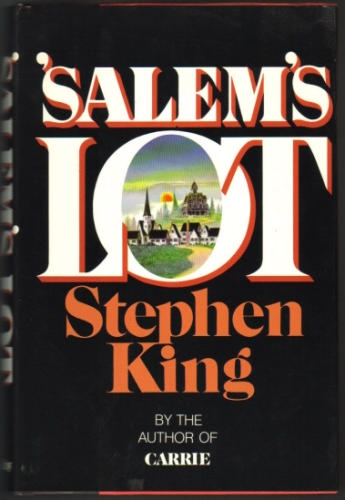
Stephen King's 1975 novel 'Salem's Lot follows writer Ben Mears as he returns to his childhood town of Jerusalem's Lot, Maine, only to discover that its residents are being turned into vampires by a newly arrived stranger. It transplants Gothic vampire horror into a small New England community, tracking that community's collapse under a supernatural siege. It is a single, self-contained novel.
- The Andromeda Strain
series2 books1969
similar bysurvivalcontemporarytense+2 more
Michael Crichton's 1969 novel The Andromeda Strain follows a team of scientists racing to contain a lethal extraterrestrial microorganism that crash-lands in Arizona, told in the clinical, document-driven style that helped establish the techno-thriller genre. Daniel H. Wilson's authorized 2019 sequel The Andromeda Evolution revisits the same threat five decades later. Together the two books form a two-part outbreak story separated by a fifty-year gap in publication.
- The Triffids
series3 books1951
similar bysurvivalour worlddarkpost-apocalyptic+1 more
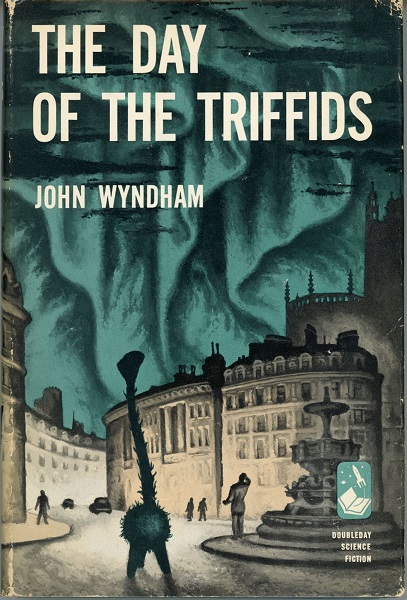
John Wyndham's The Day of the Triffids (1951) opens with a meteor-shower-like event that leaves most of Britain's population blind, throwing civilization into collapse just as triffids, an aggressive and mobile species of poisonous plant, become free to hunt the helpless survivors. Simon Clark's authorized sequel The Night of the Triffids (2001) picks up a generation later, narrated by the original protagonist's son as he confronts a new triffid-dominated world, and John Whitbourn's The Age of the Triffids extends the shared setting further still. Together the three novels form a loose post-apocalyptic trilogy built on Wyndham's original premise rather than a tightly plotted single story.
- Zom-B
series12 books2012
similar bysurvivalour worldcontemporarydarktensepost-apocalypticzombie horror
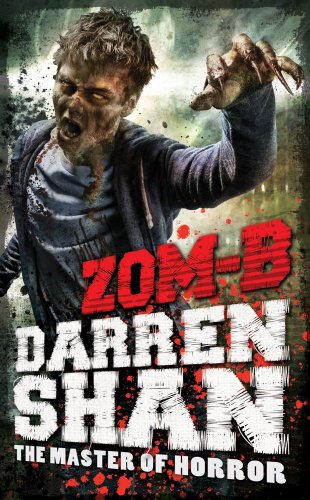
Zom-B is a young adult zombie apocalyptic-thriller novel series by written by Irish author Darren O'Shaughnessy under the pen name Darren Shan. The series is told by first-person perspective of B Smith, a teenager turned into a zombie. Like Shan's previous series, Zom-B is notable for exploring themes of racism, xenophobia, and the sociological concept of "us and them".
- I Am Legend
Richard Mathesonstandalone novel1954
similar bysurvivalour worldpost-apocalypticdarktense
The last human survivor of the vampire epidemic has to maintain his defences against their onslaught, while attempting to research the cause and possibly solution to the plague. Robert Neville is the last living man on Earth... but he is not alone. Every other man, woman and child on the planet has become a vampire, and they are hungry for Neville's blood. By day he is the hunter, stalking the undead through the ruins of civilization. By night, he barricades himself in his home and prays for the dawn. How long can a man survive like this?
- The Enemy (Charlie Higson)
series7 books2009
similar bysurvivalpost-apocalypticdarktensecontemporaryzombie horror+1 more
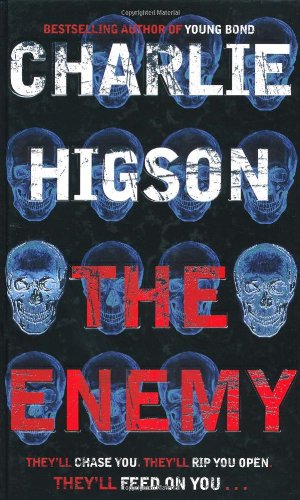
The Enemy opens Charlie Higson's seven-book YA horror series, set in London after a mysterious sickness turns every adult into a voracious, flesh-hungry threat and leaves children to fend for themselves in a city gone feral. Each subsequent book (The Dead, The Fear, The Sacrifice, The Fallen, The Hunted, The End) follows different groups of survivors as the outbreak's scope and cause slowly come into focus. Higson also wrote a short companion book, Geeks vs. Zombies, alongside the main series.
- As the World Dies Universe
series19 books2008
similar bysurvivalcontemporarypost-apocalypticzombie horror+3 more
- Forest of Hands and Teeth
series9 books2009
similar bysurvivalpost-apocalypticdarktensezombie horror+1 more
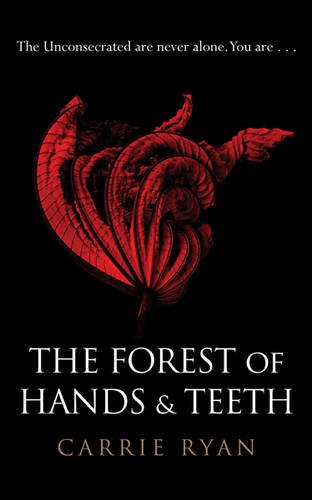
Carrie Ryan's debut trilogy is set generations after an apocalypse turned much of humanity into the mindless, cannibalistic "Unconsecrated," following young women in a small walled village whose protective fence keeps the undead out and its residents locked into a repressive, secretive society. The Forest of Hands and Teeth follows the first heroine's break from that village into the wider, undead-infested world; The Dead-Tossed Waves and The Dark and Hollow Places carry the aftermath forward through new narrators. It is YA horror more concerned with the fear and control inside the fences than with survivalist action.
- Zombie Novels
series2 books2011
similar bysurvivalcontemporarytensepost-apocalypticzombie horror+2 more
- H. G. Wells' War of the Worlds
universe65 books1898
Start hereThe War of the Worlds · Start here
similar by+2 more
No one would have believed, in the closing years of the nineteenth century, that human affairs were being watched keenly and closely from the timeless worlds of space. And then the cylinders fell. H. G. Wells' War of the Worlds opens in the quiet of the Surrey commons, where a falling star proves to be the first Martian craft — and from the pit rise the towering tripods, the Heat-Ray, the choking Black Smoke and the creeping red weed, wielded by minds that regard mankind much as we regard the creatures we boil for supper. This is invasion rendered as natural disaster: cold, methodical, and vast beyond argument. Wells' 1898 novel is the seed; everything else grows from that Martian soil. The catalogue gathers direct sequels and continuations alongside a wide field of other hands. In War of the Worlds: Global Dispatches the invasion is retold across the whole planet through the eyes of Twain, Verne, Tolstoy, Lowell and Kipling; in the Manly Wade and Wade Wellman crossover, Sherlock Holmes, Watson and Professor Challenger take the field against the machines; and Scott Washburn's Great Martian War stretches the fighting into a decades-long alternate history of steam, artillery and grinding attrition. It is a loose shared world — no single decreed sequence, many voices answering one calamity. What sets this world apart is its refusal of heroics: the invaders fall not to generals but to the smallest things of Earth, humbling and indifferent. Begin, always, with Wells' original novel — it is short, and it is the ground every later book stands upon. From there follow your appetite: Global Dispatches for the panorama, the Holmes campaign for adventure, Washburn for the long war.
- Tripods
series4 books1967
completed
similar byour worldpost-apocalyptictense+1 more
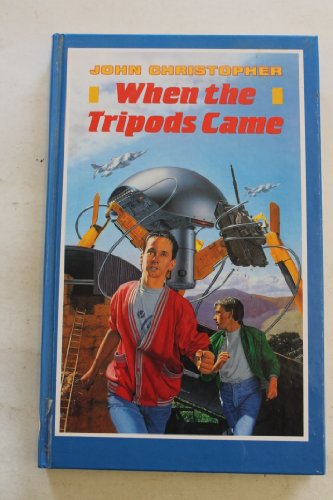
The Tripods is a series of young adult science fiction novels by John Christopher. The series takes place in a post-apocalyptic world where humanity is enslaved by "Tripods"—gigantic three-legged walking machines piloted by an alien race later identified as the "Masters". The first two books were the basis of a science fiction TV series, produced in the United Kingdom in the 1980s.
- Rats
series4 books1974
completed
similar bysurvivalcontemporarydarktense+2 more
The Rats, James Herbert's 1974 debut novel, imagines a plague of giant mutant rats overrunning London, told through a rotating cast of victims and survivors in the tradition of British disaster horror. It was followed by two sequels, Lair and Domain, which widen the outbreak first to the countryside and then to a besieged, apocalyptic city, completing a three-book trilogy.
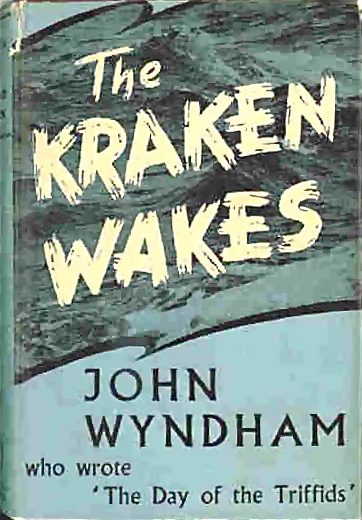
- The Kraken Wakes
John Wyndhamstandalone novel1953
similar bysurvivalour worlddarktensepost-apocalyptic
" Behind a spectacular meteor shower actually hides the beginning of an invasion by a mysterious and powerful alien race. Earth's life is disrupted by the attacks of extraterrestrials whose war machines, emerging from the depths of the oceans, seem indestructible. The coalitioned forces of the whole world are worthless, powerless in the face of the indecipherable and deadly plans of a superior intelligence, capable of bringing the entire planet to the brink of catastrophe" Goodreads May 20, 2022
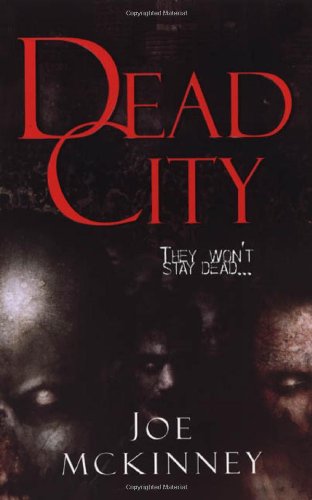
- Dead World (Joe McKinney)
series7 books2006
completed
similar bysurvivaldarktensecontemporarypost-apocalypticzombie horror+1 more
- Otherworld (Kelley Armstrong)
series100 books1996
similar byour worldcontemporary+1 more
Women of the Otherworld is Kelley Armstrong's long-running urban fantasy series about werewolves, witches, sorcerers, and other supernatural beings trying to pass as ordinary people in the contemporary world, told across thirteen novels plus assorted novellas published between 2001 and 2012. Each book tends to follow a different member of this hidden community while slowly building a shared, continuing world.
- City at World's End
Edmond Hamiltonstandalone novel1951
similar bysurvivalour worldpost-apocalypticdarktense
An experimental atomic weapons test in small-town America goes catastrophically wrong, hurling the entire town of Middletown, buildings, streets and all, untold ages into Earth's future, to a time when the sun is dying and humanity's last city struggles on beneath a darkening sky. Cut off from everything and everyone they knew, the townspeople have to find a way to survive in a world that has nothing left to spare for latecomers. Edmond Hamilton's novel strands a slice of mid-century America at the literal end of the world.
- The Fog
James Herbertstandalone novel1975
similar bysurvivalour worldcontemporarydarktense
The Fog is a horror novel by English writer James Herbert, published in 1975. It is about a deadly fog that drives its victims insane when they come into contact with it.
- Adrian's Undead Diary Universe
series21 books2010
similar bycontemporarypost-apocalypticzombie horror+2 more
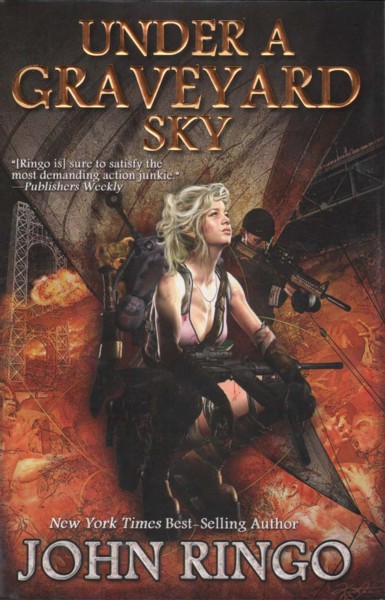
- Black Tide Rising (John Ringo)
series63 books2013
similar bypost-apocalyptic+6 more
Black Tide Rising opens with a bioengineered plague that turns most of humanity into feral, aggressive threats, following the Smith family as they refit an old sailboat and fight to survive and rebuild some form of civilization from the wreckage. John Ringo's original quartet spawned an extended shared-world series co-written with several collaborators, following other survivor groups through the same collapse. It sits in military-flavored post-apocalyptic SF rather than traditional fantasy.
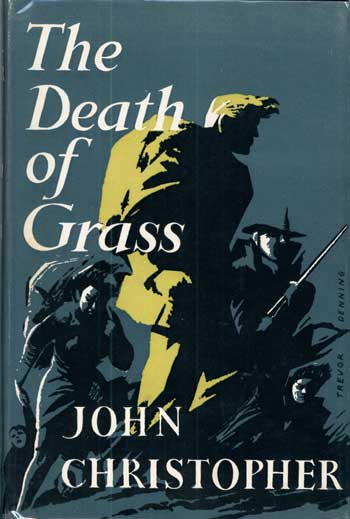
- The Death of Grass
John Christopherstandalone novel1956
similar bysurvivalour worldpost-apocalypticdarktense
The Death of Grass is a 1956 post-apocalyptic science fiction novel written by the English author Sam Youd under the pen name John Christopher. The plot concerns a virus that kills off grass species, including rice and wheat. The Death of Grass was the first of several post-apocalyptic novels written by Youd. The novel was written in a matter of weeks and liberated him from his day job.