Loreful
HomeDiscover
Search series, authors…⌘K
Loreful

Reading orders for SF/F series and shared universes — with your place kept in every one.

Explore

UniversesSeriesWorksAuthorsAtlas

Help

FAQAboutSite map

Account & legal

Sign inCreate accountPrivacyTerms

Data

Built on ISFDB, Wikipedia, Wikidata and Open Library. Curated reading orders carry their reasoning on the page; the rest follow publication order. Data sources & licenses

© Loreful · data: ISFDB · CC BY

More like Empty World

anchored on:science fictionpost-apocalypticsurvivalplague and pandemicbritish isleslate 20th century+4 more

but

Mood

The mood the book leaves you in.

  • The reading experience is propelled by journeys, exploration, and physical risk; excitement and forward momentum dominate over dread or introspection.
  • Joy and loss are deliberately mixed; the resolution grants characters something real while taking something else away, leaving warmth and sorrow together.
  • The book demands work from the reader — dense prose, difficult structure, unfamiliar ideas, or morally uncomfortable material — as part of its intended effect.
  • Grim events, cruelty, or despair dominate the atmosphere, and the book does not soften them with comfort or comic relief.
  • The atmosphere is quietly unsettling — wrongness, unease, and the uncanny pervade the book without necessarily escalating into overt horror.
  • The book is built to move the reader; character feeling is foregrounded and major scenes aim at a strong emotional response.
  • Humor is a primary aim and the prose plays for laughs — comic situations, wit, or dialogue produce sustained comedy, not occasional levity.
  • The book insists that things can improve; effort and decency are shown to matter, and the arc bends toward better outcomes even through hardship.
  • The book teaches as it goes — real facts, history, science, or craft are conveyed in enough depth that learning is part of the reading experience.
  • The book is designed to uplift and motivate, presenting perseverance or achievement in a way that invites the reader to aspire or act.
  • The overall register is cheerful and easygoing; stakes are kept gentle and the book avoids dwelling on pain or dread.
  • Withheld information drives the experience; the book sustains enigmas and secrets the reader wants resolved, whatever its genre.
  • The book is contemplative and inward-looking, giving more weight to thought, memory, and meaning than to external events.
  • The book works as comfort reading — low tension, a soothing pace, and an atmosphere the reader can unwind in.
  • Grief, loss, or melancholy set the dominant register, and the book lets sorrow stand rather than resolving it into comfort.
  • Sustained suspense is the point; the book keeps the reader braced for what happens next through danger, pressure, or impending revelation.
  • Playful invention and charm define the register — fanciful conceits, light absurdity, and a narration that delights in its own oddity.

About

What the story runs on.

  • Stories in which extraterrestrial beings are central — as characters, cultures, or the object of the plot.
  • Stories structured as a quest — a journey undertaken to find, deliver, or destroy something of great import.
  • Stories in which staying alive against nature, catastrophe, or scarcity is the central problem.
  • Stories of lovers kept apart by law, family, faith, or station, where the obstacle to love is the plot.
  • Stories in which a friendship — its making, testing, or loss — is the emotional center.
  • Stories of growing up — a young protagonist crossing from childhood into adult knowledge and responsibility.
  • Stories about who a character truly is — self-discovery, doubled lives, and the search for a self.
  • Stories about mourning — living through the death of a loved one and what loss does to the survivors.
  • Stories in which a buried family truth — hidden parentage, crimes, or shames — surfaces and reorders the present.
  • Stories driven by maneuvering for power — factions, conspiracies, and statecraft conducted in shadow.
  • Stories in which war itself is the subject — combat, occupation, and what warfare does to soldiers and civilians.
  • Stories organized around investigating a killing — the case, the clues, and the pursuit of the killer, in any genre's clothing.

Shelf

Where it sits in the library.

    • Fiction built on magic or other supernatural elements that have no scientific explanation.
    • Secondary-world fantasy at large scale, where the fate of nations or the world turns on the protagonists' struggle.
    • Fantasy set in a recognizably modern city or contemporary world where the supernatural intrudes on everyday life.
    • Fantasy that blends in horror's atmosphere and imagery, keeping a fantastical frame around grim or frightening material.
    • Action-driven fantasy following warriors or rogues with personal stakes against sorcerous threats, rather than world-spanning conflicts.
    • Fantasy set in a real historical period or a close analogue of one, with magic woven into the era.
    • Fantasy in which protagonists cross from the ordinary world into another world through a portal or similar passage.
    • Fiction that retells or reworks a traditional fairy tale in a new form or setting.
    • Fantasy drawing directly on myths, legends, and folklore, retelling them or building on their figures and logic.
    • Fantasy of ghosts, vampires, shapeshifters, psychics, and similar phenomena, usually set in an otherwise ordinary world.
    • Fiction mixing science-fictional trappings with overtly magical or impossible elements in one setting.
    • Low-stakes fantasy emphasizing comfort, community, and everyday pleasures over conflict and peril.
    • Speculative fiction of pervasive moral ambiguity, violence, and cynicism that rejects heroic conventions — fantasy and SF alike.
      • Fiction that extrapolates from science and technology — future societies, space travel, or speculative inventions — within at least nominally natural laws.
      • Science fiction of interstellar scope — starships, galactic polities, and adventure across star systems.
      • Science fiction committed to scientific rigor, where technical plausibility constrains the story.
      • Science fiction centered on armed forces and warfare, told largely from a military point of view.
      • Science fiction of networked, corporate-dominated near futures, pairing high technology with social decay.
      • Science fiction styled on nineteenth-century steam-powered technology, often in a Victorian or pseudo-Victorian setting.
      • Fiction depicting an oppressive or catastrophic society, presented as a warning.
      • Fiction set after civilization's collapse, following survivors in the ruins of the old world.
      • Fiction in which characters move between past and future, and the mechanics or consequences of that travel drive the plot.
      • Fiction exploring a world where a historical event went differently and history diverged from ours.
      • Science fiction about humanity's first encounter and communication with an alien intelligence.
      • Science fiction in which extraterrestrial forces attack or occupy Earth and humanity resists.
      • Fiction whose primary aim is to frighten or unsettle the reader through dread, menace, or the monstrous.
      • Horror of vast, indifferent, incomprehensible entities before which humanity is insignificant, in the Lovecraft tradition.
      • Horror of decaying houses, buried family secrets, and oppressive atmosphere in the Gothic literary tradition.
      • Horror centered on hauntings and the returning dead.
      • Horror located in the mind — paranoia, obsession, and unreliable perception rather than external monsters.
      • Horror built around the reanimated dead and survival amid their outbreaks.
      • Horror defined by explicit, transgressive gore that refuses to cut away from violence.
      • Speculative fiction of the strange and uncanny that resists both natural explanation and standard genre categories.
      • Fiction organized around solving a crime or puzzle, typically following an investigator toward the identification of a culprit.
      • A puzzle-first mystery that lays out clues so the culprit's identity can be deduced before the reveal.
      • Crime fiction of moral ambiguity, fatalism, and hard-edged style, set among the corrupt and the doomed.
      • A mystery following the realistic routines of police work — forensics, interviews, and case-building.
      • A gentle mystery with an amateur sleuth, a small community, and violence kept off the page.
      • A mystery set in a past era, where the investigation works within that period's methods and society.
      • Fast-paced fiction driven by imminent danger, pursuit, or high-stakes conspiracy, built to sustain tension.
      • A thriller of espionage — agents, tradecraft, and intelligence services in conflict.
      • A thriller centered on lawyers and the courtroom, where litigation carries the suspense.
      • A thriller driven by detailed contemporary or near-future technology, often military or scientific.
      • A thriller whose tension comes from mental states and manipulation between characters rather than external action.
      • Fiction whose central plot is a romantic relationship and its development toward an emotionally satisfying resolution.
      • Romance in which one or both partners are supernatural beings, blending fantasy elements into the love story.
      • A fantasy-romance hybrid in which the romantic arc and the fantasy plot carry equal weight.
      • Romance set in a past era, with courtship shaped by the period's society and manners.
      • Romance set in the present day, without supernatural or historical elements.
      • Fiction set in a real past period, where the historical setting materially shapes characters and events.
        • General and literary fiction emphasizing prose style, character interiority, or formal ambition over genre plot conventions.
        • Fiction in a realistic world where magical events occur and are treated as ordinary, in the tradition of Latin American literature.
        • Fiction that ridicules people, institutions, or society in order to criticize them.
        • Fiction of dreamlike, irrational imagery and logic that breaks from realistic representation.
        • Fiction that plays with narrative convention through metafiction, fragmentation, and self-reference.
        • Fiction propelled by journeys, exploration, and physical peril, where action and survival carry the plot.
        • Adventure fiction of ships and seafaring — naval engagements, voyages, and life at sea.
        • Fiction of the American frontier West — gunmen, ranchers, and lawmen, typically in the late nineteenth century.
        • Fiction centered on soldiers, campaigns, and the experience of warfare, historical or imagined.
          • Fiction written primarily to amuse, using comedic situations, wit, or parody as its organizing principle.
            • Multi-generational fiction following a family or dynasty across decades, with inheritance and kinship as the through-line.
              • Fiction whose world runs on explicit game mechanics — levels, stats, and skills that characters can see and exploit.
                • Fiction about costumed or superpowered heroes and their conflicts with comparable villains.

                Practical

                How long a commitment, whether it stands alone, and whether it has finished.

                Tap a chip to ask for it · tap again to rule it out · once more to clear. Numbers show what would be left.

                • Cover of The Last Man
                  The Last Man

                  Mary Shelley · standalone novel · 1826

                  similar byscience fictionpost-apocalypticbritish islesdarksadplague and pandemicgrief and loss+1 more

                  The Last Man is an apocalyptic, dystopian science fiction novel by Mary Shelley, first published in 1826. The narrative concerns Europe in the late 21st century, ravaged by the rise of a bubonic plague pandemic that rapidly sweeps across the entire globe, ultimately resulting in the near-extinction of humanity. It also includes discussion of the British state as a republic, for which Shelley sat in meetings of the House of Commons to gain insight to the governmental system of the Romantic era. The novel includes many fictive allusions to her husband Percy Bysshe Shelley, who drowned in a shipwreck four years before the book's publication, as well as their close friend Lord Byron, who had died two years previously.

                • Cover of Fall-Out
                  Fall-Out

                  Gudrun Pausewang · standalone novel · 1987

                  similar bylate 20th centuryscience fictiondarksadsurvivalpost-apocalypticyoung adultgrief and loss+2 more

                  Novel is about a breakdown of a nuclear power station in Germany and the story of two teenager-lovers Hannah and Elmar who take refuge. 38.000 people die and Hannah unfortunately becomes contaminated.

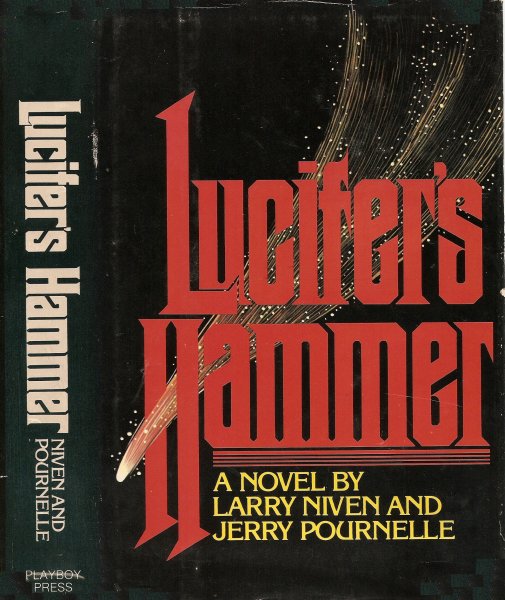
                • Cover of Lucifer's Hammer
                  Lucifer's Hammer

                  Larry Niven & Jerry Pournelle · standalone novel · 1977

                  similar bylate 20th centuryscience fictionpost-apocalypticdarksurvival+1 more

                  Lucifer's Hammer is a science fiction post-apocalypse-survival novel by American writers Larry Niven and Jerry Pournelle that was first published in 1977. It was nominated for the Hugo Award for Best Novel in 1978.

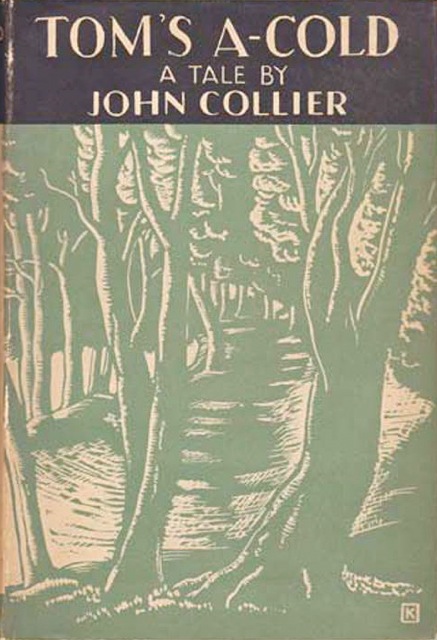
                • Cover of Tom's A-Cold
                  Tom's A-Cold

                  John Collier · standalone novel · 1933

                  similar bybritish isleslate 20th centuryscience fictionpost-apocalypticdarksurvivalcoming of agereflective

                  "Radically dissimilar to his most familiar work is Tom's A-Cold (1933; vt Full Circle 1933), a remarkably effective Ruined Earth novel set in the 1990s, long after an unexplained Disaster has decimated England's (and presumably the world's) population and thrust mankind back into rural barbarism, a condition out of which the eldest survivors, who remember civilization, are trying to educate the young third generation. The simple plot plays no tricks on the reader: the young protagonist, a born leader, rises through raids and conflict to the chieftainship, undergoes a tragedy, and reconciles himself at the novel's close to the burdens of a government which will improve the lot of his people. Throughout the novel, very movingly, Collier renders the reborn, circumambient natural world with a hallucinatory visual intensity found nowhere else in his work. Along with Alun Llewellyn's The Strange Invaders (1934), Tom's A-Cold can be seen, in its atmosphere of almost loving conviction, as a genuine successor to Richard Jefferies's After London (1885)." --SFE3, biographical entry by John Clute

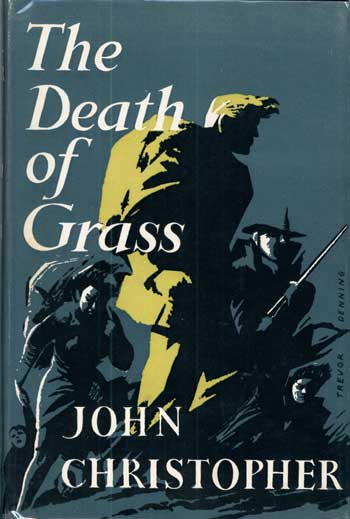
                • Cover of The Death of Grass
                  The Death of Grass

                  John Christopher · standalone novel · 1956

                  similar byscience fictionpost-apocalypticbritish islesdarkplague and pandemicsurvival

                  The Death of Grass is a 1956 post-apocalyptic science fiction novel written by the English author Sam Youd under the pen name John Christopher. The plot concerns a virus that kills off grass species, including rice and wheat. The Death of Grass was the first of several post-apocalyptic novels written by Youd. The novel was written in a matter of weeks and liberated him from his day job.

                • Cover of Brother in the Land
                  Brother in the Land

                  Robert Swindells · standalone novel · 1984

                  similar bybritish islesscience fictionpost-apocalypticdarksurvivalyoung adultcoming of age

                  Brother in the Land is a 1984 post-apocalyptic novel by the British author Robert E. "Bob" Swindells. The plot follows the adventures of a teenage boy as he struggles to survive in the north of England after a nuclear war has devastated the country.

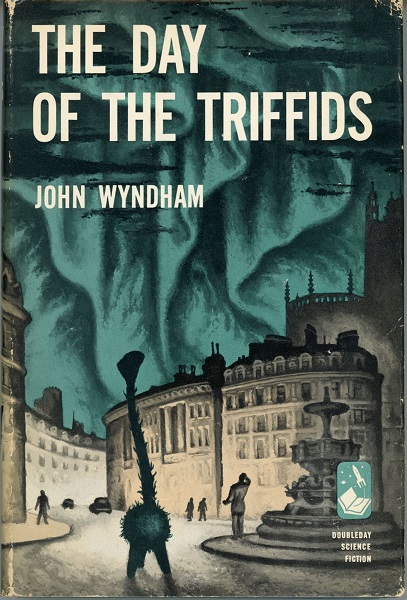
                • Cover of The Triffids
                  The Triffids

                  series · 3 books · 1951

                  similar byscience fictionbritish islespost-apocalypticdarksurvival+1 more

                  John Wyndham's The Day of the Triffids (1951) opens with a meteor-shower-like event that leaves most of Britain's population blind, throwing civilization into collapse just as triffids, an aggressive and mobile species of poisonous plant, become free to hunt the helpless survivors. Simon Clark's authorized sequel The Night of the Triffids (2001) picks up a generation later, narrated by the original protagonist's son as he confronts a new triffid-dominated world, and John Whitbourn's The Age of the Triffids extends the shared setting further still. Together the three novels form a loose post-apocalyptic trilogy built on Wyndham's original premise rather than a tightly plotted single story.

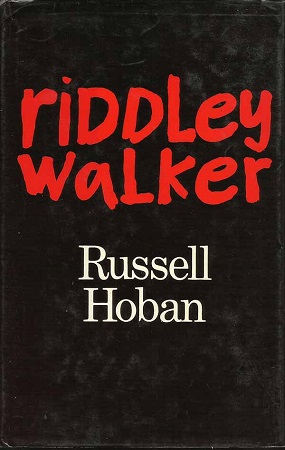
                • Cover of Riddley Walker
                  Riddley Walker

                  Russell Hoban · standalone novel · 1980

                  similar byscience fictionpost-apocalypticbritish islesdarksurvivalcoming of age

                  WorldCat: Composed in an English which has never been spoken and laced with a storytelling tradition that predates the written word, RIDDLEY WALKER is the world waiting for us at the bitter end of the nuclear road. It is desolate, dangerous and harrowing, and a modern masterpiece.

                • Cover of On the Beach
                  On the Beach

                  Nevil Shute · standalone novel · 1957

                  similar byscience fictionpost-apocalypticsadsurvivalgrief and loss+1 more

                  On the Beach is an apocalyptic novel published in 1957, written by British author Nevil Shute after he immigrated to Australia. The novel details the experiences of a mixed group of people in Melbourne as they await the arrival of deadly radiation spreading towards them from the Northern Hemisphere, following a nuclear war some years previously. As the radiation approaches, each person deals with impending death differently.

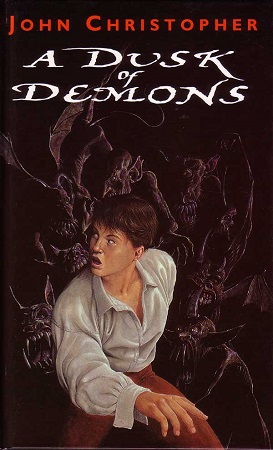
                • Cover of A Dusk of Demons
                  A Dusk of Demons

                  John Christopher · standalone novel · 1993

                  similar byscience fictionpost-apocalypticbritish islesdarkyoung adultsurvivalcoming of age

                  A Dusk of Demons is a young adult science fiction novel written by the British author John Christopher and published in 1993. The story is set in a post-apocalyptic future in England where it is believed that demons rule Earth.

                • Cover of The Road
                  The Road

                  Cormac McCarthy · standalone novel · 2006

                  similar bypost-apocalypticdarksadsurvivalscience fictiongrief and loss

                  In this post-apocalyptic novel, a father and his son walk alone through burned America. Nothing moves in the ravaged landscape save the ash on the wind. It is cold enough to crack stones, and when the snow falls it is gray. They sky is dark. Their destination is the coast, although they don't know what, if anything, awaits them there. They have nothing; just a pistol to defend themselves against the lawless bands that stalk the road, the clothes they are wearing, a cart of scavenged food--and each other. This book boldly imagines a future in which no hope remains, but in which the father and his son, "each the other's world entire," are sustained by love. It is an unflinching meditation on the worst and the best that we are capable of: ultimate destructiveness, desperate tenacity, and the tenderness that keeps two people alive in the face of total devastation.--From publisher description.

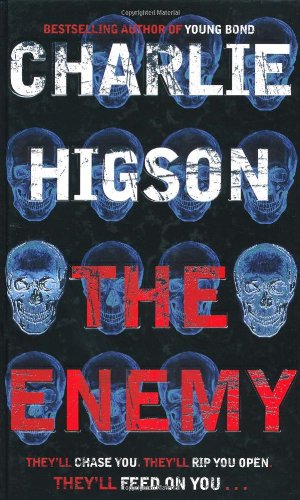
                • Cover of The Enemy (Charlie Higson)
                  The Enemy (Charlie Higson)

                  series · 7 books · 2009

                  similar bybritish islespost-apocalypticdarksurvivalyoung adultcoming of age+1 more

                  The Enemy opens Charlie Higson's seven-book YA horror series, set in London after a mysterious sickness turns every adult into a voracious, flesh-hungry threat and leaves children to fend for themselves in a city gone feral. Each subsequent book (The Dead, The Fear, The Sacrifice, The Fallen, The Hunted, The End) follows different groups of survivors as the outbreak's scope and cause slowly come into focus. Higson also wrote a short companion book, Geeks vs. Zombies, alongside the main series.

                • Cover of The Dog Stars
                  The Dog Stars

                  Peter Heller · standalone novel · 2012

                  similar byscience fictionpost-apocalypticsadsurvivalgrief and lossplague and pandemicreflective

                  The Dog Stars is a 2012 post-apocalyptic fiction novel by Peter Heller. It follows a pilot and mechanic, Hig, who is surviving at an abandoned airport after a pandemic. He meets other survivors, including a woman, while dealing with grief for his old life. The book was adapted into a movie, also called The Dog Stars, released in 2026.

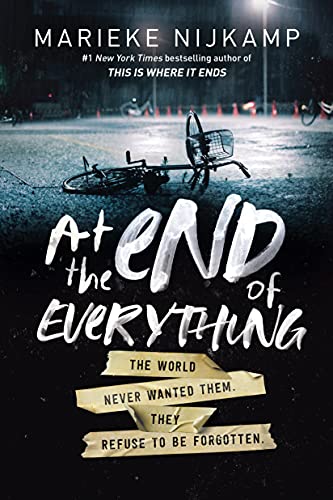
                • Cover of At the End of Everything
                  At the End of Everything

                  Marieke Nijkamp · standalone novel · 2022

                  similar byscience fictionpost-apocalypticdarksurvivalplague and pandemicyoung adultcoming of age

                  The Hope Juvenile Treatment Center is ironically named. No one has hope for the delinquent teenagers who have been exiled there; the world barely acknowledges that they exist. Then the guards at Hope start acting strange. And one day…they don't show up. But when the teens band together to make a break from the facility, they encounter soldiers outside the gates. There's a rapidly spreading infectious disease outside, and no one can leave their houses or travel without a permit. Which means that they're stuck at Hope. And this time, no one is watching out for them at all. As supplies quickly dwindle and a deadly plague tears through their ranks, the group has to decide whom among them they can trust and figure out how they can survive in a world that has never wanted them in the first place.

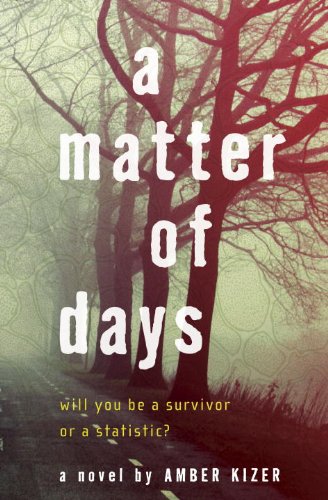
                • Cover of A Matter of Days
                  A Matter of Days

                  Amber Kizer · standalone novel · 2013

                  similar bypost-apocalypticsadsurvivalplague and pandemicscience fictionyoung adultcoming of age+1 more

                  In the not-too-distant future when a global pandemic kills most of humanity, a teenaged girl and her younger brother struggle to survive.

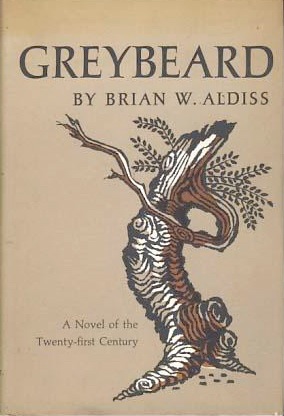
                • Cover of Greybeard
                  Greybeard

                  Brian W. Aldiss · standalone novel · 1964

                  similar byscience fictionpost-apocalypticbritish islessurvivalgrief and lossreflective

                  Long after a catastrophe that has sterilized humans and most other mammals, the 54-year-old protagonists—Greybeard and Martha—take a tour of entropic England. In scattered self contained communities only the old survive, while outside these enclaves nature comes back into its own, peopling the land with new animal life.

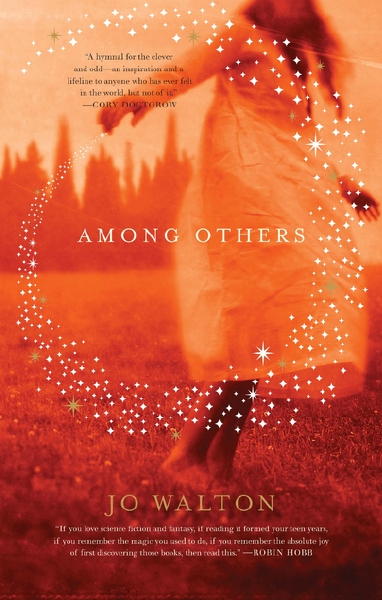
                • Cover of Among Others
                  Among Others

                  Jo Walton · standalone novel · 2011

                  similar bybritish isleslate 20th centurycoming of agegrief and lossreflective+1 more

                  Among Others is a 2011 fantasy novel written by Welsh-Canadian writer Jo Walton, published originally by Tor Books. It is published in the UK by Corsair. It won the Nebula Award for Best Novel of 2011, the 2012 Hugo Award for Best Novel and the 2012 British Fantasy Award.

                • Cover of Hungry City Chronicles / Mortal Engines
                  Hungry City Chronicles / Mortal Engines

                  series · 5 books · 2001

                  part of Mortal Engines Universe

                  similar byscience fictionpost-apocalypticyoung adultsurvival+2 more

                  The Mortal Engines Quartet, also known as the Predator Cities Quartet, is a series of epic young adult science fiction novels by the English novelist and illustrator Philip Reeve. He began the first volume of the series, Mortal Engines, in the 1980s, and it was published in 2001. Reeve then published three further novels, Predator's Gold (2003), Infernal Devices (2005), and A Darkling Plain (2006).

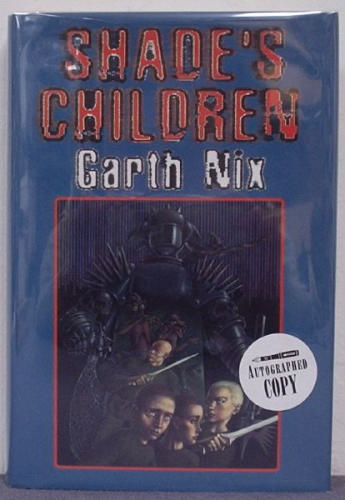
                • Cover of Shade's Children milieu
                  Shade's Children milieu

                  series · 2 books · 1997

                  similar byscience fictionpost-apocalypticdarkyoung adultsurvivalcoming of age

                  Shade's Children is set on an Earth where all adults vanished overnight fourteen years earlier, leaving children to be harvested at puberty by the machines that now run the world, unless they escape into hiding with Shade, a mysterious AI-like protector. Garth Nix's 1997 novel is a single, self-contained book rather than a series, though its bleak post-apocalyptic premise has drawn comparisons to his other work.

                • Cover of Z for Zachariah
                  Z for Zachariah

                  Robert C. O'Brien · standalone novel · 1975

                  similar byscience fictionpost-apocalypticsurvivalyoung adultcoming of age+1 more

                  Sixteen-year-old Ann Burden, on an Amish family farm in an isolated valley, believes she is the only survivor of nuclear war and nerve gas. One day a man arrives in a "safe-suit" that he and others have recently developed.

                • Cover of A Wrinkle in the Skin
                  A Wrinkle in the Skin

                  John Christopher · standalone novel · 1965

                  similar bybritish islesscience fictionpost-apocalypticdarksurvival

                  A Wrinkle In The Skin is a 1965 post-apocalyptic science fiction novel written by the English author John Christopher.

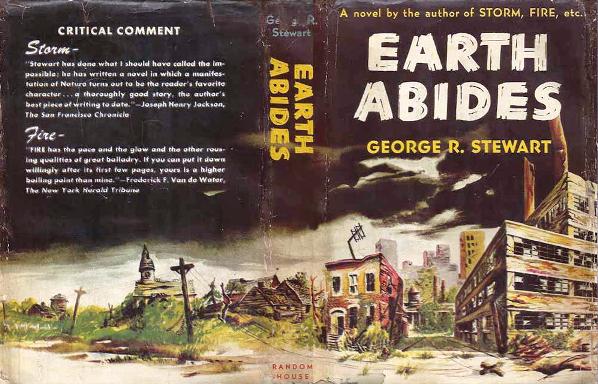
                • Cover of Earth Abides
                  Earth Abides

                  George R. Stewart · standalone novel · 1949

                  similar byscience fictionpost-apocalypticsurvivalplague and pandemicreflective+1 more

                  The novel tells the story of the fall of civilization from deadly disease and the emergence of a new culture with simpler tools. Set in the 1940s in Berkeley, California, the story is told by Isherwood Williams, who emerges from isolation in the mountains to find almost everyone dead. en.wikipedia.org

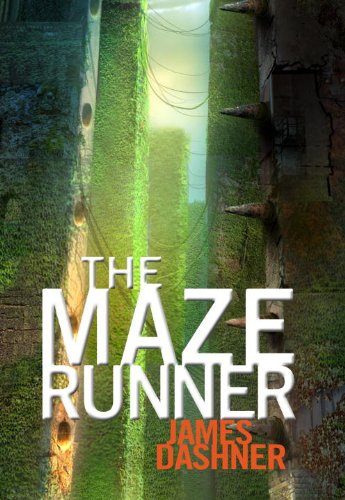
                • Cover of Maze Runner
                  Maze Runner

                  series · 11 books · 2009

                  similar byscience fictionpost-apocalypticsurvivalyoung adult+3 more

                  The Maze Runner is a series of young adult dystopian science fiction novels written by American author James Dashner. The series consists of the trilogy The Maze Runner (2009), The Scorch Trials (2010) and The Death Cure (2011), as well as two prequel novels, The Kill Order (2012) and The Fever Code (2016). A novella titled Crank Palace (2020) and a companion book titled The Maze Runner Files (2013) have also been released. A sequel trilogy in the series titled The Maze Cutter takes place 73 years following the events of The Death Cure and consists of the novels The Maze Cutter (2022), The Godhead Complex (2023), and The Infinite Glade (2025).

                • Cover of The Fireman
                  The Fireman

                  Joe Hill · standalone novel · 2016

                  similar byscience fictionpost-apocalypticdarksurvivalplague and pandemic

                  The Fireman is a novel set in a post-apocalyptic time by American author Joe Hill. The novel, Hill's fourth, tells the tale of a deadly spore that has infected most of the world's population. Hill first spoke of the novel in 2013 in promotional interviews for his then-new novel NOS4A2. The novel was released on May 17, 2016.