Loreful
HomeDiscover
Search series, authors…⌘K
Loreful

Reading orders for SF/F series and shared universes — with your place kept in every one.

Explore

UniversesSeriesWorksAuthorsAtlas

Help

FAQAboutSite map

Account & legal

Sign inCreate accountPrivacyTerms

Data

Built on ISFDB, Wikipedia, Wikidata and Open Library. Curated reading orders carry their reasoning on the page; the rest follow publication order. Data sources & licenses

© Loreful · data: ISFDB · CC BY

More like Enchanted Fire

anchored on:fantasymythic fantasy

but

Mood

The mood the book leaves you in.

  • The reading experience is propelled by journeys, exploration, and physical risk; excitement and forward momentum dominate over dread or introspection.
  • Joy and loss are deliberately mixed; the resolution grants characters something real while taking something else away, leaving warmth and sorrow together.
  • The book demands work from the reader — dense prose, difficult structure, unfamiliar ideas, or morally uncomfortable material — as part of its intended effect.
  • Grim events, cruelty, or despair dominate the atmosphere, and the book does not soften them with comfort or comic relief.
  • The atmosphere is quietly unsettling — wrongness, unease, and the uncanny pervade the book without necessarily escalating into overt horror.
  • The book is built to move the reader; character feeling is foregrounded and major scenes aim at a strong emotional response.
  • Humor is a primary aim and the prose plays for laughs — comic situations, wit, or dialogue produce sustained comedy, not occasional levity.
  • The book insists that things can improve; effort and decency are shown to matter, and the arc bends toward better outcomes even through hardship.
  • The book teaches as it goes — real facts, history, science, or craft are conveyed in enough depth that learning is part of the reading experience.
  • The book is designed to uplift and motivate, presenting perseverance or achievement in a way that invites the reader to aspire or act.
  • The overall register is cheerful and easygoing; stakes are kept gentle and the book avoids dwelling on pain or dread.
  • Withheld information drives the experience; the book sustains enigmas and secrets the reader wants resolved, whatever its genre.
  • The book is contemplative and inward-looking, giving more weight to thought, memory, and meaning than to external events.
  • The book works as comfort reading — low tension, a soothing pace, and an atmosphere the reader can unwind in.
  • Grief, loss, or melancholy set the dominant register, and the book lets sorrow stand rather than resolving it into comfort.
  • Sustained suspense is the point; the book keeps the reader braced for what happens next through danger, pressure, or impending revelation.
  • Playful invention and charm define the register — fanciful conceits, light absurdity, and a narration that delights in its own oddity.

About

What the story runs on.

  • Stories in which extraterrestrial beings are central — as characters, cultures, or the object of the plot.
  • Stories centered on witches and the practice of witchcraft — covens, hedge magic, familiars, and the witch's place in her community.
  • Stories structured as a quest — a journey undertaken to find, deliver, or destroy something of great import.
  • Stories in which staying alive against nature, catastrophe, or scarcity is the central problem.
  • Stories of lovers kept apart by law, family, faith, or station, where the obstacle to love is the plot.
  • Stories in which a friendship — its making, testing, or loss — is the emotional center.
  • Stories of growing up — a young protagonist crossing from childhood into adult knowledge and responsibility.
  • Stories about who a character truly is — self-discovery, doubled lives, and the search for a self.
  • Stories in which a buried family truth — hidden parentage, crimes, or shames — surfaces and reorders the present.
  • Stories driven by maneuvering for power — factions, conspiracies, and statecraft conducted in shadow.
  • Stories in which war itself is the subject — combat, occupation, and what warfare does to soldiers and civilians.
  • Stories organized around investigating a killing — the case, the clues, and the pursuit of the killer, in any genre's clothing.

Shelf

Where it sits in the library.

    • Fiction built on magic or other supernatural elements that have no scientific explanation.
    • Secondary-world fantasy at large scale, where the fate of nations or the world turns on the protagonists' struggle.
    • Fantasy set in a recognizably modern city or contemporary world where the supernatural intrudes on everyday life.
    • Fantasy that blends in horror's atmosphere and imagery, keeping a fantastical frame around grim or frightening material.
    • Action-driven fantasy following warriors or rogues with personal stakes against sorcerous threats, rather than world-spanning conflicts.
    • Fantasy set in a real historical period or a close analogue of one, with magic woven into the era.
    • Fantasy in which protagonists cross from the ordinary world into another world through a portal or similar passage.
    • Fiction that retells or reworks a traditional fairy tale in a new form or setting.
    • Fantasy drawing directly on myths, legends, and folklore, retelling them or building on their figures and logic.
    • Fantasy of ghosts, vampires, shapeshifters, psychics, and similar phenomena, usually set in an otherwise ordinary world.
    • Fiction mixing science-fictional trappings with overtly magical or impossible elements in one setting.
    • Low-stakes fantasy emphasizing comfort, community, and everyday pleasures over conflict and peril.
    • Speculative fiction of pervasive moral ambiguity, violence, and cynicism that rejects heroic conventions — fantasy and SF alike.
      • Fiction that extrapolates from science and technology — future societies, space travel, or speculative inventions — within at least nominally natural laws.
      • Science fiction of interstellar scope — starships, galactic polities, and adventure across star systems.
      • Science fiction committed to scientific rigor, where technical plausibility constrains the story.
      • Science fiction centered on armed forces and warfare, told largely from a military point of view.
      • Science fiction of networked, corporate-dominated near futures, pairing high technology with social decay.
      • Science fiction styled on nineteenth-century steam-powered technology, often in a Victorian or pseudo-Victorian setting.
      • Fiction depicting an oppressive or catastrophic society, presented as a warning.
      • Fiction set after civilization's collapse, following survivors in the ruins of the old world.
      • Fiction in which characters move between past and future, and the mechanics or consequences of that travel drive the plot.
      • Fiction exploring a world where a historical event went differently and history diverged from ours.
      • Science fiction about humanity's first encounter and communication with an alien intelligence.
      • Science fiction in which extraterrestrial forces attack or occupy Earth and humanity resists.
      • Fiction whose primary aim is to frighten or unsettle the reader through dread, menace, or the monstrous.
      • Horror of vast, indifferent, incomprehensible entities before which humanity is insignificant, in the Lovecraft tradition.
      • Horror of decaying houses, buried family secrets, and oppressive atmosphere in the Gothic literary tradition.
      • Horror centered on hauntings and the returning dead.
      • Horror located in the mind — paranoia, obsession, and unreliable perception rather than external monsters.
      • Horror built around the reanimated dead and survival amid their outbreaks.
      • Horror defined by explicit, transgressive gore that refuses to cut away from violence.
      • Speculative fiction of the strange and uncanny that resists both natural explanation and standard genre categories.
      • Fiction organized around solving a crime or puzzle, typically following an investigator toward the identification of a culprit.
      • A puzzle-first mystery that lays out clues so the culprit's identity can be deduced before the reveal.
      • Crime fiction of moral ambiguity, fatalism, and hard-edged style, set among the corrupt and the doomed.
      • A mystery following the realistic routines of police work — forensics, interviews, and case-building.
      • A gentle mystery with an amateur sleuth, a small community, and violence kept off the page.
      • A mystery set in a past era, where the investigation works within that period's methods and society.
      • Fast-paced fiction driven by imminent danger, pursuit, or high-stakes conspiracy, built to sustain tension.
      • A thriller of espionage — agents, tradecraft, and intelligence services in conflict.
      • A thriller centered on lawyers and the courtroom, where litigation carries the suspense.
      • A thriller driven by detailed contemporary or near-future technology, often military or scientific.
      • A thriller whose tension comes from mental states and manipulation between characters rather than external action.
      • Fiction whose central plot is a romantic relationship and its development toward an emotionally satisfying resolution.
      • Romance in which one or both partners are supernatural beings, blending fantasy elements into the love story.
      • A fantasy-romance hybrid in which the romantic arc and the fantasy plot carry equal weight.
      • Romance set in a past era, with courtship shaped by the period's society and manners.
      • Romance set in the present day, without supernatural or historical elements.
      • Fiction set in a real past period, where the historical setting materially shapes characters and events.
        • General and literary fiction emphasizing prose style, character interiority, or formal ambition over genre plot conventions.
        • Fiction in a realistic world where magical events occur and are treated as ordinary, in the tradition of Latin American literature.
        • Fiction that ridicules people, institutions, or society in order to criticize them.
        • Fiction of dreamlike, irrational imagery and logic that breaks from realistic representation.
        • Fiction that plays with narrative convention through metafiction, fragmentation, and self-reference.
        • Fiction propelled by journeys, exploration, and physical peril, where action and survival carry the plot.
        • Adventure fiction of ships and seafaring — naval engagements, voyages, and life at sea.
        • Fiction of the American frontier West — gunmen, ranchers, and lawmen, typically in the late nineteenth century.
        • Fiction centered on soldiers, campaigns, and the experience of warfare, historical or imagined.
          • Fiction written primarily to amuse, using comedic situations, wit, or parody as its organizing principle.
            • Multi-generational fiction following a family or dynasty across decades, with inheritance and kinship as the through-line.
              • Fiction whose world runs on explicit game mechanics — levels, stats, and skills that characters can see and exploit.
                • Fiction about costumed or superpowered heroes and their conflicts with comparable villains.

                Practical

                How long a commitment, whether it stands alone, and whether it has finished.

                Tap a chip to ask for it · tap again to rule it out · once more to clear. Numbers show what would be left.

                • Cover of The World's Desire
                  The World's Desire

                  H. Rider Haggard & Andrew Lang · standalone novel · 1890

                  similar byadventurousmediterraneanancient worldfantasymythic fantasygodsforbidden love

                  "... a continuation of the Odysseus myth. In this romance, Aphrodite compels Odysseus to leave his ruined home in Ithaca in pursuit of Helen of Troy, his love before Penelope." --VisualHaggard.org

                • TK
                  The Kaphtu Universe

                  series · 6 books · 1979

                  completed

                  similar byancient worldmythic fantasy+4 more

                • Cover of Theseus
                  Theseus

                  series · 2 books · 1958

                  completed

                  similar byadventurousmediterraneanancient worldmythic fantasy+1 more

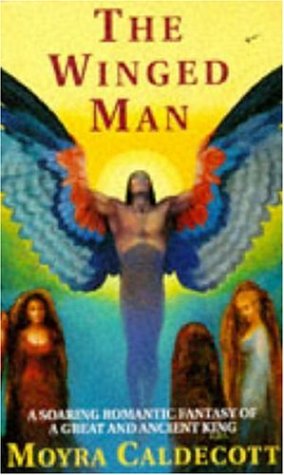
                • Cover of The Winged Man
                  The Winged Man

                  Moyra Caldecott · standalone novel · 1993

                  similar byadventurousancient worldfantasymythic fantasyhistorical fantasy+3 more

                  To this day, throughout the ancient city of Bath, there exist statues and images of the man who was the legendary founder of the city, and the father of King Lear. A leper and a swineherd... a necromancer and a wise king... his memory lives on.Restless at the royal court, the young Prince Bladud sets off to consult an oracle in the west country - a wild wooded place near a mysterious hot spring that gushes from a cave. There the priestess tells him that he will be a great king, and that one day he will fly like an eagle.When he returns to his father's hill-fort at Trinovantum, ancient London, Bladud's head is full of magnificent dreams... until trickery entraps him in a loveless marriage. His unquenchable thirst for knowledge, sharpened by a mysterious experience at the burial mound of his forefathers, takes him away from his home and wife on a dangerous journey to faraway Greece. There he meets and falls in love with a woman who has appeared to him many times already in dreams and visions.On returning to his own country, he finds his father dying and his wife conspiring with his brother to disinherit him. Then, found to be suffering from a disease believed to be leprosy, he is driven from the court and shunned by his people. In this dark time he becomes a swineherd. One day, he notices his pigs are free of sores after wallowing in hot mud. He tries the healing waters of Sul himself, is cured, and returns to claim his throne...His was a golden age of wisdom and magic, where Otherworld beings mingle freely with the people of this world, and where swans and ravens and owls take on their own special mysterious significance.Full of brilliant imagination, this colourful fantasy draws its strength and inspiration from the strange and beautiful realms of Celtic and Greek myth and legend.

                • Cover of The Iliad and The Odyssey universe
                  The Iliad and The Odyssey universe

                  series · 36 books · 1840

                  similar byancient worldmythic fantasy+4 more

                • Cover of Ayesha
                  Ayesha

                  series · 8 books · 1886

                  similar byfantasy+2 more

                  The Ayesha books follow H. Rider Haggard's immortal sorceress-queen Ayesha, introduced in his 1887 novel She as the ruler of a hidden civilization who has waited millennia for her lost love to be reborn. Haggard continued her story in later novels, including the 1905 sequel Ayesha: The Return of She, which reunites her with characters from the first book, and further installments tracing her earlier history. Later reissues and retellings continue to build on the same character.

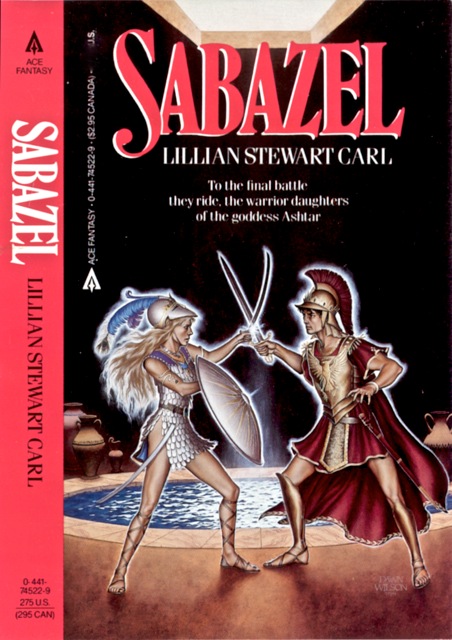
                • Cover of Sabazel
                  Sabazel

                  series · 4 books · 1985

                  similar byfantasy+4 more

                • Cover of The Firebrand
                  The Firebrand

                  Marion Zimmer Bradley · standalone novel · 1987

                  similar bymediterraneanancient worldmythic fantasyfantasygodsemotionalhistorical fantasy

                  The Firebrand is a 1987 historical fantasy novel by American author Marion Zimmer Bradley. Set in the ancient city of Troy, the novel is a retelling of Homer's epic poem the Iliad. The Firebrand is written from the point of view of Kassandra, the prophet daughter of King Priam of Troy, and also features other prominent characters from Greek mythology. As in the Iliad, Kassandra foresees catastrophe for her city, but few pay heed to her warnings. In Bradley's story, Kassandra is presented as a strong and insightful woman rather than as a sufferer of insanity.

                • Cover of The Golden Fleece and the Heroes Who Lived Before Achilles
                  The Golden Fleece and the Heroes Who Lived Before Achilles

                  Padraic Colum · standalone novel · 1921

                  similar byadventurousmediterraneanancient worldmythic fantasygods

                  A somewhat fictionalized account of ancient Greek heroes.

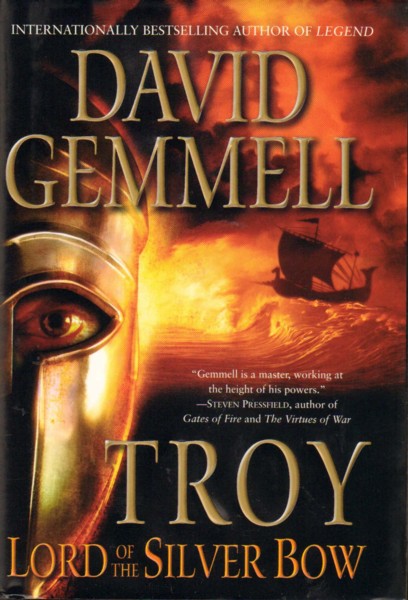
                • Cover of Troy
                  Troy

                  series · 3 books · 2005

                  similar bymediterraneanancient worldfantasyhistorical fantasy+1 more

                  David Gemmell's retelling of the Trojan War, completed by his wife Stella Gemmell after his death, follows a traumatized young prince, an independent priestess, and a vengeance-driven warrior as their lives converge on a city consumed by betrayal, ambition, and the armies gathering beyond its walls. Lord of the Silver Bow, Shield of Thunder, and Fall of Kings strip away Homer's gods in favor of a grounded, character-driven war story.

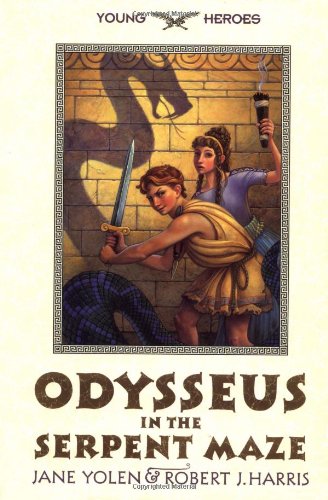
                • Cover of Young Heroes
                  Young Heroes

                  series · 4 books · 2001

                  similar byadventurousancient worldmythic fantasyfantasy+1 more

                • Cover of Stone Blind
                  Stone Blind

                  Natalie Haynes · standalone novel · 2022

                  similar bymediterraneanancient worldfantasymythic fantasygodsemotional

                  Stone Blind is a novel retelling the Greek myth of the gorgon Medusa. It was written by Natalie Haynes, a British classicist and writer. The book was longlisted for the Women's Prize for Fiction and nominated for best fiction book at the British Book Awards.

                • Cover of Singer to the Sea God
                  Singer to the Sea God

                  Vivien Alcock · standalone novel · 1992

                  similar byadventurousmediterraneanancient worldfantasymythic fantasygods

                  "[A] quest set in ancient Greece and drawing freely on its myths. Phaidon, slave in the court where his uncle Pelops is cook, is a horrified observer when Perseus turns up with Medusa's head and turns the king and his fellows to stone. But at least this affords an opportunity to escape servitude ..." --KirkusReviews.com, contemporary review (posted 2010, perhaps with later cover image)

                • Cover of The Adventures of Odysseus and the Tale of Troy
                  The Adventures of Odysseus and the Tale of Troy

                  Padraic Colum · standalone novel · 1918

                  similar byadventurousmediterraneanancient worldfantasymythic fantasy+1 more

                  Iliad and Odyssey retold in combination

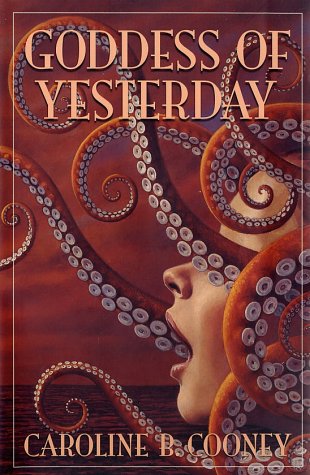
                • Cover of Goddess of Yesterday
                  Goddess of Yesterday

                  Caroline B. Cooney · standalone novel · 2002

                  similar byadventurousmediterraneanancient worldmythic fantasygodshistorical fantasy+1 more

                  Goddess of Yesterday is a 2002 novel by Caroline B. Cooney based on the Trojan War from Greek mythology. The book was nominated for the South Carolina Junior Book Award, and was a 2003 ALA Notable Children's Book for Older Readers

                • Cover of Pandora (Carolyn Hennesy)
                  Pandora (Carolyn Hennesy)

                  series · 7 books · 2007

                  similar byfantasymythic fantasygods+2 more

                • Cover of The Myth Trilogy
                  The Myth Trilogy

                  series · 3 books · 1994

                  completed

                  similar byancient worldfantasymythic fantasygods+3 more

                • Cover of Beloved of the Gods
                  Beloved of the Gods

                  series · 1 book · 2000

                  similar bymediterraneanancient worldmythic fantasygodshistorical fantasy+1 more

                • Cover of Troy
                  Troy

                  Adèle Geras · standalone novel · 2000

                  similar bymediterraneanancient worldmythic fantasyfantasygodsforbidden loveemotional

                  From the back cover of a Harcourt advance reading copy: "The siege of Troy has lasted almost ten years. Inside the walled city, food is growing scarce and the death toll is rising. From the heights of Mount Olympus, the Gods watch with interest. Bored with the endless, dreary war, Aphrodite, Goddess of Love, turns her attention to two sisters: Marpessa, who is gifted with God-sight and serves as handmaiden to Helen, the most beautiful woman in the world; and Xanthe, who is kind and loving and tends the wounded soldiers in the Blood Room. When Eros Eros fits and arrow to his bow and lets it fly, neither sister will escape its power."

                • Cover of Alderley
                  Alderley

                  series · 4 books · 1960

                  similar byfantasymythic fantasy+1 more

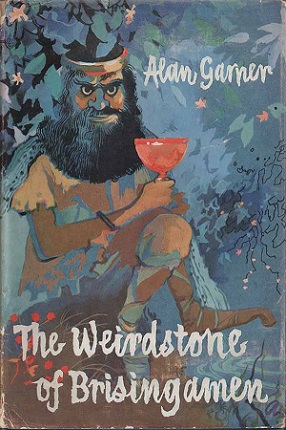
                  Alan Garner's Alderley books begin with The Weirdstone of Brisingamen (1960) and The Moon of Gomrath (1963), children's fantasies set around the real Cheshire hill of Alderley Edge and drawn from its local legends. Garner returned to the same setting and characters decades later in Boneland (2012), a far darker novel for adults in which the now-grown Colin, afflicted with amnesia covering his entire childhood, tries to piece together what really happened to him and his sister. The three books span most of Garner's writing life rather than forming one continuous trilogy.

                • Cover of Book of the Gods
                  Book of the Gods

                  series · 5 books · 1998

                  completed

                  similar byancient worldmythic fantasyfantasygods+1 more

                • Cover of Guardians Trilogy (Nora Roberts)
                  Guardians Trilogy (Nora Roberts)

                  series · 3 books · 2015

                  similar byadventurousmediterraneanfantasyemotional+2 more

                • Cover of The Sword Is Forged
                  The Sword Is Forged

                  Evangeline Walton · standalone novel · 1983

                  similar byadventurousmediterraneanancient worldmythic fantasyfantasygods

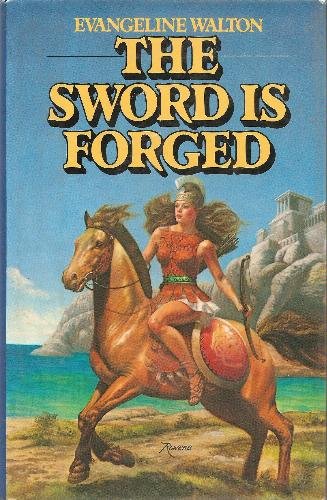
                  The Sword Is Forged is a 1983 historical fiction novel by Evangeline Walton. It is based on the story of Theseus and the Amazon queen Antiope from Greek mythology.

                • Cover of Five Children Universe
                  Five Children Universe

                  series · 27 books · 1902

                  completed

                  similar byfantasy+1 more

                  Two separate modern continuations of E. Nesbit's Psammead stories were written decades apart by different authors: Helen Cresswell's The Return of the Psammead (1992) brings the wish-granting sand fairy back for a new set of children, while Kate Saunders's Five Children on the Western Front (2014) follows the now-grown Lamb and his siblings as the First World War arrives, in a more somber sequel to Nesbit's original trilogy. Neither book is by Nesbit herself, and the two have no direct connection to each other beyond both drawing on her creation. Later writers have kept returning to Nesbit's premise long after her own trilogy ended.