More like End Zone
anchored on:literary & generalnorth americalate 20th centurywarreflective
but
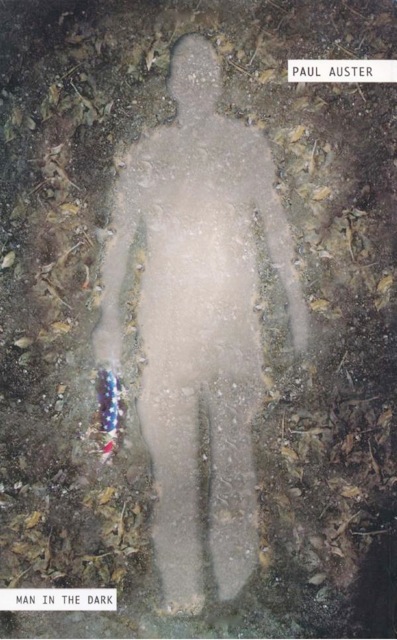
- Man in the Dark
Paul Austerstandalone novel2008
similar byliterary & generalwarreflectivenorth americaidentity
An insomniac makes up a story about a man transported to an alternate reality in which a US civil war erupted after the 2000 election.
- The Edible Woman
Margaret Atwoodstandalone novel1969
similar byliterary & generalreflectivelate 20th centurynorth americaidentity
The Edible Woman is the first published novel by Canadian writer Margaret Atwood, published in 1969. It is the story of a young woman, Marian, whose sane, structured, consumer-oriented world starts to slip out of focus. Following her engagement, Marian feels her body and her self are becoming separated. Marian begins endowing food with human qualities that cause her to identify with it, and finds herself unable to eat, repelled by metaphorical cannibalism. In a foreword written in 1979 for the Virago edition of the novel, Atwood described it as a protofeminist rather than feminist work.
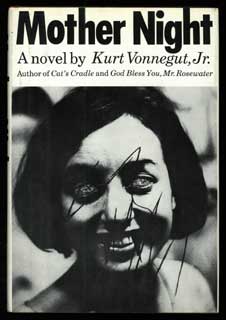
- Mother Night
Kurt Vonnegut & Jr.standalone novel1962
similar byliterary & generalwarreflectiveidentity
Howard W. Campbell Jr., an American playwright who grew up in Germany, writes his memoirs from an Israeli prison cell awaiting trial for war crimes. As the Nazis rose to power, Campbell stayed on, married a German actress, and was recruited by an American agent to serve as a double agent, broadcasting Nazi propaganda over the radio while secretly passing coded intelligence to the Allies. The catch, as Campbell tells it, is that he became one of the war's most effective propagandists in the process, whatever his loyalties. Kurt Vonnegut's darkest novel asks what a person becomes when the mask he wears for a cause is indistinguishable from his face.
- Phases of Gravity
Dan Simmonsstandalone novel1989
similar byliterary & generalreflectivelate 20th centurynorth americaidentity
Follows Richard Baedecker, an Apollo astronaut who walked on the moon, through his midlife crisis. He meanders through India, Glen Oak Illinois, the mountains of Colorado, and the coastline of Oregon, checking up on his son and his former Apollo crewmates.
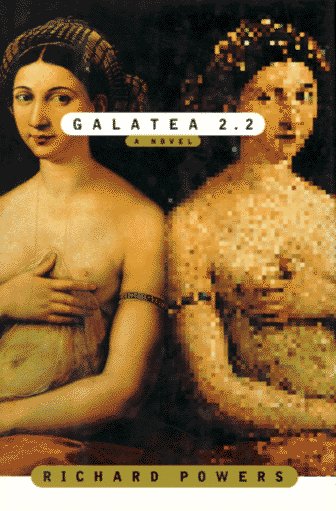
- Galatea 2.2
Richard Powersstandalone novel1995
similar byliterary & generalreflectivelate 20th centurynorth americaidentity+1 more
Galatea 2.2 is a 1995 pseudo-autobiographical novel by American writer Richard Powers and a contemporary reworking of the Pygmalion myth. The book's narrator shares the same name as Powers, with the book referencing events and books in the author's life while mentioning other events that may or may not be based upon Powers' life.
- Beautyland
Marie-Helene Bertinostandalone novel2024
similar byliterary & generalreflectivenorth americalate 20th century+1 more
Beautyland is a novel by Marie-Helene Bertino. It was published on January 16, 2024, by Farrar, Straus and Giroux. The book follows Adina, who is sent by aliens before birth to find out if they could live on earth and reports to them via a fax machine. The book starts with Adina's birth, which takes place in 1977 when Voyager 1 was launched.
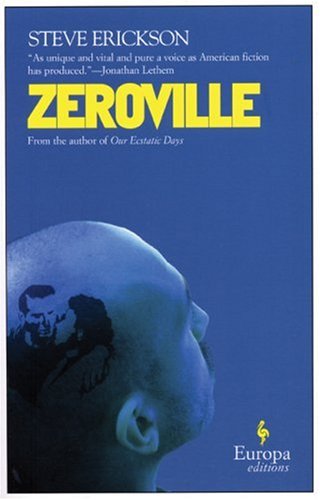
- Zeroville
Steve Ericksonstandalone novel2007
similar byliterary & generalreflectivenorth americalate 20th century+2 more
Zeroville is a 2007 novel by Steve Erickson about the upheaval in the film industry in the 1970s. It has been translated into French, Spanish, Italian, Japanese and other languages. It was named one of the best novels of the year by Newsweek, the Washington Post BookWorld and the Los Angeles Times Book Review among others, and in winter 2008 was one of the five favorite novels of 800 novelists and critics in a poll of the National Book Critics Circle. The novel was also shortlisted for the Believer Book Award.
- Life Before Man
Margaret Atwoodstandalone novel1979
similar byliterary & generalreflectivenorth americalate 20th century+1 more
Life Before Man is a novel by Canadian writer Margaret Atwood. It was first published by McClelland and Stewart in 1979 and was a finalist for the Governor General's Award.
- Hystopia
David Meansstandalone novel2016
similar byliterary & generalwarnorth americachallenging+1 more
Hystopia is a 2016 novel by David Means. Literary critic Christian Lorentzen described the novel as "a counterfactual narrative by a Vietnam veteran, named Eugene Allen about his experience in a therapeutic, psychedelics-based trauma recovery program initiated, in the novel's alternate history, by John F. Kennedy." In July 2016, it was longlisted for the 2016 Man Booker Prize.
- The House on Mango Street
Sandra Cisnerosstandalone novel1984
similar byliterary & generalreflectivenorth americalate 20th centuryidentity
In a series of inter-connected vignettes, this is the story of a young girl growing up in the Hispanic quarter of Chicago. Contains magical realism.
- Todd Family
series2 books2013
similar byliterary & generalwarreflective+1 more
Kate Atkinson's Life After Life gives Ursula Todd, born on a snowy night in 1910, a strange gift: whenever she dies, she's born again into a slightly altered version of the same life, gradually piecing together enough intuition across her many deaths to try to change the course of the twentieth century's worst events. The companion novel A God in Ruins turns to Ursula's brother Teddy, a bomber pilot, following his one, single life forward from the war through old age. The two books share a family and a set of preoccupations -- memory, war, chance -- without forming a conventional sequential series.
- Oh Pure and Radiant Heart
Lydia Milletstandalone novel2005
similar byliterary & generalwarreflectivenorth america
Oh Pure and Radiant Heart imagines a world in which the three geniuses who were key to the invention of the atom bomb--physicists J. Robert Oppenheimer, Enrico Fermi and Leo Szilard--are displaced to contemporary America at the moment history's first mushroom cloud rises over the New Mexico desert in July 1945. When the scientists appear in Santa Fe in 2003, Ann, a reference librarian, and her doting husband Ben take them in, and with the long-dead physicists for houseguests are swept up in a quixotic and calamitous quest.
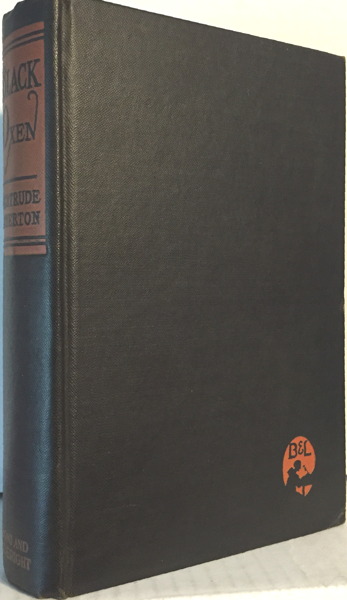
- Black Oxen
Gertrude Athertonstandalone novel1923
similar byliterary & generalreflectivenorth americaidentity
"... Black Oxen was written in a burst of mental energy after Gertrude Atherton herself received an experimental anti-aging treatment; the introduction and appendices to this edition explore parallels between Atherton's medical treatment and that of her rejuvenated protagonist, as well as provide selections from other contemporary writings on aging, science, and the role of women in the 1920s. ..." --description of the 2012 Broadview ed. at Amazon 2019-09-05 (read in full, {{ASIN|1554810256}}
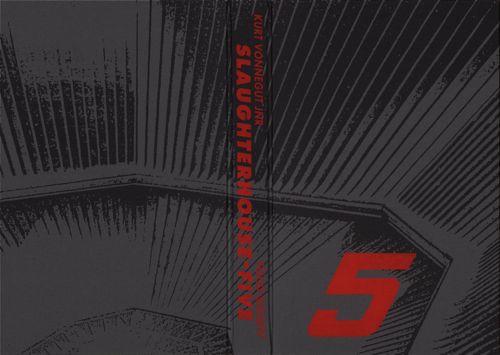
- Slaughterhouse-Five or the Children's Crusade: A Duty-Dance with Death
Kurt Vonnegut & Jr.standalone novel1969
similar byliterary & generalwarreflective
Vonnegut opens in his own voice, describing the twenty years it took him to face writing about surviving the firebombing of Dresden as a POW. He then hands the story to Billy Pilgrim, an awkward, fatalistic American chaplain's assistant swept into the Battle of the Bulge and captured by German forces alongside a soldier who dies blaming him for it. Imprisoned in a disused slaughterhouse in Dresden, Billy survives the firebombing that follows, and, we're told upfront, has also come 'unstuck in time,' living his life out of order, including a stretch on the alien world of Tralfamadore. Vonnegut's best-known novel folds war memoir into science fiction and black comedy.
- Moon Palace
Paul Austerstandalone novel1989
similar byliterary & generalreflectivenorth americalate 20th centuryidentity
Moon Palace is a novel written by Paul Auster that was first published in 1989.
- My Life As an Ice Cream Sandwich
Ibi Zoboistandalone novel2019
similar byliterary & generalreflectivenorth americalate 20th centuryidentity
Twelve-year-old Ebony-Grace Norfleet has lived with her beloved grandfather Jeremiah in Huntsville, Alabama ever since she was little. As one of the first black engineers to integrate NASA, Jeremiah has nurtured Ebony-Grace’s love for all things outer space and science fiction—especially Star Wars and Star Trek. But in the summer of 1984, when trouble arises with Jeremiah, it’s decided she’ll spend a few weeks with her father in Harlem. Harlem is an exciting and terrifying place for a sheltered girl from Hunstville, and Ebony-Grace’s first instinct is to retreat into her imagination. But soon 126th Street begins to reveal that it has more in common with her beloved sci-fi adventures than she ever thought possible, and by summer's end, Ebony-Grace discovers that Harlem has a place for a girl whose eyes are always on the stars.
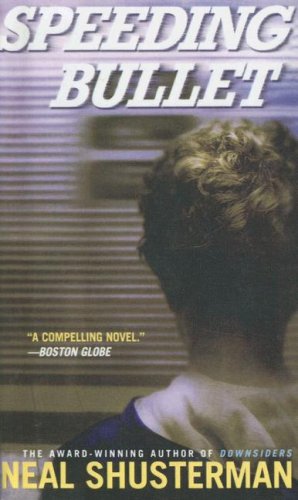
- Speeding Bullet
Neal Shustermanstandalone novel1991
similar byliterary & generalreflectivenorth americalate 20th centuryidentity
After becoming famous and getting the attention of the daughter of a wealthy New York City developer following his rescue of a little girl from a speeding subway train, Nick looks for other people to rescue.
- Even Cowgirls Get the Blues
Tom Robbinsstandalone novel1976
similar byliterary & generalnorth americalate 20th centuryidentity
Sissy Hankshaw was born with unusually oversized thumbs, and instead of seeing them as a flaw turns them into a gift: the greatest hitchhiking thumbs in America, carrying her across the country on a restless road life. Her travels take her to New York, where she becomes star model for the Countess, a feminine-hygiene tycoon, before a stint at a Dakota ranch called the Rubber Rose brings her into the orbit of Bonanza Jellybean's cowgirls and a mountain mystic known only as the Chink. Around Sissy's wandering, Robbins builds a philosophical comedy about freedom and gender, with a flock of endangered whooping cranes crossing her path. Tom Robbins's best-known novel.
- American Psycho
Bret Easton Ellisstandalone novel1991
similar byliterary & generalnorth americalate 20th centurychallenging+1 more
American Psycho is a horror novel by American writer Bret Easton Ellis, published in 1991. The story is told in the first-person by Patrick Bateman, a wealthy, narcissistic, and vain Manhattan investment banker who lives a double life as a serial killer. Alison Kelly of The Observer notes that while "Some countries [deem it] so potentially controversial that it only to be sold as shrink-wrapped", "critics rave about it" and "academics revel in its transgressive and postmodern qualities".
- Time's Arrow
Martin Amisstandalone novel1991
similar byliterary & generalwaridentitychallenging+1 more
From Amazon description: In this icy, knife's-edge story of a life that progresses backward through time, unfolding into one of the darkest episodes of the 20th century, Amis ("at his intriguing, heedful, and powerful best" —Time Out), finds a chillingly original approach to the Holocaust in fiction • From the acclaimed author of Zone of Interest "The narrative moves with irresistible momentum.... [Amis is] a daring, exacting writer willing to defy the odds in pursuit of his art." —Newsday Tod. T. Friendly is living his life in reverse. Doctor Friendly has just died, but he moves "out of blackest sleep" to find himself surrounded by doctors and on the deathbed of a man in whose body he is imprisoned. After weeks of improving in the hospital, he is sent home to his affable, melting-pot, primary-colors existence in suburban America. As Friendly breaks up with his lovers in a prelude to seducing them and mangles his patients before he sends them home, his life races backward toward the one appalling moment in modern history when such reversals make sense. From the fresh-cut lawns of his retirement to the hustle of New York, and then back to the boat which reverses his course to the war-torn Europe Friendly came from, Amis brings the steeliest nerve to the job of realizing the novel's inevitable logic. Trapped in his body from grave to cradle, Friendly's consciousness can only watch as he struggles to make sense of the good doctor's most ambitious project yet—the final solution.
- Underworld
Don DeLillostandalone novel1997
similar byliterary & generalreflectivenorth americaidentitychallenging
Underworld is a 1997 novel by American writer Don DeLillo. The novel is centered on the efforts of Nick Shay, a waste management executive who grew up in the Bronx, to trace the history of the baseball that won the New York Giants the pennant in 1951, and encompasses numerous subplots drawn from American history in the second half of the twentieth century. Described as both postmodernist and a reaction to postmodernism, it examines themes of nuclear proliferation, waste, and the contribution of individual lives to the course of history.
- The Day of Creation
J. G. Ballardstandalone novel1987
similar byliterary & generalreflectivelate 20th centurychallenging
Dr. John Mallory has spent six purposeless months running a WHO clinic in a corner of Central Africa gutted by guerrilla war, with almost no patients to treat, when he throws himself into a project: bringing water to the parched land, with dreams of blooming the Sahara. When his drilling improbably succeeds and unleashes a river, Mallory's fixation curdles into obsession -- he begins to identify with the river as an extension of himself, and assembles an expedition, including a girl he takes for a water spirit and a half-blind documentary filmmaker, to follow it upstream toward its source. A visionary novel by J. G. Ballard.
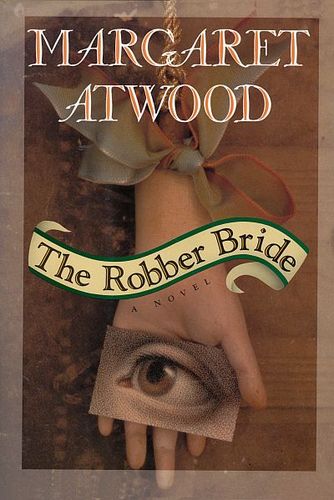
- The Robber Bride
Margaret Atwoodstandalone novel1993
similar byliterary & generalreflectivenorth americaidentity
The Robber Bride is a novel by Canadian writer Margaret Atwood, first published by McClelland and Stewart in 1993.
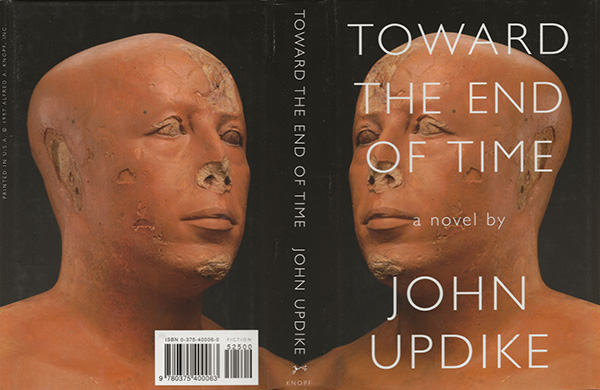
- Toward the End of Time
John Updikestandalone novel1997
similar byliterary & generalreflectivenorth americaidentity+1 more
From the front flap of the Knopf first edition: "Ben Turnbull, the hero of John Updike's eighteenth novel, is a sixty-six-year-old retired investment counselor living north of Boston in the year 2020. A recent war between the United States and China has thinned the population and brought social chaos. The dollar has been locally replaced by Massachusetts scrip; instead of taxes, one pays protection money to competing racketeers. Nevertheless, Ben's life, traced by his journal entries over the course of a year, retains many of its accustomed comforts, as supervised by his vibrant wife, Gloria. He plays golf; he pays visits to his five children and ten grandchildren. Something of a science buff, he finds his personal history caught up in the disjunctions and vagaries of the "many-worlds" hypothesis derived from the indeterminacy of quantum theory. His identity branches into variants extending back through history and ahead in the evolution of the universe, as both it and his own mortal, nature-enshrouded existence move toward the end of time."