Loreful
HomeDiscover
Search series, authors…⌘K
Loreful

Reading orders for SF/F series and shared universes — with your place kept in every one.

Explore

UniversesSeriesWorksAuthorsAtlas

Help

FAQAboutSite map

Account & legal

Sign inCreate accountPrivacyTerms

Data

Built on ISFDB, Wikipedia, Wikidata and Open Library. Curated reading orders carry their reasoning on the page; the rest follow publication order. Data sources & licenses

© Loreful · data: ISFDB · CC BY

More like Endgame

anchored on:science fictiondemonsnear futuredarktensehorror+1 more

but

Mood

The mood the book leaves you in.

  • The reading experience is propelled by journeys, exploration, and physical risk; excitement and forward momentum dominate over dread or introspection.
  • Joy and loss are deliberately mixed; the resolution grants characters something real while taking something else away, leaving warmth and sorrow together.
  • The book demands work from the reader — dense prose, difficult structure, unfamiliar ideas, or morally uncomfortable material — as part of its intended effect.
  • Grim events, cruelty, or despair dominate the atmosphere, and the book does not soften them with comfort or comic relief.
  • The atmosphere is quietly unsettling — wrongness, unease, and the uncanny pervade the book without necessarily escalating into overt horror.
  • The book is built to move the reader; character feeling is foregrounded and major scenes aim at a strong emotional response.
  • Humor is a primary aim and the prose plays for laughs — comic situations, wit, or dialogue produce sustained comedy, not occasional levity.
  • The book insists that things can improve; effort and decency are shown to matter, and the arc bends toward better outcomes even through hardship.
  • The book teaches as it goes — real facts, history, science, or craft are conveyed in enough depth that learning is part of the reading experience.
  • The book is designed to uplift and motivate, presenting perseverance or achievement in a way that invites the reader to aspire or act.
  • The overall register is cheerful and easygoing; stakes are kept gentle and the book avoids dwelling on pain or dread.
  • Withheld information drives the experience; the book sustains enigmas and secrets the reader wants resolved, whatever its genre.
  • The book is contemplative and inward-looking, giving more weight to thought, memory, and meaning than to external events.
  • The book works as comfort reading — low tension, a soothing pace, and an atmosphere the reader can unwind in.
  • Grief, loss, or melancholy set the dominant register, and the book lets sorrow stand rather than resolving it into comfort.
  • Sustained suspense is the point; the book keeps the reader braced for what happens next through danger, pressure, or impending revelation.
  • Playful invention and charm define the register — fanciful conceits, light absurdity, and a narration that delights in its own oddity.

About

What the story runs on.

  • Stories in which extraterrestrial beings are central — as characters, cultures, or the object of the plot.
  • Stories about venturing into space to explore — survey missions, astronauts, and the frontier of the unknown beyond Earth.
  • Stories structured as a quest — a journey undertaken to find, deliver, or destroy something of great import.
  • Stories in which staying alive against nature, catastrophe, or scarcity is the central problem.
  • Stories of lovers kept apart by law, family, faith, or station, where the obstacle to love is the plot.
  • Stories of growing up — a young protagonist crossing from childhood into adult knowledge and responsibility.
  • Stories about who a character truly is — self-discovery, doubled lives, and the search for a self.
  • Stories about mental unraveling — descent into madness, delusion, and minds at war with themselves.
  • Stories in which a buried family truth — hidden parentage, crimes, or shames — surfaces and reorders the present.
  • Stories driven by maneuvering for power — factions, conspiracies, and statecraft conducted in shadow.
  • Stories in which war itself is the subject — combat, occupation, and what warfare does to soldiers and civilians.
  • Stories organized around investigating a killing — the case, the clues, and the pursuit of the killer, in any genre's clothing.

Shelf

Where it sits in the library.

    • Fiction built on magic or other supernatural elements that have no scientific explanation.
    • Secondary-world fantasy at large scale, where the fate of nations or the world turns on the protagonists' struggle.
    • Fantasy set in a recognizably modern city or contemporary world where the supernatural intrudes on everyday life.
    • Fantasy that blends in horror's atmosphere and imagery, keeping a fantastical frame around grim or frightening material.
    • Action-driven fantasy following warriors or rogues with personal stakes against sorcerous threats, rather than world-spanning conflicts.
    • Fantasy set in a real historical period or a close analogue of one, with magic woven into the era.
    • Fantasy in which protagonists cross from the ordinary world into another world through a portal or similar passage.
    • Fiction that retells or reworks a traditional fairy tale in a new form or setting.
    • Fantasy drawing directly on myths, legends, and folklore, retelling them or building on their figures and logic.
    • Fantasy of ghosts, vampires, shapeshifters, psychics, and similar phenomena, usually set in an otherwise ordinary world.
    • Fiction mixing science-fictional trappings with overtly magical or impossible elements in one setting.
    • Low-stakes fantasy emphasizing comfort, community, and everyday pleasures over conflict and peril.
    • Speculative fiction of pervasive moral ambiguity, violence, and cynicism that rejects heroic conventions — fantasy and SF alike.
      • Fiction that extrapolates from science and technology — future societies, space travel, or speculative inventions — within at least nominally natural laws.
      • Science fiction of interstellar scope — starships, galactic polities, and adventure across star systems.
      • Science fiction committed to scientific rigor, where technical plausibility constrains the story.
      • Science fiction centered on armed forces and warfare, told largely from a military point of view.
      • Science fiction of networked, corporate-dominated near futures, pairing high technology with social decay.
      • Science fiction styled on nineteenth-century steam-powered technology, often in a Victorian or pseudo-Victorian setting.
      • Fiction depicting an oppressive or catastrophic society, presented as a warning.
      • Fiction set after civilization's collapse, following survivors in the ruins of the old world.
      • Fiction in which characters move between past and future, and the mechanics or consequences of that travel drive the plot.
      • Fiction exploring a world where a historical event went differently and history diverged from ours.
      • Science fiction about humanity's first encounter and communication with an alien intelligence.
      • Science fiction in which extraterrestrial forces attack or occupy Earth and humanity resists.
      • Fiction whose primary aim is to frighten or unsettle the reader through dread, menace, or the monstrous.
      • Horror of vast, indifferent, incomprehensible entities before which humanity is insignificant, in the Lovecraft tradition.
      • Horror of decaying houses, buried family secrets, and oppressive atmosphere in the Gothic literary tradition.
      • Horror centered on hauntings and the returning dead.
      • Horror located in the mind — paranoia, obsession, and unreliable perception rather than external monsters.
      • Horror built around the reanimated dead and survival amid their outbreaks.
      • Horror defined by explicit, transgressive gore that refuses to cut away from violence.
      • Speculative fiction of the strange and uncanny that resists both natural explanation and standard genre categories.
      • Fiction organized around solving a crime or puzzle, typically following an investigator toward the identification of a culprit.
      • A puzzle-first mystery that lays out clues so the culprit's identity can be deduced before the reveal.
      • Crime fiction of moral ambiguity, fatalism, and hard-edged style, set among the corrupt and the doomed.
      • A mystery following the realistic routines of police work — forensics, interviews, and case-building.
      • A gentle mystery with an amateur sleuth, a small community, and violence kept off the page.
      • A mystery set in a past era, where the investigation works within that period's methods and society.
      • Fast-paced fiction driven by imminent danger, pursuit, or high-stakes conspiracy, built to sustain tension.
      • A thriller of espionage — agents, tradecraft, and intelligence services in conflict.
      • A thriller centered on lawyers and the courtroom, where litigation carries the suspense.
      • A thriller driven by detailed contemporary or near-future technology, often military or scientific.
      • A thriller whose tension comes from mental states and manipulation between characters rather than external action.
      • Fiction whose central plot is a romantic relationship and its development toward an emotionally satisfying resolution.
      • Romance in which one or both partners are supernatural beings, blending fantasy elements into the love story.
      • A fantasy-romance hybrid in which the romantic arc and the fantasy plot carry equal weight.
      • Romance set in a past era, with courtship shaped by the period's society and manners.
      • Romance set in the present day, without supernatural or historical elements.
      • Fiction set in a real past period, where the historical setting materially shapes characters and events.
        • General and literary fiction emphasizing prose style, character interiority, or formal ambition over genre plot conventions.
        • Fiction in a realistic world where magical events occur and are treated as ordinary, in the tradition of Latin American literature.
        • Fiction that ridicules people, institutions, or society in order to criticize them.
        • Fiction of dreamlike, irrational imagery and logic that breaks from realistic representation.
        • Fiction that plays with narrative convention through metafiction, fragmentation, and self-reference.
        • Fiction propelled by journeys, exploration, and physical peril, where action and survival carry the plot.
        • Adventure fiction of ships and seafaring — naval engagements, voyages, and life at sea.
        • Fiction of the American frontier West — gunmen, ranchers, and lawmen, typically in the late nineteenth century.
        • Fiction centered on soldiers, campaigns, and the experience of warfare, historical or imagined.
          • Fiction written primarily to amuse, using comedic situations, wit, or parody as its organizing principle.
            • Multi-generational fiction following a family or dynasty across decades, with inheritance and kinship as the through-line.
              • Fiction whose world runs on explicit game mechanics — levels, stats, and skills that characters can see and exploit.
                • Fiction about costumed or superpowered heroes and their conflicts with comparable villains.

                Practical

                How long a commitment, whether it stands alone, and whether it has finished.

                Tap a chip to ask for it · tap again to rule it out · once more to clear. Numbers show what would be left.

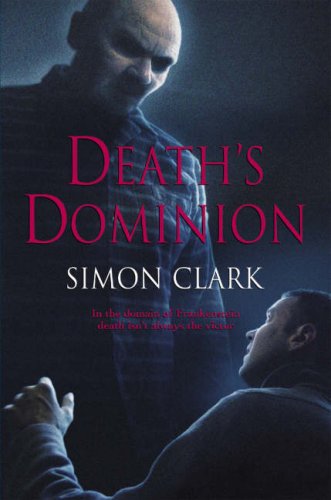
                • Cover of Death's Dominion
                  Death's Dominion

                  Simon Clark · standalone novel · 2006

                  similar bynear futurescience fictionundeaddarkhorrortense

                  Today science raises the dead to serve the living, but humanity begins to despise the risen dead who toil among them. After all, what does it feel like to shake hands with a corpse? Or converse with a man who died last year? Humankind vows to destroy every last one of its 'monsters'. Soldiers and civilians alike destroy these gentle creatures in a terrifying killing spree. The monsters can't fight back, it's not in their nature, and when caught they must submit to their destruction. Until one of them retaliates against humanity with shocking brutality. Doctor Paul Marais will discover that Dominion is far more than just a killing machine. In this domain, death isn't always the victor.

                • Cover of The Passage
                  The Passage

                  series · 3 books · 2010

                  similar bynear futuredarkscience fictionhorrortense

                  The Passage is a novel series by Justin Cronin. There are three published books in the series. The film rights were acquired by Fox Entertainment Group in 2007 for adaptation into a film trilogy, but after 12 years of development and planning, it was changed to a television series, which premiered in January 2019 and was canceled after the first season.

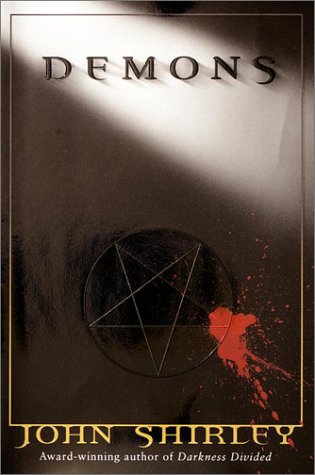
                • Cover of Demons
                  Demons

                  John Shirley · standalone novel · 2002

                  similar bydemonsnear futuredarkscience fictionhorrortense

                  Writers from Clive Barker to Bruce Sterling and Roger Zelazny have praised John Shirley's searing, apocalyptic visions of postmodern hell on earth. Now this perversely brilliant author, one of the seminal representatives on the cyberpunk movement, unleashes his newest masterpiece.DEMONSIn a future uncomfortably close to the present day, the apocalypse has surpassed all expectations. Hideous demons roam the streets in an orgy of terror, drawing pleasure from torturing humans as sadistically as possible. Divided into seven clans, these grisly invaders--gnashing, writhing, bloodthirsty monsters--seem horrifically to belong in our world.Ira, a young San Francisco artist, becomes involved with a strange group of scientists and philosophers desperately trying to end the bloody siege. Yet through it all, Ira continues to paint--for in his canvasses lie crucial clues to the demons' origins.Yet the demons draw their strength from an all-too-familiar evil--a deadly malevolence supported by some of the greatest powers on earth, concealed beneath the trappings of status, success, and abused power. Ira and his allies-- including a compelling young seeress--come to believe these demons didn't just appear. They were summoned. But the most shocking revelation is yet to come . . .EXCLUSIVE TO THIS EDITION: The original novella Demons was published as an acclaimed, limited edition hardcover which Publishers Weekly called a "mini-masterpiece." Now the terror continues, as the sequel story, "Undercurrents," takes the reader on a macabre journey into the center of the conspiracy that may lay waste to the Earth. From the Hardcover edition.

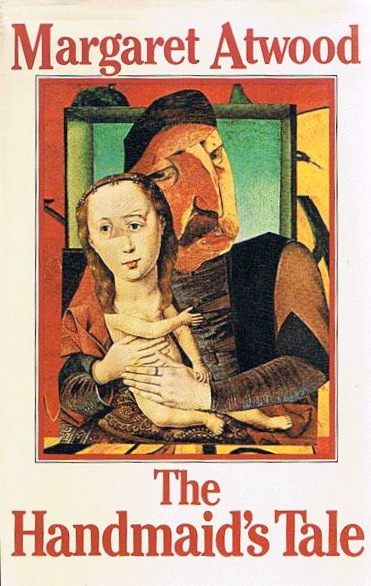
                • Cover of The Handmaid's Tale
                  The Handmaid's Tale

                  series · 3 books · 1985

                  similar bynear futurescience fictiondarktense

                  The Handmaid's Tale is Margaret Atwood's 1985 novel set in Gilead, a totalitarian theocracy that has overthrown the United States and forces fertile women into reproductive servitude as Handmaids; it is narrated by one such woman, Offred. Atwood returned to the world in her 2019 sequel The Testaments, set fifteen years later and narrated by three women, including the regime's Aunt Lydia. Together the two novels move from Gilead's grip on power toward the first cracks in it.

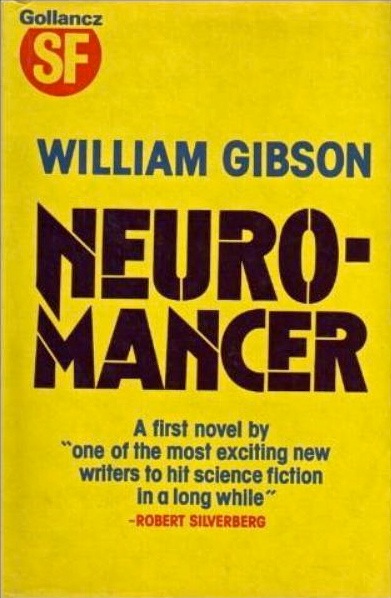
                • Cover of Sprawl Trilogy
                  Sprawl Trilogy

                  series · 10 books · 1981

                  similar bynear futurescience fictiontensedark

                  The Sprawl Trilogy is William Gibson's foundational cyberpunk sequence: Neuromancer (1984), in which hacker Case is drawn into a high-stakes heist alongside an artificial intelligence and a damaged ex-soldier, followed by Count Zero (1986) and Mona Lisa Overdrive (1988), which widen the same near-future world of corporate power and networked cyberspace to new characters. Johnny Mnemonic, an early short story set in the same fictional milieu, predates the novels and introduces the courier Molly Millions before her role in the trilogy. Together these works established much of cyberpunk's visual and thematic vocabulary.

                • Cover of Swan Song
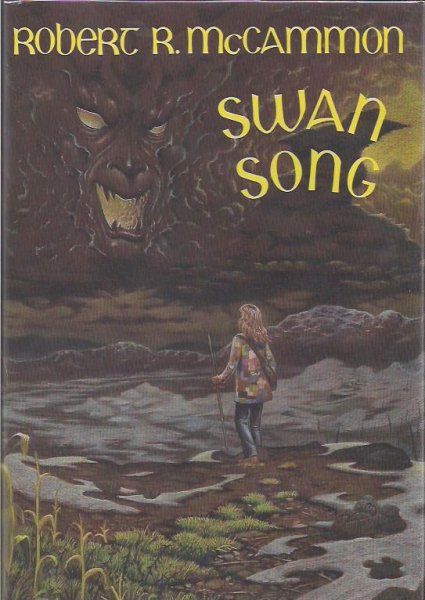
                  Swan Song

                  Robert R. McCammon · standalone novel · 1987

                  similar bynear futuredarkscience fictionhorrortense

                  Swan Song is a 1987 post-apocalyptic horror novel by American novelist Robert R. McCammon. Published June 1, 1987, the novel describes the aftermath of a nuclear war that provokes an evolution in humankind. Swan Song won the 1987 Bram Stoker award, tying with Stephen King's Misery.

                • Cover of The Shockwave Rider
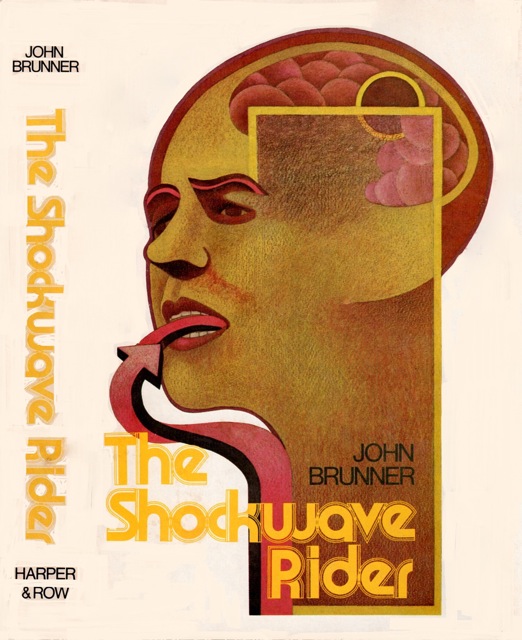
                  The Shockwave Rider

                  John Brunner · standalone novel · 1975

                  similar bynear futurescience fictiontensedark

                  The Shockwave Rider is a science fiction novel by John Brunner, originally published in 1975. It is notable for its hero's use of computer hacking skills to escape pursuit in a dystopian future, and for the coining of the word "worm" to describe a program that propagates itself through a computer network. It also introduces the concept of a Delphi pool, perhaps derived from the RAND Corporation's Delphi method – a prediction market on world events which bears close resemblance to DARPA's controversial and cancelled Policy Analysis Market.

                • Cover of Blade Runner Universe
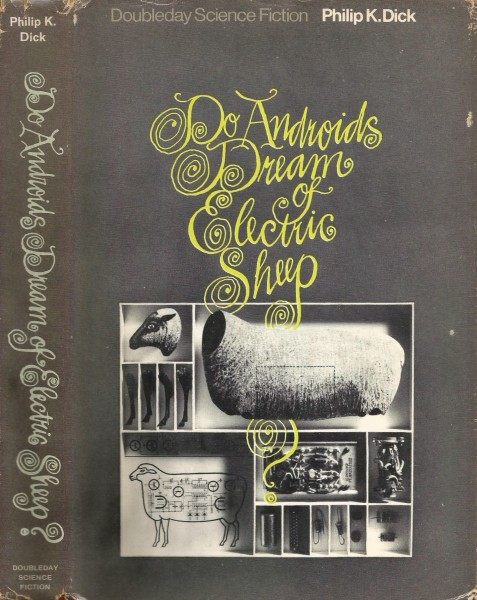
                  Blade Runner Universe

                  series · 6 books · 1968

                  similar bynear futurescience fictiondark+1 more

                  Philip K. Dick's 1968 novel Do Androids Dream of Electric Sheep? follows bounty hunter Rick Deckard as he tracks escaped androids through an irradiated, near-abandoned San Francisco, using the hunt to probe questions of empathy and what separates human from machine. The novel became the basis for Ridley Scott's 1982 film Blade Runner, and Marvel Comics later published an illustrated adaptation of that film. Together the two trace the story's path from prose original to screen and comic-page adaptation.

                • Cover of The Long Walk
                  The Long Walk

                  Stephen King · standalone novel · 1979

                  similar bynear futuredarkscience fictionhorrortense

                  The Long Walk is a dystopian horror novel by American writer Stephen King, published in 1979, under the pseudonym Richard Bachman. Set in a dystopian alternative version of the United States ruled by a totalitarian regime, the plot follows the contestants of a grueling annual walking contest. While not the first of King's novels to be published, The Long Walk was the first novel he wrote, having begun it in 1966–67 during his freshman year at the University of Maine, some eight years before his first published novel, Carrie, was released in 1974.

                • Cover of The Children of Men
                  The Children of Men

                  P. D. James · standalone novel · 1992

                  similar bynear futurescience fictiondarktense

                  "The human race has become infertile, and under the despotic rule of Xan Lyppiatt, the Warden of England the old are despairing and the young cruel. Theo Faren, a cousin of the Warden, lives a solitary life in this ominous atmosphere. That is, until a chance encounter with a young woman leads him into contact with a group of dissenters. Suddenly his life is changed irrevocably, as he faces agonising choices which could affect the future of mankind." (pdjames.co.uk)

                • Cover of Rosemary Reilly
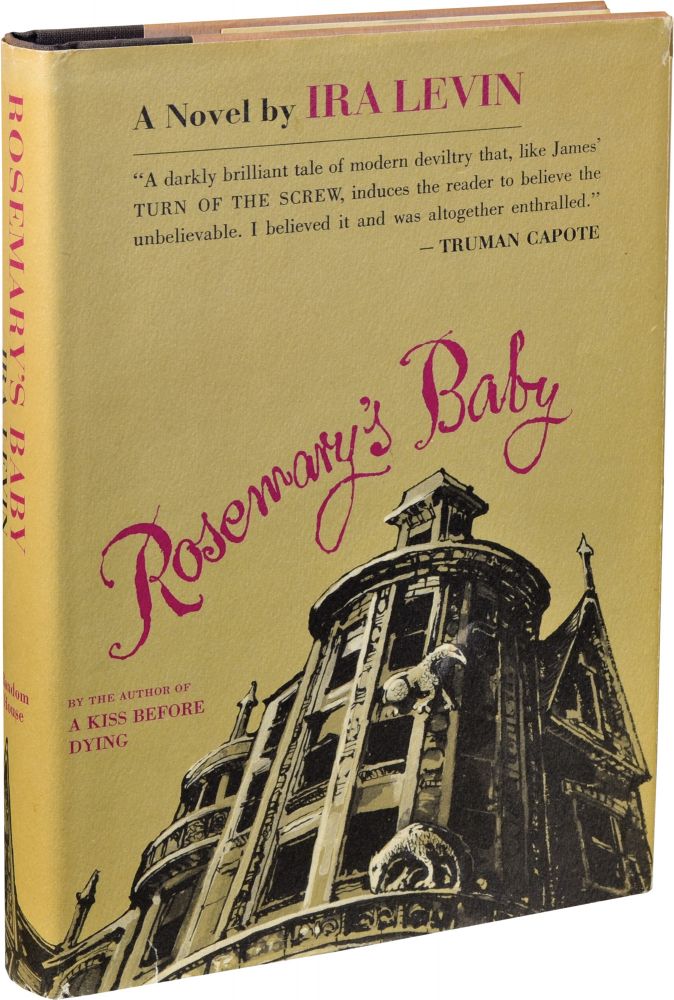
                  Rosemary Reilly

                  series · 2 books · 1967

                  completed

                  similar bydemonstensehorror+2 more

                  Rosemary's Baby follows a young wife in a Gothic Manhattan apartment building who grows increasingly convinced that her elderly neighbors, and even her own husband, are part of a conspiracy surrounding her pregnancy. Ira Levin returned to the character thirty years later in the 1997 sequel Son of Rosemary. Together the two novels form a short, self-contained horror series about faith, control, and motherhood.

                • Cover of The Sheep Look Up
                  The Sheep Look Up

                  John Brunner · standalone novel · 1972

                  similar bynear futurescience fictiondark+1 more

                  The Sheep Look Up is a 1972 dystopian science fiction novel by British author John Brunner, dealing with the deterioration of the environment in the United States. It was nominated for the 1972 Nebula Award for Best Novel.

                • Cover of Level 7
                  Level 7

                  Mordecai Roshwald · standalone novel · 1959

                  similar bynear futurescience fictiondarktense

                  Level 7 is a 1959 science fiction novel by American writer Mordecai Roshwald. It is told from the first-person perspective of a modern soldier, X-127, living in the underground military complex Level 7, where he and several hundred others are expected to reside permanently. X-127 fulfills the role of 'push-button' offensive initiator of his nation's nuclear weapons capacity against an unspecified enemy. X-127 narrates life within a deep shelter before, during and after a nuclear war that wipes out the human species.

                • Cover of Make Room! Make Room!
                  Make Room! Make Room!

                  Harry Harrison · standalone novel · 1966

                  similar bynear futurescience fictiondarktense

                  Make Room! Make Room! is a 1966 science fiction novel written by Harry Harrison exploring the consequences of both unchecked population growth on society and the hoarding of resources by a wealthy minority. It was originally serialized in Impulse magazine.

                • Cover of Earthworks
                  Earthworks

                  Brian W. Aldiss · standalone novel · 1965

                  similar bynear futurescience fictiondarktense

                  Earthworks is a 1965 dystopian science fiction novel by British science fiction author Brian Aldiss. The novel draws its premise from prevalent fears about population growth and overcrowding of the Earth.

                • Cover of The Running Man
                  The Running Man

                  Stephen King · standalone novel · 1982

                  similar bynear futurescience fictiontensedark

                  The Running Man is a dystopian thriller novel by American writer Stephen King, first published under the pseudonym Richard Bachman in 1982 as a paperback original. It was collected in 1985 in the omnibus The Bachman Books. The novel is set in a dystopian United States during the year 2025, in which the nation's economy is in ruins and world violence is rising. The story follows protagonist Ben Richards as he participates in the reality show The Running Man, in which contestants win money by evading a team of hitmen sent to kill them.

                • Cover of The Windup Universe
                  The Windup Universe

                  series · 3 books · 2005

                  similar bynear futurescience fictiondark+1 more

                • Cover of Deadweight
                  Deadweight

                  series · 3 books · 2019

                  similar bynear futurescience fictiondarkhorrortense

                • Cover of Rogue Moon
                  Rogue Moon

                  Algis Budrys · standalone novel · 1960

                  similar bynear futurescience fictiontense+1 more

                  A project to transport humans by matter transmission becomes the means to send explorers to the Moon when the US discovers an alien artifact on the dark side, but anyone who enters dies, so a hardened adventurer is given the job.

                • Cover of To the Devil - a Daughter
                  To the Devil - a Daughter

                  Dennis Wheatley · standalone novel · 1953

                  similar bydemonsdarkhorrortense

                  Beneath the azure sky of the French Riviera, Christina Mordant looks and behaves like any other attractive girl. But each night as darkness falls, the demon within her betrays its presence. A thousand miles away, deep in the Essex marshes, a priest of Satan is about to achieve his life's ambition: Canon Copely-Syle of Bentford Priory prepares for the virgin sacrifice which will give breath to the foul abomination he has created...

                • Cover of Gravity
                  Gravity

                  Tess Gerritsen · standalone novel · 1999

                  similar bynear futurescience fictiontensedark

                  Medical thriller set aboard the International Space Station where astronauts are dying one by one from a mysterious disease. Dr Emma Watson is a research physician on a mission to study living organisms in space. But the mission aboard the space station turns into a nightmare.

                • Cover of Farnham's Freehold
                  Farnham's Freehold

                  Robert A. Heinlein · standalone novel · 1964

                  similar bynear futurescience fictiontense+1 more

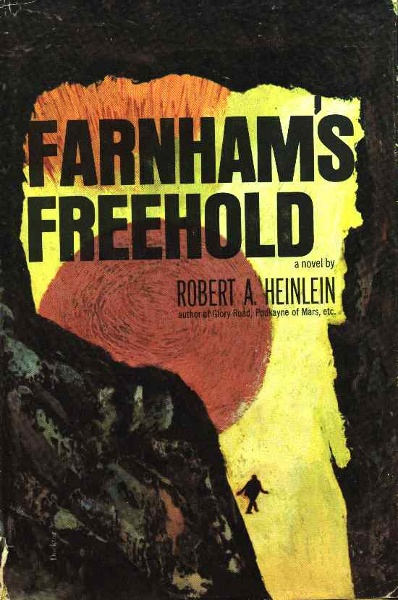
                  Farnham's Freehold is a science fiction novel by American writer Robert A. Heinlein. A serialized version, edited by Frederik Pohl, appeared in Worlds of If magazine. The complete version was published in novel form by G. P. Putnam later in 1964.

                • Cover of The Season of Passage
                  The Season of Passage

                  Christopher Pike · standalone novel · 1992

                  similar bynear futurescience fictionhorrordarktense

                  Dr. Lauren Wagner was a celebrity. She was involved with the most exciting adventure mankind had ever undertaken. The whole world admired and respected her. But Lauren knew fear. Inside--voices entreating her to love them. Outside--the mystery of the missing group that had gone before her. The dead group. But were they simply dead? Or something else? A terrifying novel of horror--and, surprisingly, of salvation--from one of America's bestselling writers. A novel you won't forget.

                • Cover of Tomorrow!
                  Tomorrow!

                  Philip Wylie · standalone novel · 1954

                  similar bynear futurescience fictiondarktense

                  Conjecture of a tomorrow which brings an attack by the enemy and the destruction of all major cities across an unprepared country.