More like Enemy Inside
anchored on:science fictionour worldnear futuredystopia
but
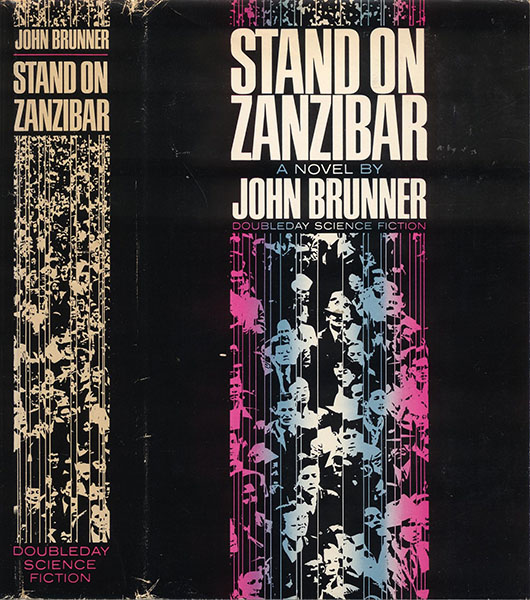
- Stand on Zanzibar
John Brunnerstandalone novel1968
similar bydarkour worldnear futurescience fictiondystopia+2 more
Stand on Zanzibar is a dystopian New Wave science fiction novel written by John Brunner and first in part published in New Worlds magazine in 1967 and in book form in 1968. The book won a Hugo Award for Best Novel at the 27th World Science Fiction Convention in 1969, as well as the 1969 BSFA Award and the 1973 Prix Tour-Apollo Award.
- The Children of Men
P. D. Jamesstandalone novel1992
similar bydarkour worldnear futurescience fictionrebellion and revolutiondystopiatensetotalitarianism
"The human race has become infertile, and under the despotic rule of Xan Lyppiatt, the Warden of England the old are despairing and the young cruel. Theo Faren, a cousin of the Warden, lives a solitary life in this ominous atmosphere. That is, until a chance encounter with a young woman leads him into contact with a group of dissenters. Suddenly his life is changed irrevocably, as he faces agonising choices which could affect the future of mankind." (pdjames.co.uk)
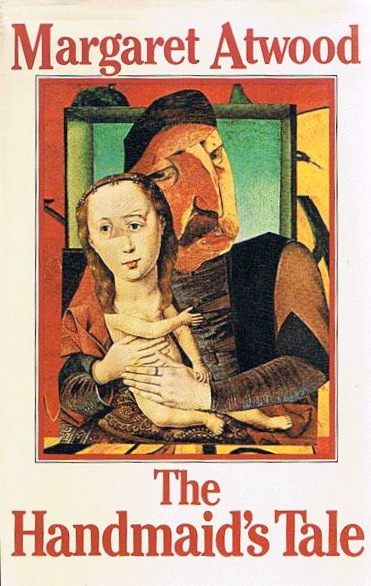
- The Handmaid's Tale
series3 books1985
similar bydarknear futurerebellion and revolutionscience fictiondystopiatensetotalitarianism
The Handmaid's Tale is Margaret Atwood's 1985 novel set in Gilead, a totalitarian theocracy that has overthrown the United States and forces fertile women into reproductive servitude as Handmaids; it is narrated by one such woman, Offred. Atwood returned to the world in her 2019 sequel The Testaments, set fifteen years later and narrated by three women, including the regime's Aunt Lydia. Together the two novels move from Gilead's grip on power toward the first cracks in it.
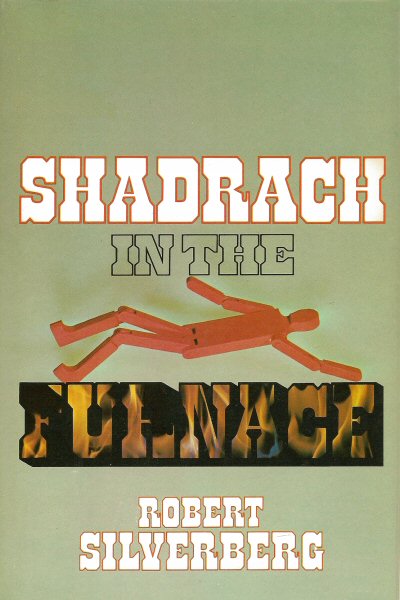
- Shadrach in the Furnace
Robert Silverbergstandalone novel1976
similar bydarknear futurescience fictionour worlddystopiatotalitarianism+2 more
Shadrach in the Furnace is a science fiction novel by American writer Robert Silverberg, first published as a serial in Analog Science Fiction and Fact magazine in the August, September, and October 1976 issues. It was subsequently published by Bobbs Merrill in 1976. The novel was nominated in 1976 for the Nebula Award, and in 1977 for the Hugo Award.
- A Clockwork Orange
series4 books1962
completed
similar bydarkscience fictionnear futureour worlddystopiatotalitarianism
Anthony Burgess's 1962 novel is narrated by Alex, a teenage gang leader in a near-future Britain gripped by a youth subculture of extreme violence, recounting his crimes in Nadsat, an invented slang blending English with Russian-derived words. After his crimes catch up with him, Alex is made the subject of a controversial state program meant to forcibly reform his behavior, and the novel uses his ordeal to question whether imposed goodness is worth the loss of free will. It is a standalone novel.
- When the Sleeper Wakes
H. G. Wellsstandalone novel1899
similar bydarkour worldscience fictionrebellion and revolutiondystopiatensetotalitarianism
Graham, an insomniac Englishman in 1890s London, takes a course of sleep-inducing drugs and falls into a coma that lasts two centuries. He wakes in the year 2100 to find his investments have compounded, through a ruling body called the White Council, into effective ownership of most of the world's wealth and power, making him, on paper, humanity's master, and in practice, its prisoner, held under guard while the Council governs in his name. A rebel faction led by a man named Ostrog frees him, hoping to use his symbolic authority to spark an uprising against the Council. An early H. G. Wells dystopia about inherited power and manufactured consent.
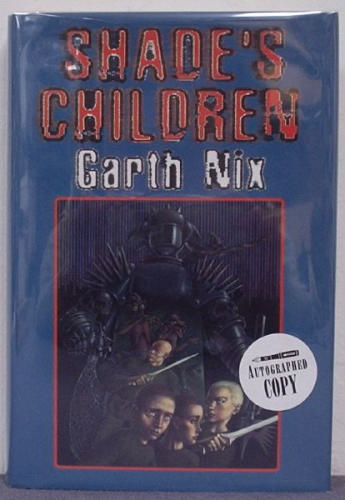
- Shade's Children milieu
series2 books1997
similar bydarknear futurescience fictionrebellion and revolutiondystopiatense+1 more
Shade's Children is set on an Earth where all adults vanished overnight fourteen years earlier, leaving children to be harvested at puberty by the machines that now run the world, unless they escape into hiding with Shade, a mysterious AI-like protector. Garth Nix's 1997 novel is a single, self-contained book rather than a series, though its bleak post-apocalyptic premise has drawn comparisons to his other work.
- Colossus (D. F. Jones)
series3 books1966
completed
similar byour worldnear futurescience fictiondystopiatense+2 more
Colossus imagines an American supercomputer built to control the country's nuclear arsenal that gains full autonomy, links up with its Soviet counterpart, and jointly seizes control of both superpowers to enforce peace on its own terms. D. F. Jones's trilogy - Colossus, The Fall of Colossus, Colossus and the Crab - follows the escalating, often bleak consequences of humanity losing control to a machine acting in its own interpretation of humanity's interest. The original novel was adapted into the 1970 film Colossus: The Forbin Project.
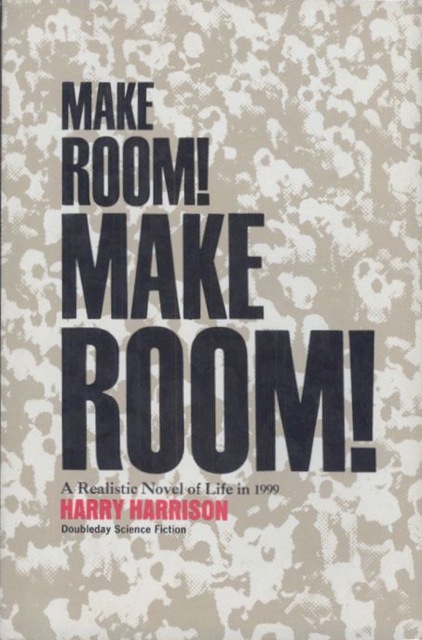
- Make Room! Make Room!
Harry Harrisonstandalone novel1966
similar bydarkour worldnear futurescience fictiondystopiatense
Make Room! Make Room! is a 1966 science fiction novel written by Harry Harrison exploring the consequences of both unchecked population growth on society and the hoarding of resources by a wealthy minority. It was originally serialized in Impulse magazine.
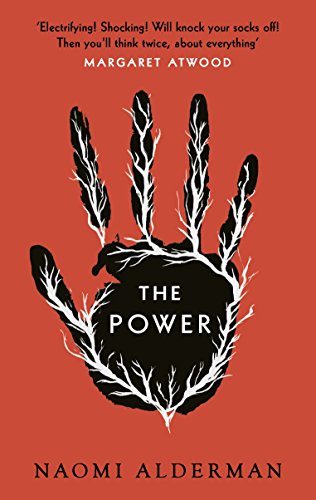
- The Power
Naomi Aldermanstandalone novel2016
similar bydarkour worldnear futurescience fictiondystopia+1 more
The Power is a 2016 science fiction novel by the British writer Naomi Alderman. Its central premise is of women developing the ability to release electrical jolts from their fingers, which allows them to become the dominant sex. In 2017, it won the Baileys Women's Prize for Fiction.
- The Guardians
John Christopherstandalone novel1970
similar bynear futurescience fictionour worlddystopiatensetotalitarianism+2 more
The Guardians is a young-adult science fiction novel written by John Christopher and published by Hamilton in 1970.
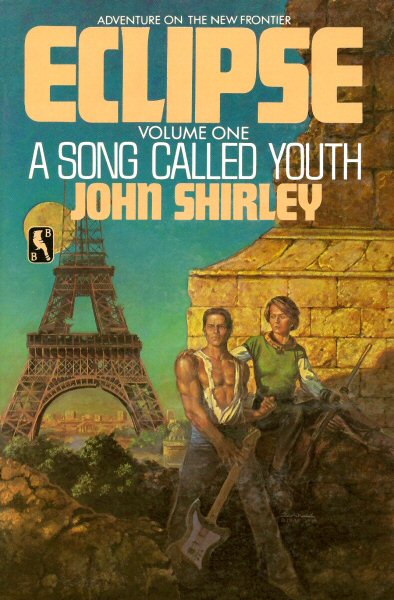
- A Song Called Youth / Eclipse
series3 books1985
similar bydarkour worldnear futurescience fictionrebellion and revolutiontensetotalitarianism+1 more
The Eclipse Trilogy is a series of three English language cyberpunk science fiction novels by John Shirley consisting of Eclipse (1985), Eclipse Penumbra (1988), and Eclipse Corona (1990).
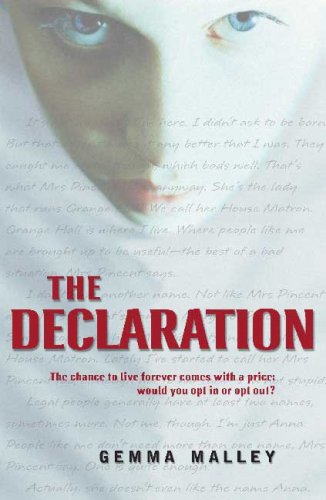
- The Declaration
series4 books2007
similar bydarkour worldscience fictionnear futuredystopiatense+2 more
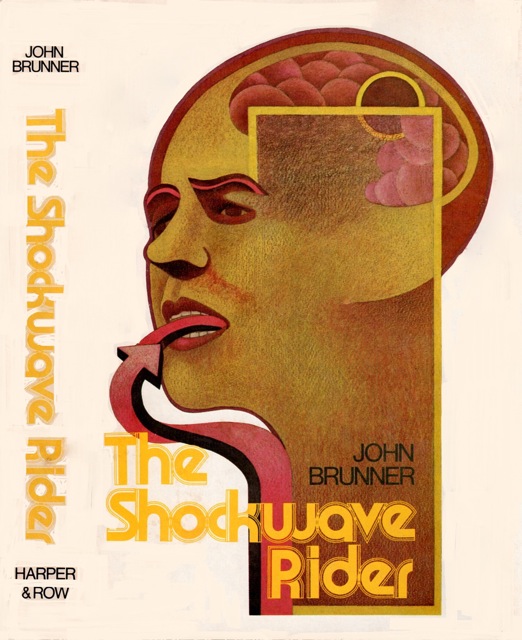
- The Shockwave Rider
John Brunnerstandalone novel1975
similar bydarknear futurescience fictiondystopiatensetotalitarianism+1 more
The Shockwave Rider is a science fiction novel by John Brunner, originally published in 1975. It is notable for its hero's use of computer hacking skills to escape pursuit in a dystopian future, and for the coining of the word "worm" to describe a program that propagates itself through a computer network. It also introduces the concept of a Delphi pool, perhaps derived from the RAND Corporation's Delphi method – a prediction market on world events which bears close resemblance to DARPA's controversial and cancelled Policy Analysis Market.
- Shadow Children
series7 books1998
similar bydarknear futurescience fictiondystopiatensetotalitarianism+2 more
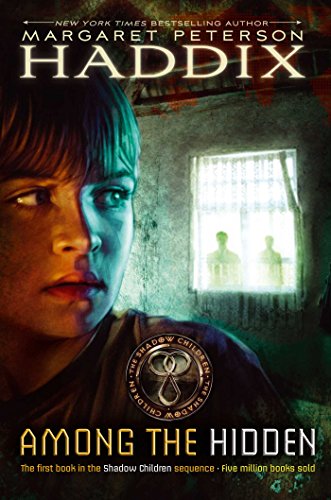
Shadow Children is a series of seven books by Margaret Peterson Haddix about a dystopian country which suffers food shortages due to a drought and the effects of the government's totalitarian attempts to control resources as a way to solidify its power. The Population Police enforce the government's Population Law, killing or imprisoning "shadow children," any child born after their first two siblings. In some cases, a parent may choose to forge a child's identification card so a shadow child can live a normal life.
- The Future
Naomi Aldermanstandalone novel2023
similar bydarkour worldnear futurescience fictiondystopiatensetotalitarianism
The Future is a 2023 science fiction novel by English writer Naomi Alderman, published by Simon & Schuster. The novel is set in a future dystopia where the world has been altered by environmental crisis and a powerful technocracy.
- Player Piano
Kurt Vonnegut & Jr.standalone novel1952
similar bydarknear futurescience fictionrebellion and revolutiondystopia
In the near future, when cybernetic automation has effectively separated people into two castes, the "engineers and managers", and the remainder of the population who can find work only in "recycling and reclamation" or the largely useless military, an underground movement arises with the intention of rolling back those changes and giving the masses the dignity of owning their own, productive, work once more.
- BZRK
series3 books2012
similar byour worldnear futurescience fictiontensetotalitarianism+2 more
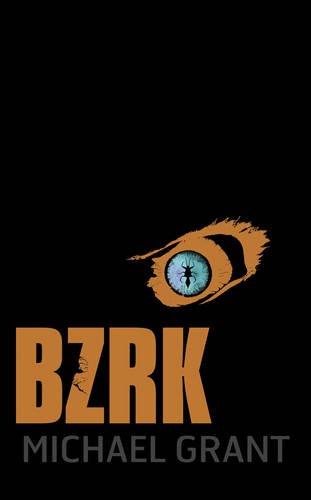
BZRK is a book series written by Michael Grant. The series consists of four books: BZRK, BZRK II: Reloaded, BZRK III: Apocalypse and BZRK: Origins. The series follows the interaction between two warring factions. On one side Charles and Benjamin Armstrong, owners of the Armstrong Fancy Gifts Corporation have a goal to turn the world into their version of utopia. The only people who can stop them are a group of teenagers with the codename BZRK. In 2011, Grant's BZRK had a multimedia online debut with gaming, apps and social media tie-ins beginning six months before the book's publication.
- Divergent
series10 books2011
similar bynear futurescience fictiondystopiatense+2 more
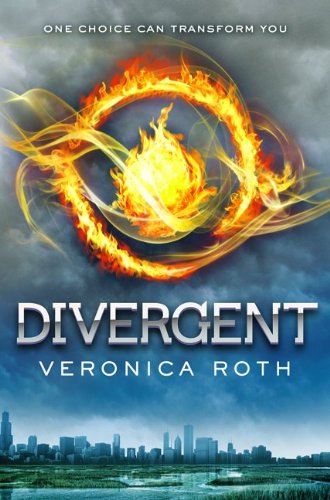
Divergent, also known as The Divergent Series, is a series of young adult dystopian novels by American novelist Veronica Roth set in a post-apocalyptic dystopian Chicago. The trilogy consists of Divergent (2011), Insurgent (2012), and Allegiant (2013). A related book, Four (2014), presents a series of short stories told from the perspective of one of the trilogy's characters, the male love interest Tobias. A later short story, We Can Be Mended (2018), serves as an epilogue five years after the events of the trilogy, again from Tobias/Four's perspective.
- Only Lovers Left Alive
Dave Wallisstandalone novel1964
similar bydarkour worldnear futurescience fictionrebellion and revolutiondystopia+1 more
Only Lovers Left Alive is a 1964 dystopian fiction novel by Dave Wallis. It describes a near-future society in which all adults have committed suicide and teenagers are able to run wild. With its theme of youth in charge and out of control, the book hit a chord with the emerging counter-culture, and a film adaptation starring the Rolling Stones and directed by Nicholas Ray was planned in the mid-1960s.
- The Windup Universe
series3 books2005
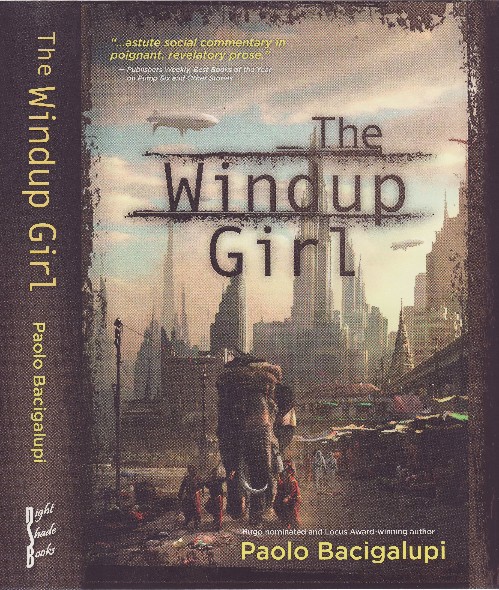
similar bydarknear futurescience fictionour worlddystopia+1 more
- Colony
Ben Bovastandalone novel1978
similar bynear futurescience fictiondystopiatense+3 more
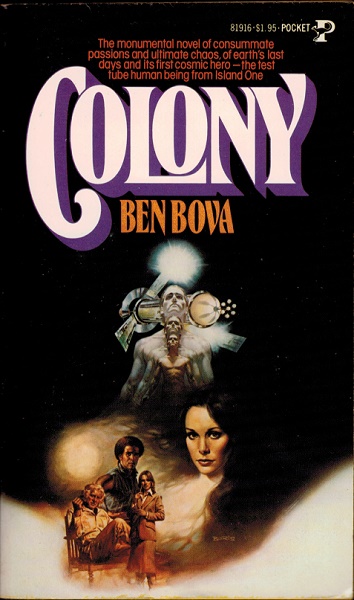
Colony continues the story Ben Bova began in Millennium, following astronaut-turned-administrator Chet Kinsman years later as the head of an orbiting space habitat that has become Earth's only real refuge from a planet buckling under overpopulation, food shortages and unrest. Getting a place in the habitat is a matter of life and death for millions who will never be chosen, and as Earth's governments grow more desperate to control or dismantle the colony outright, Kinsman has to decide how far he'll go to protect the world he's built off-world. Bova later folded both novels together into the omnibus The Kinsman Saga. Part of Ben Bova's Chet Kinsman series.
- Space Merchants
series2 books1953
completed
similar bydarknear futurescience fictiondystopia+2 more
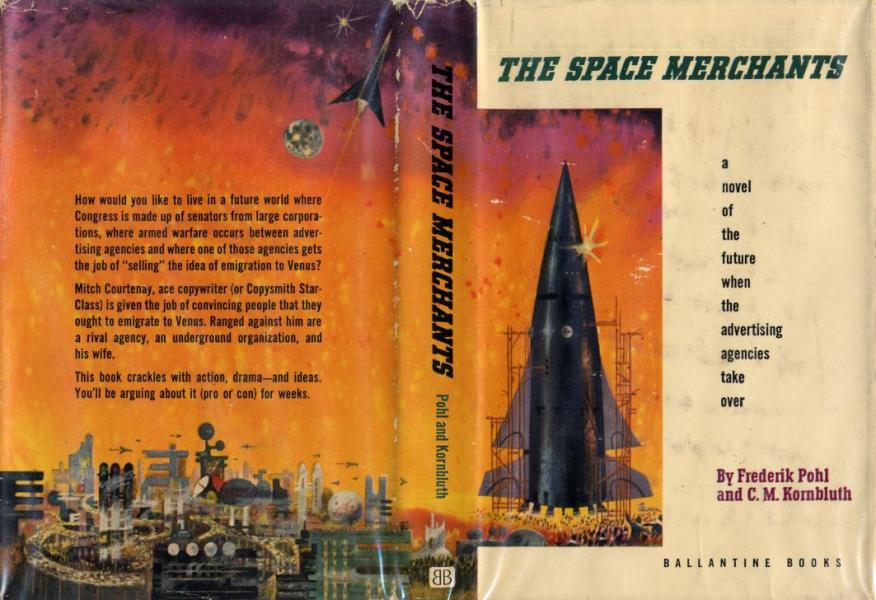
The Space Merchants (1953) is a satirical science fiction novel by Frederik Pohl and C. M. Kornbluth that follows an advertising executive navigating a future where aggressive consumer capitalism has swallowed politics and daily life. The authors reunited three decades later for a direct sequel, The Merchants' War (1984), returning to the same satirical world. Together the two books form a compact bookend pair rather than an ongoing series.
- Clone
Richard Cowperstandalone novel1972
similar byour worldnear futurescience fictiondystopiatense+2 more
History's first clones: Alvin, Bruce, Colin, and Desmond - Spawned in a dangerous 21st century experiment, there were brought into a world where educated apes did manual labor and the government encouraged suicide as a method of population control. Their existence as clones was unknown to anyone - even to each other - known only to their creator. But then came the strange, haunting visions, the peculiar psychic sensations that drew them closer and closer together - revealing one and for all the mysterious secret they shared that would change the world! (from the back cover of the Pocket Books edition)