More like Energized
anchored on:science fictionnear futurehard science fiction
but
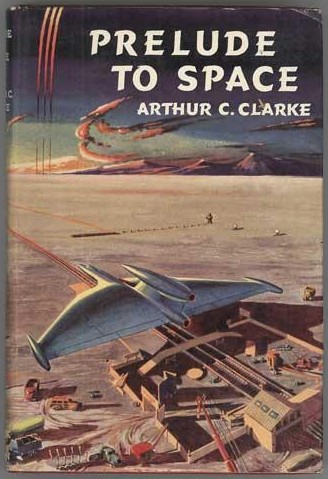
- Prelude to Space
Arthur C. Clarkestandalone novel1951
similar byspace explorationinformativenear futurescience fictionhard science fiction+1 more
Prelude to Space is a science fiction novel written by British author Arthur C. Clarke in 1947. It appeared for the first time in 1951 as a paperback from World Editions Inc, as number three in its series of Galaxy novels. Sidgwick & Jackson published it in the UK in 1953, followed the next year by a United States hardcover edition from Gnome Press and a paperback from Ballantine Books.
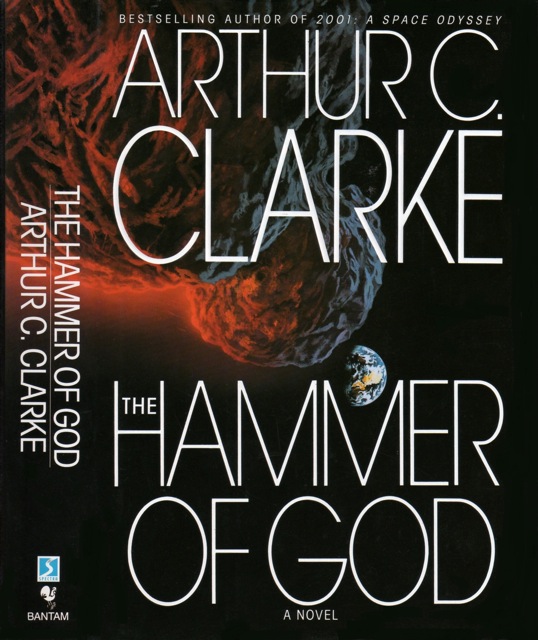
- The Hammer of God
Arthur C. Clarkestandalone novel1993
similar byspace explorationinformativenear futurespacescience fictionhard science fictiontense
The Hammer of God is a science fiction novel by Arthur C. Clarke originally published in 1993. Set in the year 2109, it deals with the discovery of an asteroid to be on course to collide with Earth and depicts the mission for deflecting the asteroid by using fusion thermal rockets.
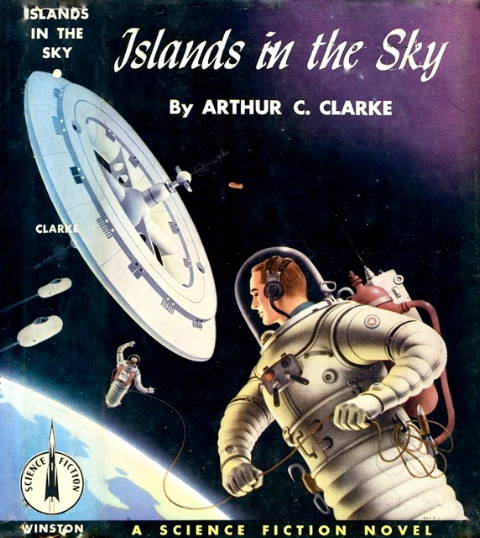
- Islands in the Sky
Arthur C. Clarkestandalone novel1952
similar byspace explorationnear futurespacescience fiction+1 more
Islands in the Sky is a 1952 science fiction novel by British writer Arthur C. Clarke. It is one of his earliest works. Clarke wrote the story as a travelogue of human settlement of cislunar space in the last half of the twenty-first century.
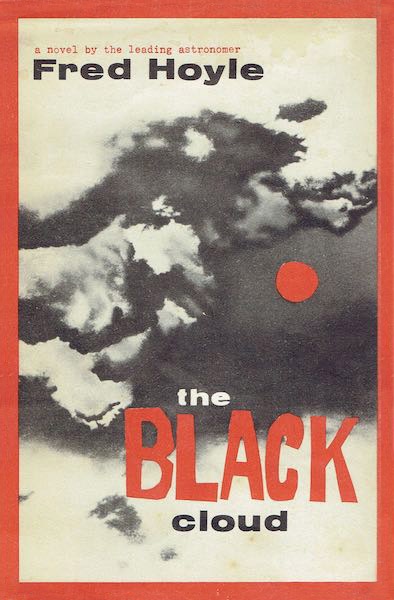
- The Black Cloud
Fred Hoylestandalone novel1957
similar byscience fictionhard science fictiontense+3 more
The Black Cloud is a 1957 science fiction novel by British astrophysicist Fred Hoyle. It details the arrival of an enormous cloud of gas that enters the Solar System and appears about to destroy most of the life on Earth by blocking the Sun's radiation.
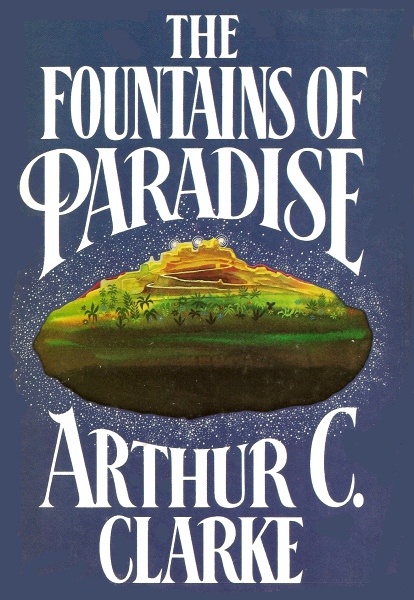
- The Fountains of Paradise
Arthur C. Clarkestandalone novel1979
similar byspace explorationinformativespacescience fictionhard science fiction
The Fountains of Paradise is a 1979 science fiction novel by British writer Arthur C. Clarke. Set in the 22nd century, it describes the construction of a space elevator. This "orbital tower" is a giant structure rising from the ground and linking with a satellite in geostationary orbit at the height of approximately 36,000 kilometres. Such a structure would be used to raise payloads to orbit without the expense of using rockets. The novel won both the Hugo and Nebula Awards for Best Novel.
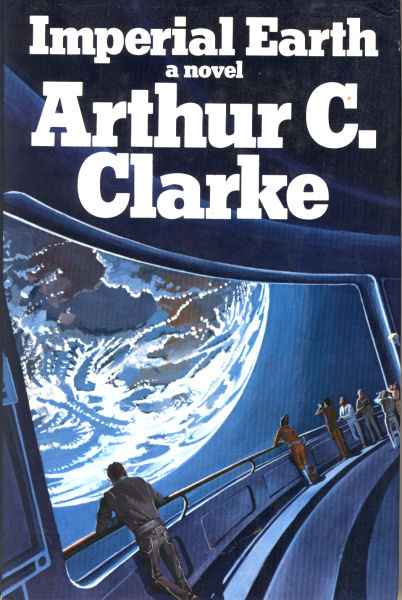
- Imperial Earth
Arthur C. Clarkestandalone novel1975
similar byspace explorationspacescience fictionhard science fiction+1 more
Imperial Earth is a science fiction novel by British writer Sir Arthur C. Clarke, published in 1975 by Gollancz Books. The plot follows the protagonist, Duncan Makenzie, on a trip to Earth from his home on Titan, in large part as a diplomatic visit to the U.S. for its quincentennial in 2276, but also to have a clone of himself produced. The book was published in time for the U.S. bicentennial in 1976.
- Dragon's Egg
series3 books1980
completed
similar byspace explorationinformativescience fictionhard science fiction+2 more
Robert L. Forward's Dragon's Egg (1980) follows first contact with the cheela, intelligent beings the size of sesame seeds living on the surface of a neutron star, where crushing gravity and fast-moving physics let them evolve from primitive agriculture to advanced technology in about a month of Earth time while human observers watch from orbit. The sequel Starquake (1985) follows the cheela's own development of space travel and a catastrophic starquake that devastates their neutron-star home, alongside the continuing story of the human crew observing them.
- Minervan Experiment / Giants
series5 books1977
completed
similar byspace explorationscience fictionhard science fiction+3 more
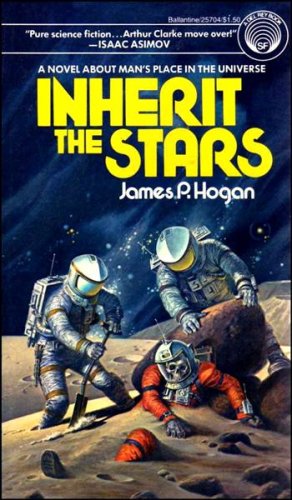
The Giants series is a quintet of science fiction novels by James P. Hogan, published between 1977 and 2005. The series began with Inherit the Stars, published by Del Rey Books in May 1977.
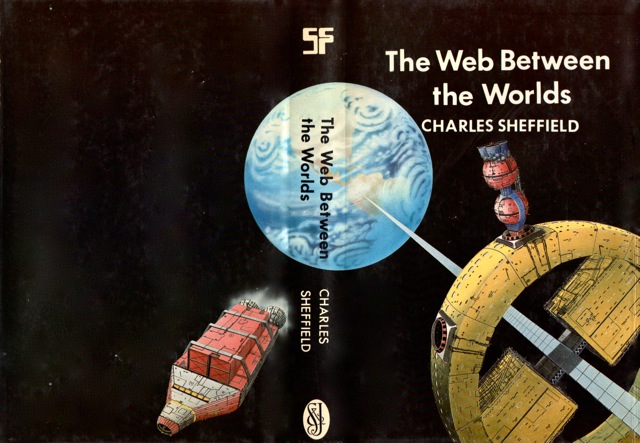
- The Web Between the Worlds
Charles Sheffieldstandalone novel1979
similar byspace explorationinformativenear futurespacescience fictionhard science fiction
The Web Between the Worlds is the second science fiction novel by Charles Sheffield. It was first published as a trade paperback by Ace Books in 1979, by the first UK edition in hardcover by Sidgwick & Jackson Ltd the following year. Further editions were published by Arrow Books, Ace Books, Del Rey/Ballantyne and others; in 2001 Baen Books issued a revised edition. The novel has also been translated into German and French. This novel and the simultaneously published novel The Fountains of Paradise, by Arthur C. Clarke, are the first popularization of the space elevator.
- Mesklin
series6 books1954
completed
similar byspace explorationscience fictionhard science fiction+1 more
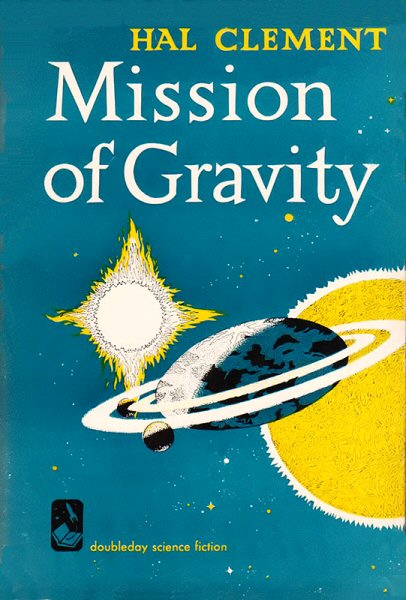
Mesklin is a fictional planet created by Hal Clement and used in a number of his hard science fiction stories, starting with Mission of Gravity (1954). Alongside the novel's original 1953 serialization in Astounding Science Fiction, Clement published an essay titled "Whirligig World" on how he designed the planet to have the properties he wanted. The idea came from an object that was at the time believed to exist in the 61 Cygni system, and which might represent an extrasolar planet.
- Encounter with Tiber
John Barnes & Buzz Aldrinstandalone novel1996
similar byspace explorationinformativenear futurespacescience fictionhard science fiction
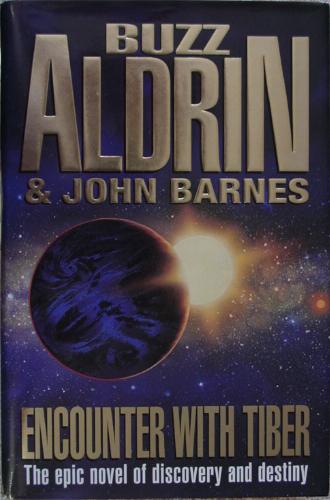
Encounter With Tiber (ISBN 0-340-62451-5) is a 1996 science fiction novel written by former astronaut Buzz Aldrin and science fiction writer John Barnes. A working title, used on some advance covers for the British edition, was The Tides of Tiber.
- Blindsight / Firefall
series3 books2006
similar byspacescience fictionhard science fictionartificial intelligencetense+2 more
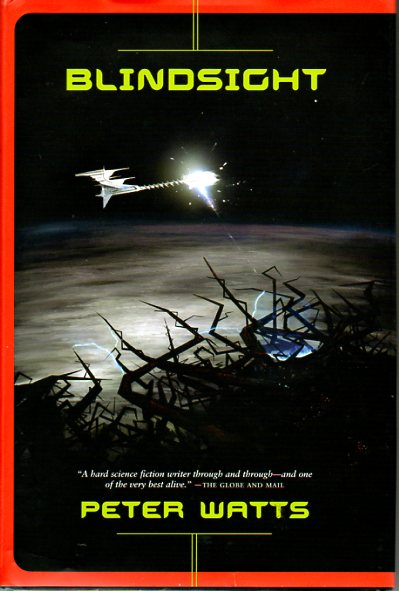
Blindsight sends a crew of radically modified posthumans (including a resurrected, genetically restored vampire) out to the Oort cloud after humanity detects an alien signal, only to make contact with something intelligent, wildly capable, and possibly not conscious at all — a first-contact story built around the question of whether self-awareness is actually useful. Peter Watts's Echopraxia is a same-timeframe "sidequel" rather than a direct sequel, following different characters through the fallout of the same first-contact event.
- Heart of the Comet
David Brin & Gregory Benfordstandalone novel1986
similar byspace explorationnear futurespacescience fictionhard science fiction+1 more
Heart of the Comet is a novel by David Brin and Gregory Benford about human space travel to Halley's Comet published in 1986. Its publication coincided with the comet's 1986 approach to the Earth.
- Adventures of Viktor & Julia
series2 books1999
similar byspace explorationnear futurescience fictionhard science fictiontense+1 more
- NASA Trilogy
series4 books1996
similar byspace explorationscience fictionhard science fictiontense+2 more
The NASA Trilogy consists of three hard science fiction novels written by British science fiction author Stephen Baxter. They were published from 1996 to 1998. These books explore the possibilities of the American space program if the circumstances had been different. They have generally darker tones than his other books and are critical of NASA. They consist of:
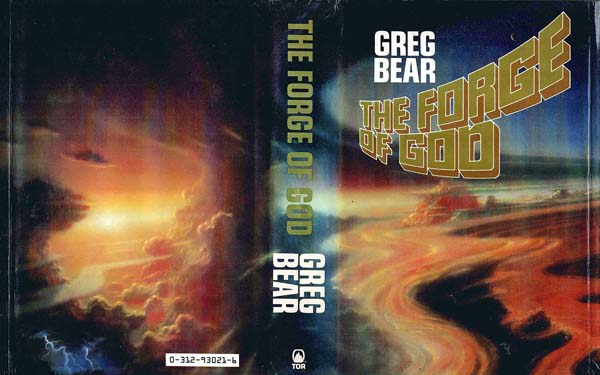
- Forge of God
series2 books1987
completed
similar byscience fictiontense+4 more
The Forge of God (1987) is Greg Bear's science fiction novel about Earth's discovery that it is the target of an incomprehensible, overwhelming alien attack, following scientists and ordinary people as they try to understand what is destroying the planet. Its 1992 sequel, Anvil of Stars, follows a group of young survivors sent on a mission of interstellar retaliation, continuing directly from the first book's ending.
- The Martian
series2 books2012
similar byspace explorationnear futurescience fictionhard science fictiontense
Andy Weir's novel The Martian, first self-published in 2011 before a commercial re-release, follows astronaut Mark Watney after he is stranded alone on Mars when his crew presumes him dead and departs. Using scientific improvisation and dark humor, Watney works to keep himself alive long enough for a rescue to reach him. It is a single, self-contained survival story.
- The Long Earth
series7 books2012
similar byspace explorationnear futurescience fiction+1 more
Terry Pratchett and Stephen Baxter's Long Earth series (five novels, 2012-2016) begins when a cheap, simple device called a Stepper lets people step sideways into a vast, possibly infinite chain of parallel Earths, none of which developed human civilization. The books follow a natural stepper and an AI that believes itself the reincarnation of a Tibetan repairman as they travel millions of steps out along the chain, encountering other hominid species and the dangers, ecological and social, of an endless open frontier.
- Have Space Suit - Will Travel
Robert A. Heinleinstandalone novel1958
similar byspace explorationnear futurespacescience fictiontense
From the back cover of the Del Rey 9th printing: "Skyjacked - Everything happened at once. One minute Kip Russell was walking about in his own backyard, testing out an old space suit and dreaming about going to the moon - and the next he was out cold and the captive of an insidious space pirate. The whole thing seemed like a very bad dream until he discovered he wasn't the only prisoner on board. Then the reality of the situation became inescapable. He - along with the daughter of a world-renowned scientist and a beautiful creature from an alien planet - had been skyjacked by a monstrous extraterrestrial and they were on their way to the Moon... a journey toward a fate worse than death!"
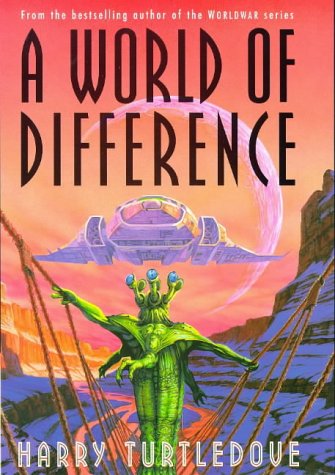
- A World of Difference
Harry Turtledovestandalone novel1990
similar byspace explorationinformativenear futurescience fiction+1 more
A World of Difference is a 1990 science fiction novel by American writer Harry Turtledove.
- Manifold
series8 books1997
similar byspace explorationspacescience fictionnear futurehard science fiction
Manifold: Time, Manifold: Space, and Manifold: Origin follow overlapping characters through three mutually exclusive answers to the Fermi Paradox - why we appear to be alone in the universe - each book taking one answer seriously enough to build an entire future history around it. Stephen Baxter designed the trilogy to be read in any order, since it plays out across a multiverse rather than a single continuous timeline.
- A Fall of Moondust
Arthur C. Clarkestandalone novel1961
similar bynear futurescience fictionhard science fictiontense+1 more
From the back cover of the Harbrace paperback: "The action of A Fall of Moondust takes place almost a century from now when tours on the moon are a common occurrence. One of the high points of each tour is a cruise around the Sea of Thirst, a body of volcanic dust, in a specially designed vessel called the Selene On a perfectly routine voyage one day the Selene suddenly disappears. How do you locate a small tourist "cruiser" buried beneath fifty feet of dust? If you find it, how do you rescue the passengers and crew? If you are on board, how do you feel and what do you do while brave men and expert technicians join forces in a race against time? Sustained excitement, lively humor, and an engaging cast of characters make this one of Arthur C. Clarke's most intriguing novels."
- Earth
David Brinstandalone novel1990
similar byinformativenear futurescience fictiontense+1 more
Earth is a 1990 science fiction novel by American writer David Brin. The book was nominated for the Hugo and Locus Awards in 1991.