More like Engine Summer
anchored on:science fictionfar futurereflectivepost-apocalypticcoming of ageidentity
but
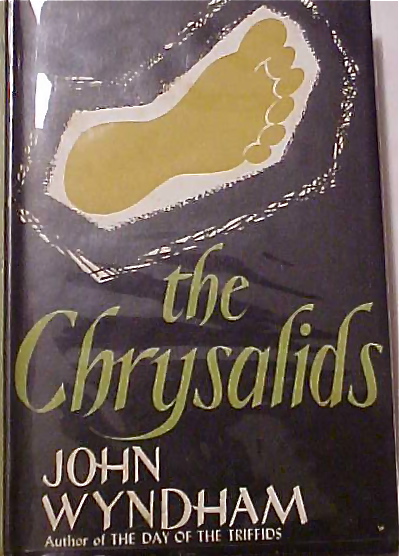
- The Chrysalids
John Wyndhamstandalone novel1955
similar byreflectivefar futurecoming of agescience fictionpost-apocalyptic
The Chrysalids is a science fiction novel by British writer John Wyndham, first published in 1955 by Michael Joseph. It is the least typical of Wyndham's major novels, but regarded by some as his best. An early manuscript version was entitled Time for a Change.
- Stranger in a Strange Land
Robert A. Heinleinstandalone novel1961
similar byreflectiveidentityscience fictioncoming of age
Stranger in a Strange Land is a 1961 science fiction novel by the American author Robert A. Heinlein. It tells the story of Valentine Michael Smith, a human who comes to Earth in early adulthood after being born on the planet Mars and raised by Martians, and explores his interaction with and eventual transformation of Terran culture.
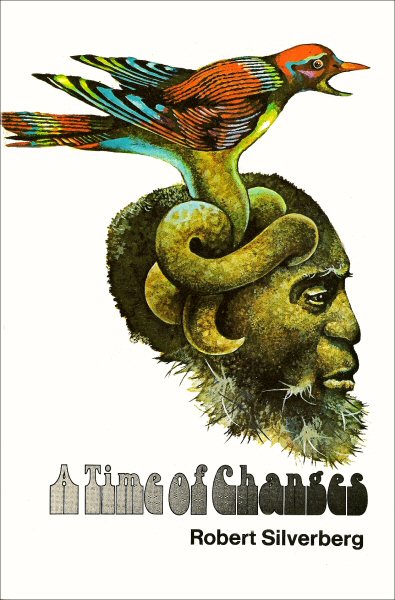
- A Time of Changes
Robert Silverbergstandalone novel1971
similar byreflectivefar futureidentityscience fiction+1 more
A Time of Changes is a 1971 science fiction novel by American writer Robert Silverberg. It won the Nebula Award for that year, and was also nominated for the 1972 Hugo and Locus Awards.
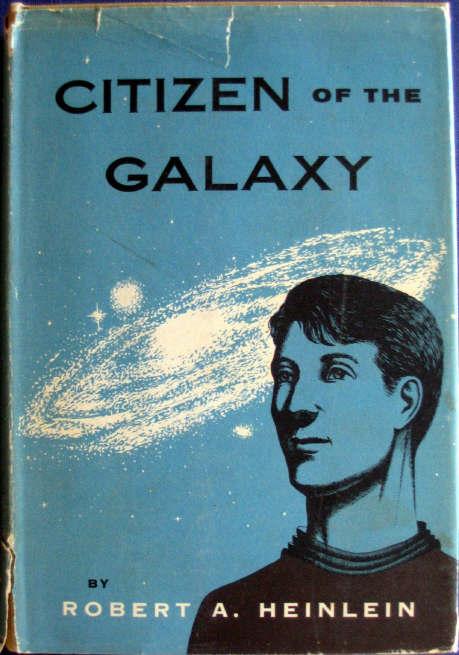
- Citizen of the Galaxy
Robert A. Heinleinstandalone novel1957
similar byfar futurecoming of ageidentityscience fiction
On a planet far distant from Earth, a lame beggar buys a young boy slave who has forgotten his origins. The beggar is more than he seems, and gives the boy an extensive education while employing him as an observer of activity in their city. Years later, the beggar is captured by the government, and the youth must escape the planet.
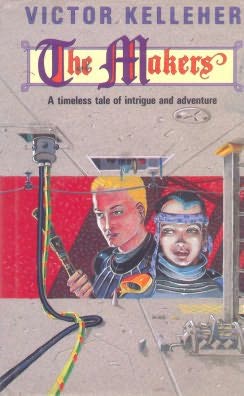
- The Makers
Victor Kelleherstandalone novel1987
similar byreflectivefar futurecoming of ageidentityscience fiction
In a new, primitive society of the distant future a young cadet warrior seems loyal to the god-like mutant Makers, but situations occur which cause him to question his humanity and in his search for understanding he discovers his mutant mother and another perspective of life.
- Rite of Passage
Alexei Panshinstandalone novel1968
similar byreflectivefar futurecoming of agescience fiction
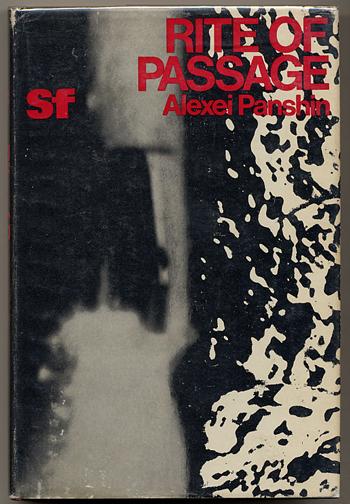
Rite of Passage is a science fiction novel by American writer Alexei Panshin. Published in 1968 as an Ace Science Fiction Special, this novel about a shipboard teenager's coming of age won that year's Nebula Award, and was nominated for the Hugo Award for Best Novel in 1969.
- The Man in the Maze
Robert Silverbergstandalone novel1969
similar byreflectivefar futureidentityscience fiction
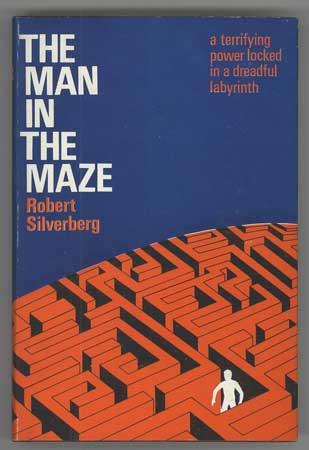
The Man in the Maze is a science fiction novel by American writer Robert Silverberg, originally serialized in the magazine Worlds of If in April and May 1968, and published in bookstores the following year. It tells the tale of a man rendered incapable of interacting normally with other human beings by his uncontrollable psychic abilities. The novel is inspired by Sophocles' play Philoctetes, with the roles of Odysseus, Neoptolemus and Philoctetes played by Boardman, Rawlins, and Muller, respectively.
- How to Live Safely in a Science Fictional Universe
Charles Yustandalone novel2010
similar byreflectivefar futureidentityscience fiction
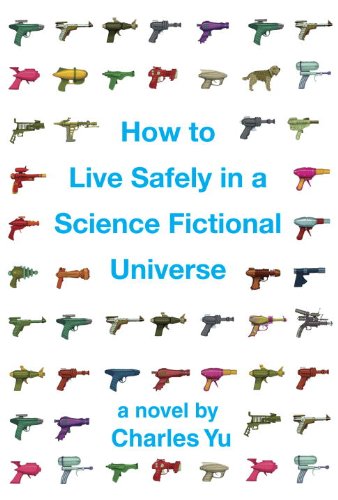
How to Live Safely in a Science Fictional Universe is a 2010 novel by Taiwanese-American writer Charles Yu. The novel revolves around a search for a father and the father-son relationship. It also includes themes about life and how we live especially with respect to time, memories, and creation of the self.
- Singer from the Sea
Sheri S. Tepperstandalone novel1999
similar byreflectivefar futurecoming of agescience fiction+1 more
An accomplished student and heiress to a great title, Genevieve has been carefully instructed in the Covenants, the inflexible laws governing women of her class. But as her fate approaches, she begins to question the ties that bind her.
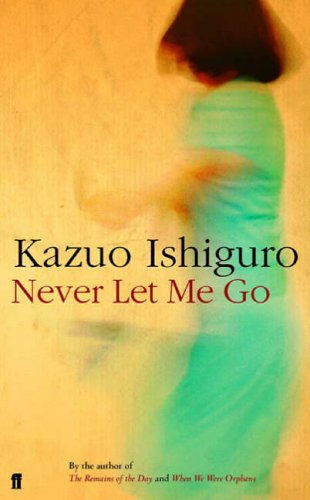
- Never Let Me Go
Kazuo Ishigurostandalone novel2005
similar byreflectivecoming of ageidentityscience fiction
Never Let Me Go is a 2005 science fiction novel by the British author Kazuo Ishiguro. It was shortlisted for the 2005 Man Booker Prize, for the 2006 Arthur C. Clarke Award and the 2005 National Book Critics Circle Award. Time magazine named it the best novel of 2005. It included the novel in its '100 Best English-language novels published since 1923—the beginning of TIME'. It also received an ALA Alex Award in 2006. A film adaptation directed by Mark Romanek was released in 2010.
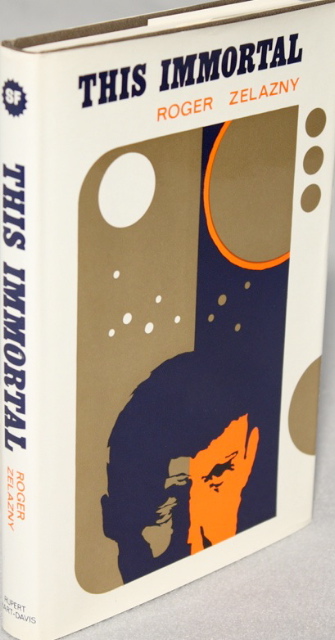
- This Immortal
series2 books1966
similar byreflectivefar futurescience fictionpost-apocalyptic
This Immortal is a single science fiction novel by Roger Zelazny, expanded from his 1965 serial ...And Call Me Conrad. In a depopulated future Earth largely toured by an alien race, its long-lived, secretive protagonist Conrad Nomikos is assigned to guide and protect a visiting alien across the ruins of Greece and Egypt, uncovering old grudges and assassination plots along the way. The novel shared the 1966 Hugo Award for Best Novel with Frank Herbert's Dune.
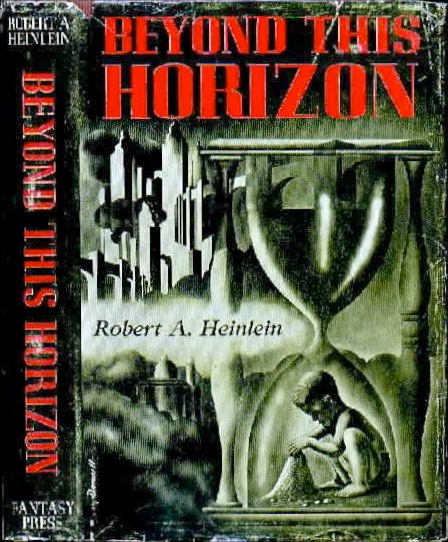
- Beyond This Horizon
Robert A. Heinleinstandalone novel1948
similar byreflectivefar futurescience fiction+1 more
From the front flap of a 2001 Baen reprint: "Utopia has been achieved. For centuries, disease, hunger, poverty, and war have been things found only in the history tapes. And applied genetics has given men and women the bodies of athletes and a lifespan of over a century. They should all have been very happy... But Hamilton Felix is bored. And he is the culmination of a star line, each of his last thirty ancestors chosen for superior genes. Hamilton is, as far as genetics can produce one, the ultimate man. And this ultimate man can see no reason why the human race should survive, and has no intention of continuing the pointless comedy. However, Hamilton's life is about to become less boring. A secret cabal of revolutionaries who find utopia not just boring, but desperately in need of leaders who know just What Needs to be Done, are planning to revolt and put themselves in charge. Knowing of Hamilton's disenchantment with the modern world, they have recruited him to join their Glorious Revolution. Big mistake! The revolutionaries are about to find out that recruiting a superman was definitely not a good idea..."
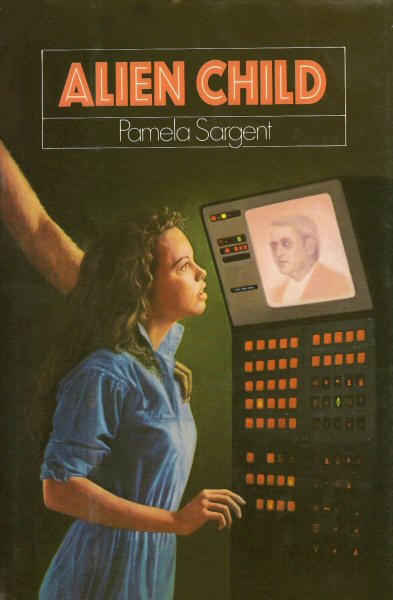
- Alien Child
Pamela Sargentstandalone novel1988
similar byreflectivefar futurecoming of agescience fictionpost-apocalyptic
A girl growing up in an insulated though pleasant environment, with a furry guardian for company, comes to realize that she must be the last human left on earth.
- Triton
Samuel R. Delanystandalone novel1976
similar byreflectivefar futureidentityscience fiction
Trouble on Triton: An Ambiguous Heterotopia (1976) is a science fiction novel by American writer Samuel R. Delany. It was nominated for the 1976 Nebula Award for Best Novel, and was shortlisted for a retrospective James Tiptree, Jr. Award in 1995. It was originally published under the shorter title Triton.
- The City and the Stars
Arthur C. Clarkestandalone novel1956
similar byreflectivefar futurescience fiction+1 more
The City and the Stars is a science fiction novel by British writer Arthur C. Clarke, published in 1956. This novel is a complete rewrite of Clarke's earlier Against the Fall of Night, his first novel, which had been published in Startling Stories magazine in 1948 after being rejected by the editor of Astounding Science-Fiction, according to the author.
- Saint Leibowitz
series6 books1955
completed
similar byfar futurescience fictionpost-apocalyptic+1 more
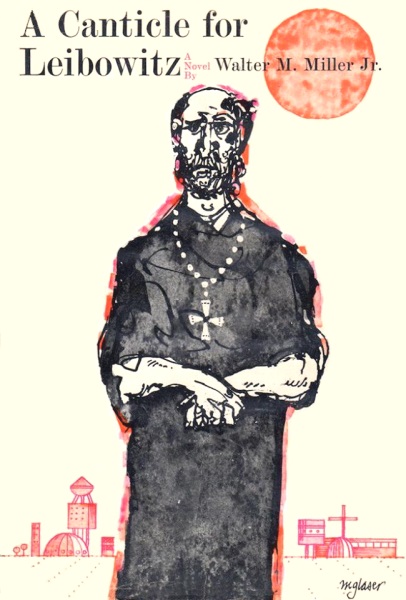
Walter M. Miller Jr.'s A Canticle for Leibowitz (1959), assembled from three novellas he had published earlier in the decade, follows the monks of a Catholic monastery in the post-nuclear American Southwest as they preserve fragments of scientific knowledge across centuries, watching civilization slowly rebuild itself and edge back toward the mistakes that destroyed it. Miller's posthumous sequel, Saint Leibowitz and the Wild Horse Woman, completed by Terry Bisson from his notes after his death and published in 1997, returns to the same abbey and its world decades later. Together the two novels form a sparse, decades-spanning series about memory, faith, and the cycles of civilization.
- To Live Again
Robert Silverbergstandalone novel1969
similar byreflectivefar futureidentityscience fiction
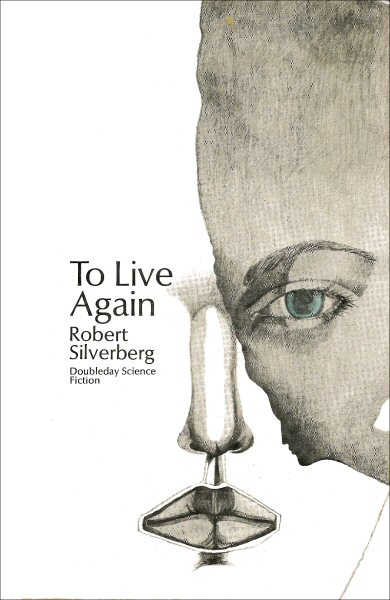
In a future where the very rich can have their personalities recorded before death and then implanted into a living host to share, or dominate, that person's mind and body, owning a recorded soul becomes the ultimate status symbol among the powerful. The practice carries real risk: a strong enough recorded personality can overwhelm its host entirely, a fate the novel calls going dybbuk. Robert Silverberg builds a society around this trade in secondhand immortality, and the people who profit, or don't survive, dealing in it. A standalone novel from Silverberg's prolific late-1960s run.
- Wyrms
Orson Scott Cardstandalone novel1987
similar byreflectivefar futureidentityscience fiction
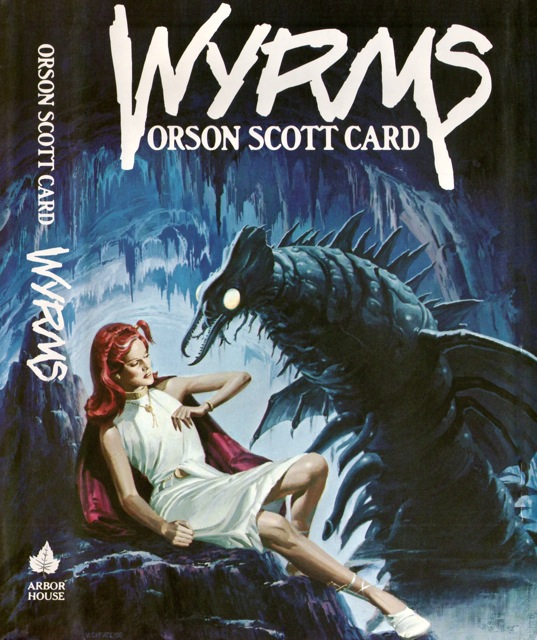
Wyrms (1987) is a science fiction novel by American writer Orson Scott Card. The story examines desire, wisdom, and human will. Card describes a version of the tri-partite soul, similar to that articulated by Plato in the Republic.
- Stars in My Pocket Like Grains of Sand
Samuel R. Delanystandalone novel1984
similar byreflectivefar futureidentityscience fiction
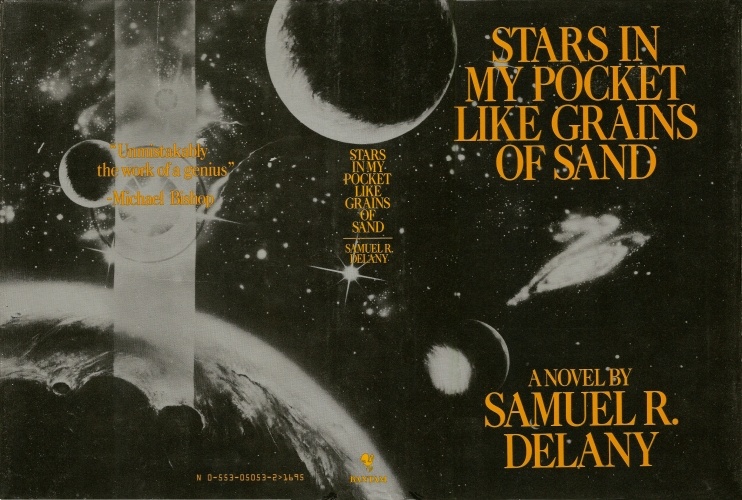
Stars in My Pocket Like Grains of Sand (1984) is a science fiction novel by Samuel R. Delany. It is part of what would have been a "diptych", in Delany's description, of which the second half, The Splendor and Misery of Bodies, of Cities, remains unfinished.
- Teixcalaan
series2 books2019
similar byreflectivefar futureidentityscience fiction
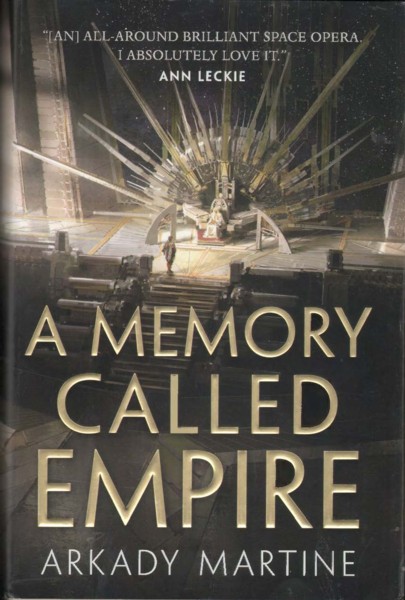
Arkady Martine's space opera duology follows Mahit Dzmare, ambassador from the small, independent Lsel Station, as she arrives in the vast Teixcalaanli Empire to investigate her predecessor's death and finds herself caught up in the empire's own succession crisis. A Memory Called Empire and A Desolation Called Peace pair court intrigue with Mahit's conflicted, outsider fascination with an empire she can't help admiring.
- Imperial Galaxy
series2 books2012
similar byfar futurecoming of ageidentityscience fiction
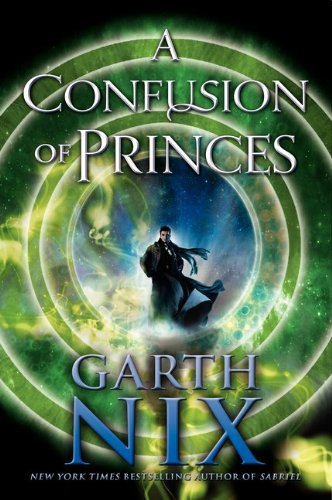
Prince Khemri has spent his life as one of ten thousand princes bred and trained by a sprawling galactic empire, expecting eventual rule -- until he learns just how disposable princes actually are, and how routinely they're assassinated by their own siblings. Garth Nix's A Confusion of Princes follows Khemri through the empire's ruthless military, its secret intelligence service, and a deadly, decades-long competition to determine who might one day take the throne. It's a single, self-contained space opera rather than an ongoing series.
- The Giver
series5 books1993
similar byfar futurescience fiction+2 more
The Giver Quartet is a series of four books about a dystopian world by American author Lois Lowry, which consists of The Giver (1993), Gathering Blue (2000), Messenger (2004), and Son (2012). The first book won the 1994 Newbery Medal and has sold more than 50 million copies. The story takes place at an unknown point of time within the future. Each book has a different protagonist but is set in the same futuristic era.
- Childhood's End
Arthur C. Clarkestandalone novel1953
similar byreflectiveidentityscience fiction
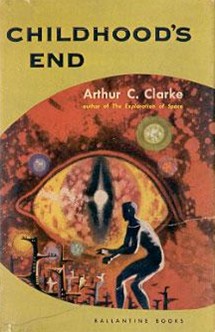
Childhood's End is a 1953 science fiction novel by the British author Arthur C. Clarke. The story follows a peaceful alien invasion of Earth by mysterious Overlords, whose arrival begins decades of apparent utopia under indirect alien rule, at the cost of human identity and culture.
- Earth Abides
George R. Stewartstandalone novel1949
similar byreflectivescience fictionpost-apocalyptic+1 more
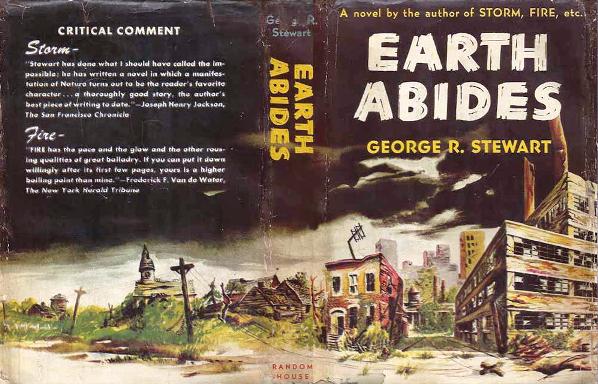
The novel tells the story of the fall of civilization from deadly disease and the emergence of a new culture with simpler tools. Set in the 1940s in Berkeley, California, the story is told by Isherwood Williams, who emerges from isolation in the mountains to find almost everyone dead. en.wikipedia.org