More like Entry to Elsewhen
anchored on:science fictionspaceshipfar futurespace operaspace colonizationother star systems
but
- Aurora
Kim Stanley Robinsonstandalone novel2015
similar byspace colonizationfar futurescience fictionchallengingreflectivespaceshipother star systems+1 more
Aurora is a 2015 novel by American science fiction author Kim Stanley Robinson. The novel concerns a generation ship built in the style of a Stanford torus, traveling to Tau Ceti to start a human colony. The novel's primary narrative voice is that of the starship's artificial intelligence. Aurora was well received by critics.
- Learning the World
Ken MacLeodstandalone novel2005
similar byspace colonizationfar futurescience fictionreflectivealiensspace operaspaceshipother star systems
From the front flap of the Tor first printing: "Humanity has spread to every star within 500 light-years of its half-forgotten origin, coloring the sky with a haze of habitats. Societies rise and fall. Incautious experiments burn fast and fade. On the fringes, less modified humans get on with the job of settling a universe that has, so far, been empty of intelligent life. The ancient starship But the Sky, My Lady! The Sky! is entering orbit around a promising new system after a four hundred year journey. For its long-lived inhabitants, the centuries have been busy. Now a younger generation is eager to settle the system. The ship is a seed-pod ready to burst. Then they detect curious electromagnetic emissions from the system's Earth-like world. As the nature of the signals becomes clear, the choices facing the humans become stark. On Ground, second world from the sun, a young astronomer searches for his system's outermost planet. A moving point of light thrills, then disappoints him. It's only a comet. His physicist colleague Orro takes time off from trying to invent a flying-machine to calculate the comet's trajectory. Something is very odd about that comet's path. They are not the only ones for whom the world has changed. "We are not living in the universe we thought we lived in yesterday. We have to start learning the world all over again.""
- Helliconia
series4 books1982
completed
similar byspace colonizationfar futurescience fictionchallengingreflectiveother star systems+1 more
The Helliconia trilogy is a series of science fiction books by British writer Brian W. Aldiss, set on the Earth-like planet Helliconia. It is an epic chronicling the rise and fall of a civilisation over thousands of years as the planet progresses through its incredibly long seasons, which last for centuries.
- Dune
series20 books1963
part of Dune Universe
similar byfar futurescience fictionspace operaother star systems+2 more
Frank Herbert's Dune Chronicles opens with 1965's Dune, set on the desert planet Arrakis where House Atreides takes control of the only source of the vital spice melange and young Paul Atreides is pulled into a struggle over its politics and religion. Herbert carried the story forward across five further novels — Dune Messiah, Children of Dune, God Emperor of Dune, Heretics of Dune, and Chapterhouse: Dune — following Paul's line over the following millennia, before Brian Herbert and Kevin J. Anderson later extended the saga. Many other editions of these six novels are omnibus and box-set repackagings rather than separate stories.
- Semiosis
series3 books2018
similar byspace colonizationfar futurescience fictionother star systems+3 more
Semiosis is Sue Burke's science fiction trilogy: Semiosis (2018), Interference and Usurpation. It follows generations of human colonists on an alien world forming an uneasy, evolving relationship with Stevland, a highly intelligent sentient plant, as the colony's survival comes to depend on cooperating with a fundamentally non-animal intelligence. The trilogy follows one continuous colony's history across decades of story time.
- Manseed
Jack Williamsonstandalone novel1982
similar byspace colonizationfar futurescience fictionreflectiveother star systems+2 more
In the decades since i've read this novel somehow i forgot almost everything about it, except the powerful force it had on me. However, the the following description from http://www.fictiondb.com/author/jack-williamson~manseed~117359~b.htm seems to match my long ago reading experience: Egan Drake was a wealthy but unhappy visionary who died early and left behind only a powerful dream. He proposed to spread Mankind among the stars. Then there was Megan Drake. She took her brother's vision and made it real. At the Raven Foundation's New Mexico headquarters, she gathered around her experts in astronautics, biology, computer science, defense, and fusion propulsion. The project was simple in design yet grandiose in its aim: a thousand tiny ships would crawl to the stars; each that landed on an Earth-type planet would produce several dozen colonists; each colonist would be a product of the genes derived from Megan and her experts. Every ship would manufacture cyborgs for repairs and self-protection. But much of the technology was new and untried; no one could predict what might really occur at a millennia-long journey's end if, say, a cyborg fell in love or aliens were met or...
- Remnant Population
Elizabeth Moonstandalone novel1996
similar byspace colonizationfar futurescience fictionreflectivealiensother star systems+1 more
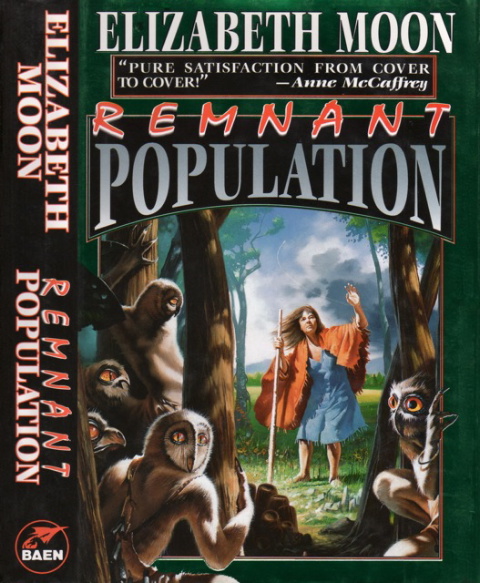
From the dust jacket front flap of the Baen first edition: Alone at last... People had always told Ofelia what to do; for once she was going to do what she wanted. She refused to get on the cryo ships, refused to leave the only world she could call home. And when they finally came for her, she hid, not that the authorities looked all that hard for one crazy old woman. Now Ofelia is alone, content to live with no more demands on her self or her time, the only remaining settler on an abandoned planet. The new settlers arrive. At first she fears that they have come to reoccupy the settlement she has come to think of as hers - but they land far away. And as Ofelia secretly listens, they are slaughtered to the last child by stone-age aliens no one knew were there. Now it will be up to Ofelia to save the aliens from Earth's wrath...
- Embassytown
China Miévillestandalone novel2011
similar byspace colonizationfar futurescience fictionchallengingaliensother star systems+1 more
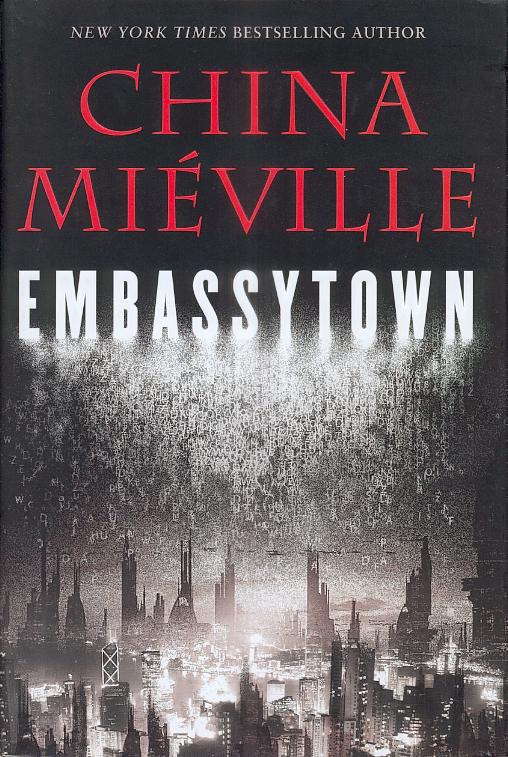
In the far future, humans have colonized a distant planet, home to the enigmatic Ariekei, sentient beings famed for a language unique in the universe, one that only a few altered human ambassadors can speak. Avice Benner Cho, a human colonist, has returned to Embassytown after years of deep-space adventure. She cannot speak the Ariekei tongue, but she is an indelible part of it, having long ago been made a figure of speech, a living simile in their language. When distant political machinations deliver a new ambassador to Arieka, the fragile equilibrium between humans and aliens is violently upset. Catastrophe looms, and Avice is torn between competing loyalties—to a husband she no longer loves, to a system she no longer trusts, and to her place in a language she cannot speak yet speaks through her.
- Building Harlequin's Moon
Larry Niven & Brenda Cooperstandalone novel2005
similar byspace colonizationfar futurescience fictionchallengingreflectiveother star systems+2 more
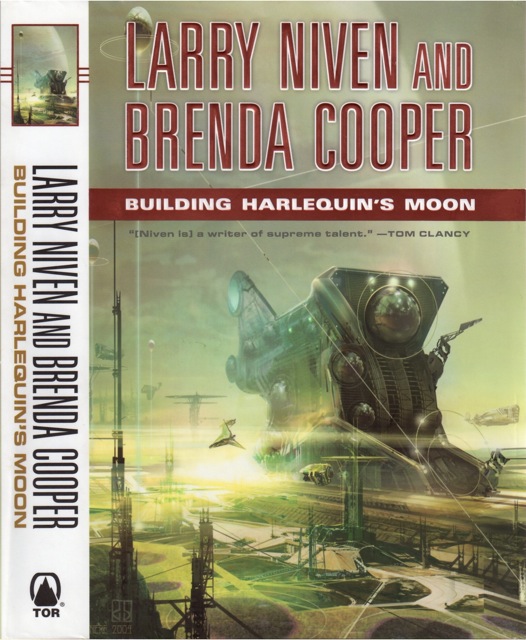
The first interstellar starship, John Glenn, fled a Solar System populated by rogue AIs and machine/human hybrids, threatened by too much nanotechnology and rife with political dangers. The John Glenn’s crew intended to terraform the nearly pristine planet Ymir, in hopes of creating a utopian society that will limit intelligent technology. But by some miscalculation they have landed in another solar system, and extremely low on the antimatter needed to continue to Ymir, they must shape the nearby planet Harlequin’s moon, Selene, into a new, temporary home. Their only hope of ever reaching Ymir is to rebuild their store of antimatter through decades of terraforming the moon. Gabriel, the head terraformer, must lead this nearly impossible task, with all the wrong materials. His primary tools are the uneducated and nearly illiterate children of the original colonists, born and bred to build Harlequin’s moon into a virtual antimatter factory. With no concept of the future and with life defined as duty, one girl, Rachel Vanowen, begins to ask herself the question: what will become of the children of Selene once the terraforming is complete.
- Noumenon Universe
series4 books2014
similar byspace colonizationfar futurescience fictionspace operaother star systems+2 more
- Nemesis
Isaac Asimovstandalone novel1989
similar byspace colonizationfar futurescience fictionspace operaother star systems+1 more
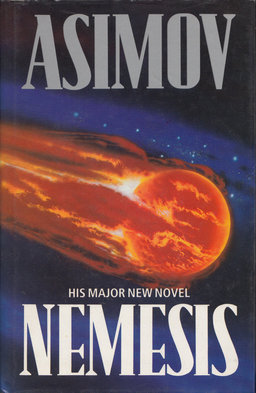
The expanding population and ensuing ecological degradation of Earth leads to the establishment of orbital habitats which continue to compete with each other as well as with Earth, leading one of them to abandon the Solar System entirely, to establish itself around a neighboring star.
- Hainish
series33 books1964
completed
similar byfar futurescience fictionreflectiveother star systems+1 more
The Hainish Cycle consists of a number of science fiction novels and stories by Ursula K. Le Guin. The cycle is set in a future history that features civilizations of human beings on planets orbiting a number of nearby stars, including Terra ("Earth"); these humans are contacting each other for the first time and establishing diplomatic relations, as well as setting up a confederacy under the guidance of the oldest of the human worlds, the peaceful planet Hain. In this history, human beings did not evolve on Earth, but they were instead the result of interstellar colonies planted by Hain in the distant past, after which interstellar travel ceased for an extended period. Some of the human races have new genetic traits, a result of ancient Hainish experiments in genetic engineering; this includes people who can dream while awake, and a world of hermaphroditic people who only enter active sexuality once per month, not knowing which sex will manifest in them. In keeping with Le Guin's narrative approach, she uses varied social and environmental settings to explore the anthropological and sociological outcomes of human evolution in those environments. The author often discounted the characterization of a so-called "Hainish Cycle".
- Ender Wiggin
series14 books1977
part of Ender's Game Universe
similar byfar futurescience fictionaliensother star systems+2 more
Orson Scott Card's Ender's Game (1985, expanded from his 1977 novella) follows child prodigy Andrew "Ender" Wiggin as he is recruited into a military training program built to prepare Earth's defenses for an anticipated third war against an insectoid alien species known as the Formics. The saga continues years later through Speaker for the Dead and Xenocide, following an older Ender as he confronts the moral weight of his role in that earlier conflict, and concludes the core arc in Children of the Mind, with Ender in Exile filling in the years between the first two books. Set within the wider Ender's Game universe, the series shifts from military coming-of-age story to slower, more philosophical science fiction as it progresses.
- 2312
Kim Stanley Robinsonstandalone novel2012
similar byspace colonizationfar futurescience fictionreflectiveother star systems+1 more
In the eponymous year, when Earth's ecology is degraded and humanity has settled throughout the solar system by terraforming and genetic engineering, mysterious disasters strike some human communities and an assortment of human types from throughout the system seek to find and eliminate the cause.
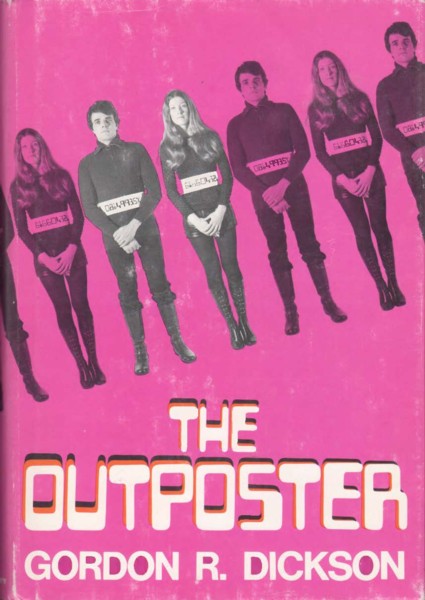
- The Outposter
Gordon R. Dicksonstandalone novel1972
similar byspace colonizationfar futurescience fictionspace operaother star systems+1 more
From the flap of the Lippincott first edition: "Rich man, poor man, beggarman, thief - the lottery played no favorites. If your number came up, you joined the rest of the losers marked for exile from overcrowded Earth. Shipped to a raw new outpost in space, you were officially called a colonist. But your whispered name was "garbage," your destination was oblivion, and you had few illusions about your chances of survival. The Outposters - a token band of specially trained personnel - were given the impossible task of guiding and protecting these outcasts in their harsh new environment. Will indifferent support from Earth, supply lines ran thin and raids by hostile aliens were increasing unchecked. Only one young Outposter, Mark Ten Roos, dared to challenge the system and change the odds. To help him, Mark hand-picked a strange assortment of allies from the new shipment of colonists: a brash opportunist, every instinct honed for personal survival; a midget woman with a professorship in philosophy; a widowed mathematician, expert in position astrophysics; an ex-marine with a dishonorable discharge. And help came to Mark from a source he had not expected - the daughter of the Outer Navy's ranking officer. When Mark Ten Roo put his plan into action, he knew he was also putting his life on the line."
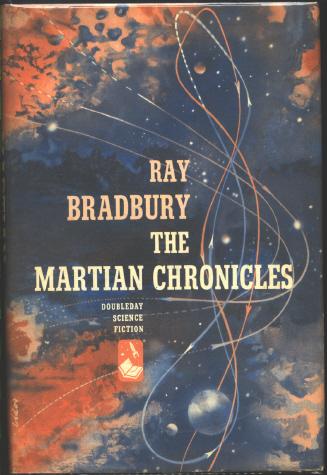
- The Martian Chronicles
series30 books1946
completed
similar byspace colonizationscience fictionreflective+2 more
The Martian Chronicles (1950) is Ray Bradbury's fix-up novel, a chain of linked short stories following waves of settlers leaving a troubled Earth to colonize Mars and encountering its native Martians, before Earth itself is ultimately consumed by nuclear war.
- Catteni Sequence
series5 books1970
completed
similar byfar futurescience fictionaliensspace operaother star systems+1 more
The Catteni series is a tetralogy of science fiction novels by American writer Anne McCaffrey. In this universe, humans are slaves of aliens, the humanoid Catteni. Woven through all four of the books are details of the relationship between Kristin Bjornsen, a former slave, and Zainal, a renegade Catteni.
- Rite of Passage
Alexei Panshinstandalone novel1968
similar byspace colonizationfar futurescience fictionreflectivespaceship
Rite of Passage is a science fiction novel by American writer Alexei Panshin. Published in 1968 as an Ace Science Fiction Special, this novel about a shipboard teenager's coming of age won that year's Nebula Award, and was nominated for the Hugo Award for Best Novel in 1969.
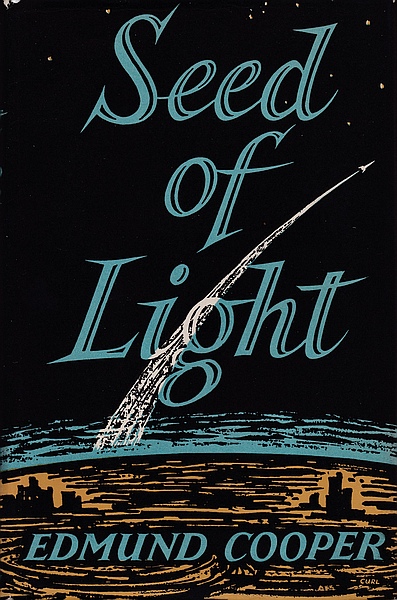
- Seed of Light
Edmund Cooperstandalone novel1959
similar byspace colonizationfar futurescience fictionspace operaspaceship+1 more
From the back cover of the Ballantine first edition: "The Solarian was a hundred metres high and, at its broadest point, twenty metres in diameter. It was designed to carry an initial crew of ten people - five men and five women - with provision for subsequent children. Yet in that vast hull every cubic metre of space was indispensable, for the ship was a self-contained world, required to support human life independently for centuries. No member of the crew, male or female, could regard themselves as a separate entity, an individual personality But each person was a part of a total life-unit, a dedicated nucleus that might one day expand into a tribe; that might, phoenixlike, bring forth a new human race."
- Isis
series3 books1980
completed
similar byspace colonizationfar futurescience fictionother star systems+2 more
The Keeper of the Isis Light, by Monica Hughes, opens a science-fiction trilogy for young readers set on the distant colony world of Isis, orbiting the star Ra, as new settlers from Earth arrive to find the planet already has a solitary young guardian who isn't glad to see them. The trilogy continues through The Guardian of Isis and The Isis Pedlar, later collected together as The Isis Trilogy.
- Star Maker
series9 books1937
completed
part of Last Men Universe
similar byscience fictionfar future+4 more
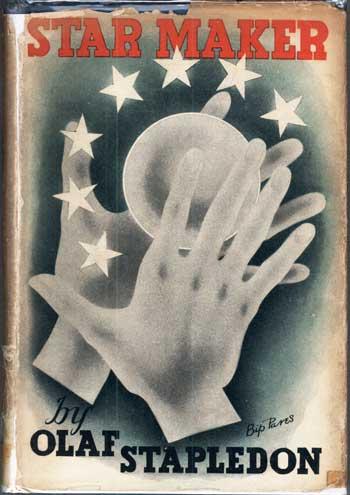
Star Maker (1937) is Olaf Stapledon's cosmic philosophical novel, tracing the rise and fall of civilizations across the universe as it builds toward questions about creation, unity, and the nature of the Star Maker behind it all, expanding the scope of his earlier Last and First Men. It is paired here with Nebula Maker, a related manuscript Stapledon wrote in the 1930s between those two novels but which went unpublished until its rediscovery in 1976, alongside a handful of shorter pieces. Together they sit within Stapledon's last-men-universe of linked visionary future histories.
- Cities in Flight
series10 books1950
completed
similar byspace colonizationscience fictionfar futurespace opera+1 more
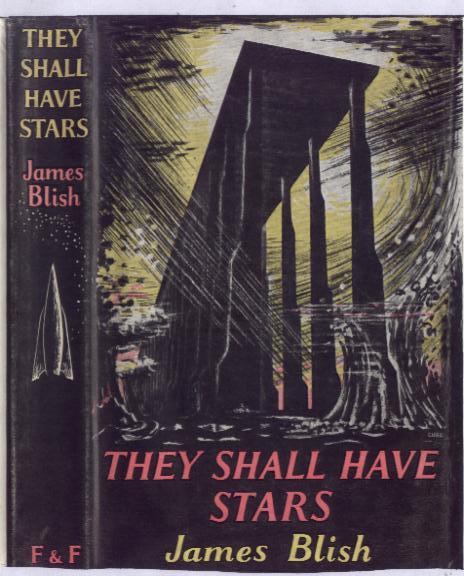
Cities in Flight is a four-volume series of science fiction novels and short stories by American writer James Blish, originally published between 1950 and 1962, which were first known collectively as the "Okie" novels. The series features entire cities that are able to fly through space using an anti-gravity device, the spindizzy. The stories cover roughly two thousand years, from the very near future to the end of the universe. One story, "Earthman, Come Home", won a Retro Hugo Award in 2004 for Best Novelette. Since 1970, the primary edition has been the omnibus volume first published in paperback by Avon Books. Over the years James Blish made many changes to these stories in response to points raised in letters from readers.
- Culture
series15 books1987
completed
part of The Culture
similar byscience fictionfar futurespace opera+3 more
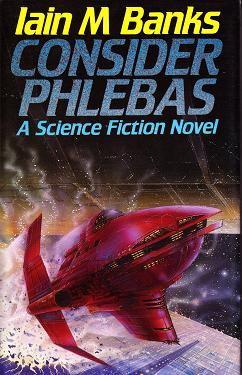
The Culture series is a science fiction series written by Scottish author Iain M. Banks and released from 1987 until 2012. The stories centre on The Culture, a utopian, post-scarcity space society of humanoid aliens and advanced superintelligent artificial intelligences living in artificial habitats spread across the Milky Way galaxy. The main themes of the series are the dilemmas that an idealistic, more-advanced civilization faces in dealing with smaller, less-advanced civilizations that do not share its ideals, and whose behaviour it sometimes finds barbaric. In some of the stories, action takes place mainly in non-Culture environments, and the leading characters are often on the fringes of the Culture, sometimes acting as agents of the Culture in its plans to civilize the galaxy. Each novel is a self-contained story with new characters, although reference is occasionally made to the events of previous novels.
- The Margarets
Sheri S. Tepperstandalone novel2007
similar byspace colonizationfar futurescience fictionspace operaother star systems+1 more
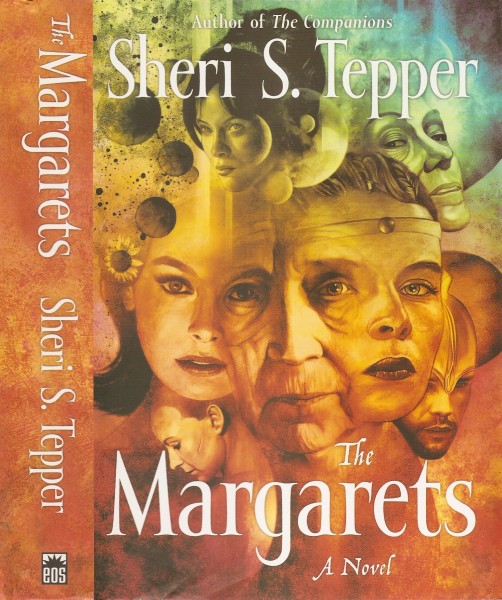
The Margarets marks the long-awaited return of one of the most respected authors in the sf community; a writer who has earned accolades and the admiration of every true aficionado of bold, brilliant, risk-taking speculative fiction. Sheri S. Tepper dazzles yet again with a powerful tale of ingenious survival and strange destiny.The only human child living in a human work colony on the Martian satellite Phobos, little Margaret Bain has devised a system for keeping the suffocating demons of boredom and loneliness at bay: She invents six imaginary companions, each an extension of her own personality, to play with. When the unproductive Phobos project is shut down, and after Margaret is forced to return to Earth with her parents, the child's other selves are lost to her. But they are not gone. Left behind, each one flourishes—refining its own persona, acquiring its own history—before ultimately dispersing to far-flung destinations throughout the universe.On a near-barren homeworld denuded by thoughtless-ness and chemistry, Margaret grows to adulthood and marries, despite the seemingly utter hopelessness of humanity's future. The Earth is so impoverished that its inhabitants must import water and other basic necessities of life—trading the only viable product the planet has left to offer . . . slaves. The time will come when Margaret must leave this world as well, expelled as part of a desperate survival plan millennia in the making—an astonishing scheme that will require her to gather together the many Margarets who are now scattered throughout the galaxy. The creator of the Margarets must now bring all her selves home . . . or watch her race perish.