Loreful
HomeDiscover
Search series, authors…⌘K
Loreful

Reading orders for SF/F series and shared universes — with your place kept in every one.

Explore

UniversesSeriesWorksAuthorsAtlas

Help

FAQAboutSite map

Account & legal

Sign inCreate accountPrivacyTerms

Data

Built on ISFDB, Wikipedia, Wikidata and Open Library. Curated reading orders carry their reasoning on the page; the rest follow publication order. Data sources & licenses

© Loreful · data: ISFDB · CC BY

More like Equoid

anchored on:british islescontemporaryscience fictionhorrorspy thrillerfunny+1 more

but

Mood

The mood the book leaves you in.

  • The reading experience is propelled by journeys, exploration, and physical risk; excitement and forward momentum dominate over dread or introspection.
  • Joy and loss are deliberately mixed; the resolution grants characters something real while taking something else away, leaving warmth and sorrow together.
  • The book demands work from the reader — dense prose, difficult structure, unfamiliar ideas, or morally uncomfortable material — as part of its intended effect.
  • Grim events, cruelty, or despair dominate the atmosphere, and the book does not soften them with comfort or comic relief.
  • The atmosphere is quietly unsettling — wrongness, unease, and the uncanny pervade the book without necessarily escalating into overt horror.
  • The book is built to move the reader; character feeling is foregrounded and major scenes aim at a strong emotional response.
  • Humor is a primary aim and the prose plays for laughs — comic situations, wit, or dialogue produce sustained comedy, not occasional levity.
  • The book insists that things can improve; effort and decency are shown to matter, and the arc bends toward better outcomes even through hardship.
  • The book teaches as it goes — real facts, history, science, or craft are conveyed in enough depth that learning is part of the reading experience.
  • The book is designed to uplift and motivate, presenting perseverance or achievement in a way that invites the reader to aspire or act.
  • The overall register is cheerful and easygoing; stakes are kept gentle and the book avoids dwelling on pain or dread.
  • Withheld information drives the experience; the book sustains enigmas and secrets the reader wants resolved, whatever its genre.
  • The book is contemplative and inward-looking, giving more weight to thought, memory, and meaning than to external events.
  • The book works as comfort reading — low tension, a soothing pace, and an atmosphere the reader can unwind in.
  • Grief, loss, or melancholy set the dominant register, and the book lets sorrow stand rather than resolving it into comfort.
  • Sustained suspense is the point; the book keeps the reader braced for what happens next through danger, pressure, or impending revelation.
  • Playful invention and charm define the register — fanciful conceits, light absurdity, and a narration that delights in its own oddity.

About

What the story runs on.

  • Stories in which extraterrestrial beings are central — as characters, cultures, or the object of the plot.
  • Stories structured as a quest — a journey undertaken to find, deliver, or destroy something of great import.
  • Stories in which staying alive against nature, catastrophe, or scarcity is the central problem.
  • Stories of lovers kept apart by law, family, faith, or station, where the obstacle to love is the plot.
  • Stories in which a friendship — its making, testing, or loss — is the emotional center.
  • Stories of growing up — a young protagonist crossing from childhood into adult knowledge and responsibility.
  • Stories about who a character truly is — self-discovery, doubled lives, and the search for a self.
  • Stories about mourning — living through the death of a loved one and what loss does to the survivors.
  • Stories in which a buried family truth — hidden parentage, crimes, or shames — surfaces and reorders the present.
  • Stories driven by maneuvering for power — factions, conspiracies, and statecraft conducted in shadow.
  • Stories in which war itself is the subject — combat, occupation, and what warfare does to soldiers and civilians.
  • Stories organized around investigating a killing — the case, the clues, and the pursuit of the killer, in any genre's clothing.

Shelf

Where it sits in the library.

    • Fiction built on magic or other supernatural elements that have no scientific explanation.
    • Secondary-world fantasy at large scale, where the fate of nations or the world turns on the protagonists' struggle.
    • Fantasy set in a recognizably modern city or contemporary world where the supernatural intrudes on everyday life.
    • Fantasy that blends in horror's atmosphere and imagery, keeping a fantastical frame around grim or frightening material.
    • Action-driven fantasy following warriors or rogues with personal stakes against sorcerous threats, rather than world-spanning conflicts.
    • Fantasy set in a real historical period or a close analogue of one, with magic woven into the era.
    • Fantasy in which protagonists cross from the ordinary world into another world through a portal or similar passage.
    • Fiction that retells or reworks a traditional fairy tale in a new form or setting.
    • Fantasy drawing directly on myths, legends, and folklore, retelling them or building on their figures and logic.
    • Fantasy of ghosts, vampires, shapeshifters, psychics, and similar phenomena, usually set in an otherwise ordinary world.
    • Fiction mixing science-fictional trappings with overtly magical or impossible elements in one setting.
    • Low-stakes fantasy emphasizing comfort, community, and everyday pleasures over conflict and peril.
    • Speculative fiction of pervasive moral ambiguity, violence, and cynicism that rejects heroic conventions — fantasy and SF alike.
      • Fiction that extrapolates from science and technology — future societies, space travel, or speculative inventions — within at least nominally natural laws.
      • Science fiction of interstellar scope — starships, galactic polities, and adventure across star systems.
      • Science fiction committed to scientific rigor, where technical plausibility constrains the story.
      • Science fiction centered on armed forces and warfare, told largely from a military point of view.
      • Science fiction of networked, corporate-dominated near futures, pairing high technology with social decay.
      • Science fiction styled on nineteenth-century steam-powered technology, often in a Victorian or pseudo-Victorian setting.
      • Fiction depicting an oppressive or catastrophic society, presented as a warning.
      • Fiction set after civilization's collapse, following survivors in the ruins of the old world.
      • Fiction in which characters move between past and future, and the mechanics or consequences of that travel drive the plot.
      • Fiction exploring a world where a historical event went differently and history diverged from ours.
      • Science fiction about humanity's first encounter and communication with an alien intelligence.
      • Science fiction in which extraterrestrial forces attack or occupy Earth and humanity resists.
      • Fiction whose primary aim is to frighten or unsettle the reader through dread, menace, or the monstrous.
      • Horror of vast, indifferent, incomprehensible entities before which humanity is insignificant, in the Lovecraft tradition.
      • Horror of decaying houses, buried family secrets, and oppressive atmosphere in the Gothic literary tradition.
      • Horror centered on hauntings and the returning dead.
      • Horror located in the mind — paranoia, obsession, and unreliable perception rather than external monsters.
      • Horror built around the reanimated dead and survival amid their outbreaks.
      • Horror defined by explicit, transgressive gore that refuses to cut away from violence.
      • Speculative fiction of the strange and uncanny that resists both natural explanation and standard genre categories.
      • Fiction organized around solving a crime or puzzle, typically following an investigator toward the identification of a culprit.
      • A puzzle-first mystery that lays out clues so the culprit's identity can be deduced before the reveal.
      • Crime fiction of moral ambiguity, fatalism, and hard-edged style, set among the corrupt and the doomed.
      • A mystery following the realistic routines of police work — forensics, interviews, and case-building.
      • A gentle mystery with an amateur sleuth, a small community, and violence kept off the page.
      • A mystery set in a past era, where the investigation works within that period's methods and society.
      • Fast-paced fiction driven by imminent danger, pursuit, or high-stakes conspiracy, built to sustain tension.
      • A thriller of espionage — agents, tradecraft, and intelligence services in conflict.
      • A thriller centered on lawyers and the courtroom, where litigation carries the suspense.
      • A thriller driven by detailed contemporary or near-future technology, often military or scientific.
      • A thriller whose tension comes from mental states and manipulation between characters rather than external action.
      • Fiction whose central plot is a romantic relationship and its development toward an emotionally satisfying resolution.
      • Romance in which one or both partners are supernatural beings, blending fantasy elements into the love story.
      • A fantasy-romance hybrid in which the romantic arc and the fantasy plot carry equal weight.
      • Romance set in a past era, with courtship shaped by the period's society and manners.
      • Romance set in the present day, without supernatural or historical elements.
      • Fiction set in a real past period, where the historical setting materially shapes characters and events.
        • General and literary fiction emphasizing prose style, character interiority, or formal ambition over genre plot conventions.
        • Fiction in a realistic world where magical events occur and are treated as ordinary, in the tradition of Latin American literature.
        • Fiction that ridicules people, institutions, or society in order to criticize them.
        • Fiction of dreamlike, irrational imagery and logic that breaks from realistic representation.
        • Fiction that plays with narrative convention through metafiction, fragmentation, and self-reference.
        • Fiction propelled by journeys, exploration, and physical peril, where action and survival carry the plot.
        • Adventure fiction of ships and seafaring — naval engagements, voyages, and life at sea.
        • Fiction of the American frontier West — gunmen, ranchers, and lawmen, typically in the late nineteenth century.
        • Fiction centered on soldiers, campaigns, and the experience of warfare, historical or imagined.
          • Fiction written primarily to amuse, using comedic situations, wit, or parody as its organizing principle.
            • Multi-generational fiction following a family or dynasty across decades, with inheritance and kinship as the through-line.
              • Fiction whose world runs on explicit game mechanics — levels, stats, and skills that characters can see and exploit.
                • Fiction about costumed or superpowered heroes and their conflicts with comparable villains.

                Practical

                How long a commitment, whether it stands alone, and whether it has finished.

                Tap a chip to ask for it · tap again to rule it out · once more to clear. Numbers show what would be left.

                • Cover of Laundry Files
                  Laundry Files

                  series · 22 books · 2004

                  similar bybritish islescontemporaryscience fictionspy thriller+4 more

                  The Laundry Files is a series of novels by British writer Charles Stross. They mix the genres of Lovecraftian horror, spy thriller, science fiction, and workplace humour. Their main character for the first five novels is "Bob Howard", a one-time I.T. consultant turned occult field agent. Howard is recruited to work for the Q-Division of SOE, otherwise known as "the Laundry", the British government agency which deals with occult threats. "Magic" is described as being a branch of applied computation (mathematics), therefore computers and equations are just as useful as, and perhaps more potent than, classical spellbooks, pentagrams, and sigils for the purpose of influencing ancient powers and opening gates to other dimensions. These occult struggles happen largely out of view of the public, as the Laundry seeks to keep the methods for contacting such powers under wraps. There are also elements of dry humour and satirisation of bureaucracy.

                • Cover of The Secret of Crickley Hall
                  The Secret of Crickley Hall

                  James Herbert · standalone novel · 2006

                  similar bybritish islescontemporarytensehorroreerie

                  The Secret of Crickley Hall is a 2006 supernatural thriller novel by the British writer James Herbert.

                • Cover of The Godsend
                  The Godsend

                  Bernard Taylor · standalone novel · 1976

                  similar bybritish islescontemporarytensehorroreerie

                  The Godsend is a horror novel by British writer Bernard Taylor. It is his debut novel and was first published in 1976 by Souvenir Press.

                • Cover of The Fog
                  The Fog

                  James Herbert · standalone novel · 1975

                  similar bycontemporarybritish islestensehorror+1 more

                  The Fog is a horror novel by English writer James Herbert, published in 1975. It is about a deadly fog that drives its victims insane when they come into contact with it.

                • Cover of Breathe
                  Breathe

                  Cliff McNish · standalone novel · 2006

                  similar bybritish islescontemporarytensehorroreerie

                  Breathe: A Ghost Story is a novel by English author Cliff McNish published in 2006 as McNish's first stand-alone novel. It is about a group of ghost children trapped inside an old farmhouse by a malignant spirit known as the Ghost Mother. Twelve-year-old Jack, suffering from chronic asthma, has just moved into the old house with his widowed mother, and discovers that the Ghost Mother wants him to herself.

                • Cover of The Burning Girls
                  The Burning Girls

                  C. J. Tudor · standalone novel · 2021

                  similar bybritish islescontemporarytensehorroreerie

                  The Burning Girls is a 2021 horror novel by British author C. J. Tudor. It was published in 2021 by Michael Joseph. The novel follows Jack Brooks, a reverend who moves into a new parish with her teenage daughter Flo to face a series of disturbing events, and a gruesome local legend that seems linked with the murder of two teenage girls 30 years previously.

                • Cover of Rats
                  Rats

                  series · 4 books · 1974

                  completed

                  similar bycontemporarybritish islestensehorror+1 more

                  The Rats, James Herbert's 1974 debut novel, imagines a plague of giant mutant rats overrunning London, told through a rotating cast of victims and survivors in the tradition of British disaster horror. It was followed by two sequels, Lair and Domain, which widen the outbreak first to the countryside and then to a besieged, apocalyptic city, completing a three-book trilogy.

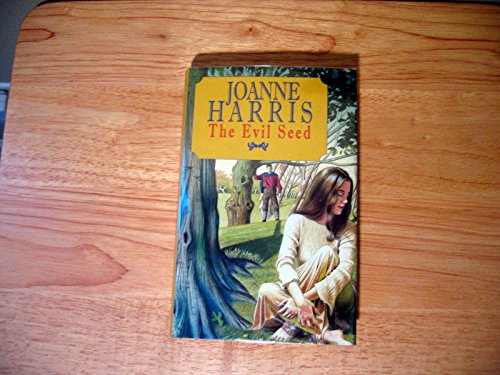
                • Cover of The Evil Seed
                  The Evil Seed

                  Joanne Harris · standalone novel · 1992

                  similar bybritish islescontemporarytensehorroreerie

                  The revised and updated reissue of Joanne Harris's first novel, an absorbing, dark, chilling story.Something inside me remembers and will not forget...When Alice Farrell is drawn to Grantchester churchyard and reads the strange inscription on Rosemary Virginia Ashley's gravestone, she feels oddly disturbed.And when former boyfriend Joe returns to Cambridge with his new girlfriend Ginny, Alice is repelled by the ethereal, lavender-eyed beauty - and is certain of her evil.Then Alice finds an old diary in Ginny's room and reads the story of Daniel Holmes, who lived in Cambridge forty years earlier, and fell under the fatal spell of Rosemary Ashley. As the two stories intertwine, Alice's suspicions about Ginny increase - until the past meets present in a terrifying climax...

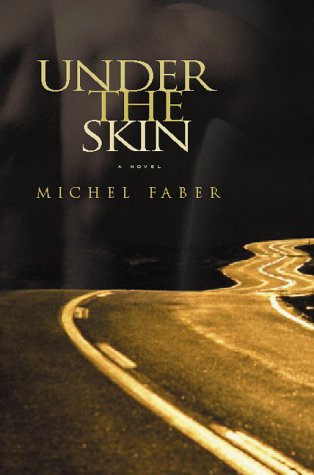
                • Cover of Under the Skin
                  Under the Skin

                  Michel Faber · standalone novel · 2000

                  similar bybritish islescontemporaryscience fictionhorroreerie

                  Under the Skin is a 2000 science fiction novel by Michel Faber. Set on the coast in north-central Scotland, it traces an alien who, assuming human form, drives around the countryside picking up male hitchhikers whom she drugs and delivers to her home planet. The novel, which was Faber's debut, was shortlisted for the 2000 Whitbread Award. It was later loosely adapted into a 2013 film of the same name directed by Jonathan Glazer.

                • Cover of The House on the Strand
                  The House on the Strand

                  Daphne du Maurier · standalone novel · 1969

                  similar bybritish islescontemporaryscience fictioneerie+1 more

                  The House on the Strand is a novel by Daphne du Maurier, first published in the UK in 1969 by Victor Gollancz, with a jacket illustration by her daughter, Flavia Tower. The US edition was published by Doubleday.

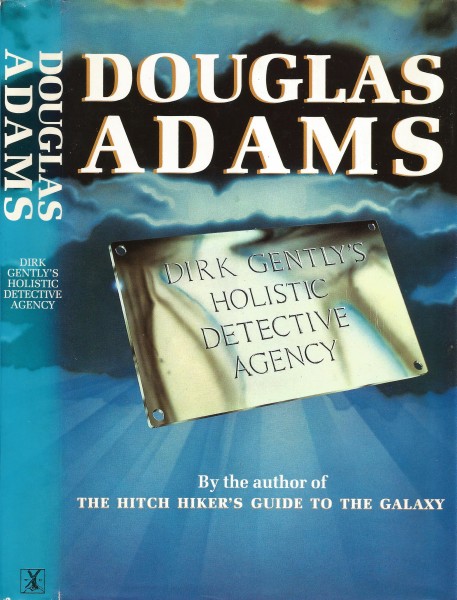
                • Cover of Dirk Gently
                  Dirk Gently

                  series · 3 books · 1987

                  completed

                  part of The Hitchhiker's Guide to the Galaxy Universe

                  similar bycontemporarybritish islesfunnyscience fiction

                  Dirk Gently's Holistic Detective Agency (1987) introduces Douglas Adams's eccentric investigator, whose approach treats all events and objects as ultimately connected however implausibly, as a case involving time travel, a ghost, and a Cambridge murder tangles into one plot. Adams completed one further full novel, The Long Dark Tea-Time of the Soul (1988), before his death; The Salmon of Doubt (2002) later collected his unfinished notes toward a third book alongside essays and other writing, rather than completing the story.

                • Cover of Thieving Fear
                  Thieving Fear

                  Ramsey Campbell · standalone novel · 2008

                  similar bybritish islescontemporarytensehorroreerie

                  A MASTERLY WORK OF CLAUSTROPHOBIA AND PSYCHIC TERRORCharlotte Nolan and her cousins may not have ended up in the jobs they hoped to have when they were teenagers, but they've made their way in life. Charlotte works for a London publisher, Ellen cares for the elderly, Hugh has left teaching to work in a supermarket while his brother Rory is a controversial artist. Then more than their jobs begin to go wrong as something reaches out of the past for them. What has it to do with the summer night they spent on Thursaston Common? If the dreams they had that night are catching up with them, how is the Victorian occultist Arthur Pendemon involved? Before the nightmare ends more than one of them will have to enter what remains of Pendemon's house and confront what still lives there in the dark.

                • Cover of The Survivor
                  The Survivor

                  James Herbert · standalone novel · 1976

                  similar bybritish islescontemporarytensehorror

                  The Survivor is a British horror novel written by James Herbert and published by the New English Library in 1976. It is the third novel by Herbert, and the second not part of a wider series. It was the basis of the 1981 film of the same name, starring Robert Powell and Jenny Agutter. Herbert described the movie as "terrible ... absolute rubbish."

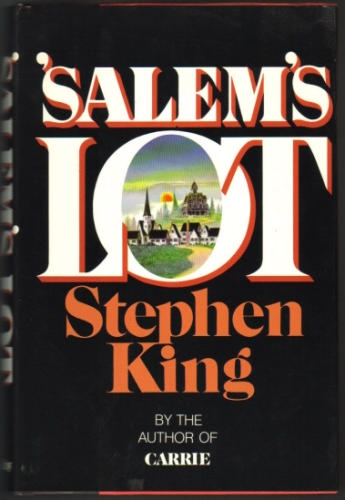
                • Cover of Jerusalem's Lot
                  Jerusalem's Lot

                  series · 3 books · 1975

                  similar bycontemporarytensehorroreerie

                  Stephen King's 1975 novel 'Salem's Lot follows writer Ben Mears as he returns to his childhood town of Jerusalem's Lot, Maine, only to discover that its residents are being turned into vampires by a newly arrived stranger. It transplants Gothic vampire horror into a small New England community, tracking that community's collapse under a supernatural siege. It is a single, self-contained novel.

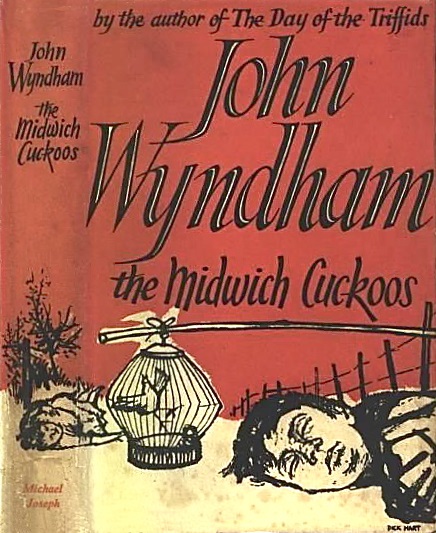
                • Cover of The Midwich Cuckoos
                  The Midwich Cuckoos

                  John Wyndham · standalone novel · 1957

                  similar bybritish islestensescience fictioneerie

                  The Midwich Cuckoos is a 1957 science fiction novel written by the English author John Wyndham. It tells the tale of an English village in which the women become pregnant by brood parasitic aliens. The book has been praised by many critics, including the dramatist Dan Rebellato, who called it "a searching novel of moral ambiguities", and the novelist Margaret Atwood, who called the book Wyndham's "chef d'œuvre". The book has been adapted for film, radio, and television.

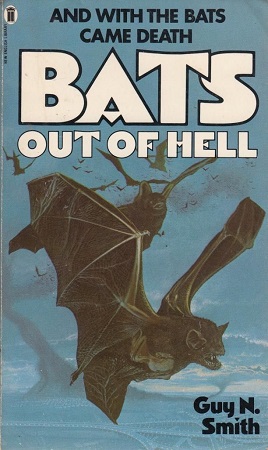
                • Cover of Bats Out of Hell
                  Bats Out of Hell

                  Guy N. Smith · standalone novel · 1978

                  similar bycontemporarybritish islestensescience fictionhorror

                  Professor Brian Newman had accidently created a deadly new virus at the Midland Biological Research Centre. In a single glass cage in his laboratory, its first victims were slowly dying in agony. For the sake of the world, the bats in that cage must never be released. But glass is all too easily broken.........

                • Cover of The Damnation Game
                  The Damnation Game

                  Clive Barker · standalone novel · 1985

                  similar bycontemporarybritish islestensehorror

                  Marty Strauss is a compulsive gambler fresh out of prison when he's hired as bodyguard for Joseph Whitehead, a reclusive tycoon whose fortune and continued existence trace back to a bargain struck decades earlier, during World War II, with a man named Mamoulian. That bargain is coming due: Mamoulian, who commands powers reaching well past death, wants what he's owed, and Whitehead's household -- his wife, his daughter Carys, his previous bodyguard -- is caught in the middle of a decades-old debt finally being called in. Marty, out of his depth from the start, finds himself the only one willing to stand against Mamoulian. Clive Barker's first novel.

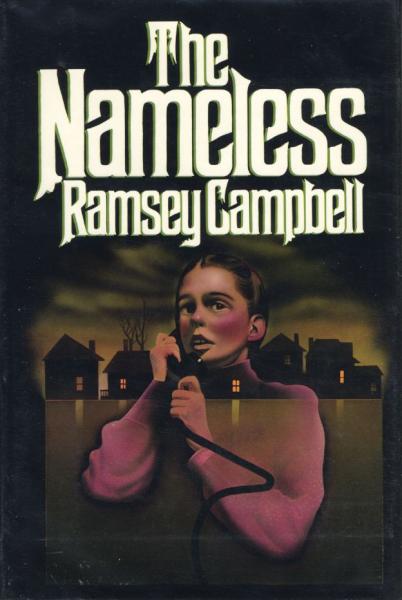
                • Cover of The Nameless
                  The Nameless

                  Ramsey Campbell · standalone novel · 1981

                  similar bycontemporarybritish islestensehorror

                  A call for help... from a little girl long dead. Barbara Waugh experienced the worst horror a mother can imagine. Her little girl, Angela, was murdered. Horribly. But now, years later, mysterious phone calls bring both hope and fear. Each time, the girl's voice on the other end simply pleads, 'Mummy, help me.' Could Angela still be alive after all? Barbara's desperate search for the truth - and her daughter - will lead her into a living nightmare, an evil world of torture, murder and gruesome rituals, where the initiated have abandoned their names... and are searching for new victims.

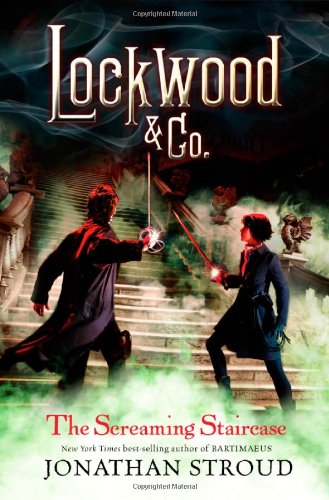
                • Cover of Lockwood & Co.
                  Lockwood & Co.

                  series · 6 books · 2013

                  similar bybritish islescontemporaryeerie+1 more

                  Lockwood & Co. is a young adult supernatural thriller series by Jonathan Stroud. It follows three young operatives of a psychic detection agency as they fight ghosts in London, England.

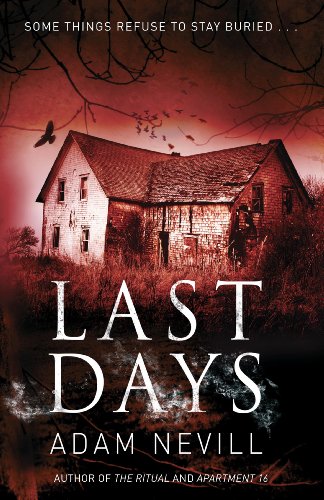
                • Cover of Last Days
                  Last Days

                  Adam Nevill · standalone novel · 2012

                  similar bycontemporarybritish islestensehorroreerie

                  Last Days is a 2012 horror novel by the British author Adam Nevill. The book was first published in the United Kingdom on 24 May 2012 by Pan Macmillan and was published in the United States on 26 February 2013 through St. Martin's Griffin. It won the 2013 British Fantasy Award for Best Horror Novel and film rights for Last Days were first optioned by Adam Storke in early 2014. The option has subsequently passed to another film production company.

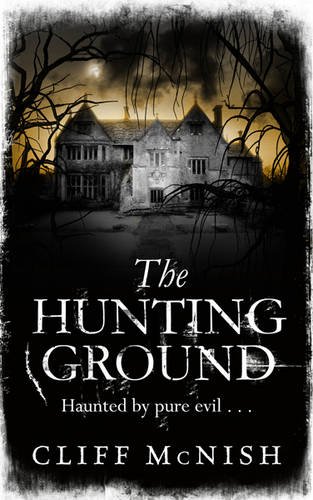
                • Cover of The Hunting Ground
                  The Hunting Ground

                  Cliff McNish · standalone novel · 2011

                  similar bycontemporarybritish islestensehorroreerie

                  When Elliott and his brother, Ben, move into the old and crumbling Glebe House they don't expect to find themselves sharing it with ghosts. But soon sinister events are unfolding. An old diary reveals glimpses of the mansion's past - and of a terrible tragedy. A mysterious woman talks to the dead. And evil lurks in the East Wing - a hideous labyrinth of passageways devised by a truly twisted mind. Can Elliott and his family escape the clutches of Glebe House? Or will they be trapped in the maze of corridors, forever hunted by the dead?

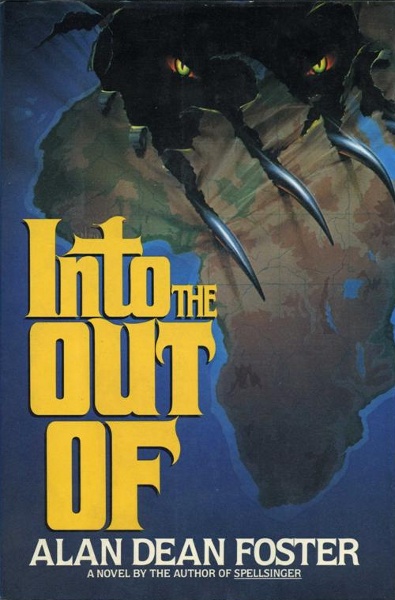
                • Cover of Into the Out of
                  Into the Out of

                  Alan Dean Foster · standalone novel · 1986

                  similar bycontemporarytensescience fictionhorroreerie

                  Into the Out Of (1986) is a horror-science fiction novel by American writer Alan Dean Foster.

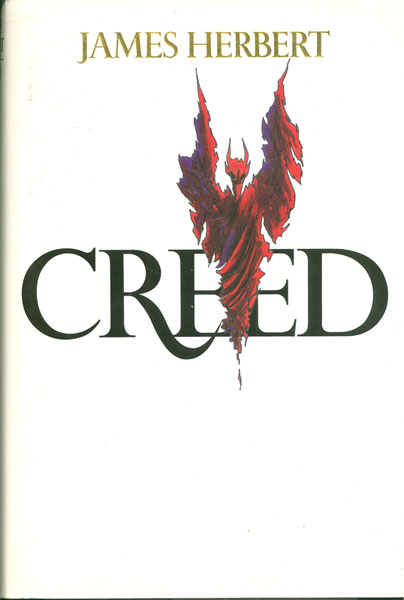
                • Cover of Creed
                  Creed

                  James Herbert · standalone novel · 1990

                  similar bycontemporarybritish islestensehorroreerie

                  Remember with fear. Sometimes horror is in the mind. And sometimes it's real. Telling the difference isn't always easy. It wasn't for Joe Creed. He'd just photographed the unreal. Now he had to pay the price. Because he always thought that demons were just a joke. But the joke was on him. And it wasn't very funny. It was deadly.

                • Cover of Cell
                  Cell

                  Stephen King · standalone novel · 2006

                  similar bycontemporarytensescience fictionhorror

                  In Cell, King taps into readers fears of technological warfare and terrorism. Mobile phones deliver the apocalypse to millions of unsuspecting humans by wiping their brains of any humanity, leaving only aggressive and destructive impulses behind. Those without cell phones, like illustrator Clayton Riddell and his small band of "normies," must fight for survival, and their journey to find Clayton's estranged wife and young son rockets the book toward resolution.