Loreful
HomeDiscover
Search series, authors…⌘K
Loreful

Reading orders for SF/F series and shared universes — with your place kept in every one.

Explore

UniversesSeriesWorksAuthorsAtlas

Help

FAQAboutSite map

Account & legal

Sign inCreate accountPrivacyTerms

Data

Built on ISFDB, Wikipedia, Wikidata and Open Library. Curated reading orders carry their reasoning on the page; the rest follow publication order. Data sources & licenses

© Loreful · data: ISFDB · CC BY

More like Evernight

anchored on:paranormal romanceeurope19th centurymadnessredemptionassassins+3 more

but

Mood

The mood the book leaves you in.

  • The reading experience is propelled by journeys, exploration, and physical risk; excitement and forward momentum dominate over dread or introspection.
  • Joy and loss are deliberately mixed; the resolution grants characters something real while taking something else away, leaving warmth and sorrow together.
  • The book demands work from the reader — dense prose, difficult structure, unfamiliar ideas, or morally uncomfortable material — as part of its intended effect.
  • Grim events, cruelty, or despair dominate the atmosphere, and the book does not soften them with comfort or comic relief.
  • The atmosphere is quietly unsettling — wrongness, unease, and the uncanny pervade the book without necessarily escalating into overt horror.
  • The book is built to move the reader; character feeling is foregrounded and major scenes aim at a strong emotional response.
  • Humor is a primary aim and the prose plays for laughs — comic situations, wit, or dialogue produce sustained comedy, not occasional levity.
  • The book insists that things can improve; effort and decency are shown to matter, and the arc bends toward better outcomes even through hardship.
  • The book teaches as it goes — real facts, history, science, or craft are conveyed in enough depth that learning is part of the reading experience.
  • The book is designed to uplift and motivate, presenting perseverance or achievement in a way that invites the reader to aspire or act.
  • The overall register is cheerful and easygoing; stakes are kept gentle and the book avoids dwelling on pain or dread.
  • Withheld information drives the experience; the book sustains enigmas and secrets the reader wants resolved, whatever its genre.
  • The book is contemplative and inward-looking, giving more weight to thought, memory, and meaning than to external events.
  • The book works as comfort reading — low tension, a soothing pace, and an atmosphere the reader can unwind in.
  • Grief, loss, or melancholy set the dominant register, and the book lets sorrow stand rather than resolving it into comfort.
  • Sustained suspense is the point; the book keeps the reader braced for what happens next through danger, pressure, or impending revelation.
  • Playful invention and charm define the register — fanciful conceits, light absurdity, and a narration that delights in its own oddity.

About

What the story runs on.

  • Stories structured as a quest — a journey undertaken to find, deliver, or destroy something of great import.
  • Stories in which staying alive against nature, catastrophe, or scarcity is the central problem.
  • Stories of lovers kept apart by law, family, faith, or station, where the obstacle to love is the plot.
  • Stories in which a friendship — its making, testing, or loss — is the emotional center.
  • Stories of growing up — a young protagonist crossing from childhood into adult knowledge and responsibility.
  • Stories about who a character truly is — self-discovery, doubled lives, and the search for a self.
  • Stories about mental unraveling — descent into madness, delusion, and minds at war with themselves.
  • Stories about mourning — living through the death of a loved one and what loss does to the survivors.
  • Stories in which a buried family truth — hidden parentage, crimes, or shames — surfaces and reorders the present.
  • Stories driven by maneuvering for power — factions, conspiracies, and statecraft conducted in shadow.
  • Stories in which war itself is the subject — combat, occupation, and what warfare does to soldiers and civilians.
  • Stories organized around investigating a killing — the case, the clues, and the pursuit of the killer, in any genre's clothing.

Shelf

Where it sits in the library.

    • Fiction built on magic or other supernatural elements that have no scientific explanation.
    • Secondary-world fantasy at large scale, where the fate of nations or the world turns on the protagonists' struggle.
    • Fantasy set in a recognizably modern city or contemporary world where the supernatural intrudes on everyday life.
    • Fantasy that blends in horror's atmosphere and imagery, keeping a fantastical frame around grim or frightening material.
    • Action-driven fantasy following warriors or rogues with personal stakes against sorcerous threats, rather than world-spanning conflicts.
    • Fantasy set in a real historical period or a close analogue of one, with magic woven into the era.
    • Fantasy in which protagonists cross from the ordinary world into another world through a portal or similar passage.
    • Fiction that retells or reworks a traditional fairy tale in a new form or setting.
    • Fantasy drawing directly on myths, legends, and folklore, retelling them or building on their figures and logic.
    • Fantasy of ghosts, vampires, shapeshifters, psychics, and similar phenomena, usually set in an otherwise ordinary world.
    • Fiction mixing science-fictional trappings with overtly magical or impossible elements in one setting.
    • Low-stakes fantasy emphasizing comfort, community, and everyday pleasures over conflict and peril.
    • Speculative fiction of pervasive moral ambiguity, violence, and cynicism that rejects heroic conventions — fantasy and SF alike.
      • Fiction that extrapolates from science and technology — future societies, space travel, or speculative inventions — within at least nominally natural laws.
      • Science fiction of interstellar scope — starships, galactic polities, and adventure across star systems.
      • Science fiction committed to scientific rigor, where technical plausibility constrains the story.
      • Science fiction centered on armed forces and warfare, told largely from a military point of view.
      • Science fiction of networked, corporate-dominated near futures, pairing high technology with social decay.
      • Science fiction styled on nineteenth-century steam-powered technology, often in a Victorian or pseudo-Victorian setting.
      • Fiction depicting an oppressive or catastrophic society, presented as a warning.
      • Fiction set after civilization's collapse, following survivors in the ruins of the old world.
      • Fiction in which characters move between past and future, and the mechanics or consequences of that travel drive the plot.
      • Fiction exploring a world where a historical event went differently and history diverged from ours.
      • Science fiction about humanity's first encounter and communication with an alien intelligence.
      • Science fiction in which extraterrestrial forces attack or occupy Earth and humanity resists.
      • Fiction whose primary aim is to frighten or unsettle the reader through dread, menace, or the monstrous.
      • Horror of vast, indifferent, incomprehensible entities before which humanity is insignificant, in the Lovecraft tradition.
      • Horror of decaying houses, buried family secrets, and oppressive atmosphere in the Gothic literary tradition.
      • Horror centered on hauntings and the returning dead.
      • Horror located in the mind — paranoia, obsession, and unreliable perception rather than external monsters.
      • Horror built around the reanimated dead and survival amid their outbreaks.
      • Horror defined by explicit, transgressive gore that refuses to cut away from violence.
      • Speculative fiction of the strange and uncanny that resists both natural explanation and standard genre categories.
      • Fiction organized around solving a crime or puzzle, typically following an investigator toward the identification of a culprit.
      • A puzzle-first mystery that lays out clues so the culprit's identity can be deduced before the reveal.
      • Crime fiction of moral ambiguity, fatalism, and hard-edged style, set among the corrupt and the doomed.
      • A mystery following the realistic routines of police work — forensics, interviews, and case-building.
      • A gentle mystery with an amateur sleuth, a small community, and violence kept off the page.
      • A mystery set in a past era, where the investigation works within that period's methods and society.
      • Fast-paced fiction driven by imminent danger, pursuit, or high-stakes conspiracy, built to sustain tension.
      • A thriller of espionage — agents, tradecraft, and intelligence services in conflict.
      • A thriller centered on lawyers and the courtroom, where litigation carries the suspense.
      • A thriller driven by detailed contemporary or near-future technology, often military or scientific.
      • A thriller whose tension comes from mental states and manipulation between characters rather than external action.
      • Fiction whose central plot is a romantic relationship and its development toward an emotionally satisfying resolution.
      • Romance in which one or both partners are supernatural beings, blending fantasy elements into the love story.
      • A fantasy-romance hybrid in which the romantic arc and the fantasy plot carry equal weight.
      • Romance set in a past era, with courtship shaped by the period's society and manners.
      • Romance set in the present day, without supernatural or historical elements.
      • Fiction set in a real past period, where the historical setting materially shapes characters and events.
        • General and literary fiction emphasizing prose style, character interiority, or formal ambition over genre plot conventions.
        • Fiction in a realistic world where magical events occur and are treated as ordinary, in the tradition of Latin American literature.
        • Fiction that ridicules people, institutions, or society in order to criticize them.
        • Fiction of dreamlike, irrational imagery and logic that breaks from realistic representation.
        • Fiction that plays with narrative convention through metafiction, fragmentation, and self-reference.
        • Fiction propelled by journeys, exploration, and physical peril, where action and survival carry the plot.
        • Adventure fiction of ships and seafaring — naval engagements, voyages, and life at sea.
        • Fiction of the American frontier West — gunmen, ranchers, and lawmen, typically in the late nineteenth century.
        • Fiction centered on soldiers, campaigns, and the experience of warfare, historical or imagined.
          • Fiction written primarily to amuse, using comedic situations, wit, or parody as its organizing principle.
            • Multi-generational fiction following a family or dynasty across decades, with inheritance and kinship as the through-line.
              • Fiction whose world runs on explicit game mechanics — levels, stats, and skills that characters can see and exploit.
                • Fiction about costumed or superpowered heroes and their conflicts with comparable villains.

                Practical

                How long a commitment, whether it stands alone, and whether it has finished.

                Tap a chip to ask for it · tap again to rule it out · once more to clear. Numbers show what would be left.

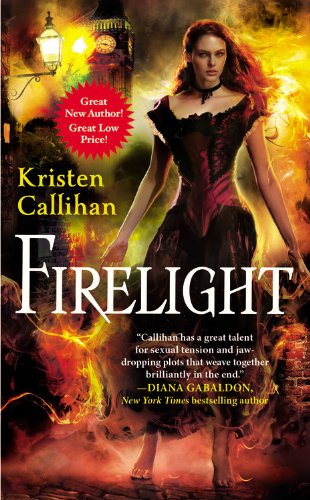
                • Cover of Darkest London
                  Darkest London

                  series · 8 books · 2012

                  similar by19th centuryparanormal romancebritish isles+4 more

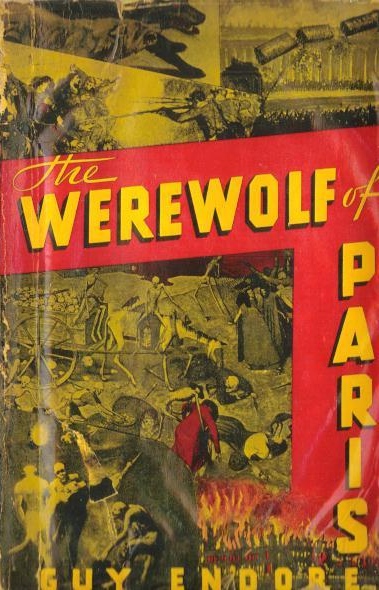
                • Cover of The Werewolf of Paris
                  The Werewolf of Paris

                  Guy Endore · standalone novel · 1933

                  similar by19th centurydarkmadnesseurope

                  The Werewolf of Paris (1933) is a Gothic horror novel by American writer Guy Endore. The novel follows Bertrand Caillet, the eponymous werewolf, throughout the tumultuous events of the Franco-Prussian War and the Paris Commune of 1870–71. Some literature experts have compared this book with Dracula by Bram Stoker and they have identified it as the Dracula of werewolf fiction.

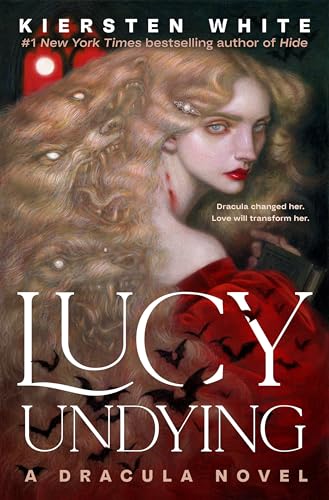
                • Cover of Lucy Undying
                  Lucy Undying

                  Kiersten White · standalone novel · 2024

                  similar byparanormal romancedarkemotionalbritish islesfantasy

                  Her name was written in the pages of someone else’s story: Lucy Westenra was one of Dracula’s first victims. But her death was only the beginning. Lucy rose from the grave a vampire and has spent her immortal life trying to escape from Dracula’s clutches—and trying to discover who she really is and what she truly wants. Her undead life takes an unexpected turn in twenty-first-century London, when she meets another woman, Iris, who is also yearning to break free from her past. Iris’s family has built a health empire based on a sinister secret, and they’ll do anything to stay in power. Lucy has long believed she would never love again. Yet she finds herself compelled by the charming Iris while Iris is equally mesmerized by the confident and glamorous Lucy. But their intense connection and blossoming love is threatened by outside forces. Iris’s mother won’t let go of her without a fight, and Lucy’s past still has fangs: Dracula is on the prowl once more. Lucy Westenra has been a tragically murdered teen, a lonesome adventurer, and a fearsome hunter, but happiness has always eluded her. Can she find the strength to destroy Dracula once and for all, or will her heart once again be her undoing?

                • Cover of Sweep: The Story of a Girl and Her Monster
                  Sweep: The Story of a Girl and Her Monster

                  Jonathan Auxier · standalone novel · 2018

                  similar by19th centurydarkemotionalbritish islesfantasyhistorical fantasy

                  Victorian London relied on climbing boys orphans owned by chimney sweeps to clean flues and protect homes from fire. Eleven-year-old Nan Sparrow is quite possibly the best climber who ever lived and a girl. With her wits and will, she s managed to beat the deadly odds time and time again.

                • Cover of The Private Memoirs and Confessions of a Justified Sinner
                  The Private Memoirs and Confessions of a Justified Sinner

                  James Hogg · standalone novel · 1824

                  similar by19th centurydarkmadnessbritish isles

                  The Private Memoirs and Confessions of a Justified Sinner: Written by Himself: With a detail of curious traditionary facts and other evidence by the editor is a novel by the Scottish author James Hogg, published anonymously in 1824.

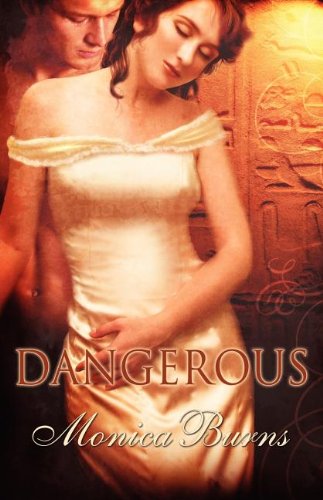
                • Cover of Dangerous
                  Dangerous

                  Monica Burns · standalone novel · 2009

                  similar by19th centuryemotionalparanormal romanceeuropebritish isles

                  "His love could be the death of her. When Constance Athelson, Viscountess Westbury, hides her face to attend the Black Widows Ball, she never expected to find erotic passion in a masked stranger's arms. The torrent of lust isn't enough to drown out her dubious "gift" for seeing visions and talking to the dead. Terrified of being found out, she secures a position cataloguing archaeological artifacts for the Earl of Wyndham—where she encounters a ghost begging her to break a curse plaguing his family. Before his mysterious lover disappeared, Lucien Blakemore was tempted to throw caution aside. Yet he knows one taste of love will unleash the curse that drove his father and brother to murder their wives. When he returns home empty handed and empty hearted, he's shocked to discover his new assistant is the goddess who fled into the night. But could her presence be part of a murderous plot to unearth the location of a secret Egyptian tomb? The answer—or his doom—lies behind the desire shining in his seductress's eyes." – from this book's product page on Samhain's website as of 2016-11-06.

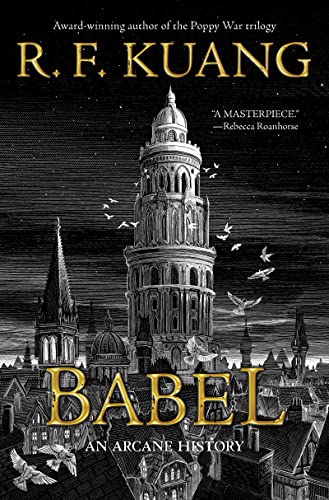
                • Cover of Babel, or, The Necessity of Violence: An Arcane History of the Oxford Translators' Revolution
                  Babel, or, The Necessity of Violence: An Arcane History of the Oxford Translators' Revolution

                  R. F. Kuang · standalone novel · 2022

                  similar by19th centurydarkbritish islesfantasyhistorical fantasy

                  Babel, or The Necessity of Violence: An Arcane History of the Oxford Translators' Revolution is a 2022 novel of speculative fiction by R. F. Kuang set in a fantastical version of Oxford in 1830s England. Thematically similar to The Poppy War (2018–20), Kuang's first book series, the book criticizes British imperialism, racism and capitalism, and the complicity of academia, knowledge, and language in perpetuating and enabling them.

                • Cover of A Strange Story
                  A Strange Story

                  Edward Bulwer-Lytton · standalone novel · 1861

                  similar by19th centurydarkmadnessbritish islesfantasy

                  A Strange Story is an 1862 Gothic novel by the British writer Edward Bulwer-Lytton. It was originally serialised in the magazine All the Year Round edited by Charles Dickens. It was then published in two volumes by the London publishing house Sampson Low. The American release was handled by Harper and Brothers of New York. The novel reflects Bulwer-Lytton's interest in themes of the occult and mesmerism.

                • Cover of The Sorrows of Satan
                  The Sorrows of Satan

                  Marie Corelli · standalone novel · 1895

                  similar by19th centurydarkbritish islesfantasy+1 more

                  The Sorrows of Satan is an 1895 Faustian novel by Marie Corelli. It is widely regarded as one of the world's first best-sellers – partly due to an upheaval in the system British libraries used to purchase their books, and partly due to its popular appeal. Roundly condemned by contemporary literary critics for Corelli's moralistic and prosaic style, it nonetheless had strong supporters, including Oscar Wilde and various members of royalty.

                • Cover of The Stress of Her Regard Universe
                  The Stress of Her Regard Universe

                  series · 3 books · 1989

                  similar by19th centurydarkhistorical fantasy+3 more

                  Tim Powers's The Stress of Her Regard reimagines the lives of Byron, Shelley, and Keats through a secret history in which they are stalked and inspired by a nephilim, a shape-shifting vampiric being that acts as a deadly muse. Physician Michael Crawford is drawn into their orbit after inadvertently marrying himself to one of the creatures, setting off a pursuit across the Alps to break her hold on him. The 2012 sequel, Hide Me Among the Graves, moves the same secret history forward into Victorian London.

                • Cover of Mortal Love
                  Mortal Love

                  Elizabeth Hand · standalone novel · 2004

                  similar bydark19th centurymadnesseuropebritish islesfantasy

                  "A tragedy that occurs in a hospital for the insane in Frankfurt, Germany, will have repercussions across decades and eras. Several weeks after the death of a female patient in a terrible fire, the poet Algernon Swinburne follows a mysterious woman through the shadows toward a remarkable event at once enthralling, stimulating, and terrifying beneath the streets of London. Years later, at the start of a new century, a struggling young artist, Radborne Comstock, is introduced to a ravishing beauty who immediately becomes his muse, his desire, and his greatest torment. It is a legacy of pleasure and madness that will be passed down to his grandson, the dilettante actor Valentine Comstock, who is plagued by disturbing and increasingly erotic visions. And in the present day a journalist named Daniel Rowlands is seduced by the bewitching and mercurial Larkin Meade, who holds the key to lost artistic masterpieces, and to secrets too devastating to imagine." "What connects these men - and others whose grand destinies are to imagine and create - is one woman. Eternal, unknowable, the very ideal of beauty and desirability, she exists somewhere beyond the boundaries of time, a sensuous dream of flesh and fantasy to inspire or destroy, an immortal lover...or an angel of death."--BOOK JACKET.

                • Cover of Drood
                  Drood

                  Dan Simmons · standalone novel · 2009

                  similar by19th centurydarkmadnessbritish isles

                  Drood is a novel written by Dan Simmons. The book was initially published on February 1, 2009 by Little, Brown and Company. It is a fictionalized account of the last five years of Charles Dickens' life.

                • Cover of Immortal Rogues
                  Immortal Rogues

                  series · 3 books · 2003

                  similar by19th centuryparanormal romanceemotionalbritish isles+1 more

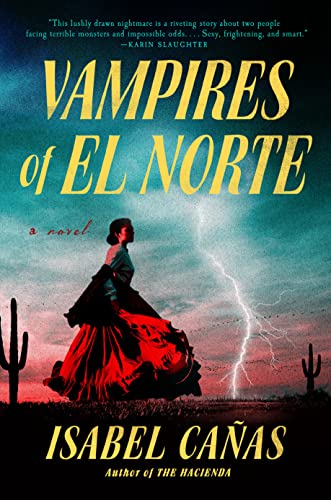
                • Cover of Vampires of El Norte
                  Vampires of El Norte

                  Isabel Cañas · standalone novel · 2023

                  similar by19th centuryemotionalparanormal romancehistorical fantasy+1 more

                  Vampires of El Norte is a 2023 novel by Isabel Cañas. The novel centers on the romance between Nena, daughter of a ranchero, and the vaquero Néstor. The novel takes place during the Mexican–American War, with the addition of vampires.

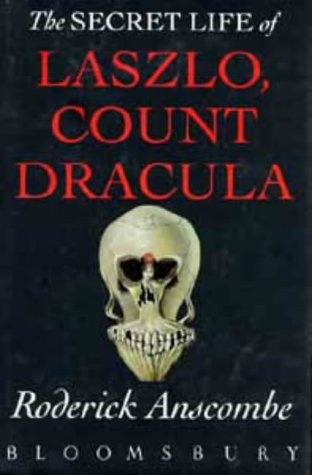
                • Cover of The Secret Life of Laszlo, Count Dracula
                  The Secret Life of Laszlo, Count Dracula

                  Roderick Anscombe · standalone novel · 1994

                  similar by19th centurydarkmadnesseurope

                  From the front flap of the Hyperion first edition: "In his mesmerizing fictional debut, psychiatrist Roderick Anscombe takes readers into the fevered mind of Count Dracula the man - aristocrat, doctor, and helpless killer of young women. There are no vampires in this stunningly erotic reinvention of the classic myth, only tormented human beings. Tortured by his own perverse desires, the distinguished Dr. Dracula is drawn to possess and destroy young women, first in Paris where he is studying with the renowned pioneer of hypnosis, Charcot, and then in the Hungarian countryside, as the Count takes over the deteriorating family estate. Even as he maintains the facade of the aristocratic life, Dracula is drawn inexorably into a world of violent emotion, blood lust, and self-loathing. Swirling between the scientific fact and superstition of the day - and propelled into the medical epidemics and politics of the Austro-Hungarian empire - Dracula becomes a public saint and a private savage, and all the while a plausible and pitiable human being."

                • Cover of The Grey Horse
                  The Grey Horse

                  R. A. MacAvoy · standalone novel · 1987

                  similar by19th centuryemotionalbritish islesfantasyhistorical fantasy

                  Publisher's description: "Set against the colorful and magical backdrop of Ireland. It chronicles a time when the Irish people suffered under harsh English overlords who sought to destroy their culture and way of life. Into the Irish town of Carraroe, a magnificent, completely grey stallion appears. The horse brings with him the promise of better times and magical happenings, for he is actually the shaped-shifted form of Ruairi MacEibhir, journeyed to such a time of danger in order to win the hand of the woman he loves."

                • Cover of Gemma Doyle
                  Gemma Doyle

                  series · 4 books · 2003

                  similar by19th centurybritish islesfantasyhistorical fantasy+2 more

                  The Gemma Doyle Trilogy is a trilogy of fantasy novels by American writer Libba Bray. They are told from the perspective of Gemma Doyle, a girl in the late nineteenth century. The Gemma Doyle Trilogy consists of three books: A Great and Terrible Beauty, Rebel Angels, and The Sweet Far Thing.

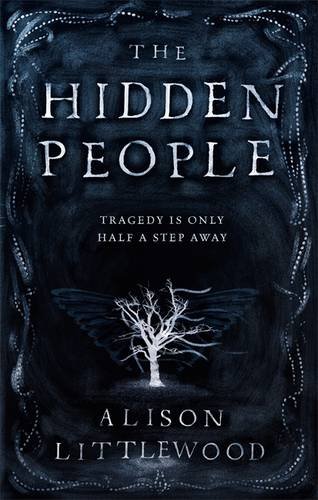
                • Cover of The Hidden People
                  The Hidden People

                  Alison Littlewood · standalone novel · 2016

                  similar by19th centurydarkmadnessbritish isleshistorical fantasy

                  The Hidden People is a historical fantasy and horror novel by English writer Alison Littlewood, first published in October 2016 in the United Kingdom by Jo Fletcher Books. It is based on the 1895 incident in County Tipperary, Ireland, where Bridget Cleary was burnt alive by her husband, who believed she was a fairy changeling.

                • Cover of The House on the Borderland
                  The House on the Borderland

                  William Hope Hodgson · standalone novel · 1908

                  similar bydarkmadnessbritish isles+1 more

                  The House on the Borderland (1908) is a supernatural horror novel by British fantasist William Hope Hodgson. The novel is a hallucinatory account of a recluse's stay at a remote house, and his experiences of supernatural creatures and otherworldly dimensions.

                • Cover of The Real Saga of Mina Harker
                  The Real Saga of Mina Harker

                  series · 2 books · 1994

                  similar by19th centurydarkeuropebritish isles+3 more

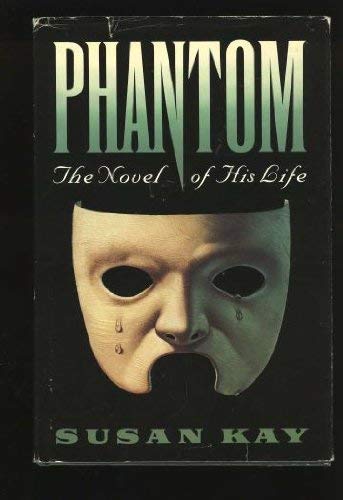
                • Cover of Phantom
                  Phantom

                  Susan Kay · standalone novel · 1990

                  similar by19th centurydarkemotionaleurope

                  A child is born... His mother's only gift is a mask. Precocious and gifted, he will live friendless and alone, taunted and abused, he will flee, only to find himself caged again-as a freak in a Gypsy carnival. A brilliant outcast... the world is his home. Filled with bitter rage, he will kill to escape, becoming a stonemason's apprentice in Rome... a dark magician at the treacherous Persian court... and finally, the genius behind the construction of the Paris Opera House and the labyrinthine world below. Lacking one thing only: A woman's love. Cloaked in secrets, his power complete, he will see the exquisite Christine and for the first time know what it means to love. Obsessed, he will bring her into his eerie subterranean world, driven to posses her heart and soul. Phantom--A haunting story of power and darkness, of magic and murder, of sensuality and betrayal, and ultimately, the unforgettable story of a man and a woman and the eternal quality of love.

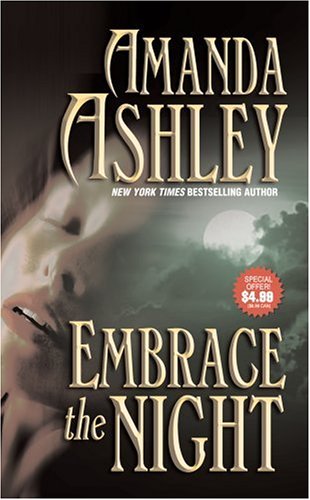
                • Cover of Embrace the Night
                  Embrace the Night

                  Amanda Ashley · standalone novel · 1998

                  similar byparanormal romancedarkemotionalredemption

                  Cursed by the darkness, he searches through the ages for the redeeming light, the one who can save him. She fears the handsome stranger whose eyes promise ecstasy while his mouth whispers dark secrets. Apart, they will face a destiny of despair. Together, they will share undying passion. Reissue.

                • Cover of The Taker / Immortal
                  The Taker / Immortal

                  series · 5 books · 2011

                  similar byemotional+5 more

                  Alma Katsu's The Taker opens the Immortal trilogy (plus a linked prequel novella) when a young doctor named Luke meets a woman who reveals she is immortal, and hears how she was abandoned by a lover two centuries earlier and made eternal by a centuries-old Hungarian count who abducted her. The dark historical fantasy continues across The Reckoning and The Descent, with The Devil's Scribe serving as a prequel novella.

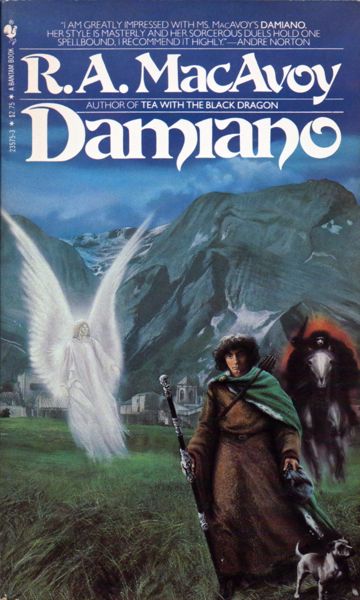
                • Cover of Damiano
                  Damiano

                  series · 3 books · 1984

                  similar byemotionaleuropefantasyhistorical fantasy+2 more

                  Damiano follows a young alchemist and lute player in Renaissance-flavored Italy who sets out, with the help of the archangel Raphael, to bring peace to his war-torn home city, only to find that stopping a war takes more violence than his gentle magic is suited for. R. A. MacAvoy's trilogy continues through Damiano's Lute and Raphael, later collected as A Trio for Lute, and was praised for its light touch with small-scale magic set against real cruelty.