Loreful
HomeDiscover
Search series, authors…⌘K
Loreful

Reading orders for SF/F series and shared universes — with your place kept in every one.

Explore

UniversesSeriesWorksAuthorsAtlas

Help

FAQAboutSite map

Account & legal

Sign inCreate accountPrivacyTerms

Data

Built on ISFDB, Wikipedia, Wikidata and Open Library. Curated reading orders carry their reasoning on the page; the rest follow publication order. Data sources & licenses

© Loreful · data: ISFDB · CC BY

More like Everything Matters!

anchored on:literary & generalnorth americacontemporaryscience fictioncoming of ageidentity+4 more

but

Mood

The mood the book leaves you in.

  • The reading experience is propelled by journeys, exploration, and physical risk; excitement and forward momentum dominate over dread or introspection.
  • Joy and loss are deliberately mixed; the resolution grants characters something real while taking something else away, leaving warmth and sorrow together.
  • The book demands work from the reader — dense prose, difficult structure, unfamiliar ideas, or morally uncomfortable material — as part of its intended effect.
  • Grim events, cruelty, or despair dominate the atmosphere, and the book does not soften them with comfort or comic relief.
  • The atmosphere is quietly unsettling — wrongness, unease, and the uncanny pervade the book without necessarily escalating into overt horror.
  • The book is built to move the reader; character feeling is foregrounded and major scenes aim at a strong emotional response.
  • Humor is a primary aim and the prose plays for laughs — comic situations, wit, or dialogue produce sustained comedy, not occasional levity.
  • The book insists that things can improve; effort and decency are shown to matter, and the arc bends toward better outcomes even through hardship.
  • The book teaches as it goes — real facts, history, science, or craft are conveyed in enough depth that learning is part of the reading experience.
  • The book is designed to uplift and motivate, presenting perseverance or achievement in a way that invites the reader to aspire or act.
  • The overall register is cheerful and easygoing; stakes are kept gentle and the book avoids dwelling on pain or dread.
  • Withheld information drives the experience; the book sustains enigmas and secrets the reader wants resolved, whatever its genre.
  • The book is contemplative and inward-looking, giving more weight to thought, memory, and meaning than to external events.
  • The book works as comfort reading — low tension, a soothing pace, and an atmosphere the reader can unwind in.
  • Grief, loss, or melancholy set the dominant register, and the book lets sorrow stand rather than resolving it into comfort.
  • Sustained suspense is the point; the book keeps the reader braced for what happens next through danger, pressure, or impending revelation.
  • Playful invention and charm define the register — fanciful conceits, light absurdity, and a narration that delights in its own oddity.

About

What the story runs on.

  • Stories in which extraterrestrial beings are central — as characters, cultures, or the object of the plot.
  • Stories structured as a quest — a journey undertaken to find, deliver, or destroy something of great import.
  • Stories in which staying alive against nature, catastrophe, or scarcity is the central problem.
  • Stories of lovers kept apart by law, family, faith, or station, where the obstacle to love is the plot.
  • Stories in which a friendship — its making, testing, or loss — is the emotional center.
  • Stories of growing up — a young protagonist crossing from childhood into adult knowledge and responsibility.
  • Stories about who a character truly is — self-discovery, doubled lives, and the search for a self.
  • Stories about mourning — living through the death of a loved one and what loss does to the survivors.
  • Stories in which a buried family truth — hidden parentage, crimes, or shames — surfaces and reorders the present.
  • Stories driven by maneuvering for power — factions, conspiracies, and statecraft conducted in shadow.
  • Stories in which war itself is the subject — combat, occupation, and what warfare does to soldiers and civilians.
  • Stories organized around investigating a killing — the case, the clues, and the pursuit of the killer, in any genre's clothing.

Shelf

Where it sits in the library.

    • Fiction built on magic or other supernatural elements that have no scientific explanation.
    • Secondary-world fantasy at large scale, where the fate of nations or the world turns on the protagonists' struggle.
    • Fantasy set in a recognizably modern city or contemporary world where the supernatural intrudes on everyday life.
    • Fantasy that blends in horror's atmosphere and imagery, keeping a fantastical frame around grim or frightening material.
    • Action-driven fantasy following warriors or rogues with personal stakes against sorcerous threats, rather than world-spanning conflicts.
    • Fantasy set in a real historical period or a close analogue of one, with magic woven into the era.
    • Fantasy in which protagonists cross from the ordinary world into another world through a portal or similar passage.
    • Fiction that retells or reworks a traditional fairy tale in a new form or setting.
    • Fantasy drawing directly on myths, legends, and folklore, retelling them or building on their figures and logic.
    • Fantasy of ghosts, vampires, shapeshifters, psychics, and similar phenomena, usually set in an otherwise ordinary world.
    • Fiction mixing science-fictional trappings with overtly magical or impossible elements in one setting.
    • Low-stakes fantasy emphasizing comfort, community, and everyday pleasures over conflict and peril.
    • Speculative fiction of pervasive moral ambiguity, violence, and cynicism that rejects heroic conventions — fantasy and SF alike.
      • Fiction that extrapolates from science and technology — future societies, space travel, or speculative inventions — within at least nominally natural laws.
      • Science fiction of interstellar scope — starships, galactic polities, and adventure across star systems.
      • Science fiction committed to scientific rigor, where technical plausibility constrains the story.
      • Science fiction centered on armed forces and warfare, told largely from a military point of view.
      • Science fiction of networked, corporate-dominated near futures, pairing high technology with social decay.
      • Science fiction styled on nineteenth-century steam-powered technology, often in a Victorian or pseudo-Victorian setting.
      • Fiction depicting an oppressive or catastrophic society, presented as a warning.
      • Fiction set after civilization's collapse, following survivors in the ruins of the old world.
      • Fiction in which characters move between past and future, and the mechanics or consequences of that travel drive the plot.
      • Fiction exploring a world where a historical event went differently and history diverged from ours.
      • Science fiction about humanity's first encounter and communication with an alien intelligence.
      • Science fiction in which extraterrestrial forces attack or occupy Earth and humanity resists.
      • Fiction whose primary aim is to frighten or unsettle the reader through dread, menace, or the monstrous.
      • Horror of vast, indifferent, incomprehensible entities before which humanity is insignificant, in the Lovecraft tradition.
      • Horror of decaying houses, buried family secrets, and oppressive atmosphere in the Gothic literary tradition.
      • Horror centered on hauntings and the returning dead.
      • Horror located in the mind — paranoia, obsession, and unreliable perception rather than external monsters.
      • Horror built around the reanimated dead and survival amid their outbreaks.
      • Horror defined by explicit, transgressive gore that refuses to cut away from violence.
      • Speculative fiction of the strange and uncanny that resists both natural explanation and standard genre categories.
      • Fiction organized around solving a crime or puzzle, typically following an investigator toward the identification of a culprit.
      • A puzzle-first mystery that lays out clues so the culprit's identity can be deduced before the reveal.
      • Crime fiction of moral ambiguity, fatalism, and hard-edged style, set among the corrupt and the doomed.
      • A mystery following the realistic routines of police work — forensics, interviews, and case-building.
      • A gentle mystery with an amateur sleuth, a small community, and violence kept off the page.
      • A mystery set in a past era, where the investigation works within that period's methods and society.
      • Fast-paced fiction driven by imminent danger, pursuit, or high-stakes conspiracy, built to sustain tension.
      • A thriller of espionage — agents, tradecraft, and intelligence services in conflict.
      • A thriller centered on lawyers and the courtroom, where litigation carries the suspense.
      • A thriller driven by detailed contemporary or near-future technology, often military or scientific.
      • A thriller whose tension comes from mental states and manipulation between characters rather than external action.
      • Fiction whose central plot is a romantic relationship and its development toward an emotionally satisfying resolution.
      • Romance in which one or both partners are supernatural beings, blending fantasy elements into the love story.
      • A fantasy-romance hybrid in which the romantic arc and the fantasy plot carry equal weight.
      • Romance set in a past era, with courtship shaped by the period's society and manners.
      • Romance set in the present day, without supernatural or historical elements.
      • Fiction set in a real past period, where the historical setting materially shapes characters and events.
        • General and literary fiction emphasizing prose style, character interiority, or formal ambition over genre plot conventions.
        • Fiction in a realistic world where magical events occur and are treated as ordinary, in the tradition of Latin American literature.
        • Fiction that ridicules people, institutions, or society in order to criticize them.
        • Fiction of dreamlike, irrational imagery and logic that breaks from realistic representation.
        • Fiction that plays with narrative convention through metafiction, fragmentation, and self-reference.
        • Fiction propelled by journeys, exploration, and physical peril, where action and survival carry the plot.
        • Adventure fiction of ships and seafaring — naval engagements, voyages, and life at sea.
        • Fiction of the American frontier West — gunmen, ranchers, and lawmen, typically in the late nineteenth century.
        • Fiction centered on soldiers, campaigns, and the experience of warfare, historical or imagined.
          • Fiction written primarily to amuse, using comedic situations, wit, or parody as its organizing principle.
            • Multi-generational fiction following a family or dynasty across decades, with inheritance and kinship as the through-line.
              • Fiction whose world runs on explicit game mechanics — levels, stats, and skills that characters can see and exploit.
                • Fiction about costumed or superpowered heroes and their conflicts with comparable villains.

                Practical

                How long a commitment, whether it stands alone, and whether it has finished.

                Tap a chip to ask for it · tap again to rule it out · once more to clear. Numbers show what would be left.

                • Cover of Flowers for Algernon
                  Flowers for Algernon

                  Daniel Keyes · standalone novel · 1966

                  similar bynorth americacontemporaryscience fictioncoming of ageidentityfirst person+1 more

                  A man with a low IQ becomes the subject of an experimental medical procedure which raises his IQ well over genius level.

                • Cover of Dying Inside
                  Dying Inside

                  Robert Silverberg · standalone novel · 1972

                  similar bynorth americacontemporaryreflectivescience fictionidentityfirst person+1 more

                  Dying Inside is a 1972 science fiction novel by American writer Robert Silverberg. It was first serialized in Galaxy in 1972 and published in book form by Charles Scribner's Sons later that year. The novel follows David Selig, a middle-aged telepath in contemporary New York City, as the mind-reading ability that has shaped his life begins to disappear.

                • Cover of Before I Fall
                  Before I Fall

                  series · 2 books · 2010

                  similar bynorth americacontemporaryliterary & generalreflectivecoming of agegrief and lossfirst person

                  Lauren Oliver's Before I Fall is a 2010 young-adult novel narrated by teenager Samantha Kingston, who is forced to relive the day of her death repeatedly over the course of a week. Attempting to understand why, Samantha tries different choices and actions each time through, some starkly out of character, as she reckons with her life and relationships. It was adapted into a 2017 film of the same name.

                • Cover of Oh Pure and Radiant Heart
                  Oh Pure and Radiant Heart

                  Lydia Millet · standalone novel · 2005

                  similar bynorth americacontemporaryliterary & generalbittersweetreflectivescience fiction+1 more

                  Oh Pure and Radiant Heart imagines a world in which the three geniuses who were key to the invention of the atom bomb--physicists J. Robert Oppenheimer, Enrico Fermi and Leo Szilard--are displaced to contemporary America at the moment history's first mushroom cloud rises over the New Mexico desert in July 1945. When the scientists appear in Santa Fe in 2003, Ann, a reference librarian, and her doting husband Ben take them in, and with the long-dead physicists for houseguests are swept up in a quixotic and calamitous quest.

                • Cover of The Falling Woman
                  The Falling Woman

                  Pat Murphy · standalone novel · 1986

                  similar bynorth americacontemporaryreflectiveliterary & generalidentitygrief and loss+1 more

                  The Falling Woman is a 1986 contemporary psychological fantasy novel by Pat Murphy. The book won the Nebula Award for Best Novel in 1987.

                • Cover of The Particular Sadness of Lemon Cake
                  The Particular Sadness of Lemon Cake

                  Aimee Bender · standalone novel · 2010

                  similar bycontemporaryliterary & generalreflectivenorth americacoming of ageidentityfirst person

                  The story follows a girl with a talent, from childhood to young adulthood. Rose has the ability to taste emotions in the food she eats, which she discovers on her ninth birthday, tasting in her birthday cake the emotions of her mother who baked it.

                • Cover of The Book of Form and Emptiness
                  The Book of Form and Emptiness

                  Ruth Ozeki · standalone novel · 2021

                  similar bycontemporaryliterary & generalreflectivenorth americacoming of agegrief and lossfirst person

                  The Book of Form and Emptiness is a novel by American author Ruth Ozeki, published in 2021 by Viking. Ozeki's fourth novel, the book won the 2022 Women's Prize for Fiction. The story follows a boy who hears voices from inanimate objects while the narrative explores themes of mental illness and bereavement.

                • Cover of Faithful
                  Faithful

                  Alice Hoffman · standalone novel · 2016

                  similar bynorth americacontemporaryliterary & generalreflectivecoming of ageidentitygrief and loss

                  Growing up on Long Island, Shelby Richmond is an ordinary girl until one night an extraordinary tragedy changes her fate. Her best friend's future is destroyed in an accident, while Shelby walks away with the burden of guilt. What happens when a life is turned inside out? When love is something so distant it may as well be a star in the sky? Faithful is the story of a survivor, filled with emotion--from dark suffering to true happiness--a moving portrait of a young woman finding her way in the modern world. A fan of Chinese food, dogs, bookstores, and men she should stay away from, Shelby has to fight her way back to her own future. In New York City she finds a circle of lost and found souls--including an angel who's been watching over her ever since that fateful icy night.

                • Cover of Things
                  Things

                  series · 3 books · 2002

                  completed

                  similar bycontemporaryliterary & generalnorth americacoming of ageidentityfirst person+2 more

                • Cover of Invisible Ghosts
                  Invisible Ghosts

                  Robyn Schneider · standalone novel · 2018

                  similar bynorth americacontemporaryliterary & generalbittersweetcoming of agegrief and lossfirst person

                  Rose Asher believes in ghosts. She should, since she has one for a best friend: Logan, her annoying, Netflix-addicted brother, who is forever stuck at fifteen. But Rose is growing up, and when an old friend moves back to Laguna Canyon and appears in her drama class, things get complicated. Jamie Aldridge is charming, confident, and a painful reminder of the life Rose has been missing out on since her brother's death. She watches as Jamie easily rejoins their former friends--a group of magnificently silly theater nerds--while she struggles to choose between the boy who makes her feel alive and the brother she isn't ready to lose.

                • Cover of Flight
                  Flight

                  Sherman Alexie · standalone novel · 2007

                  similar bynorth americacontemporaryliterary & generalscience fictioncoming of ageidentityfirst person

                  Flight is a 2007 novel written by Sherman Alexie. It is written in the first-person, from the viewpoint of a Native American teenager who calls himself Zits. Zits is a foster child, having spent the majority of his life moving from one negative or abusive family experience to another. After running away from his most recent foster home, he is detained by police and put into jail. While in his cell, he meets a new friend, Justice, who introduces Zits to a new way of thinking. A new ideology of making white people pay for their historic treatment of Native Americans. Justice provides the weapons, sending Zits on a mass shooting in a downtown Seattle bank. Shot in the back of the head by security, Zits is suddenly transported to the past and thrust into the body of a stranger; this is the first of many similar incidents. The story confronts Zits' feelings of vulnerability as a misunderstood teenager, an orphan, and as a biracial person with Native American ancestry and how forgiveness across multiple generations is an inside job.

                • Cover of Never Let Me Go
                  Never Let Me Go

                  Kazuo Ishiguro · standalone novel · 2005

                  similar byreflectivescience fictionliterary & generalcoming of ageidentitygrief and lossfirst person

                  Never Let Me Go is a 2005 science fiction novel by the British author Kazuo Ishiguro. It was shortlisted for the 2005 Man Booker Prize, for the 2006 Arthur C. Clarke Award and the 2005 National Book Critics Circle Award. Time magazine named it the best novel of 2005. It included the novel in its '100 Best English-language novels published since 1923—the beginning of TIME'. It also received an ALA Alex Award in 2006. A film adaptation directed by Mark Romanek was released in 2010.

                • Cover of Surfacing
                  Surfacing

                  Margaret Atwood · standalone novel · 1972

                  similar bynorth americaliterary & generalreflectiveidentitygrief and losscoming of agefirst person

                  Surfacing is a novel by Canadian author Margaret Atwood. Published by McClelland and Stewart in 1972, it was her second novel. Surfacing has been described by commentators as a companion novel to Atwood's collection of poems, Power Politics, which was written the previous year and deals with complementary issues.

                • Cover of Spilling Clarence
                  Spilling Clarence

                  Anne Ursu · standalone novel · 2003

                  similar bynorth americacontemporaryliterary & generalbittersweetreflectiveidentitygrief and loss+1 more

                  A chemical spill drifts over the town of Clarence. Deletrium is a drug that releases forgotten memories. Soon the town is caught up in memories of good things and bad, hopes and regrets, people's relationships with their own histories.

                • Cover of Stranger in a Strange Land
                  Stranger in a Strange Land

                  Robert A. Heinlein · standalone novel · 1961

                  similar bynorth americareflectivescience fictionidentitycoming of age

                  Stranger in a Strange Land is a 1961 science fiction novel by the American author Robert A. Heinlein. It tells the story of Valentine Michael Smith, a human who comes to Earth in early adulthood after being born on the planet Mars and raised by Martians, and explores his interaction with and eventual transformation of Terran culture.

                • Cover of A Million Heavens
                  A Million Heavens

                  John Brandon · standalone novel · 2012

                  similar bynorth americacontemporaryliterary & generalreflectiveidentitygrief and loss

                  A Million Heavens is a 2012 novel by John Brandon. The book was first published on 3 July 2012 by McSweeney's and is Brandon's third novel, following his 2010 book Citrus County.

                • Cover of The Martian Child
                  The Martian Child

                  David Gerrold · standalone novel · 2002

                  similar bynorth americacontemporaryliterary & generalreflectiveidentityfirst person

                  A Novel About A Single Father Adopting A Son

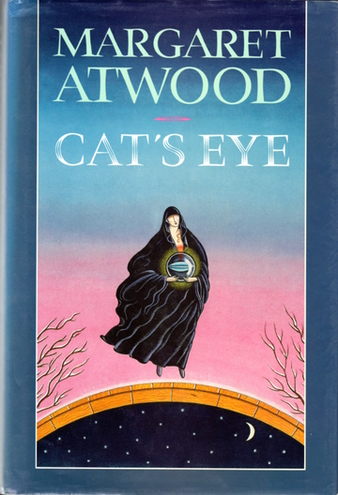
                • Cover of Cat's Eye
                  Cat's Eye

                  Margaret Atwood · standalone novel · 1988

                  similar bynorth americaliterary & generalreflectivecoming of agegrief and lossfirst person

                  Cat's Eye is a 1988 novel by Canadian writer Margaret Atwood about fictional painter Elaine Risley, who vividly reflects on her childhood and teenage years. Her strongest memories are of Cordelia, who was the leader of a trio of girls who were both very cruel and very kind to her in ways that tint Elaine's perceptions of relationships and her world — not to mention her art — into her middle years. The novel unfolds in mid-20th century Canada, from World War II to the late 1980s, and includes a look at many of the cultural elements of that time period, including feminism and various modern art movements. The book was a finalist for the 1988 Governor General's Award and for the 1989 Booker Prize.

                • Cover of Tuck Everlasting
                  Tuck Everlasting

                  Natalie Babbitt · standalone novel · 1975

                  similar bynorth americacontemporarybittersweetreflectivecoming of age

                  Publisher's description: "The Tuck family is confronted with an agonizing situation when they discover that a ten-year-old girl and a malicious stranger now share their secret about a spring whose water prevents one from ever growing any older."

                • Cover of Fade
                  Fade

                  Robert Cormier · standalone novel · 1988

                  similar bynorth americacontemporaryliterary & generalcoming of ageidentityfirst person

                  Fade is a 1988 young adult novel written by Robert Cormier.

                • Cover of Beautyland
                  Beautyland

                  Marie-Helene Bertino · standalone novel · 2024

                  similar bynorth americaliterary & generalreflectivescience fictioncoming of agefirst person+1 more

                  Beautyland is a novel by Marie-Helene Bertino. It was published on January 16, 2024, by Farrar, Straus and Giroux. The book follows Adina, who is sent by aliens before birth to find out if they could live on earth and reports to them via a fax machine. The book starts with Adina's birth, which takes place in 1977 when Voyager 1 was launched.

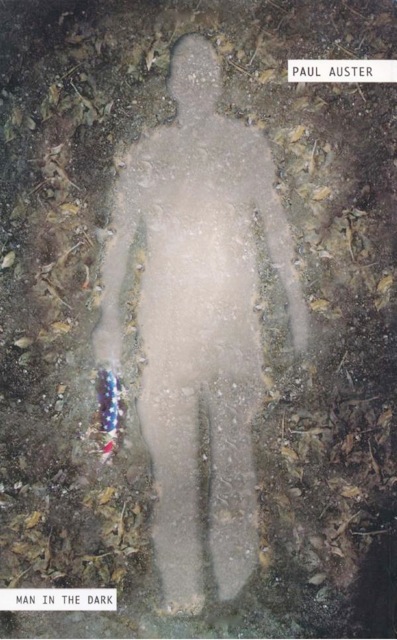
                • Cover of Man in the Dark
                  Man in the Dark

                  Paul Auster · standalone novel · 2008

                  similar bynorth americacontemporaryliterary & generalreflectiveidentity+1 more

                  An insomniac makes up a story about a man transported to an alternate reality in which a US civil war erupted after the 2000 election.

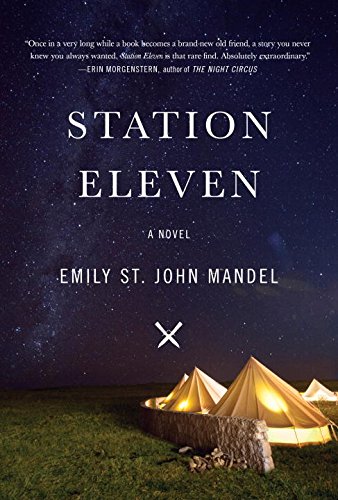
                • Cover of Station Eleven
                  Station Eleven

                  Emily St. John Mandel · standalone novel · 2014

                  similar bynorth americabittersweetreflectivescience fictionliterary & general+1 more

                  "Set in the days of civilization's collapse, Station Eleven tells the story of a Hollywood star, his would-be savior, and a nomadic group of actors roaming the scattered outposts of the Great Lakes region, risking everything for art and humanity. One snowy night a famous Hollywood actor slumps over and dies onstage during a production of King Lear. Hours later, the world as we know it begins to dissolve. Moving back and forth in time — from the actor's early days as a film star to fifteen years in the future, when a theater troupe known as the Traveling Symphony roams the wasteland of what remains — this suspenseful, elegiac, spellbinding novel charts the strange twists of fate that connect five people: the actor, the man who tried to save him, the actor's first wife, his oldest friend, and a young actress with the Traveling Symphony, caught in the crosshairs of a dangerous self-proclaimed prophet." (source: Goodreads.com)

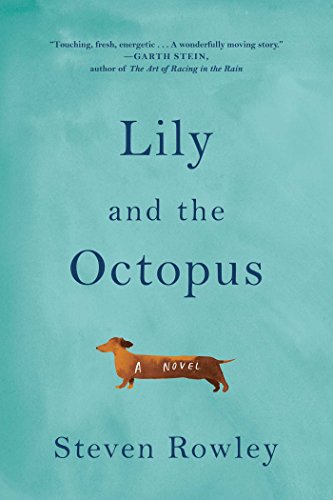
                • Cover of Lily and the Octopus
                  Lily and the Octopus

                  Steven Rowley · standalone novel · 2016

                  similar bynorth americacontemporaryliterary & generalbittersweetgrief and lossfirst person

                  Lily and the Octopus is the 2016 debut novel of Steven Rowley.