More like Evil Robot Monkey
anchored on:science fictionrobotsupliftour worldreflective
but
- We Can Build You
Philip K. Dickstandalone novel1972
similar byscience fictionrobotsreflectiveour world
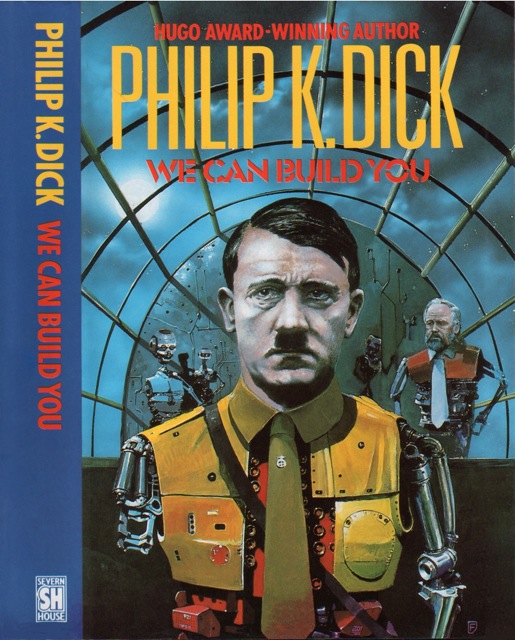
We Can Build You is a 1972 science fiction novel by American writer Philip K. Dick. Written in 1962 as The First in Our Family, it remained unpublished until appearing in serial form as A. Lincoln, Simulacrum in the November 1969 and January 1970 issues of Amazing Stories magazine, re-titled by editor Ted White. The novel was issued as a mass market paperback original by DAW Books in 1972, its final title provided by publisher Donald A. Wollheim. Its first hardcover edition was published in Italy in 1976, and Vintage issued a trade paperback in 1994.
- City
series19 books1944
completed
similar byscience fictionreflectiveour world+1 more
City is Clifford D. Simak's fix-up novel, assembling eight linked stories originally published in Astounding Science Fiction during the 1940s and framed as legends dogs tell about a half-mythical creature called Man. It follows humanity's gradual abandonment of its cities and eventual departure from Earth, while the dogs left behind are surgically uplifted into a peaceable, speaking civilization of their own. The book won the International Fantasy Award in 1952.
- Sirius: A Fantasy of Love and Discord
Olaf Stapledonstandalone novel1944
similar byscience fictionreflectiveour worlduplift
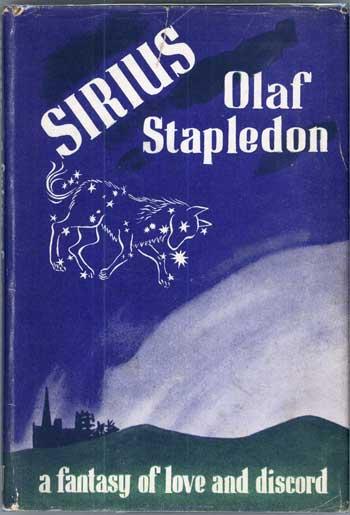
Sirius is a 1944 science fiction novel by the British philosopher and author Olaf Stapledon, whose title character is a dog named Sirius with humanlike intelligence. A sense of existential questioning suffuses the book, as the author delves into aspects of Sirius's psyche. The novel deals with many human issues through Sirius and his experiences, his unusual nature, his ideas and his relationships with humans. The characters go to great lengths to prevent Sirius from becoming a circus-type wonderdog, and instead, they seek to develop Sirius's character much like a family would create and foster that of a human child.
- Mockingbird
Walter Tevisstandalone novel1980
similar byscience fictionreflectiveour worldrobots
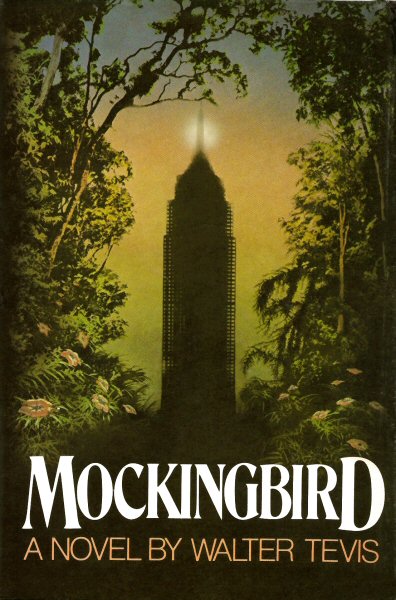
WorldCat: In a future world where mankind is dying, humans wander through life in a drugged electronic bliss. Quick sex is the norm, and some people would rather commit suicide than live in hopelessness. Humanity's salvation rests with an android who has no desire to live, and a man and a woman who must discover love, hope, and dreams of a world reborn.
- Childhood's End
Arthur C. Clarkestandalone novel1953
similar byscience fictionreflectiveour world
Childhood's End is a 1953 science fiction novel by the British author Arthur C. Clarke. The story follows a peaceful alien invasion of Earth by mysterious Overlords, whose arrival begins decades of apparent utopia under indirect alien rule, at the cost of human identity and culture.
- Stranger in a Strange Land
Robert A. Heinleinstandalone novel1961
similar byscience fictionreflectiveour world
Stranger in a Strange Land is a 1961 science fiction novel by the American author Robert A. Heinlein. It tells the story of Valentine Michael Smith, a human who comes to Earth in early adulthood after being born on the planet Mars and raised by Martians, and explores his interaction with and eventual transformation of Terran culture.
- More Than Human
Theodore Sturgeonstandalone novel1953
similar byscience fictionreflectiveour world
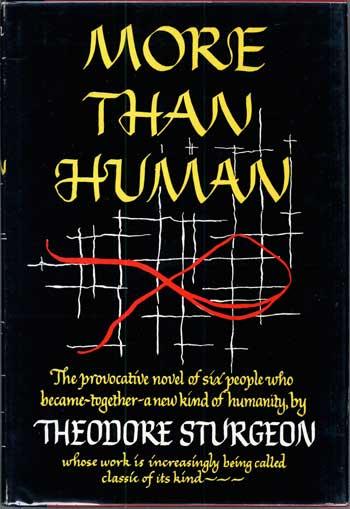
More Than Human is a 1953 science fiction fix-up novel by American writer Theodore Sturgeon. It is a revision and expansion of his 1952 novella Baby Is Three, which is bracketed by two additional parts written for the novel, "The Fabulous Idiot" and "Morality". It won the 1954 International Fantasy Award, which was also given to works in science fiction. It was additionally nominated in 2004 for a "Retro Hugo" award for the year 1954. Science fiction critic and editor David Pringle included it in his book Science Fiction: The 100 Best Novels.
- No Enemy But Time
Michael Bishopstandalone novel1982
similar byscience fictionreflectiveour worldemotional
No Enemy But Time is a 1982 science fiction novel by Michael Bishop. It won the 1982 Nebula Award for Best Novel, and was also nominated for the 1983 John W. Campbell Memorial Award. It was included in David Pringle's book Science Fiction: The 100 Best Novels.
- Ring Around the Sun
Clifford D. Simakstandalone novel1953
similar byscience fictionreflectiveour world+1 more
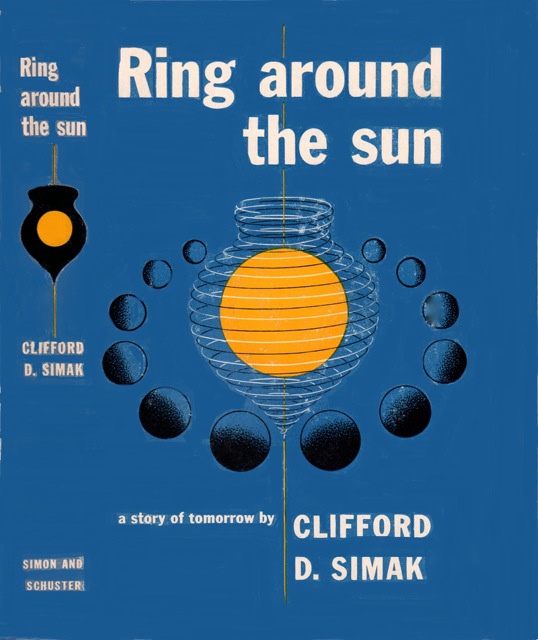
Ring Around the Sun is a science fiction novel by American writer Clifford D. Simak. Its anti-urban and pro-agrarian sentiments are typical of much of Simak's work.
- I Will Fear No Evil
Robert A. Heinleinstandalone novel1970
similar byscience fictionreflectiveour world
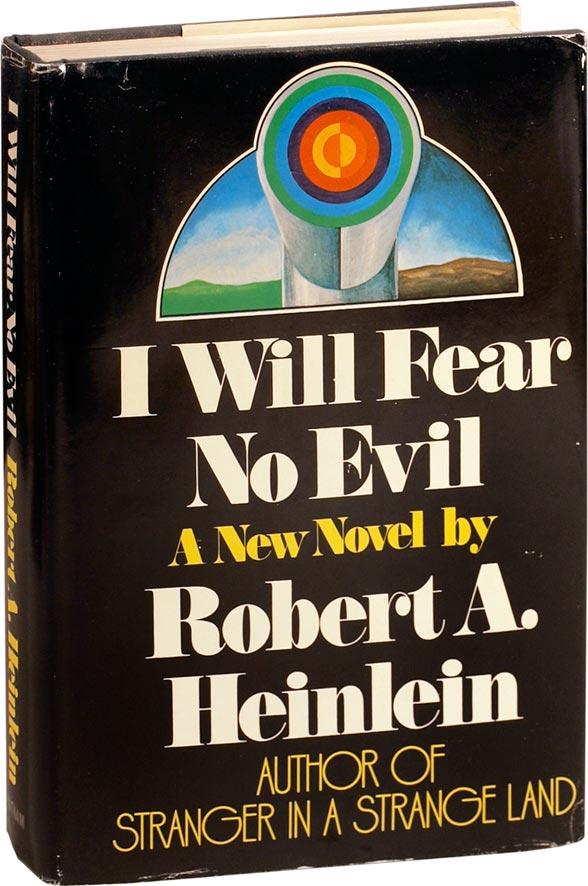
I Will Fear No Evil is a science fiction novel by American writer Robert A. Heinlein, originally serialised in Galaxy and published in hardcover in 1970. The title is taken from Psalm 23:4.
- The Speed of Dark
Elizabeth Moonstandalone novel2002
similar byscience fictionreflectiveour worldemotional
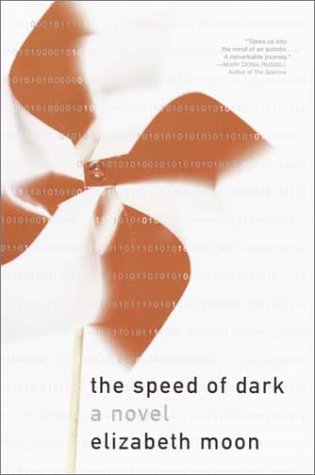
From the Penguin Random House website In the near future, disease will be a condition of the past. Most genetic defects will be removed at birth; the remaining during infancy. Lou Arrendale, a high-functioning autistic adult, is a member of the lost generation, born at the wrong time to reap the rewards of medical science. He lives a low-key, independent life. But then he is offered a chance to try a brand-new experimental "cure" for his condition. With this treatment Lou would think and act and be just like everyone else. But if he was suddenly free of autism, would he still be himself? Would he still love the same classical music — with its complications and resolutions? Would he still see the same colors and patterns in the world—shades and hues that others cannot see? Most important, would he still love Marjory, a woman who may never be able to reciprocate his feelings? Now Lou must decide if he should submit to a surgery that might completely change the way he views the world ... and the very essence of who he is.
- Beyond This Horizon
Robert A. Heinleinstandalone novel1948
similar byscience fictionreflectiveour world
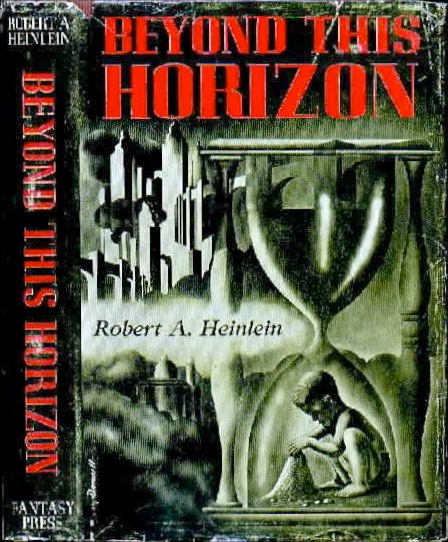
From the front flap of a 2001 Baen reprint: "Utopia has been achieved. For centuries, disease, hunger, poverty, and war have been things found only in the history tapes. And applied genetics has given men and women the bodies of athletes and a lifespan of over a century. They should all have been very happy... But Hamilton Felix is bored. And he is the culmination of a star line, each of his last thirty ancestors chosen for superior genes. Hamilton is, as far as genetics can produce one, the ultimate man. And this ultimate man can see no reason why the human race should survive, and has no intention of continuing the pointless comedy. However, Hamilton's life is about to become less boring. A secret cabal of revolutionaries who find utopia not just boring, but desperately in need of leaders who know just What Needs to be Done, are planning to revolt and put themselves in charge. Knowing of Hamilton's disenchantment with the modern world, they have recruited him to join their Glorious Revolution. Big mistake! The revolutionaries are about to find out that recruiting a superman was definitely not a good idea..."
- Silver Metal Lover
series2 books1981
completed
similar byscience fictionrobotsour worldemotional
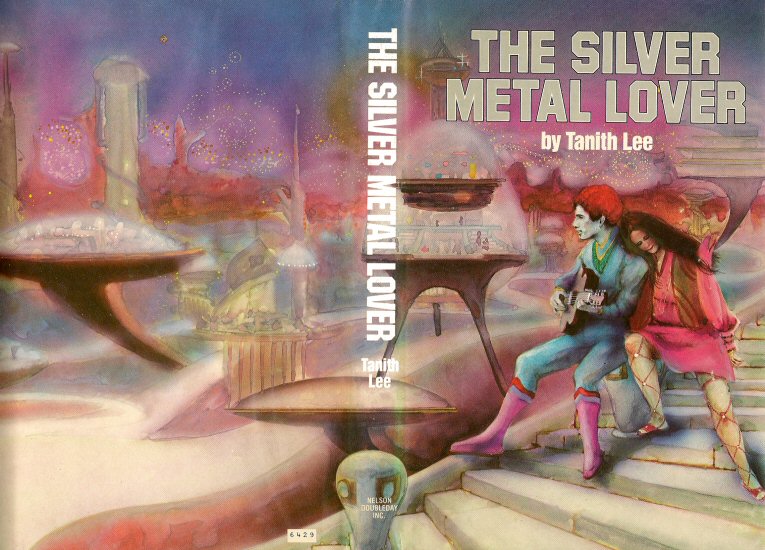
The S.I.L.V.E.R. series is a fantasy novel series by Tanith Lee. The Silver Metal Lover, published in 1981, is the first in the series. Metallic Love, published in 2005, is the second novel.
- In the Days of the Comet
H. G. Wellsstandalone novel1906
similar byscience fictionreflectiveour world
In the Days of the Comet is a 1906 science fiction novel by H. G. Wells in which humanity is "exalted" when a comet causes "the nitrogen of the air, the old azote," to "change out of itself" and become "a respirable gas, differing indeed from oxygen, but helping and sustaining its action, a bath of strength and healing for nerve and brain." The result: "The great Change has come for evermore, happiness and beauty are our atmosphere, there is peace on earth and good will to all men."
- The Man Who Fell to Earth
Walter Tevisstandalone novel1963
similar byscience fictionreflectiveour world
The Man Who Fell to Earth is a 1963 science-fiction novel by American writer Walter Tevis. Published by Gold Medal Books as a paperback original, it was Tevis's second novel, following The Hustler. The novel follows Thomas Jerome Newton, an extraterrestrial from the drought-stricken planet Anthea, who comes to Earth hoping to build a spacecraft that can save the surviving members of his species.
- Godbody
Theodore Sturgeonstandalone novel1986
similar byscience fictionreflectiveour worldemotional
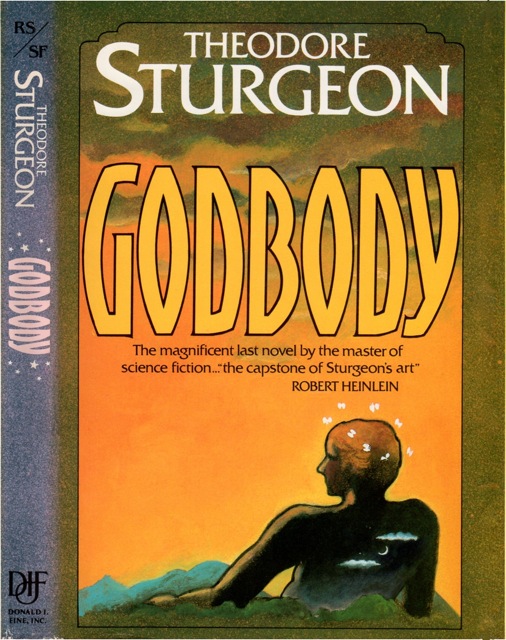
Godbody is a science fiction novel by American writer Theodore Sturgeon, published posthumously in 1986. A foreword, "Agape and Eros: The Art of Theodore Sturgeon", was contributed by Robert A. Heinlein and an afterword was contributed by Stephen R. Donaldson.
- This Immortal
series2 books1966
similar byscience fictionreflectiveour world
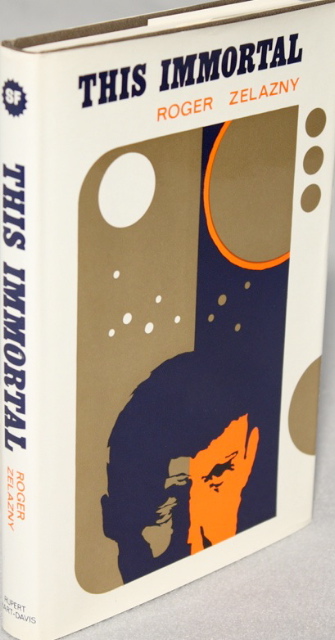
This Immortal is a single science fiction novel by Roger Zelazny, expanded from his 1965 serial ...And Call Me Conrad. In a depopulated future Earth largely toured by an alien race, its long-lived, secretive protagonist Conrad Nomikos is assigned to guide and protect a visiting alien across the ruins of Greece and Egypt, uncovering old grudges and assassination plots along the way. The novel shared the 1966 Hugo Award for Best Novel with Frank Herbert's Dune.
- The Dreaming Jewels
Theodore Sturgeonstandalone novel1950
similar byscience fictionour worldemotional+1 more
The Dreaming Jewels (1950), also known as The Synthetic Man, is a science fiction novel by American writer Theodore Sturgeon. It was his first published novel.
- The City and the Stars
Arthur C. Clarkestandalone novel1956
similar byscience fictionreflective+2 more
The City and the Stars is a science fiction novel by British writer Arthur C. Clarke, published in 1956. This novel is a complete rewrite of Clarke's earlier Against the Fall of Night, his first novel, which had been published in Startling Stories magazine in 1948 after being rejected by the editor of Astounding Science-Fiction, according to the author.
- The Whole Man
John Brunnerstandalone novel1964
similar byscience fictionreflectiveour world+1 more
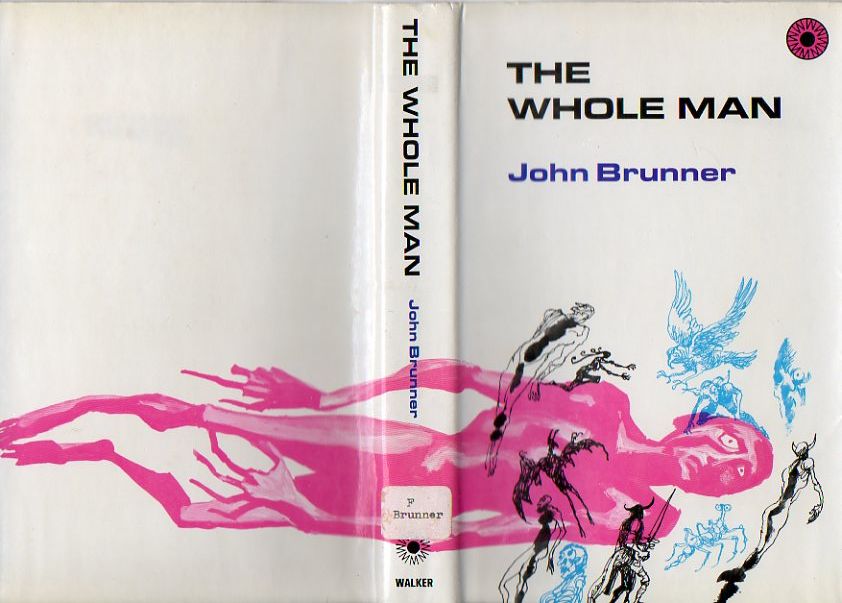
The Whole Man is a 1964 science fiction novel by John Brunner. It was nominated for a Hugo Award for Best Novel in 1965. In the UK, it was published under the title Telepathist.
- Brain Wave
Poul Andersonstandalone novel1954
similar byscience fictionreflectiveour world
Brain Wave is a science fiction novel by American writer Poul Anderson, first published in serial form in Space Science Fiction in 1953, and then as a novel in 1954. Anderson had said that he could consider it one of his top five books. This is one of many science fiction works written at this time on the theme of heightened intelligence.
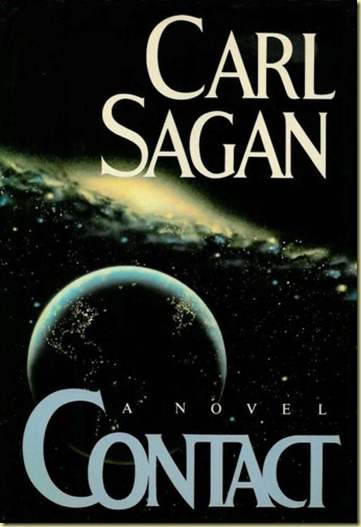
- Contact
Carl Saganstandalone novel1985
similar byscience fictionreflectiveour world
From the front flap of the Simon and Schuster first edition: For centuries humanity has dreamed of life and intelligence beyond the Earth; for decades scientists have searched for it in every corner of the sky; for years Project Argus, a vast, sophisticated complex of radio telescopes, has listened for a signal indicating the existence, somewhere in the universe, of extraterrestrial intelligence. Then, one afternoon, the course of human history is changed, abruptly and forever. The Message, awaited for so long, its very possibility doubted by so many, arrives. Contact has been made. Life, intelligence, someone, something beyond Earth, 26 light-years away, in the vicinity of the star Vega, is calling, beaming across space a wholly unexpected message to say that we are not - have never been - alone. In Contact, Carl Sagan, whose Cosmos enthralled millions of readers and television viewers, has brilliantly employed the freedom of fiction to imagine the greatest adventure of all - humanity's first encounter with other intelligent beings. But the novel is not only about contact between humans and extraterrestrials; it is also about contact, down here on Earth, with each other and ourselves. At its center is a brilliant scientist, Eleanor Arroway, director of Project Argos, who is the first to realize that chapter one of human history is over. It is she who is instrumental in decoding the Message - and in persuading world leaders not to treat it as a threat - she who finds her own life changed by the immense challenge of responding to the Message; she who finally journeys out to experience, in circumstances at once profoundly religious and scientific, the most fateful encounter in human history.
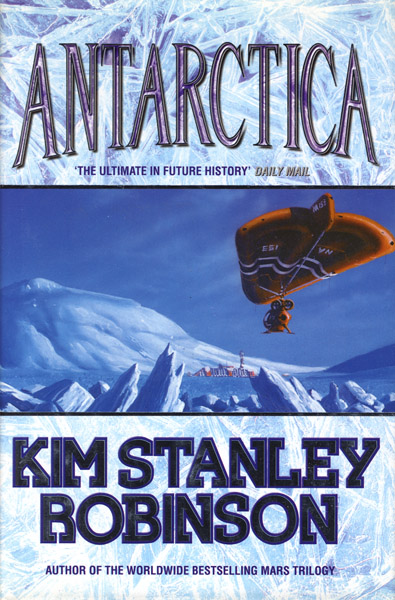
- Antarctica
Kim Stanley Robinsonstandalone novel1997
similar byscience fictionreflectiveour world
Antarctica (1997) is a science fiction novel by American writer Kim Stanley Robinson. It deals with a variety of characters living at or visiting an Antarctic research station. The novel incorporates many of Robinson's frequent themes, including scientific process and the importance of environmental protection.