Loreful
HomeDiscover
Search series, authors…⌘K
Loreful

Reading orders for SF/F series and shared universes — with your place kept in every one.

Explore

UniversesSeriesWorksAuthorsAtlas

Help

FAQAboutSite map

Account & legal

Sign inCreate accountPrivacyTerms

Data

Built on ISFDB, Wikipedia, Wikidata and Open Library. Curated reading orders carry their reasoning on the page; the rest follow publication order. Data sources & licenses

© Loreful · data: ISFDB · CC BY

More like Existence

but

Mood

The mood the book leaves you in.

  • The reading experience is propelled by journeys, exploration, and physical risk; excitement and forward momentum dominate over dread or introspection.
  • Joy and loss are deliberately mixed; the resolution grants characters something real while taking something else away, leaving warmth and sorrow together.
  • The book demands work from the reader — dense prose, difficult structure, unfamiliar ideas, or morally uncomfortable material — as part of its intended effect.
  • Grim events, cruelty, or despair dominate the atmosphere, and the book does not soften them with comfort or comic relief.
  • The atmosphere is quietly unsettling — wrongness, unease, and the uncanny pervade the book without necessarily escalating into overt horror.
  • The book is built to move the reader; character feeling is foregrounded and major scenes aim at a strong emotional response.
  • Humor is a primary aim and the prose plays for laughs — comic situations, wit, or dialogue produce sustained comedy, not occasional levity.
  • The book insists that things can improve; effort and decency are shown to matter, and the arc bends toward better outcomes even through hardship.
  • The book teaches as it goes — real facts, history, science, or craft are conveyed in enough depth that learning is part of the reading experience.
  • The book is designed to uplift and motivate, presenting perseverance or achievement in a way that invites the reader to aspire or act.
  • The overall register is cheerful and easygoing; stakes are kept gentle and the book avoids dwelling on pain or dread.
  • Withheld information drives the experience; the book sustains enigmas and secrets the reader wants resolved, whatever its genre.
  • The book is contemplative and inward-looking, giving more weight to thought, memory, and meaning than to external events.
  • The book works as comfort reading — low tension, a soothing pace, and an atmosphere the reader can unwind in.
  • Grief, loss, or melancholy set the dominant register, and the book lets sorrow stand rather than resolving it into comfort.
  • Sustained suspense is the point; the book keeps the reader braced for what happens next through danger, pressure, or impending revelation.
  • Playful invention and charm define the register — fanciful conceits, light absurdity, and a narration that delights in its own oddity.

About

What the story runs on.

  • Stories about minds with paranormal abilities — telepathy, telekinesis, precognition, empathy — and how societies handle those who have them.
  • Stories centered on vampires — blood-drinking undead — whether as predators, love interests, or protagonists.
  • Stories centered on witches and the practice of witchcraft — covens, hedge magic, familiars, and the witch's place in her community.
  • Stories in which staying alive against nature, catastrophe, or scarcity is the central problem.
  • Stories of lovers kept apart by law, family, faith, or station, where the obstacle to love is the plot.
  • Stories in which a friendship — its making, testing, or loss — is the emotional center.
  • Stories of growing up — a young protagonist crossing from childhood into adult knowledge and responsibility.
  • Stories about who a character truly is — self-discovery, doubled lives, and the search for a self.
  • Stories about mental unraveling — descent into madness, delusion, and minds at war with themselves.
  • Stories about mourning — living through the death of a loved one and what loss does to the survivors.
  • Stories in which a buried family truth — hidden parentage, crimes, or shames — surfaces and reorders the present.
  • Stories organized around investigating a killing — the case, the clues, and the pursuit of the killer, in any genre's clothing.

Shelf

Where it sits in the library.

    • Fiction built on magic or other supernatural elements that have no scientific explanation.
    • Secondary-world fantasy at large scale, where the fate of nations or the world turns on the protagonists' struggle.
    • Fantasy set in a recognizably modern city or contemporary world where the supernatural intrudes on everyday life.
    • Fantasy that blends in horror's atmosphere and imagery, keeping a fantastical frame around grim or frightening material.
    • Action-driven fantasy following warriors or rogues with personal stakes against sorcerous threats, rather than world-spanning conflicts.
    • Fantasy set in a real historical period or a close analogue of one, with magic woven into the era.
    • Fantasy in which protagonists cross from the ordinary world into another world through a portal or similar passage.
    • Fiction that retells or reworks a traditional fairy tale in a new form or setting.
    • Fantasy drawing directly on myths, legends, and folklore, retelling them or building on their figures and logic.
    • Fantasy of ghosts, vampires, shapeshifters, psychics, and similar phenomena, usually set in an otherwise ordinary world.
    • Fiction mixing science-fictional trappings with overtly magical or impossible elements in one setting.
    • Low-stakes fantasy emphasizing comfort, community, and everyday pleasures over conflict and peril.
    • Speculative fiction of pervasive moral ambiguity, violence, and cynicism that rejects heroic conventions — fantasy and SF alike.
      • Fiction that extrapolates from science and technology — future societies, space travel, or speculative inventions — within at least nominally natural laws.
      • Science fiction of interstellar scope — starships, galactic polities, and adventure across star systems.
      • Science fiction committed to scientific rigor, where technical plausibility constrains the story.
      • Science fiction centered on armed forces and warfare, told largely from a military point of view.
      • Science fiction of networked, corporate-dominated near futures, pairing high technology with social decay.
      • Science fiction styled on nineteenth-century steam-powered technology, often in a Victorian or pseudo-Victorian setting.
      • Fiction depicting an oppressive or catastrophic society, presented as a warning.
      • Fiction set after civilization's collapse, following survivors in the ruins of the old world.
      • Fiction in which characters move between past and future, and the mechanics or consequences of that travel drive the plot.
      • Fiction exploring a world where a historical event went differently and history diverged from ours.
      • Science fiction about humanity's first encounter and communication with an alien intelligence.
      • Science fiction in which extraterrestrial forces attack or occupy Earth and humanity resists.
      • Fiction whose primary aim is to frighten or unsettle the reader through dread, menace, or the monstrous.
      • Horror of vast, indifferent, incomprehensible entities before which humanity is insignificant, in the Lovecraft tradition.
      • Horror of decaying houses, buried family secrets, and oppressive atmosphere in the Gothic literary tradition.
      • Horror centered on hauntings and the returning dead.
      • Horror located in the mind — paranoia, obsession, and unreliable perception rather than external monsters.
      • Horror built around the reanimated dead and survival amid their outbreaks.
      • Horror defined by explicit, transgressive gore that refuses to cut away from violence.
      • Speculative fiction of the strange and uncanny that resists both natural explanation and standard genre categories.
      • Fiction organized around solving a crime or puzzle, typically following an investigator toward the identification of a culprit.
      • A puzzle-first mystery that lays out clues so the culprit's identity can be deduced before the reveal.
      • Crime fiction of moral ambiguity, fatalism, and hard-edged style, set among the corrupt and the doomed.
      • A mystery following the realistic routines of police work — forensics, interviews, and case-building.
      • A gentle mystery with an amateur sleuth, a small community, and violence kept off the page.
      • A mystery set in a past era, where the investigation works within that period's methods and society.
      • Fast-paced fiction driven by imminent danger, pursuit, or high-stakes conspiracy, built to sustain tension.
      • A thriller of espionage — agents, tradecraft, and intelligence services in conflict.
      • A thriller centered on lawyers and the courtroom, where litigation carries the suspense.
      • A thriller driven by detailed contemporary or near-future technology, often military or scientific.
      • A thriller whose tension comes from mental states and manipulation between characters rather than external action.
      • Fiction whose central plot is a romantic relationship and its development toward an emotionally satisfying resolution.
      • Romance in which one or both partners are supernatural beings, blending fantasy elements into the love story.
      • A fantasy-romance hybrid in which the romantic arc and the fantasy plot carry equal weight.
      • Romance set in a past era, with courtship shaped by the period's society and manners.
      • Romance set in the present day, without supernatural or historical elements.
      • Fiction set in a real past period, where the historical setting materially shapes characters and events.
        • General and literary fiction emphasizing prose style, character interiority, or formal ambition over genre plot conventions.
        • Fiction in a realistic world where magical events occur and are treated as ordinary, in the tradition of Latin American literature.
        • Fiction that ridicules people, institutions, or society in order to criticize them.
        • Fiction of dreamlike, irrational imagery and logic that breaks from realistic representation.
        • Fiction that plays with narrative convention through metafiction, fragmentation, and self-reference.
        • Fiction propelled by journeys, exploration, and physical peril, where action and survival carry the plot.
        • Adventure fiction of ships and seafaring — naval engagements, voyages, and life at sea.
        • Fiction of the American frontier West — gunmen, ranchers, and lawmen, typically in the late nineteenth century.
        • Fiction centered on soldiers, campaigns, and the experience of warfare, historical or imagined.
          • Fiction written primarily to amuse, using comedic situations, wit, or parody as its organizing principle.
            • Multi-generational fiction following a family or dynasty across decades, with inheritance and kinship as the through-line.
              • Fiction whose world runs on explicit game mechanics — levels, stats, and skills that characters can see and exploit.
                • Fiction about costumed or superpowered heroes and their conflicts with comparable villains.

                Practical

                How long a commitment, whether it stands alone, and whether it has finished.

                Tap a chip to ask for it · tap again to rule it out · once more to clear. Numbers show what would be left.

                • Cover of Whileaway
                  Whileaway

                  series · 4 books · 1972

                  completed

                  similar bygender and societycontemporary

                  Joanna Russ's The Female Man (1975) is a single feminist science fiction novel, not a multi-book series, built around four women from parallel timelines with very different gender arrangements. One of them, Janet, comes from Whileaway, an all-female utopian Earth ten centuries in the future where men died out in a plague; the other three come from realities closer to Russ's own, and their collisions are used to interrogate what womanhood and equality could mean under different social rules.

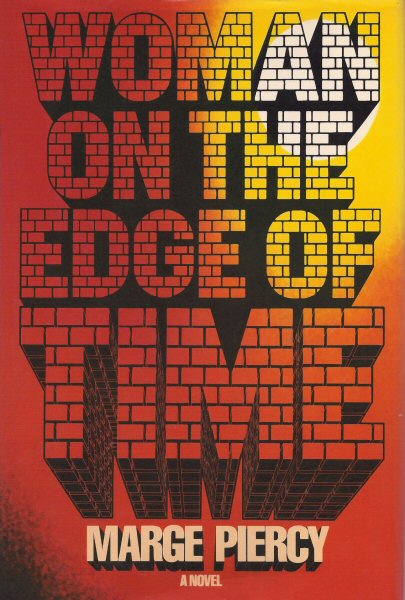
                • Cover of Woman on the Edge of Time
                  Woman on the Edge of Time

                  Marge Piercy · standalone novel · 1976

                  similar bygender and societycontemporary

                  Woman on the Edge of Time is a 1976 feminist science fiction novel by American writer Marge Piercy. The novel was originally published by Alfred A. Knopf. Piercy draws on several inspirations to write this novel such as utopian studies, technoscience, socialization, and female fantasies. One of Piercy's main inspirations for her utopian novels is Plato's Republic. Piercy describes the novel as, "if only…"

                • Cover of The White Plague
                  The White Plague

                  Frank Herbert · standalone novel · 1982

                  similar bygender and society+1 more

                  The White Plague is a 1982 science fiction novel by American author Frank Herbert about an engineered disease which kills only women. It was nominated for a best science fiction novel Locus Award in 1983.

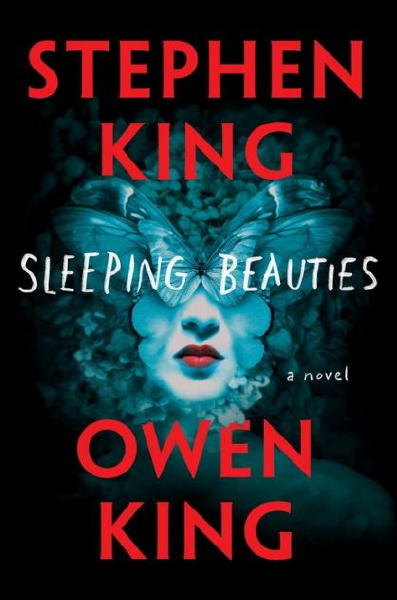
                • Cover of Sleeping Beauties
                  Sleeping Beauties

                  Stephen King & Owen King · standalone novel · 2017

                  similar bygender and societycontemporary

                  Sleeping Beauties is a novel by Stephen King and his son Owen King, released on September 26, 2017. The book was first mentioned during a promotional appearance on the CBC radio program q. Of the novel, Stephen King stated, "Owen brought me this dynamite idea and I've collaborated a couple of times with Joe. I'm not going to say what the idea is because it's too good."

                • Cover of The Robber Bride
                  The Robber Bride

                  Margaret Atwood · standalone novel · 1993

                  similar bygender and societycontemporary

                  The Robber Bride is a novel by Canadian writer Margaret Atwood, first published by McClelland and Stewart in 1993.

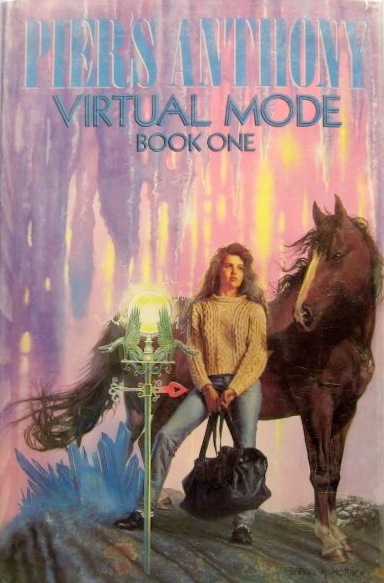
                • Cover of Mode
                  Mode

                  series · 4 books · 1991

                  similar bycontemporary+1 more

                  The Mode series is a quartet of novels by Piers Anthony. Like many of Anthony's other fictional works, it explores many themes and ideas. This series has themes of violence, the abuse of power, sexism and male dominance, gender roles, the environment, integrity and personal honor, sapient animal life, parallel and alternative evolution, space travel, alternate dimensions, paradox, obscure concepts in physics and mathematics, sexual assault and abuse, child and adolescent sexuality, and suicide.

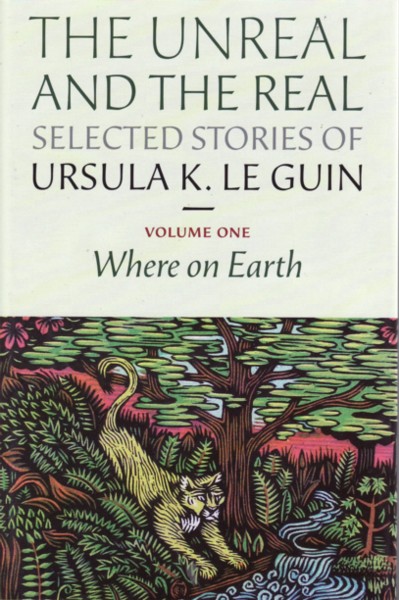
                • Cover of The Unreal and the Real: Selected Stories of Ursula K. Le Guin
                  The Unreal and the Real: Selected Stories of Ursula K. Le Guin

                  series · 2 books · 2012

                  completed

                  similar bygender and society+1 more

                • Cover of Beautiful You
                  Beautiful You

                  Chuck Palahniuk · standalone novel · 2014

                  similar bygender and societycontemporary

                  Beautiful You is a novel by Chuck Palahniuk, released October 21, 2014. It is set in New York City and follows the main character, Penny, who finds herself the object of affection of a Digital Age tycoon named C. Linus Maxwell, known to the Manhattan elite as "Climax-well".

                • Cover of Great Apes
                  Great Apes

                  Will Self · standalone novel · 1997

                  similar bygender and societycontemporary

                  Great Apes is a 1997 novel by Will Self.

                • Cover of The Cloning of Joanna May
                  The Cloning of Joanna May

                  Fay Weldon · standalone novel · 1989

                  similar bygender and societycontemporary

                  The Cloning of Joanna May is a 1989 science fiction novel by British writer Fay Weldon.

                • Cover of The Witches of Eastwick
                  The Witches of Eastwick

                  series · 2 books · 1984

                  completed

                  similar bycontemporary+1 more

                • Cover of The Future of Another Timeline
                  The Future of Another Timeline

                  Annalee Newitz · standalone novel · 2019

                  similar bygender and societycontemporary

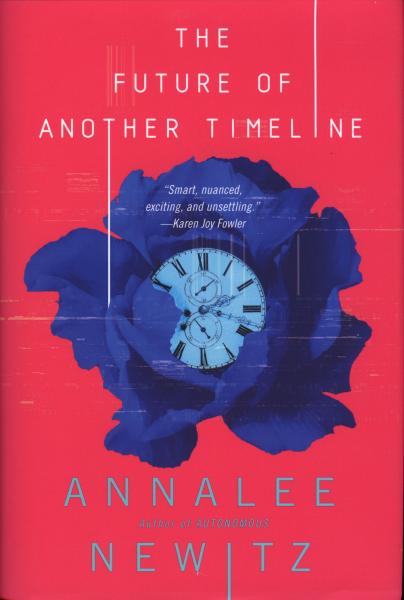
                  The Future of Another Timeline is a 2019 science fiction novel by Annalee Newitz. The feminist time-travel adventure follows Tess, a professional time traveler, geoscientist, and secretly a member of the Daughters of Harriet (Tubman), who are working to make the future better for women.

                • Cover of The Fresco
                  The Fresco

                  Sheri S. Tepper · standalone novel · 2000

                  similar bycontemporary+1 more

                  The Fresco is a science fiction novel by American writer Sheri S. Tepper, published in 2000. It describes Earth's contact with a confederation of intelligent alien races. The Fresco was on the shortlist for 2001 James Tiptree, Jr. Award

                • Cover of Stranger in a Strange Land
                  Stranger in a Strange Land

                  Robert A. Heinlein · standalone novel · 1961

                  similar by+1 more

                  Stranger in a Strange Land is a 1961 science fiction novel by the American author Robert A. Heinlein. It tells the story of Valentine Michael Smith, a human who comes to Earth in early adulthood after being born on the planet Mars and raised by Martians, and explores his interaction with and eventual transformation of Terran culture.

                • Cover of The Refrigerator Monologues
                  The Refrigerator Monologues

                  Catherynne M. Valente · standalone novel · 2017

                  similar bygender and societycontemporary

                  The Refrigerator Monologues is a 2017 superhero fiction novel by Catherynne Valente, with art by Annie Wu, exploring the lives - and deaths - of superheroines, and of the girlfriends of superheroes; the title refers to "women in refrigerators", and to The Vagina Monologues. It was published by Saga Press.

                • Cover of Frankissstein
                  Frankissstein

                  Jeanette Winterson · standalone novel · 2019

                  similar bygender and societycontemporary

                  Frankissstein: A Love Story is a 2019 novel by Jeanette Winterson. It was published on 28 May 2019 by Jonathan Cape. The novel employs speculative fiction and historical fiction to reimagine Mary Shelley's classic novel Frankenstein (1818). The story switches between Mary Shelley writing Frankenstein in Geneva, Switzerland in 1816 and the story of Ry Shelley, a transgender doctor and Victor Stein, a transhumanist, who become involved in the world of artificial intelligence and cryonics in present-day Brexit-era Britain.

                • Cover of Gender Blender
                  Gender Blender

                  Blake Nelson · standalone novel · 2006

                  similar bygender and societycontemporary

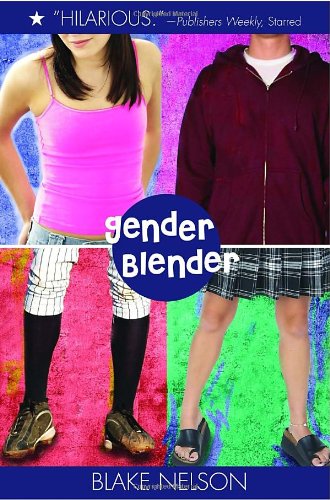
                  Gender Blender is a young adult novel written by Blake Nelson. The book explores the differences between males and females and dramatizes it in a way that children will understand.

                • Cover of Beauty Queens
                  Beauty Queens

                  Libba Bray · standalone novel · 2011

                  similar bygender and societycontemporary

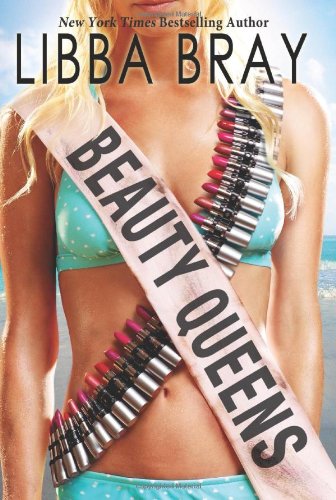
                  The contestants of the Miss Teen Dream pageant are only concerned with practicing their circle turns, dance numbers, and benign answers to interview questions until their plane crashes on a tropical island. Now, with sequins and hair dryers scattered everywhere, the survivors face a huge dilemma: should they search for food and water or continue diligently preparing to appear on national television? The Corporation is counting on them to uphold standards of beauty and behavior, but can the girls count on The Corporation?

                • Cover of House of Holes
                  House of Holes

                  Nicholson Baker · standalone novel · 2011

                  similar bygender and societycontemporary

                  House of Holes is a 2011 novel by American writer Nicholson Baker. It consists of a series of chapters that are more or less connected which tell of the sexual and emotional experiences of a variety of characters in a kind of sexual fantasy land, the titular "House of Holes". The third "dirty novel" by Baker after Vox and The Fermata, it is praised by many reviewers for the inventiveness of its language.

                • Cover of Larque on the Wing
                  Larque on the Wing

                  Nancy Springer · standalone novel · 1994

                  similar bygender and societycontemporary

                  Going through a messy mid-life crisis, forty-year-old wife and mother Larque Harootunian gets carried away with her latest doppelganger--herself at age ten--who helps transform her into a young, strong, courageous, and gay man.

                • Cover of Solstice
                  Solstice

                  Diane Woods · standalone novel · 2021

                  similar bygender and societycontemporary

                  ● "Jake Miller was a young man who lived a boring life, but Jake also had a secret life: as Denise. And as Denise, Jake felt as a real person while Jake became something less. Until one summer solstice, it was Denise who awoke in bed, instead place of Jake. And all the world insisted there was no Jake Miller, there had always and only been Denise. It was a dream come true—permanent and complete. Then things started getting truly weird." ― paraphrased from this book's product page on Amazon.com as of 2024-05-28.

                • Cover of We're Here
                  We're Here

                  series · 5 books · 2021

                  similar bygender and societycontemporary

                • Cover of The Bog Wife
                  The Bog Wife

                  Kay Chronister · standalone novel · 2024

                  similar bycontemporary+1 more

                  The Bog Wife is a 2024 horror novel by Kay Chronister that incorporates elements of Southern Gothic literature. It tells the story of the Haddesley family, in which family members sacrifice their family patriarch to a bog in order receive a wife in return. The story has received praise for its exploration of patriarchal family dynamics and traditions.

                • Cover of Bending the Landscape
                  Bending the Landscape

                  series · 3 books · 1997

                  similar bygender and society+1 more

                  Bending the Landscape is the title of a series of LGBT-themed anthologies of short speculative fiction edited by Nicola Griffith and Stephen Pagel. Three books were produced between 1997 and 2001, subtitled Science Fiction, Fantasy, and Horror. Each volume won LGBT or genre awards.