More like Exogene
anchored on:science fictionmilitary science fictiongenetic engineeringnear futuredarkidentity+2 more
but
- Subterrene War
series3 books2011
similar bynear futurescience fictiondarkgenetic engineeringtensemilitary science fictionwar+2 more
- The Last Centurion
John Ringostandalone novel2008
similar bynear futurescience fictiondarktensemilitary science fictionwarsurvival
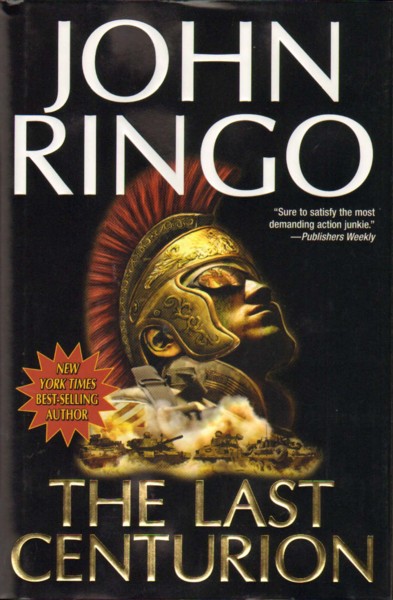
The Last Centurion is a 2008 stand-alone novel by John Ringo. It is written in "blog style" from the point of view of a U.S. Army officer known as "Bandit Six". The novel is set in a post apocalyptic world that has been ravaged by a brief ice age and disease.
- Level 7
Mordecai Roshwaldstandalone novel1959
similar bynear futuredarkscience fictiontensewarsurvival
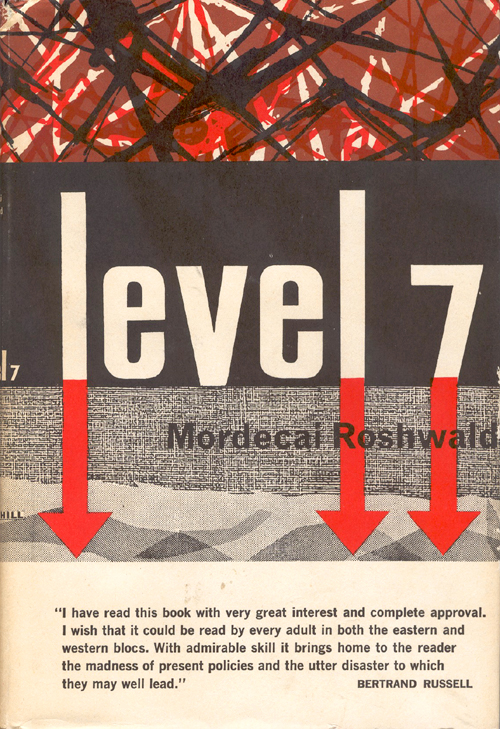
Level 7 is a 1959 science fiction novel by American writer Mordecai Roshwald. It is told from the first-person perspective of a modern soldier, X-127, living in the underground military complex Level 7, where he and several hundred others are expected to reside permanently. X-127 fulfills the role of 'push-button' offensive initiator of his nation's nuclear weapons capacity against an unspecified enemy. X-127 narrates life within a deep shelter before, during and after a nuclear war that wipes out the human species.
- Defenders
Will McIntoshstandalone novel2014
similar bynear futurescience fictiongenetic engineeringdarktensemilitary science fictionwar
Summary from copyright page: "When Earth is invaded by telepathic aliens, humanity responds by creating the defenders. They are the perfect warriors - seventeen feet tall,knowing and loving nothing but war, their minds closed to the aliens. The question is, what do you do with millions of genetically engineered warriors once the war is won? A novel of power, alliance, violence, redemption,sacrifice, and yearning for connection, Defenders presents a revolutionary story of invasion, occupation, and resistance."
- The Twilight of Briareus
Richard Cowperstandalone novel1974
similar bynear futurescience fictiondarktensegenetic engineeringidentitysurvival
It took the light of the supernova Briareus Delta one hundred and thirty-two years to cross space to the Solar System. But the night it exploded in our sky was a night that would never be forgotten in the history of the world. For in that bath of cosmic particles, all things changed. Not only the weather and the flora and fauna, but humanity itself received what seemed to be its death sentence. Sterility signalled the end of man, until the strange children known as the Zeta-mutants began to appear. Richard Cowper, author of Clone and other sf novels, has produced in this new novel a gripping story of how one man coped with the terrible dilemma of his world - how he attempted to solve the problem of the girls with the amber eyes and what he did when he found out what he himself had become during The Twilight of Briarseus. (from the back cover of the DAW Books first printing)
- The Windup Universe
series3 books2005
similar bynear futuredarkscience fictiongenetic engineering+1 more
- Blade Runner Universe
series6 books1968
similar bynear futurescience fictiondarkidentity+1 more
Philip K. Dick's 1968 novel Do Androids Dream of Electric Sheep? follows bounty hunter Rick Deckard as he tracks escaped androids through an irradiated, near-abandoned San Francisco, using the hunt to probe questions of empathy and what separates human from machine. The novel became the basis for Ridley Scott's 1982 film Blade Runner, and Marvel Comics later published an illustrated adaptation of that film. Together the two trace the story's path from prose original to screen and comic-page adaptation.
- Friday
Robert A. Heinleinstandalone novel1982
similar bynear futurescience fictiongenetic engineeringtenseidentity
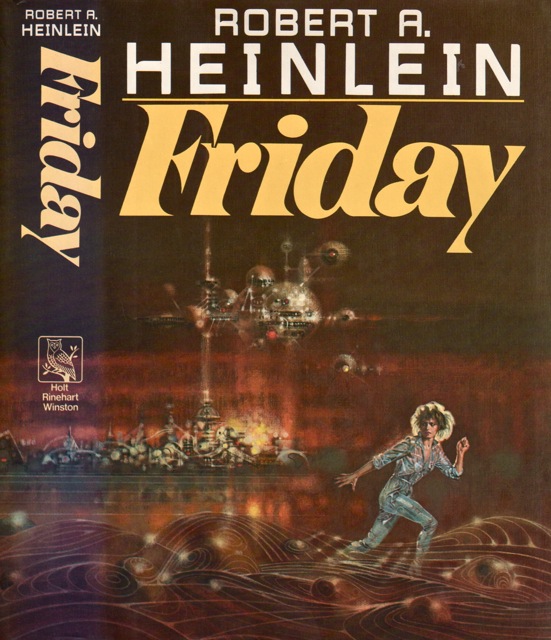
Friday is a 1982 science fiction novel by American writer Robert A. Heinlein. It is the story of a female "artificial person", the eponymous Friday, genetically engineered to be stronger, faster, smarter, and generally better than normal humans. Artificial humans are widely resented, and much of the story deals with Friday's struggle both against prejudice and to conceal her enhanced attributes from other humans. The story is set in a Balkanized 21st century, in which the nations of the North American continent have been split up into a number of smaller states.
- Ship Breaker
series3 books2010
similar bydarkscience fictiontensenear futuresurvival+3 more
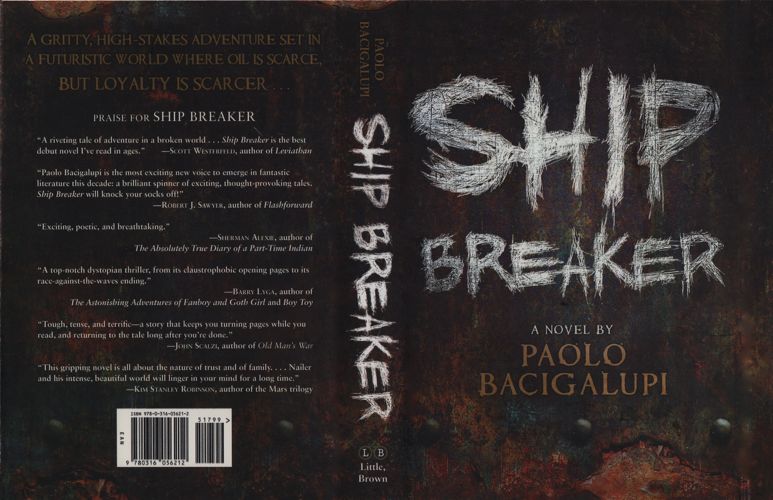
Nailer works a light-crew scavenging copper wire and scrap from beached oil tankers on a Gulf Coast reshaped by rising seas and vanished order, until a wrecked clipper ship washes ashore carrying a half-drowned girl from the wealthy world he'll never belong to. Paolo Bacigalupi's Ship Breaker follows Nailer as helping her pulls him out of his abusive father's orbit and into a much larger, more dangerous game involving her family's fortune. The sequels The Drowned Cities and Tool of War widen the same flooded, resource-scavenging future to new characters and coastlines.
- Tomorrow!
Philip Wyliestandalone novel1954
similar bynear futuredarkscience fictiontensewarsurvival
Conjecture of a tomorrow which brings an attack by the enemy and the destruction of all major cities across an unprepared country.
- Down to a Sunless Sea
David Grahamstandalone novel1979
similar bynear futuredarkscience fictiontensewarsurvival
David Graham's Down to a Sunless Sea (1979) is a post-apocalyptic novel about a planeload of people during and after a short nuclear war, set in a near-future world where the USA is critically short of oil. The title of the book is taken from a line of the poem Kubla Khan by Samuel Taylor Coleridge.
- When She Woke
Hillary Jordanstandalone novel2011
similar bynear futuredarkscience fictiontensegenetic engineering+1 more
When She Woke is a science fiction novel by American author Hillary Jordan, published in October 2011. It has been translated into French, Spanish, Turkish, German, Portuguese and Chinese. The novel is a dystopian reimagining of Nathaniel Hawthorne's The Scarlet Letter, set in a future theocratic America where rather than being imprisoned and rehabilitated, criminals are punished by being "chromed" – having their skin color genetically altered to fit their crime – and released into the general population to survive as best they can.
- Final Blackout
L. Ron Hubbardstandalone novel1948
similar bynear futurescience fictiondarktensewar+1 more
Final Blackout is a dystopic science fiction novel by American writer L. Ron Hubbard. The novel is set in the future and follows a man known as "the Lieutenant" as he restores order to England after a world war. First published in serialized format in 1940 in the science fiction magazine Astounding Science Fiction, Final Blackout was published in book form in 1948 by The Hadley Publishing Co. Author Services Inc. published a hardcover edition of the book in 1988, and in 1989 the Church of Scientology-affiliated organization Bridge Publications said that a film director named Christopher Cain had signed a contract to write and direct a movie version based on the book.
- Black Man
Richard Morganstandalone novel2007
similar bynear futurescience fictiongenetic engineeringdarktenseidentity
Black Man is a 2007 science fiction novel by the British author Richard Morgan. It won the 2008 Arthur C. Clarke Award.
- War Against the Chtorr
series7 books1983
similar bynear futurescience fictiontensedarkwarsurvival+1 more
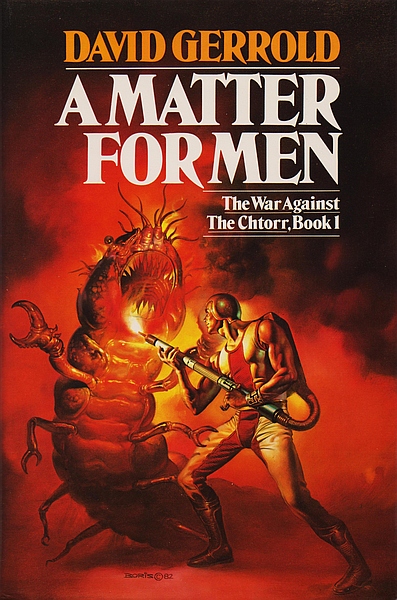
The War Against the Chtorr is a series of science fiction novels by American writer David Gerrold. The Chtorr series was originally planned as a trilogy, but as the story became more intricate, Gerrold realized that three books would not be enough for him to tell the entire story. For a time, he was uncertain how many books there would be in the end but plans on seven. As of 2022, four books have been completed. As of 2017, a fifth and sixth were in the works, 24 years after the publication of the fourth book.
- The Red (Linda Nagata)
series7 books2012
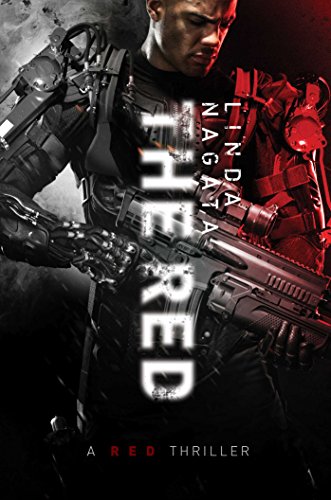
similar bynear futurescience fictionmilitary science fictiontensedark+1 more
- Unwind Dystology
series5 books2007
similar bynear futurescience fictiontensedarkgenetic engineering+2 more
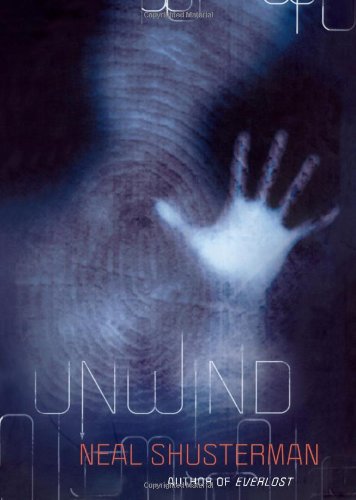
Neal Shusterman's Unwind Dystology opens in a United States reshaped by the resolution to a war over reproductive rights: parents can retroactively have a teenager "unwound," their body disassembled for transplant on the premise that nothing technically dies since every part lives on in someone else. The first novel follows three teens fleeing that fate, and the sequels widen the same dystopia's cast and consequences across a four-book arc plus companion material. It is grim speculative fiction built to ask hard bioethical questions rather than offer comfort.
- Sprawl Trilogy
series10 books1981
similar bynear futurescience fictiontensedark
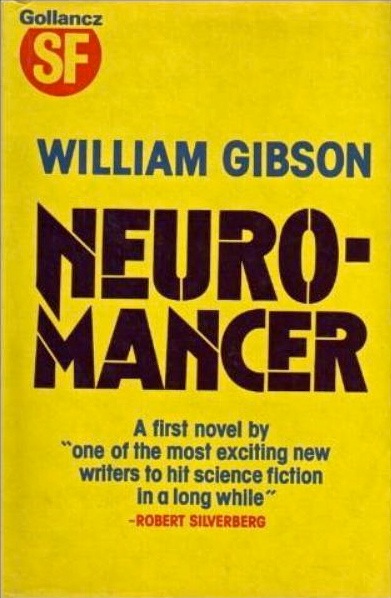
The Sprawl Trilogy is William Gibson's foundational cyberpunk sequence: Neuromancer (1984), in which hacker Case is drawn into a high-stakes heist alongside an artificial intelligence and a damaged ex-soldier, followed by Count Zero (1986) and Mona Lisa Overdrive (1988), which widen the same near-future world of corporate power and networked cyberspace to new characters. Johnny Mnemonic, an early short story set in the same fictional milieu, predates the novels and introduces the courier Molly Millions before her role in the trilogy. Together these works established much of cyberpunk's visual and thematic vocabulary.
- The Long Loud Silence
Wilson Tuckerstandalone novel1952
similar bynear futuredarkscience fictiontensewarsurvival
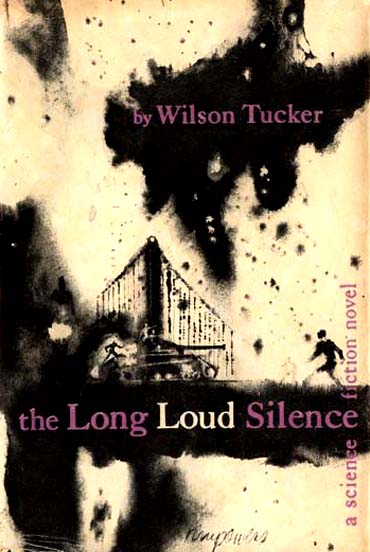
Publisher's description: Tomorrow's war -- the war that could not be. The army of the United States was stationed along the length of the Mississippi River, guns pointed east -- with orders to shoot anyone attempting to cross. For the Final War was not a war of the ultimate bomb, of atomic hell. It was a war of the tiny germ, the filterable virus, the disease that came to conquer a nation -- and stayed to damn a world."
- The Zap Gun
Philip K. Dickstandalone novel1967
similar bynear futurescience fictiondarkwar+2 more
The Zap Gun is a 1967 science fiction novel by American writer Philip K. Dick. It was first published as the two-part serial Project Plowshare in Worlds of Tomorrow in 1965 and 1966, before Pyramid Books issued it in paperback under its present title. The novel originated in a title-first commission devised by Pyramid editor Don Bensen and was written in 1964 during a period of rapid production in Dick's career.
- The Handmaid's Tale
series3 books1985
similar bynear futuredarkscience fictiontense
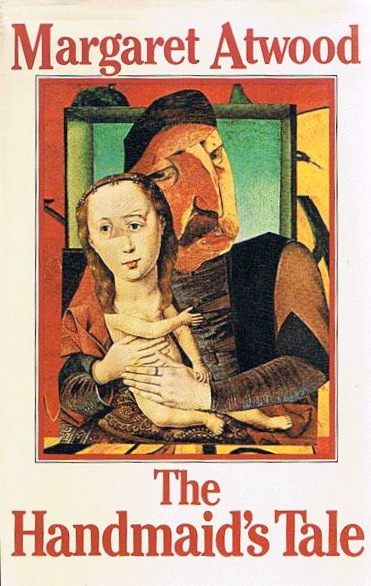
The Handmaid's Tale is Margaret Atwood's 1985 novel set in Gilead, a totalitarian theocracy that has overthrown the United States and forces fertile women into reproductive servitude as Handmaids; it is narrated by one such woman, Offred. Atwood returned to the world in her 2019 sequel The Testaments, set fifteen years later and narrated by three women, including the regime's Aunt Lydia. Together the two novels move from Gilead's grip on power toward the first cracks in it.
- American War
Omar El Akkadstandalone novel2017
similar bynear futuredarkscience fictionwarsurvival+1 more
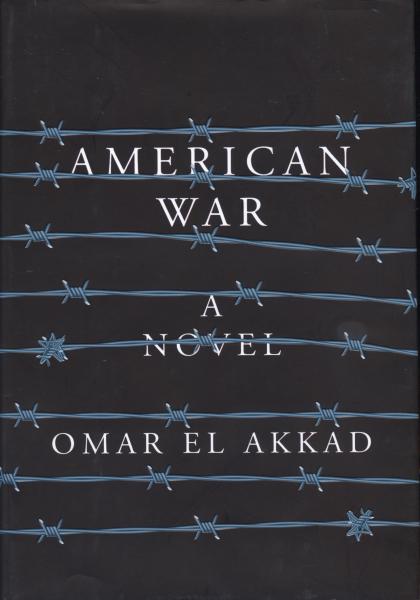
American War is the first novel by the Egyptian-Canadian journalist Omar El Akkad. It is set in the United States in the near future, ravaged by climate change and disease, in which the Second Civil War has broken out over the use of fossil fuels.
- Upgrade
Blake Crouchstandalone novel2022
similar bynear futurescience fictiongenetic engineeringtenseidentity+1 more
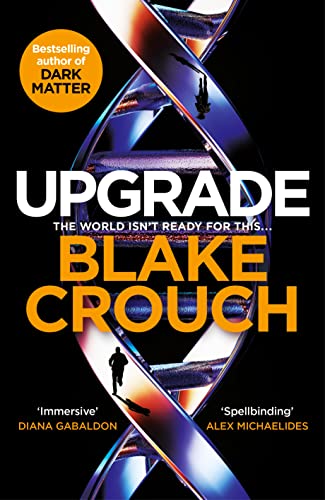
Upgrade is a 2022 novel by Blake Crouch. It is his tenth stand-alone novel, published three years after Summer Frost (2019). The novel explores the ethical and existential ramifications of genetic engineering, set in a near-future world where humanity grapples with the consequences of advanced human genetic enhancement.
- Darwin
series2 books1999
completed
similar bynear futurescience fictiongenetic engineeringtense+1 more
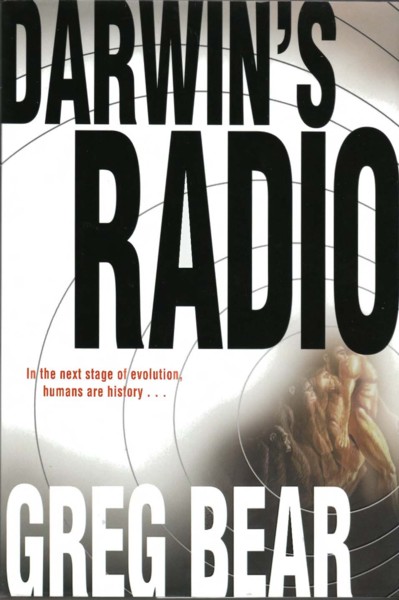
Greg Bear's Darwin's Radio imagines a dormant retrovirus in human DNA activating worldwide, triggering an accelerated leap in human evolution that governments respond to as a plague. The 1999 novel won the Nebula Award; its sequel Darwin's Children follows the first generation of changed children as society decides what to do with them. Together they're speculative near-future science fiction grounded in genetics rather than space opera.