More like Explorers
anchored on:adventure
but
- Cavor
series2 books1901
similar byadventurousspace explorationscience fiction
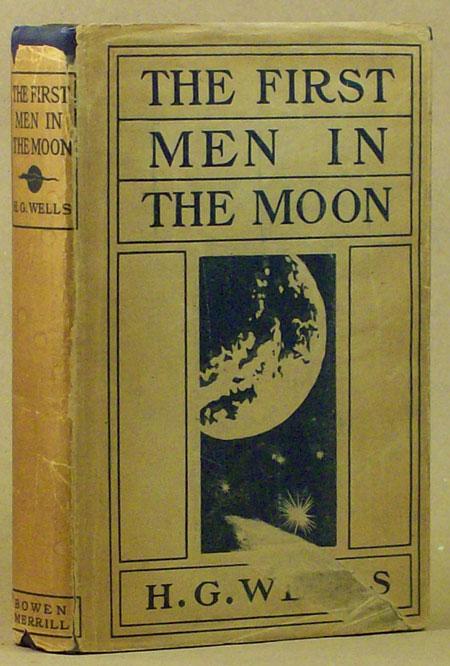
H. G. Wells's 1901 novel The First Men in the Moon is narrated by the businessman Bedford, who joins the reclusive scientist Cavor after Cavor invents cavorite, a gravity-blocking substance that carries the two men to the Moon. There they discover a vast underground civilization of insect-like Selenites, and the expedition that began as a hunt for lunar minerals turns into an encounter with an alien society. It is a standalone novel; later editions crediting Stephen Baxter add an introduction or afterword rather than a continuing story.
- The Stonehenge Gate
Jack Williamsonstandalone novel2005
similar byadventurousadventurespace explorationexpeditionsscience fiction+1 more
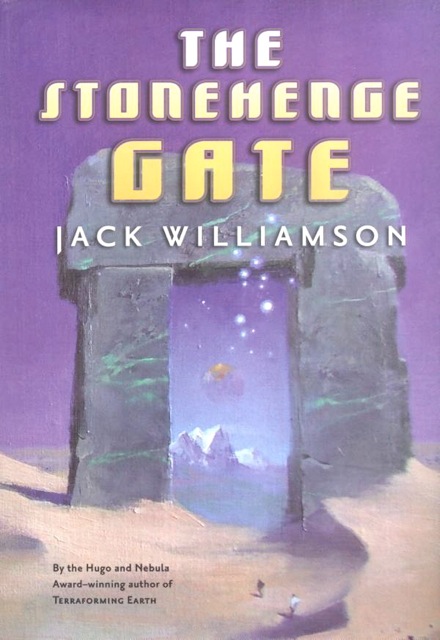
Stumbling on ancient stones in the Sahara Desert, four adventurous excavators and poker buddies realize that they have discovered a gateway to other worlds, from technologically advanced planets to primitive civilizations.
- Time for the Stars
Robert A. Heinleinstandalone novel1956
similar byadventurousspace explorationscience fiction+2 more
Explorer spaceships need a way to communicate back to earth in a timely manner when they are light years away. When telepathy is found to have no delay, pairs of twins are hired. One twin stays on Earth to receive reports, and the other twin goes into space.
- Time Traders
series7 books1958
similar byadventurousscience fiction+1 more
The Time Traders opens Andre Norton's Cold War-flavored science fiction series, following an American agent recruited to travel into the past and counter a Soviet operation built around ancient technology unearthed from a vanished civilization. Norton, later joined by collaborators Sherwood Smith and P. M. Griffin, expanded the sequence to seven novels published between 1958 and 2002, and revised the opening book herself in 2000. Like several of Norton's other series, it treats leftover technology from a long-gone ancient culture as its central plot engine.
- Allan Quatermain
series25 books1885
similar byadventurousadventureexpeditions
Allan Quatermain is the protagonist of H. Rider Haggard's 1885 novel King Solomon's Mines, its one sequel Allan Quatermain (1887), twelve prequel novels and four prequel short stories, totalling eighteen works. An English professional big game hunter and adventurer, in film and television he has been portrayed by Richard Chamberlain, Sean Connery, Cedric Hardwicke, Patrick Swayze and Stewart Granger among others.
- Doctor Dolittle
series27 books1920
similar byour world+2 more
Hugh Lofting's Doctor Dolittle books follow a Victorian-era English physician who gives up treating people to practice medicine among animals, whose languages he learns to speak, traveling the world with an ever-growing menagerie of companions. Lofting wrote twelve novels between 1920 and 1936, beginning with The Story of Doctor Dolittle, with two further story collections published after his 1947 death. Kathryn Knight and Nick Price, credited alongside Lofting in modern editions, are illustrators/editors of reissues rather than co-authors of new installments.
- Matt Cruse
series3 books2004
similar byadventurousadventureour world+1 more
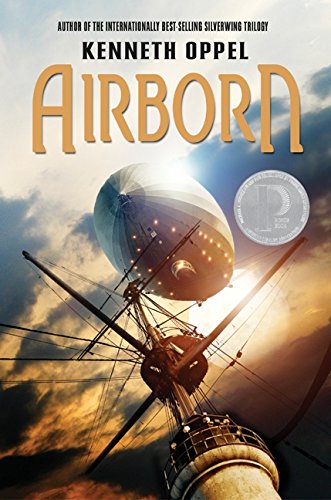
Airborn opens Kenneth Oppel's trilogy with Matt Cruse, a cabin boy aboard a transoceanic passenger airship, who joins a search for a legendary flying creature whose existence no one can prove. Set in an alternate world built around long-distance airship travel, the series continues through Skybreaker and Starclimber as Matt's ambitions and the ships he crews grow more dangerous. The first book won Canada's Governor General's Award for children's literature in 2004.
- Tarzan
series50 books1912
part of Tarzan Universe
similar byadventurousadventure
Tarzan is a series of 24 adventure novels written by Edgar Rice Burroughs (1875–1950) and published between 1912 and 1966, followed by several novels either co-written by Burroughs, or officially authorized by his estate. There are also two works written by Burroughs especially for children that are not related to the main series.
- Ringworld
series5 books1970
part of Known Space
similar byadventurousspace explorationscience fiction
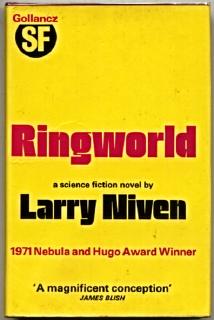
The Ringworld series is a series of science fiction novels written by American author Larry Niven. It is part of his Known Space series of stories. Its backdrop is the Ringworld, a giant artifact 3 million times the surface area of Earth circling a star. The series is composed of four standalone science fiction novels, the original award-winning book and its three sequels:1970: Ringworld 1979: The Ringworld Engineers 1996: The Ringworld Throne 2004: Ringworld's Children
- Hitchhiker's Guide to the Galaxy
series16 books1979
part of The Hitchhiker's Guide to the Galaxy Universe
similar byscience fiction+2 more
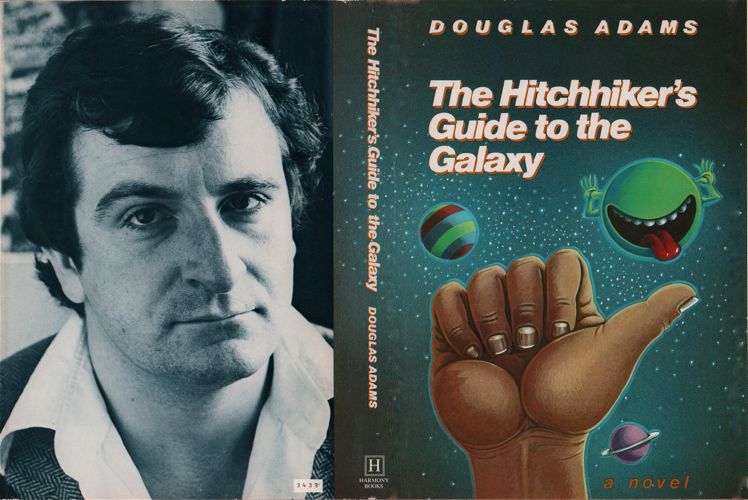
The Hitchhiker's Guide to the Galaxy is a comedy science fiction franchise created by Douglas Adams. Originally a radio sitcom broadcast over two series on BBC Radio 4 between 1978 and 1980, it was soon adapted to other formats, including both novels and comic books, a 1981 BBC television series, a 1984 text adventure game, stage shows and a 2005 feature film.
- The Cave Girl
Edgar Rice Burroughsstandalone novel1925
similar byadventurousadventureexpeditionsour world
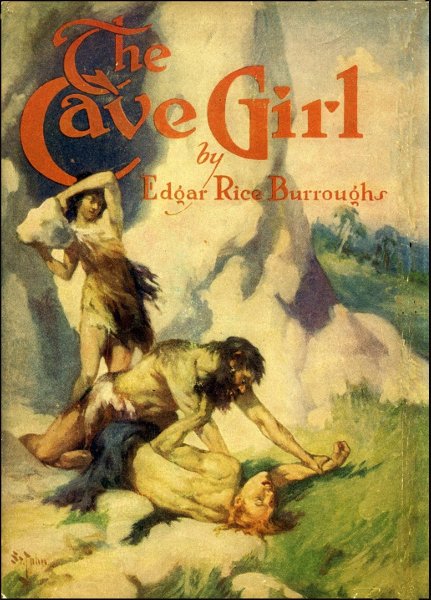
The Cave Girl is a lost world novel by American writer Edgar Rice Burroughs. Originally published in two separate stories, The Cave Girl begun in February 1913 and published by "All-Story" in July, August, and September 1913; and The Cave Man begun in 1914 and published by "All-Story Weekly" throughout March and April 1917. The book version was first published by A. C. McClurg on 1925-03-21. In August 1949, Dell Paperback published a version with a map captioned "Wild Island Home of Nadara the Cave Girl Where Violence and Bloodshed Rule."
- Pym
series5 books1838
similar byadventureexpeditions+2 more
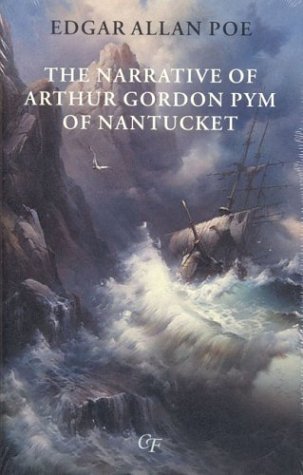
Edgar Allan Poe's The Narrative of Arthur Gordon Pym of Nantucket (1838), his only complete novel, sends a young stowaway through shipwreck, mutiny, and cannibalism toward an increasingly strange voyage to the South Pole that breaks off on a mysterious, unexplained image. Jules Verne wrote an unauthorized 1897 sequel, An Antarctic Mystery, resolving Poe's cliffhanger in more rationalist terms, while Mat Johnson's 2011 novel Pym uses Poe's original as the springboard for a satirical modern story about race.
- H. G. Wells' War of the Worlds
universe65 books1898
Start hereThe War of the Worlds · Start here
similar byscience fiction+1 more
No one would have believed, in the closing years of the nineteenth century, that human affairs were being watched keenly and closely from the timeless worlds of space. And then the cylinders fell. H. G. Wells' War of the Worlds opens in the quiet of the Surrey commons, where a falling star proves to be the first Martian craft — and from the pit rise the towering tripods, the Heat-Ray, the choking Black Smoke and the creeping red weed, wielded by minds that regard mankind much as we regard the creatures we boil for supper. This is invasion rendered as natural disaster: cold, methodical, and vast beyond argument. Wells' 1898 novel is the seed; everything else grows from that Martian soil. The catalogue gathers direct sequels and continuations alongside a wide field of other hands. In War of the Worlds: Global Dispatches the invasion is retold across the whole planet through the eyes of Twain, Verne, Tolstoy, Lowell and Kipling; in the Manly Wade and Wade Wellman crossover, Sherlock Holmes, Watson and Professor Challenger take the field against the machines; and Scott Washburn's Great Martian War stretches the fighting into a decades-long alternate history of steam, artillery and grinding attrition. It is a loose shared world — no single decreed sequence, many voices answering one calamity. What sets this world apart is its refusal of heroics: the invaders fall not to generals but to the smallest things of Earth, humbling and indifferent. Begin, always, with Wells' original novel — it is short, and it is the ground every later book stands upon. From there follow your appetite: Global Dispatches for the panorama, the Holmes campaign for adventure, Washburn for the long war.
- Voyages extraordinaires
series59 books1863
similar byadventurousadventure+3 more
The Voyages extraordinaires is a collection or sequence of novels and short stories by the French writer Jules Verne. The cycle features some of Verne's best known titles, such as Journey to the Center of the Earth, From the Earth to the Moon, Twenty Thousand Leagues Under the Seas, Around the World in Eighty Days and The Mysterious Island.
- Saucer
series3 books2002
similar byadventurousour worldscience fiction+2 more
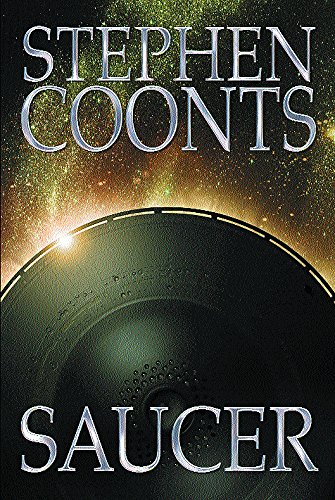
Saucer is Stephen Coonts's techno-thriller trilogy beginning with Saucer (2002), continued in Saucer: The Conquest and Saucer: Savage Planet. It follows the discovery of a functioning craft buried for millennia in the Sahara desert and the test pilots and adventurers who end up flying, and fighting over, it, escalating from a buried desert secret toward wider stakes involving hostile outside interests.
- Future History
series42 books1939
completed
similar byscience fiction+1 more
The Future History is a series of science fiction stories written by American author Robert A. Heinlein (1907–1988). It describes a projected future of the human race from the middle of the 20th century through the early 23rd century. The term Future History was coined by John W. Campbell Jr. in the February 1941 issue of Astounding Science Fiction. Campbell published an early draft of Heinlein's chart of the series in the May 1941 issue.
- Danny Dunn
series15 books1956
completed
similar byadventurousadventurescience fiction+1 more
Danny Dunn is the young protagonist of a long-running mid-century American juvenile science fiction series by Raymond Abrashkin and Jay Williams, starting in 1956. Each book sends Danny and his friends into an adventure built around a specific piece of speculative technology — anti-gravity paint, a homework machine, weather control — that goes predictably wrong or is misused by someone else. Aimed squarely at young readers, the fifteen-book run treats gadget-driven science fiction as a springboard for comic mishap and light moralizing rather than hard extrapolation.