Loreful
HomeDiscover
Search series, authors…⌘K
Loreful

Reading orders for SF/F series and shared universes — with your place kept in every one.

Explore

UniversesSeriesWorksAuthorsAtlas

Help

FAQAboutSite map

Account & legal

Sign inCreate accountPrivacyTerms

Data

Built on ISFDB, Wikipedia, Wikidata and Open Library. Curated reading orders carry their reasoning on the page; the rest follow publication order. Data sources & licenses

© Loreful · data: ISFDB · CC BY

More like Explorers in Hell

anchored on:fantasyafterlife & underworldgodspolitical intriguewardark

but

Mood

The mood the book leaves you in.

  • The reading experience is propelled by journeys, exploration, and physical risk; excitement and forward momentum dominate over dread or introspection.
  • Joy and loss are deliberately mixed; the resolution grants characters something real while taking something else away, leaving warmth and sorrow together.
  • The book demands work from the reader — dense prose, difficult structure, unfamiliar ideas, or morally uncomfortable material — as part of its intended effect.
  • Grim events, cruelty, or despair dominate the atmosphere, and the book does not soften them with comfort or comic relief.
  • The atmosphere is quietly unsettling — wrongness, unease, and the uncanny pervade the book without necessarily escalating into overt horror.
  • The book is built to move the reader; character feeling is foregrounded and major scenes aim at a strong emotional response.
  • Humor is a primary aim and the prose plays for laughs — comic situations, wit, or dialogue produce sustained comedy, not occasional levity.
  • The book insists that things can improve; effort and decency are shown to matter, and the arc bends toward better outcomes even through hardship.
  • The book teaches as it goes — real facts, history, science, or craft are conveyed in enough depth that learning is part of the reading experience.
  • The book is designed to uplift and motivate, presenting perseverance or achievement in a way that invites the reader to aspire or act.
  • The overall register is cheerful and easygoing; stakes are kept gentle and the book avoids dwelling on pain or dread.
  • Withheld information drives the experience; the book sustains enigmas and secrets the reader wants resolved, whatever its genre.
  • The book is contemplative and inward-looking, giving more weight to thought, memory, and meaning than to external events.
  • The book works as comfort reading — low tension, a soothing pace, and an atmosphere the reader can unwind in.
  • Grief, loss, or melancholy set the dominant register, and the book lets sorrow stand rather than resolving it into comfort.
  • Sustained suspense is the point; the book keeps the reader braced for what happens next through danger, pressure, or impending revelation.
  • Playful invention and charm define the register — fanciful conceits, light absurdity, and a narration that delights in its own oddity.

About

What the story runs on.

  • Stories in which extraterrestrial beings are central — as characters, cultures, or the object of the plot.
  • Stories about venturing into space to explore — survey missions, astronauts, and the frontier of the unknown beyond Earth.
  • Stories structured as a quest — a journey undertaken to find, deliver, or destroy something of great import.
  • Stories in which staying alive against nature, catastrophe, or scarcity is the central problem.
  • Stories of lovers kept apart by law, family, faith, or station, where the obstacle to love is the plot.
  • Stories in which a friendship — its making, testing, or loss — is the emotional center.
  • Stories of growing up — a young protagonist crossing from childhood into adult knowledge and responsibility.
  • Stories about who a character truly is — self-discovery, doubled lives, and the search for a self.
  • Stories in which a buried family truth — hidden parentage, crimes, or shames — surfaces and reorders the present.
  • Stories driven by maneuvering for power — factions, conspiracies, and statecraft conducted in shadow.
  • Stories in which war itself is the subject — combat, occupation, and what warfare does to soldiers and civilians.
  • Stories organized around investigating a killing — the case, the clues, and the pursuit of the killer, in any genre's clothing.

Shelf

Where it sits in the library.

    • Fiction built on magic or other supernatural elements that have no scientific explanation.
    • Secondary-world fantasy at large scale, where the fate of nations or the world turns on the protagonists' struggle.
    • Fantasy set in a recognizably modern city or contemporary world where the supernatural intrudes on everyday life.
    • Fantasy that blends in horror's atmosphere and imagery, keeping a fantastical frame around grim or frightening material.
    • Action-driven fantasy following warriors or rogues with personal stakes against sorcerous threats, rather than world-spanning conflicts.
    • Fantasy set in a real historical period or a close analogue of one, with magic woven into the era.
    • Fantasy in which protagonists cross from the ordinary world into another world through a portal or similar passage.
    • Fiction that retells or reworks a traditional fairy tale in a new form or setting.
    • Fantasy drawing directly on myths, legends, and folklore, retelling them or building on their figures and logic.
    • Fantasy of ghosts, vampires, shapeshifters, psychics, and similar phenomena, usually set in an otherwise ordinary world.
    • Fiction mixing science-fictional trappings with overtly magical or impossible elements in one setting.
    • Low-stakes fantasy emphasizing comfort, community, and everyday pleasures over conflict and peril.
    • Speculative fiction of pervasive moral ambiguity, violence, and cynicism that rejects heroic conventions — fantasy and SF alike.
      • Fiction that extrapolates from science and technology — future societies, space travel, or speculative inventions — within at least nominally natural laws.
      • Science fiction of interstellar scope — starships, galactic polities, and adventure across star systems.
      • Science fiction committed to scientific rigor, where technical plausibility constrains the story.
      • Science fiction centered on armed forces and warfare, told largely from a military point of view.
      • Science fiction of networked, corporate-dominated near futures, pairing high technology with social decay.
      • Science fiction styled on nineteenth-century steam-powered technology, often in a Victorian or pseudo-Victorian setting.
      • Fiction depicting an oppressive or catastrophic society, presented as a warning.
      • Fiction set after civilization's collapse, following survivors in the ruins of the old world.
      • Fiction in which characters move between past and future, and the mechanics or consequences of that travel drive the plot.
      • Fiction exploring a world where a historical event went differently and history diverged from ours.
      • Science fiction about humanity's first encounter and communication with an alien intelligence.
      • Science fiction in which extraterrestrial forces attack or occupy Earth and humanity resists.
      • Fiction whose primary aim is to frighten or unsettle the reader through dread, menace, or the monstrous.
      • Horror of vast, indifferent, incomprehensible entities before which humanity is insignificant, in the Lovecraft tradition.
      • Horror of decaying houses, buried family secrets, and oppressive atmosphere in the Gothic literary tradition.
      • Horror centered on hauntings and the returning dead.
      • Horror located in the mind — paranoia, obsession, and unreliable perception rather than external monsters.
      • Horror built around the reanimated dead and survival amid their outbreaks.
      • Horror defined by explicit, transgressive gore that refuses to cut away from violence.
      • Speculative fiction of the strange and uncanny that resists both natural explanation and standard genre categories.
      • Fiction organized around solving a crime or puzzle, typically following an investigator toward the identification of a culprit.
      • A puzzle-first mystery that lays out clues so the culprit's identity can be deduced before the reveal.
      • Crime fiction of moral ambiguity, fatalism, and hard-edged style, set among the corrupt and the doomed.
      • A mystery following the realistic routines of police work — forensics, interviews, and case-building.
      • A gentle mystery with an amateur sleuth, a small community, and violence kept off the page.
      • A mystery set in a past era, where the investigation works within that period's methods and society.
      • Fast-paced fiction driven by imminent danger, pursuit, or high-stakes conspiracy, built to sustain tension.
      • A thriller of espionage — agents, tradecraft, and intelligence services in conflict.
      • A thriller centered on lawyers and the courtroom, where litigation carries the suspense.
      • A thriller driven by detailed contemporary or near-future technology, often military or scientific.
      • A thriller whose tension comes from mental states and manipulation between characters rather than external action.
      • Fiction whose central plot is a romantic relationship and its development toward an emotionally satisfying resolution.
      • Romance in which one or both partners are supernatural beings, blending fantasy elements into the love story.
      • A fantasy-romance hybrid in which the romantic arc and the fantasy plot carry equal weight.
      • Romance set in a past era, with courtship shaped by the period's society and manners.
      • Romance set in the present day, without supernatural or historical elements.
      • Fiction set in a real past period, where the historical setting materially shapes characters and events.
        • General and literary fiction emphasizing prose style, character interiority, or formal ambition over genre plot conventions.
        • Fiction in a realistic world where magical events occur and are treated as ordinary, in the tradition of Latin American literature.
        • Fiction that ridicules people, institutions, or society in order to criticize them.
        • Fiction of dreamlike, irrational imagery and logic that breaks from realistic representation.
        • Fiction that plays with narrative convention through metafiction, fragmentation, and self-reference.
        • Fiction propelled by journeys, exploration, and physical peril, where action and survival carry the plot.
        • Adventure fiction of ships and seafaring — naval engagements, voyages, and life at sea.
        • Fiction of the American frontier West — gunmen, ranchers, and lawmen, typically in the late nineteenth century.
        • Fiction centered on soldiers, campaigns, and the experience of warfare, historical or imagined.
          • Fiction written primarily to amuse, using comedic situations, wit, or parody as its organizing principle.
            • Multi-generational fiction following a family or dynasty across decades, with inheritance and kinship as the through-line.
              • Fiction whose world runs on explicit game mechanics — levels, stats, and skills that characters can see and exploit.
                • Fiction about costumed or superpowered heroes and their conflicts with comparable villains.

                Practical

                How long a commitment, whether it stands alone, and whether it has finished.

                Tap a chip to ask for it · tap again to rule it out · once more to clear. Numbers show what would be left.

                • Cover of To Reign in Hell
                  To Reign in Hell

                  Steven Brust · standalone novel · 1984

                  similar byfantasydarkafterlife & underworldgods+2 more

                  To Reign in Hell is a 1984 fantasy novel by American writer Steven Brust. It deals with the revolt of angels in Heaven from a point of view that casts Satan as a sympathetic protagonist. The novel appears to be heavily influenced by John Milton's Paradise Lost.

                • Cover of A Song of Ice and Fire
                  A Song of Ice and Fire

                  series · 14 books · 1996

                  part of World of Ice and Fire

                  similar byfantasydarkpolitical intriguewar

                  A Song of Ice and Fire is a series of high fantasy novels by the American author George R. R. Martin. Martin began writing the first volume, A Game of Thrones, in 1991, and published it in 1996. Martin, who originally envisioned the series as a trilogy, has released five out of seven planned volumes. The most recent entry in the series, A Dance with Dragons, was published in 2011. Since then, Martin has been working on the sixth novel, titled The Winds of Winter. A seventh novel, A Dream of Spring, is planned to follow.

                • Cover of Malazan Book of the Fallen
                  Malazan Book of the Fallen

                  series · 20 books · 1999

                  part of Malazan

                  similar bydarkfantasywargods+1 more

                  The Malazan Book of the Fallen is a series of epic fantasy novels written by the Canadian author Steven Erikson. The series, published by Bantam Books in the U.K. and Tor Books in the U.S., consists of ten volumes, beginning with Gardens of the Moon (1999) and concluding with The Crippled God (2011). Erikson's series presents the narratives of a large cast of characters spanning thousands of years across multiple continents.

                • Cover of Katabasis
                  Katabasis

                  R. F. Kuang · standalone novel · 2025

                  similar byfantasydarkafterlife & underworldadventurous

                  Katabasis is a 2025 fantasy novel by American writer R. F. Kuang. It was released on August 26, 2025. The novel follows two magicians, doctoral candidates, who must venture into hell to save their thesis advisor in order to receive letters of recommendation.

                • Cover of The Dark Star Trilogy
                  The Dark Star Trilogy

                  series · 2 books · 2019

                  similar byfantasydarkpolitical intrigue+1 more

                  Marlon James's Dark Star Trilogy opens with Black Leopard, Red Wolf, in which a mercenary tracker is hired to find a missing boy and is drawn into a war between kingdoms across a continent built from African history and mythology. The second volume, Moon Witch, Spider King, retells much of the same span of time from the perspective of a rival witness, deliberately contradicting the first narrator's account. The trilogy is conceived as one conflict viewed through incompatible narrators rather than a linear continuation.

                • Cover of Malazan
                  Malazan

                  universe · 36 books · 1999

                  Start hereMalazan Book of the Fallen · Start here

                  similar bydarkwar+3 more

                  Pity the historian who tries to map this world; pity more the god who thinks he rules it. The Malazan Empire marches across continents on the boots of its common soldiers, and above them move Ascendants — mortals grown into something like gods, and gods worn thin as old coin. Magic is drawn from Warrens, roads of power threaded through reality; the dead keep their grudges; and every empire, however vast, is a wager against time. This is epic fantasy told from the mud, where a sapper cracking a joke weighs as much as an immortal settling a feud older than the human race. The world began as a tabletop campaign two friends built in the 1980s, and it still moves by two hands. Steven Erikson's ten-volume Malazan Book of the Fallen is the spine — Gardens of the Moon, Deadhouse Gates, Memories of Ice, on through The Crippled God — each book a near-standalone campaign that only later reveals how it locks together. Ian C. Esslemont walks the same years from a different vantage in his Novels of the Malazan Empire (Night of Knives, Return of the Crimson Guard onward). Around them stand the prequels: Erikson's Kharkanas Trilogy, archaic and elegiac, chronicling a doomed elder people, and Esslemont's brisker Path to Ascendancy, following two adventurers before they became legends. Erikson's Witness sequence carries the tale forward, and novellas of the genial necromancers Bauchelain and Korbal Broach supply the gallows comedy. Nothing is explained to you; comprehension is earned, and that is the pleasure. The themes run deep — compassion set against cruelty, the toll empires charge, civilizations that fall and are mourned. Begin where the saga does, with Erikson's Gardens of the Moon, and read the ten in publication order; the prequels are for the already-initiated. Trust that confusion is the price of entry.

                • Cover of Inferno
                  Inferno

                  series · 2 books · 1976

                  similar byfantasyafterlife & underworlddark

                  In Inferno, Larry Niven and Jerry Pournelle send a science fiction writer to his death and drop him into a modern-dress version of Dante's nine circles of Hell, where he must reason his way toward understanding why he has been damned. The 1976 novel was nominated for both the Hugo and Nebula awards, and the authors returned to the same character decades later in a sequel, Escape from Hell. Together the two books form a self-contained pair rather than an open-ended series.

                • Cover of Dragon Age (Bioware RPG tie-in)
                  Dragon Age (Bioware RPG tie-in)

                  series · 21 books · 2009

                  similar byfantasypolitical intrigue+3 more

                  These tie-in novels expand BioWare's Dragon Age video game series into prose, mostly written by the games' own lead writers, and are set in the same dark-fantasy world of Thedas. The Stolen Throne and The Calling serve as prequels filling in the backstory of characters central to the first game, while later books such as Asunder and The Masked Empire tie more directly into the plots and politics of the sequels. They are written for players wanting deeper lore rather than as standalone entry points to the setting.

                • Cover of Lost Gods
                  Lost Gods

                  Brom · standalone novel · 2016

                  similar byfantasydarkafterlife & underworldgodsadventurous

                  A young man descends into Purgatory to save his wife and unborn child in this vividly, illustrated novel of wonder and terror. (text from BromArt.com )

                • Cover of The Acacia Trilogy
                  The Acacia Trilogy

                  series · 3 books · 2007

                  similar byfantasydarkpolitical intriguewar+1 more

                  Acacia: The War with the Mein begins with an empire's ruling Akaran children fleeing after assassins from an exiled people kill their father, scattering the heirs into a wider world whose comfortable myths — and the drug trade and slavery underwriting the empire's peace — turn out to be far uglier than they were raised to believe. David Anthony Durham's trilogy, continuing through The Other Lands and The Sacred Band, follows the siblings as each confronts a different piece of the empire's hidden machinery.

                • Cover of Beklan Empire
                  Beklan Empire

                  series · 2 books · 1974

                  completed

                  similar byfantasypolitical intriguewar+2 more

                  Two standalone novels by Richard Adams set in the same invented world, the Beklan Empire, an ancient, quasi-Mediterranean land of god-kings, slave markets, and warring city-states. Shardik (1974) follows a hunter swept into a religious and military frenzy over a giant bear believed to be the vessel of a god; Maia (1984) turns to an earlier generation of the empire and follows a slave girl's rise through its court and conquests. The two novels share only their setting, not characters or plot.

                • Cover of Deeplight
                  Deeplight

                  Frances Hardinge · standalone novel · 2019

                  similar byfantasydarkgodsadventurous

                  Deeplight is a young adult fantasy novel by Frances Hardinge, published October 31, 2019 by Macmillan Children's Books. It is her 9th novel.

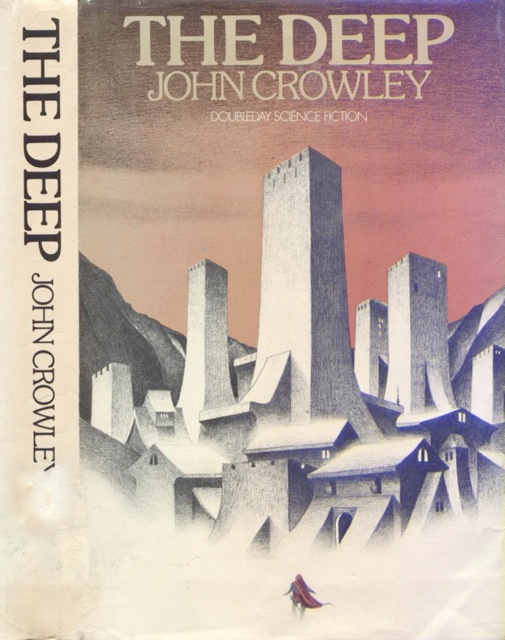
                • Cover of The Deep
                  The Deep

                  John Crowley · standalone novel · 1975

                  similar byfantasydarkpolitical intriguewar

                  The Deep is a 1975 speculative fiction novel by American writer John Crowley, who described it as being "based quite closely on events in the English Wars of the Roses", and illustrated by the likes of John Cayea, Wayne Anderson in 1977, and Yvonne Gilbert in 1984. The novel is set in a medieval world where the two factions, the "Reds" and the "Blacks", struggle for supremacy through battle.

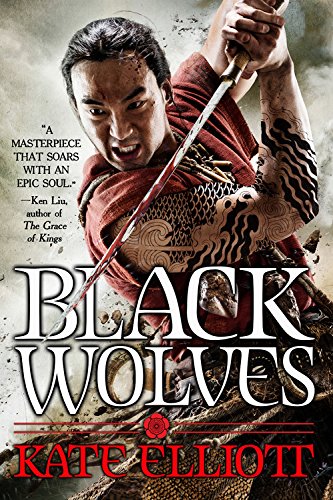
                • Cover of Black Wolves Trilogy
                  Black Wolves Trilogy

                  series · 1 book · 2015

                  similar byfantasydarkpolitical intriguewar

                • Cover of Wheel of the Infinite
                  Wheel of the Infinite

                  Martha Wells · standalone novel · 2000

                  similar byfantasydarkgods+1 more

                  Wheel of the Infinite is a 2000 fantasy novel by Martha Wells. It was first published by Eos/HarperCollins.

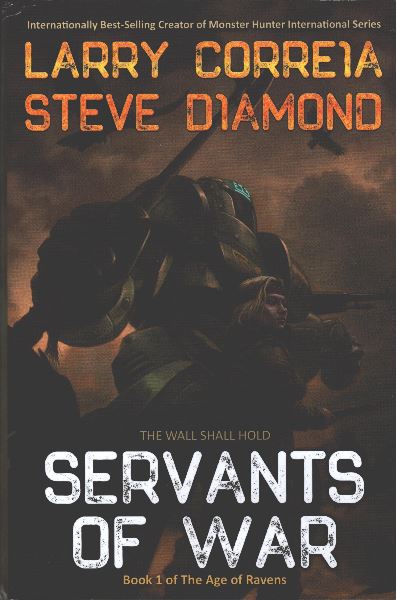
                • Cover of The Age of Ravens
                  The Age of Ravens

                  series · 2 books · 2019

                  similar byfantasydarkgodswar+1 more

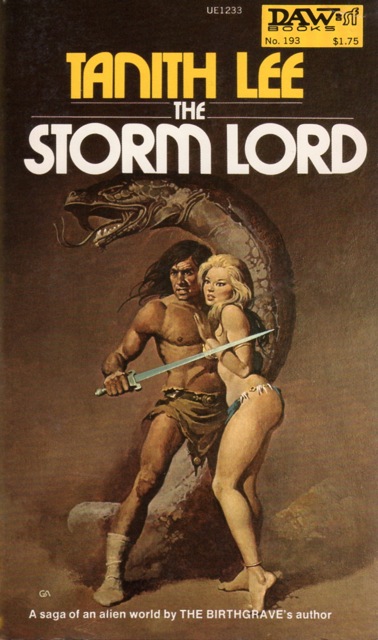
                • Cover of Wars of Vis
                  Wars of Vis

                  series · 3 books · 1976

                  completed

                  similar byfantasydarkgods+3 more

                  Tanith Lee's Wars of Vis trilogy is set on a world of feuding city-states, following the warlord Raldnor Am Anackire's rise as long-buried tensions between the pale-skinned Vis and darker-skinned Lowlanders erupt into open war and the revelation of hidden power. The Storm Lord opens the trilogy, continued by Anackire and The White Serpent.

                • Cover of Targaryen History
                  Targaryen History

                  series · 4 books · 2013

                  part of World of Ice and Fire

                  similar byfantasydarkpolitical intriguewar

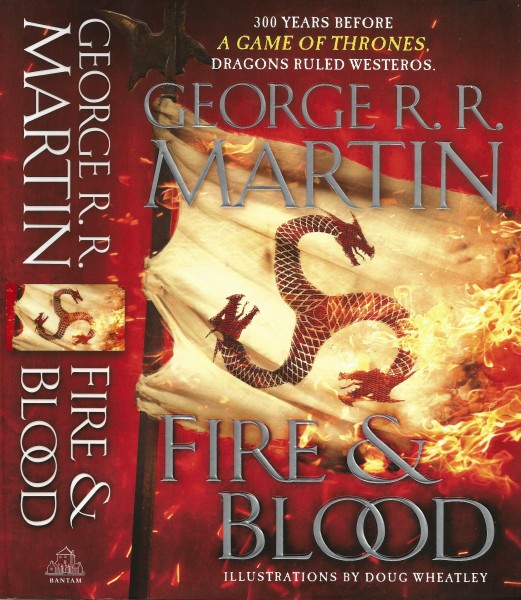
                  Set centuries before A Game of Thrones in George R. R. Martin's A Song of Ice and Fire universe, this history of House Targaryen traces the dynasty's founding, its wars, and its relationship with dragons through the voice of an in-world maester chronicler. Fire & Blood is the first of a planned two-part history, with the earlier novella The Princess and the Queen covering the dynastic civil war known as the Dance of the Dragons.

                • Cover of Between Earth and Sky
                  Between Earth and Sky

                  series · 3 books · 2020

                  similar byfantasydarkgodspolitical intrigue

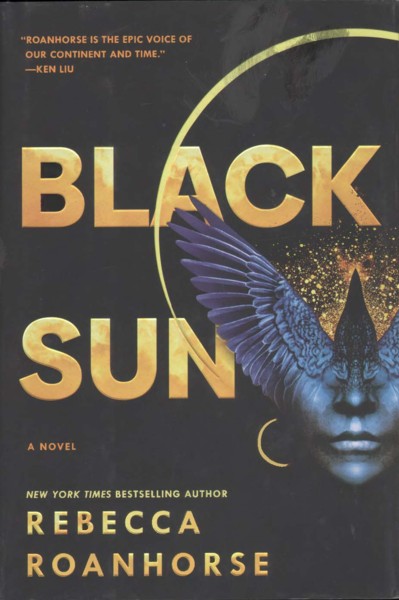
                  Between Earth and Sky is a fantasy novel series by American writer Rebecca Roanhorse. It currently comprises three novels: Black Sun (2020), Fevered Star (2022), and Mirrored Heavens (2024). It is an epic fantasy series inspired by various pre-Columbian American cultures. Black Sun won the 2021 Alex Award and the 2021 Ignyte Award for Best Adult Novel; it was additionally a finalist for the Locus Award for Best Fantasy Novel, Nebula Award for Best Novel, and Hugo Award for Best Novel. The whole series won the 2025 Hugo Award for Best Series.

                • Cover of The Nikolai Duology
                  The Nikolai Duology

                  series · 2 books · 2019

                  part of Grishaverse

                  similar byfantasydarkpolitical intriguewar

                  Leigh Bardugo's Nikolai Duology picks up Nikolai Lantsov and Zoya Nazyalensky from her earlier Grishaverse trilogy set in Ravka, now dealing with the kingdom's fallout as king and general, and adds Nina Zenik from the Six of Crows spin-off working a mission out of Ketterdam. King of Scars and its sequel Rule of Wolves tie together threads from across the wider Grishaverse rather than starting fresh, raising the stakes to a hidden threat inside Nikolai himself. It functions as the convergence point for Bardugo's separate Grishaverse story lines.

                • Cover of Forgotten Realms: War of the Spider Queen
                  Forgotten Realms: War of the Spider Queen

                  series · 6 books · 2002

                  part of Forgotten Realms

                  similar byfantasydarkgodspolitical intrigue+1 more

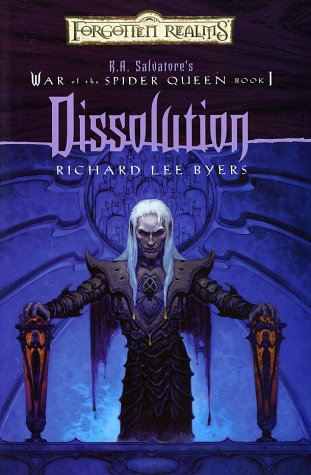
                  War of the Spider Queen is a fantasy series of novels set in the Forgotten Realms universe published by Wizards of the Coast. The series contains six books focused on the drow and their principal deity Lolth. Each of the six novels in the series is written by a different author with veteran Forgotten Realms author R. A. Salvatore overseeing the project. Cover art for each book in the series was designed by Gerald Brom who has done other Forgotten Realms work including reprints of The Avatar Series.

                • Cover of Song of the Last Kingdom
                  Song of the Last Kingdom

                  series · 2 books · 2023

                  similar byfantasydark+3 more

                • Cover of The Lotus War
                  The Lotus War

                  series · 4 books · 2012

                  similar byfantasydark+3 more

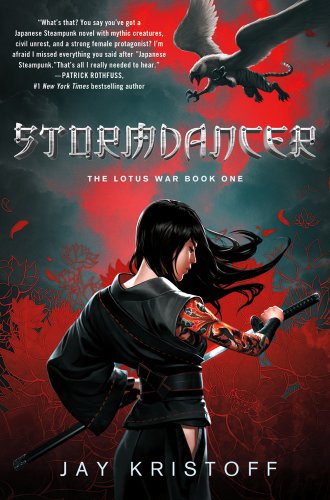
                  The Lotus War is Jay Kristoff's steampunk fantasy trilogy set in a pollution-choked, Japanese-inspired empire: Stormdancer (2012), Kinslayer and Endsinger, with the novella The Last Stormdancer as a coda. It follows a young woman who tames a griffin-like beast thought extinct, drawing her into a rebellion against the empire's oppressive Shogunate. It is a complete trilogy plus novella.

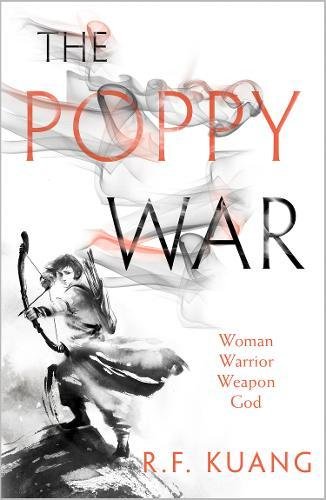
                • Cover of The Poppy War
                  The Poppy War

                  series · 4 books · 2018

                  similar bydarkfantasywar+2 more

                  The Poppy War follows Rin, a war orphan who tests into an elite military academy and discovers a talent for shamanic power tied to a pantheon of vengeful gods. R. F. Kuang's trilogy reworks the Second Sino-Japanese War and its atrocities into an epic fantasy that grows darker and more morally compromised as it goes. It's told across The Poppy War, The Dragon Republic, and The Burning God.