Loreful
HomeDiscover
Search series, authors…⌘K
Loreful

Reading orders for SF/F series and shared universes — with your place kept in every one.

Explore

UniversesSeriesWorksAuthorsAtlas

Help

FAQAboutSite map

Account & legal

Sign inCreate accountPrivacyTerms

Data

Built on ISFDB, Wikipedia, Wikidata and Open Library. Curated reading orders carry their reasoning on the page; the rest follow publication order. Data sources & licenses

© Loreful · data: ISFDB · CC BY

More like Extinction Event

anchored on:science fictioncontemporaryour world

but

Mood

The mood the book leaves you in.

  • The reading experience is propelled by journeys, exploration, and physical risk; excitement and forward momentum dominate over dread or introspection.
  • Joy and loss are deliberately mixed; the resolution grants characters something real while taking something else away, leaving warmth and sorrow together.
  • The book demands work from the reader — dense prose, difficult structure, unfamiliar ideas, or morally uncomfortable material — as part of its intended effect.
  • Grim events, cruelty, or despair dominate the atmosphere, and the book does not soften them with comfort or comic relief.
  • The atmosphere is quietly unsettling — wrongness, unease, and the uncanny pervade the book without necessarily escalating into overt horror.
  • The book is built to move the reader; character feeling is foregrounded and major scenes aim at a strong emotional response.
  • Humor is a primary aim and the prose plays for laughs — comic situations, wit, or dialogue produce sustained comedy, not occasional levity.
  • The book insists that things can improve; effort and decency are shown to matter, and the arc bends toward better outcomes even through hardship.
  • The book teaches as it goes — real facts, history, science, or craft are conveyed in enough depth that learning is part of the reading experience.
  • The book is designed to uplift and motivate, presenting perseverance or achievement in a way that invites the reader to aspire or act.
  • The overall register is cheerful and easygoing; stakes are kept gentle and the book avoids dwelling on pain or dread.
  • Withheld information drives the experience; the book sustains enigmas and secrets the reader wants resolved, whatever its genre.
  • The book is contemplative and inward-looking, giving more weight to thought, memory, and meaning than to external events.
  • The book works as comfort reading — low tension, a soothing pace, and an atmosphere the reader can unwind in.
  • Grief, loss, or melancholy set the dominant register, and the book lets sorrow stand rather than resolving it into comfort.
  • Sustained suspense is the point; the book keeps the reader braced for what happens next through danger, pressure, or impending revelation.
  • Playful invention and charm define the register — fanciful conceits, light absurdity, and a narration that delights in its own oddity.

About

What the story runs on.

  • Stories in which extraterrestrial beings are central — as characters, cultures, or the object of the plot.
  • Stories structured as a quest — a journey undertaken to find, deliver, or destroy something of great import.
  • Stories in which staying alive against nature, catastrophe, or scarcity is the central problem.
  • Stories of lovers kept apart by law, family, faith, or station, where the obstacle to love is the plot.
  • Stories in which a friendship — its making, testing, or loss — is the emotional center.
  • Stories of growing up — a young protagonist crossing from childhood into adult knowledge and responsibility.
  • Stories about who a character truly is — self-discovery, doubled lives, and the search for a self.
  • Stories about mourning — living through the death of a loved one and what loss does to the survivors.
  • Stories in which a buried family truth — hidden parentage, crimes, or shames — surfaces and reorders the present.
  • Stories driven by maneuvering for power — factions, conspiracies, and statecraft conducted in shadow.
  • Stories in which war itself is the subject — combat, occupation, and what warfare does to soldiers and civilians.
  • Stories organized around investigating a killing — the case, the clues, and the pursuit of the killer, in any genre's clothing.

Shelf

Where it sits in the library.

    • Fiction built on magic or other supernatural elements that have no scientific explanation.
    • Secondary-world fantasy at large scale, where the fate of nations or the world turns on the protagonists' struggle.
    • Fantasy set in a recognizably modern city or contemporary world where the supernatural intrudes on everyday life.
    • Fantasy that blends in horror's atmosphere and imagery, keeping a fantastical frame around grim or frightening material.
    • Action-driven fantasy following warriors or rogues with personal stakes against sorcerous threats, rather than world-spanning conflicts.
    • Fantasy set in a real historical period or a close analogue of one, with magic woven into the era.
    • Fantasy in which protagonists cross from the ordinary world into another world through a portal or similar passage.
    • Fiction that retells or reworks a traditional fairy tale in a new form or setting.
    • Fantasy drawing directly on myths, legends, and folklore, retelling them or building on their figures and logic.
    • Fantasy of ghosts, vampires, shapeshifters, psychics, and similar phenomena, usually set in an otherwise ordinary world.
    • Fiction mixing science-fictional trappings with overtly magical or impossible elements in one setting.
    • Low-stakes fantasy emphasizing comfort, community, and everyday pleasures over conflict and peril.
    • Speculative fiction of pervasive moral ambiguity, violence, and cynicism that rejects heroic conventions — fantasy and SF alike.
      • Fiction that extrapolates from science and technology — future societies, space travel, or speculative inventions — within at least nominally natural laws.
      • Science fiction of interstellar scope — starships, galactic polities, and adventure across star systems.
      • Science fiction committed to scientific rigor, where technical plausibility constrains the story.
      • Science fiction centered on armed forces and warfare, told largely from a military point of view.
      • Science fiction of networked, corporate-dominated near futures, pairing high technology with social decay.
      • Science fiction styled on nineteenth-century steam-powered technology, often in a Victorian or pseudo-Victorian setting.
      • Fiction depicting an oppressive or catastrophic society, presented as a warning.
      • Fiction set after civilization's collapse, following survivors in the ruins of the old world.
      • Fiction in which characters move between past and future, and the mechanics or consequences of that travel drive the plot.
      • Fiction exploring a world where a historical event went differently and history diverged from ours.
      • Science fiction about humanity's first encounter and communication with an alien intelligence.
      • Science fiction in which extraterrestrial forces attack or occupy Earth and humanity resists.
      • Fiction whose primary aim is to frighten or unsettle the reader through dread, menace, or the monstrous.
      • Horror of vast, indifferent, incomprehensible entities before which humanity is insignificant, in the Lovecraft tradition.
      • Horror of decaying houses, buried family secrets, and oppressive atmosphere in the Gothic literary tradition.
      • Horror centered on hauntings and the returning dead.
      • Horror located in the mind — paranoia, obsession, and unreliable perception rather than external monsters.
      • Horror built around the reanimated dead and survival amid their outbreaks.
      • Horror defined by explicit, transgressive gore that refuses to cut away from violence.
      • Speculative fiction of the strange and uncanny that resists both natural explanation and standard genre categories.
      • Fiction organized around solving a crime or puzzle, typically following an investigator toward the identification of a culprit.
      • A puzzle-first mystery that lays out clues so the culprit's identity can be deduced before the reveal.
      • Crime fiction of moral ambiguity, fatalism, and hard-edged style, set among the corrupt and the doomed.
      • A mystery following the realistic routines of police work — forensics, interviews, and case-building.
      • A gentle mystery with an amateur sleuth, a small community, and violence kept off the page.
      • A mystery set in a past era, where the investigation works within that period's methods and society.
      • Fast-paced fiction driven by imminent danger, pursuit, or high-stakes conspiracy, built to sustain tension.
      • A thriller of espionage — agents, tradecraft, and intelligence services in conflict.
      • A thriller centered on lawyers and the courtroom, where litigation carries the suspense.
      • A thriller driven by detailed contemporary or near-future technology, often military or scientific.
      • A thriller whose tension comes from mental states and manipulation between characters rather than external action.
      • Fiction whose central plot is a romantic relationship and its development toward an emotionally satisfying resolution.
      • Romance in which one or both partners are supernatural beings, blending fantasy elements into the love story.
      • A fantasy-romance hybrid in which the romantic arc and the fantasy plot carry equal weight.
      • Romance set in a past era, with courtship shaped by the period's society and manners.
      • Romance set in the present day, without supernatural or historical elements.
      • Fiction set in a real past period, where the historical setting materially shapes characters and events.
        • General and literary fiction emphasizing prose style, character interiority, or formal ambition over genre plot conventions.
        • Fiction in a realistic world where magical events occur and are treated as ordinary, in the tradition of Latin American literature.
        • Fiction that ridicules people, institutions, or society in order to criticize them.
        • Fiction of dreamlike, irrational imagery and logic that breaks from realistic representation.
        • Fiction that plays with narrative convention through metafiction, fragmentation, and self-reference.
        • Fiction propelled by journeys, exploration, and physical peril, where action and survival carry the plot.
        • Adventure fiction of ships and seafaring — naval engagements, voyages, and life at sea.
        • Fiction of the American frontier West — gunmen, ranchers, and lawmen, typically in the late nineteenth century.
        • Fiction centered on soldiers, campaigns, and the experience of warfare, historical or imagined.
          • Fiction written primarily to amuse, using comedic situations, wit, or parody as its organizing principle.
            • Multi-generational fiction following a family or dynasty across decades, with inheritance and kinship as the through-line.
              • Fiction whose world runs on explicit game mechanics — levels, stats, and skills that characters can see and exploit.
                • Fiction about costumed or superpowered heroes and their conflicts with comparable villains.

                Practical

                How long a commitment, whether it stands alone, and whether it has finished.

                Tap a chip to ask for it · tap again to rule it out · once more to clear. Numbers show what would be left.

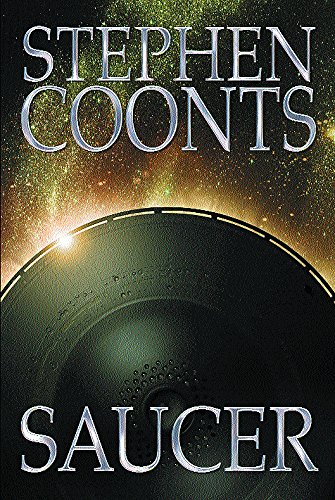
                • Cover of Saucer
                  Saucer

                  series · 3 books · 2002

                  similar byscience fictiontensecontemporaryour worldadventurous+1 more

                  Saucer is Stephen Coonts's techno-thriller trilogy beginning with Saucer (2002), continued in Saucer: The Conquest and Saucer: Savage Planet. It follows the discovery of a functioning craft buried for millennia in the Sahara desert and the test pilots and adventurers who end up flying, and fighting over, it, escalating from a buried desert secret toward wider stakes involving hostile outside interests.

                • Cover of Southern Reach Trilogy
                  Southern Reach Trilogy

                  series · 4 books · 2014

                  similar byscience fictioncontemporaryour world+3 more

                  The Southern Reach Series is a series of novels by the American author Jeff VanderMeer first published in 2014—Annihilation, Authority, Acceptance, and Absolution. The series takes its name from the secret agency that is central to the plot. In 2013, Paramount Pictures bought the movie rights for the series, and a film adaptation of Annihilation was made with Alex Garland as writer-director. The film was released in 2018. The most recent book in the series, Absolution, was released on 22 October 2024.

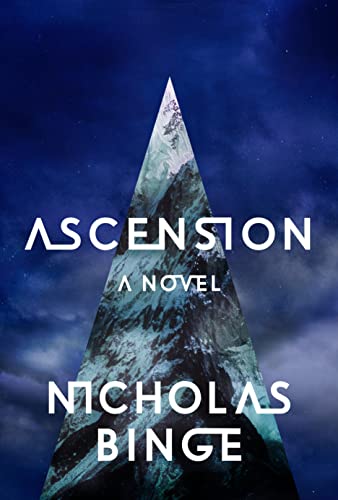
                • Cover of Ascension
                  Ascension

                  Nicholas Binge · standalone novel · 2023

                  similar byscience fictionexpeditionstensecontemporaryour world+1 more

                  Ascension is a 2023 novel by Nicholas Binge, published in the UK by Harper Voyager, and in the US by Riverhead Books. It is published or forthcoming in twelve languages, and a film adaptation is in development. The novel tells the story of Harold Tunmore, a physicist, who joins a team to climb a mountain that has appeared in the middle of the Pacific Ocean.

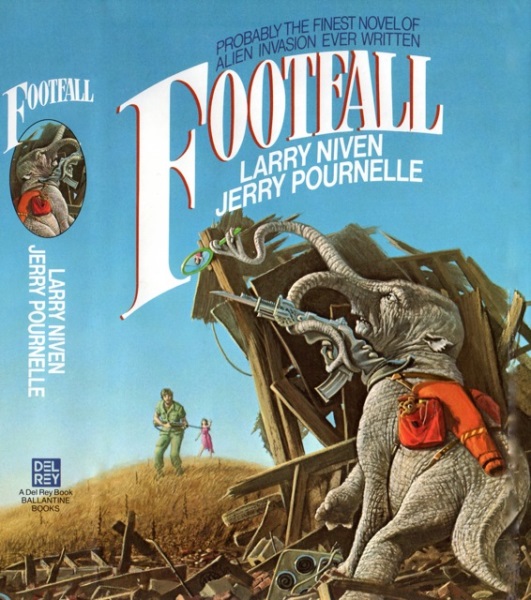
                • Cover of Footfall
                  Footfall

                  Larry Niven & Jerry Pournelle · standalone novel · 1985

                  similar byscience fictiontensecontemporaryour worldsurvival+1 more

                  When aliens travel to Earth from Alpha Centauri, differences between alien and human psychology result in an unprovoked invasion, and the resulting resistance results in the aliens' use of a devastating weapon.

                • Cover of The Andromeda Strain
                  The Andromeda Strain

                  series · 2 books · 1969

                  similar byscience fictiontensecontemporarysurvival+1 more

                  Michael Crichton's 1969 novel The Andromeda Strain follows a team of scientists racing to contain a lethal extraterrestrial microorganism that crash-lands in Arizona, told in the clinical, document-driven style that helped establish the techno-thriller genre. Daniel H. Wilson's authorized 2019 sequel The Andromeda Evolution revisits the same threat five decades later. Together the two books form a two-part outbreak story separated by a fifty-year gap in publication.

                • Cover of The Earthend Saga
                  The Earthend Saga

                  series · 3 books · 2014

                  similar byscience fictiontensecontemporaryour world+2 more

                  The EarthEnd Saga is a science fiction novel series co-written by actress Gillian Anderson and writer Jeff Rovin.

                • Cover of The Wanderer
                  The Wanderer

                  Fritz Leiber · standalone novel · 1964

                  similar byscience fictiontensecontemporaryour worldsurvival

                  The Wanderer is a science fiction novel by American writer Fritz Leiber, published as a paperback original by Ballantine Books in 1964. It won the 1965 Hugo Award for Best Novel.

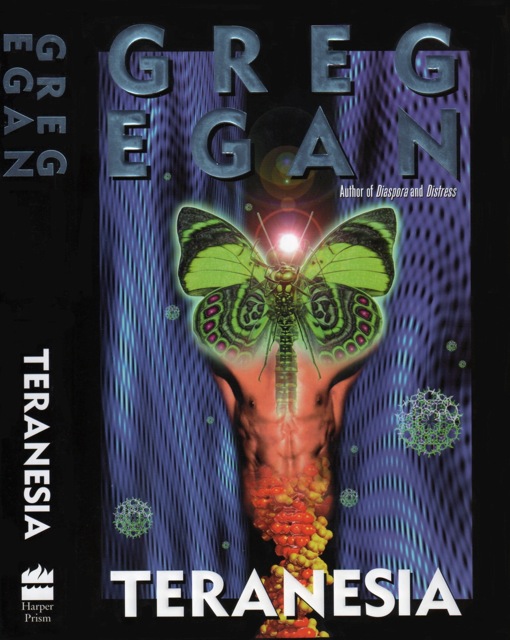
                • Cover of Teranesia
                  Teranesia

                  Greg Egan · standalone novel · 1999

                  similar byscience fictionexpeditionscontemporarysurvival+1 more

                  from the flaps of the HarperPrism first printing: "Welcome to Teranesia, the island of butterflies, where evolution has stopped making sense. Prabir Suresh lives in paradise, a nine-year-old boy with an island all his own to name, to explore, and to populate with imaginary monsters stranger than any tropical wildlife. Teranesia is his kingdom, shared only by his biologist parents and baby sister, Madhusree. The unexplained genetic mutation of the island's butterflies that brought his family to the remote South Moluccas barely touches Prabir; his own life revolves around the beaches, the jungle, and the schooling and friendship made possible by the net. When civil war breaks out across Indonesia, this paradise comes to a violent end and his family is broken apart, leaving Prabir with nagging feelings of guilt and an overwhelming, almost irrational sense of responsibility for his sister. The mystery of the butterflies remains unsolved but nearly twenty years later reports begin to appear of strange new species of plants and animals appearing throughout the region - species separated from their known cousins by recent, dramatic mutations that seem far too efficient and functional to have arisen by chance from pollution, disease, or any other random catastrophe. Madhusree is now a biology student; proud of her parents' unacknowledged work, and with no memories of the trauma of the war to discourage her, she decides to join a multinational expedition being mounted to investigate the new phenomenon. Unable to cast off his fears for her safety, Prabir reluctantly follows her. But travel between the scattered islands is difficult, and Madhusree's expedition is out of contact. In the hope of finding her, Prabir joins up with an independent scientist, Martha Grant, who has come to search for clues to the evolutionary mystery and whatever commercial benefits it might bring to her sponsor. As Prabir and Martha begin to untangle the secret of Teranesia, Prabir is forced to confront his past, and to face the painful realities that have shaped his life while also dealing with the implications of an unprecedented biological revolution. A Scientific mystery, an adventure story, and a meditation on the origins of love, Teranesia is Greg Egan's most ambitious and accessible novel yet."

                • ML
                  Meg / Loch Universe

                  series · 11 books · 1997

                  similar byscience fictiontensecontemporaryour worldsurvival+1 more

                • Cover of Tom Broadbent / Wyman Ford
                  Tom Broadbent / Wyman Ford

                  series · 6 books · 2003

                  similar bytensecontemporaryscience fictionour world+3 more

                  Douglas Jerome Preston is an American journalist and author. Although he is best known for his thrillers in collaboration with Lincoln Child, he has also written six solo novels, including the Wyman Ford series and a novel titled Jennie, which was made into a movie by Disney called The Jennie Project. Preston has authored a half-dozen nonfiction books on science and exploration and writes occasionally for The New Yorker, Smithsonian, and other magazines.

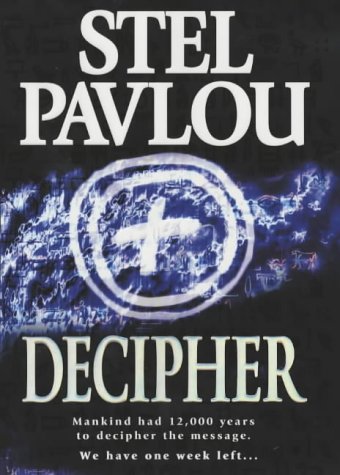
                • Cover of Decipher
                  Decipher

                  Stel Pavlou · standalone novel · 2001

                  similar byexpeditionstensescience fictioncontemporaryour world

                  Decipher is a speculative fiction novel by British author Stel Pavlou, published in 2001 in England by Simon & Schuster and 2002 in the United States by St. Martin's Press. The novel is about a fictional linguist, Richard Scott, and an assembled team of specialists who are in a race against time to crack a code found on ancient monuments around the world before an impending cataclysm predicted in mythology can strike. The story centers on the ancient city of Atlantis and features other mythical sites such as the Hall of Records.

                • Cover of Timeline
                  Timeline

                  Michael Crichton · standalone novel · 1999

                  similar byscience fictionexpeditionstensesurvivaladventurous

                  Timeline is a science fiction novel by American writer Michael Crichton, his twelfth under his own name and twenty-second overall, published in November 1999. It tells the story of a group of history students who travel to 14th-century France to rescue their professor. The book follows in Crichton's long history of combining science, technical details, and action in his books, this time addressing quantum and multiverse theory.

                • Cover of The Visitors
                  The Visitors

                  Clifford D. Simak · standalone novel · 1980

                  similar byscience fictiontensecontemporaryour worldsurvival

                  WorldCat: Intelligent, alien creatures arrive on Earth from outer space, threatening world stability and presaging the destruction of civilization.

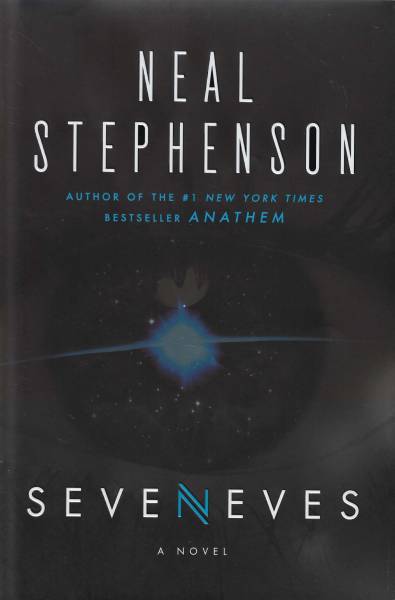
                • Cover of Seveneves
                  Seveneves

                  Neal Stephenson · standalone novel · 2015

                  similar byscience fictiontenseour worldsurvival+1 more

                  Seveneves is a science fiction novel by Neal Stephenson published in 2015. The story tells of the desperate efforts to preserve Homo sapiens in the wake of apocalyptic events on Earth after the unexplained disintegration of the Moon and the remaking of human society as a space-based civilization after a severe genetic bottleneck.

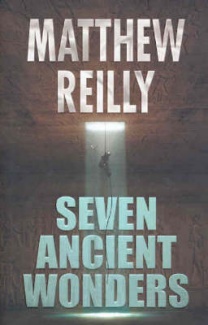
                • Cover of Jack West, Jr.
                  Jack West, Jr.

                  series · 7 books · 2005

                  similar bycontemporaryour world+3 more

                  Matthew Reilly's Jack West Jr. series opens with Seven Ancient Wonders (2005), an action-adventure thriller sending Jack West Jr. on a globe-spanning hunt tied to the ancient wonders of the world. The series continues its countdown structure through The Six Sacred Stones and five further novels, ending with The One Impossible Labyrinth (2021).

                • Cover of The Questor Tapes
                  The Questor Tapes

                  D. C. Fontana · standalone novel · 1974

                  similar byscience fictiontensecontemporaryour worldadventurous+1 more

                  On back cover: "The gripping story of an artificial man ... a fast-paced adventure moving from the Los Angeles freeways to the bustling London metropolis ... and on to the distant peaks of Mount Ararat for a spectacular climax!"

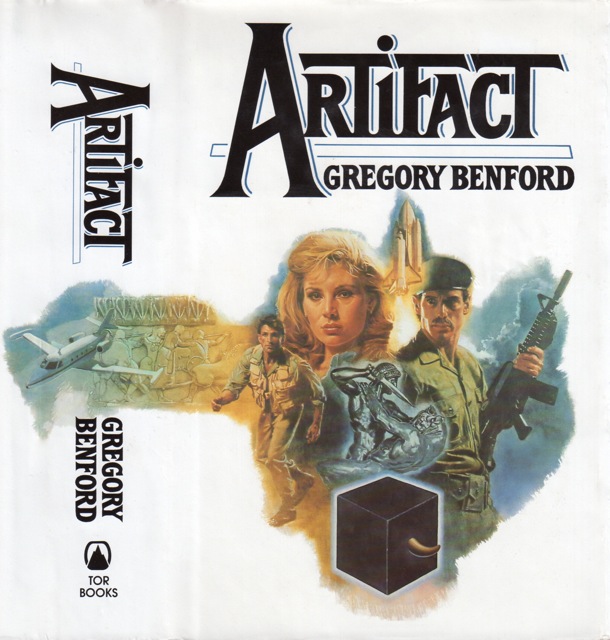
                • Cover of Artifact
                  Artifact

                  Gregory Benford · standalone novel · 1985

                  similar byscience fictionexpeditionscontemporary+1 more

                  Archaeologists have discovered in Greece an object of alien origin buried 3500 years ago. A small black rock cube was unearthed in a Mycenaean tomb. However, archaeologists do not know that it was buried precisely because it would have had catastrophic effects on civilization if it remained on the surface.

                • Cover of Dirk Pitt
                  Dirk Pitt

                  series · 12 books · 1973

                  completed

                  similar byexpeditionstenseour worldcontemporaryadventurous

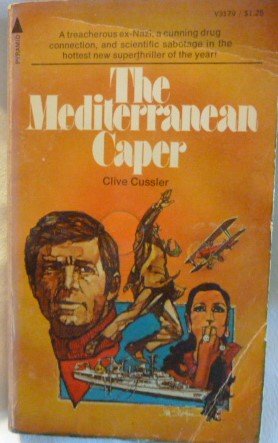
                  Clive Cussler's Dirk Pitt novels follow the title character, a two-fisted marine engineer and de facto field agent for the fictional National Underwater and Marine Agency, through globe-spanning adventures mixing undersea salvage, historical mystery, and international conspiracy. The run collected here spans The Mediterranean Caper (1973) through Valhalla Rising (2001), the earlier stretch of a series Cussler continued for decades with later co-authors.

                • Cover of H. G. Wells' War of the Worlds
                  H. G. Wells' War of the Worlds

                  universe · 65 books · 1898

                  Start hereThe War of the Worlds · Start here

                  similar byscience fiction+2 more

                  No one would have believed, in the closing years of the nineteenth century, that human affairs were being watched keenly and closely from the timeless worlds of space. And then the cylinders fell. H. G. Wells' War of the Worlds opens in the quiet of the Surrey commons, where a falling star proves to be the first Martian craft — and from the pit rise the towering tripods, the Heat-Ray, the choking Black Smoke and the creeping red weed, wielded by minds that regard mankind much as we regard the creatures we boil for supper. This is invasion rendered as natural disaster: cold, methodical, and vast beyond argument. Wells' 1898 novel is the seed; everything else grows from that Martian soil. The catalogue gathers direct sequels and continuations alongside a wide field of other hands. In War of the Worlds: Global Dispatches the invasion is retold across the whole planet through the eyes of Twain, Verne, Tolstoy, Lowell and Kipling; in the Manly Wade and Wade Wellman crossover, Sherlock Holmes, Watson and Professor Challenger take the field against the machines; and Scott Washburn's Great Martian War stretches the fighting into a decades-long alternate history of steam, artillery and grinding attrition. It is a loose shared world — no single decreed sequence, many voices answering one calamity. What sets this world apart is its refusal of heroics: the invaders fall not to generals but to the smallest things of Earth, humbling and indifferent. Begin, always, with Wells' original novel — it is short, and it is the ground every later book stands upon. From there follow your appetite: Global Dispatches for the panorama, the Holmes campaign for adventure, Washburn for the long war.

                • Cover of The Triffids
                  The Triffids

                  series · 3 books · 1951

                  similar byscience fictionour worldsurvival+1 more

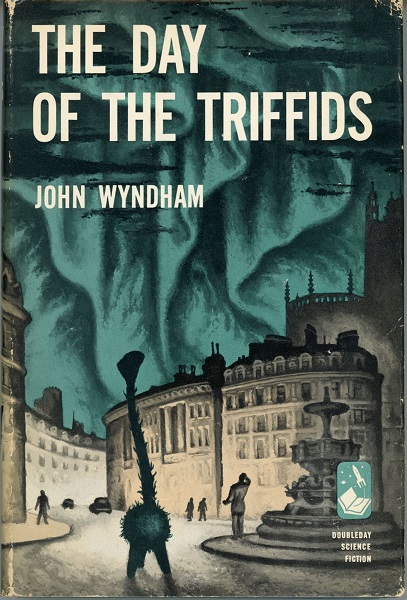
                  John Wyndham's The Day of the Triffids (1951) opens with a meteor-shower-like event that leaves most of Britain's population blind, throwing civilization into collapse just as triffids, an aggressive and mobile species of poisonous plant, become free to hunt the helpless survivors. Simon Clark's authorized sequel The Night of the Triffids (2001) picks up a generation later, narrated by the original protagonist's son as he confronts a new triffid-dominated world, and John Whitbourn's The Age of the Triffids extends the shared setting further still. Together the three novels form a loose post-apocalyptic trilogy built on Wyndham's original premise rather than a tightly plotted single story.

                • Cover of The Apocalypse Troll
                  The Apocalypse Troll

                  David Weber · standalone novel · 1999

                  similar byscience fictiontensecontemporaryour worldadventurous+1 more

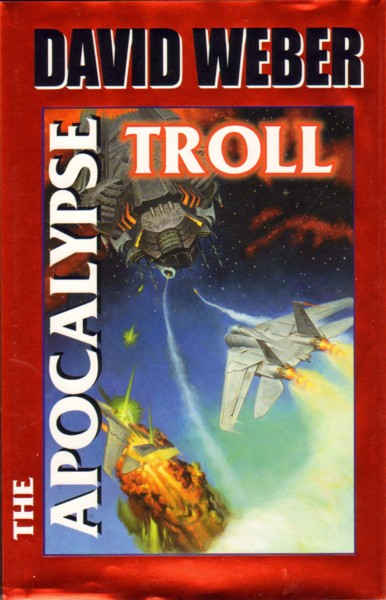
                  The Apocalypse Troll is a novel by American writer David Weber, first published by Baen Books in January 1999. It is a story about time travel and alien invasion.

                • Cover of Tripods
                  Tripods

                  series · 4 books · 1967

                  completed

                  similar byscience fictiontenseour world+2 more

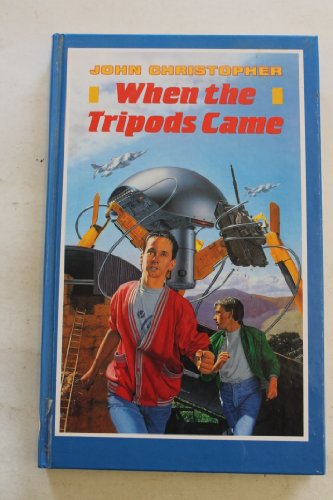
                  The Tripods is a series of young adult science fiction novels by John Christopher. The series takes place in a post-apocalyptic world where humanity is enslaved by "Tripods"—gigantic three-legged walking machines piloted by an alien race later identified as the "Masters". The first two books were the basis of a science fiction TV series, produced in the United Kingdom in the 1980s.

                • Cover of Richard Forthrast
                  Richard Forthrast

                  series · 2 books · 2011

                  similar byscience fictionour world+3 more

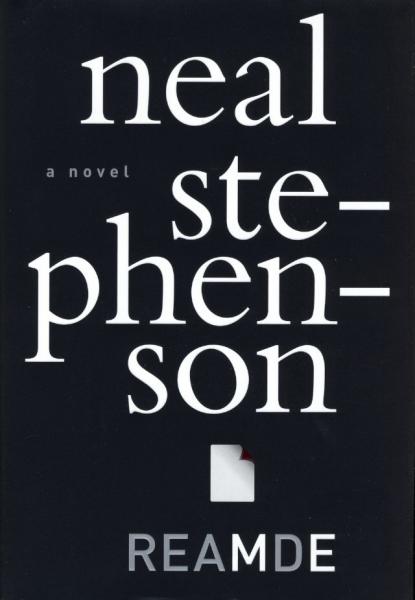
                  Neal Stephenson's Richard 'Dodge' Forthrast novels open with Reamde, a globe-spanning thriller that starts when ransomware inside an MMORPG economy pulls Richard's extended family into a real-world hostage crisis involving hackers, jihadists and Russian mobsters. The sequel Fall; or, Dodge in Hell shifts registers entirely, following Richard's digitally preserved mind after death into an afterlife simulation built from his scanned brain. The two books share a protagonist and family but differ sharply in genre and scale.

                • Cover of The River
                  The River

                  Cheryl Kaye Tardif · standalone novel · 2005

                  similar byscience fictionexpeditionstensecontemporarysurvival+1 more

                  "Seven years ago, Del Hawthorne's father and friends disappeared near the Nathanni River and were presumed dead. When one of the missing men stumbles onto the University grounds, alive but barely recognizable and aging before her eyes. Gatherin a group of volunteers, Del travels to the Nahanni River to rescue her father. There, she finds a secret underground river that plunges her into a technologically advanced world of nonobots and painful serums. — paraphrased form the back cover copy to the second paperback printing.