More like Extracted
anchored on:science fictiontime travelour worldnear futureyoung adultamnesia+5 more
but
- The Light of Other Days
Arthur C. Clarke & Stephen Baxterstandalone novel2000
similar byour worldnear futuretensescience fictiontime travel+2 more
An industrialist devises a technique to use tiny wormholes as light pipes to enable viewing of any event anywhere; and subsequently it becomes possible to use them to view any event in the past as well. The effects on society are enormous.
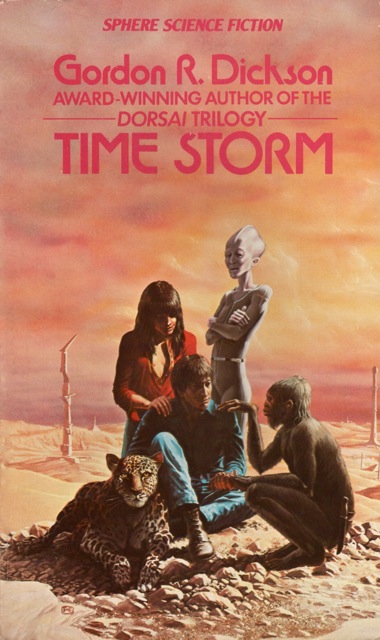
- Time Storm
Gordon R. Dicksonstandalone novel1977
similar byour worldnear futureadventuroustensescience fictiontime travel
A time storm has devastated the Earth, and only a small fraction of humankind remains. From the rubble, three survivors form an unlikely alliance: a young man, a young woman, and a leopard. "A masterful science fiction story told by a masterful science fiction writer". -- Milwaukee Journal. A time storm strikes the Earth. The Earth remains, but different parts of the Earth are in different eras. Travel between the different zones is thought to be impossible. The main character, Marc Despard, resolves to fight the time storm. After some struggles, he assembles a small band of people, including one alien, to help him try to understand what has happened and to stop the time storm. He has 2 extraordinary relationships with a older teenaged girl who is speechless for the first part of the book (she was "struck dumb" by the time storm) and with, believe it or not, a leopard. Dickson's writing makes the extraordinary seem quite normal. Ultimately, after being harried by a Mad Max-like group of survivors, he uses a machine found in a different era of time to bring his small band of followers into the future so that he can find those who are trying to fight the time storm. He convinces those future beings that he is capable of fighting the time storm, and ultimately stops it, and gets the girl in the end.
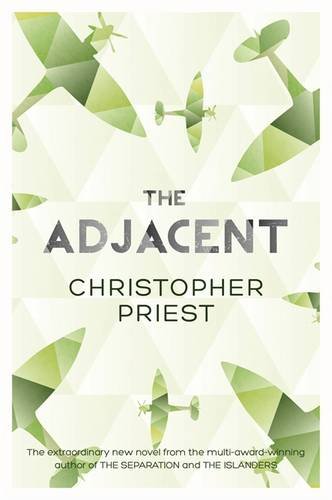
- The Adjacent
Christopher Prieststandalone novel2013
similar byour worldnear futurescience fictionwartime travelmultiple pov+2 more
In the near future, Tibor Tarent, a freelance photographer, is recalled from Anatolia to Britain when his wife, an aid worker, is killed--annihilated by a terrifying weapon that reduces its target to a triangular patch of scorched earth. A century earlier, Tommy Trent, a stage magician, is sent to the Western Front on a secret mission to render British reconnaissance aircraft invisible to the enemy. Present day: a theoretical physicist develops a new method of diverting matter, a discovery with devastating consequences that will resonate through time.
- Flashforward
Robert J. Sawyerstandalone novel1999
similar byour worldnear futuretensescience fictionidentitytime travel
Flashforward is a science fiction novel by Canadian author Robert J. Sawyer first published in 1999. The novel is set in 2009. At CERN, the Large Hadron Collider accelerator is performing a run to search for the Higgs boson. The experiment has a unique side effect; the entire human race loses their consciousness for about two minutes. During that time, nearly everyone sees themselves roughly twenty-one years and six months in the future. Each individual experiences the future through the senses of their future self. This "flashforward" results in countless deaths and accidents involving vehicles, aircraft, and any other device needing human control at the time of the experiment. The novel was adapted into the 2009 television series FlashForward.
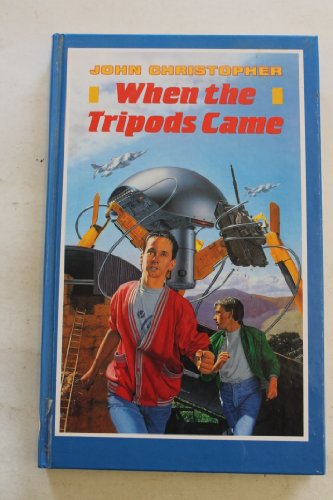
- Tripods
series4 books1967
completed
similar bytenseour worldnear futurescience fictionyoung adult+1 more
The Tripods is a series of young adult science fiction novels by John Christopher. The series takes place in a post-apocalyptic world where humanity is enslaved by "Tripods"—gigantic three-legged walking machines piloted by an alien race later identified as the "Masters". The first two books were the basis of a science fiction TV series, produced in the United Kingdom in the 1980s.
- Time and Time Again
Ben Eltonstandalone novel2014
similar bynear futureadventuroustensescience fictiontime travelwar+1 more
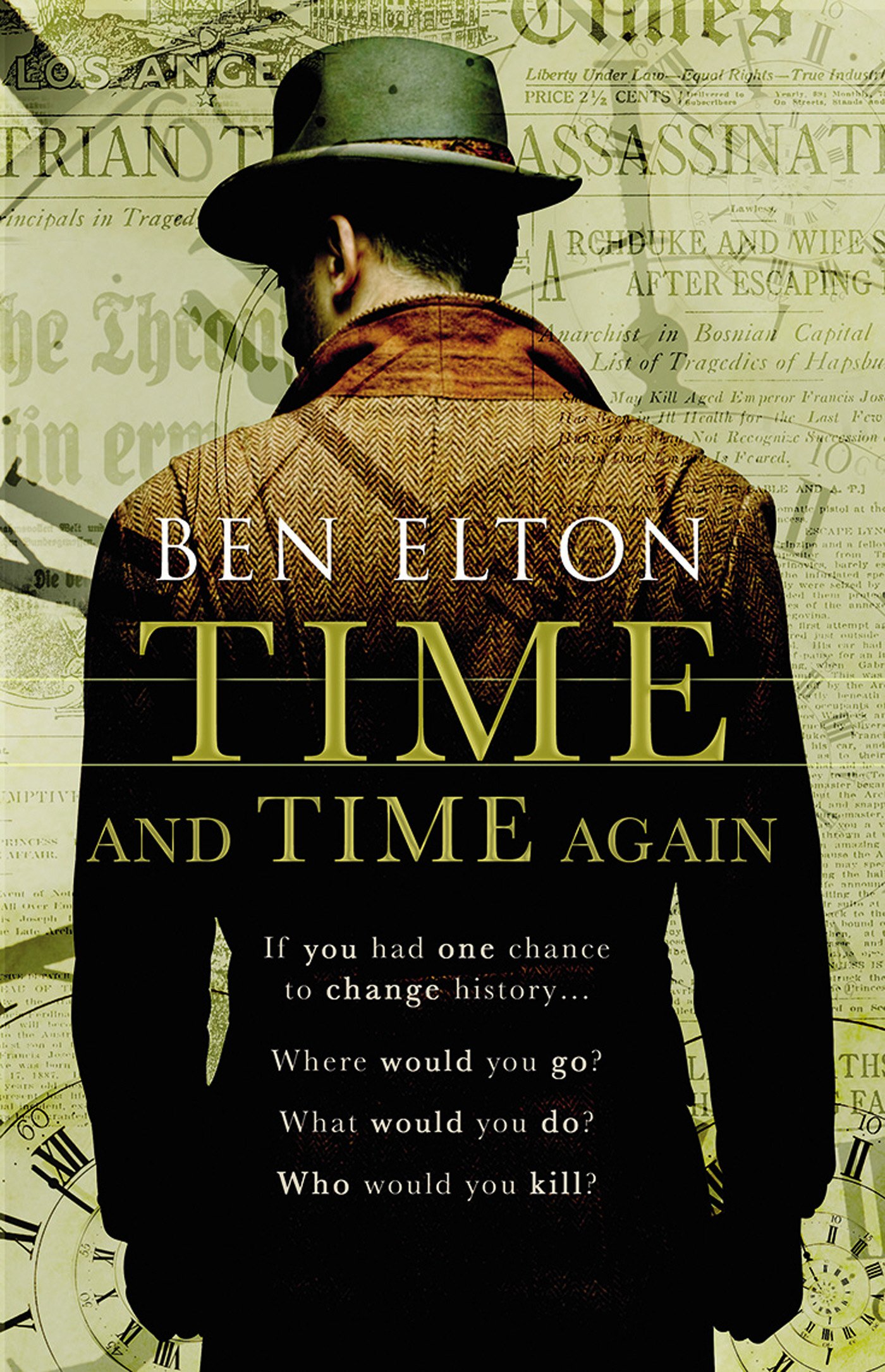
Time and Time Again is a 2014 novel by Ben Elton. In a fictional 2024, former soldier and University of Cambridge graduate Hugh Stanton is summoned to go back in time and prevent the outbreak of World War I. A review of the book in The Guardian notes that it "has the makings of a decent Young Adult novel" A book review in the Irish Examiner was of the opinion that "the novel that started with such a bang, ended with a fizzle."
- Cas Russell / Russell's Attic
series5 books2014
similar byour worldtensescience fictionadventurousnear futureidentity+1 more
- Future Shock (Elizabeth Briggs)
series3 books2016
similar byour worldnear futuretensescience fictiontime travelyoung adult+1 more
- Friday
Robert A. Heinleinstandalone novel1982
similar bynear futureadventuroustensescience fictionidentity
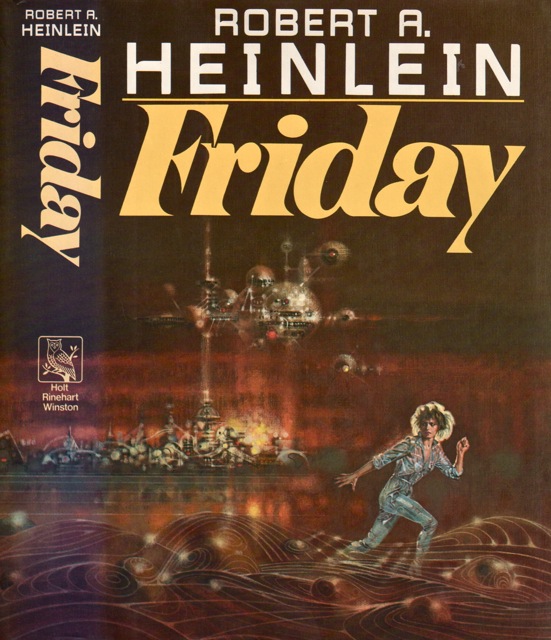
Friday is a 1982 science fiction novel by American writer Robert A. Heinlein. It is the story of a female "artificial person", the eponymous Friday, genetically engineered to be stronger, faster, smarter, and generally better than normal humans. Artificial humans are widely resented, and much of the story deals with Friday's struggle both against prejudice and to conceal her enhanced attributes from other humans. The story is set in a Balkanized 21st century, in which the nations of the North American continent have been split up into a number of smaller states.
- Total Recall
Piers Anthonystandalone novel1989
similar byour worldnear futuretensescience fictionamnesiaidentity
Douglas Quail is haunted by nightmares of Mars, covert missions and a life more glamorous than his earthbound 2089 AD reality. So he turns to "Recall", manufacturers of synthetic memories. They implant a memory into him but he soon finds that his nightmares are true memories.
- The Zap Gun
Philip K. Dickstandalone novel1967
similar byour worldnear futurescience fictionwar+2 more
The Zap Gun is a 1967 science fiction novel by American writer Philip K. Dick. It was first published as the two-part serial Project Plowshare in Worlds of Tomorrow in 1965 and 1966, before Pyramid Books issued it in paperback under its present title. The novel originated in a title-first commission devised by Pyramid editor Don Bensen and was written in 1964 during a period of rapid production in Dick's career.
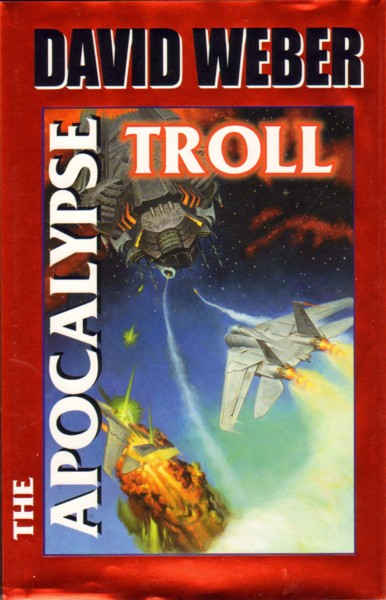
- The Apocalypse Troll
David Weberstandalone novel1999
similar byour worldadventuroustensescience fictiontime travelwar
The Apocalypse Troll is a novel by American writer David Weber, first published by Baen Books in January 1999. It is a story about time travel and alien invasion.
- Renegades (Marissa Meyer)
series3 books2017
similar bytenseidentityour worldnear futurescience fictionyoung adult+1 more
Renegades is set in Gatlon City after a civil war between the superheroic Renegades and the villainous Anarchists, and follows Nova, a young woman with the power to put people to sleep by touch, as she infiltrates the Renegades as a spy for her uncle's Anarchists and falls for Adrian, the adopted son of the Renegades' leaders. Marissa Meyer's trilogy, continuing through Archenemies and Supernova, plays the two factions' history against the leads' divided loyalties; Meyer has said she doesn't plan to extend the series further.
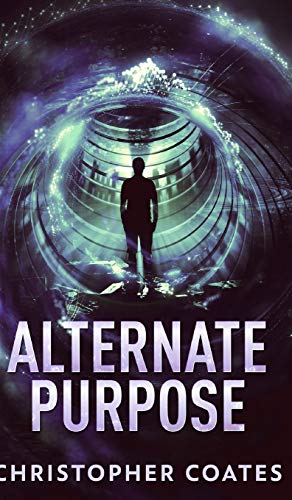
- Alternate Purpose
Christopher Coatesstandalone novel2019
similar byour worldnear futuretensescience fictiontime travel
• "A global pandemic has devastated the world. Facing a rebuilding time of generations, two scientists come up with a solution: send someone back in time to prevent the horrible accident that released the deadly pathogen on the world. The problem with their discovery? The time travel process is fatal to anyone trying it." ― quoted from this book's product page on Amazon.com as of 2020-05-28.
- The Body Electric
Beth Revisstandalone novel2014
similar byour worldnear futuretensescience fictionamnesiaidentityyoung adult
Ella Shepherd discovers that she has the ability to alter other people's memories, but soon learns that she may have been a victim of memory alteration herself as she seeks to uncover the mystery surrounding the technology.
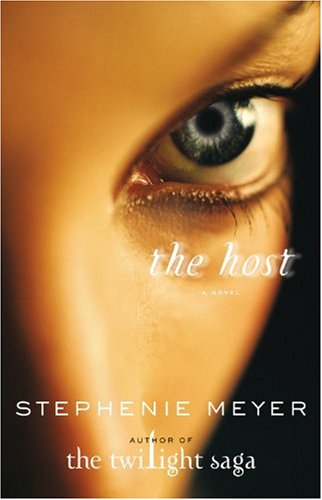
- The Host
Stephenie Meyerstandalone novel2008
similar byour worldnear futuretensescience fictionidentity
The earth has been invaded by a species that take over the minds of their human hosts while leaving their bodies intact, and most of humanity has succumbed. But Melanie Stryder refuses to fade away. Wanderer, the invading "soul" who has been given Melanie's body, knew about the challenges of living inside a human: the overwhelming emotions, the too vivid memories. But there was one difficulty Wanderer didn't expect: the former tenant of her body refusing to relinquish possession of her mind. Melanie fills Wanderer's thoughts with visions of the man Melanie loves--Jared, a human who still lives in hiding. Unable to separate herself from her body's desires, Wanderer yearns for a man she's never met. As outside forces make Wanderer and Melanie unwilling allies, they set off to search for the man they both love.--From publisher description.
- Z for Zachariah
Robert C. O'Brienstandalone novel1975
similar byour worldnear futuretensescience fictionyoung adult
Sixteen-year-old Ann Burden, on an Amish family farm in an isolated valley, believes she is the only survivor of nuclear war and nerve gas. One day a man arrives in a "safe-suit" that he and others have recently developed.
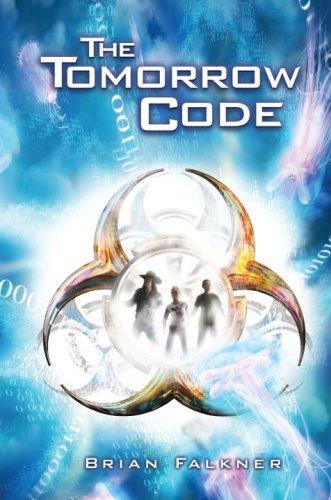
- The Tomorrow Code
Brian Falknerstandalone novel2008
similar bynear futureadventuroustensescience fictiontime travelyoung adult
THE END OF THE WORLD started quietly enough for Tane Williams and Rebecca Richards. . . .Tane and Rebecca aren't sure what to make of it--a sequence of 1s and 0s, the message looks like nothing more than a random collection of alternating digits. Working to decode it, however, Tane and Rebecca discover that the message contains lottery numbers . . . lottery numbers that win the next random draw! Suddenly Tane and Rebecca are rich, but who sent the numbers? And why? More messages follow, and slowly it becomes clear--the messages are being sent back in time from Tane and Rebecca's future. Something there has gone horribly wrong, and it's up to them to prevent it from happening. As they follow the messages' cryptic instructions, Tane and Rebecca begin to suspect the worst--that the very survival of the human race may be at stake.From the Hardcover edition.
- The Star Beast
Robert A. Heinleinstandalone novel1954
similar byour worldnear futureadventurousscience fictionyoung adult
A talking alien pet has grown to the size of a small dinosaur. She repeatedly gets her teenage owner in trouble whenever she leaves the backyard, but he continues to care for her, as did his father and grandfather before him. When an alien delegation lands on Earth and demands custody, he fights to protect her.
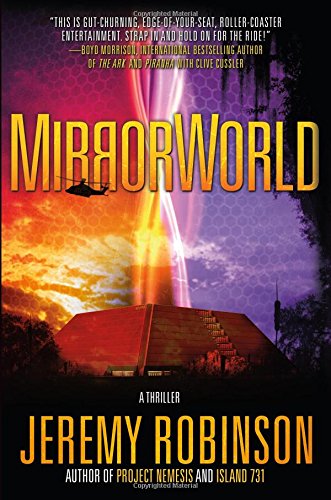
- MirrorWorld
Jeremy Robinsonstandalone novel2015
similar byour worldnear futuretenseamnesiaidentityscience fiction
"Crazy has no memory and feels no fear. Dangerous and unpredictable, he's locked away in SafeHaven, a psychiatric hospital, where he spends the long days watching Wheel of Fortune and wondering what the outside world smells like. When a mysterious visitor arives and offers him a way out Crazy doesn't hesitate to accept. But outside the hospital Crazy is faced with a world on the brink of nuclear annihilation, and find himself relocated to Neuro Inc., a secretive corporation with strange government ties. When he discovers evidence of human experimentation he escapes with a syringe, the contents of which are unknown to him but precious to Neuro. Cornered and with a complete disregard for the results, Crazy makes himself indispensable by injecting the substance into his leg. As the substance enters his bloodstream, though, his eyes are opened to a world beyond human experience, where fear is a tool and the shadows hide the source of mankind's nightmares. Struggling to understand his new abilities, Crazy allies himself with the company he fled and begins peeling back the layers of his past, the brewing war between worlds, how he can stop it and what he did to start it. With Crazy, Robinson, whose trademarked pacing and inventive plots have been highly praised by bestselling authors like Jonathan Maberry, Scott Sigler and James Rollins, treats readers to a wildly imaginative, frenetically paced thriller exploring the origins of fear"--
- The Lathe of Heaven
Ursula K. Le Guinstandalone novel1971
similar byour worldnear futuretensescience fiction+1 more
The Lathe of Heaven is a 1971 science fiction novel by American writer Ursula K. Le Guin, first serialized in the American science fiction magazine Amazing Stories. It won the 1972 Locus Award for Best Novel and was a finalist for the 1971 Nebula Award for Best Novel and 1972 Hugo Award for Best Novel. Two television film adaptations were released: the PBS production, The Lathe of Heaven (1980), and Lathe of Heaven (2002), a remake produced by the A&E Network.
- Have Space Suit - Will Travel
Robert A. Heinleinstandalone novel1958
similar bynear futureadventuroustensescience fictionyoung adult
From the back cover of the Del Rey 9th printing: "Skyjacked - Everything happened at once. One minute Kip Russell was walking about in his own backyard, testing out an old space suit and dreaming about going to the moon - and the next he was out cold and the captive of an insidious space pirate. The whole thing seemed like a very bad dream until he discovered he wasn't the only prisoner on board. Then the reality of the situation became inescapable. He - along with the daughter of a world-renowned scientist and a beautiful creature from an alien planet - had been skyjacked by a monstrous extraterrestrial and they were on their way to the Moon... a journey toward a fate worse than death!"
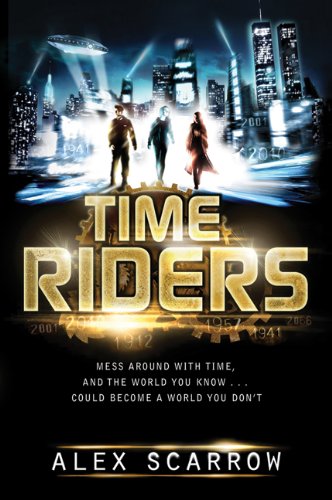
- TimeRiders
series9 books2010
similar byour worldadventuroustensescience fictiontime travelyoung adult
TimeRiders is a series of teen science fiction novels written by Alex Scarrow. The series consists of nine books and is published by Puffin Books.