More like Falling Star
but
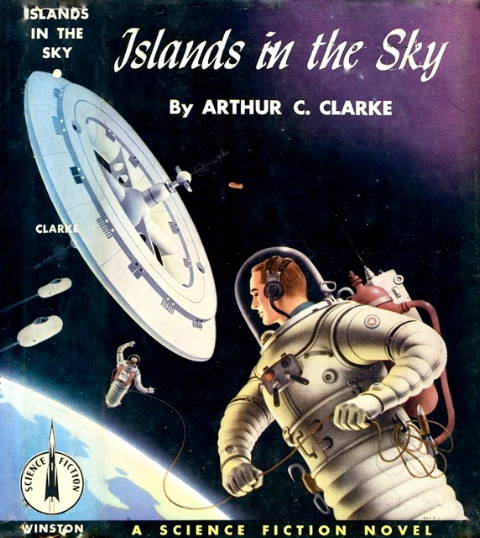
- Islands in the Sky
Arthur C. Clarkestandalone novel1952
similar byspace explorationspace stationnear future
Islands in the Sky is a 1952 science fiction novel by British writer Arthur C. Clarke. It is one of his earliest works. Clarke wrote the story as a travelogue of human settlement of cislunar space in the last half of the twenty-first century.
- To the Stars (Leinster)
series3 books1953
completed
similar byspace explorationnear future+1 more
Murray Leinster's Joe Kenmore trilogy follows a master machinist's son through the Cold War-era race to build and defend America's first space station, then a rescue tug, and finally a lunar outpost, in three techno-thriller adventures blending realistic 1950s spaceflight speculation with sabotage plots. Space Platform (1953) introduces Kenmore amid attempts to sabotage the orbital station project; Space Tug and City on the Moon carry the same hardware-focused approach into orbit and onto the Moon.
- Gravity
Tess Gerritsenstandalone novel1999
similar byspace explorationspace stationnear future
Medical thriller set aboard the International Space Station where astronauts are dying one by one from a mysterious disease. Dr Emma Watson is a research physician on a mission to study living organisms in space. But the mission aboard the space station turns into a nightmare.
- Juniper Time
Kate Wilhelmstandalone novel1979
similar byspace explorationspace stationnear future
From back cover of Pocket Books paperback, June 1980: In a world now ravaged by drought and famine. Jean Brighton and Arthur Cluny grew up in the limelight, children of space pioneers who built the orbiting space laboratory. Now Arthur carried on his father's work at the lab. But Jean fled into isolation, harboring a hatred for the space station and the intrigue that surrounded it. How could she know that in her desert solitude she would hold the key to the future of the space station she so desperately wanted to forget... that for a moment international peace would rest in her hands... or that Arthur would come to wrest from her a secret she would rather not face, a secret that could return the world to... JUNIPER TIME?
- Childhood's End
Arthur C. Clarkestandalone novel1953
similar bynear future+1 more
Childhood's End is a 1953 science fiction novel by the British author Arthur C. Clarke. The story follows a peaceful alien invasion of Earth by mysterious Overlords, whose arrival begins decades of apparent utopia under indirect alien rule, at the cost of human identity and culture.
- Orbital
Samantha Harveystandalone novel2023
similar byspace explorationspace stationnear future
Orbital is a 2023 novel by English novelist Samantha Harvey that incorporates elements of science fiction, literary fiction, and philosophical fiction, published by Jonathan Cape in the UK and by Grove Atlantic in the US. It follows six fictional astronauts over 24 hours on an orbiting space station.
- The Martian
series2 books2012
similar byspace explorationnear future
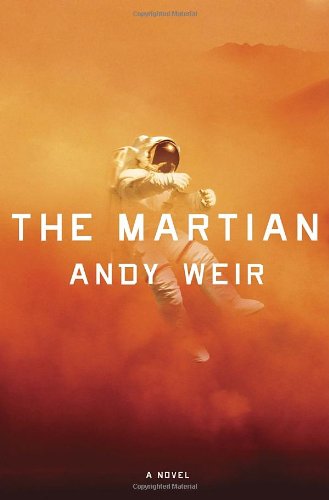
Andy Weir's novel The Martian, first self-published in 2011 before a commercial re-release, follows astronaut Mark Watney after he is stranded alone on Mars when his crew presumes him dead and departs. Using scientific improvisation and dark humor, Watney works to keep himself alive long enough for a rescue to reach him. It is a single, self-contained survival story.
- Podkayne of Mars
Robert A. Heinleinstandalone novel1963
similar bynear future+1 more
From the back cover of the Baen 1995 edition: "Meet Podkayne Fries, a thoroughly modern Martian Ms. who thinks that Earth is not really fit for habitation and that humanity evolved in the now-exploded Fifth Planet. Poddy has one goal in life, to be the first female starship captain. She has her strategy all scoped out, and with her determination, looks and I.Q. she'll get there, never you doubt! But all work and no play would make Poddy a Dull Girl, so when a chance comes her way to travel to distant Earth via Venus with her elderly uncle, Poddy jumps at it, even if it does mean having her loathsome little brother along for the trip: Travel, Adventure, the chance to cuddle up (in a nice way) with real spaceship officers and ruthlessly pump their brains - she'll have it all. What Poddy doesn't know is that "Unca Tom" is more than her warmly supportive relative: he is also the Ambassador Plenipotentiary from Mars to the Three Planets Conference (travelling not quite incognito enough) and that certain people will stop at nothing to gain control of his vote - including kidnapping and doing terrible things to sweetly innocent Poddy Fries..."
- Stardance
series5 books1977
similar by+2 more
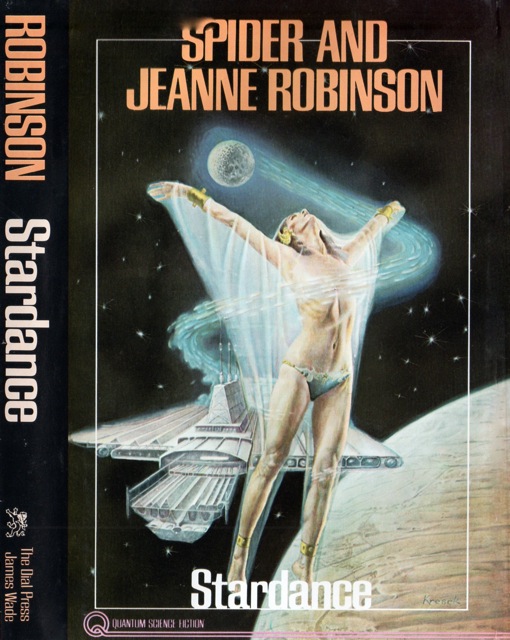
Stardance began as Spider Robinson and Jeanne Robinson's Hugo- and Nebula-winning novella before growing into a trilogy about the birth of dance choreographed for zero gravity, and the human and, later, alien audiences it reaches. Jeanne Robinson was herself a professional dancer, and the books carry that grounding into their depiction of movement as art once freed from gravity. The sequels, Starseed and Starmind, push the premise outward from one dancer's breakthrough into first-contact territory.
- A Fall of Moondust
Arthur C. Clarkestandalone novel1961
similar bynear future+1 more
From the back cover of the Harbrace paperback: "The action of A Fall of Moondust takes place almost a century from now when tours on the moon are a common occurrence. One of the high points of each tour is a cruise around the Sea of Thirst, a body of volcanic dust, in a specially designed vessel called the Selene On a perfectly routine voyage one day the Selene suddenly disappears. How do you locate a small tourist "cruiser" buried beneath fifty feet of dust? If you find it, how do you rescue the passengers and crew? If you are on board, how do you feel and what do you do while brave men and expert technicians join forces in a race against time? Sustained excitement, lively humor, and an engaging cast of characters make this one of Arthur C. Clarke's most intriguing novels."
- The Fountains of Paradise
Arthur C. Clarkestandalone novel1979
similar byspace explorationspace station
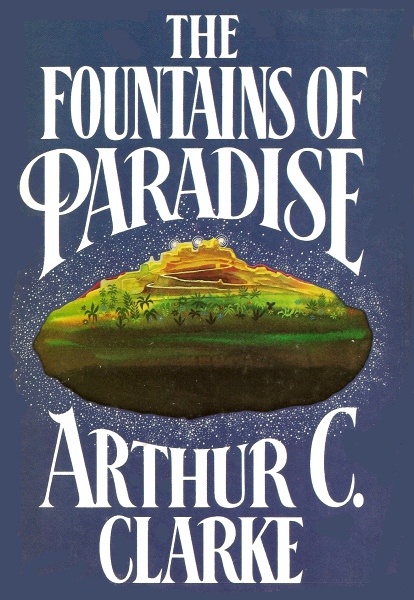
The Fountains of Paradise is a 1979 science fiction novel by British writer Arthur C. Clarke. Set in the 22nd century, it describes the construction of a space elevator. This "orbital tower" is a giant structure rising from the ground and linking with a satellite in geostationary orbit at the height of approximately 36,000 kilometres. Such a structure would be used to raise payloads to orbit without the expense of using rockets. The novel won both the Hugo and Nebula Awards for Best Novel.
- Aftermath (Charles Sheffield)
series2 books1998
completed
similar bynear future+1 more
Charles Sheffield's Aftermath duology opens with a near-future Earth devastated by a nearby supernova's radiation, which knocks out electronics and forces survivors to rebuild without most modern technology. Starfire continues years later as a second, larger stellar threat approaches and humanity must recover enough capability to respond. Sheffield, a physicist by training, grounds both books in hard-science consequences of the disaster rather than treating it as mere backdrop.
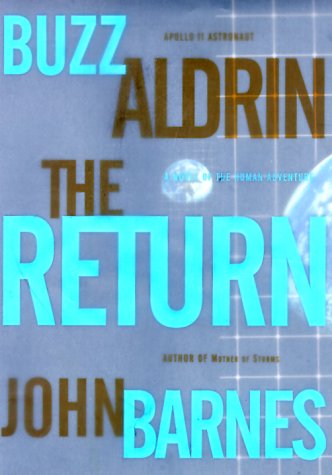
- The Return
John Barnes & Buzz Aldrinstandalone novel2000
similar byspace explorationspace stationnear future
From the flaps of the Forge first edition: "When a tragic Shuttle accident kills a world-famous basketball player on his trip into space, a trip that had been planned as a PR coup for the space program, former astronaut Scott Blackstone is out of a job. Worse, he and his "Citizen Observer" program are vilified in the media, and he's being sued for a billion dollars. His older brother, Nick, research chief for a major aerospace firm, persuades Scott's estranged wife, Thalia - a top-ranked attorney - to take on Scott's defense. Gradually, it begins to appear that the "accident" might not have been an accident at all. Meanwhile, as long feared, India and Pakistan go to war - and worse, Pakistan deploys a nuclear device high in the upper atmosphere, putting the crew of the orbiting International Space Station in imminent danger of destruction by radiation exposure. While the world's space vehicles are all grounded by the radiation storm set off by the detonation, only a few weeks remain to rescue the crew, and there's no way to do it. Save, perhaps, for a secret project of Nick's..."
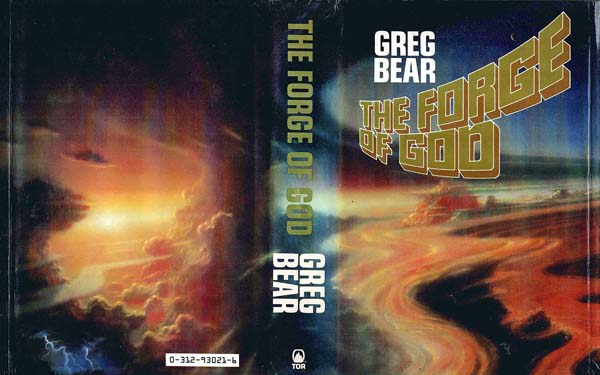
- Forge of God
series2 books1987
completed
similar by+2 more
The Forge of God (1987) is Greg Bear's science fiction novel about Earth's discovery that it is the target of an incomprehensible, overwhelming alien attack, following scientists and ordinary people as they try to understand what is destroying the planet. Its 1992 sequel, Anvil of Stars, follows a group of young survivors sent on a mission of interstellar retaliation, continuing directly from the first book's ending.
- Have Space Suit - Will Travel
Robert A. Heinleinstandalone novel1958
similar byspace explorationnear future
From the back cover of the Del Rey 9th printing: "Skyjacked - Everything happened at once. One minute Kip Russell was walking about in his own backyard, testing out an old space suit and dreaming about going to the moon - and the next he was out cold and the captive of an insidious space pirate. The whole thing seemed like a very bad dream until he discovered he wasn't the only prisoner on board. Then the reality of the situation became inescapable. He - along with the daughter of a world-renowned scientist and a beautiful creature from an alien planet - had been skyjacked by a monstrous extraterrestrial and they were on their way to the Moon... a journey toward a fate worse than death!"
- Prelude to Space
Arthur C. Clarkestandalone novel1951
similar byspace explorationnear future
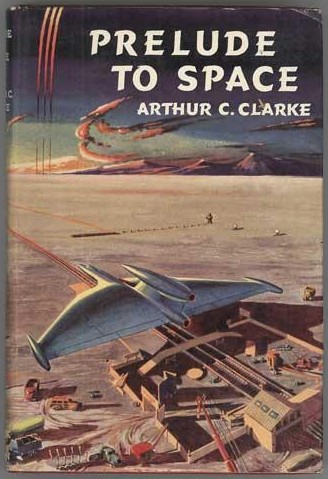
Prelude to Space is a science fiction novel written by British author Arthur C. Clarke in 1947. It appeared for the first time in 1951 as a paperback from World Editions Inc, as number three in its series of Galaxy novels. Sidgwick & Jackson published it in the UK in 1953, followed the next year by a United States hardcover edition from Gnome Press and a paperback from Ballantine Books.
- Brain Wave
Poul Andersonstandalone novel1954
similar bynear future+1 more
Brain Wave is a science fiction novel by American writer Poul Anderson, first published in serial form in Space Science Fiction in 1953, and then as a novel in 1954. Anderson had said that he could consider it one of his top five books. This is one of many science fiction works written at this time on the theme of heightened intelligence.
- Gaean
series3 books1979
completed
similar by+2 more
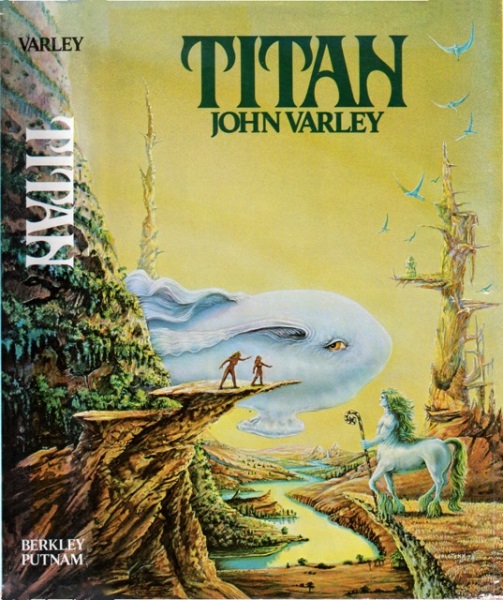
The Gaea Trilogy consists of three science fiction novels by John Varley. The stories tell of humanity's encounter with a living being in the shape of a 1,300 km diameter Stanford torus, inhabited by many different species, most notably the centaur-like Titanides, in orbit around the planet Saturn.
- Rocket Ship Galileo
Robert A. Heinleinstandalone novel1947
similar byspace explorationnear future
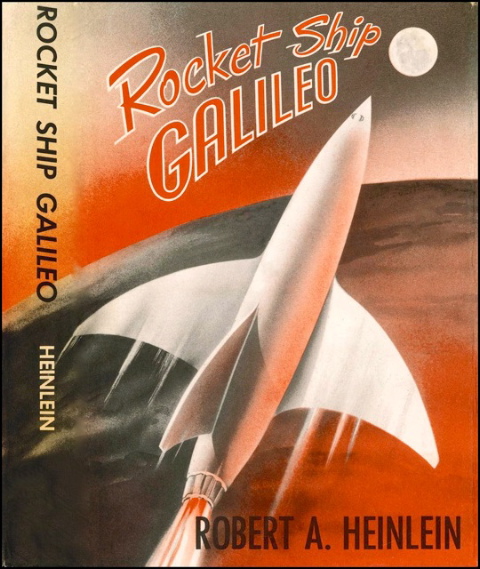
Three teenage boys do backyard experiments on powerful model rockets. An uncle who is an atomic engineer enlists them to make and fly the first rocket to the moon.
- Project Hail Mary
Andy Weirstandalone novel2021
similar byspace explorationnear future
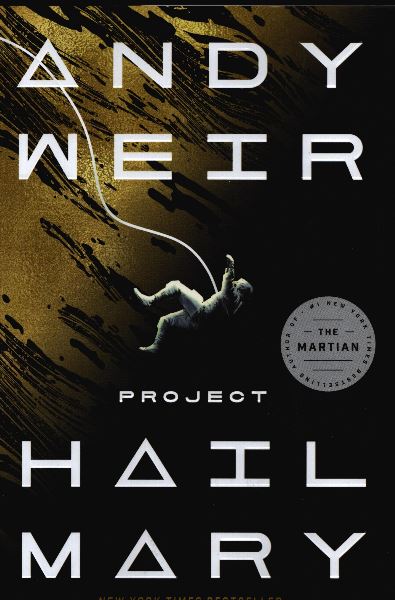
Project Hail Mary is a 2021 hard science fiction novel by American writer Andy Weir. It centers on science teacher and former biologist Ryland Grace, who wakes up aboard a spacecraft, afflicted with amnesia.
- Secret of the Marauder Satellite
Ted Whitestandalone novel1967
similar byspace explorationspace stationnear future
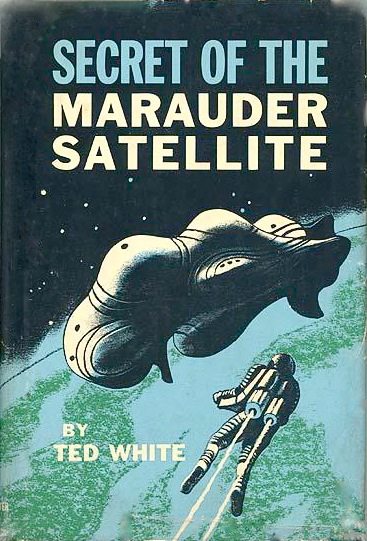
Publisher's description: "A graduate of the first space school sent to the U.S. Space Station is given the tricky and dangerous assignment of salvaging defunct satellites."
- The Forever City
Richard A. Lupoffstandalone novel1988
similar byspace explorationnear future+1 more
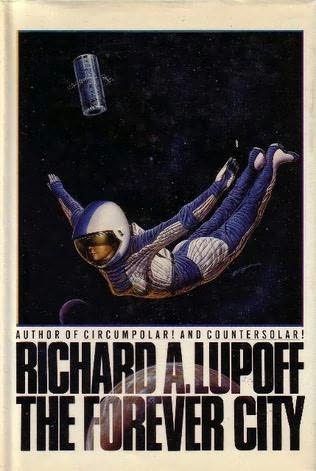
From the front flap of the Walker first edition: "On the free orbital city of Yukawa, there wasn't much work for a camera operator outside of the holovision studios. When the holovision adventure series starring Alfonso Petrov's father was canceled, Alfonso couldn't even get another job at the studio. The city refused to give him a union card. The only work he could find was on a tiny spaceship bound for a rescue mission into deep and unknown space. The spaceship was called Lilienthal. Its pilot, Mariel Thanh O'Hara, was looking for her brother. Her passanger, Carlotta Xiang, humanity's greatest living scientist, was looking for antimatter to use as an energy source. Alfonso Petrov was looking for a way to survive the mission and get home alive. The three headed for the Oort Cloud, at the very farthest edge of the solar system. The little ship was traveling into the unknown, prepared for anything it might encounter. But none of its passengers expected to be thrown into another universe - a universe that has been twisted through a dimension that makes fiction into reality. To his amazement, Alfonso finds himself lost in the fictional world of his father's holovision series. Traveling home from there just might be impossible!"