More like Fallout
anchored on:north americatechno-thriller
but
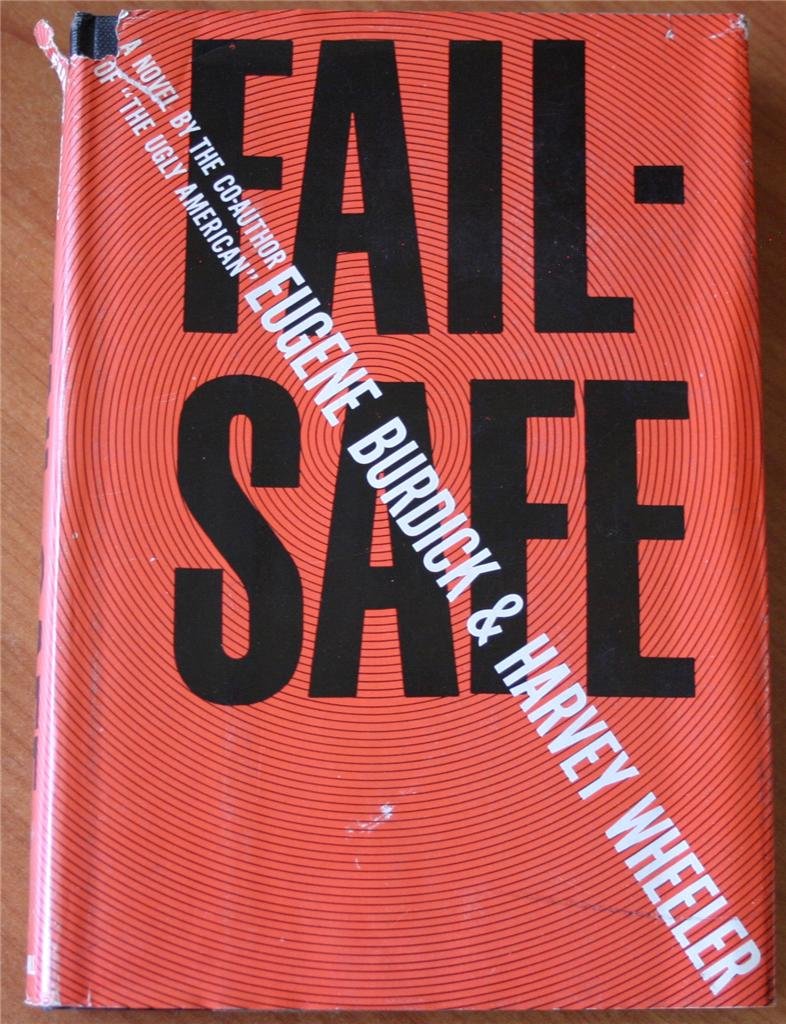
- Fail-Safe
Harvey Wheeler & Eugene Burdickstandalone novel1962
similar bytensetechno-thrillernorth americathriller & suspense+1 more
Fail-Safe is a bestselling American novel by Eugene Burdick and Harvey Wheeler. Expanded from Wheeler's short story "Abraham '59", it was initially serialized in three installments in the Saturday Evening Post on October 13, 20, and 27, 1962, during the Cuban Missile Crisis.
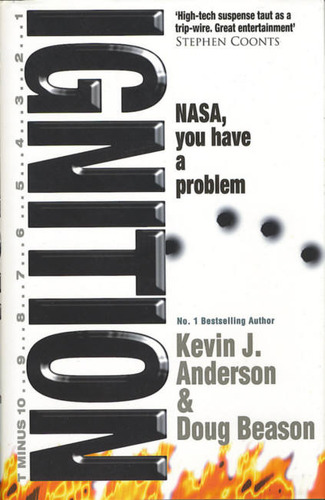
- Ignition
Kevin J. Anderson & Doug Beasonstandalone novel1996
similar bytensetechno-thrillernorth americathriller & suspense+1 more
From the front flap of the Forge first edition: "The launch of the shuttle Atlantis will make history. Another triumph for the space program and a political coup: a Russian cosmonaut is scheduled to perform the first spacewalk from an American unit. The checkout fail-safes are all go. The mission is proceeding like clockwork. The team of American and Russian astronauts are strapped in, the mission specialists in Houston see no hitches. No one knows the real danger... For as millions of viewers tune in to watch the countdown, there's nothing to indicate that what they're seeing is a prerecorded show. Terrorists have take over Launch Control at Cape Canaveral and are threatening to blow up the Atlantis in less than three hours - unless their demands are met. Only Colonel "Iceberg" Friese, the mission's former commander, invalided out with a broken foot, knows about the danger to his crew. Unknown to anyone, he's sneaked into the restricted zone. And now it's up to him to stop the clock before the countdown reaches... Ignition."
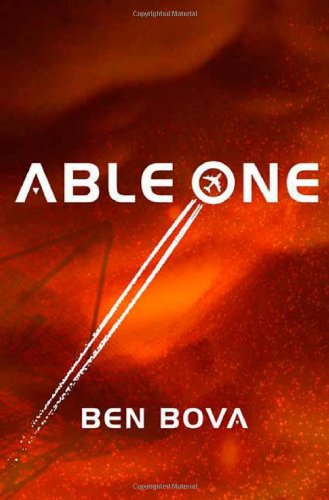
- Able One
Ben Bovastandalone novel2010
similar bypolitical intriguetensetechno-thrillernorth america
Can an experimental defense system stop North Korean missile strikes? "Able One" is a timely thrill-ride by one of science fiction's most respected novelists.
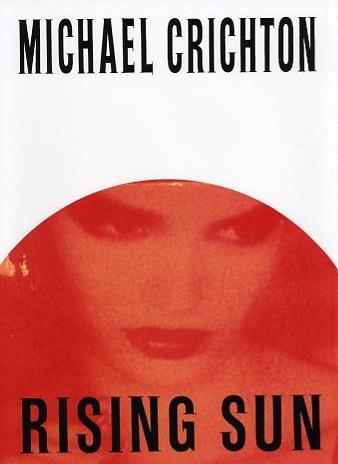
- Rising Sun
Michael Crichtonstandalone novel1992
similar bytensetechno-thrillernorth americathriller & suspense+1 more
Rising Sun is a 1992 novel by Michael Crichton. It was his eighth under his own name and eighteenth overall, and is about a murder in the Los Angeles headquarters of a Japanese corporation. The book was published by Alfred A. Knopf, Inc. An image of fashion model Gia Carangi is incorporated in the cover art for the original edition.
- The Blue Ant Trilogy
series3 books2003
similar bytechno-thrillerthriller & suspense+3 more
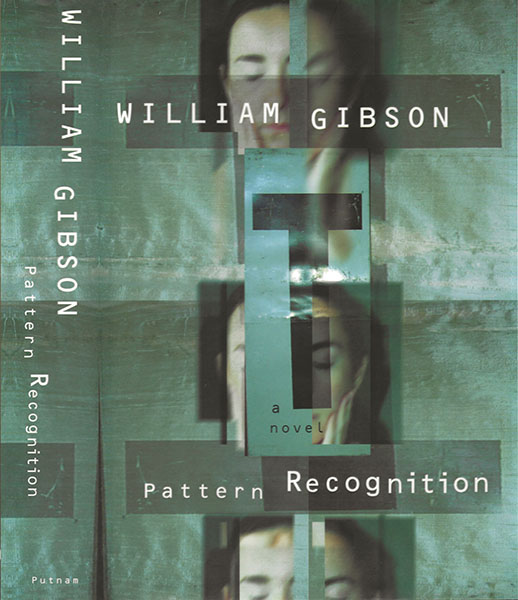
Hubertus Bigend is a fictional character appearing in the third trilogy of novels of science fiction and literary author William Gibson. Bigend is the antihero of Gibson's Pattern Recognition (2003), Spook Country (2007) and Zero History (2010). In an interview Gibson says "I've always had a sense of Bigend as someone who presents himself as though he knows what's going on, but who in fact doesn't. It's just my sense of the subtext of the character: he's bullshitting himself, at the same time as he's bullshitting all of us."
- Digital Fortress
Dan Brownstandalone novel1998
similar bypolitical intriguetensetechno-thrillerthriller & suspense
Digital Fortress is a techno-thriller novel written by American author Dan Brown and published in 1998 by St. Martin's Press. The book explores the theme of government surveillance of electronically stored information on the private lives of citizens, and the possible civil liberties and ethical implications of using such technology.
- The Handmaid's Tale
series3 books1985
similar bytensenorth america+1 more
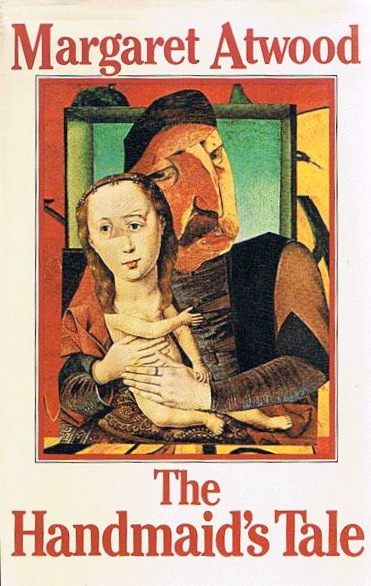
The Handmaid's Tale is Margaret Atwood's 1985 novel set in Gilead, a totalitarian theocracy that has overthrown the United States and forces fertile women into reproductive servitude as Handmaids; it is narrated by one such woman, Offred. Atwood returned to the world in her 2019 sequel The Testaments, set fifteen years later and narrated by three women, including the regime's Aunt Lydia. Together the two novels move from Gilead's grip on power toward the first cracks in it.
- Deception Point
Dan Brownstandalone novel2001
similar bypolitical intriguetensetechno-thrillerthriller & suspense
Deception Point is a 2001 mystery-thriller novel by American author Dan Brown. It is Brown's third novel. It was published by Simon & Schuster.
- No Harm Can Come to a Good Man
James Smythestandalone novel2014
similar bytensetechno-thrillernorth americathriller & suspense+1 more
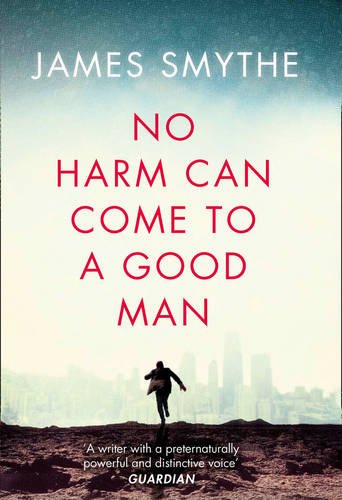
How far would you go to save your family from an invisible threat? A terrifyingly original thriller from the author of The Machine. ClearVista is used by everyone and can predict everything. It's a daily lifesaver, predicting weather to traffic to who you should befriend. Laurence Walker wants to be the next President of the United States. ClearVista will predict his chances. It will predict whether he's the right man for the job. It will predict that his son can only survive for 102 seconds underwater. It will predict that Laurence's life is about to collapse in the most unimaginable way.
- Friday
Robert A. Heinleinstandalone novel1982
similar bytensenorth america+1 more
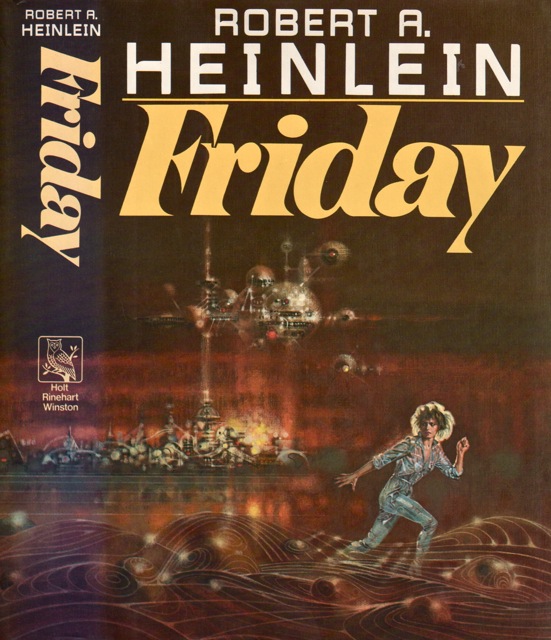
Friday is a 1982 science fiction novel by American writer Robert A. Heinlein. It is the story of a female "artificial person", the eponymous Friday, genetically engineered to be stronger, faster, smarter, and generally better than normal humans. Artificial humans are widely resented, and much of the story deals with Friday's struggle both against prejudice and to conceal her enhanced attributes from other humans. The story is set in a Balkanized 21st century, in which the nations of the North American continent have been split up into a number of smaller states.
- The Puppet Masters
Robert A. Heinleinstandalone novel1951
similar bytensenorth america+1 more
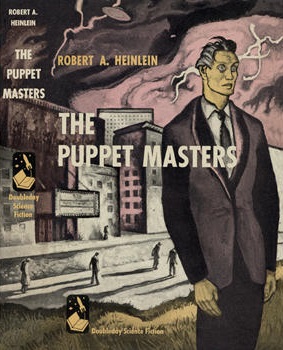
Parasitical aliens attach themselves to human hosts and take over their bodies. Two spies are sent to find out what's happening, but the extent is much farther than they knew. With access to the humans' memories, the aliens quietly invade the government and start taking over.
- State of Fear
Michael Crichtonstandalone novel2004
similar bypolitical intriguetensetechno-thrillerthriller & suspense
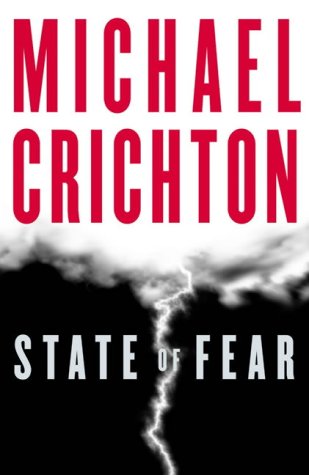
State of Fear is a 2004 techno-thriller novel by Michael Crichton, his fourteenth under his own name and twenty-fourth overall, in which eco-terrorists plot mass murder to publicize the danger of global warming.
- Beyond This Horizon
Robert A. Heinleinstandalone novel1948
similar bynorth america+2 more
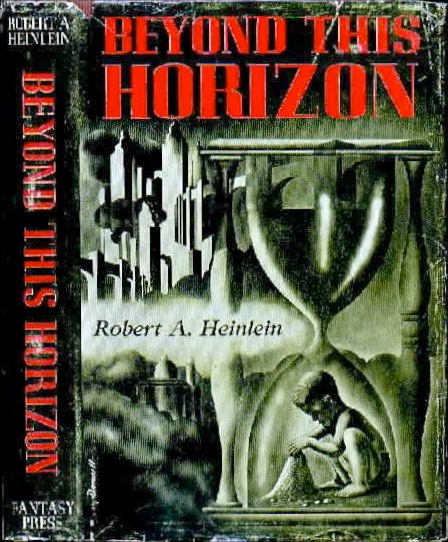
From the front flap of a 2001 Baen reprint: "Utopia has been achieved. For centuries, disease, hunger, poverty, and war have been things found only in the history tapes. And applied genetics has given men and women the bodies of athletes and a lifespan of over a century. They should all have been very happy... But Hamilton Felix is bored. And he is the culmination of a star line, each of his last thirty ancestors chosen for superior genes. Hamilton is, as far as genetics can produce one, the ultimate man. And this ultimate man can see no reason why the human race should survive, and has no intention of continuing the pointless comedy. However, Hamilton's life is about to become less boring. A secret cabal of revolutionaries who find utopia not just boring, but desperately in need of leaders who know just What Needs to be Done, are planning to revolt and put themselves in charge. Knowing of Hamilton's disenchantment with the modern world, they have recruited him to join their Glorious Revolution. Big mistake! The revolutionaries are about to find out that recruiting a superman was definitely not a good idea..."
- The Hunger Games Universe
universe5 books2008
Start hereThe Hunger Games · Start here
similar bytensenorth america+1 more
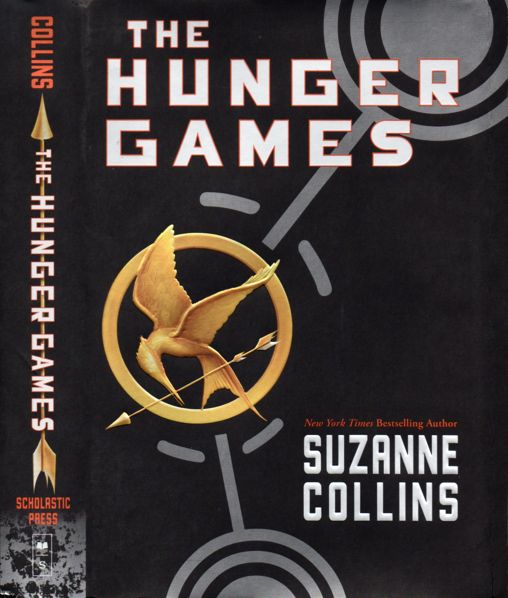
Panem, they call it now — a nation raised on the drowned bones of North America, a glittering Capitol ringed by twelve districts it once starved into obedience. Every year the Capitol collects its debt in children: two tributes from each district, drawn by lottery, dropped into an engineered arena, and made to kill one another on live television while the whole country is required to watch. This is the Hunger Games — entertainment, punishment, and government at once. Suzanne Collins tells it in a compact, unified body of work. The founding trilogy — The Hunger Games, Catching Fire, and Mockingjay — follows Katniss Everdeen, a girl from the coal-mining District 12 who volunteers in her sister's place and becomes something the Capitol never scripted. Two prequels reach back into the same machinery: The Ballad of Songbirds and Snakes traces a young Coriolanus Snow long before he is President, and Sunrise on the Reaping returns to District 12 a generation ahead of Katniss. Begin with the trilogy, in order — it is Katniss's voice, close and present-tense, that makes Panem breathe, and the prequels land hardest once you know how her story ends. Beneath the spectacle sits one steady, uncomfortable question: who profits when we agree to look away.
- The Spook Who Sat by the Door
Sam Greenleestandalone novel1969
similar bypolitical intriguetensenorth americathriller & suspense
The Spook Who Sat by the Door (1969), by Sam Greenlee, is the fictional story of Dan Freeman, the first black CIA officer, and of the CIA's history of training persons and political groups who later used their specialised training in gathering intelligence, political subversion, and guerrilla warfare against the CIA. The novel has been characterised as "part thriller, part satire and part social commentary". As described by The New Yorker, the title "alludes to the conspicuous deployment of the agency's one black officer to display its phony integration".
- The Attack
Kurt Schlichterstandalone novel2024
similar bypolitical intriguetensetechno-thrillernorth americathriller & suspense
“Could October 7 happen in America? Yes. And much worse. Forewarned is forearmed. Read Colonel K’s latest. Now!” Dr. Sebastian Gorka, Radio Host and National Security Strategist “America is one giant soft target. Kurt’s narrators tell tales of the nightmare scenario open borders can bring.” Jim Hanson, Author and Special Forces Veteran From the author of the bestselling Kelly Turnbull People’s Republic series of action novels comes his latest thriller, THE ATTACK. Set in the very near future and ripped from today’s headlines, THE ATTACK is a terrifying novel that describes in frightening detail exactly how America’s enemies could launch a massive terrorist assault here at home. From the White House to the Middle East, from the blood-stained streets of America’s suburbs to the cockpit of a B-2 bomber that will initiate the first blow in America’s merciless vengeance, THE ATTACK blends vivid realism with stirring action. With input from key military and counterterrorism experts, THE ATTACK tells the story of a cunning, implacable, and brutal enemy taking advantage of a confused and weak president to launch an assault that dwarfs Hamas’s strike on Israel. With a wide-open border and American law enforcement focused on churchgoers and parents attending schoolboard meetings, the jihadist enemy can pick the time and place for its deadly attack. The only things standing in its way are the courage of America’s brave first responders and military, as well as regular citizens who are caught up in the bloodshed and are forced to fight back.
- The Sum of All Fears
Tom Clancystandalone novel1991
similar bypolitical intriguetensetechno-thrillernorth americathriller & suspense
The Sum of All Fears is a political thriller novel, written by Tom Clancy and released on August 14, 1991, as the sequel to Clear and Present Danger (1989). The main character Jack Ryan, who is now the Deputy Director of Central Intelligence, tries to stop a crisis concerning the Middle East peace process wherein Palestinian and former East German terrorists conspire to bring the United States and Soviet Union into a nuclear war. It debuted at number one on the New York Times bestseller list.
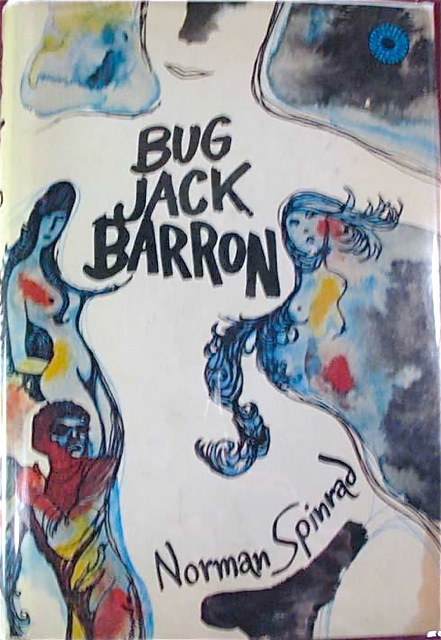
- Bug Jack Barron
Norman Spinradstandalone novel1969
similar bypolitical intriguetensenorth america
Bug Jack Barron is a 1969 science fiction novel by American writer Norman Spinrad, first serialized in the New Worlds magazine under the editorship of Michael Moorcock. It was nominated for the 1970 Hugo Award. The novel is notable for its lyrical style and unique use of cut-up phrases. In this regard, Spinrad has cited the influence of Beat writers William S. Burroughs, Allen Ginsberg, and Jack Kerouac.
- Dune Universe
universe78 books1963
Start hereDune · Start here
similar bypolitical intrigue+1 more
Arrakis. Dune. The desert planet, where empire runs on a single substance: the spice melange, which folds space, prolongs life, and unlocks prescience, and which exists nowhere else in the known universe. Frank Herbert's saga is a meditation dressed as an adventure — feudal houses and a secret sisterhood, engineered messiahs and the patient ecology of a world without water, all turning on the terrible gravity of who commands the spice. It reads like scripture and schemes like a war room, ten thousand years hence, among people who have outlawed the thinking machine and made instruments of themselves instead. At its heart stand Herbert's original six — Dune, Dune Messiah, Children of Dune, God Emperor of Dune, Heretics of Dune, Chapterhouse: Dune — a single deepening arc across millennia, arguing the whole way between prophecy and free will. Around that spine his son Brian Herbert and Kevin J. Anderson have raised a vast prequel architecture: Prelude to Dune, tracing the great houses a generation before Paul; Legends of Dune, reaching back to the crusade that broke the machines; the Schools of Dune cycle on the founding of Bene Gesserit, Mentat, and Navigator; the Caladan Trilogy and Heroes of Dune filling years the originals left in shadow. Many hands, dozens of volumes, one desert. What sets Dune apart is its refusal of the simple: religion is manufactured, heroes are hazards, and the sand itself — worm, water, ecology — acts as a political power. Begin where the universe did, with Frank Herbert's Dune (1965), and read the original six in order; you need nothing else to feel the full weight. The prequels are a country to explore afterward, taken by era. Beginnings are delicate times.
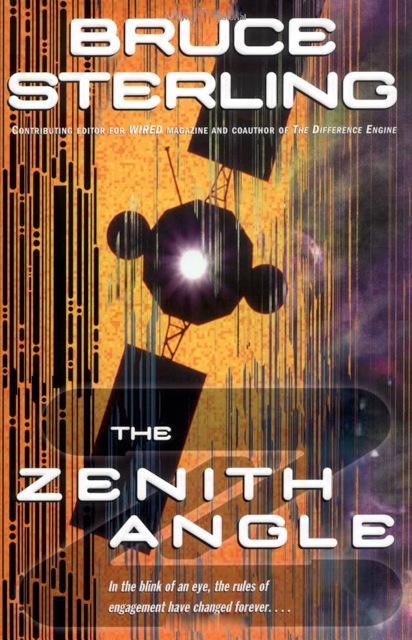
- The Zenith Angle
Bruce Sterlingstandalone novel2004
similar bypolitical intriguetensetechno-thrillernorth america
The Zenith Angle is a science fiction novel by American writer Bruce Sterling, first published in 2004, about a pioneering expert in computer and network security with a traditional hacker personality named Derek Vandeveer. His life irrevocably changes after the September 11, 2001 attacks on the World Trade Center.
- Dune
series20 books1963
part of Dune Universe
similar bypolitical intrigue+1 more
Frank Herbert's Dune Chronicles opens with 1965's Dune, set on the desert planet Arrakis where House Atreides takes control of the only source of the vital spice melange and young Paul Atreides is pulled into a struggle over its politics and religion. Herbert carried the story forward across five further novels — Dune Messiah, Children of Dune, God Emperor of Dune, Heretics of Dune, and Chapterhouse: Dune — following Paul's line over the following millennia, before Brian Herbert and Kevin J. Anderson later extended the saga. Many other editions of these six novels are omnibus and box-set repackagings rather than separate stories.
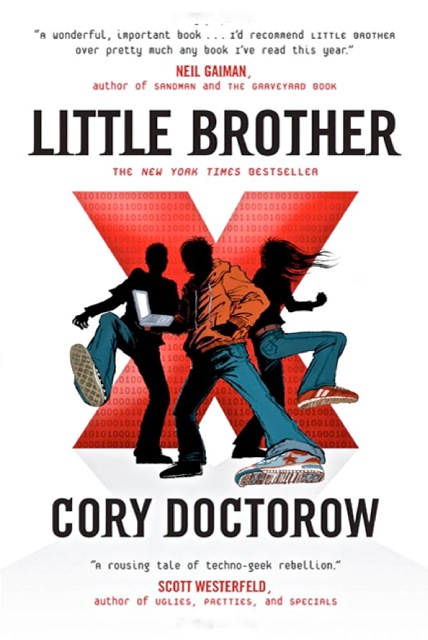
- Little Brother
series7 books2008
similar bytensenorth america+2 more
Cory Doctorow's Little Brother follows Marcus, a San Francisco teenager who builds a covert mesh network, the Xnet, to organize resistance after the Department of Homeland Security uses a terrorist attack as pretext for mass surveillance and civil-rights violations. Homeland continues Marcus's fight years later, and Attack Surface completes the trilogy; a companion story, 'Lawful Interception,' and other short pieces extend the same near-future world. Throughout, the series doubles as a working explanation of the surveillance and cryptography tools its characters use.