Loreful
HomeDiscover
Search series, authors…⌘K
Loreful

Reading orders for SF/F series and shared universes — with your place kept in every one.

Explore

UniversesSeriesWorksAuthorsAtlas

Help

FAQAboutSite map

Account & legal

Sign inCreate accountPrivacyTerms

Data

Built on ISFDB, Wikipedia, Wikidata and Open Library. Curated reading orders carry their reasoning on the page; the rest follow publication order. Data sources & licenses

© Loreful · data: ISFDB · CC BY

More like Fat Vampire

anchored on:humorvampiresnorth americacontemporaryfunnyyoung adult+3 more

but

Mood

The mood the book leaves you in.

  • The reading experience is propelled by journeys, exploration, and physical risk; excitement and forward momentum dominate over dread or introspection.
  • Joy and loss are deliberately mixed; the resolution grants characters something real while taking something else away, leaving warmth and sorrow together.
  • The book demands work from the reader — dense prose, difficult structure, unfamiliar ideas, or morally uncomfortable material — as part of its intended effect.
  • Grim events, cruelty, or despair dominate the atmosphere, and the book does not soften them with comfort or comic relief.
  • The atmosphere is quietly unsettling — wrongness, unease, and the uncanny pervade the book without necessarily escalating into overt horror.
  • The book is built to move the reader; character feeling is foregrounded and major scenes aim at a strong emotional response.
  • Humor is a primary aim and the prose plays for laughs — comic situations, wit, or dialogue produce sustained comedy, not occasional levity.
  • The book insists that things can improve; effort and decency are shown to matter, and the arc bends toward better outcomes even through hardship.
  • The book teaches as it goes — real facts, history, science, or craft are conveyed in enough depth that learning is part of the reading experience.
  • The book is designed to uplift and motivate, presenting perseverance or achievement in a way that invites the reader to aspire or act.
  • The overall register is cheerful and easygoing; stakes are kept gentle and the book avoids dwelling on pain or dread.
  • Withheld information drives the experience; the book sustains enigmas and secrets the reader wants resolved, whatever its genre.
  • The book is contemplative and inward-looking, giving more weight to thought, memory, and meaning than to external events.
  • The book works as comfort reading — low tension, a soothing pace, and an atmosphere the reader can unwind in.
  • Grief, loss, or melancholy set the dominant register, and the book lets sorrow stand rather than resolving it into comfort.
  • Sustained suspense is the point; the book keeps the reader braced for what happens next through danger, pressure, or impending revelation.
  • Playful invention and charm define the register — fanciful conceits, light absurdity, and a narration that delights in its own oddity.

About

What the story runs on.

  • Stories in which extraterrestrial beings are central — as characters, cultures, or the object of the plot.
  • Stories structured as a quest — a journey undertaken to find, deliver, or destroy something of great import.
  • Stories in which staying alive against nature, catastrophe, or scarcity is the central problem.
  • Stories of lovers kept apart by law, family, faith, or station, where the obstacle to love is the plot.
  • Stories in which a friendship — its making, testing, or loss — is the emotional center.
  • Stories of growing up — a young protagonist crossing from childhood into adult knowledge and responsibility.
  • Stories about who a character truly is — self-discovery, doubled lives, and the search for a self.
  • Stories about mourning — living through the death of a loved one and what loss does to the survivors.
  • Stories in which a buried family truth — hidden parentage, crimes, or shames — surfaces and reorders the present.
  • Stories driven by maneuvering for power — factions, conspiracies, and statecraft conducted in shadow.
  • Stories in which war itself is the subject — combat, occupation, and what warfare does to soldiers and civilians.
  • Stories organized around investigating a killing — the case, the clues, and the pursuit of the killer, in any genre's clothing.

Shelf

Where it sits in the library.

    • Fiction built on magic or other supernatural elements that have no scientific explanation.
    • Secondary-world fantasy at large scale, where the fate of nations or the world turns on the protagonists' struggle.
    • Fantasy set in a recognizably modern city or contemporary world where the supernatural intrudes on everyday life.
    • Fantasy that blends in horror's atmosphere and imagery, keeping a fantastical frame around grim or frightening material.
    • Action-driven fantasy following warriors or rogues with personal stakes against sorcerous threats, rather than world-spanning conflicts.
    • Fantasy set in a real historical period or a close analogue of one, with magic woven into the era.
    • Fantasy in which protagonists cross from the ordinary world into another world through a portal or similar passage.
    • Fiction that retells or reworks a traditional fairy tale in a new form or setting.
    • Fantasy drawing directly on myths, legends, and folklore, retelling them or building on their figures and logic.
    • Fantasy of ghosts, vampires, shapeshifters, psychics, and similar phenomena, usually set in an otherwise ordinary world.
    • Fiction mixing science-fictional trappings with overtly magical or impossible elements in one setting.
    • Low-stakes fantasy emphasizing comfort, community, and everyday pleasures over conflict and peril.
    • Speculative fiction of pervasive moral ambiguity, violence, and cynicism that rejects heroic conventions — fantasy and SF alike.
      • Fiction that extrapolates from science and technology — future societies, space travel, or speculative inventions — within at least nominally natural laws.
      • Science fiction of interstellar scope — starships, galactic polities, and adventure across star systems.
      • Science fiction committed to scientific rigor, where technical plausibility constrains the story.
      • Science fiction centered on armed forces and warfare, told largely from a military point of view.
      • Science fiction of networked, corporate-dominated near futures, pairing high technology with social decay.
      • Science fiction styled on nineteenth-century steam-powered technology, often in a Victorian or pseudo-Victorian setting.
      • Fiction depicting an oppressive or catastrophic society, presented as a warning.
      • Fiction set after civilization's collapse, following survivors in the ruins of the old world.
      • Fiction in which characters move between past and future, and the mechanics or consequences of that travel drive the plot.
      • Fiction exploring a world where a historical event went differently and history diverged from ours.
      • Science fiction about humanity's first encounter and communication with an alien intelligence.
      • Science fiction in which extraterrestrial forces attack or occupy Earth and humanity resists.
      • Fiction whose primary aim is to frighten or unsettle the reader through dread, menace, or the monstrous.
      • Horror of vast, indifferent, incomprehensible entities before which humanity is insignificant, in the Lovecraft tradition.
      • Horror of decaying houses, buried family secrets, and oppressive atmosphere in the Gothic literary tradition.
      • Horror centered on hauntings and the returning dead.
      • Horror located in the mind — paranoia, obsession, and unreliable perception rather than external monsters.
      • Horror built around the reanimated dead and survival amid their outbreaks.
      • Horror defined by explicit, transgressive gore that refuses to cut away from violence.
      • Speculative fiction of the strange and uncanny that resists both natural explanation and standard genre categories.
      • Fiction organized around solving a crime or puzzle, typically following an investigator toward the identification of a culprit.
      • A puzzle-first mystery that lays out clues so the culprit's identity can be deduced before the reveal.
      • Crime fiction of moral ambiguity, fatalism, and hard-edged style, set among the corrupt and the doomed.
      • A mystery following the realistic routines of police work — forensics, interviews, and case-building.
      • A gentle mystery with an amateur sleuth, a small community, and violence kept off the page.
      • A mystery set in a past era, where the investigation works within that period's methods and society.
      • Fast-paced fiction driven by imminent danger, pursuit, or high-stakes conspiracy, built to sustain tension.
      • A thriller of espionage — agents, tradecraft, and intelligence services in conflict.
      • A thriller centered on lawyers and the courtroom, where litigation carries the suspense.
      • A thriller driven by detailed contemporary or near-future technology, often military or scientific.
      • A thriller whose tension comes from mental states and manipulation between characters rather than external action.
      • Fiction whose central plot is a romantic relationship and its development toward an emotionally satisfying resolution.
      • Romance in which one or both partners are supernatural beings, blending fantasy elements into the love story.
      • A fantasy-romance hybrid in which the romantic arc and the fantasy plot carry equal weight.
      • Romance set in a past era, with courtship shaped by the period's society and manners.
      • Romance set in the present day, without supernatural or historical elements.
      • Fiction set in a real past period, where the historical setting materially shapes characters and events.
        • General and literary fiction emphasizing prose style, character interiority, or formal ambition over genre plot conventions.
        • Fiction in a realistic world where magical events occur and are treated as ordinary, in the tradition of Latin American literature.
        • Fiction that ridicules people, institutions, or society in order to criticize them.
        • Fiction of dreamlike, irrational imagery and logic that breaks from realistic representation.
        • Fiction that plays with narrative convention through metafiction, fragmentation, and self-reference.
        • Fiction propelled by journeys, exploration, and physical peril, where action and survival carry the plot.
        • Adventure fiction of ships and seafaring — naval engagements, voyages, and life at sea.
        • Fiction of the American frontier West — gunmen, ranchers, and lawmen, typically in the late nineteenth century.
        • Fiction centered on soldiers, campaigns, and the experience of warfare, historical or imagined.
          • Fiction written primarily to amuse, using comedic situations, wit, or parody as its organizing principle.
            • Multi-generational fiction following a family or dynasty across decades, with inheritance and kinship as the through-line.
              • Fiction whose world runs on explicit game mechanics — levels, stats, and skills that characters can see and exploit.
                • Fiction about costumed or superpowered heroes and their conflicts with comparable villains.

                Practical

                How long a commitment, whether it stands alone, and whether it has finished.

                Tap a chip to ask for it · tap again to rule it out · once more to clear. Numbers show what would be left.

                • Cover of Love Story
                  Love Story

                  series · 3 books · 1995

                  similar byvampirescontemporaryfunnyhumorlightheartednorth americabig city+1 more

                  Christopher Moore's Love Story trilogy opens with Bloodsucking Fiends, a comic horror-romance about a young San Francisco woman turned into a vampire. You Suck and Bite Me continue the story across the following two novels, keeping Moore's irreverent, comedic take on vampire fiction.

                • Cover of Team Human
                  Team Human

                  Justine Larbalestier & Sarah Rees Brennan · standalone novel · 2012

                  similar byvampirescontemporaryfunnycoming of agehumorlightheartedyoung adult+1 more

                  Team Human is a young adult novel co-written by Justine Larbalestier and Sarah Rees Brennan. It was published in 2012 by Allen and Unwin in Australia and by Harper Teen, a division of HarperCollins in the US. The book came out of the authors' shared love of vampire stories, and is both parody and celebration of the genre. The book is dedicated to a long list of authors who have written in the genre, including Stephen King, Stephenie Meyer, Anne Rice, Bram Stoker, and Larbalestier's husband Scott Westerfeld.

                • Cover of The Coldest Girl in Coldtown
                  The Coldest Girl in Coldtown

                  series · 2 books · 2009

                  similar byvampirescontemporarycoming of agefantasynorth americayoung adultbig city

                • Cover of The Nose from Jupiter
                  The Nose from Jupiter

                  Richard Scrimger · standalone novel · 1998

                  similar bycontemporaryfunnycoming of agenorth americafantasyhumorlighthearted

                  Richard Scrimger is a Canadian writer who has published fourteen books since 1996. He is best known for his children's literature, but has also written three books for adults: Crosstown (1996), Still Life With Children (1997) and Mystical Rose (2000). His books have been translated into several languages.

                • Cover of House of Night
                  House of Night

                  series · 20 books · 2007

                  similar bycontemporaryvampiresnorth americafantasyyoung adult+1 more

                  House of Night is a series of young adult vampire-themed fantasy novels by American author P. C. Cast and her daughter Kristin Cast. It follows the adventures of Zoey Redbird, a 16-year-old girl who is "marked", becomes a fledgling vampyre and is required to attend the House of Night boarding school in Tulsa, Oklahoma. Books in the series have been on the New York Times Best Seller list for 63 weeks and have sold over seven million copies in North America, and more than ten million books worldwide, in 39 countries.

                • Cover of Pine Cove
                  Pine Cove

                  series · 3 books · 1992

                  similar bycontemporaryfunnyhumorfantasynorth america+1 more

                  Pine Cove gathers three loosely connected comic novels — Practical Demonkeeping, The Lust Lizard of Melancholy Cove, The Stupidest Angel — that Christopher Moore set in the same fictional small town on the California coast, recycling some of the same eccentric residents even as each book follows its own standalone plot (the first centers on a drifter's demon and the reluctant wizard trying to control it). It's part of the larger shared world Moore uses across most of his comic novels, rather than a continuing story arc.

                • Cover of The Wish List
                  The Wish List

                  Eoin Colfer · standalone novel · 2000

                  similar bycontemporaryfunnycoming of agefantasyhumoryoung adult

                  Humorous young-adult fantasy novel of a girl trying to save her soul from the devil (Locus1).

                • Cover of Magic in Manhattan (Sarah Mlynowski)
                  Magic in Manhattan (Sarah Mlynowski)

                  series · 4 books · 2005

                  similar bycontemporarycoming of agenorth americalightheartedyoung adult+3 more

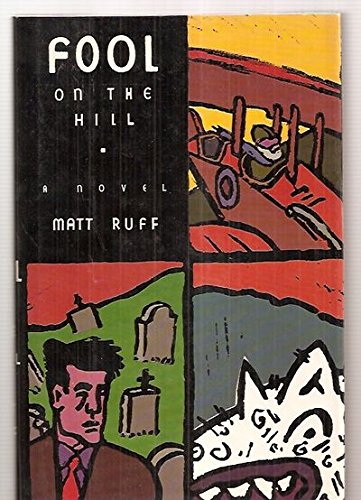
                • Cover of Fool on the Hill
                  Fool on the Hill

                  Matt Ruff · standalone novel · 1988

                  similar bycontemporaryfunnycoming of agenorth americafantasyhumor

                  Fool on the Hill is a 1988 comic fantasy novel by American writer Matt Ruff, set at Cornell University in Ithaca, New York.

                • Cover of Ma and Pa Dracula
                  Ma and Pa Dracula

                  Ann M. Martin · standalone novel · 1989

                  similar byvampirescontemporaryfantasyhumorfunnylighthearted+1 more

                  A fourth grader discovers that his adoptive parents are vampires and tries to convince them to let him go to school and have human friends.

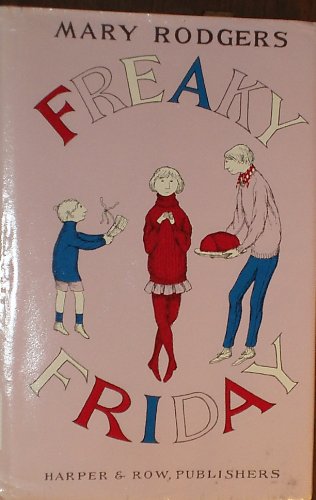
                • Cover of Andrews Family
                  Andrews Family

                  series · 3 books · 1972

                  completed

                  similar byfunnycoming of agelightheartedcontemporaryfantasynorth america+1 more

                  Mary Rodgers wrote a loose set of comic novels about one suburban family, each built around a different fantastical role-reversal: a mother and daughter swap bodies for a day in Freaky Friday, a boy discovers a television that shows tomorrow's news in A Billion for Boris, and a father and son trade places in Summer Switch. The books share characters and tone rather than a continuing plot.

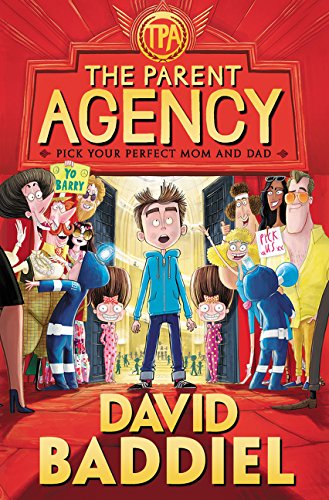
                • Cover of The Parent Agency
                  The Parent Agency

                  David Baddiel · standalone novel · 2014

                  similar bycontemporaryfunnyfantasyhumorlighthearted+2 more

                  The Parent Agency is a children's fiction novel written by David Baddiel and illustrated by Jim Field. It was published on 9 October 2014 by HarperCollins Children's Books. The book follows a 9-year-old boy named Barry Bennett, who gets transported to an alternate universe where children choose their parents. As of 2016, a film adaptation is in the works.

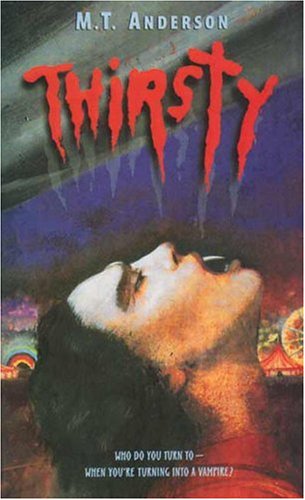
                • Cover of Thirsty
                  Thirsty

                  M. T. Anderson · standalone novel · 1997

                  similar byvampirescontemporarycoming of agenorth americayoung adult+1 more

                  Thirsty is a 1997 horror novel written by M. T. Anderson. It is set in modern Clayton, Massachusetts. The main character, Christopher, just wants a normal life; to date his crush Rebecca Schwartz, stay up late, and other teenager things. Unfortunately, Chris has much more to worry about than puberty — he also has to deal with his vampirism.

                • Cover of Coyote Blue
                  Coyote Blue

                  Christopher Moore · standalone novel · 1994

                  similar bycontemporaryfunnynorth americafantasyhumor+1 more

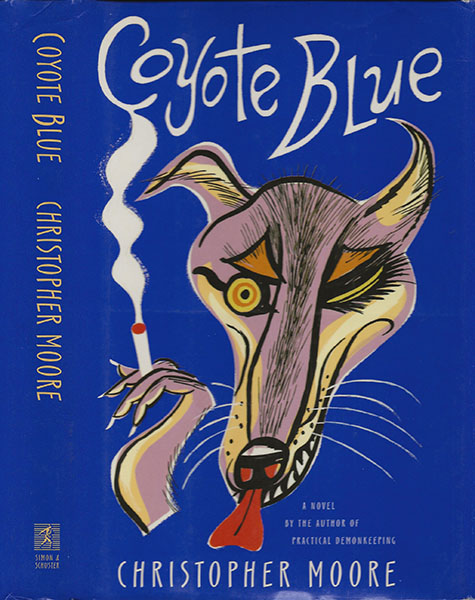
                  Coyote Blue is a novel by American writer Christopher Moore, published in 1994. It has been widely reviewed.

                • Cover of Hellhole
                  Hellhole

                  Gina Damico · standalone novel · 2015

                  similar bycontemporaryfunnynorth americafantasyhumoryoung adult+2 more

                  A devil is a bad influence... There was a time when geeky, squeaky-clean Max Kilgore would never lie or steal or even think about murder. Then he accidentally unearths a devil, and Max’s choices are no longer his own. The big red guy has a penchant for couch surfing and junk food—and you should never underestimate evil on a sugar high. With the help of Lore, a former goth girl who knows a thing or two about the dark side, Max is racing against the clock to get rid of the houseguest from hell before time, and all the Flamin’ Hot Cheetos this side of the fiery abyss, run out.

                • Cover of The Morganville Vampires
                  The Morganville Vampires

                  series · 40 books · 2006

                  completed

                  similar byvampirescontemporarynorth americayoung adult+2 more

                  The Morganville Vampires is a series of young adult urban fantasy/vampire novels written by Rachel Caine. The novels feature Claire Danvers, a student at Texas Prairie University, and her housemates in the vampire-controlled city of Morganville, Texas. While the mayor of Morganville is human, the population co-exist with a group of vampires. Morganville is also home to an unusually large number of second-hand thrift stores.

                • Cover of The Misadventures of Grayson
                  The Misadventures of Grayson

                  series · 2 books · 2025

                  similar bycontemporaryhumorfunnycoming of agenorth america+2 more

                • Cover of Drink, Slay, Love
                  Drink, Slay, Love

                  Sarah Beth Durst · standalone novel · 2011

                  similar byvampirescontemporarycoming of agefunnylightheartedyoung adult

                  Pearl is a sixteen-year-old vampire...fond of blood, allergic to sunlight, and mostly evil. That is until one night she encounters a unicorn and he stabs her through the heart with his horn. Oops. Her family doesn't believe her (because obviously unicorns don't exist), but when Pearl reveals she can now withstand the sun, they are thrilled. She can be enrolled in high school, make friends and then lure these tasty snacks to her family! But Pearl's change is deeper than her family realise. She has started to experience a number of alarming symptoms including feeling sympathy for her meals - the humans. While struggling with balancing high school, her family and her new conscience, Pearl learns that the Vampire King has a seriously evil plot in store for the local humans - and that her good-looking new friend Evan is the were-unicorn that stabbed her through the heart. Pearl is now the lynchpin between the vampires and their hunters, but which side of her will win? The bloodsucker or her conscience?

                • Cover of Harry the Book
                  Harry the Book

                  series · 16 books · 2007

                  completed

                  similar bycontemporaryhumorfunnyfantasylightheartednorth americabig city

                • Cover of With a Little Luck
                  With a Little Luck

                  Marissa Meyer · standalone novel · 2024

                  similar bycontemporarycoming of agenorth americafantasylightheartedyoung adult

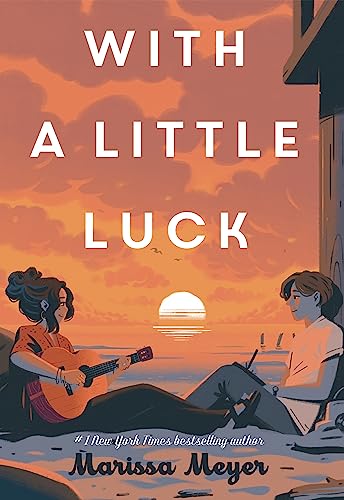
                  Jude is determined to fly under the radar. He just wants to draw his comics, host regular D&D night with his friends, work at his parents’ vinyl record store, and escape high school as unscathed as possible. That is, until the night he comes across a mysterious twenty-sided dice and finds himself inexplicably gifted with a bout of supernatural good luck. Suddenly, everything Jude has ever wanted is within reach. His first art submission is accepted to his favorite fanzine. He helps his friend’s song become a finalist in a songwriting competition. And he’s the 100th caller to a local radio contest, winning him a pair of coveted concert tickets, which he uses to ask out the popular girl he’s been crushing on since elementary school. For a few blissful weeks, he feels invincible. But when he loses the magic dice at a local music festival, his luck takes a turn for the worse. He struggles to reclaim his good fortune while fighting off long-buried feelings for his best friend―who is definitely not the girl he’s supposed to be in love with. Can Jude risk stepping into the spotlight long enough to win the true girl of his dreams? Or is he doomed to be unlucky in love forever?

                • Cover of Vampire Beach
                  Vampire Beach

                  series · 6 books · 2006

                  similar byvampirescontemporarycoming of agenorth americayoung adult+1 more

                  Vampire Beach is a series of teen vampire novels written by Alex Duval a pseudonym for the authors Melinda Metz and Linda J. Burns, published by Simon & Schuster. The series follows Jason, a human whose family moves out to Malibu. Jason learns that the hottest clique in Malibu are actually all vampires. The series was originally published in 2006, and was re-published in 2010 with updated cover art. It differs from many teen vampire series as it is told from Jason's point of view.

                • Cover of George Brown, Class Clown
                  George Brown, Class Clown

                  series · 12 books · 2010

                  similar bycontemporaryhumorfunnylightheartedfantasy+2 more

                • Cover of Moth (Karen Mahoney)
                  Moth (Karen Mahoney)

                  series · 3 books · 2009

                  similar byvampirescontemporarycoming of agefantasynorth americayoung adult+1 more

                • Cover of Be More Chill
                  Be More Chill

                  Ned Vizzini · standalone novel · 2004

                  similar bycontemporarycoming of agenorth americahumorfunnyyoung adult

                  Be More Chill is a novel written by American author Ned Vizzini and published on June 1, 2004. It follows unpopular high school student and social outcast Jeremy Heere, who is considered a loser by his peers. Deeply unsatisfied with his poor reputation and lack of romantic and sexual progress with his crush Christine, Jeremy obtains a SQUIP, a supercomputer in the form of a pill that travels to his brain upon ingestion and radically transforms Jeremy’s behavior and social status by giving him advice on how to be cool. The book was received positively for its amusing premise, plot, and humor. It has been adapted into a popular stage musical and a graphic novel.