More like Fearless
anchored on:science fictionnear futureyoung adultdystopia
but
- A Clockwork Orange
series4 books1962
completed
similar bydarkour worldscience fictionnear futuredystopiasurveillance+1 more
Anthony Burgess's 1962 novel is narrated by Alex, a teenage gang leader in a near-future Britain gripped by a youth subculture of extreme violence, recounting his crimes in Nadsat, an invented slang blending English with Russian-derived words. After his crimes catch up with him, Alex is made the subject of a controversial state program meant to forcibly reform his behavior, and the novel uses his ordeal to question whether imposed goodness is worth the loss of free will. It is a standalone novel.
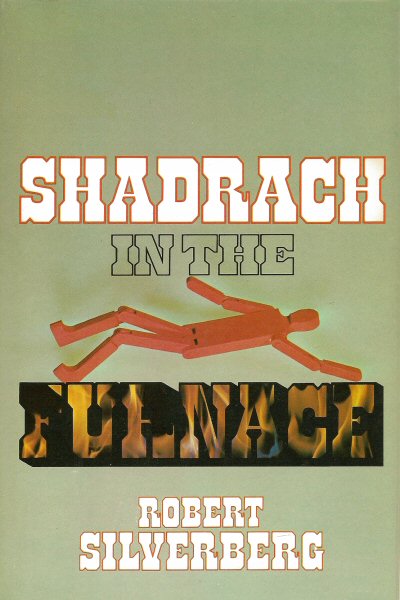
- Shadrach in the Furnace
Robert Silverbergstandalone novel1976
similar bydarkour worldnear futurescience fictiondystopiaidentity+3 more
Shadrach in the Furnace is a science fiction novel by American writer Robert Silverberg, first published as a serial in Analog Science Fiction and Fact magazine in the August, September, and October 1976 issues. It was subsequently published by Bobbs Merrill in 1976. The novel was nominated in 1976 for the Nebula Award, and in 1977 for the Hugo Award.
- Library of America P. K. Dick Collection
series9 books1962
completed
similar byscience fictionnear future+4 more
- Uglies Universe
series9 books2005
similar byscience fictiondystopianear futureyoung adult+6 more
Scott Westerfeld's Uglies series is set roughly three centuries in the future, after industrial collapse, in a society that classifies everyone by mandatory cosmetic-surgery life stages - Uglies, Pretties, Middle Pretties, and Crumblies - policed by the surveillance division Special Circumstances. Tally Youngblood, the original tetralogy's protagonist, initially awaits her own operation before learning it also surgically dulls independent thought, driving her toward the hidden resistance community called the Smoke. Beyond the four core novels (Uglies, Pretties, Specials, Extras), the franchise extends into other formats, including the manga-influenced graphic novel Shay's Story, co-written with Devin Grayson, and a later Impostors spin-off series.
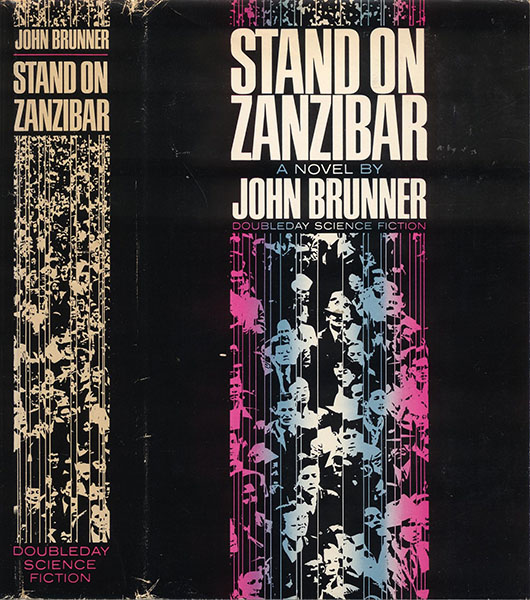
- Stand on Zanzibar
John Brunnerstandalone novel1968
similar bydarkour worldnear futurescience fictiondystopiasurveillance+1 more
Stand on Zanzibar is a dystopian New Wave science fiction novel written by John Brunner and first in part published in New Worlds magazine in 1967 and in book form in 1968. The book won a Hugo Award for Best Novel at the 27th World Science Fiction Convention in 1969, as well as the 1969 BSFA Award and the 1973 Prix Tour-Apollo Award.
- Blade Runner Universe
series6 books1968
similar bydarknear futurescience fictionidentity+2 more
Philip K. Dick's 1968 novel Do Androids Dream of Electric Sheep? follows bounty hunter Rick Deckard as he tracks escaped androids through an irradiated, near-abandoned San Francisco, using the hunt to probe questions of empathy and what separates human from machine. The novel became the basis for Ridley Scott's 1982 film Blade Runner, and Marvel Comics later published an illustrated adaptation of that film. Together the two trace the story's path from prose original to screen and comic-page adaptation.
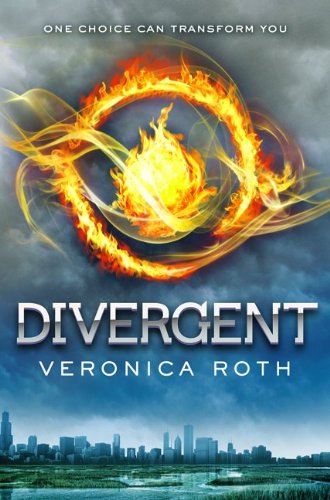
- Divergent
series10 books2011
similar bynear futurescience fictiondystopiaidentityyoung adulttense+2 more
Divergent, also known as The Divergent Series, is a series of young adult dystopian novels by American novelist Veronica Roth set in a post-apocalyptic dystopian Chicago. The trilogy consists of Divergent (2011), Insurgent (2012), and Allegiant (2013). A related book, Four (2014), presents a series of short stories told from the perspective of one of the trilogy's characters, the male love interest Tobias. A later short story, We Can Be Mended (2018), serves as an epilogue five years after the events of the trilogy, again from Tobias/Four's perspective.
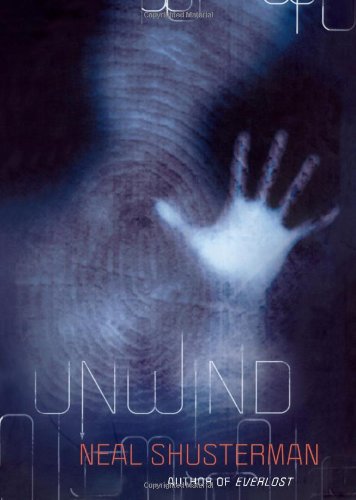
- Unwind Dystology
series5 books2007
similar bydarknear futurescience fictiondystopiarebellion and revolutionyoung adulttense+2 more
Neal Shusterman's Unwind Dystology opens in a United States reshaped by the resolution to a war over reproductive rights: parents can retroactively have a teenager "unwound," their body disassembled for transplant on the premise that nothing technically dies since every part lives on in someone else. The first novel follows three teens fleeing that fate, and the sequels widen the same dystopia's cast and consequences across a four-book arc plus companion material. It is grim speculative fiction built to ask hard bioethical questions rather than offer comfort.
- Space Merchants
series2 books1953
completed
similar bydarknear futurescience fictiondystopia+1 more
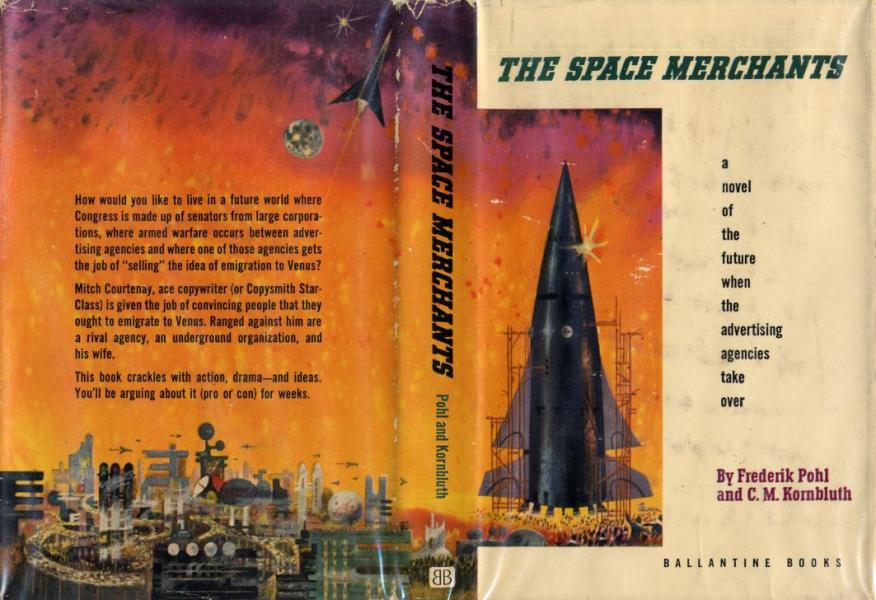
The Space Merchants (1953) is a satirical science fiction novel by Frederik Pohl and C. M. Kornbluth that follows an advertising executive navigating a future where aggressive consumer capitalism has swallowed politics and daily life. The authors reunited three decades later for a direct sequel, The Merchants' War (1984), returning to the same satirical world. Together the two books form a compact bookend pair rather than an ongoing series.
- The Program
series7 books2013
similar byour worldnear futurescience fictiondystopiaidentityyoung adulttense+3 more
- Poster Girl
Veronica Rothstandalone novel2022
similar byour worldnear futurescience fictiondystopia+1 more
- Shade's Children milieu
series2 books1997
similar bydarknear futurescience fictiondystopiarebellion and revolutionyoung adulttense+1 more
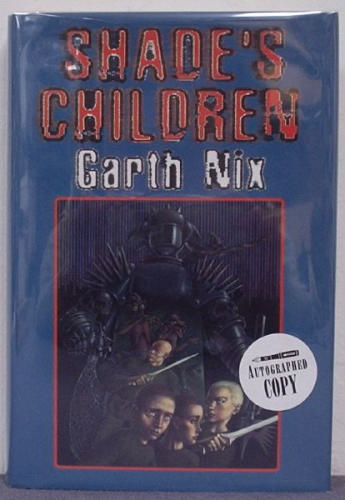
Shade's Children is set on an Earth where all adults vanished overnight fourteen years earlier, leaving children to be harvested at puberty by the machines that now run the world, unless they escape into hiding with Shade, a mysterious AI-like protector. Garth Nix's 1997 novel is a single, self-contained book rather than a series, though its bleak post-apocalyptic premise has drawn comparisons to his other work.
- Brave New World
series8 books1932
similar byscience fictiondystopia+4 more
Aldous Huxley's 1932 novel imagines a future World State where reproduction, social caste, and desire are all engineered before birth, and the population is kept content through conditioning, sleep-hypnosis, and a mood-altering drug called soma. The story follows the disruption this seemingly stable order suffers when an outsider raised beyond its reach is brought into it, exposing what the society traded away for comfort and order. Some editions pair the novel with Huxley's own 1958 nonfiction essay collection, Brave New World Revisited, which reassesses the book's ideas rather than continuing its story.
- This Perfect Day
Ira Levinstandalone novel1970
similar bydarkour worldscience fictiondystopiaidentityrebellion and revolutiontense+1 more
This Perfect Day is a science fiction novel by American writer Ira Levin, about a technocratic dystopia. Levin won a Prometheus Award in 1992 for this novel. This Perfect Day is one of two Levin novels yet to be adapted to film.
- Ship Breaker
series3 books2010
similar bydarkscience fictionnear futureyoung adulttense+4 more
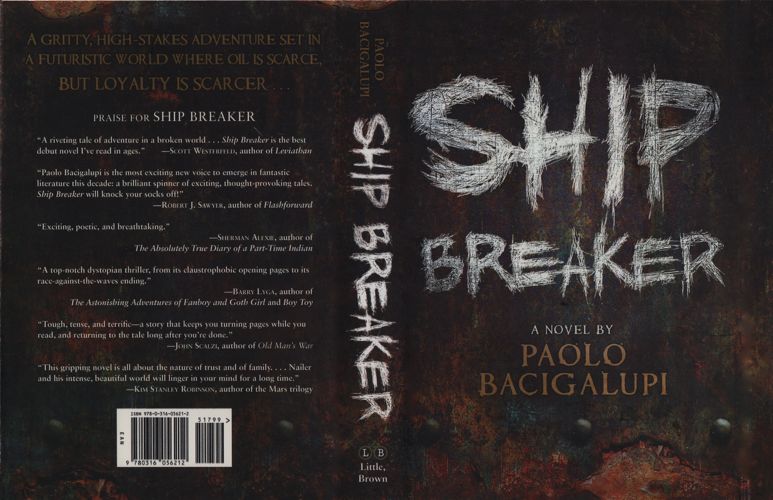
Nailer works a light-crew scavenging copper wire and scrap from beached oil tankers on a Gulf Coast reshaped by rising seas and vanished order, until a wrecked clipper ship washes ashore carrying a half-drowned girl from the wealthy world he'll never belong to. Paolo Bacigalupi's Ship Breaker follows Nailer as helping her pulls him out of his abusive father's orbit and into a much larger, more dangerous game involving her family's fortune. The sequels The Drowned Cities and Tool of War widen the same flooded, resource-scavenging future to new characters and coastlines.
- The Handmaid's Tale
series3 books1985
similar bydarknear futurescience fictiondystopiarebellion and revolutiontense+1 more
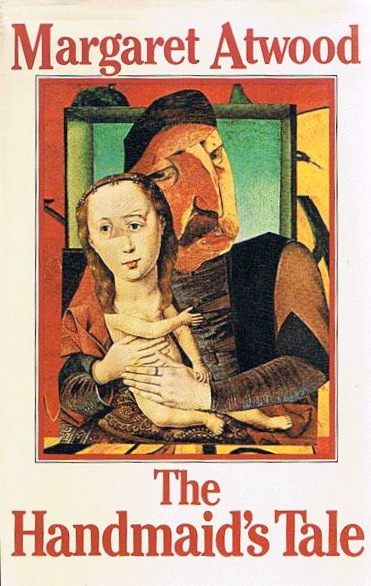
The Handmaid's Tale is Margaret Atwood's 1985 novel set in Gilead, a totalitarian theocracy that has overthrown the United States and forces fertile women into reproductive servitude as Handmaids; it is narrated by one such woman, Offred. Atwood returned to the world in her 2019 sequel The Testaments, set fifteen years later and narrated by three women, including the regime's Aunt Lydia. Together the two novels move from Gilead's grip on power toward the first cracks in it.
- Fahrenheit 451
series2 books1951
completed
similar byscience fictiondystopianear future+3 more
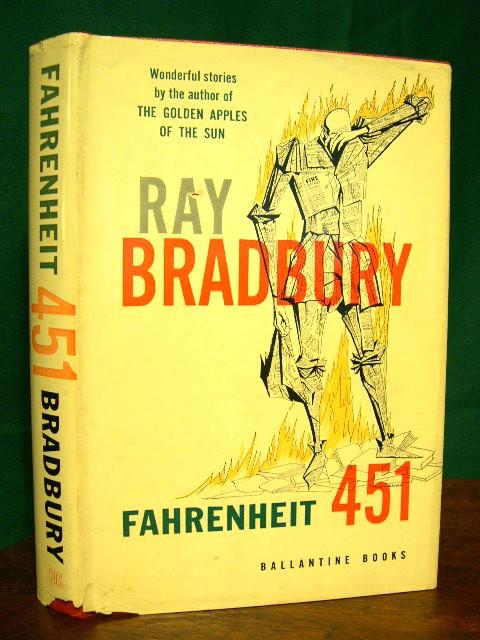
Fahrenheit 451 began life as "The Fireman," a novella Ray Bradbury published in 1951, which he then expanded into the full novel released in 1953 under its now-famous title. Set in a future where books are outlawed and firemen exist to burn them, it follows fireman Guy Montag as doubts about his job push him toward the very literature he's supposed to destroy. The novella and novel are one story's evolution rather than two separate books.
- Juliette / Shatter Me
series16 books2011
similar bynear futurescience fictiondystopiayoung adult+3 more
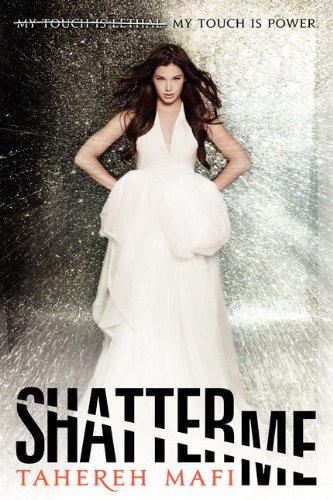
Tahereh Mafi's Shatter Me series follows Juliette, a teenager whose touch is lethally dangerous, in a dystopian future. The debut novel, Shatter Me (2011), is written in a fragmented, diary-like style with crossed-out lines reflecting its narrator's state of mind; the series has since grown to seven novels plus five companion novellas.
- Shadow Children
series7 books1998
similar bydarknear futurescience fictiondystopiatenseyoung adult+2 more
Shadow Children is a series of seven books by Margaret Peterson Haddix about a dystopian country which suffers food shortages due to a drought and the effects of the government's totalitarian attempts to control resources as a way to solidify its power. The Population Police enforce the government's Population Law, killing or imprisoning "shadow children," any child born after their first two siblings. In some cases, a parent may choose to forge a child's identification card so a shadow child can live a normal life.
- Maddie
series3 books2011
similar byour worldnear futurescience fictiondystopiasurveillanceyoung adulttense+2 more
- Maze Runner
series11 books2009
similar byscience fictionnear futuredystopiayoung adulttense+2 more
The Maze Runner is a series of young adult dystopian science fiction novels written by American author James Dashner. The series consists of the trilogy The Maze Runner (2009), The Scorch Trials (2010) and The Death Cure (2011), as well as two prequel novels, The Kill Order (2012) and The Fever Code (2016). A novella titled Crank Palace (2020) and a companion book titled The Maze Runner Files (2013) have also been released. A sequel trilogy in the series titled The Maze Cutter takes place 73 years following the events of The Death Cure and consists of the novels The Maze Cutter (2022), The Godhead Complex (2023), and The Infinite Glade (2025).
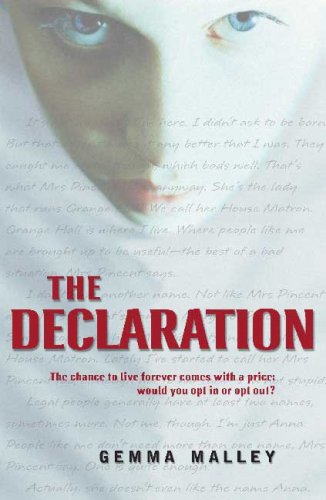
- The Declaration
series4 books2007
similar bydarkour worldscience fictionnear futuredystopiayoung adulttense+1 more
- Feed
M. T. Andersonstandalone novel2002
similar bydarknear futurescience fictiondystopiasurveillanceyoung adult+1 more
Feed (2002) is a cyberpunk, satirical, dystopian, young-adult novel by M. T. Anderson, focusing on issues such as American hegemony, corporate power, consumerism, information technology, data mining, and environmental decline, with a sometimes sardonic, sometimes somber tone. From the first-person perspective of a teenaged boy, the book takes place in a near-futuristic American culture completely dominated by advertising and corporate exploitation, corresponding to the enormous popularity of internetworking brain implants called feeds.