Loreful
HomeDiscover
Search series, authors…⌘K
Loreful

Reading orders for SF/F series and shared universes — with your place kept in every one.

Explore

UniversesSeriesWorksAuthorsAtlas

Help

FAQAboutSite map

Account & legal

Sign inCreate accountPrivacyTerms

Data

Built on ISFDB, Wikipedia, Wikidata and Open Library. Curated reading orders carry their reasoning on the page; the rest follow publication order. Data sources & licenses

© Loreful · data: ISFDB · CC BY

More like Ferman's Devils

but

Mood

The mood the book leaves you in.

  • The reading experience is propelled by journeys, exploration, and physical risk; excitement and forward momentum dominate over dread or introspection.
  • Joy and loss are deliberately mixed; the resolution grants characters something real while taking something else away, leaving warmth and sorrow together.
  • The book demands work from the reader — dense prose, difficult structure, unfamiliar ideas, or morally uncomfortable material — as part of its intended effect.
  • Grim events, cruelty, or despair dominate the atmosphere, and the book does not soften them with comfort or comic relief.
  • The atmosphere is quietly unsettling — wrongness, unease, and the uncanny pervade the book without necessarily escalating into overt horror.
  • The book is built to move the reader; character feeling is foregrounded and major scenes aim at a strong emotional response.
  • Humor is a primary aim and the prose plays for laughs — comic situations, wit, or dialogue produce sustained comedy, not occasional levity.
  • The book insists that things can improve; effort and decency are shown to matter, and the arc bends toward better outcomes even through hardship.
  • The book teaches as it goes — real facts, history, science, or craft are conveyed in enough depth that learning is part of the reading experience.
  • The book is designed to uplift and motivate, presenting perseverance or achievement in a way that invites the reader to aspire or act.
  • The overall register is cheerful and easygoing; stakes are kept gentle and the book avoids dwelling on pain or dread.
  • Withheld information drives the experience; the book sustains enigmas and secrets the reader wants resolved, whatever its genre.
  • The book is contemplative and inward-looking, giving more weight to thought, memory, and meaning than to external events.
  • The book works as comfort reading — low tension, a soothing pace, and an atmosphere the reader can unwind in.
  • Grief, loss, or melancholy set the dominant register, and the book lets sorrow stand rather than resolving it into comfort.
  • Sustained suspense is the point; the book keeps the reader braced for what happens next through danger, pressure, or impending revelation.
  • Playful invention and charm define the register — fanciful conceits, light absurdity, and a narration that delights in its own oddity.

About

What the story runs on.

  • Stories in which extraterrestrial beings are central — as characters, cultures, or the object of the plot.
  • Stories about venturing into space to explore — survey missions, astronauts, and the frontier of the unknown beyond Earth.
  • Stories structured as a quest — a journey undertaken to find, deliver, or destroy something of great import.
  • Stories in which staying alive against nature, catastrophe, or scarcity is the central problem.
  • Stories of lovers kept apart by law, family, faith, or station, where the obstacle to love is the plot.
  • Stories of growing up — a young protagonist crossing from childhood into adult knowledge and responsibility.
  • Stories about who a character truly is — self-discovery, doubled lives, and the search for a self.
  • Stories about mourning — living through the death of a loved one and what loss does to the survivors.
  • Stories in which a buried family truth — hidden parentage, crimes, or shames — surfaces and reorders the present.
  • Stories driven by maneuvering for power — factions, conspiracies, and statecraft conducted in shadow.
  • Stories in which war itself is the subject — combat, occupation, and what warfare does to soldiers and civilians.
  • Stories organized around investigating a killing — the case, the clues, and the pursuit of the killer, in any genre's clothing.

Shelf

Where it sits in the library.

    • Fiction built on magic or other supernatural elements that have no scientific explanation.
    • Secondary-world fantasy at large scale, where the fate of nations or the world turns on the protagonists' struggle.
    • Fantasy set in a recognizably modern city or contemporary world where the supernatural intrudes on everyday life.
    • Fantasy that blends in horror's atmosphere and imagery, keeping a fantastical frame around grim or frightening material.
    • Action-driven fantasy following warriors or rogues with personal stakes against sorcerous threats, rather than world-spanning conflicts.
    • Fantasy set in a real historical period or a close analogue of one, with magic woven into the era.
    • Fantasy in which protagonists cross from the ordinary world into another world through a portal or similar passage.
    • Fiction that retells or reworks a traditional fairy tale in a new form or setting.
    • Fantasy drawing directly on myths, legends, and folklore, retelling them or building on their figures and logic.
    • Fantasy of ghosts, vampires, shapeshifters, psychics, and similar phenomena, usually set in an otherwise ordinary world.
    • Fiction mixing science-fictional trappings with overtly magical or impossible elements in one setting.
    • Low-stakes fantasy emphasizing comfort, community, and everyday pleasures over conflict and peril.
    • Speculative fiction of pervasive moral ambiguity, violence, and cynicism that rejects heroic conventions — fantasy and SF alike.
      • Fiction that extrapolates from science and technology — future societies, space travel, or speculative inventions — within at least nominally natural laws.
      • Science fiction of interstellar scope — starships, galactic polities, and adventure across star systems.
      • Science fiction committed to scientific rigor, where technical plausibility constrains the story.
      • Science fiction centered on armed forces and warfare, told largely from a military point of view.
      • Science fiction of networked, corporate-dominated near futures, pairing high technology with social decay.
      • Science fiction styled on nineteenth-century steam-powered technology, often in a Victorian or pseudo-Victorian setting.
      • Fiction depicting an oppressive or catastrophic society, presented as a warning.
      • Fiction set after civilization's collapse, following survivors in the ruins of the old world.
      • Fiction in which characters move between past and future, and the mechanics or consequences of that travel drive the plot.
      • Fiction exploring a world where a historical event went differently and history diverged from ours.
      • Science fiction about humanity's first encounter and communication with an alien intelligence.
      • Science fiction in which extraterrestrial forces attack or occupy Earth and humanity resists.
      • Fiction whose primary aim is to frighten or unsettle the reader through dread, menace, or the monstrous.
      • Horror of vast, indifferent, incomprehensible entities before which humanity is insignificant, in the Lovecraft tradition.
      • Horror of decaying houses, buried family secrets, and oppressive atmosphere in the Gothic literary tradition.
      • Horror centered on hauntings and the returning dead.
      • Horror located in the mind — paranoia, obsession, and unreliable perception rather than external monsters.
      • Horror built around the reanimated dead and survival amid their outbreaks.
      • Horror defined by explicit, transgressive gore that refuses to cut away from violence.
      • Speculative fiction of the strange and uncanny that resists both natural explanation and standard genre categories.
      • Fiction organized around solving a crime or puzzle, typically following an investigator toward the identification of a culprit.
      • A puzzle-first mystery that lays out clues so the culprit's identity can be deduced before the reveal.
      • Crime fiction of moral ambiguity, fatalism, and hard-edged style, set among the corrupt and the doomed.
      • A mystery following the realistic routines of police work — forensics, interviews, and case-building.
      • A gentle mystery with an amateur sleuth, a small community, and violence kept off the page.
      • A mystery set in a past era, where the investigation works within that period's methods and society.
      • Fast-paced fiction driven by imminent danger, pursuit, or high-stakes conspiracy, built to sustain tension.
      • A thriller of espionage — agents, tradecraft, and intelligence services in conflict.
      • A thriller centered on lawyers and the courtroom, where litigation carries the suspense.
      • A thriller driven by detailed contemporary or near-future technology, often military or scientific.
      • A thriller whose tension comes from mental states and manipulation between characters rather than external action.
      • Fiction whose central plot is a romantic relationship and its development toward an emotionally satisfying resolution.
      • Romance in which one or both partners are supernatural beings, blending fantasy elements into the love story.
      • A fantasy-romance hybrid in which the romantic arc and the fantasy plot carry equal weight.
      • Romance set in a past era, with courtship shaped by the period's society and manners.
      • Romance set in the present day, without supernatural or historical elements.
      • Fiction set in a real past period, where the historical setting materially shapes characters and events.
        • General and literary fiction emphasizing prose style, character interiority, or formal ambition over genre plot conventions.
        • Fiction in a realistic world where magical events occur and are treated as ordinary, in the tradition of Latin American literature.
        • Fiction that ridicules people, institutions, or society in order to criticize them.
        • Fiction of dreamlike, irrational imagery and logic that breaks from realistic representation.
        • Fiction that plays with narrative convention through metafiction, fragmentation, and self-reference.
        • Fiction propelled by journeys, exploration, and physical peril, where action and survival carry the plot.
        • Adventure fiction of ships and seafaring — naval engagements, voyages, and life at sea.
        • Fiction of the American frontier West — gunmen, ranchers, and lawmen, typically in the late nineteenth century.
        • Fiction centered on soldiers, campaigns, and the experience of warfare, historical or imagined.
          • Fiction written primarily to amuse, using comedic situations, wit, or parody as its organizing principle.
            • Multi-generational fiction following a family or dynasty across decades, with inheritance and kinship as the through-line.
              • Fiction whose world runs on explicit game mechanics — levels, stats, and skills that characters can see and exploit.
                • Fiction about costumed or superpowered heroes and their conflicts with comparable villains.

                Practical

                How long a commitment, whether it stands alone, and whether it has finished.

                Tap a chip to ask for it · tap again to rule it out · once more to clear. Numbers show what would be left.

                • Cover of Rosemary Reilly
                  Rosemary Reilly

                  series · 2 books · 1967

                  completed

                  similar bydemonsbig city+3 more

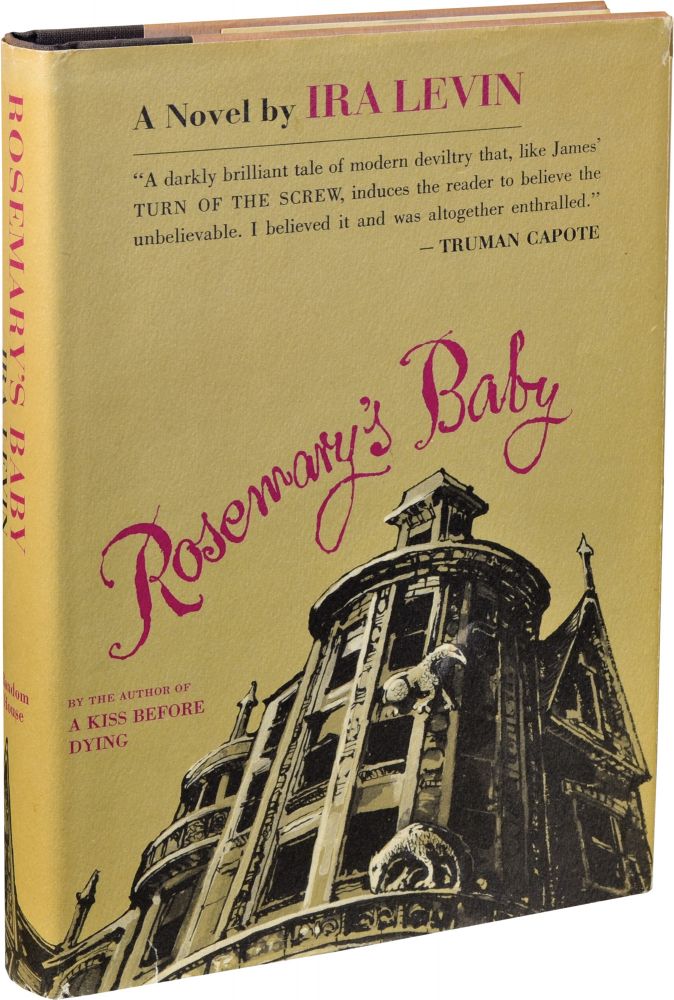
                  Rosemary's Baby follows a young wife in a Gothic Manhattan apartment building who grows increasingly convinced that her elderly neighbors, and even her own husband, are part of a conspiracy surrounding her pregnancy. Ira Levin returned to the character thirty years later in the 1997 sequel Son of Rosemary. Together the two novels form a short, self-contained horror series about faith, control, and motherhood.

                • Cover of Quantum Gravity
                  Quantum Gravity

                  series · 6 books · 2006

                  similar bynear future+3 more

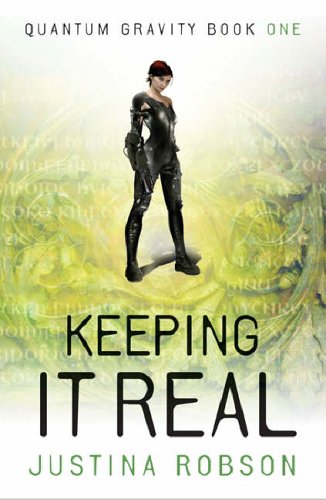
                  Justina Robson's Quantum Gravity series opens with Keeping It Real, set six years after a catastrophic 'Quantum Bomb' tore open the boundaries between Earth and other dimensions, leaving humans in uneasy contact with elves, elementals, and demons. The series follows cyborg special agent Lila Black across five novels as magic and technology collide.

                • Cover of H. G. Wells' War of the Worlds
                  H. G. Wells' War of the Worlds

                  universe · 65 books · 1898

                  Start hereThe War of the Worlds · Start here

                  similar byscience fiction+1 more

                  No one would have believed, in the closing years of the nineteenth century, that human affairs were being watched keenly and closely from the timeless worlds of space. And then the cylinders fell. H. G. Wells' War of the Worlds opens in the quiet of the Surrey commons, where a falling star proves to be the first Martian craft — and from the pit rise the towering tripods, the Heat-Ray, the choking Black Smoke and the creeping red weed, wielded by minds that regard mankind much as we regard the creatures we boil for supper. This is invasion rendered as natural disaster: cold, methodical, and vast beyond argument. Wells' 1898 novel is the seed; everything else grows from that Martian soil. The catalogue gathers direct sequels and continuations alongside a wide field of other hands. In War of the Worlds: Global Dispatches the invasion is retold across the whole planet through the eyes of Twain, Verne, Tolstoy, Lowell and Kipling; in the Manly Wade and Wade Wellman crossover, Sherlock Holmes, Watson and Professor Challenger take the field against the machines; and Scott Washburn's Great Martian War stretches the fighting into a decades-long alternate history of steam, artillery and grinding attrition. It is a loose shared world — no single decreed sequence, many voices answering one calamity. What sets this world apart is its refusal of heroics: the invaders fall not to generals but to the smallest things of Earth, humbling and indifferent. Begin, always, with Wells' original novel — it is short, and it is the ground every later book stands upon. From there follow your appetite: Global Dispatches for the panorama, the Holmes campaign for adventure, Washburn for the long war.

                • Cover of A Clockwork Orange
                  A Clockwork Orange

                  series · 4 books · 1962

                  completed

                  similar byscience fictiondarknear futureour worldbig city

                  Anthony Burgess's 1962 novel is narrated by Alex, a teenage gang leader in a near-future Britain gripped by a youth subculture of extreme violence, recounting his crimes in Nadsat, an invented slang blending English with Russian-derived words. After his crimes catch up with him, Alex is made the subject of a controversial state program meant to forcibly reform his behavior, and the novel uses his ordeal to question whether imposed goodness is worth the loss of free will. It is a standalone novel.

                • Cover of After Such Knowledge
                  After Such Knowledge

                  series · 7 books · 1953

                  completed

                  similar by+4 more

                  After Such Knowledge is James Blish's loosely linked trilogy on the costs of forbidden or dangerous knowledge. It opens with A Case of Conscience, in which a Jesuit scientist studying a seemingly sinless alien race is forced to weigh what he finds against his own faith, continues with the historical novel Doctor Mirabilis about the medieval friar and scientist Roger Bacon, and closes with the two-part Black Easter, in which a magician is hired to loose Hell's demons upon the world for a single day. The three books share a theme rather than a continuous plot or cast.

                • Cover of Cosmic Trilogy (C. S. Lewis)
                  Cosmic Trilogy (C. S. Lewis)

                  series · 4 books · 1938

                  completed

                  similar byscience fiction+2 more

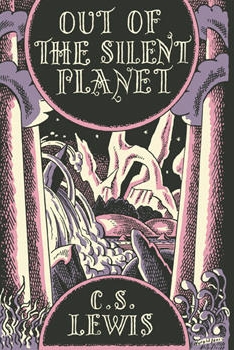
                  The Space Trilogy is a series of science fiction novels by British writer C. S. Lewis. The trilogy consists of Out of the Silent Planet (1938), Perelandra (1943), and That Hideous Strength (1945). A philologist named Elwin Ransom is the protagonist of the first two novels and an important character in the third.

                • Cover of Blade Runner Universe
                  Blade Runner Universe

                  series · 6 books · 1968

                  similar byscience fictiondarknear futurebig city+1 more

                  Philip K. Dick's 1968 novel Do Androids Dream of Electric Sheep? follows bounty hunter Rick Deckard as he tracks escaped androids through an irradiated, near-abandoned San Francisco, using the hunt to probe questions of empathy and what separates human from machine. The novel became the basis for Ridley Scott's 1982 film Blade Runner, and Marvel Comics later published an illustrated adaptation of that film. Together the two trace the story's path from prose original to screen and comic-page adaptation.

                • Cover of Stand on Zanzibar
                  Stand on Zanzibar

                  John Brunner · standalone novel · 1968

                  similar byscience fictiondarknear futureour worldbig city

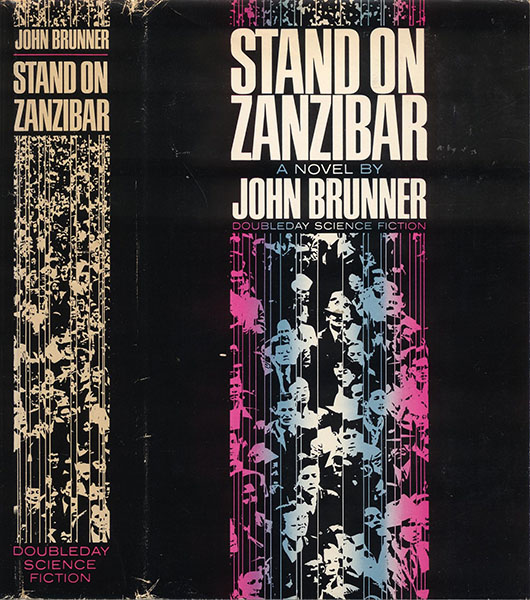
                  Stand on Zanzibar is a dystopian New Wave science fiction novel written by John Brunner and first in part published in New Worlds magazine in 1967 and in book form in 1968. The book won a Hugo Award for Best Novel at the 27th World Science Fiction Convention in 1969, as well as the 1969 BSFA Award and the 1973 Prix Tour-Apollo Award.

                • Cover of Library of America P. K. Dick Collection
                  Library of America P. K. Dick Collection

                  series · 9 books · 1962

                  completed

                  similar byscience fictionnear future+2 more

                • Cover of Crescent City (Sarah J. Maas)
                  Crescent City (Sarah J. Maas)

                  series · 3 books · 2020

                  similar by+1 more

                  Crescent City follows Bryce Quinlan, a half-Fae, half-human young woman in the magical city of Lunathion, whose life is upended by a violent murder and pulls her into an uneasy partnership with the fallen angel Hunt Athalar as they dig into a conspiracy reaching into the city's ruling powers. Sarah J. Maas set the trilogy — House of Earth and Blood, House of Sky and Breath, House of Flame and Shadow — in Midgard, a world built separately from her earlier series, with political intrigue and romance driving events as much as the mystery.

                • Cover of The Mayfair Witches Saga
                  The Mayfair Witches Saga

                  series · 3 books · 1990

                  completed

                  similar bydark+1 more

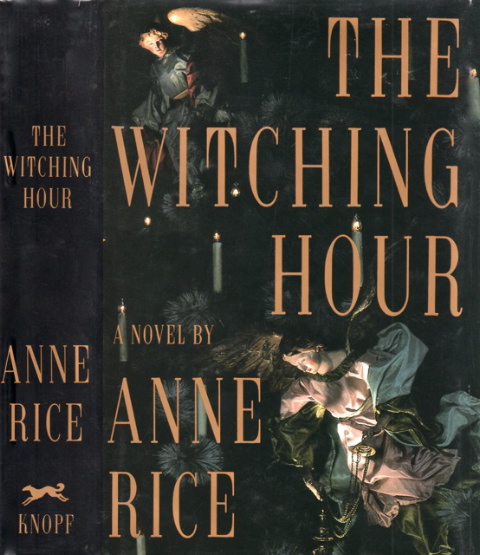
                  Lives of the Mayfair Witches is a trilogy of Gothic supernatural horror fantasy novels by American author Anne Rice. It centers on a family of witches whose fortunes have been guided for generations by a spirit named Lasher. The series began in 1990 with The Witching Hour, which was followed by the sequels Lasher (1993) and Taltos (1994). All three novels debuted at No. 2 on The New York Times Best Seller list.

                • Cover of Sprawl Trilogy
                  Sprawl Trilogy

                  series · 10 books · 1981

                  similar byscience fictiondarknear futurebig city

                  The Sprawl Trilogy is William Gibson's foundational cyberpunk sequence: Neuromancer (1984), in which hacker Case is drawn into a high-stakes heist alongside an artificial intelligence and a damaged ex-soldier, followed by Count Zero (1986) and Mona Lisa Overdrive (1988), which widen the same near-future world of corporate power and networked cyberspace to new characters. Johnny Mnemonic, an early short story set in the same fictional milieu, predates the novels and introduces the courier Molly Millions before her role in the trilogy. Together these works established much of cyberpunk's visual and thematic vocabulary.

                • Cover of Divergent
                  Divergent

                  series · 10 books · 2011

                  similar byscience fictionnear futurebig city+1 more

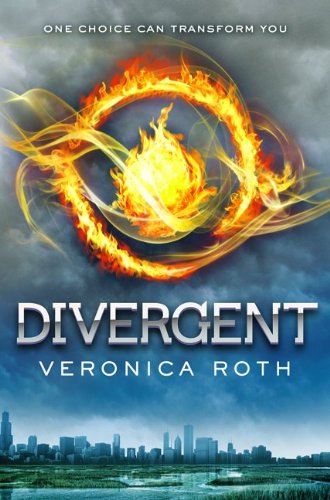
                  Divergent, also known as The Divergent Series, is a series of young adult dystopian novels by American novelist Veronica Roth set in a post-apocalyptic dystopian Chicago. The trilogy consists of Divergent (2011), Insurgent (2012), and Allegiant (2013). A related book, Four (2014), presents a series of short stories told from the perspective of one of the trilogy's characters, the male love interest Tobias. A later short story, We Can Be Mended (2018), serves as an epilogue five years after the events of the trilogy, again from Tobias/Four's perspective.

                • Cover of Make Room! Make Room!
                  Make Room! Make Room!

                  Harry Harrison · standalone novel · 1966

                  similar byscience fictiondarknear futureour worldbig city

                  Make Room! Make Room! is a 1966 science fiction novel written by Harry Harrison exploring the consequences of both unchecked population growth on society and the hoarding of resources by a wealthy minority. It was originally serialized in Impulse magazine.

                • Cover of Fahrenheit 451
                  Fahrenheit 451

                  series · 2 books · 1951

                  completed

                  similar byscience fictionnear future+1 more

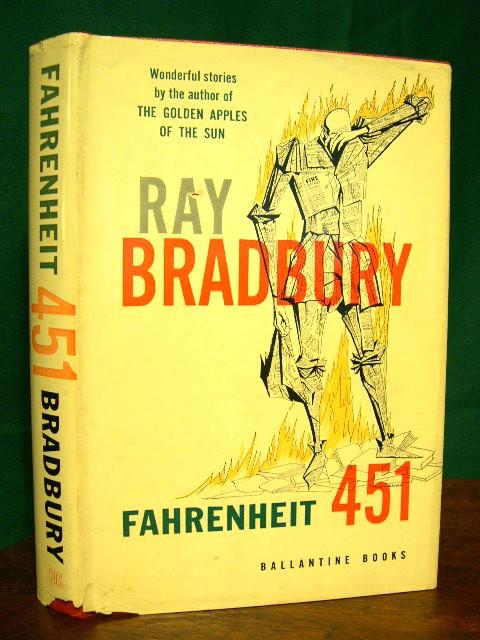
                  Fahrenheit 451 began life as "The Fireman," a novella Ray Bradbury published in 1951, which he then expanded into the full novel released in 1953 under its now-famous title. Set in a future where books are outlawed and firemen exist to burn them, it follows fireman Guy Montag as doubts about his job push him toward the very literature he's supposed to destroy. The novella and novel are one story's evolution rather than two separate books.

                • Cover of His Dark Materials Universe
                  His Dark Materials Universe

                  universe · 13 books · 1995

                  Start hereHis Dark Materials · Start here

                  In a world like ours and unlike it, every human soul walks outside the body in the shape of an animal — a daemon, who speaks, who cannot be lied to, and who settles into one fixed form only when childhood ends. This is the country of His Dark Materials: a company of parallel worlds across which an invisible dust of consciousness drifts down upon the waking mind; where a Church that calls itself the Magisterium would sooner sever a child's soul than let that Dust be understood; and where a golden instrument, the alethiometer, answers true questions for anyone with the patience to read it. Philip Pullman's design stands in two trilogies and a scatter of shorter tales. His Dark Materials — Northern Lights (published in America as The Golden Compass), The Subtle Knife, and The Amber Spyglass — carries Lyra Belacqua from the rooftops of a shadow Oxford across the borders between worlds. The Book of Dust returns to that same territory: La Belle Sauvage looks back to Lyra as an infant carried through a great flood, while The Secret Commonwealth follows her grown and less certain into adulthood, with a concluding volume closing the arc. Around them sit slim companion books — Lyra's Oxford, Once Upon a Time in the North, Serpentine — and Nicholas Wright's stage adaptation, made with Pullman's blessing. The register is grave and luminous at once, its title lifted from Milton and its quarrel drawn from Blake: a story that takes the side of curiosity, love, and the physical world against any authority that would forbid them. It reads as adventure — armoured bears, aeronauts, knife-cut windows between skies — yet reasons like philosophy. Begin with Northern Lights / The Golden Compass and read the first trilogy through before turning to The Book of Dust, which deepens everything the first has already made you feel.

                • Cover of Anisian Convergence
                  Anisian Convergence

                  series · 5 books · 2022

                  similar byscience fiction+2 more

                • Cover of The Windup Universe
                  The Windup Universe

                  series · 3 books · 2005

                  similar byscience fictiondarknear futureour world+1 more

                • DU
                  Deepgate Universe

                  series · 5 books · 2006

                  similar bydark+3 more

                • QL
                  Quantum Logic

                  series · 7 books · 1990

                  completed

                  similar byscience fictionnear future

                • Cover of Demons
                  Demons

                  John Shirley · standalone novel · 2002

                  similar bydemonsscience fictiondarknear futurebig city

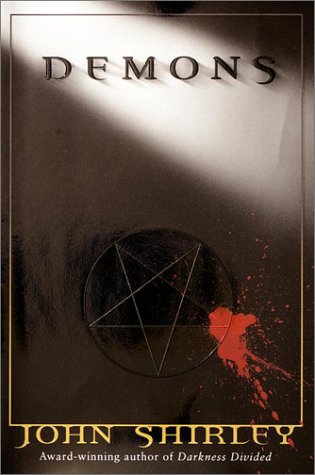
                  Writers from Clive Barker to Bruce Sterling and Roger Zelazny have praised John Shirley's searing, apocalyptic visions of postmodern hell on earth. Now this perversely brilliant author, one of the seminal representatives on the cyberpunk movement, unleashes his newest masterpiece.DEMONSIn a future uncomfortably close to the present day, the apocalypse has surpassed all expectations. Hideous demons roam the streets in an orgy of terror, drawing pleasure from torturing humans as sadistically as possible. Divided into seven clans, these grisly invaders--gnashing, writhing, bloodthirsty monsters--seem horrifically to belong in our world.Ira, a young San Francisco artist, becomes involved with a strange group of scientists and philosophers desperately trying to end the bloody siege. Yet through it all, Ira continues to paint--for in his canvasses lie crucial clues to the demons' origins.Yet the demons draw their strength from an all-too-familiar evil--a deadly malevolence supported by some of the greatest powers on earth, concealed beneath the trappings of status, success, and abused power. Ira and his allies-- including a compelling young seeress--come to believe these demons didn't just appear. They were summoned. But the most shocking revelation is yet to come . . .EXCLUSIVE TO THIS EDITION: The original novella Demons was published as an acclaimed, limited edition hardcover which Publishers Weekly called a "mini-masterpiece." Now the terror continues, as the sequel story, "Undercurrents," takes the reader on a macabre journey into the center of the conspiracy that may lay waste to the Earth. From the Hardcover edition.

                • Cover of Cluster
                  Cluster

                  series · 9 books · 1977

                  similar byscience fiction

                  Cluster is a series of science fiction novels by Piers Anthony. Anthony originally conceived of and wrote the series as a trilogy but later added two additional volumes. Although the central problem of each novel is unique, the books feature shared themes of cooperation, tolerance, open-mindedness, introspection, self-knowledge, and understanding. There is also a generous amount of alien sex/mating.

                • Cover of Djinn City
                  Djinn City

                  series · 2 books · 2017

                  similar bynear futurebig city+2 more

                • Cover of Nineteen Eighty-Four
                  Nineteen Eighty-Four

                  series · 4 books · 1949

                  similar by+2 more

                  Nineteen Eighty-Four (1949) is George Orwell's novel of a totalitarian future Britain kept under constant surveillance and thought control, following Winston Smith's doomed attempt at a private rebellion against the ruling Party. Sandra Newman's Julia (2023), written with the Orwell estate's authorization, retells the same events from the point of view of Winston's lover Julia, filling in a life and set of motives the original largely left offstage.