More like Final Release
anchored on:near futurescience fiction
but
- Sprawl Trilogy
series10 books1981
similar bytensescience fictionnear futureartificial intelligencevirtual realitybig citycyberpunk
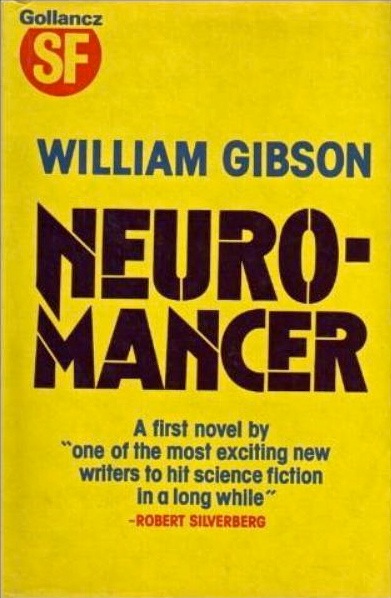
The Sprawl Trilogy is William Gibson's foundational cyberpunk sequence: Neuromancer (1984), in which hacker Case is drawn into a high-stakes heist alongside an artificial intelligence and a damaged ex-soldier, followed by Count Zero (1986) and Mona Lisa Overdrive (1988), which widen the same near-future world of corporate power and networked cyberspace to new characters. Johnny Mnemonic, an early short story set in the same fictional milieu, predates the novels and introduces the courier Molly Millions before her role in the trilogy. Together these works established much of cyberpunk's visual and thematic vocabulary.
- Bridge Trilogy
series4 books1990
similar byscience fictionnear futurebig citycyberpunk+3 more
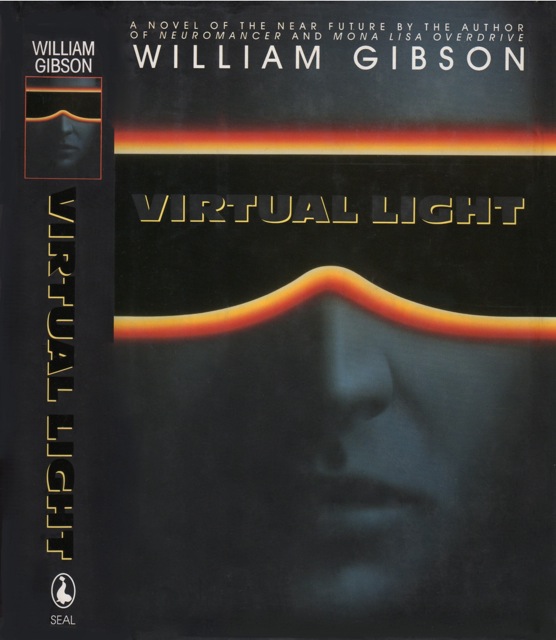
The Bridge trilogy is a series of novels by William Gibson, his second after the successful Sprawl trilogy. The trilogy comprises the novels Virtual Light (1993), Idoru (1996) and All Tomorrow's Parties (1999). A short story, "Skinner's Room", was originally composed for Visionary San Francisco, a 1990 museum exhibition exploring the future of San Francisco.
- Blade Runner Universe
series6 books1968
similar byscience fictionnear futurebig citycyberpunk+3 more
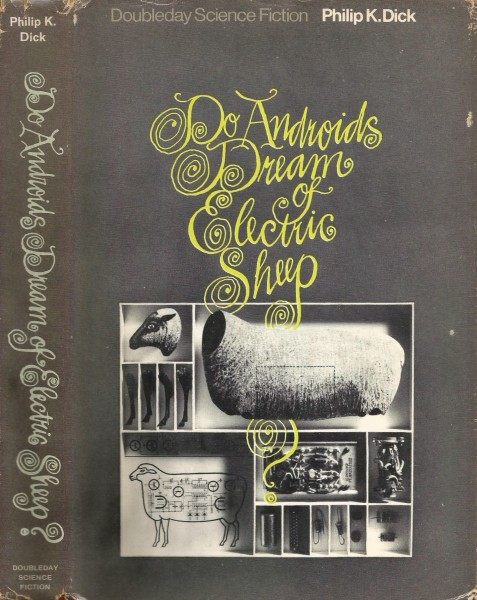
Philip K. Dick's 1968 novel Do Androids Dream of Electric Sheep? follows bounty hunter Rick Deckard as he tracks escaped androids through an irradiated, near-abandoned San Francisco, using the hunt to probe questions of empathy and what separates human from machine. The novel became the basis for Ridley Scott's 1982 film Blade Runner, and Marvel Comics later published an illustrated adaptation of that film. Together the two trace the story's path from prose original to screen and comic-page adaptation.
- Halting State
series2 books2007
similar bytensescience fictionnear futureartificial intelligencecyberpunk+3 more
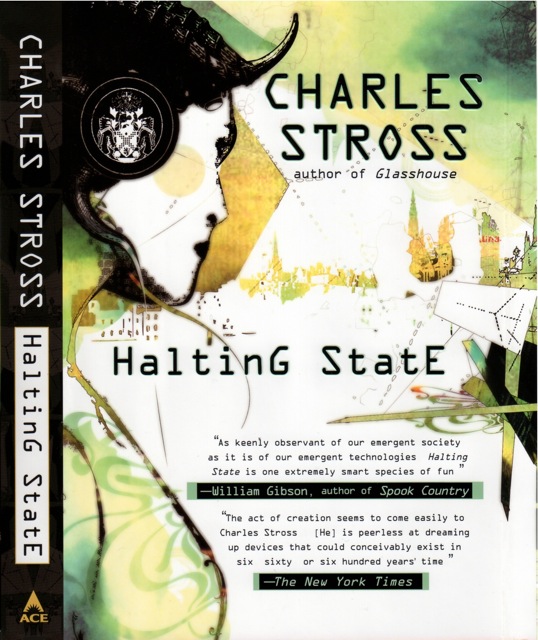
Charles Stross's Halting State opens as a near-future police procedural: a bank robbery inside a massively multiplayer online game turns out to mask a much larger cybercrime, investigated through shifting narrators using augmented-reality glasses and always-on networks. Its loose sequel, Rule 34, follows an Edinburgh police officer investigating a string of deaths linked by nothing but an obscure internet meme, in the same near-future Scotland. Both are standalone technothrillers connected by setting and tone rather than a continuing plot.
- Lock In
series3 books2014
similar bytensescience fictionnear futurebig city+2 more
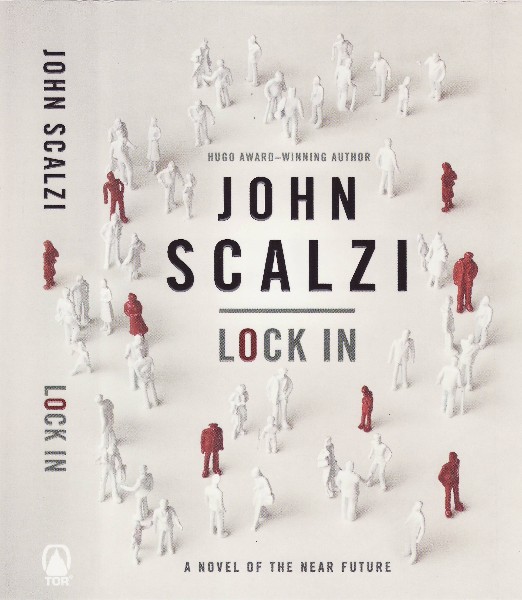
Lock In imagines a near-future pandemic that leaves a fraction of survivors fully conscious but completely paralyzed, able to interact with the world only through robotic surrogates or by borrowing the bodies of rare people whose brains can host another person's consciousness. John Scalzi's series follows a rookie FBI agent investigating crimes that exploit this new class of disability and technology, across the novels Lock In and Head On plus the interstitial oral history Unlocked. It's science-fiction police procedural more than space opera.
- Snow Crash
Neal Stephensonstandalone novel1992
similar bytensescience fictionnear futurevirtual realitybig citycyberpunk
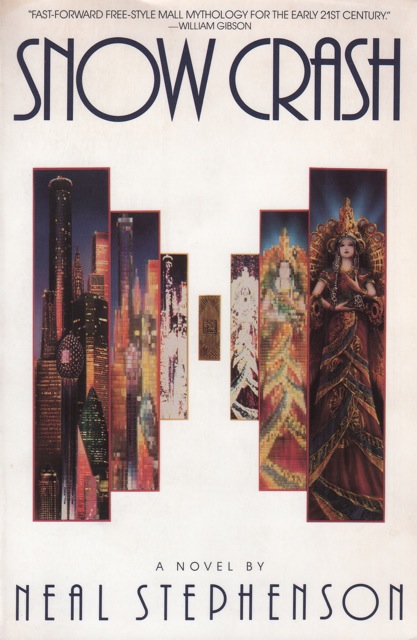
Snow Crash is a 1992 science fiction novel by Neal Stephenson. Like many of Stephenson's novels, its themes include history, linguistics, anthropology, archaeology, religion, computer science, politics, cryptography, memetics, and philosophy.
- Hardwired
series3 books1986
similar bytensescience fictionnear futureour worldcyberpunk+2 more
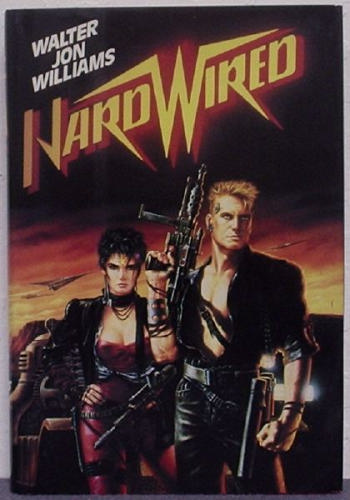
Walter Jon Williams' Hardwired (1986) is an early and influential cyberpunk novel. Voice of the Whirlwind, published three years later, is a loosely connected follow-up set in the same future, sharing its technological and political backdrop with a different cast of characters.
- Rainbows End
Vernor Vingestandalone novel2006
similar bytensescience fictionnear futurevirtual realitybig city+1 more
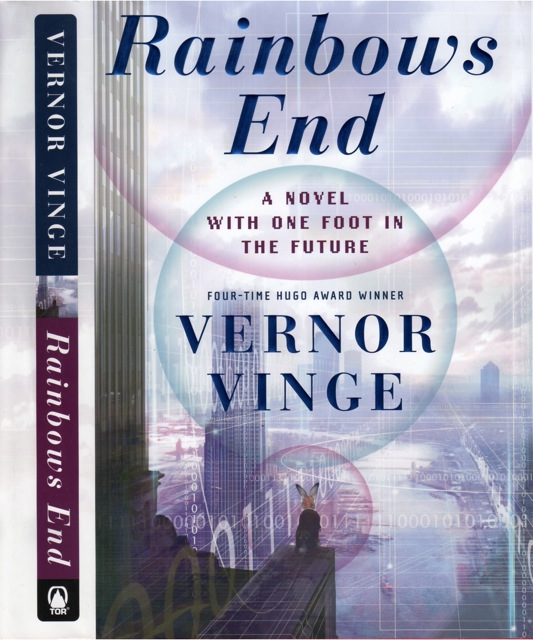
A science-fiction thriller set in a place and time as exciting and strange as any far-future world: San Diego, California, 2025. Robert Gu is a recovering Alzheimer’s patient. The world that he remembers was much as we know it today. Now, as he regains his faculties through a cure developed during the years of his near-fatal decline, he discovers that the world has changed and so has his place in it. He was a world-renowned poet. Now he is seventy-five years old, though by a medical miracle he looks much younger, and he’s starting over, for the first time unsure of his poetic gifts. Living with his son’s family, he has no choice but to learn how to cope with a new information age in which the virtual and the real are a seamless continuum, layers of reality built on digital views seen by a single person or millions, depending on your choice. But the consensus reality of the digital world is available only if, like his thirteen-year-old granddaughter Miri, you know how to wear your wireless access—through nodes designed into smart clothes—and to see the digital context—through smart contact lenses. With knowledge comes risk. When Robert begins to re-train at Fairmont High, learning with other older people what is second nature to Miri and other teens at school, he unwittingly becomes part of a wide-ranging conspiracy to use technology as a tool for world domination. In a world where every computer chip has Homeland Security built-in, this conspiracy is something that baffles even the most sophisticated security analysts, including Robert’s son and daughter-in law, two top people in the U.S. military. And even Miri, in her attempts to protect her grandfather, may be entangled in the plot. As Robert becomes more deeply involved in conspiracy, he is shocked to learn of a radical change planned for the UCSD Geisel Library; all the books there, and worldwide, would cease to physically exist. He and his fellow re-trainees feel compelled to join protests against the change. With forces around the world converging on San Diego, both the conspiracy and the protest climax in a spectacular moment as unique and satisfying as it is unexpected.
- The Light of Other Days
Arthur C. Clarke & Stephen Baxterstandalone novel2000
similar bytensescience fictionnear futureour world+2 more
An industrialist devises a technique to use tiny wormholes as light pipes to enable viewing of any event anywhere; and subsequently it becomes possible to use them to view any event in the past as well. The effects on society are enormous.
- Otherland
series6 books1996
similar bytensescience fictionnear futureartificial intelligencevirtual realityour worldcyberpunk
Otherland is a science fiction tetralogy by American writer Tad Williams, published between 1996 and 2001. The story is set on Earth near the end of the 21st century, probably between 2082 and 2089, in a world where technology has advanced somewhat beyond the present. The most notable advancement is the widespread availability of full-immersion virtual reality installations, which allow people from all walks of life to access an online world, called simply the Net. Tad Williams weaves an intricate plot spanning four thick volumes, and creates a picture of a future society where virtual worlds are fully integrated into everyday life.
- The Jackpot Trilogy
series2 books2014
similar bytensescience fictionnear future+4 more
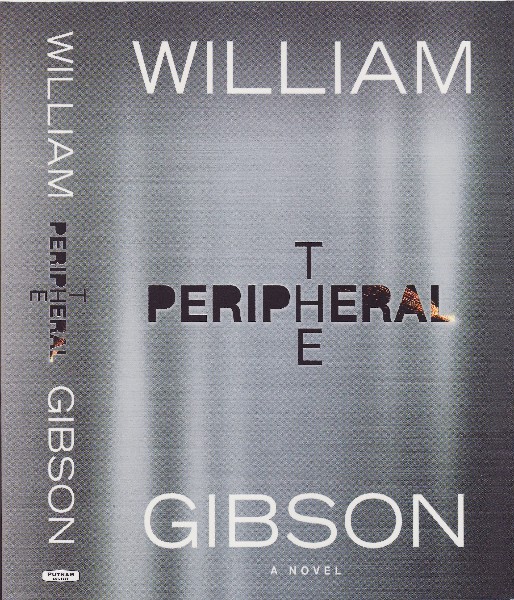
William Gibson's Jackpot sequence begins with The Peripheral (2014), a science-fiction thriller cross-cutting between a near-future American town and a devastated London seventy years on. Gibson continued the same world in Agency (2020), set slightly later in the near-future timeline.
- Ready Player One
series3 books2011
similar byscience fictionnear futurevirtual realitycyberpunk+2 more
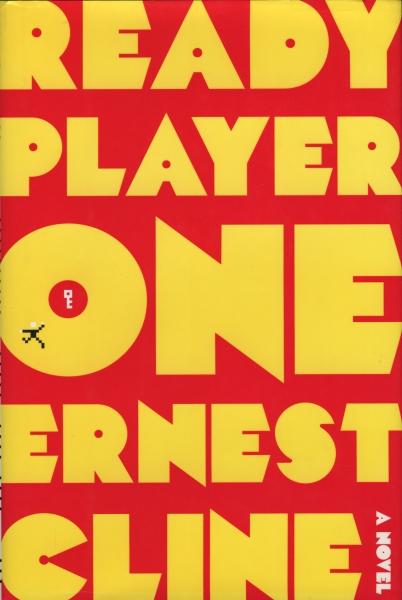
Ernest Cline's Ready Player One (2011) is set in a near-future dystopia where much of humanity escapes into the OASIS, a vast virtual-reality universe, and follows teenager Wade Watts as he chases an Easter egg hidden by the OASIS's late creator in a puzzle-based hunt worth a fortune. The 2020 sequel, Ready Player Two, picks up after Wade has gained control of the OASIS and follows him and his friends into a new quest built around a brain-computer interface the creator left behind.
- Richard Forthrast
series2 books2011
similar byscience fictionvirtual realityour world+3 more
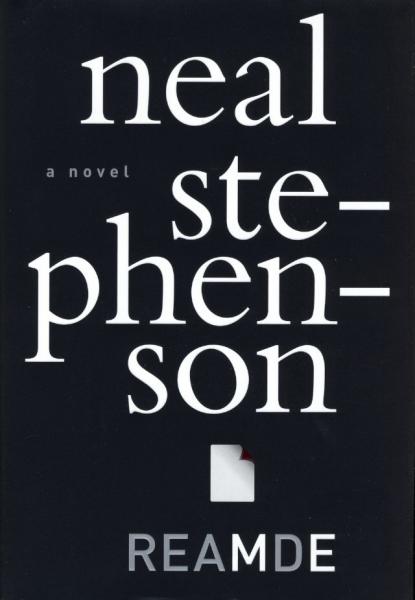
Neal Stephenson's Richard 'Dodge' Forthrast novels open with Reamde, a globe-spanning thriller that starts when ransomware inside an MMORPG economy pulls Richard's extended family into a real-world hostage crisis involving hackers, jihadists and Russian mobsters. The sequel Fall; or, Dodge in Hell shifts registers entirely, following Richard's digitally preserved mind after death into an afterlife simulation built from his scanned brain. The two books share a protagonist and family but differ sharply in genre and scale.
- Budayeen
series13 books1973
completed
similar byscience fictionnear futurebig citycyberpunk+1 more
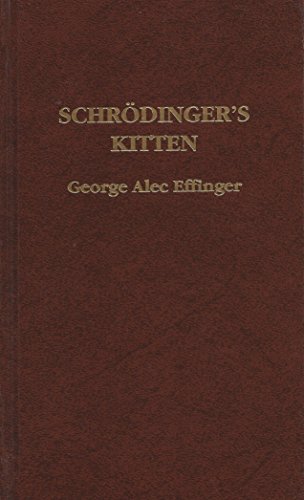
George Alec Effinger's Budayeen sequence reimagines the French Quarter of New Orleans as a 22nd-century red-light district in a future Middle Eastern city, where body modification has gone electronic: cybernetic 'moddies' and 'daddies' let people plug in new personalities and skills at will. Its hero, hustler-turned-investigator Marid Audran, works the Budayeen's back alleys across the novels When Gravity Fails, A Fire in the Sun, and The Exile Kiss. Budayeen Nights, published after Effinger's death, gathers his shorter fiction set in the same neon-lit quarter.
- Halo (Tom Maddox)
series5 books1985
completed
similar byscience fictionnear futurecyberpunk+3 more
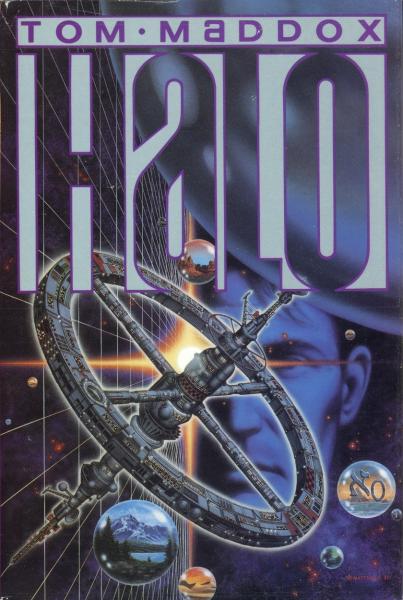
Halo (1991) was Tom Maddox's only novel, a work of early cyberpunk fiction published by Tor Books. Maddox was part of the cyberpunk movement alongside William Gibson (with whom he later collaborated on The X-Files) and coined the term Gibson popularized as 'ICE' in Neuromancer; Halo remains his sole full-length work in the genre.
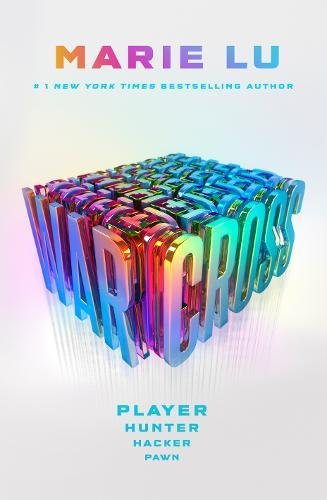
- Warcross
series2 books2017
similar bytensescience fictionnear futurevirtual realityour worldcyberpunk+1 more
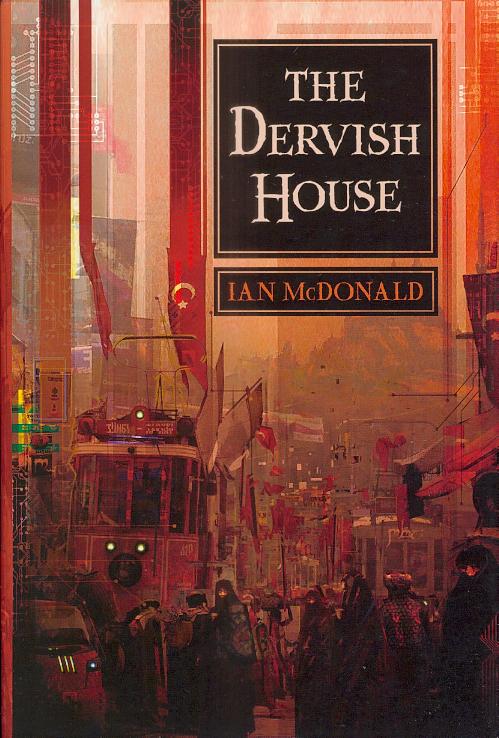
- The Dervish House
Ian McDonaldstandalone novel2010
similar bytensescience fictionnear futureartificial intelligencebig citycyberpunk
The Dervish House is a 2010 science fiction novel by British author Ian McDonald. The novel was shortlisted for the Arthur C. Clarke Award in 2011, and won the BSFA Award and the John W. Campbell Memorial Award in the same year. It was a nominee for the 2011 Hugo Award for Best Novel. The French translation La maison des derviches won the Planete-SF Blogger's Award in 2012.
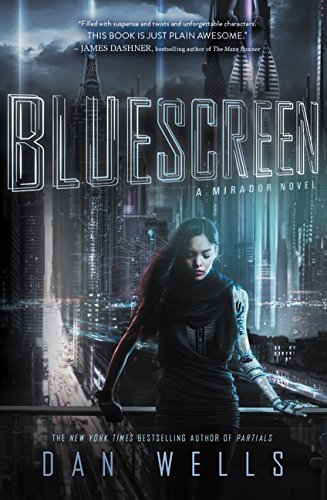
- Mirador
series3 books2016
similar bytensescience fictionnear futurevirtual realitybig citycyberpunk+2 more
- The Mortality Doctrine
series4 books2013
similar bytensescience fictionartificial intelligencevirtual realitynear futurecyberpunk
The Eye of Minds opens James Dashner's Mortality Doctrine trilogy in a near-future where a teenage gamer is recruited to help stop a rogue hacker named Kaine who threatens mass destruction from inside the virtual world he haunts. Dashner has said he didn't intend the series as dystopian in the way of his Maze Runner books, though he saw it sharing their tone and spirit. The trilogy continues with The Rule of Thoughts and The Game of Lives.
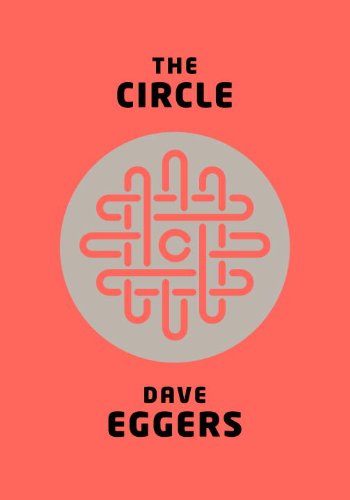
- The Circle (Eggers)
series2 books2013
similar bytensescience fictionnear futurebig city+1 more
Mae Holland lands a coveted job at the Circle, a Silicon Valley tech company whose relentless, cheerful push toward total transparency -- 'secrets are lies, sharing is caring, privacy is theft' -- gradually reveals itself as something closer to soft totalitarianism. Dave Eggers's The Circle follows Mae's rise inside the company as she buys further and further into its ideology, at increasing cost to her own privacy and the people around her. The 2021 follow-up, The Every, picks up with Mae now running the merged tech giant and a new employee questioning it from the inside.
- Web
series14 books1997
similar bytensescience fictionnear futurevirtual reality+1 more
The Web is a series of 12 books for young adults, novellas about the Internet of the future, edited by Simon Spanton, written by English language science fiction and fantasy authors like Stephen Baxter, Stephen Bowkett, Eric Brown, Pat Cadigan, Maggie Furey, Peter F. Hamilton, Graham Joyce, James Lovegrove, and Ken MacLeod.