Loreful
HomeDiscover
Search series, authors…⌘K
Loreful

Reading orders for SF/F series and shared universes — with your place kept in every one.

Explore

UniversesSeriesWorksAuthorsAtlas

Help

FAQAboutSite map

Account & legal

Sign inCreate accountPrivacyTerms

Data

Built on ISFDB, Wikipedia, Wikidata and Open Library. Curated reading orders carry their reasoning on the page; the rest follow publication order. Data sources & licenses

© Loreful · data: ISFDB · CC BY

More like Final War

anchored on:science fictionwarfar futuredark

but

Mood

The mood the book leaves you in.

  • The reading experience is propelled by journeys, exploration, and physical risk; excitement and forward momentum dominate over dread or introspection.
  • Joy and loss are deliberately mixed; the resolution grants characters something real while taking something else away, leaving warmth and sorrow together.
  • The book demands work from the reader — dense prose, difficult structure, unfamiliar ideas, or morally uncomfortable material — as part of its intended effect.
  • Grim events, cruelty, or despair dominate the atmosphere, and the book does not soften them with comfort or comic relief.
  • The atmosphere is quietly unsettling — wrongness, unease, and the uncanny pervade the book without necessarily escalating into overt horror.
  • The book is built to move the reader; character feeling is foregrounded and major scenes aim at a strong emotional response.
  • Humor is a primary aim and the prose plays for laughs — comic situations, wit, or dialogue produce sustained comedy, not occasional levity.
  • The book insists that things can improve; effort and decency are shown to matter, and the arc bends toward better outcomes even through hardship.
  • The book teaches as it goes — real facts, history, science, or craft are conveyed in enough depth that learning is part of the reading experience.
  • The book is designed to uplift and motivate, presenting perseverance or achievement in a way that invites the reader to aspire or act.
  • The overall register is cheerful and easygoing; stakes are kept gentle and the book avoids dwelling on pain or dread.
  • Withheld information drives the experience; the book sustains enigmas and secrets the reader wants resolved, whatever its genre.
  • The book is contemplative and inward-looking, giving more weight to thought, memory, and meaning than to external events.
  • The book works as comfort reading — low tension, a soothing pace, and an atmosphere the reader can unwind in.
  • Grief, loss, or melancholy set the dominant register, and the book lets sorrow stand rather than resolving it into comfort.
  • Sustained suspense is the point; the book keeps the reader braced for what happens next through danger, pressure, or impending revelation.
  • Playful invention and charm define the register — fanciful conceits, light absurdity, and a narration that delights in its own oddity.

About

What the story runs on.

  • Stories in which extraterrestrial beings are central — as characters, cultures, or the object of the plot.
  • Stories about venturing into space to explore — survey missions, astronauts, and the frontier of the unknown beyond Earth.
  • Stories structured as a quest — a journey undertaken to find, deliver, or destroy something of great import.
  • Stories in which staying alive against nature, catastrophe, or scarcity is the central problem.
  • Stories of growing up — a young protagonist crossing from childhood into adult knowledge and responsibility.
  • Stories about who a character truly is — self-discovery, doubled lives, and the search for a self.
  • Stories about mental unraveling — descent into madness, delusion, and minds at war with themselves.
  • Stories in which a buried family truth — hidden parentage, crimes, or shames — surfaces and reorders the present.
  • Stories driven by maneuvering for power — factions, conspiracies, and statecraft conducted in shadow.
  • Stories about rising against rulers — uprisings, resistance movements, and revolutions and their aftermaths.
  • Stories in which war itself is the subject — combat, occupation, and what warfare does to soldiers and civilians.
  • Stories organized around investigating a killing — the case, the clues, and the pursuit of the killer, in any genre's clothing.

Shelf

Where it sits in the library.

    • Fiction built on magic or other supernatural elements that have no scientific explanation.
    • Secondary-world fantasy at large scale, where the fate of nations or the world turns on the protagonists' struggle.
    • Fantasy set in a recognizably modern city or contemporary world where the supernatural intrudes on everyday life.
    • Fantasy that blends in horror's atmosphere and imagery, keeping a fantastical frame around grim or frightening material.
    • Action-driven fantasy following warriors or rogues with personal stakes against sorcerous threats, rather than world-spanning conflicts.
    • Fantasy set in a real historical period or a close analogue of one, with magic woven into the era.
    • Fantasy in which protagonists cross from the ordinary world into another world through a portal or similar passage.
    • Fiction that retells or reworks a traditional fairy tale in a new form or setting.
    • Fantasy drawing directly on myths, legends, and folklore, retelling them or building on their figures and logic.
    • Fantasy of ghosts, vampires, shapeshifters, psychics, and similar phenomena, usually set in an otherwise ordinary world.
    • Fiction mixing science-fictional trappings with overtly magical or impossible elements in one setting.
    • Low-stakes fantasy emphasizing comfort, community, and everyday pleasures over conflict and peril.
    • Speculative fiction of pervasive moral ambiguity, violence, and cynicism that rejects heroic conventions — fantasy and SF alike.
      • Fiction that extrapolates from science and technology — future societies, space travel, or speculative inventions — within at least nominally natural laws.
      • Science fiction of interstellar scope — starships, galactic polities, and adventure across star systems.
      • Science fiction committed to scientific rigor, where technical plausibility constrains the story.
      • Science fiction centered on armed forces and warfare, told largely from a military point of view.
      • Science fiction of networked, corporate-dominated near futures, pairing high technology with social decay.
      • Science fiction styled on nineteenth-century steam-powered technology, often in a Victorian or pseudo-Victorian setting.
      • Fiction depicting an oppressive or catastrophic society, presented as a warning.
      • Fiction set after civilization's collapse, following survivors in the ruins of the old world.
      • Fiction in which characters move between past and future, and the mechanics or consequences of that travel drive the plot.
      • Fiction exploring a world where a historical event went differently and history diverged from ours.
      • Science fiction about humanity's first encounter and communication with an alien intelligence.
      • Science fiction in which extraterrestrial forces attack or occupy Earth and humanity resists.
      • Fiction whose primary aim is to frighten or unsettle the reader through dread, menace, or the monstrous.
      • Horror of vast, indifferent, incomprehensible entities before which humanity is insignificant, in the Lovecraft tradition.
      • Horror of decaying houses, buried family secrets, and oppressive atmosphere in the Gothic literary tradition.
      • Horror centered on hauntings and the returning dead.
      • Horror located in the mind — paranoia, obsession, and unreliable perception rather than external monsters.
      • Horror built around the reanimated dead and survival amid their outbreaks.
      • Horror defined by explicit, transgressive gore that refuses to cut away from violence.
      • Speculative fiction of the strange and uncanny that resists both natural explanation and standard genre categories.
      • Fiction organized around solving a crime or puzzle, typically following an investigator toward the identification of a culprit.
      • A puzzle-first mystery that lays out clues so the culprit's identity can be deduced before the reveal.
      • Crime fiction of moral ambiguity, fatalism, and hard-edged style, set among the corrupt and the doomed.
      • A mystery following the realistic routines of police work — forensics, interviews, and case-building.
      • A gentle mystery with an amateur sleuth, a small community, and violence kept off the page.
      • A mystery set in a past era, where the investigation works within that period's methods and society.
      • Fast-paced fiction driven by imminent danger, pursuit, or high-stakes conspiracy, built to sustain tension.
      • A thriller of espionage — agents, tradecraft, and intelligence services in conflict.
      • A thriller centered on lawyers and the courtroom, where litigation carries the suspense.
      • A thriller driven by detailed contemporary or near-future technology, often military or scientific.
      • A thriller whose tension comes from mental states and manipulation between characters rather than external action.
      • Fiction whose central plot is a romantic relationship and its development toward an emotionally satisfying resolution.
      • Romance in which one or both partners are supernatural beings, blending fantasy elements into the love story.
      • A fantasy-romance hybrid in which the romantic arc and the fantasy plot carry equal weight.
      • Romance set in a past era, with courtship shaped by the period's society and manners.
      • Romance set in the present day, without supernatural or historical elements.
      • Fiction set in a real past period, where the historical setting materially shapes characters and events.
        • General and literary fiction emphasizing prose style, character interiority, or formal ambition over genre plot conventions.
        • Fiction in a realistic world where magical events occur and are treated as ordinary, in the tradition of Latin American literature.
        • Fiction that ridicules people, institutions, or society in order to criticize them.
        • Fiction of dreamlike, irrational imagery and logic that breaks from realistic representation.
        • Fiction that plays with narrative convention through metafiction, fragmentation, and self-reference.
        • Fiction propelled by journeys, exploration, and physical peril, where action and survival carry the plot.
        • Adventure fiction of ships and seafaring — naval engagements, voyages, and life at sea.
        • Fiction of the American frontier West — gunmen, ranchers, and lawmen, typically in the late nineteenth century.
        • Fiction centered on soldiers, campaigns, and the experience of warfare, historical or imagined.
          • Fiction written primarily to amuse, using comedic situations, wit, or parody as its organizing principle.
            • Multi-generational fiction following a family or dynasty across decades, with inheritance and kinship as the through-line.
              • Fiction whose world runs on explicit game mechanics — levels, stats, and skills that characters can see and exploit.
                • Fiction about costumed or superpowered heroes and their conflicts with comparable villains.

                Practical

                How long a commitment, whether it stands alone, and whether it has finished.

                Tap a chip to ask for it · tap again to rule it out · once more to clear. Numbers show what would be left.

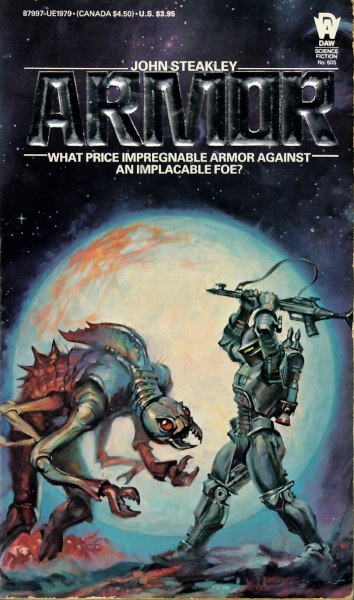
                • Cover of Armor
                  Armor

                  John Steakley · standalone novel · 1984

                  similar byscience fictiondarkwarfar future

                  Armor is a military science fiction novel by John Steakley. It features the military use of exoskeletons and insect-like alien enemies but concentrates on the psychological effects of violence on human beings.

                • Cover of The Gate to Women's Country
                  The Gate to Women's Country

                  Sheri S. Tepper · standalone novel · 1988

                  similar byscience fictiondarkwarfar future

                  The Gate to Women's Country is a post-apocalyptic novel by American writer Sheri S. Tepper, published in 1988. It describes a world set three hundred years into the future after a catastrophic war which has fractured the United States into several nations.

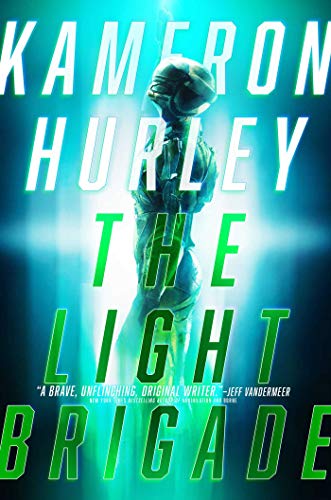
                • Cover of The Light Brigade
                  The Light Brigade

                  Kameron Hurley · standalone novel · 2019

                  similar bywarscience fictiondarkfar future

                  The Light Brigade is a 2019 science fiction novel by Kameron Hurley, in which brutal descriptions of war and economic exploitation in a dystopian future are used to provide strongly critical commentary on the nature of warfare and capitalism. It was nominated for both Hugo and Locus awards for 2020.

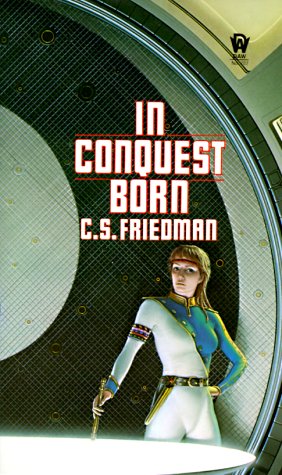
                • Cover of Azean Empire
                  Azean Empire

                  series · 2 books · 1987

                  similar bywarscience fictiondarkfar future

                  C. S. Friedman's Azean Empire novels are set in a distant-future conflict between two competing human societies, the Azeans and the Braxins, contesting interstellar dominance. In Conquest Born, her debut, works as space opera and military SF with an anthropological bent, using the two societies' opposed cultures and reproductive philosophies as the real engine of the conflict rather than just the battles themselves. The Wilding continues the same interstellar rivalry.

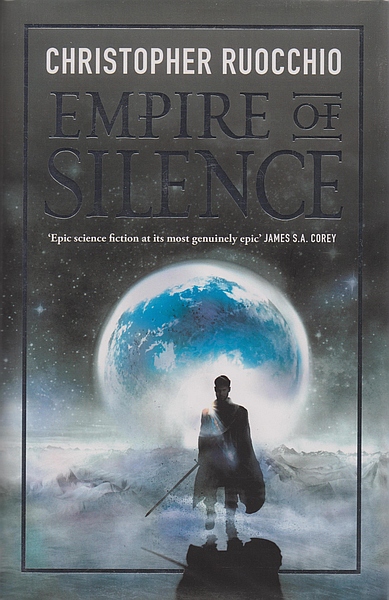
                • Cover of Sun Eater
                  Sun Eater

                  series · 36 books · 2018

                  similar byscience fictiondarkwarfar future

                  The Sun Eater is a science fiction novel series written by American author Christopher Ruocchio. Not including short stories and novellas, the series consists of the following novels: Empire of Silence (2018), Howling Dark (2019), Demon in White (2020), Kingdoms of Death (2022), Ashes of Man (2022), Disquiet Gods (2024), and Shadows Upon Time (2025).

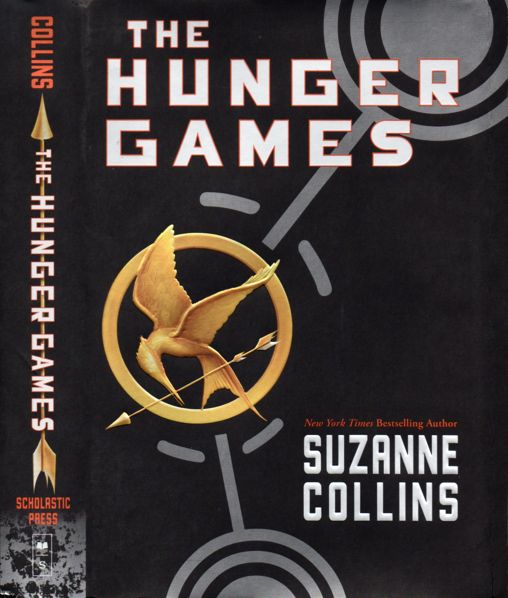
                • Cover of The Hunger Games
                  The Hunger Games

                  series · 3 books · 2008

                  part of The Hunger Games Universe

                  similar byscience fictiondarkfar future+1 more

                  The Hunger Games is a series of young adult dystopian novels written by American author Suzanne Collins. The series consists of a trilogy that follows teenage protagonist Katniss Everdeen, as well as two prequels. The Hunger Games universe is a dystopia set in Panem, a post-apocalyptic North American country consisting of the wealthy Capitol and 12 districts in varying states of poverty. As punishment for rebellion, the Capitol hosts an annual battle royale competition called The Hunger Games. Each of the 12 districts must send two children between the ages of 12 and 18 to participate, and the last surviving child is dubbed the victor.

                • Cover of The World Set Free
                  The World Set Free

                  H. G. Wells · standalone novel · 1914

                  similar bywarscience fictiondark

                  The World Set Free is a novel written in 1913 and published in 1914 by H. G. Wells. The book is based on a prediction of a more destructive and uncontrollable sort of weapon than the world has yet seen. It had appeared first in serialised form with a different ending as A Prophetic Trilogy, consisting of three books: A Trap to Catch the Sun, The Last War in the World and The World Set Free.

                • Cover of Xan-Sskarn War
                  Xan-Sskarn War

                  series · 1 book · 2010

                  similar bywarscience fictiondarkfar future

                • Cover of The Penultimate Truth
                  The Penultimate Truth

                  Philip K. Dick · standalone novel · 1964

                  similar byscience fictiondarkfar future+1 more

                  The Penultimate Truth is a 1964 science fiction novel by American writer Philip K. Dick. The story is set in a future where the bulk of humanity is kept in large underground shelters. The people are told that World War III is being fought above them, when in reality the war ended years ago. The novel is based on Dick's 1953 short story "The Defenders". Dick also drew upon two of his other short stories for the plot of the novel: "The Mold of Yancy" and "The Unreconstructed M".

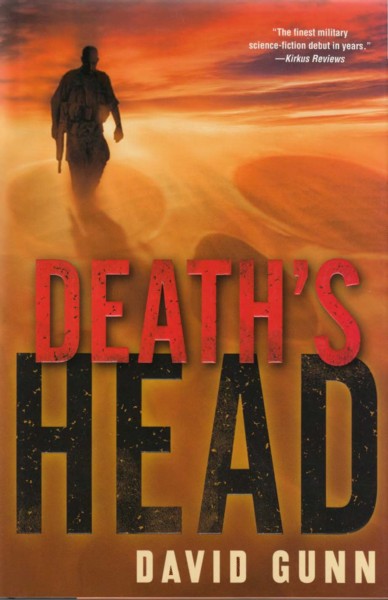
                • Cover of Death's Head (David Gunn)
                  Death's Head (David Gunn)

                  series · 3 books · 2007

                  similar byscience fictiondarkwarfar future

                  Death's Head is a noir military science fiction series written by David Gunn. The series follows the antihero Sven Tveskoeg, an ex-sergeant of The Legion, in service to the Octovian Empire.

                • Cover of Slaughterhouse-Five or the Children's Crusade: A Duty-Dance with Death
                  Slaughterhouse-Five or the Children's Crusade: A Duty-Dance with Death

                  Kurt Vonnegut & Jr. · standalone novel · 1969

                  similar bywardarkscience fiction

                  Vonnegut opens in his own voice, describing the twenty years it took him to face writing about surviving the firebombing of Dresden as a POW. He then hands the story to Billy Pilgrim, an awkward, fatalistic American chaplain's assistant swept into the Battle of the Bulge and captured by German forces alongside a soldier who dies blaming him for it. Imprisoned in a disused slaughterhouse in Dresden, Billy survives the firebombing that follows, and, we're told upfront, has also come 'unstuck in time,' living his life out of order, including a stretch on the alien world of Tralfamadore. Vonnegut's best-known novel folds war memoir into science fiction and black comedy.

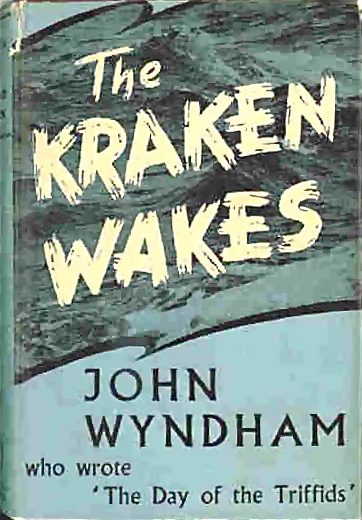
                • Cover of The Kraken Wakes
                  The Kraken Wakes

                  John Wyndham · standalone novel · 1953

                  similar byscience fictiondarkwar

                  " Behind a spectacular meteor shower actually hides the beginning of an invasion by a mysterious and powerful alien race. Earth's life is disrupted by the attacks of extraterrestrials whose war machines, emerging from the depths of the oceans, seem indestructible. The coalitioned forces of the whole world are worthless, powerless in the face of the indecipherable and deadly plans of a superior intelligence, capable of bringing the entire planet to the brink of catastrophe" Goodreads May 20, 2022

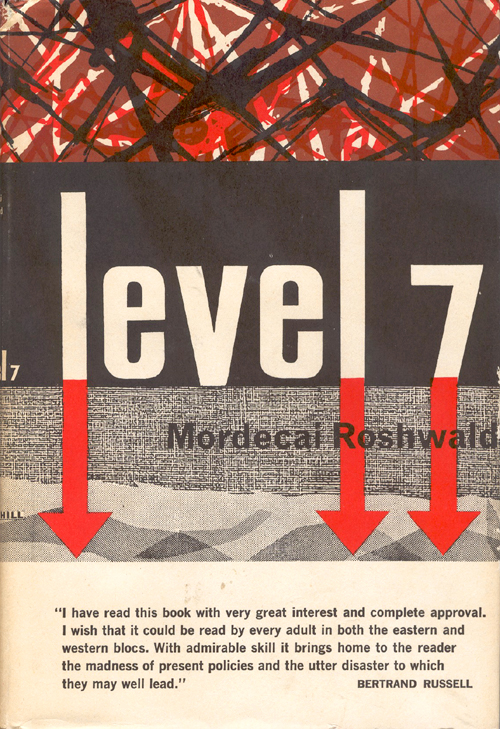
                • Cover of Level 7
                  Level 7

                  Mordecai Roshwald · standalone novel · 1959

                  similar bywarscience fictiondark

                  Level 7 is a 1959 science fiction novel by American writer Mordecai Roshwald. It is told from the first-person perspective of a modern soldier, X-127, living in the underground military complex Level 7, where he and several hundred others are expected to reside permanently. X-127 fulfills the role of 'push-button' offensive initiator of his nation's nuclear weapons capacity against an unspecified enemy. X-127 narrates life within a deep shelter before, during and after a nuclear war that wipes out the human species.

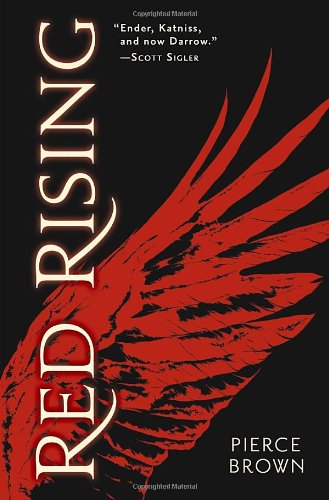
                • Cover of Red Rising
                  Red Rising

                  series · 13 books · 2014

                  similar byscience fictiondarkfar future+1 more

                  Pierce Brown's Red Rising follows Darrow, a lowborn 'Red' miner on a colonized Mars who discovers his caste's suffering is a lie sustained by the ruling Gold elite, and infiltrates their ranks to destroy the system from within. The series expands from a single-protagonist revenge story into a sprawling multi-book war across the solar system, eventually following an ensemble cast beyond Darrow alone, and combines Roman-inspired factional politics with brutal, competition-driven action set pieces.

                • Cover of Final Blackout
                  Final Blackout

                  L. Ron Hubbard · standalone novel · 1948

                  similar bywarscience fictiondark

                  Final Blackout is a dystopic science fiction novel by American writer L. Ron Hubbard. The novel is set in the future and follows a man known as "the Lieutenant" as he restores order to England after a world war. First published in serialized format in 1940 in the science fiction magazine Astounding Science Fiction, Final Blackout was published in book form in 1948 by The Hadley Publishing Co. Author Services Inc. published a hardcover edition of the book in 1988, and in 1989 the Church of Scientology-affiliated organization Bridge Publications said that a film director named Christopher Cain had signed a contract to write and direct a movie version based on the book.

                • Cover of The Hunger Games Universe
                  The Hunger Games Universe

                  universe · 5 books · 2008

                  Start hereThe Hunger Games · Start here

                  similar bydarkscience fictionfar future+1 more

                  Panem, they call it now — a nation raised on the drowned bones of North America, a glittering Capitol ringed by twelve districts it once starved into obedience. Every year the Capitol collects its debt in children: two tributes from each district, drawn by lottery, dropped into an engineered arena, and made to kill one another on live television while the whole country is required to watch. This is the Hunger Games — entertainment, punishment, and government at once. Suzanne Collins tells it in a compact, unified body of work. The founding trilogy — The Hunger Games, Catching Fire, and Mockingjay — follows Katniss Everdeen, a girl from the coal-mining District 12 who volunteers in her sister's place and becomes something the Capitol never scripted. Two prequels reach back into the same machinery: The Ballad of Songbirds and Snakes traces a young Coriolanus Snow long before he is President, and Sunrise on the Reaping returns to District 12 a generation ahead of Katniss. Begin with the trilogy, in order — it is Katniss's voice, close and present-tense, that makes Panem breathe, and the prequels land hardest once you know how her story ends. Beneath the spectacle sits one steady, uncomfortable question: who profits when we agree to look away.

                • Cover of Forever War
                  Forever War

                  series · 10 books · 1972

                  similar byscience fictionfar future+2 more

                  Joe Haldeman's The Forever War (1974) follows a soldier conscripted into a centuries-long interstellar war against the alien Taurans, using relativistic space travel so that months spent in transit correspond to years or decades passing back on Earth. Haldeman later returned to the same conflict in Forever Peace (1997), a thematically connected but separate story, and Forever Free (1999), a direct sequel set years after the original war's end. The first novel won the Hugo, Nebula, and Locus awards and is considered a foundational work of military science fiction.

                • Cover of The Eternity Brigade
                  The Eternity Brigade

                  Stephen Goldin · standalone novel · 1980

                  similar byscience fictiondarkwarfar future

                  WorldCat: Hundreds of human bodies have been placed in coffins in a military warehouse. But they are not dead, merely frozen in a cryogenic process meant to preserve an army of men to be restored to life if ever they are needed. The Earth they arise to inhabit is a world completely different from any they have known or imagined. Their only task is to fight and kill in the wars that plague the planet. They are not treated as men, but as fighting machines to be endlessly duplicated and used up. By having had their genetic patterns programmed into a computer, they are doomed to live over and over again, as part of an army that will not die and cannot escape. Yet one man is determined to break the pattern and free himself, truly believing that there must be a way out ... of eternity.

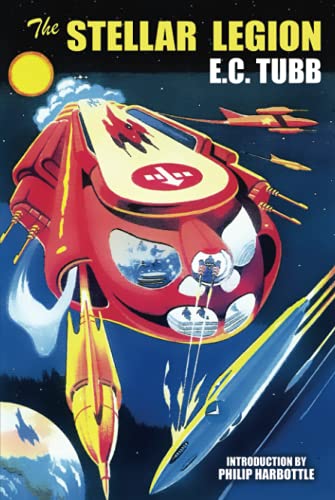
                • Cover of The Stellar Legion
                  The Stellar Legion

                  E. C. Tubb · standalone novel · 1954

                  similar byscience fictiondarkwarfar future

                  "Wilson, a waif of the war of unity, spends his boyhood in forced labour. When he is sent to the penal world of Stellar, he survives, winning promotion in the Stellar Legion, a brutal military system. Laurance, Director of the Federation of Man, wants to dissolve the Legion. He pits his wits against its commander, Hogarth. He's terrified lest the human wolves, trained and hardened in blood and terror, should ravage the defenceless galaxy ..."--Publisher description.

                • Cover of Starship Troopers
                  Starship Troopers

                  Robert A. Heinlein · standalone novel · 1959

                  similar bywarscience fictionfar future

                  Starship Troopers is a military science fiction novel by American writer Robert A. Heinlein. Written in a few weeks in reaction to the US suspending nuclear tests, the story was first published as a two-part serial in The Magazine of Fantasy & Science Fiction as Starship Soldier, and published as a book by G. P. Putnam's Sons on November 5, 1959.

                • Cover of Tomorrow!
                  Tomorrow!

                  Philip Wylie · standalone novel · 1954

                  similar bywarscience fictiondark

                  Conjecture of a tomorrow which brings an attack by the enemy and the destruction of all major cities across an unprepared country.

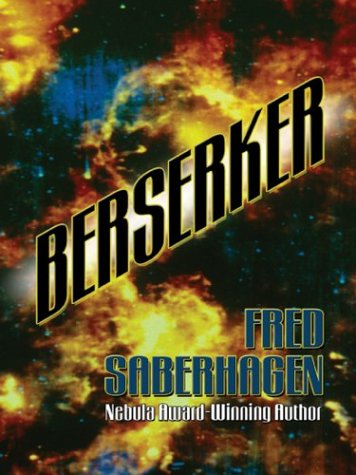
                • Cover of Berserker (Fred Saberhagen)
                  Berserker (Fred Saberhagen)

                  series · 59 books · 1963

                  similar byscience fictionwarfar future+1 more

                  The Berserker series is a series of space opera science fiction short stories and novels by Fred Saberhagen, in which robotic self-replicating machines strive to destroy all life.

                • Cover of Hungry City Chronicles / Mortal Engines
                  Hungry City Chronicles / Mortal Engines

                  series · 5 books · 2001

                  part of Mortal Engines Universe

                  similar byscience fictionwarfar future+1 more

                  The Mortal Engines Quartet, also known as the Predator Cities Quartet, is a series of epic young adult science fiction novels by the English novelist and illustrator Philip Reeve. He began the first volume of the series, Mortal Engines, in the 1980s, and it was published in 2001. Reeve then published three further novels, Predator's Gold (2003), Infernal Devices (2005), and A Darkling Plain (2006).

                • Cover of American War
                  American War

                  Omar El Akkad · standalone novel · 2017

                  similar bywarscience fictiondark

                  American War is the first novel by the Egyptian-Canadian journalist Omar El Akkad. It is set in the United States in the near future, ravaged by climate change and disease, in which the Second Civil War has broken out over the use of fossil fuels.