More like Finity
anchored on:science fictionalternate historythriller & suspenseidentityparallel universemysterious+1 more
but
- Dark Matter
Blake Crouchstandalone novel2016
similar byidentityparallel universetensescience fictionthriller & suspense
Jason Dessen, college physics professor, husband and father, is kidnapped and taken to a parallel universe where his counterpart had dedicated his life to inventing a method of traveling between an infinity of parallel universes.
- The Oracle Year
Charles Soulestandalone novel2018
similar byidentitymysterioustensepolitical intriguescience fictionthriller & suspense
Awakening from a dream with more than one hundred predictions about the future in his head, an unassuming Manhattan bassist becomes one of the world's most powerful men and hides his identity behind an online persona that is targeted by greedy corporations and dangerous enemies.
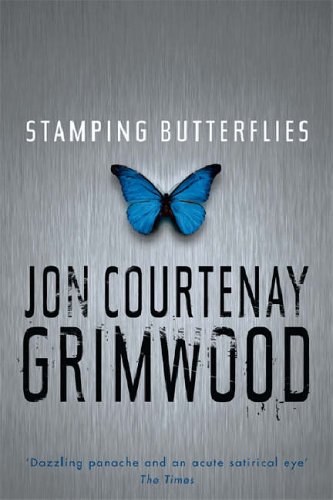
- Stamping Butterflies
Jon Courtenay Grimwoodstandalone novel2004
similar byidentitymysterioustensescience fictionthriller & suspense+1 more
From acclaimed author Jon Courtenay Grimwood comes an exotic new novel that defies expectation at every turn. A mystery, a thriller, and a cutting-edge sci-fi adventure all in one, Stamping Butterflies bends time, genre, and consciousness itself to tell the spellbinding story of two worlds, three lives, one future--and the question upon which everything depends: who is dreaming whom....From Marrakech to China's Forbidden City, from a doomed starship carrying a cryogenically preserved crew to an island prison camp, the fate of the world is being played out in the minds of two dreamers. One, a would-be assassin obsessed with enigmatic equations, has set out to kill the U.S. President. The other is a young Chinese emperor ruling thousands of years in the future. Each believes he is dreaming the other. One must change the future; one must change the past. And time is running out for both.Caught in the maelstrom is a motley cast of characters, each an unwitting key to the ultimate fate of both worlds: Moz, a resourceful young Marrakech street punk, and his half-German girlfriend, Malika; Jake Razor, a self-exiled rock star; and psychiatrist Katie Petrov, who finds herself racing against a looming death sentence to pry free the secret of her condemned patient--a secret with the power to restore hope to the future...or stamp it out forever.From the Trade Paperback edition.
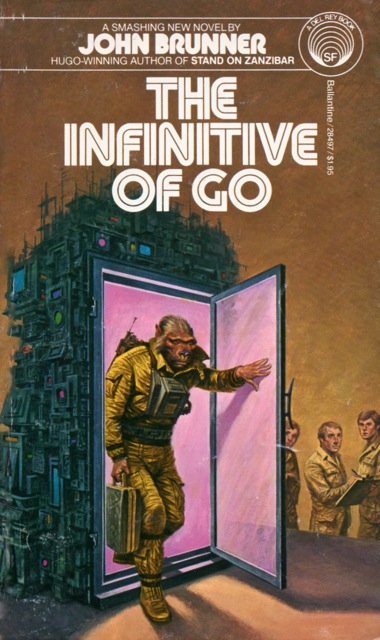
- The Infinitive of Go
John Brunnerstandalone novel1980
similar byidentityparallel universemysterioustensescience fiction
Amazon: The first practical matter transmitter was a success, or so everyone thought. In spite of paranoid security restrictions, Justin Williams and Cinnamon Wright, co-inventors of the device, counted on it to revolutionize civilization and gain them an honored place in history. But the first long-distance field test with a human being - a diplomatic courier carrying a vital message - somehow misfired when the courier killed himself on arrival at his destination. To prove his faith in his invention - and to escape charges of sabotage - Justin had himself "posted" thousands of miles. He came through unchanged. It was the world that was somehow different.
- The Merchant Princes
series14 books2004
similar byparallel universetensepolitical intriguealternate historyscience fiction
The Merchant Princes is a science fantasy and alternate history series of nine novels by British writer Charles Stross. In the series, there exist a number of parallel worlds, all of which are on the same geographical Earth but with different societies at different points of development. Members of a certain bloodline can travel between these worlds along with their immediate possessions. The series largely follows Miriam Beckstein, a technology journalist raised in a familiar "normal" Earth, who discovers she was born in a parallel world and is a member of this bloodline. She quickly becomes entangled in political maneuvering and assassination plots with her estranged family. Miriam uses modern technology and investigative journalism to attempt to stay a step ahead.
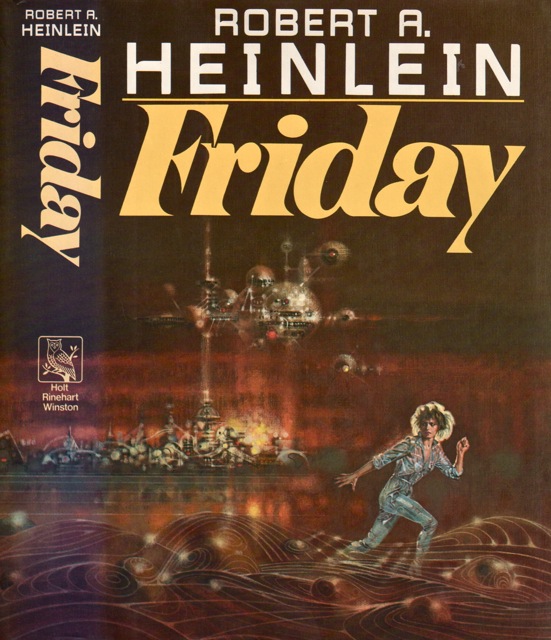
- Friday
Robert A. Heinleinstandalone novel1982
similar byidentitytensescience fiction+1 more
Friday is a 1982 science fiction novel by American writer Robert A. Heinlein. It is the story of a female "artificial person", the eponymous Friday, genetically engineered to be stronger, faster, smarter, and generally better than normal humans. Artificial humans are widely resented, and much of the story deals with Friday's struggle both against prejudice and to conceal her enhanced attributes from other humans. The story is set in a Balkanized 21st century, in which the nations of the North American continent have been split up into a number of smaller states.
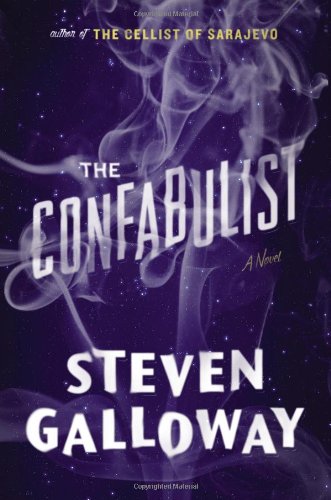
- The Confabulist
Steven Gallowaystandalone novel2014
similar byidentitymysterioustensealternate history+1 more
Alternate history. Harry Houdini, in addition to the life you know, is also a secret spy for the U.S. Treasury Department, advisor to the American military, confidant of a Russian spy, and faker of his own death.
- Who?
Algis Budrysstandalone novel1958
similar byidentitymysterioustensescience fiction
Who? is a 1958 science fiction novel by American writer Algis Budrys, set during the Cold War. It was originally a short story, inspired, as its author claimed, by a Kelly Freas painting he had seen in the offices of the magazine Fantastic Universe, and published in that magazine in April 1955.
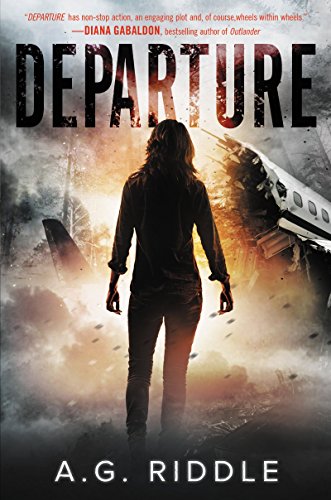
- Departure
A. G. Riddlestandalone novel2014
similar bymysterioustensepolitical intriguescience fictionthriller & suspense+1 more
"The world's past and future rests in the hands of five unwitting strangers in this definitive edition of A. G. Riddle's time-traveling, mind-bending speculative thriller. En route to London from New York, Flight 305 suddenly loses power and crash-lands in the English countryside, plunging a group of strangers into a mysterious adventure that will have repercussions for all of humankind.Struggling to stay alive, the survivors soon realize that the world they've crashed in is very different from the one they left. But where are they? Why are they here? And how will they get back home? Five passengers seem to hold clues about what's really going on: writer Harper Lane, venture capitalist Nick Stone, German genetic researcher Sabrina Schroeder, computer scientist Yul Tan, and Grayson Shaw, the son of a billionaire philanthropist.As more facts about the crash emerge, it becomes clear that some in this group know more than they're letting on--answers that will lead Harper and Nick to uncover a far-reaching conspiracy involving their own lives. As they begin to piece together the truth, they discover they have the power to change the future and the past--to save our world. or end it. A wildly inventive and propulsive adventure full of hairpin twists, Departure is a thrilling tale that weaves together power, ambition, fate, memory, and love, from a bold and visionary talent"--
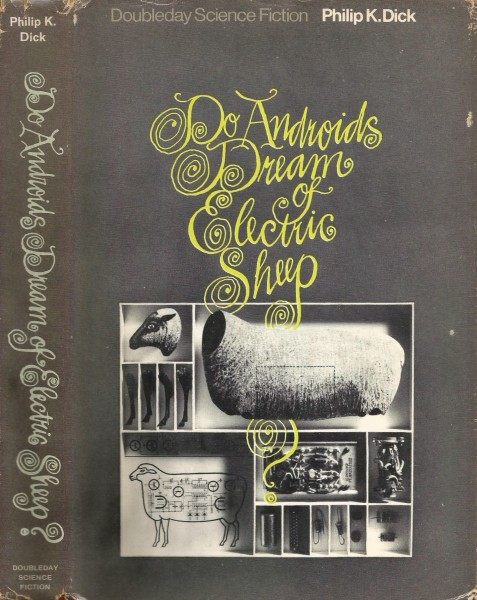
- Blade Runner Universe
series6 books1968
similar byidentityscience fiction+2 more
Philip K. Dick's 1968 novel Do Androids Dream of Electric Sheep? follows bounty hunter Rick Deckard as he tracks escaped androids through an irradiated, near-abandoned San Francisco, using the hunt to probe questions of empathy and what separates human from machine. The novel became the basis for Ridley Scott's 1982 film Blade Runner, and Marvel Comics later published an illustrated adaptation of that film. Together the two trace the story's path from prose original to screen and comic-page adaptation.
- The Next Time I Die
Jason Starrstandalone novel2022
similar byidentitymysterioustensescience fictionalternate historythriller & suspense+1 more
● Steven Blitz tries to rescue a woman from a forced kidnapping and promptly gets stabbed. When he awakes in the hospital, he finds that he has awoke in an alternate reality. — MLB
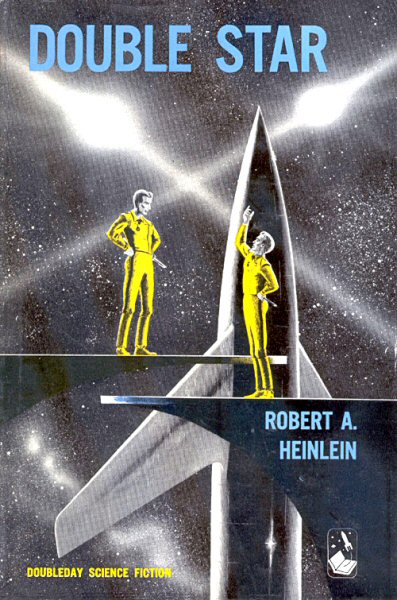
- Double Star
Robert A. Heinleinstandalone novel1956
similar byidentitypolitical intriguescience fiction+1 more
Lorenzo Smythe, the excellent yet unemployed actor, meets Dak Broadbent in a bar. Broadbent hires Lorenzo for an unspecified role, and hustles him onto a rocket ship. Broadbent turns out to be an assistant to the famous interplanetary politician and leader of the Expansionist party: John J. Bonforte. Bonforte, however, has been kidnapped by the political opposition on Mars, and due to Lorenzo's physical similarity to Bonforte, his staff wants Lorenzo to impersonate the politician for an important Martian ceremony.
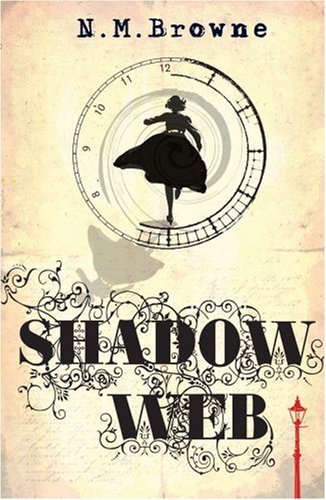
- Shadow Web
N. M. Brownestandalone novel2008
similar byidentityparallel universemysterioustensepolitical intriguescience fiction
Jessica Allendon is bored and Googles her name. Weirdly, she finds another girl, same age, same name, also living in London. They arrange to meet. At the designated time and place, Jess sees the girl, shock registering on both their faces as they realise they look identical. They shake hands and in that instant are catapulted into each other's worlds. Jessica finds herself somewhere which looks like the London of 50 years ago, but the year is still 2008. In this parallel London, the history is different, key war memorials are missing, and the Jessica whose life she now inhabits was involved in a dark and sinister conspiracy. Jess must convince everyone she is the same girl, at all costs, if she wants to get back to her London - alive.
- Flashforward
Robert J. Sawyerstandalone novel1999
similar byidentitymysterioustensescience fiction
Flashforward is a science fiction novel by Canadian author Robert J. Sawyer first published in 1999. The novel is set in 2009. At CERN, the Large Hadron Collider accelerator is performing a run to search for the Higgs boson. The experiment has a unique side effect; the entire human race loses their consciousness for about two minutes. During that time, nearly everyone sees themselves roughly twenty-one years and six months in the future. Each individual experiences the future through the senses of their future self. This "flashforward" results in countless deaths and accidents involving vehicles, aircraft, and any other device needing human control at the time of the experiment. The novel was adapted into the 2009 television series FlashForward.
- Teixcalaan
series2 books2019
similar byidentitypolitical intriguetensescience fiction+1 more
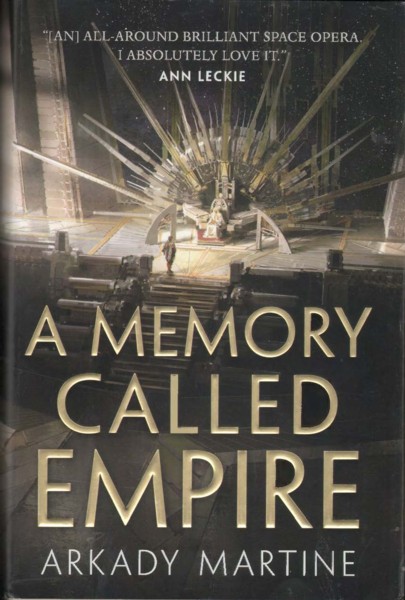
Arkady Martine's space opera duology follows Mahit Dzmare, ambassador from the small, independent Lsel Station, as she arrives in the vast Teixcalaanli Empire to investigate her predecessor's death and finds herself caught up in the empire's own succession crisis. A Memory Called Empire and A Desolation Called Peace pair court intrigue with Mahit's conflicted, outsider fascination with an empire she can't help admiring.
- The Space Between Worlds
Micaiah Johnsonstandalone novel2020
similar byidentityparallel universetensescience fiction
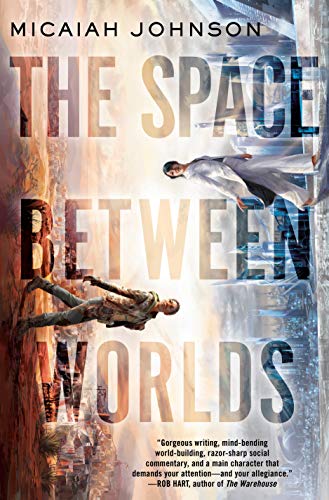
The Space Between Worlds is a 2020 science fiction novel by Micaiah Johnson. It is Johnson's debut novel. The novel takes place in the near future, where travel between parallel universes is possible.
- The Ferryman
Justin Croninstandalone novel2023
similar byidentitymysterioustensescience fiction
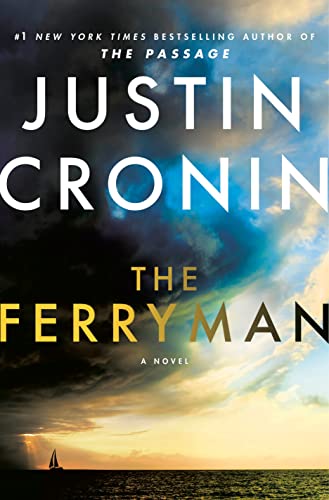
The Ferryman is a 2023 dystopian fiction novel by Justin Cronin. The protagonist, Proctor Bennett, is a titular "ferryman", responsible for transporting elderly citizens to be reborn. Proctor gradually realizes that his utopian life is not what it seems. The Ferryman is Cronin's first novel since 2016's The City of Mirrors.
- Bad Monkeys
Matt Ruffstandalone novel2007
similar byidentitymysterioustensethriller & suspense+1 more
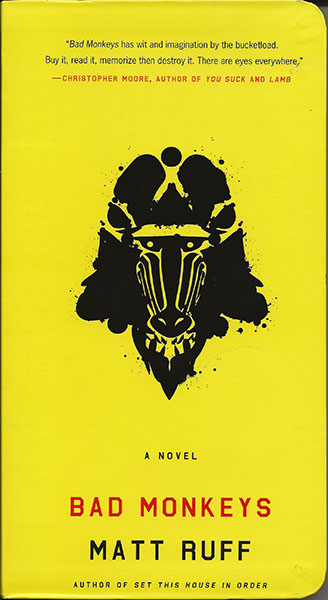
Bad Monkeys is a 2007 psychological thriller novel by American author Matt Ruff. It received mixed reviews in national media, but was subsequently optioned for film.
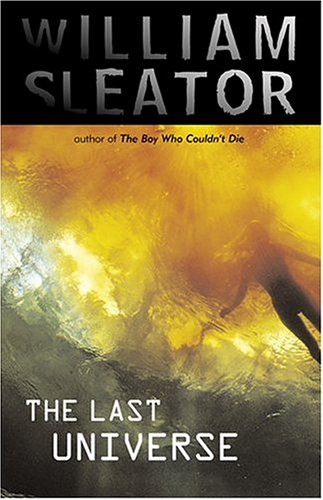
- The Last Universe
William Sleatorstandalone novel2005
similar byidentityparallel universetensescience fictionthriller & suspense
Sleator is at his sci-fi best with this quantum thriller, now available in paperbackIn this gothic, sci-fi thriller from a master storyteller, Susan and her wheelchair-bound brother, Gary, discover a mysterious maze in the vast gardens of their isolated home. Planted by a scientist uncle who disappeared long ago, the maze offers seemingly endless routes and choices. The teenagers discover that each turn they take alters their world in some way. Sickly Gary sees a chance to change his fate; Susan sees that they may both be lost forever.
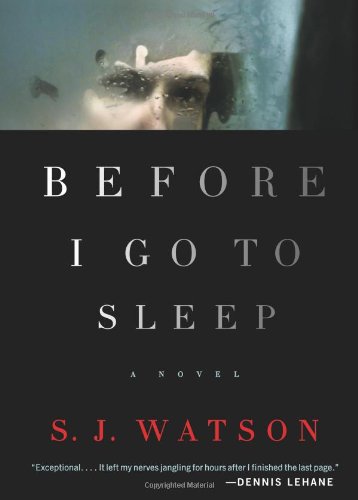
- Before I Go to Sleep
S. J. Watsonstandalone novel2011
similar byidentitymysterioustensethriller & suspense
Before I Go to Sleep is the first novel by S. J. Watson, published in the spring of 2011. It became both a Sunday Times and The New York Times bestseller and has been translated into over 40 languages. It has become a bestseller in France, Canada, Bulgaria and the Netherlands. It reached number 7 on the U.S. bestseller list, the highest position for a debut novel by a British author since J. K. Rowling. The New York Times described the author as an "out-of-nowhere literary sensation". He wrote the novel between shifts whilst working as a National Health Service (NHS) audiologist.
- Endgame Enigma
James P. Hoganstandalone novel1987
similar bymysterioustensepolitical intriguescience fictionthriller & suspensealternate history
From back cover Bantam paperback November 1988: IT MIGHT BE A STEP BEYOND STAR WARS... AND ONE STEP CLOSER TO WORLD WAR III. It is the near future. With its power and influence waning, the Soviet Union has launched Valentina Tereshkova, a giant space station capable of housing 12,000 citizens, into orbit around the earth. But is the colossal off-world colony the peaceful Utopian experiment it's alleged to be? Or is it the last desperate weapon of a crumbling superpower bent on global domination? U.S. computer scientist Paula Bryce and agent Lew McCain are sent to learn the truth -- only to find themselves trapped in the station's awesome prison facility. With a brilliant and eccentric group of dissident inmates, Bryce and McCain seek to unlock from within the secret of the mysterious station. But how will they ever report their findings? In an international powder keg, even unconfirmed suspicions could force a terrifying first strike... while the only hope for mankind rests with two Americans trapped in a prison they can't possibly escape...
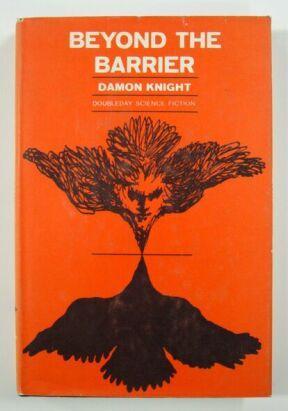
- Beyond the Barrier
Damon Knightstandalone novel1964
similar byidentitymysterioustensescience fiction
From the front flap of the Doubleday first edition: "Gordon Naismith was a physics professor at a large California university. The year was 1980, and by means of the university's duplicator he could personally teach in nine different classrooms simultaneously. Naismith was an average man in all but two respects: the reflexes were extraordinarily quick, and four years before in a plane crash he had lost all memory of his earlier life. Neither difference seemed important until one day a very unusual student in one of his classes asked a disturbing, extracurricular question: "Professor, what is a zug?" The question triggered a series of violent incidents, and soon Naismith himself, as well as the police, were beginning to wonder if the duplicator had reproduced him a tenth time. The answer lay ten thousand years in the future."
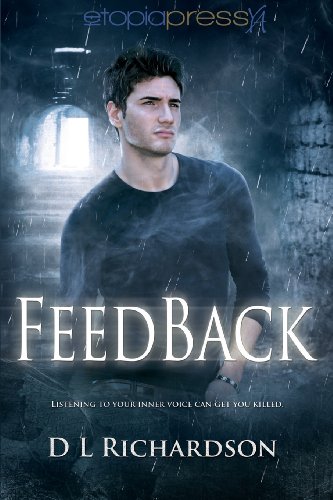
- Feedback
D. L. Richardsonstandalone novel2012
similar byidentitymysterioustensescience fictionthriller & suspense
● "Three teenagers have one thing in common: they're kidnapped two weeks after receiving life-saving organ transplants. Their abductor is a man who believes the memories of the host are retained in the organs. Extracting these memories is just the beginning. Something else is awakening inside their minds. If they trust this voice they might save the world. But it might also get them killed." ― paraphrased from this book's product page on Amazon.com as of 2024-04-03.
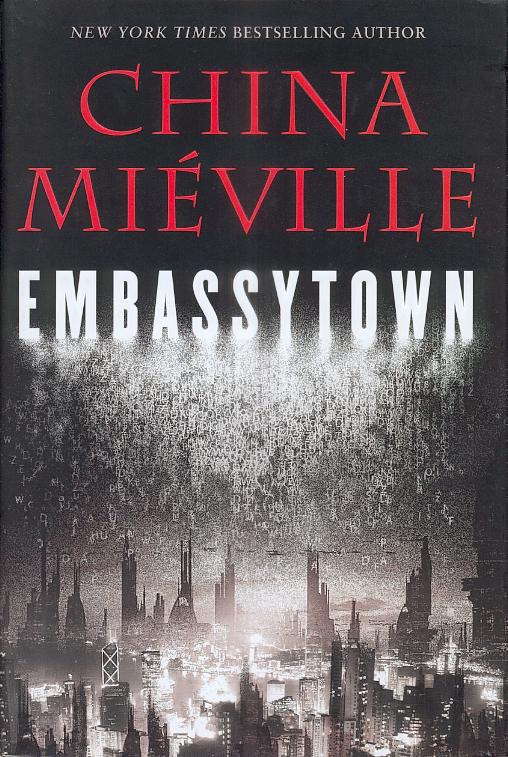
- Embassytown
China Miévillestandalone novel2011
similar byidentitymysteriouspolitical intriguescience fiction
In the far future, humans have colonized a distant planet, home to the enigmatic Ariekei, sentient beings famed for a language unique in the universe, one that only a few altered human ambassadors can speak. Avice Benner Cho, a human colonist, has returned to Embassytown after years of deep-space adventure. She cannot speak the Ariekei tongue, but she is an indelible part of it, having long ago been made a figure of speech, a living simile in their language. When distant political machinations deliver a new ambassador to Arieka, the fragile equilibrium between humans and aliens is violently upset. Catastrophe looms, and Avice is torn between competing loyalties—to a husband she no longer loves, to a system she no longer trusts, and to her place in a language she cannot speak yet speaks through her.