More like First Light
anchored on:literary & generalbritish isles
but
- Lost
Gregory Maguirestandalone novel2001
similar byliterary & generalidentityfamily secretsbritish islescontemporaryreflective
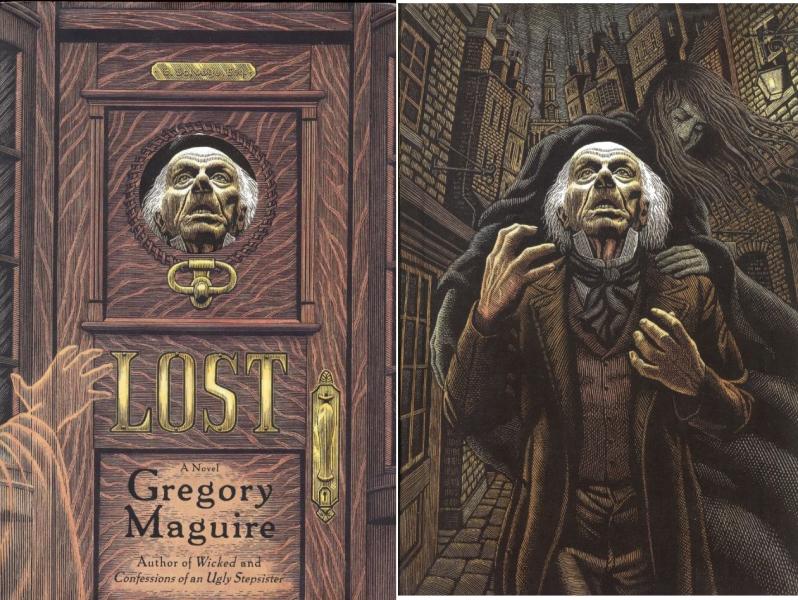
Lost is a 2001 novel by American author Gregory Maguire. Unlike many of Maguire's other adult novels, Lost is set in the real world. The novel's concept is that the protagonist is a distant relative of the man who inspired Charles Dickens' character of Ebenezer Scrooge.
- Pictures in the Dark
Gillian Crossstandalone novel1996
similar byliterary & generalidentityfamily secretsbritish islescontemporarymysterious
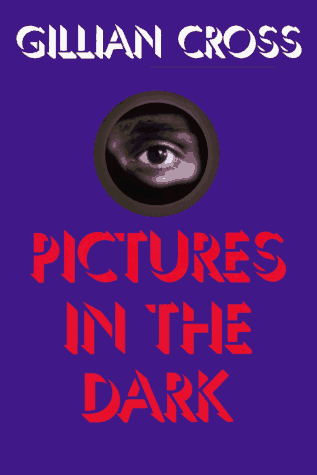
A chance photograph taken for the school Camera Club draws Charlie into the emotionally troubled lives of his classmate Jennifer's family, especially that of her younger brother who harbors an astounding secret.
- Mythago Wood
series7 books1984
completed
similar bycontemporarybritish isles+4 more
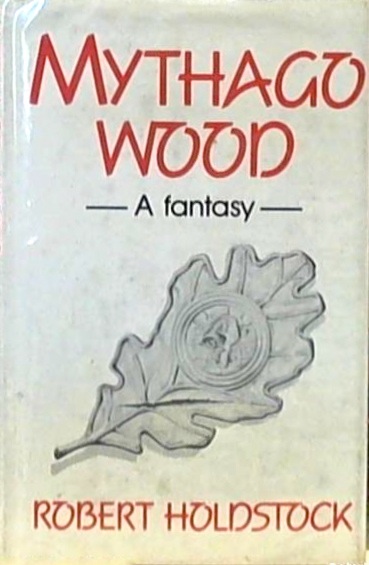
Robert Holdstock's Mythago Wood is set around Ryhope Wood, a small patch of ancient British woodland that is somehow far larger on the inside, generating 'mythagos' -- physical embodiments of myth and legend drawn from visitors' own collective unconscious. The first novel follows Stephen Huxley investigating his family's obsession with the wood after his father's death; Holdstock continued the cycle across further novels and stories exploring different characters and eras. It blends fantasy with psychology and British folklore rather than a conventional quest structure.
- The Opposite House
Helen Oyeyemistandalone novel2007
similar byliterary & generalidentitybritish islescontemporaryreflective+1 more
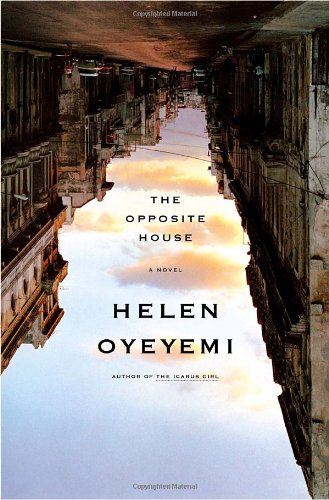
The Opposite House is a novel by British author Helen Oyeyemi first published by Bloomsbury Press in 2007.
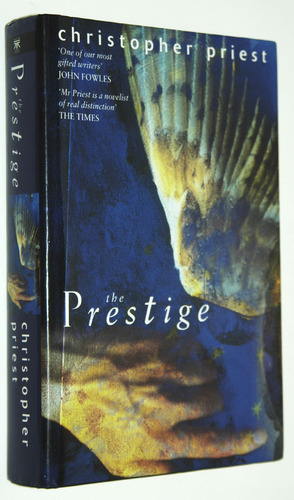
- The Prestige
Christopher Prieststandalone novel1995
similar byliterary & generalidentityfamily secretsbritish islesmysterious
A magician called Borden (at least in private) writes his own version of his life as a magician. There's a lot of focus on a trick, where he seems to move across any width of stage in an instant, and on a feud with another magician, Angier. The account includes passages, where he can't decide what exactly to write, arguing with himself. 3 generations later a Borden (at least biologically) learns about his ancestor. He's also convinced, he somehow has a twin brother, who's happy about this development.
- Kairos
series11 books1962
completed
similar by+2 more
The Time Quintet is a science fantasy series of five young adult novels written by American author Madeleine L'Engle and made up of A Wrinkle in Time (1962), A Wind in the Door (1973), A Swiftly Tilting Planet (1978), Many Waters (1986), and An Acceptable Time (1989).
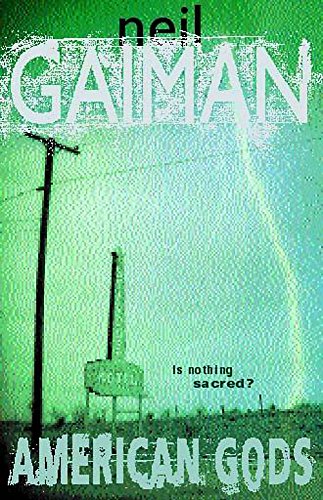
- American Gods
series10 books1999
similar bycontemporary+4 more
Neil Gaiman's American Gods (2001) follows Shadow Moon, an ex-convict who takes a job as bodyguard to a mysterious drifter who is secretly the Norse god Odin, and is drawn into a brewing conflict between the old immigrant gods of myth and the new gods of media, technology, and modern American life. Gaiman's 2005 novel Anansi Boys is set in the same mythological world and shares the trickster god Mr. Nancy, but follows a different protagonist and story, making it a loose companion rather than a direct sequel.
- Red Shift
Alan Garnerstandalone novel1973
similar byliterary & generalidentitybritish islescontemporarymysterious
Quoting that 1978 review article by Brian Lee: Red Shift [after The Owl Service] was again about the relationship between two adolescents, but interwoven in their love story were two other strands: one about a group of Roman legionaires 'going tribal' among warring factions of the British (the parallel and the brutal language are obviously those of the Americans among the Viet Cong and the Viet Minh); the other strand is about the massacre of a village on the Welsh border during the Civil War.{{BREAK}} Undoubtedly, Red Shift is a brilliantly written and gripping book. The difficulty about it is that Garner makes no concessions to his readers (and on the book jacket he makes it clear that it is for children). It is told almost entirely in cryptic conversation with minimal clues to the identity of the speakers. He switches from strand to strand of the story without warning. The book cannot be understood and appreciated at one hasty reading. It is worth serious study, but will children persevere? In her introduction to the 1973 edition of Children's Books of the Year, critic and reviewer Elaine Moss says: Spurred on by the publication of Alan Garner's literary crossword puzzle Red Shift ... many of us asked ourselves where children's publishing should end and adult begin? For Children's Books of the Year I have drawn the line below Red Shift and excluded it ... Alan Garner, in deliberately choosing an avant-garde form, is also choosing an advanced, sophisticated audience for his book. Alan Garner himself seems to have come around to this view. This year a television adaptation of Red Shift was screened at peak viewing time with no mention of the fact that it was originally published as a children's novel. [end quotation from the review article; ellipses by Lee]
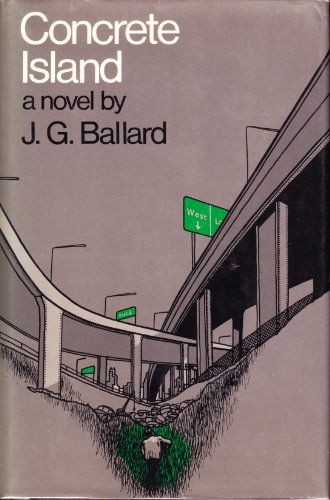
- Concrete Island
J. G. Ballardstandalone novel1974
similar byliterary & generalidentitycontemporarybritish islesreflective
Architect Robert Maitland crashes his car onto a stretch of wasteland trapped between three converging motorways -- visible from thousands of cars, reachable by none of them. Injured and unable to climb back to the road, Maitland adapts to life on what he starts calling the Island, scavenging food thrown from car windows, and discovers he isn't alone: a runaway sex worker hiding in a bunker, and a brain-damaged former circus acrobat, both long past expecting rescue. What begins as a survival story turns into a question of whether Maitland even wants to leave. A J. G. Ballard novel of urban isolation, grouped with Crash and High-Rise.
- Todd Family
series2 books2013
similar byliterary & generalfamily secretsbritish islesreflective+1 more
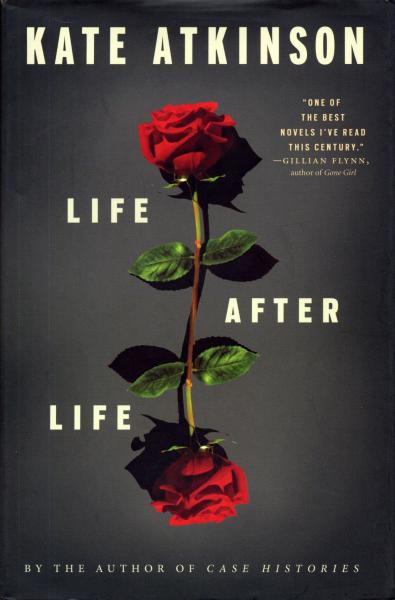
Kate Atkinson's Life After Life gives Ursula Todd, born on a snowy night in 1910, a strange gift: whenever she dies, she's born again into a slightly altered version of the same life, gradually piecing together enough intuition across her many deaths to try to change the course of the twentieth century's worst events. The companion novel A God in Ruins turns to Ursula's brother Teddy, a bomber pilot, following his one, single life forward from the war through old age. The two books share a family and a set of preoccupations -- memory, war, chance -- without forming a conventional sequential series.
- The Many Lives of John Stone
Linda Buckley-Archerstandalone novel2015
similar byliterary & generalidentityfamily secretsbritish islescontemporarymysteriousreflective
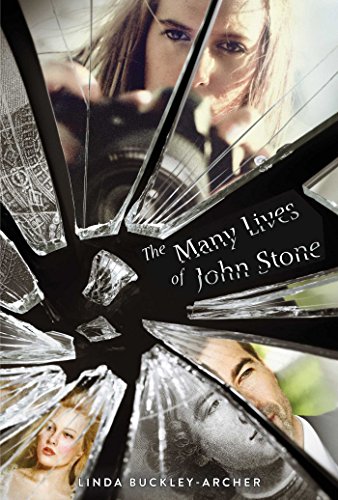
When seventeen-year-old Spark takes a summer job working at a secluded house in England, organizing journals that span centuries and all written in the same hand, she discovers her true connection to the people who live there and the trait that makes them unique.
- The Chymical Wedding
Lindsay Clarkestandalone novel1989
similar byliterary & generalidentitybritish islescontemporaryreflective+1 more
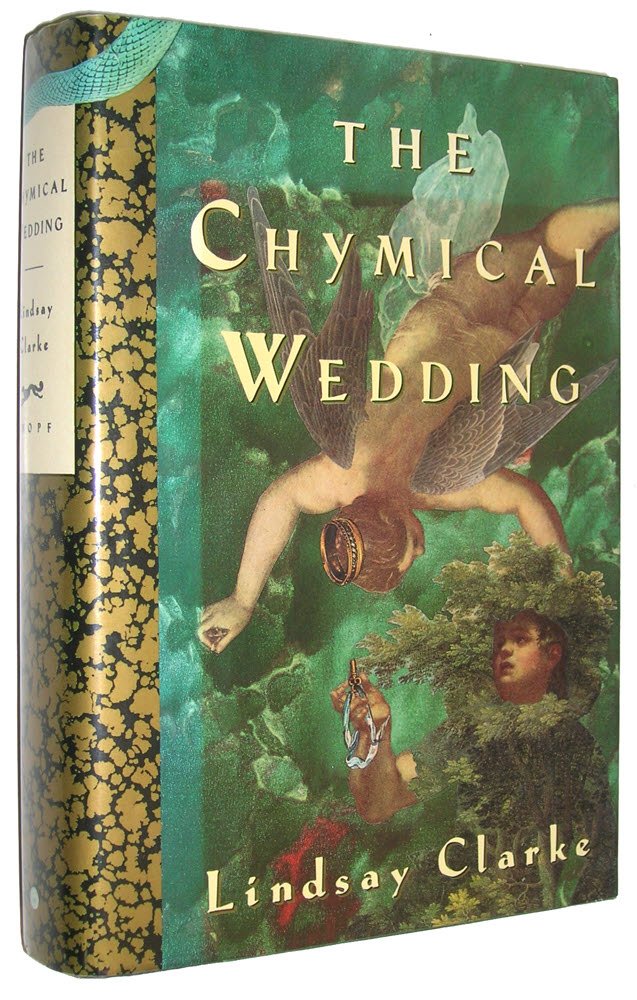
The Chymical Wedding is a 1989 novel by Lindsay Clarke about the intertwined lives of six people in two different eras. Inspired by the life of Mary Anne Atwood, the book includes themes of alchemy, the occult, fate, passion, and obsession. It won the Whitbread Prize for fiction in 1989.
- The Tragedy of Arthur
Arthur Phillipsstandalone novel2011
similar byliterary & generalidentityfamily secretscontemporarymysteriousreflective
The Tragedy of Arthur is a 2011 novel by the American author Arthur Phillips. The narrative concerns the publication of a recently discovered Arthurian play attributed to William Shakespeare, which the main narrator, "Arthur Phillips", believes to be a forgery produced by his father. It was published by Random House.
- Shade
Neil Jordanstandalone novel2004
similar byliterary & generalbritish islescontemporaryreflective+2 more
Shade is a novel published in 2004 by the Irish novelist and film writer Neil Jordan.
- The Good Neighbours
Nina Allanstandalone novel2021
similar byliterary & generalbritish islescontemporary
- The Lion of Boaz-Jachin and Jachin-Boaz
Russell Hobanstandalone novel1973
similar byliterary & generalidentitybritish islescontemporaryreflective
The Lion of Boaz-Jachin and Jachin-Boaz is a novel by American writer Russell Hoban published in 1973, and was his first book for adult readers. The novel is set in an unspecified location in the Middle East, and was written when Hoban lived in London, and was initially published by British publisher Jonathan Cape. Initially appearing to be written as a kind of fable, Boaz-Jachin and Jachin-Boaz are a father and son, both map-makers; the narrative then places both father and son in contemporary London.
- The Satanic Verses
Salman Rushdiestandalone novel1988
similar byliterary & generalidentitybritish islescontemporary+1 more
The Satanic Verses is the fourth novel by British–Indian writer Salman Rushdie. First published in September 1988, the book was inspired by the life of the Islamic prophet Muhammad. As with his previous books, Rushdie used magical realism and relied on contemporary events and people to create his characters. The title refers to the Satanic Verses, a group of Quranic verses about three pagan Meccan goddesses: Allāt, Al-Uzza, and Manāt. The part of the story that deals with the satanic verses was based on accounts from the historians al-Waqidi and al-Tabari.
- A Visit from the Goon Squad
series2 books2010
similar byliterary & generalcontemporaryreflective
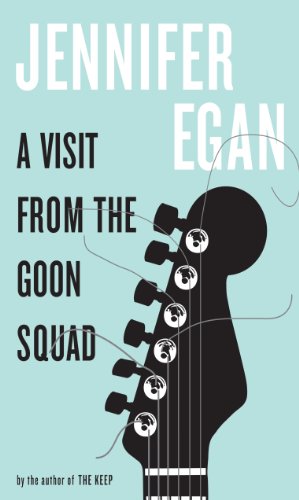
Jennifer Egan's A Visit from the Goon Squad follows a loosely connected group of characters orbiting the music industry across several decades, told through interlocking chapters that jump between narrators, timelines, and, in one chapter, a PowerPoint presentation. The Candy House returns to several of the same characters and their descendants a decade later, in a world reshaped by a technology that lets people access and share their memories. Egan links the two books through recurring characters more than a continuous plot.
- The Blue Ant Trilogy
series3 books2003
similar bycontemporarymysterious+2 more
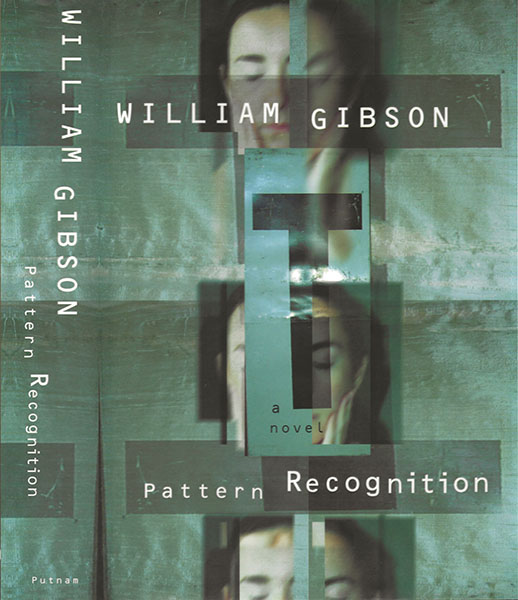
Hubertus Bigend is a fictional character appearing in the third trilogy of novels of science fiction and literary author William Gibson. Bigend is the antihero of Gibson's Pattern Recognition (2003), Spook Country (2007) and Zero History (2010). In an interview Gibson says "I've always had a sense of Bigend as someone who presents himself as though he knows what's going on, but who in fact doesn't. It's just my sense of the subtext of the character: he's bullshitting himself, at the same time as he's bullshitting all of us."