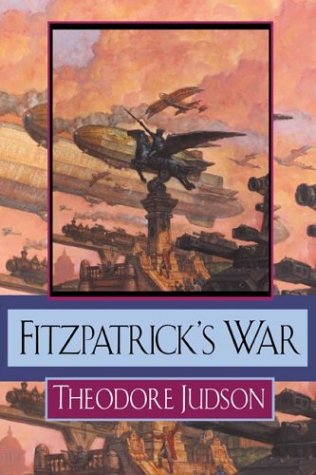
More like Fitzpatrick's War
anchored on:waralternate earthfar futurescience fictionsteampunkalternate history+5 more
but
- The Iron Dream
Norman Spinradstandalone novel1972
similar bydarkalternate earthscience fictionalternate historywarframe storytotalitarianism+1 more
Contains "The Lord of the Swastika", a Science Fiction Novel by Adolf Hitler, plus an afterword by Homer Whipple. In this universe, Adolf Hitler (1889-1953) emigrated to the US in 1919 and became a popular science fiction author, fan and illustrator. "The Lord of the Swastika" won a posthumous Hugo in 1955.
- The Last Man
Mary Shelleystandalone novel1826
similar bydarkfar futurescience fictionpost-apocalyptic+2 more
The Last Man is an apocalyptic, dystopian science fiction novel by Mary Shelley, first published in 1826. The narrative concerns Europe in the late 21st century, ravaged by the rise of a bubonic plague pandemic that rapidly sweeps across the entire globe, ultimately resulting in the near-extinction of humanity. It also includes discussion of the British state as a republic, for which Shelley sat in meetings of the House of Commons to gain insight to the governmental system of the Romantic era. The novel includes many fictive allusions to her husband Percy Bysshe Shelley, who drowned in a shipwreck four years before the book's publication, as well as their close friend Lord Byron, who had died two years previously.
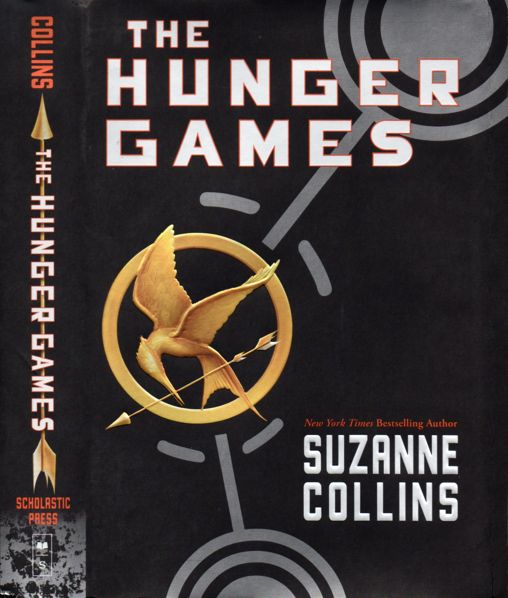
- The Hunger Games Universe
universe5 books2008
Start hereThe Hunger Games · Start here
similar bydarkfar futurescience fictiontotalitarianism+3 more
Panem, they call it now — a nation raised on the drowned bones of North America, a glittering Capitol ringed by twelve districts it once starved into obedience. Every year the Capitol collects its debt in children: two tributes from each district, drawn by lottery, dropped into an engineered arena, and made to kill one another on live television while the whole country is required to watch. This is the Hunger Games — entertainment, punishment, and government at once. Suzanne Collins tells it in a compact, unified body of work. The founding trilogy — The Hunger Games, Catching Fire, and Mockingjay — follows Katniss Everdeen, a girl from the coal-mining District 12 who volunteers in her sister's place and becomes something the Capitol never scripted. Two prequels reach back into the same machinery: The Ballad of Songbirds and Snakes traces a young Coriolanus Snow long before he is President, and Sunrise on the Reaping returns to District 12 a generation ahead of Katniss. Begin with the trilogy, in order — it is Katniss's voice, close and present-tense, that makes Panem breathe, and the prequels land hardest once you know how her story ends. Beneath the spectacle sits one steady, uncomfortable question: who profits when we agree to look away.
- Dune
series20 books1963
part of Dune Universe
similar byfar futurescience fictionpolitical intrigue+2 more
Frank Herbert's Dune Chronicles opens with 1965's Dune, set on the desert planet Arrakis where House Atreides takes control of the only source of the vital spice melange and young Paul Atreides is pulled into a struggle over its politics and religion. Herbert carried the story forward across five further novels — Dune Messiah, Children of Dune, God Emperor of Dune, Heretics of Dune, and Chapterhouse: Dune — following Paul's line over the following millennia, before Brian Herbert and Kevin J. Anderson later extended the saga. Many other editions of these six novels are omnibus and box-set repackagings rather than separate stories.
- The Hunger Games
series3 books2008
part of The Hunger Games Universe
similar bydarkfar futurescience fictionpost-apocalyptictotalitarianism+1 more
The Hunger Games is a series of young adult dystopian novels written by American author Suzanne Collins. The series consists of a trilogy that follows teenage protagonist Katniss Everdeen, as well as two prequels. The Hunger Games universe is a dystopia set in Panem, a post-apocalyptic North American country consisting of the wealthy Capitol and 12 districts in varying states of poverty. As punishment for rebellion, the Capitol hosts an annual battle royale competition called The Hunger Games. Each of the 12 districts must send two children between the ages of 12 and 18 to participate, and the last surviving child is dubbed the victor.
- Saint Leibowitz
series6 books1955
completed
similar byfar futurescience fictionpost-apocalyptic+2 more
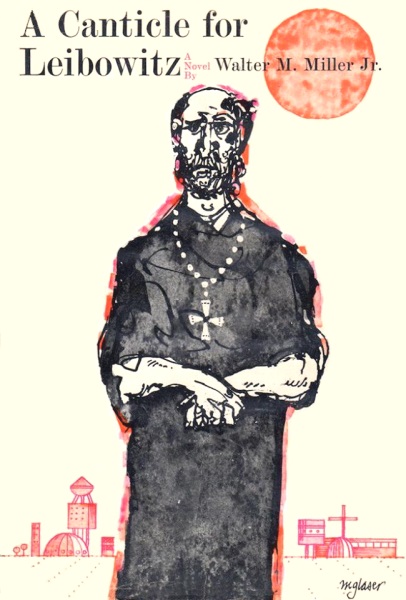
Walter M. Miller Jr.'s A Canticle for Leibowitz (1959), assembled from three novellas he had published earlier in the decade, follows the monks of a Catholic monastery in the post-nuclear American Southwest as they preserve fragments of scientific knowledge across centuries, watching civilization slowly rebuild itself and edge back toward the mistakes that destroyed it. Miller's posthumous sequel, Saint Leibowitz and the Wild Horse Woman, completed by Terry Bisson from his notes after his death and published in 1997, returns to the same abbey and its world decades later. Together the two novels form a sparse, decades-spanning series about memory, faith, and the cycles of civilization.
- When the Sleeper Wakes
H. G. Wellsstandalone novel1899
similar bydarkfar futurescience fictionpolitical intriguetotalitarianism
Graham, an insomniac Englishman in 1890s London, takes a course of sleep-inducing drugs and falls into a coma that lasts two centuries. He wakes in the year 2100 to find his investments have compounded, through a ruling body called the White Council, into effective ownership of most of the world's wealth and power, making him, on paper, humanity's master, and in practice, its prisoner, held under guard while the Council governs in his name. A rebel faction led by a man named Ostrog frees him, hoping to use his symbolic authority to spark an uprising against the Council. An early H. G. Wells dystopia about inherited power and manufactured consent.
- Eden (Harry Harrison)
series5 books1984
completed
similar byalternate earthscience fictionalternate historywar+2 more
Harry Harrison's Eden trilogy imagines an Earth where the dinosaurs never died out, evolving instead into the Yilane, a technologically advanced reptilian civilization that shares the planet uneasily with early humans. West of Eden (1984) introduces the clash between the two species; Winter in Eden and Return to Eden carry it forward as a shifting climate forces both sides to adapt or die. It's an alternate-evolution saga more than a conventional dinosaur adventure.
- The Gap
series5 books1990
similar bydarkfar futurescience fictionpolitical intrigue+2 more
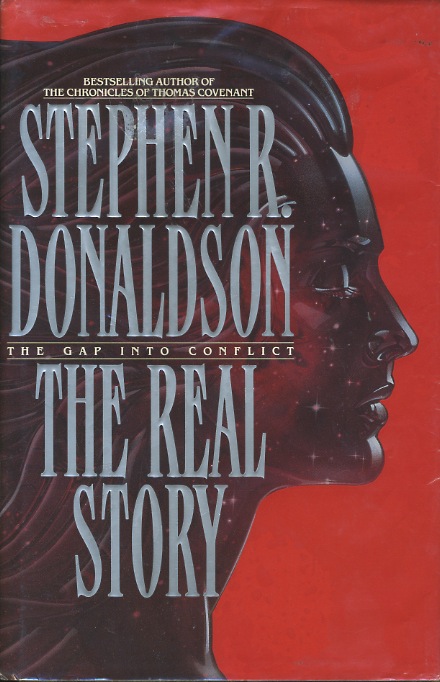
The Gap Cycle is a series of science fiction novels by Stephen R. Donaldson, more usually known for his works of epic fantasy. The series was originally published between 1991 and 1996 by Bantam Books and was reprinted by Gollancz in 2008 in the UK. Here, Donaldson gave a loose retelling of Wagner's Ring cycle.
- Draka (S. M. Stirling)
series6 books1988
similar bydarkalternate earthscience fictionalternate historywartotalitarianism+1 more
The Domination of the Draka is a dystopian science fiction alternate history series by American author S. M. Stirling.
- The Gate to Women's Country
Sheri S. Tepperstandalone novel1988
similar bydarkfar futurescience fictionwarpost-apocalyptic
The Gate to Women's Country is a post-apocalyptic novel by American writer Sheri S. Tepper, published in 1988. It describes a world set three hundred years into the future after a catastrophic war which has fractured the United States into several nations.
- Sun Eater
series36 books2018
similar bydarkfar futurescience fictionwar+1 more
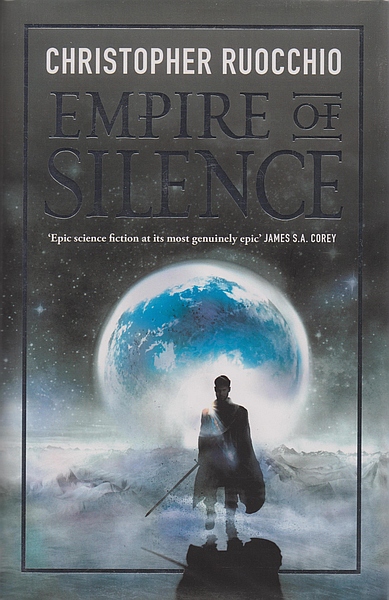
The Sun Eater is a science fiction novel series written by American author Christopher Ruocchio. Not including short stories and novellas, the series consists of the following novels: Empire of Silence (2018), Howling Dark (2019), Demon in White (2020), Kingdoms of Death (2022), Ashes of Man (2022), Disquiet Gods (2024), and Shadows Upon Time (2025).
- Dune Universe
universe78 books1963
Start hereDune · Start here
similar byfar futurescience fictionpolitical intrigue+1 more
Arrakis. Dune. The desert planet, where empire runs on a single substance: the spice melange, which folds space, prolongs life, and unlocks prescience, and which exists nowhere else in the known universe. Frank Herbert's saga is a meditation dressed as an adventure — feudal houses and a secret sisterhood, engineered messiahs and the patient ecology of a world without water, all turning on the terrible gravity of who commands the spice. It reads like scripture and schemes like a war room, ten thousand years hence, among people who have outlawed the thinking machine and made instruments of themselves instead. At its heart stand Herbert's original six — Dune, Dune Messiah, Children of Dune, God Emperor of Dune, Heretics of Dune, Chapterhouse: Dune — a single deepening arc across millennia, arguing the whole way between prophecy and free will. Around that spine his son Brian Herbert and Kevin J. Anderson have raised a vast prequel architecture: Prelude to Dune, tracing the great houses a generation before Paul; Legends of Dune, reaching back to the crusade that broke the machines; the Schools of Dune cycle on the founding of Bene Gesserit, Mentat, and Navigator; the Caladan Trilogy and Heroes of Dune filling years the originals left in shadow. Many hands, dozens of volumes, one desert. What sets Dune apart is its refusal of the simple: religion is manufactured, heroes are hazards, and the sand itself — worm, water, ecology — acts as a political power. Begin where the universe did, with Frank Herbert's Dune (1965), and read the original six in order; you need nothing else to feel the full weight. The prequels are a country to explore afterward, taken by era. Beginnings are delicate times.
- The Penultimate Truth
Philip K. Dickstandalone novel1964
similar bydarkfar futurescience fictiontotalitarianism+1 more
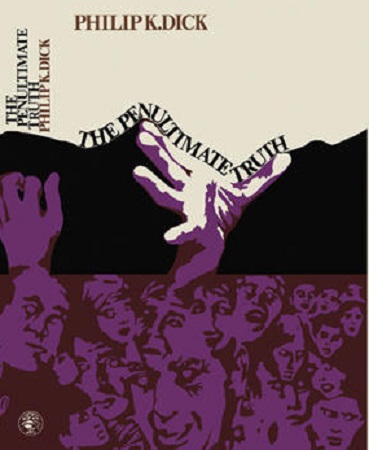
The Penultimate Truth is a 1964 science fiction novel by American writer Philip K. Dick. The story is set in a future where the bulk of humanity is kept in large underground shelters. The people are told that World War III is being fought above them, when in reality the war ended years ago. The novel is based on Dick's 1953 short story "The Defenders". Dick also drew upon two of his other short stories for the plot of the novel: "The Mold of Yancy" and "The Unreconstructed M".
- Hungry City Chronicles / Mortal Engines
series5 books2001
part of Mortal Engines Universe
similar byfar futurescience fictionsteampunkwarpost-apocalyptic+1 more
The Mortal Engines Quartet, also known as the Predator Cities Quartet, is a series of epic young adult science fiction novels by the English novelist and illustrator Philip Reeve. He began the first volume of the series, Mortal Engines, in the 1980s, and it was published in 2001. Reeve then published three further novels, Predator's Gold (2003), Infernal Devices (2005), and A Darkling Plain (2006).
- Julian Comstock: A Story of 22nd-Century America
Robert Charles Wilsonstandalone novel2009
similar byfar futurereflectivescience fictionalternate historypolitical intriguetotalitarianism+1 more
Julian Comstock: A Story of 22nd-Century America is a dystopian speculative fiction novel written by Robert Charles Wilson, and an expansion of Wilson's 2006 novella Julian: A Christmas Story.
- Azean Empire
series2 books1987
similar byfar futuredarkwarscience fictionpolitical intrigue
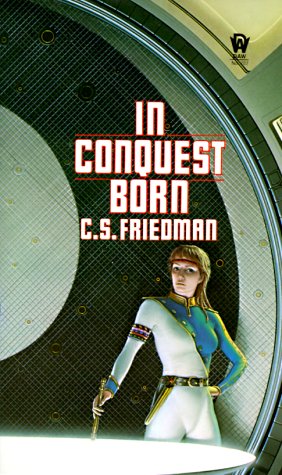
C. S. Friedman's Azean Empire novels are set in a distant-future conflict between two competing human societies, the Azeans and the Braxins, contesting interstellar dominance. In Conquest Born, her debut, works as space opera and military SF with an anthropological bent, using the two societies' opposed cultures and reproductive philosophies as the real engine of the conflict rather than just the battles themselves. The Wilding continues the same interstellar rivalry.
- Oswald Bastable
series5 books1971
part of Moorcock's Multiverse
similar byalternate earthscience fictionsteampunkalternate historywar+1 more
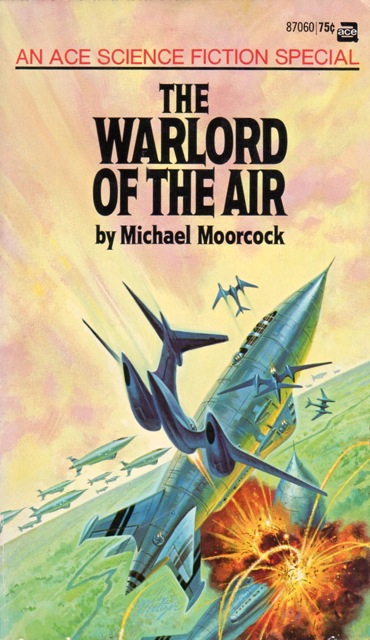
Oswald Bastable follows an Edwardian-era British soldier flung into a series of alternate futures where the First World War never happened, opening with The Warlord of the Air (1971). Across the trilogy he drifts between rival empires and airship wars, an early and influential example of what would later be called steampunk. Michael Moorcock's A Nomad of the Time Streams trilogy sits within his wider multiverse of linked worlds and recurring avatars of the Eternal Champion.
- Red Rising
series13 books2014
similar byfar futuredarkscience fiction+2 more
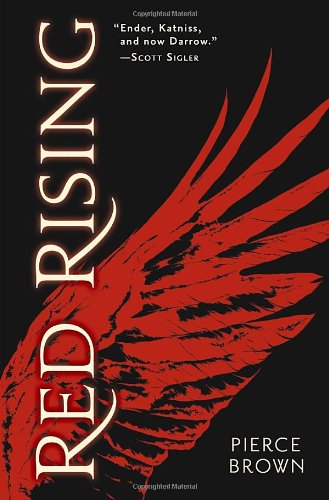
Pierce Brown's Red Rising follows Darrow, a lowborn 'Red' miner on a colonized Mars who discovers his caste's suffering is a lie sustained by the ruling Gold elite, and infiltrates their ranks to destroy the system from within. The series expands from a single-protagonist revenge story into a sprawling multi-book war across the solar system, eventually following an ensemble cast beyond Darrow alone, and combines Roman-inspired factional politics with brutal, competition-driven action set pieces.
- Armor
John Steakleystandalone novel1984
similar bydarkfar futurescience fictionwar
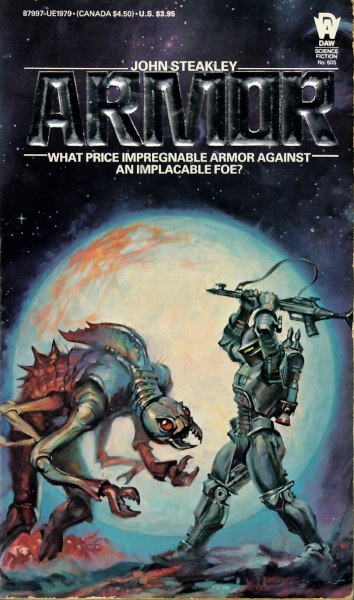
Armor is a military science fiction novel by John Steakley. It features the military use of exoskeletons and insect-like alien enemies but concentrates on the psychological effects of violence on human beings.
- The Difference Engine
William Gibson & Bruce Sterlingstandalone novel1990
similar byalternate earthscience fictionsteampunkalternate historypolitical intrigue
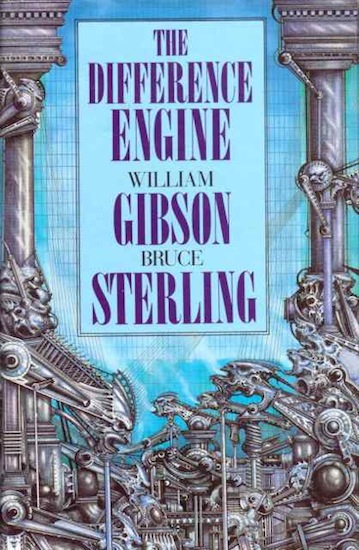
The computer age arrives a century early with Babbage's perfection of his 'analytical engine'. The industrial revolution is accelerated by the development of steam-driven cybernetic 'Engines'. An advanced Great Britain prepares to better the world's lot. An example of the 'steampunk' sub-genre of the cyberpunk movement.
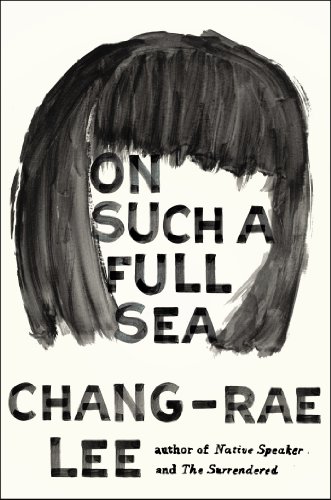
- On Such a Full Sea
Chang-rae Leestandalone novel2014
similar bydarkfar futurereflectivescience fictionpost-apocalyptic
On Such a Full Sea is a speculative fiction novel by Chang-rae Lee, published on January 7, 2014, by Riverhead Books. It is Lee's fifth novel, and the story uses the first person plural to tell the journey of the young fish tank diver, Fan, as she pursues her missing boyfriend. The novel takes place in a post-apocalyptic dystopian world ruined by environmental disaster where the population is divided between those who live in Charter villages, highly regulated and self-contained labor settlements, and the open counties, land that is full of crime and unsupervised by the government. The entire population also is afflicted with "C," a disease affecting the rest of the population that eventually kills everyone who has it. The work deals with themes of capitalism, environmental concerns, healthcare, race, and postcolonialism. It received positive reception at the time of its release, and was a finalist for the National Book Critics Circle Award for Fiction in 2014 as well as shortlisted for the 2015 Andrew Carnegie Medal for Excellence in Fiction.