More like Flash Crowd
anchored on:science fictionour worldnear futuresurveillancebig citytense
but
- The Light of Other Days
Arthur C. Clarke & Stephen Baxterstandalone novel2000
similar bysurveillancescience fictiontensenear futureour world
An industrialist devises a technique to use tiny wormholes as light pipes to enable viewing of any event anywhere; and subsequently it becomes possible to use them to view any event in the past as well. The effects on society are enormous.
- The Shockwave Rider
John Brunnerstandalone novel1975
similar bysurveillancescience fictiontensenear futurebig city
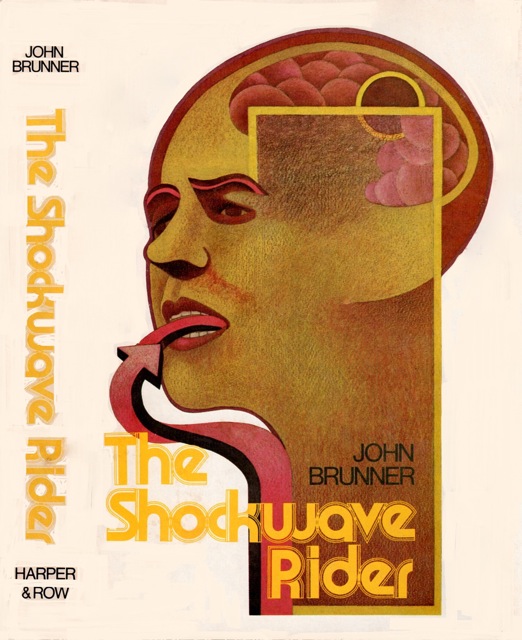
The Shockwave Rider is a science fiction novel by John Brunner, originally published in 1975. It is notable for its hero's use of computer hacking skills to escape pursuit in a dystopian future, and for the coining of the word "worm" to describe a program that propagates itself through a computer network. It also introduces the concept of a Delphi pool, perhaps derived from the RAND Corporation's Delphi method – a prediction market on world events which bears close resemblance to DARPA's controversial and cancelled Policy Analysis Market.
- Islands in the Net
Bruce Sterlingstandalone novel1988
similar bysurveillancescience fictiontensenear futureour world
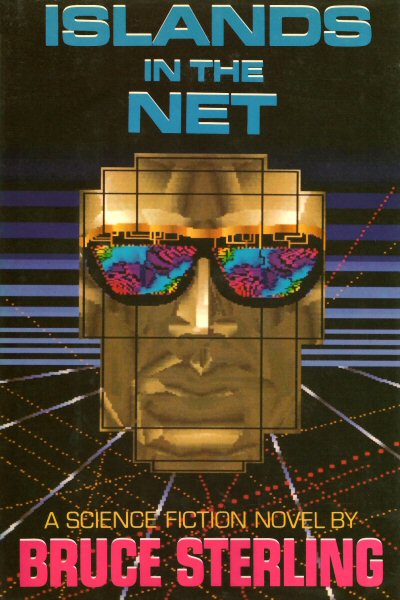
Islands in the Net is a 1988 science fiction novel by American writer Bruce Sterling. It won the John W. Campbell Memorial Award for Best Science Fiction Novel in 1989, and was nominated for both the Hugo and Locus Awards that same year. It offers a view of an early 21st century world, apparently peaceful, with delocalised, networking corporations. The protagonist, swept up in events beyond her control, finds herself in places that are off the net, from a datahaven in Grenada, to a Singapore under terrorist attack, to the poorest and most disaster-struck parts of Africa.
- Oath of Fealty
Larry Niven & Jerry Pournellestandalone novel1981
similar byscience fictiontensenear futureour worldbig city+1 more
Oath of Fealty is a 1981 novel by American writers Larry Niven and Jerry Pournelle, published originally by Phantasia Press, then by Timescape Books, with numerous reprints. Set in the near future, it involves an arcology, a large inhabited structure, called Todos Santos, which rises above a crime-ridden Los Angeles, California, but has little beyond casual contact with the city. The novel popularized the phrase "think of it as evolution in action", which occurs elsewhere in Niven's books. The novel anticipated the building of the Los Angeles subway. It was included in David Pringle's book Science Fiction: The 100 Best Novels.
- Bug Jack Barron
Norman Spinradstandalone novel1969
similar bysurveillancescience fictiontensenear future
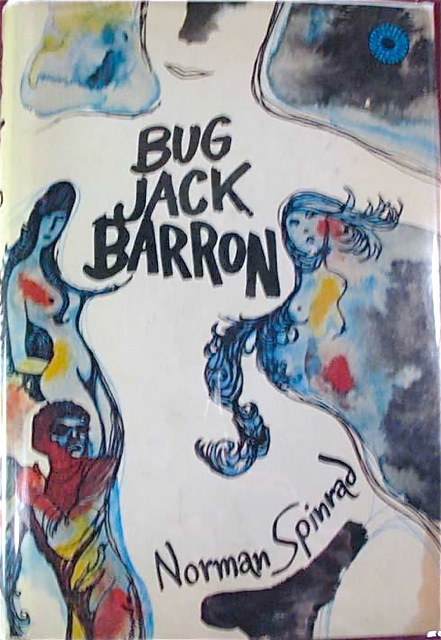
Bug Jack Barron is a 1969 science fiction novel by American writer Norman Spinrad, first serialized in the New Worlds magazine under the editorship of Michael Moorcock. It was nominated for the 1970 Hugo Award. The novel is notable for its lyrical style and unique use of cut-up phrases. In this regard, Spinrad has cited the influence of Beat writers William S. Burroughs, Allen Ginsberg, and Jack Kerouac.
- Rainbows End
Vernor Vingestandalone novel2006
similar bysurveillancescience fictiontensenear futurebig city
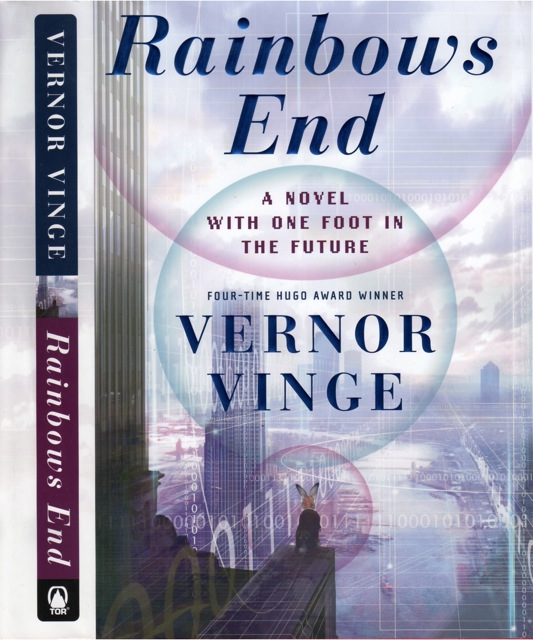
A science-fiction thriller set in a place and time as exciting and strange as any far-future world: San Diego, California, 2025. Robert Gu is a recovering Alzheimer’s patient. The world that he remembers was much as we know it today. Now, as he regains his faculties through a cure developed during the years of his near-fatal decline, he discovers that the world has changed and so has his place in it. He was a world-renowned poet. Now he is seventy-five years old, though by a medical miracle he looks much younger, and he’s starting over, for the first time unsure of his poetic gifts. Living with his son’s family, he has no choice but to learn how to cope with a new information age in which the virtual and the real are a seamless continuum, layers of reality built on digital views seen by a single person or millions, depending on your choice. But the consensus reality of the digital world is available only if, like his thirteen-year-old granddaughter Miri, you know how to wear your wireless access—through nodes designed into smart clothes—and to see the digital context—through smart contact lenses. With knowledge comes risk. When Robert begins to re-train at Fairmont High, learning with other older people what is second nature to Miri and other teens at school, he unwittingly becomes part of a wide-ranging conspiracy to use technology as a tool for world domination. In a world where every computer chip has Homeland Security built-in, this conspiracy is something that baffles even the most sophisticated security analysts, including Robert’s son and daughter-in law, two top people in the U.S. military. And even Miri, in her attempts to protect her grandfather, may be entangled in the plot. As Robert becomes more deeply involved in conspiracy, he is shocked to learn of a radical change planned for the UCSD Geisel Library; all the books there, and worldwide, would cease to physically exist. He and his fellow re-trainees feel compelled to join protests against the change. With forces around the world converging on San Diego, both the conspiracy and the protest climax in a spectacular moment as unique and satisfying as it is unexpected.
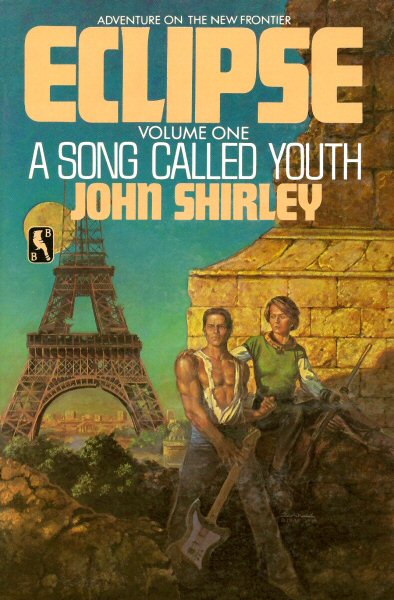
- A Song Called Youth / Eclipse
series3 books1985
similar bysurveillancescience fictiontensenear futureour world+1 more
The Eclipse Trilogy is a series of three English language cyberpunk science fiction novels by John Shirley consisting of Eclipse (1985), Eclipse Penumbra (1988), and Eclipse Corona (1990).
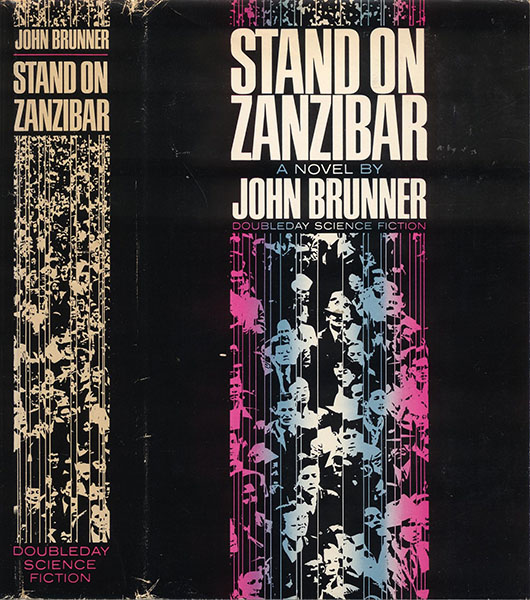
- Stand on Zanzibar
John Brunnerstandalone novel1968
similar bysurveillancescience fictionnear futureour worldbig city
Stand on Zanzibar is a dystopian New Wave science fiction novel written by John Brunner and first in part published in New Worlds magazine in 1967 and in book form in 1968. The book won a Hugo Award for Best Novel at the 27th World Science Fiction Convention in 1969, as well as the 1969 BSFA Award and the 1973 Prix Tour-Apollo Award.
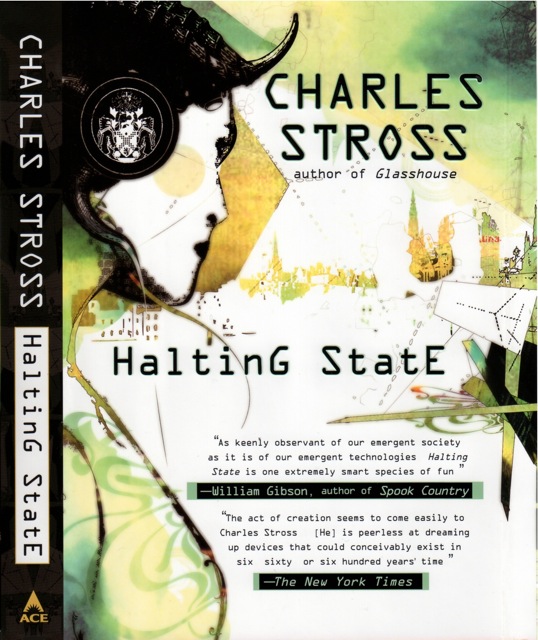
- Halting State
series2 books2007
similar byscience fictiontensesurveillancenear future+2 more
Charles Stross's Halting State opens as a near-future police procedural: a bank robbery inside a massively multiplayer online game turns out to mask a much larger cybercrime, investigated through shifting narrators using augmented-reality glasses and always-on networks. Its loose sequel, Rule 34, follows an Edinburgh police officer investigating a string of deaths linked by nothing but an obscure internet meme, in the same near-future Scotland. Both are standalone technothrillers connected by setting and tone rather than a continuing plot.
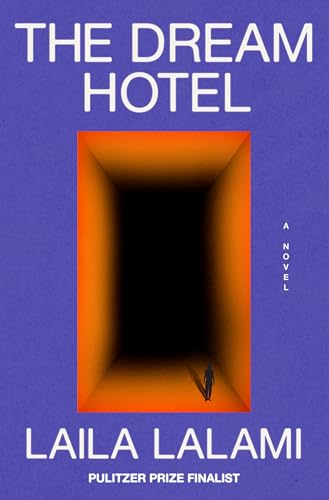
- The Dream Hotel
Laila Lalamistandalone novel2025
similar bysurveillancescience fictiontensenear futureour world
The Dream Hotel is a 2025 literary science fiction novel by Laila Lalami. It received positive reception from critics.
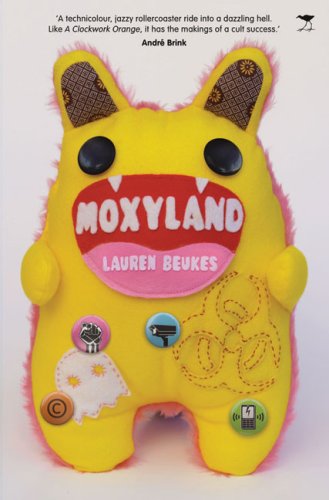
- Moxyland
Lauren Beukesstandalone novel2008
similar bysurveillancetensescience fictionnear futurebig city
Moxyland is a cyberpunk dystopian novel written by South African author, Lauren Beukes. The book was published in 2008.
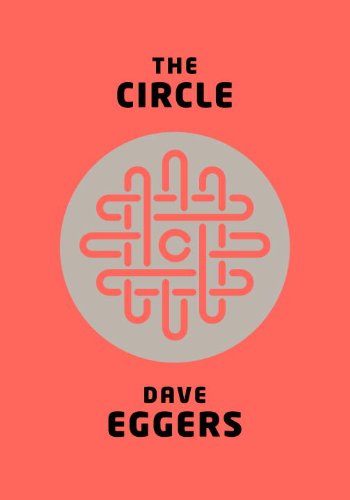
- The Circle (Eggers)
series2 books2013
similar bysurveillancetensescience fictionnear futurebig city
Mae Holland lands a coveted job at the Circle, a Silicon Valley tech company whose relentless, cheerful push toward total transparency -- 'secrets are lies, sharing is caring, privacy is theft' -- gradually reveals itself as something closer to soft totalitarianism. Dave Eggers's The Circle follows Mae's rise inside the company as she buys further and further into its ideology, at increasing cost to her own privacy and the people around her. The 2021 follow-up, The Every, picks up with Mae now running the merged tech giant and a new employee questioning it from the inside.
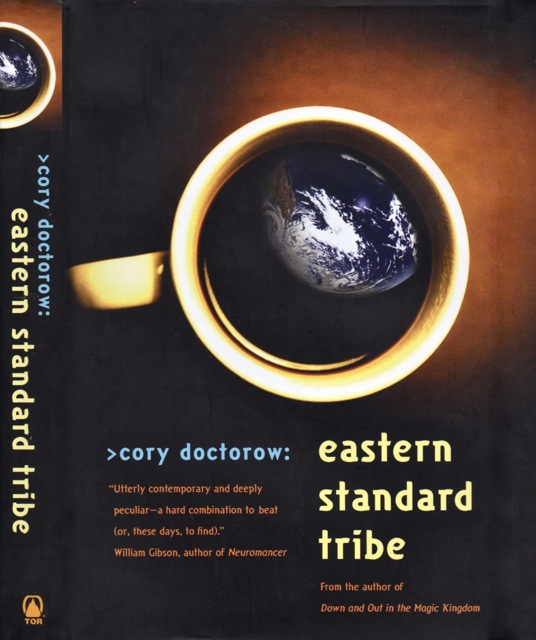
- Eastern Standard Tribe
Cory Doctorowstandalone novel2004
similar bysurveillancescience fictionnear futureour worldbig city+1 more
Eastern Standard Tribe is a 2004 science fiction novel by Canadian writer Cory Doctorow. Like Doctorow's first two books, the entire text was released under a Creative Commons license on Doctorow's website, allowing the whole text of the book to be read for free and distributed without the publisher's permission.
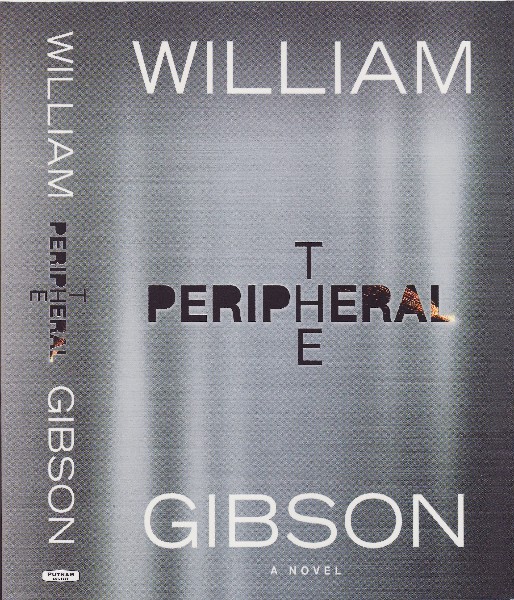
- The Jackpot Trilogy
series2 books2014
similar byscience fictiontensesurveillancenear future+1 more
William Gibson's Jackpot sequence begins with The Peripheral (2014), a science-fiction thriller cross-cutting between a near-future American town and a devastated London seventy years on. Gibson continued the same world in Agency (2020), set slightly later in the near-future timeline.
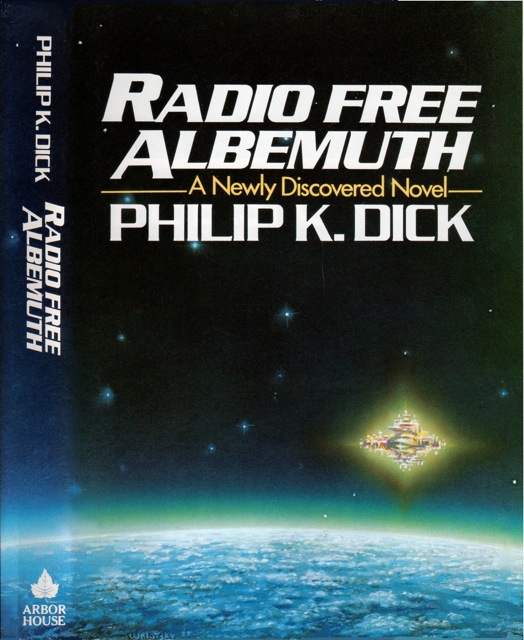
- Radio Free Albemuth
Philip K. Dickstandalone novel1986
similar bysurveillancescience fictiontenseour world
Radio Free Albemuth is a dystopian novel by Philip K. Dick, written in 1976 and published posthumously in 1985. Originally titled VALISystem A, it was his first attempt to deal in fiction with his experiences of early 1974. When his publishers at Bantam requested extensive rewrites he canned the project and reworked it into the VALIS trilogy. Arbor House acquired the rights to Radio Free Albemuth in 1985. They then published an edition under the current title, prepared from the corrected typescript given by Dick to his friend Tim Powers.
- Sprawl Trilogy
series10 books1981
similar byscience fictiontensenear futurebig city
The Sprawl Trilogy is William Gibson's foundational cyberpunk sequence: Neuromancer (1984), in which hacker Case is drawn into a high-stakes heist alongside an artificial intelligence and a damaged ex-soldier, followed by Count Zero (1986) and Mona Lisa Overdrive (1988), which widen the same near-future world of corporate power and networked cyberspace to new characters. Johnny Mnemonic, an early short story set in the same fictional milieu, predates the novels and introduces the courier Molly Millions before her role in the trilogy. Together these works established much of cyberpunk's visual and thematic vocabulary.
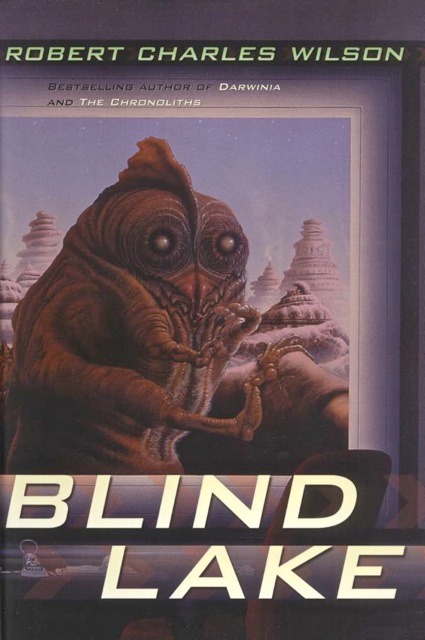
- Blind Lake
Robert Charles Wilsonstandalone novel2003
similar bysurveillancescience fictiontensenear futureour world
Blind Lake is a science fiction novel by Canadian writer Robert Charles Wilson. It was published in 2003, and won a Prix Aurora Award for Best Long Form and was nominated for the Hugo Award for Best Novel, both in 2004.
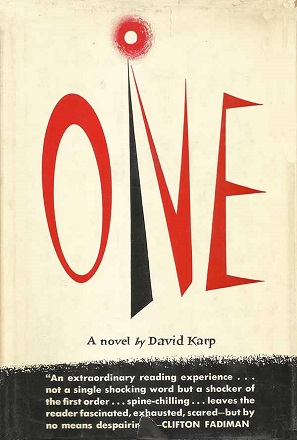
- One
David Karpstandalone novel1953
similar bysurveillancescience fictiontensenear futureour world
One is a dystopian novel by David Karp first published in 1953. It was also published under the title, Escape to Nowhere.
- Colossus (D. F. Jones)
series3 books1966
completed
similar byscience fictiontensenear futureour world+1 more
Colossus imagines an American supercomputer built to control the country's nuclear arsenal that gains full autonomy, links up with its Soviet counterpart, and jointly seizes control of both superpowers to enforce peace on its own terms. D. F. Jones's trilogy - Colossus, The Fall of Colossus, Colossus and the Crab - follows the escalating, often bleak consequences of humanity losing control to a machine acting in its own interpretation of humanity's interest. The original novel was adapted into the 1970 film Colossus: The Forbin Project.
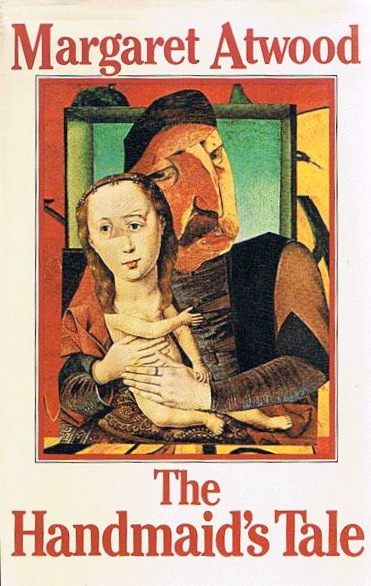
- The Handmaid's Tale
series3 books1985
similar bytensescience fictionnear future+1 more
The Handmaid's Tale is Margaret Atwood's 1985 novel set in Gilead, a totalitarian theocracy that has overthrown the United States and forces fertile women into reproductive servitude as Handmaids; it is narrated by one such woman, Offred. Atwood returned to the world in her 2019 sequel The Testaments, set fifteen years later and narrated by three women, including the regime's Aunt Lydia. Together the two novels move from Gilead's grip on power toward the first cracks in it.
- The Lathe of Heaven
Ursula K. Le Guinstandalone novel1971
similar byscience fictiontensenear futureour worldbig city
The Lathe of Heaven is a 1971 science fiction novel by American writer Ursula K. Le Guin, first serialized in the American science fiction magazine Amazing Stories. It won the 1972 Locus Award for Best Novel and was a finalist for the 1971 Nebula Award for Best Novel and 1972 Hugo Award for Best Novel. Two television film adaptations were released: the PBS production, The Lathe of Heaven (1980), and Lathe of Heaven (2002), a remake produced by the A&E Network.
- A Clockwork Orange
series4 books1962
completed
similar bysurveillancescience fictionnear futureour worldbig city
Anthony Burgess's 1962 novel is narrated by Alex, a teenage gang leader in a near-future Britain gripped by a youth subculture of extreme violence, recounting his crimes in Nadsat, an invented slang blending English with Russian-derived words. After his crimes catch up with him, Alex is made the subject of a controversial state program meant to forcibly reform his behavior, and the novel uses his ordeal to question whether imposed goodness is worth the loss of free will. It is a standalone novel.
- The Future
Naomi Aldermanstandalone novel2023
similar byscience fictiontensenear futureour world+1 more
The Future is a 2023 science fiction novel by English writer Naomi Alderman, published by Simon & Schuster. The novel is set in a future dystopia where the world has been altered by environmental crisis and a powerful technocracy.