Loreful
HomeDiscover
Search series, authors…⌘K
Loreful

Reading orders for SF/F series and shared universes — with your place kept in every one.

Explore

UniversesSeriesWorksAuthorsAtlas

Help

FAQAboutSite map

Account & legal

Sign inCreate accountPrivacyTerms

Data

Built on ISFDB, Wikipedia, Wikidata and Open Library. Curated reading orders carry their reasoning on the page; the rest follow publication order. Data sources & licenses

© Loreful · data: ISFDB · CC BY

More like Flatland

but

Mood

The mood the book leaves you in.

  • The reading experience is propelled by journeys, exploration, and physical risk; excitement and forward momentum dominate over dread or introspection.
  • Joy and loss are deliberately mixed; the resolution grants characters something real while taking something else away, leaving warmth and sorrow together.
  • The book demands work from the reader — dense prose, difficult structure, unfamiliar ideas, or morally uncomfortable material — as part of its intended effect.
  • Grim events, cruelty, or despair dominate the atmosphere, and the book does not soften them with comfort or comic relief.
  • The atmosphere is quietly unsettling — wrongness, unease, and the uncanny pervade the book without necessarily escalating into overt horror.
  • The book is built to move the reader; character feeling is foregrounded and major scenes aim at a strong emotional response.
  • Humor is a primary aim and the prose plays for laughs — comic situations, wit, or dialogue produce sustained comedy, not occasional levity.
  • The book insists that things can improve; effort and decency are shown to matter, and the arc bends toward better outcomes even through hardship.
  • The book teaches as it goes — real facts, history, science, or craft are conveyed in enough depth that learning is part of the reading experience.
  • The overall register is cheerful and easygoing; stakes are kept gentle and the book avoids dwelling on pain or dread.
  • Withheld information drives the experience; the book sustains enigmas and secrets the reader wants resolved, whatever its genre.
  • The book is contemplative and inward-looking, giving more weight to thought, memory, and meaning than to external events.
  • Grief, loss, or melancholy set the dominant register, and the book lets sorrow stand rather than resolving it into comfort.
  • Sustained suspense is the point; the book keeps the reader braced for what happens next through danger, pressure, or impending revelation.
  • Playful invention and charm define the register — fanciful conceits, light absurdity, and a narration that delights in its own oddity.

About

What the story runs on.

  • Stories in which extraterrestrial beings are central — as characters, cultures, or the object of the plot.
  • Stories about who a character truly is — self-discovery, doubled lives, and the search for a self.
  • Stories about mental unraveling — descent into madness, delusion, and minds at war with themselves.
  • Stories in which belief, doubt, and religious life are the central subject, from crises of faith to life inside a religious community.
  • Stories about making art and living as an artist — painters, sculptors, and the demands of the work.
  • Stories driven by maneuvering for power — factions, conspiracies, and statecraft conducted in shadow.
  • Stories about rising against rulers — uprisings, resistance movements, and revolutions and their aftermaths.
  • Stories in which war itself is the subject — combat, occupation, and what warfare does to soldiers and civilians.
  • Stories about inequality between social classes — poverty and privilege, and the friction or open struggle between them.
  • Stories about being watched — surveillance states, ubiquitous monitoring, and the end of privacy.
  • Stories set under absolute state power — dictatorship, thought control, propaganda, and life inside a police state.
  • Stories that examine gender — roles, power between the sexes, patriarchy, and identities that cross the lines a society draws.

Shelf

Where it sits in the library.

    • Fiction built on magic or other supernatural elements that have no scientific explanation.
    • Fantasy set in a recognizably modern city or contemporary world where the supernatural intrudes on everyday life.
    • Action-driven fantasy following warriors or rogues with personal stakes against sorcerous threats, rather than world-spanning conflicts.
    • Fantasy set in a real historical period or a close analogue of one, with magic woven into the era.
    • Fantasy in which protagonists cross from the ordinary world into another world through a portal or similar passage.
    • Fiction that retells or reworks a traditional fairy tale in a new form or setting.
    • Fantasy drawing directly on myths, legends, and folklore, retelling them or building on their figures and logic.
    • Fiction mixing science-fictional trappings with overtly magical or impossible elements in one setting.
    • Low-stakes fantasy emphasizing comfort, community, and everyday pleasures over conflict and peril.
    • Speculative fiction of pervasive moral ambiguity, violence, and cynicism that rejects heroic conventions — fantasy and SF alike.
      • Fiction that extrapolates from science and technology — future societies, space travel, or speculative inventions — within at least nominally natural laws.
      • Science fiction of interstellar scope — starships, galactic polities, and adventure across star systems.
      • Science fiction committed to scientific rigor, where technical plausibility constrains the story.
      • Science fiction centered on armed forces and warfare, told largely from a military point of view.
      • Science fiction of networked, corporate-dominated near futures, pairing high technology with social decay.
      • Fiction depicting an oppressive or catastrophic society, presented as a warning.
      • Fiction set after civilization's collapse, following survivors in the ruins of the old world.
      • Fiction in which characters move between past and future, and the mechanics or consequences of that travel drive the plot.
      • Fiction exploring a world where a historical event went differently and history diverged from ours.
      • Science fiction about humanity's first encounter and communication with an alien intelligence.
      • Science fiction in which extraterrestrial forces attack or occupy Earth and humanity resists.
      • Fiction whose primary aim is to frighten or unsettle the reader through dread, menace, or the monstrous.
      • Horror of decaying houses, buried family secrets, and oppressive atmosphere in the Gothic literary tradition.
      • Horror centered on hauntings and the returning dead.
      • Horror built around the reanimated dead and survival amid their outbreaks.
      • Horror defined by explicit, transgressive gore that refuses to cut away from violence.
      • Speculative fiction of the strange and uncanny that resists both natural explanation and standard genre categories.
      • Fiction organized around solving a crime or puzzle, typically following an investigator toward the identification of a culprit.
      • Crime fiction of moral ambiguity, fatalism, and hard-edged style, set among the corrupt and the doomed.
      • Fast-paced fiction driven by imminent danger, pursuit, or high-stakes conspiracy, built to sustain tension.
      • A thriller of espionage — agents, tradecraft, and intelligence services in conflict.
      • A thriller driven by detailed contemporary or near-future technology, often military or scientific.
      • Fiction whose central plot is a romantic relationship and its development toward an emotionally satisfying resolution.
        • Fiction set in a real past period, where the historical setting materially shapes characters and events.
          • General and literary fiction emphasizing prose style, character interiority, or formal ambition over genre plot conventions.
          • Fiction in a realistic world where magical events occur and are treated as ordinary, in the tradition of Latin American literature.
          • Fiction that ridicules people, institutions, or society in order to criticize them.
          • Fiction of dreamlike, irrational imagery and logic that breaks from realistic representation.
          • Fiction that plays with narrative convention through metafiction, fragmentation, and self-reference.
          • Fiction propelled by journeys, exploration, and physical peril, where action and survival carry the plot.
          • Adventure fiction of ships and seafaring — naval engagements, voyages, and life at sea.
          • Fiction of the American frontier West — gunmen, ranchers, and lawmen, typically in the late nineteenth century.
          • Fiction written primarily to amuse, using comedic situations, wit, or parody as its organizing principle.
            • Fiction about costumed or superpowered heroes and their conflicts with comparable villains.

            Practical

            How long a commitment, whether it stands alone, and whether it has finished.

            Tap a chip to ask for it · tap again to rule it out · once more to clear. Numbers show what would be left.

            • Cover of Stranger in a Strange Land
              Stranger in a Strange Land

              Robert A. Heinlein · standalone novel · 1961

              similar bysatire

              Stranger in a Strange Land is a 1961 science fiction novel by the American author Robert A. Heinlein. It tells the story of Valentine Michael Smith, a human who comes to Earth in early adulthood after being born on the planet Mars and raised by Martians, and explores his interaction with and eventual transformation of Terran culture.

            • Cover of Universe of Gulliver
              Universe of Gulliver

              universe · 34 books · 1726

              Start hereGulliver's Travels · Start here

              similar bysatire

              A ship's surgeon with appalling luck keeps washing up in countries that have solved the problem of being human in some appalling new way. Lilliput, where the great question of the age is which end of an egg to break. Brobdingnag, where a king hears out a description of Europe and concludes that its inhabitants are the most pernicious race of little odious vermin. Laputa, floating and abstracted above the island it taxes. And the land of the Houyhnhnms, where the horses are rational and the humans are not. Jonathan Swift published it in 1726 as a genuine traveller's account, and the trick worked. What is collected here is that book and its long afterlife: the eighteenth-century continuations printed as further Travels into Several Remote Nations, the Victorian retellings that trimmed it down to a story about a giant tied up by tiny people, and the picture-book Lilliputs that followed. It is satire with a smile on and a knife behind it — precise, patient, and colder the further in you read. The first two voyages are the ones everybody knows; the fourth is the one that changes what the first two meant. Read Gulliver's Travels whole and in order if you can, and treat the abridgements gathered here as what they are: souvenirs from the shallow end.

            • Cover of Flatland
              Flatland

              series · 2 books · 1884

              similar by+1 more

              Edwin A. Abbott's 1884 novella Flatland: A Romance of Many Dimensions imagines a two-dimensional world of geometric beings, using its narrator's brush with higher dimensions as both a mathematical thought experiment and a satire of Victorian social rank. Ian Stewart's 2001 Flatterland follows a descendant of that narrator on a tour of stranger geometries, from curved and multidimensional space to relativity, as a knowing homage to Abbott's original. Together they pair a Victorian mathematical classic with its modern sequel.

            • Cover of Cat's Cradle
              Cat's Cradle

              Kurt Vonnegut & Jr. · standalone novel · 1963

              similar bysatire

              Cat's Cradle is a satirical postmodern novel, with science fiction elements, by American writer Kurt Vonnegut. Vonnegut's fourth novel, it was first published on March 18, 1963, exploring and satirizing issues of science, technology, the purpose of religion, and the arms race, often through the use of morbid humor. The novel was nominated for the Hugo Award for Best Novel in 1964.

            • Cover of Player Piano
              Player Piano

              Kurt Vonnegut & Jr. · standalone novel · 1952

              similar bysatire

              In the near future, when cybernetic automation has effectively separated people into two castes, the "engineers and managers", and the remainder of the population who can find work only in "recycling and reclamation" or the largely useless military, an underground movement arises with the intention of rolling back those changes and giving the masses the dignity of owning their own, productive, work once more.

            • Cover of Space Merchants
              Space Merchants

              series · 2 books · 1953

              completed

              similar by+1 more

              The Space Merchants (1953) is a satirical science fiction novel by Frederik Pohl and C. M. Kornbluth that follows an advertising executive navigating a future where aggressive consumer capitalism has swallowed politics and daily life. The authors reunited three decades later for a direct sequel, The Merchants' War (1984), returning to the same satirical world. Together the two books form a compact bookend pair rather than an ongoing series.

            • Cover of God Bless You, Mr. Rosewater or Pearls Before Swine
              God Bless You, Mr. Rosewater or Pearls Before Swine

              Kurt Vonnegut & Jr. · standalone novel · 1965

              similar bysatire

              The Rosewater Foundation was built to shield the family fortune from taxes, but its current steward, war veteran and committed alcoholic Eliot Rosewater, has other ideas: he moves the foundation's offices to rural Rosewater County, Indiana, and starts handing out 'unlimited amounts of love and limited sums of money' to anyone who asks. His disgusted father, Senator Lister Rosewater, watches the family name become a punchline. Meanwhile a distant, downtrodden cousin, Fred Rosewater, is approached by an ambitious young lawyer with a scheme to have Eliot declared insane and the fortune redirected. A satire of American philanthropy, class and sanity from Kurt Vonnegut.

            • Cover of The Napoleon of Notting Hill
              The Napoleon of Notting Hill

              G. K. Chesterton · standalone novel · 1904

              similar bysatire

              The Napoleon of Notting Hill is a novel written by G. K. Chesterton in 1904, set in a nearly unchanged London in 1984.

            • Cover of Search the Sky
              Search the Sky

              C. M. Kornbluth & Frederik Pohl · standalone novel · 1954

              similar bysatire

              Search the Sky is a satirical science fiction novel by American writers Frederik Pohl and Cyril M. Kornbluth, first published in 1954 by Ballantine Books.

            • Cover of Herland
              Herland

              series · 2 books · 1915

              completed

              similar by+1 more

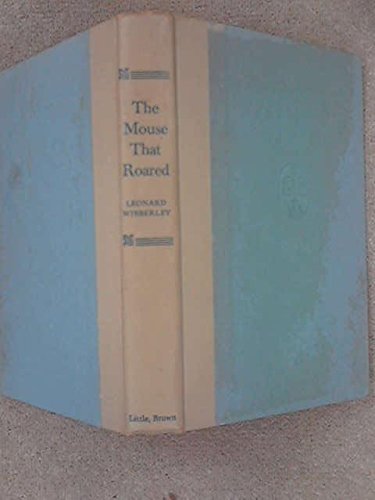
            • Cover of The Mouse That Roared
              The Mouse That Roared

              series · 6 books · 1955

              completed

              similar bysatire

              The Mouse That Roared launches Leonard Wibberley's satirical series about the tiny fictional Duchy of Grand Fenwick, a European microstate whose leaders declare war on the United States purely to lose quickly and collect the postwar reconstruction aid given to defeated nations. The 1955 novel uses Fenwick's mismatched ambitions to poke fun at Cold War politics and the nuclear arms race, and Wibberley kept the joke going across four more novels into the 1970s. Later entries send the duchy into further absurd confrontations with the wider world, including a race to the Moon and a scheme on Wall Street.

            • Cover of The Crying of Lot 49
              The Crying of Lot 49

              Thomas Pynchon · standalone novel · 1966

              similar by+1 more

              The Crying of Lot 49 is a novel by the American author Thomas Pynchon. It was published by J. B. Lippincott & Co. on April 27, 1966. The shortest of Pynchon's novels, the plot follows Oedipa Maas, a young Californian woman who begins to embrace a conspiracy theory as she possibly unearths a centuries-old feud between two mail distribution companies. One of these companies, Thurn and Taxis, actually existed; operating from 1806 to 1867, Thurn and Taxis was the first private firm to distribute postal mail. Like most of Pynchon's writing, The Crying of Lot 49 is often described as postmodernist literature. Time magazine included the book in its list of the 100 best English-language novels from 1923 to 2005.

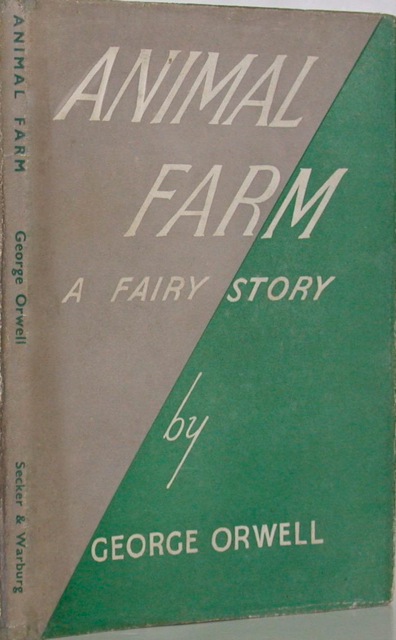
            • Cover of Animal Farm: A Fairy Story
              Animal Farm: A Fairy Story

              George Orwell · standalone novel · 1945

              similar bysatire

              WorldCat: "Fueled by Orwell's intense disillusionment with Soviet Communism, Animal Farm is a nearly perfect piece of writing, both an engaging story and an allegory that actually works. When the downtrodden beasts of Manor Farm oust their drunken human master and take over management of the land, all are awash in collectivist zeal."

            • Cover of Redshirts
              Redshirts

              John Scalzi · standalone novel · 2012

              similar bysatire

              Redshirts is a postmodernist science fiction novel by John Scalzi that satirizes the tropes and narrative elements of Star Trek from the perspectives of several characters in a fictional TV show about the adventures of a starship and its crew who gradually become aware of their true nature.

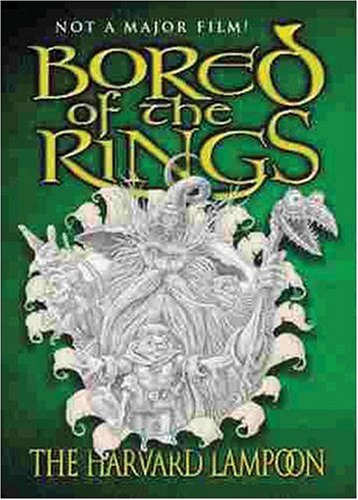
            • Cover of Bored of the Rings
              Bored of the Rings

              Henry N. Beard & Douglas C. Kenney · standalone novel · 1969

              similar bysatire

              Bored of the Rings is a 1969 parody of J. R. R. Tolkien's The Lord of the Rings. This short novel was written by Henry Beard and Douglas Kenney, who later founded National Lampoon. It was published in 1969 by Signet for The Harvard Lampoon, and, unusually for a parody, has remained in print for over 50 years. It has been translated into at least twelve languages.

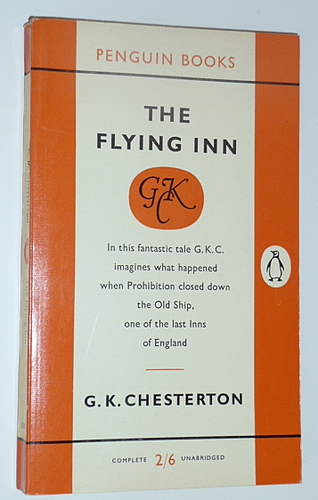
            • Cover of The Flying Inn
              The Flying Inn

              G. K. Chesterton · standalone novel · 1914

              similar bysatire

              The Flying Inn is a 1914 novel by English writer G. K. Chesterton. It is set in a future England where the temperance movement has allowed a bizarre form of Progressive Islam to dominate the political and social life of the country. Because of this, alcohol sales to the poor are effectively prohibited, while the rich can get alcoholic drinks "under a medical certificate". The plot centres on the adventures of Humphrey Pump and Captain Patrick Dalroy, who roam the country in their cart with a barrel of rum in an attempt to evade prohibition, exploiting loopholes in the law to temporarily prevent the police taking action against them. Eventually the heroes and their followers foil an attempted coup by an Islamic military force.

            • Cover of Screwtape
              Screwtape

              series · 2 books · 1942

              completed

              similar bysatire

              C.S. Lewis's Screwtape Letters (1942) is a Christian satirical novel told as 31 letters from a senior devil, Screwtape, coaching his inexperienced nephew Wormwood on how to corrupt the soul of an ordinary British man known only as 'the Patient.' Lewis added a slim sequel, Screwtape Proposes a Toast (1959), an after-dinner speech in which Screwtape skewers trends in modern education and society; the two are usually published together.

            • Cover of The Zap Gun
              The Zap Gun

              Philip K. Dick · standalone novel · 1967

              similar bysatire

              The Zap Gun is a 1967 science fiction novel by American writer Philip K. Dick. It was first published as the two-part serial Project Plowshare in Worlds of Tomorrow in 1965 and 1966, before Pyramid Books issued it in paperback under its present title. The novel originated in a title-first commission devised by Pyramid editor Don Bensen and was written in 1964 during a period of rapid production in Dick's career.

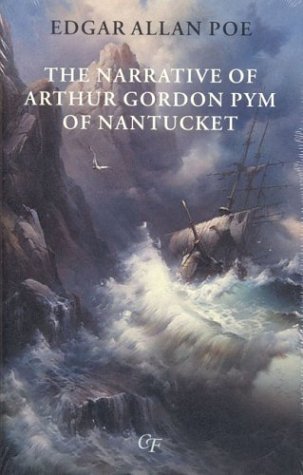
            • Cover of Pym
              Pym

              series · 5 books · 1838

              similar by+1 more

              Edgar Allan Poe's The Narrative of Arthur Gordon Pym of Nantucket (1838), his only complete novel, sends a young stowaway through shipwreck, mutiny, and cannibalism toward an increasingly strange voyage to the South Pole that breaks off on a mysterious, unexplained image. Jules Verne wrote an unauthorized 1897 sequel, An Antarctic Mystery, resolving Poe's cliffhanger in more rationalist terms, while Mat Johnson's 2011 novel Pym uses Poe's original as the springboard for a satirical modern story about race.

            • Cover of Erewhon
              Erewhon

              series · 4 books · 1872

              completed

              similar bysatire

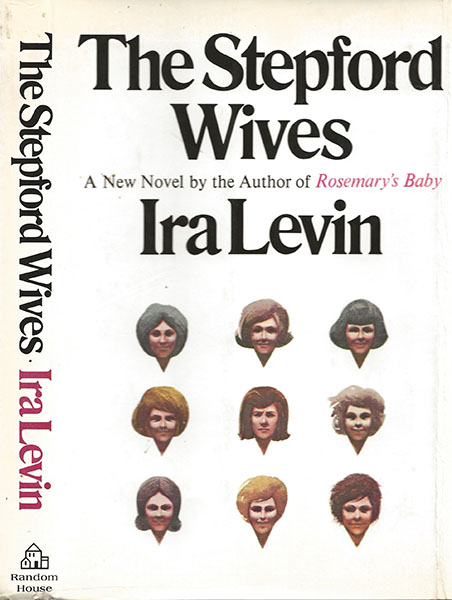
            • Cover of The Stepford Wives
              The Stepford Wives

              Ira Levin · standalone novel · 1972

              similar bysatire

              The Stepford Wives is a 1972 satirical "feminist horror" novel by Ira Levin. The story concerns Joanna Eberhart, a talented photographer, wife, and young mother who suspects that something in the town of Stepford is changing the wives from free-thinking, intelligent women into compliant wives dedicated solely to homemaking. As her friends slowly transform, Joanna realizes the horrific truth.

            • Cover of The Water-Babies
              The Water-Babies

              Charles Kingsley · standalone novel · 1863

              similar bysatire

              The Water-Babies: A Fairy Tale for a Land-Baby is a children's novel by Charles Kingsley. Written in 1862–1863 as a serial for Macmillan's Magazine, it was first published in its entirety in 1863. It was written as part satire in support of Charles Darwin's On the Origin of Species. The book was extremely popular in the United Kingdom and was a mainstay of British children's literature for many decades. The book was selected by Julia Eccleshare as one of the 1001 Children's Books You Must Read Before You Grow Up (2009).

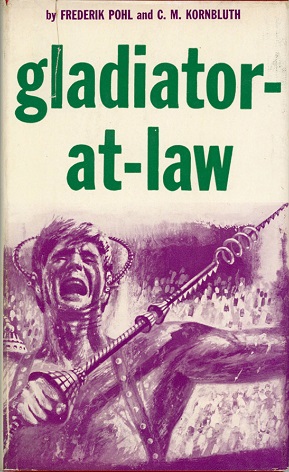
            • Cover of Gladiator-at-Law
              Gladiator-at-Law

              C. M. Kornbluth & Frederik Pohl · standalone novel · 1955

              similar bysatire

              Gladiator-At-Law is a satirical science fiction novel by American writers Frederik Pohl and Cyril M. Kornbluth. It was first published in 1955 by Ballantine Books and republished in 1986 by Baen Books.

            • Cover of Messiah
              Messiah

              Gore Vidal · standalone novel · 1954

              similar bysatire

              Messiah is a satirical novel by Gore Vidal, first published in 1954 in the United States by E.P. Dutton. It is the story of the creation of a new religion, Cavism, which quickly comes to replace the established but failing Christian religion.