Loreful
HomeDiscover
Search series, authors…⌘K
Loreful

Reading orders for SF/F series and shared universes — with your place kept in every one.

Explore

UniversesSeriesWorksAuthorsAtlas

Help

FAQAboutSite map

Account & legal

Sign inCreate accountPrivacyTerms

Data

Built on ISFDB, Wikipedia, Wikidata and Open Library. Curated reading orders carry their reasoning on the page; the rest follow publication order. Data sources & licenses

© Loreful · data: ISFDB · CC BY

More like Fool

anchored on:renaissance and early modernhumoreuropefunny

but

Mood

The mood the book leaves you in.

  • The reading experience is propelled by journeys, exploration, and physical risk; excitement and forward momentum dominate over dread or introspection.
  • Joy and loss are deliberately mixed; the resolution grants characters something real while taking something else away, leaving warmth and sorrow together.
  • The book demands work from the reader — dense prose, difficult structure, unfamiliar ideas, or morally uncomfortable material — as part of its intended effect.
  • Grim events, cruelty, or despair dominate the atmosphere, and the book does not soften them with comfort or comic relief.
  • The atmosphere is quietly unsettling — wrongness, unease, and the uncanny pervade the book without necessarily escalating into overt horror.
  • The book is built to move the reader; character feeling is foregrounded and major scenes aim at a strong emotional response.
  • Humor is a primary aim and the prose plays for laughs — comic situations, wit, or dialogue produce sustained comedy, not occasional levity.
  • The book insists that things can improve; effort and decency are shown to matter, and the arc bends toward better outcomes even through hardship.
  • The book teaches as it goes — real facts, history, science, or craft are conveyed in enough depth that learning is part of the reading experience.
  • The book is designed to uplift and motivate, presenting perseverance or achievement in a way that invites the reader to aspire or act.
  • The overall register is cheerful and easygoing; stakes are kept gentle and the book avoids dwelling on pain or dread.
  • Withheld information drives the experience; the book sustains enigmas and secrets the reader wants resolved, whatever its genre.
  • The book is contemplative and inward-looking, giving more weight to thought, memory, and meaning than to external events.
  • The book works as comfort reading — low tension, a soothing pace, and an atmosphere the reader can unwind in.
  • Grief, loss, or melancholy set the dominant register, and the book lets sorrow stand rather than resolving it into comfort.
  • Sustained suspense is the point; the book keeps the reader braced for what happens next through danger, pressure, or impending revelation.
  • Playful invention and charm define the register — fanciful conceits, light absurdity, and a narration that delights in its own oddity.

About

What the story runs on.

  • Stories in which extraterrestrial beings are central — as characters, cultures, or the object of the plot.
  • Stories about venturing into space to explore — survey missions, astronauts, and the frontier of the unknown beyond Earth.
  • Stories structured as a quest — a journey undertaken to find, deliver, or destroy something of great import.
  • Stories in which staying alive against nature, catastrophe, or scarcity is the central problem.
  • Stories of lovers kept apart by law, family, faith, or station, where the obstacle to love is the plot.
  • Stories in which a friendship — its making, testing, or loss — is the emotional center.
  • Stories of growing up — a young protagonist crossing from childhood into adult knowledge and responsibility.
  • Stories about who a character truly is — self-discovery, doubled lives, and the search for a self.
  • Stories in which a buried family truth — hidden parentage, crimes, or shames — surfaces and reorders the present.
  • Stories driven by maneuvering for power — factions, conspiracies, and statecraft conducted in shadow.
  • Stories in which war itself is the subject — combat, occupation, and what warfare does to soldiers and civilians.
  • Stories organized around investigating a killing — the case, the clues, and the pursuit of the killer, in any genre's clothing.

Shelf

Where it sits in the library.

    • Fiction built on magic or other supernatural elements that have no scientific explanation.
    • Secondary-world fantasy at large scale, where the fate of nations or the world turns on the protagonists' struggle.
    • Fantasy set in a recognizably modern city or contemporary world where the supernatural intrudes on everyday life.
    • Fantasy that blends in horror's atmosphere and imagery, keeping a fantastical frame around grim or frightening material.
    • Action-driven fantasy following warriors or rogues with personal stakes against sorcerous threats, rather than world-spanning conflicts.
    • Fantasy set in a real historical period or a close analogue of one, with magic woven into the era.
    • Fantasy in which protagonists cross from the ordinary world into another world through a portal or similar passage.
    • Fiction that retells or reworks a traditional fairy tale in a new form or setting.
    • Fantasy drawing directly on myths, legends, and folklore, retelling them or building on their figures and logic.
    • Fantasy of ghosts, vampires, shapeshifters, psychics, and similar phenomena, usually set in an otherwise ordinary world.
    • Fiction mixing science-fictional trappings with overtly magical or impossible elements in one setting.
    • Low-stakes fantasy emphasizing comfort, community, and everyday pleasures over conflict and peril.
    • Speculative fiction of pervasive moral ambiguity, violence, and cynicism that rejects heroic conventions — fantasy and SF alike.
      • Fiction that extrapolates from science and technology — future societies, space travel, or speculative inventions — within at least nominally natural laws.
      • Science fiction of interstellar scope — starships, galactic polities, and adventure across star systems.
      • Science fiction committed to scientific rigor, where technical plausibility constrains the story.
      • Science fiction centered on armed forces and warfare, told largely from a military point of view.
      • Science fiction of networked, corporate-dominated near futures, pairing high technology with social decay.
      • Science fiction styled on nineteenth-century steam-powered technology, often in a Victorian or pseudo-Victorian setting.
      • Fiction depicting an oppressive or catastrophic society, presented as a warning.
      • Fiction set after civilization's collapse, following survivors in the ruins of the old world.
      • Fiction in which characters move between past and future, and the mechanics or consequences of that travel drive the plot.
      • Fiction exploring a world where a historical event went differently and history diverged from ours.
      • Science fiction about humanity's first encounter and communication with an alien intelligence.
      • Science fiction in which extraterrestrial forces attack or occupy Earth and humanity resists.
      • Fiction whose primary aim is to frighten or unsettle the reader through dread, menace, or the monstrous.
      • Horror of vast, indifferent, incomprehensible entities before which humanity is insignificant, in the Lovecraft tradition.
      • Horror of decaying houses, buried family secrets, and oppressive atmosphere in the Gothic literary tradition.
      • Horror centered on hauntings and the returning dead.
      • Horror located in the mind — paranoia, obsession, and unreliable perception rather than external monsters.
      • Horror built around the reanimated dead and survival amid their outbreaks.
      • Horror defined by explicit, transgressive gore that refuses to cut away from violence.
      • Speculative fiction of the strange and uncanny that resists both natural explanation and standard genre categories.
      • Fiction organized around solving a crime or puzzle, typically following an investigator toward the identification of a culprit.
      • A puzzle-first mystery that lays out clues so the culprit's identity can be deduced before the reveal.
      • Crime fiction of moral ambiguity, fatalism, and hard-edged style, set among the corrupt and the doomed.
      • A mystery following the realistic routines of police work — forensics, interviews, and case-building.
      • A gentle mystery with an amateur sleuth, a small community, and violence kept off the page.
      • A mystery set in a past era, where the investigation works within that period's methods and society.
      • Fast-paced fiction driven by imminent danger, pursuit, or high-stakes conspiracy, built to sustain tension.
      • A thriller of espionage — agents, tradecraft, and intelligence services in conflict.
      • A thriller centered on lawyers and the courtroom, where litigation carries the suspense.
      • A thriller driven by detailed contemporary or near-future technology, often military or scientific.
      • A thriller whose tension comes from mental states and manipulation between characters rather than external action.
      • Fiction whose central plot is a romantic relationship and its development toward an emotionally satisfying resolution.
      • Romance in which one or both partners are supernatural beings, blending fantasy elements into the love story.
      • A fantasy-romance hybrid in which the romantic arc and the fantasy plot carry equal weight.
      • Romance set in a past era, with courtship shaped by the period's society and manners.
      • Romance set in the present day, without supernatural or historical elements.
      • Fiction set in a real past period, where the historical setting materially shapes characters and events.
        • General and literary fiction emphasizing prose style, character interiority, or formal ambition over genre plot conventions.
        • Fiction in a realistic world where magical events occur and are treated as ordinary, in the tradition of Latin American literature.
        • Fiction that ridicules people, institutions, or society in order to criticize them.
        • Fiction of dreamlike, irrational imagery and logic that breaks from realistic representation.
        • Fiction that plays with narrative convention through metafiction, fragmentation, and self-reference.
        • Fiction propelled by journeys, exploration, and physical peril, where action and survival carry the plot.
        • Adventure fiction of ships and seafaring — naval engagements, voyages, and life at sea.
        • Fiction of the American frontier West — gunmen, ranchers, and lawmen, typically in the late nineteenth century.
        • Fiction centered on soldiers, campaigns, and the experience of warfare, historical or imagined.
          • Fiction written primarily to amuse, using comedic situations, wit, or parody as its organizing principle.
            • Multi-generational fiction following a family or dynasty across decades, with inheritance and kinship as the through-line.
              • Fiction whose world runs on explicit game mechanics — levels, stats, and skills that characters can see and exploit.
                • Fiction about costumed or superpowered heroes and their conflicts with comparable villains.

                Practical

                How long a commitment, whether it stands alone, and whether it has finished.

                Tap a chip to ask for it · tap again to rule it out · once more to clear. Numbers show what would be left.

                • Cover of The Princess Bride
                  The Princess Bride

                  William Goldman · standalone novel · 1973

                  similar byfunnyrevengehumorwhimsicaladventurousfantasy

                  The Princess Bride: S. Morgenstern's Classic Tale of True Love and High Adventure, The "Good Parts" Version is a 1973 fantasy romance novel by American writer William Goldman. The book combines elements of comedy, adventure, fantasy, drama, romance, and fairy tale. It is metafictionally presented as an abridgment of a longer work by the fictional S. Morgenstern, and Goldman's commentary asides are constant throughout. It was originally published in the United States by Harcourt Brace, then later by Random House, while in the United Kingdom it was later published by Bloomsbury.

                • Cover of Heirs of Alexandria
                  Heirs of Alexandria

                  series · 7 books · 2002

                  similar byrenaissance and early modernpolitical intrigueeuropehistorical fantasymediterranean+2 more

                  Heirs of Alexandria is an alternate history/historical fantasy series introduced in 2002 and set primarily in the Republic of Venice in the 1530s. The books are written by three authors, Mercedes Lackey, Eric Flint and Dave Freer. The books combine elements from the styles of all three authors, such as Lackey's approach to tolerance and magic and Flint's sense of history alteration.

                • Cover of The Mouse That Roared
                  The Mouse That Roared

                  series · 6 books · 1955

                  completed

                  similar byfunnyhumor+2 more

                  The Mouse That Roared launches Leonard Wibberley's satirical series about the tiny fictional Duchy of Grand Fenwick, a European microstate whose leaders declare war on the United States purely to lose quickly and collect the postwar reconstruction aid given to defeated nations. The 1955 novel uses Fenwick's mismatched ambitions to poke fun at Cold War politics and the nuclear arms race, and Wibberley kept the joke going across four more novels into the 1970s. Later entries send the duchy into further absurd confrontations with the wider world, including a race to the Moon and a scheme on Wall Street.

                • Cover of D. O. D. O. (Department of Diachronic Operations)
                  D. O. D. O. (Department of Diachronic Operations)

                  series · 2 books · 2017

                  similar bypolitical intrigueeuropehistorical fantasyadventurous+3 more

                  Neal Stephenson and Nicole Galland's D.O.D.O. novels center on the Department of Diachronic Operations, a covert U.S. government agency that discovers magic vanished from the world in the nineteenth century and sets out to use time travel to bring it back. The Rise and Fall of D.O.D.O. (2017) is followed by Master of the Revels, continuing the pair's earlier collaboration on The Mongoliad.

                • Cover of Mircea Basarab
                  Mircea Basarab

                  series · 1 book · 2014

                  part of Cassandra Palmer

                  similar byrenaissance and early modernrevengepolitical intrigueeuropehistorical fantasybig city

                • Cover of The Assassini
                  The Assassini

                  series · 3 books · 2011

                  similar byrenaissance and early moderneuropehistorical fantasy+3 more

                • Cover of Discworld
                  Discworld

                  universe · 84 books · 1983

                  Start hereGuards! Guards! · Start here

                  similar byfunnyfantasy+2 more

                  The Disc is flat. It rides on the backs of four elephants, who in turn stand on the shell of Great A'Tuin, a turtle ten thousand miles long, swimming through space toward nowhere in particular. Magic works here, usually badly. Death speaks IN SMALL CAPITALS and rides a horse called Binky. It looks like a fantasy world and behaves like ours with the safety catch off: a mirror held up to bureaucracy, belief, newspapers, money, war, and the ridiculous, stubborn business of being a person. One hand shaped all of it — Terry Pratchett — across forty-one novels and a shelf of companions, maps, and the Science of Discworld books. The world is braided from strands you can pick up on their own. Rincewind, the cowardly wizard, flees across the Disc (The Colour of Magic). The witches of Lancre, led by the formidable Granny Weatherwax, mind everyone's business (Equal Rites, Wyrd Sisters). Death takes on an apprentice (Mort). The City Watch polices grimy Ankh-Morpork under Commander Vimes (Guards! Guards!). A reformed swindler is given honest work at swordpoint (Going Postal), and young Tiffany Aching learns witching alongside the tiny, larcenous Nac Mac Feegle (The Wee Free Men). Standalones like Small Gods sit apart. The trick of it is that the farce turns, mid-joke, into something that catches in the throat, with footnotes that argue back at the page. Newcomers are gently steered away from the beginning: the early Rincewind books spoof a genre you needn't have read. Enter instead by whichever strand calls — Guards! Guards! for the Watch, Mort for Death, Wyrd Sisters for the witches, Small Gods entirely alone, or The Wee Free Men for the sharpest single thread. Open any door and the whole Disc opens with it.

                • Cover of Ariosto
                  Ariosto

                  Chelsea Quinn Yarbro · standalone novel · 1980

                  similar byrenaissance and early modernpolitical intrigueeuropecourt intriguehistorical fantasyadventurousfantasymediterranean

                  Amazon: In an alternate-world Italian Renaissance where the Italian states have formed a federation, the great epic poet Ludovico Ariosto is writing a fantasy adventure set in the New World that reflects the difficulties besetting his patron, Damiano de' Medici. While the Cerrochi in Ariosto's fantasy battle the evil wizard Anatrecacciatore with the help of a heroic version of Ariosto himself, politics and skullduggery plague the Florence-based court of Italia Federata, in which Ariosto becomes enmeshed when he chooses to support the Medicis against those seeking to fracture the Italian union.

                • Cover of Sarantine Universe
                  Sarantine Universe

                  series · 8 books · 1995

                  similar bypolitical intriguehistorical fantasy+3 more

                  Guy Gavriel Kay's Sarantine-world novels are loosely connected historical fantasies sharing one invented history rather than a fixed cast: The Lions of Al-Rassan (1995, an analogue of medieval Spain), The Last Light of the Sun (2004, drawing on the Viking-age raids of Alfred the Great's Britain), Children of Earth and Sky (2016, a world modeled on Venice, Istanbul, and the Balkans in the 15th century), its prequel A Brightness Long Ago (2019), and its sequel All the Seas of the World (2022, set amid wars between Christendom and the Ottoman Empire). Each novel stands alone, but together they trace centuries of the same fictional world, distinct from Kay's separate Sarantine Mosaic duology.

                • TB
                  The Baroque Cycle

                  series · 11 books · 2003

                  similar byrenaissance and early moderneuropehistorical fiction+1 more

                  The Baroque Cycle is a series of novels by American writer Neal Stephenson. It was published in three volumes containing eight books in 2003 and 2004. The story follows the adventures of a sizable cast of characters living amidst some of the central events of the late 17th and early 18th centuries in Europe, Africa, Asia, and Central America. Despite featuring a literary treatment consistent with historical fiction, Stephenson has characterized the work as science fiction, because of the presence of some anomalous occurrences and the work's particular emphasis on themes relating to science and technology. The sciences of cryptology and numismatics feature heavily in the series, as they do in some of Stephenson's other works.

                • Cover of The Lady Janies
                  The Lady Janies

                  series · 6 books · 2016

                  similar byhistorical fantasy+4 more

                • Cover of Hitchhiker's Guide to the Galaxy
                  Hitchhiker's Guide to the Galaxy

                  series · 16 books · 1979

                  part of The Hitchhiker's Guide to the Galaxy Universe

                  similar byfunnyhumor+1 more

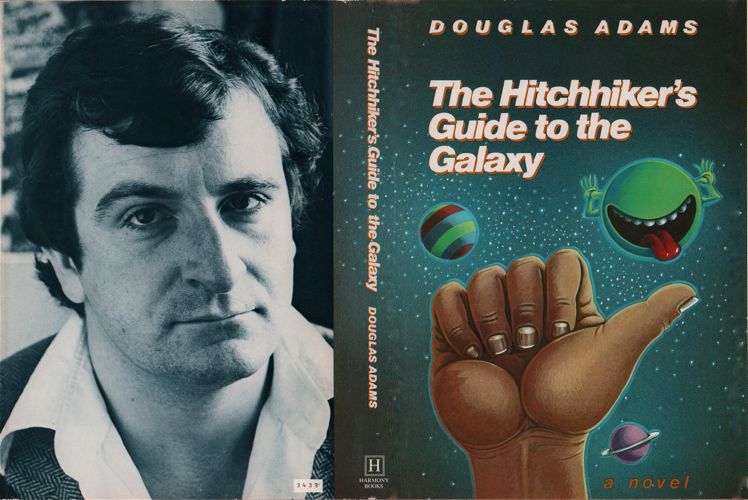
                  The Hitchhiker's Guide to the Galaxy is a comedy science fiction franchise created by Douglas Adams. Originally a radio sitcom broadcast over two series on BBC Radio 4 between 1978 and 1980, it was soon adapted to other formats, including both novels and comic books, a 1981 BBC television series, a 1984 text adventure game, stage shows and a 2005 feature film.

                • Cover of The Enterprise of Death
                  The Enterprise of Death

                  Jesse Bullington · standalone novel · 2011

                  similar byfunnyrenaissance and early moderneuropehistorical fantasyadventurousfantasy

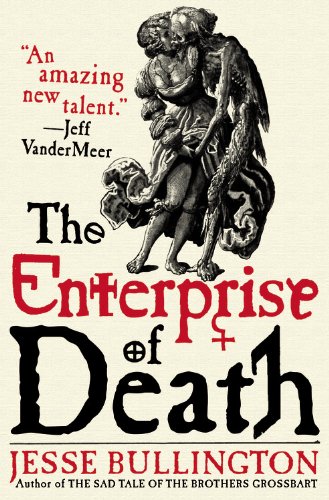
                  The Enterprise of Death is a historical fantasy novel by Jesse Bullington, published in 2011. It recounts the journeys of Awa, a lesbian Moor necromancer, through an irreverently portrayed 16th-century Europe, helped by friends who include historical figures such as the polymath Paracelsus and the artist-mercenary Niklaus Manuel.

                • Cover of Island of the Sequined Love Nun
                  Island of the Sequined Love Nun

                  Christopher Moore · standalone novel · 1997

                  similar byfunnyhumorabsurdistwhimsical+1 more

                  Island of the Sequined Love Nun is a novel by American absurdist writer Christopher Moore, published in 1997. It is based partly on the author's personal experiences in Micronesia.

                • Cover of Maestro Nostradamus
                  Maestro Nostradamus

                  series · 3 books · 2007

                  completed

                  similar byrenaissance and early moderneuropehistorical fantasy+3 more

                • Cover of The Conqueror's Trilogy
                  The Conqueror's Trilogy

                  series · 3 books · 2016

                  similar byrenaissance and early modernpolitical intrigueeuropehistorical fiction+1 more

                • Cover of Lent
                  Lent

                  Jo Walton · standalone novel · 2019

                  similar byrenaissance and early modernpolitical intrigueeuropehistorical fantasyfantasy

                  "Young Girolamo's life is a series of miracles. It's a miracle that he can see demons, plain as day, and that he can cast them out with the force of his will. It's a miracle that he's friends with Pico della Mirandola, the Count of Concordia. It's a miracle that when Girolamo visits the deathbed of Lorenzo "the Magnificent," the dying Medici is wreathed in celestial light, a surprise to everyone, Lorenzo included. It's a miracle that when Charles VIII of France invades northern Italy, Girolamo meets him in the field, and convinces him to not only spare Florence but also protect it. It's a miracle than whenever Girolamo preaches, crowds swoon. It's a miracle that, despite the Pope's determination to bring young Girolamo to heel, he's still on the loose...and, now, running Florence in all but name. That's only the beginning. Because Girolamo Savanarola is not who--or what--he thinks he is. He will discover the truth about himself at the most startling possible time. And this will be only the beginning of his many lives." - publisher

                • Cover of Charlie Asher
                  Charlie Asher

                  series · 2 books · 2006

                  similar byfunnyhumorbig city+2 more

                • Cover of Age of Unreason
                  Age of Unreason

                  series · 4 books · 1998

                  similar byrenaissance and early modernpolitical intrigueeuropehistorical fantasyadventurousfantasy

                  The Age of Unreason is a series of four novels in the historical fantasy genre written by Gregory Keyes:Newton's Cannon (1998), ISBN 1-56865-829-X A Calculus of Angels (1999), ISBN 0-7394-0260-9 Empire of Unreason (2000), ISBN 0-345-40609-5 The Shadows of God (2001), ISBN 0-345-43904-X

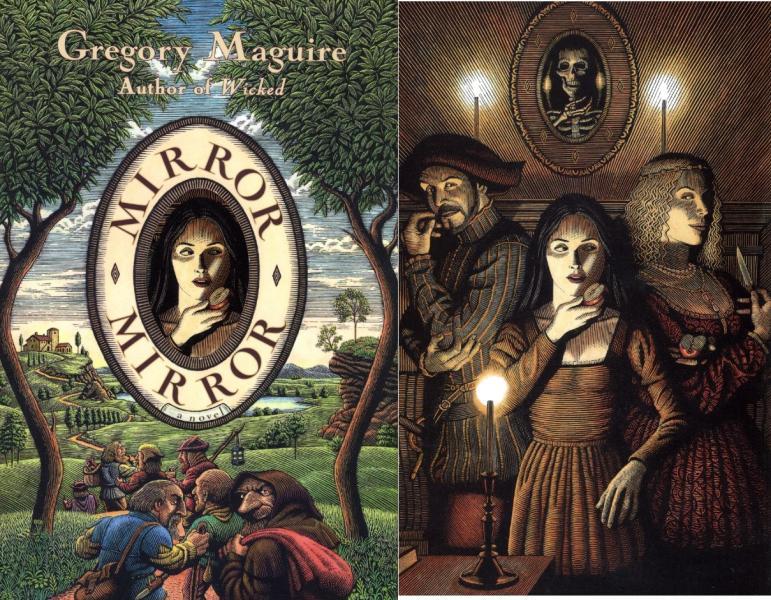
                • Cover of Mirror Mirror
                  Mirror Mirror

                  Gregory Maguire · standalone novel · 2003

                  similar byrenaissance and early moderneuropehistorical fantasyfantasymediterranean+1 more

                  Mirror, Mirror is a fantasy novel by American writer Gregory Maguire, published in 2003. The novel is a revisionist version of the tale of Snow White set in rural Italy and featuring the historical Borgia family, with Lucrezia Borgia in the role of the Evil Queen.

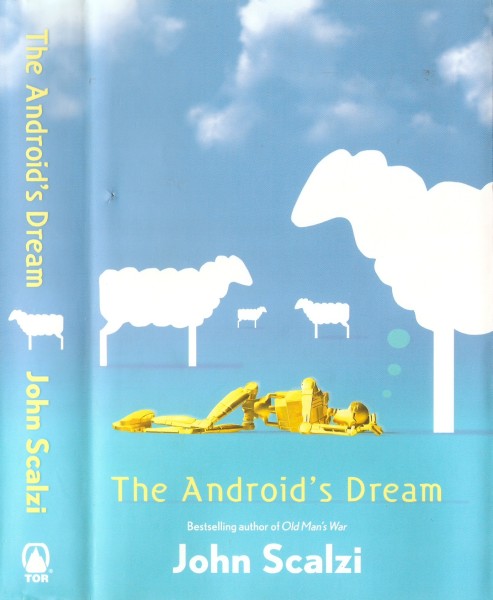
                • Cover of The Android's Dream
                  The Android's Dream

                  series · 2 books · 2006

                  similar byfunnypolitical intriguehumoradventurous

                  A minor diplomatic insult with a genetically engineered sheep breed spirals into a full interstellar crisis when the last surviving specimen of the 'Android's Dream' breed, needed for a critical ceremony with the alien Nidu, turns out to have been hunted to extinction by a Nidu faction bent on provoking war. John Scalzi's The Android's Dream follows ex-soldier Harry Creek as the hunt for a replacement leads him to Robin Baker, an ordinary woman carrying hidden sheep DNA that makes her the key to avoiding a war. It's a standalone comic space opera rather than an ongoing series.

                • Cover of The Crock of Gold
                  The Crock of Gold

                  James Stephens · standalone novel · 1912

                  similar byfunnyhumorwhimsicalfantasy

                  The Crock of Gold is a comic novel written by Irish author James Stephens, first published in 1912.

                • Cover of Mention My Name in Atlantis
                  Mention My Name in Atlantis

                  John Jakes · standalone novel · 1972

                  similar byfunnypolitical intriguehumoradventurousfantasy

                  From the back cover of the DAW Books first edition: The continent of Atlantis had troubles enough before Conax the Barbarian washed ashore. For Hoptor the Vintner, who considered himself a citizen of importance, things were going from bad to worse. The king was on his last legs, his generals were plotting, there were those scary lights in the sky, and Hoptor's favorite girl was being put up for auction on the slave block. Then Conax, the self-styled king of Chimeria - a place nobody ever heard of - turned up at the auction with his broadsword, his barbaric manners, and his hair-trigger temper. That wast the last straw. From then on Atlantis was doomed!

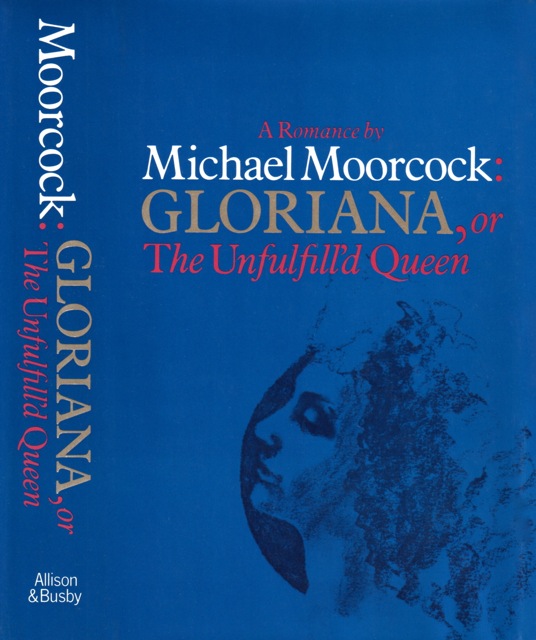
                • Cover of Gloriana, or, the Unfulfill'd Queen
                  Gloriana, or, the Unfulfill'd Queen

                  Michael Moorcock · standalone novel · 1978

                  similar byrenaissance and early modernpolitical intriguecourt intriguehistorical fantasyfantasy

                  Gloriana, or The Unfulfill'd Queen is a work of literary fantasy by British novelist Michael Moorcock. It was first published in 1978 and has remained in print ever since.