Loreful
HomeDiscover
Search series, authors…⌘K
Loreful

Reading orders for SF/F series and shared universes — with your place kept in every one.

Explore

UniversesSeriesWorksAuthorsAtlas

Help

FAQAboutSite map

Account & legal

Sign inCreate accountPrivacyTerms

Data

Built on ISFDB, Wikipedia, Wikidata and Open Library. Curated reading orders carry their reasoning on the page; the rest follow publication order. Data sources & licenses

© Loreful · data: ISFDB · CC BY

More like Foreign Devils

anchored on:science fictioncolonialismadventurous

but

Mood

The mood the book leaves you in.

  • The reading experience is propelled by journeys, exploration, and physical risk; excitement and forward momentum dominate over dread or introspection.
  • Joy and loss are deliberately mixed; the resolution grants characters something real while taking something else away, leaving warmth and sorrow together.
  • The book demands work from the reader — dense prose, difficult structure, unfamiliar ideas, or morally uncomfortable material — as part of its intended effect.
  • Grim events, cruelty, or despair dominate the atmosphere, and the book does not soften them with comfort or comic relief.
  • The atmosphere is quietly unsettling — wrongness, unease, and the uncanny pervade the book without necessarily escalating into overt horror.
  • The book is built to move the reader; character feeling is foregrounded and major scenes aim at a strong emotional response.
  • Humor is a primary aim and the prose plays for laughs — comic situations, wit, or dialogue produce sustained comedy, not occasional levity.
  • The book insists that things can improve; effort and decency are shown to matter, and the arc bends toward better outcomes even through hardship.
  • The book teaches as it goes — real facts, history, science, or craft are conveyed in enough depth that learning is part of the reading experience.
  • The book is designed to uplift and motivate, presenting perseverance or achievement in a way that invites the reader to aspire or act.
  • The overall register is cheerful and easygoing; stakes are kept gentle and the book avoids dwelling on pain or dread.
  • Withheld information drives the experience; the book sustains enigmas and secrets the reader wants resolved, whatever its genre.
  • The book is contemplative and inward-looking, giving more weight to thought, memory, and meaning than to external events.
  • The book works as comfort reading — low tension, a soothing pace, and an atmosphere the reader can unwind in.
  • Grief, loss, or melancholy set the dominant register, and the book lets sorrow stand rather than resolving it into comfort.
  • Sustained suspense is the point; the book keeps the reader braced for what happens next through danger, pressure, or impending revelation.
  • Playful invention and charm define the register — fanciful conceits, light absurdity, and a narration that delights in its own oddity.

About

What the story runs on.

  • Stories in which extraterrestrial beings are central — as characters, cultures, or the object of the plot.
  • Stories about venturing into space to explore — survey missions, astronauts, and the frontier of the unknown beyond Earth.
  • Stories about minds with paranormal abilities — telepathy, telekinesis, precognition, empathy — and how societies handle those who have them.
  • Stories structured as a quest — a journey undertaken to find, deliver, or destroy something of great import.
  • Stories in which staying alive against nature, catastrophe, or scarcity is the central problem.
  • Stories in which a friendship — its making, testing, or loss — is the emotional center.
  • Stories of growing up — a young protagonist crossing from childhood into adult knowledge and responsibility.
  • Stories about who a character truly is — self-discovery, doubled lives, and the search for a self.
  • Stories driven by maneuvering for power — factions, conspiracies, and statecraft conducted in shadow.
  • Stories about rising against rulers — uprisings, resistance movements, and revolutions and their aftermaths.
  • Stories in which war itself is the subject — combat, occupation, and what warfare does to soldiers and civilians.
  • Stories organized around investigating a killing — the case, the clues, and the pursuit of the killer, in any genre's clothing.

Shelf

Where it sits in the library.

    • Fiction built on magic or other supernatural elements that have no scientific explanation.
    • Secondary-world fantasy at large scale, where the fate of nations or the world turns on the protagonists' struggle.
    • Fantasy set in a recognizably modern city or contemporary world where the supernatural intrudes on everyday life.
    • Fantasy that blends in horror's atmosphere and imagery, keeping a fantastical frame around grim or frightening material.
    • Action-driven fantasy following warriors or rogues with personal stakes against sorcerous threats, rather than world-spanning conflicts.
    • Fantasy set in a real historical period or a close analogue of one, with magic woven into the era.
    • Fantasy in which protagonists cross from the ordinary world into another world through a portal or similar passage.
    • Fiction that retells or reworks a traditional fairy tale in a new form or setting.
    • Fantasy drawing directly on myths, legends, and folklore, retelling them or building on their figures and logic.
    • Fantasy of ghosts, vampires, shapeshifters, psychics, and similar phenomena, usually set in an otherwise ordinary world.
    • Fiction mixing science-fictional trappings with overtly magical or impossible elements in one setting.
    • Low-stakes fantasy emphasizing comfort, community, and everyday pleasures over conflict and peril.
    • Speculative fiction of pervasive moral ambiguity, violence, and cynicism that rejects heroic conventions — fantasy and SF alike.
      • Fiction that extrapolates from science and technology — future societies, space travel, or speculative inventions — within at least nominally natural laws.
      • Science fiction of interstellar scope — starships, galactic polities, and adventure across star systems.
      • Science fiction committed to scientific rigor, where technical plausibility constrains the story.
      • Science fiction centered on armed forces and warfare, told largely from a military point of view.
      • Science fiction of networked, corporate-dominated near futures, pairing high technology with social decay.
      • Science fiction styled on nineteenth-century steam-powered technology, often in a Victorian or pseudo-Victorian setting.
      • Fiction depicting an oppressive or catastrophic society, presented as a warning.
      • Fiction set after civilization's collapse, following survivors in the ruins of the old world.
      • Fiction in which characters move between past and future, and the mechanics or consequences of that travel drive the plot.
      • Fiction exploring a world where a historical event went differently and history diverged from ours.
      • Science fiction about humanity's first encounter and communication with an alien intelligence.
      • Science fiction in which extraterrestrial forces attack or occupy Earth and humanity resists.
      • Fiction whose primary aim is to frighten or unsettle the reader through dread, menace, or the monstrous.
      • Horror of vast, indifferent, incomprehensible entities before which humanity is insignificant, in the Lovecraft tradition.
      • Horror of decaying houses, buried family secrets, and oppressive atmosphere in the Gothic literary tradition.
      • Horror centered on hauntings and the returning dead.
      • Horror located in the mind — paranoia, obsession, and unreliable perception rather than external monsters.
      • Horror built around the reanimated dead and survival amid their outbreaks.
      • Horror defined by explicit, transgressive gore that refuses to cut away from violence.
      • Speculative fiction of the strange and uncanny that resists both natural explanation and standard genre categories.
      • Fiction organized around solving a crime or puzzle, typically following an investigator toward the identification of a culprit.
      • A puzzle-first mystery that lays out clues so the culprit's identity can be deduced before the reveal.
      • Crime fiction of moral ambiguity, fatalism, and hard-edged style, set among the corrupt and the doomed.
      • A mystery following the realistic routines of police work — forensics, interviews, and case-building.
      • A gentle mystery with an amateur sleuth, a small community, and violence kept off the page.
      • A mystery set in a past era, where the investigation works within that period's methods and society.
      • Fast-paced fiction driven by imminent danger, pursuit, or high-stakes conspiracy, built to sustain tension.
      • A thriller of espionage — agents, tradecraft, and intelligence services in conflict.
      • A thriller centered on lawyers and the courtroom, where litigation carries the suspense.
      • A thriller driven by detailed contemporary or near-future technology, often military or scientific.
      • A thriller whose tension comes from mental states and manipulation between characters rather than external action.
      • Fiction whose central plot is a romantic relationship and its development toward an emotionally satisfying resolution.
      • Romance in which one or both partners are supernatural beings, blending fantasy elements into the love story.
      • A fantasy-romance hybrid in which the romantic arc and the fantasy plot carry equal weight.
      • Romance set in a past era, with courtship shaped by the period's society and manners.
      • Romance set in the present day, without supernatural or historical elements.
      • Fiction set in a real past period, where the historical setting materially shapes characters and events.
        • General and literary fiction emphasizing prose style, character interiority, or formal ambition over genre plot conventions.
        • Fiction in a realistic world where magical events occur and are treated as ordinary, in the tradition of Latin American literature.
        • Fiction that ridicules people, institutions, or society in order to criticize them.
        • Fiction of dreamlike, irrational imagery and logic that breaks from realistic representation.
        • Fiction that plays with narrative convention through metafiction, fragmentation, and self-reference.
        • Fiction propelled by journeys, exploration, and physical peril, where action and survival carry the plot.
        • Adventure fiction of ships and seafaring — naval engagements, voyages, and life at sea.
        • Fiction of the American frontier West — gunmen, ranchers, and lawmen, typically in the late nineteenth century.
        • Fiction centered on soldiers, campaigns, and the experience of warfare, historical or imagined.
          • Fiction written primarily to amuse, using comedic situations, wit, or parody as its organizing principle.
            • Multi-generational fiction following a family or dynasty across decades, with inheritance and kinship as the through-line.
              • Fiction whose world runs on explicit game mechanics — levels, stats, and skills that characters can see and exploit.
                • Fiction about costumed or superpowered heroes and their conflicts with comparable villains.

                Practical

                How long a commitment, whether it stands alone, and whether it has finished.

                Tap a chip to ask for it · tap again to rule it out · once more to clear. Numbers show what would be left.

                • Cover of This Immortal
                  This Immortal

                  series · 2 books · 1966

                  similar bycolonialismscience fictionadventurous

                  This Immortal is a single science fiction novel by Roger Zelazny, expanded from his 1965 serial ...And Call Me Conrad. In a depopulated future Earth largely toured by an alien race, its long-lived, secretive protagonist Conrad Nomikos is assigned to guide and protect a visiting alien across the ruins of Greece and Egypt, uncovering old grudges and assassination plots along the way. The novel shared the 1966 Hugo Award for Best Novel with Frank Herbert's Dune.

                • Cover of Midnight Robber
                  Midnight Robber

                  Nalo Hopkinson · standalone novel · 2000

                  similar bycolonialismscience fictionadventurous

                  From the back cover of the Warner first edition: "Prisoner of New Half-Way Tree - It's carnival time and the Caribbean-colonized planet of Toussaint is celebrating with music, dance, and pageantry. Masked "Midnight Robbers" waylay revelers with brandished weapons and spellbinding words. But to young Tan-Tan, the Robber Queen is simply a favorite costume to wear at the festival - until her power-corrupted father commits and unforgivable crime. Suddenly, both father and daughter are thrust into the brutal world of New Half-Way Tree. Here monstrous creatures from folklore are real, and the humans are violent outcasts in the wilds. Here Tan-Tan must reach into the heart of myth - and become the Robber Queen herself. For only the Robber Queen's legendary powers can save her life... and set her free."

                • Cover of Conquistador
                  Conquistador

                  S. M. Stirling · standalone novel · 2003

                  similar bycolonialismscience fictionadventurous

                  From the dust jacket flaps of the first edition: Oakland, California, 1946. Ex-soldier John Rolfe, newly back from the Pacific, is about to make a fabulous discovery. It happens with a flip of his shortwave radio switch, a thunder crack of sound, and a blinding light. He blinks his eyes to discover a portal to an alternate world where Europeans have never set foot on the land he knows as America. Able to return a will to the modern world, Rolfe summons the only people with whom he is willing to share his discovery: his war buddies. And tells them to bring their families... What mistakes would you repeat? Los Angeles, twenty-first century. Fish and Game warden Tom Christiansen is involved in the bust of a smuggling operation. What he turns up is something he never anticipated: a photo of authentic Aztec priests decked out in Grateful Dead T-shirts, and a live condor from a gene pool that doesn't correspond to any know in captivity or the wild. These finds soon lead to a woman named Adrienne Rolfe - and a secret that's been hidden for sixty years. As danger brews on both sides, two realities are threatened, and so to are the lives of everyone who crosses the boundary between them...

                • Cover of Useful Idiots
                  Useful Idiots

                  Jan Mark · standalone novel · 2004

                  similar bycolonialismscience fictionadventurous

                  In 2255, a graduate student named Merrick unwittingly finds himself thrown into an extraordinary adventure in the Reserve where the Aboriginals live after a violent storm across the North Sea reveals a human skull.

                • Cover of Oswald Bastable
                  Oswald Bastable

                  series · 5 books · 1971

                  part of Moorcock's Multiverse

                  similar byadventurousscience fiction+1 more

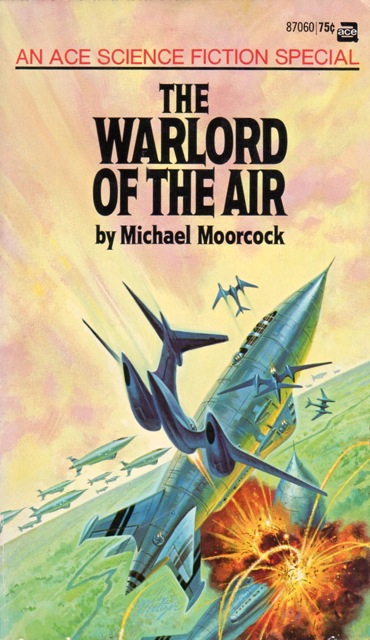
                  Oswald Bastable follows an Edwardian-era British soldier flung into a series of alternate futures where the First World War never happened, opening with The Warlord of the Air (1971). Across the trilogy he drifts between rival empires and airship wars, an early and influential example of what would later be called steampunk. Michael Moorcock's A Nomad of the Time Streams trilogy sits within his wider multiverse of linked worlds and recurring avatars of the Eternal Champion.

                • Cover of Cavor
                  Cavor

                  series · 2 books · 1901

                  similar byscience fictionadventurous

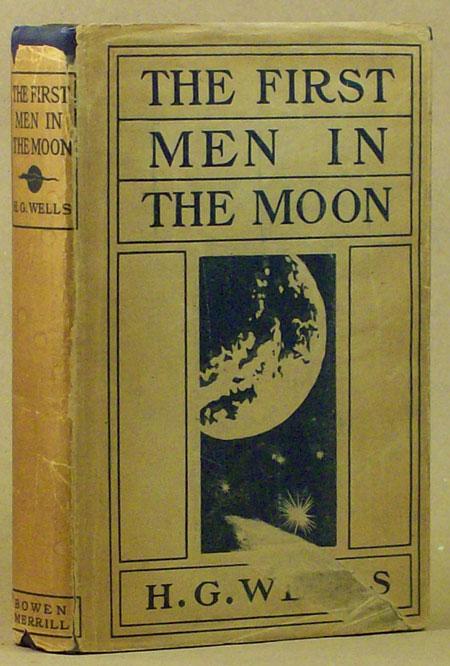
                  H. G. Wells's 1901 novel The First Men in the Moon is narrated by the businessman Bedford, who joins the reclusive scientist Cavor after Cavor invents cavorite, a gravity-blocking substance that carries the two men to the Moon. There they discover a vast underground civilization of insect-like Selenites, and the expedition that began as a hunt for lunar minerals turns into an encounter with an alien society. It is a standalone novel; later editions crediting Stephen Baxter add an introduction or afterword rather than a continuing story.

                • Cover of Jaran
                  Jaran

                  series · 6 books · 1992

                  similar bycolonialismscience fiction+1 more

                • Cover of The Super Barbarians
                  The Super Barbarians

                  John Brunner · standalone novel · 1962

                  similar bycolonialismscience fictionadventurous

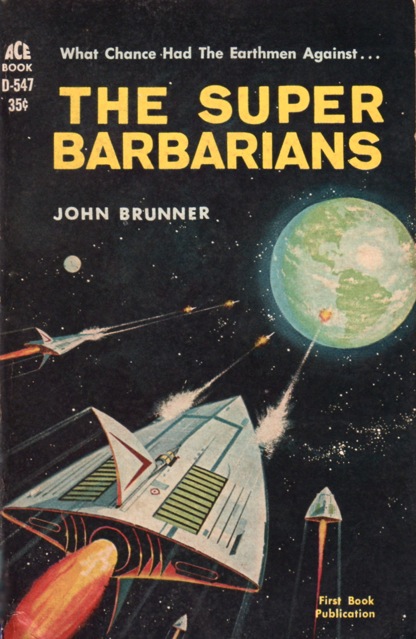
                  From the back cover of the Ace first edition: "The Acre was the only part of an entire world where Earthmen were allowed to live as they pleased and as they were accustomed. For elsewhere on Quallavarra, humanity was forced into servitude by the Vorra, The Super Barbarians who had somehow managed to conquer space. But within the Acre, the underling Terrestrials had cooked up a neat method of keeping their conquerors from stamping them out altogether. They had uncovered a diabolical Earth secret that the Vorra couldn't abide - and yet couldn't do without."

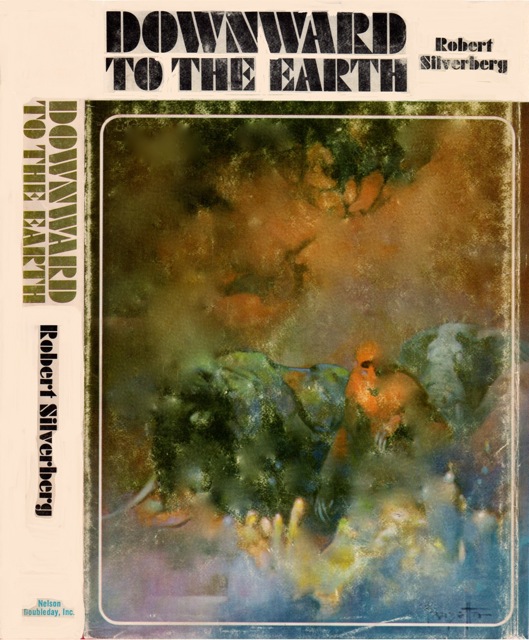
                • Cover of Downward to the Earth
                  Downward to the Earth

                  Robert Silverberg · standalone novel · 1969

                  similar bycolonialismscience fiction

                  Edmund Gunderson was the Terran administrator of the colony world of Belzagor, and he returns to it after it has gained independence, feeling a sense of guilt for the way he has treated its dominant species, the elephant-like nildoror, whose animalistic appearance had kept Gunderson from taking them seriously as sentient beings. On his return, he feels a new sense of kinship with the natives, perhaps more than for the Terran tourists. The nildoror undergo a process of rebirth, and Gunderson's greatest guilt comes from having denied rebirth to seven nildoror to make them help him repair flood damage.(From Wikipedia)

                • Cover of Golden Vanity
                  Golden Vanity

                  Rachel Pollack · standalone novel · 1980

                  similar bycolonialismscience fictionadventurous

                  The 'Allies' had arrived, sweeping down from the stars to offer a jaded Earth the marvels of the cosmos. And Earth had gone crazy. Farmers sat back to wait for Vita Flakes to fall from the sky. New York City drank itself into a permanent starstruck stupor. Blissed-out teenagers wandered into the Great Mexican Defoliation Desert to wait for the New Gods to bear them off to the astral plane... But the 'Allies' weren't in the business of trading something for nothing. This impertinent little marketworld might fetch a nice price on the interstellar auction block... particularly if a runaway wondergirl named Golden Vanity was tossed into the bargain!

                • Cover of The Moon Is a Harsh Mistress
                  The Moon Is a Harsh Mistress

                  Robert A. Heinlein · standalone novel · 1966

                  similar byscience fictionadventurous

                  A technician discovers that the massive computer that operates everything on Luna (a prison colony) has become self-aware. He befriends it, but when he accompanied a beautiful girl to a dissident meeting, he encounters people who want to throw off the yoke of their Earth rulers.

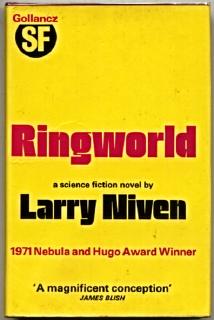
                • Cover of Ringworld
                  Ringworld

                  series · 5 books · 1970

                  part of Known Space

                  similar byscience fictionadventurous

                  The Ringworld series is a series of science fiction novels written by American author Larry Niven. It is part of his Known Space series of stories. Its backdrop is the Ringworld, a giant artifact 3 million times the surface area of Earth circling a star. The series is composed of four standalone science fiction novels, the original award-winning book and its three sequels:1970: Ringworld 1979: The Ringworld Engineers 1996: The Ringworld Throne 2004: Ringworld's Children

                • Cover of Eden (Harry Harrison)
                  Eden (Harry Harrison)

                  series · 5 books · 1984

                  completed

                  similar byscience fiction+2 more

                  Harry Harrison's Eden trilogy imagines an Earth where the dinosaurs never died out, evolving instead into the Yilane, a technologically advanced reptilian civilization that shares the planet uneasily with early humans. West of Eden (1984) introduces the clash between the two species; Winter in Eden and Return to Eden carry it forward as a shifting climate forces both sides to adapt or die. It's an alternate-evolution saga more than a conventional dinosaur adventure.

                • Cover of The Door Into Summer
                  The Door Into Summer

                  Robert A. Heinlein · standalone novel · 1957

                  similar byscience fictionadventurous

                  From the first page of the Signet 6th printing: "An electronics engineer invents a wizard robot... only to find himself shanghaied by his ruthless partner and his gold-digging fiancee. The crafty pair forces him to submit to the "long sleep" - suspended animation for thirty years. But when he wakes up in the year 2000 A.D. the inventor makes a startling discovery. He learns that it is possible now to twist time forwards or backwards. And so he returns to the past bent on a mission... of revenge."

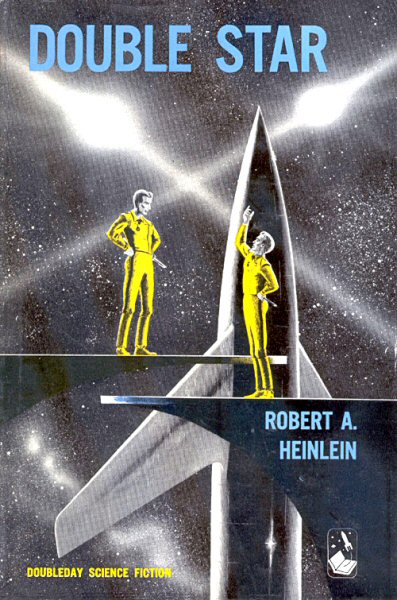
                • Cover of Double Star
                  Double Star

                  Robert A. Heinlein · standalone novel · 1956

                  similar byscience fictionadventurous

                  Lorenzo Smythe, the excellent yet unemployed actor, meets Dak Broadbent in a bar. Broadbent hires Lorenzo for an unspecified role, and hustles him onto a rocket ship. Broadbent turns out to be an assistant to the famous interplanetary politician and leader of the Expansionist party: John J. Bonforte. Bonforte, however, has been kidnapped by the political opposition on Mars, and due to Lorenzo's physical similarity to Bonforte, his staff wants Lorenzo to impersonate the politician for an important Martian ceremony.

                • Cover of Podkayne of Mars
                  Podkayne of Mars

                  Robert A. Heinlein · standalone novel · 1963

                  similar byscience fictionadventurous

                  From the back cover of the Baen 1995 edition: "Meet Podkayne Fries, a thoroughly modern Martian Ms. who thinks that Earth is not really fit for habitation and that humanity evolved in the now-exploded Fifth Planet. Poddy has one goal in life, to be the first female starship captain. She has her strategy all scoped out, and with her determination, looks and I.Q. she'll get there, never you doubt! But all work and no play would make Poddy a Dull Girl, so when a chance comes her way to travel to distant Earth via Venus with her elderly uncle, Poddy jumps at it, even if it does mean having her loathsome little brother along for the trip: Travel, Adventure, the chance to cuddle up (in a nice way) with real spaceship officers and ruthlessly pump their brains - she'll have it all. What Poddy doesn't know is that "Unca Tom" is more than her warmly supportive relative: he is also the Ambassador Plenipotentiary from Mars to the Three Planets Conference (travelling not quite incognito enough) and that certain people will stop at nothing to gain control of his vote - including kidnapping and doing terrible things to sweetly innocent Poddy Fries..."

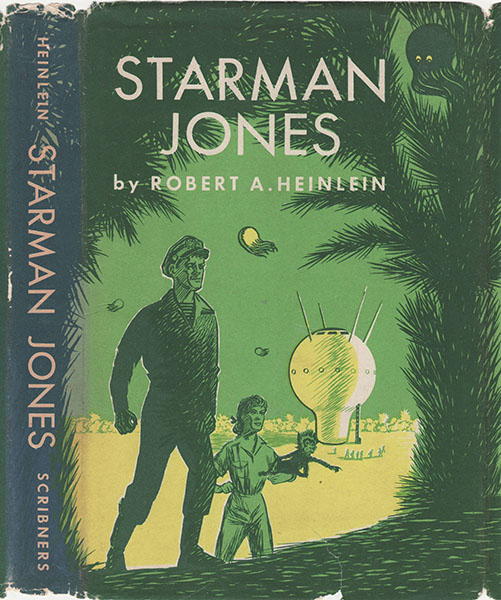
                • Cover of Starman Jones
                  Starman Jones

                  Robert A. Heinlein · standalone novel · 1953

                  similar byscience fictionadventurous

                  Starman Jones, a 1953 science fiction novel by Robert A. Heinlein, features a farm boy who wants to go to the stars. Charles Scribner's Sons published the book as part of the Heinlein juveniles series.

                • Cover of Red Planet
                  Red Planet

                  Robert A. Heinlein · standalone novel · 1949

                  similar byscience fictionadventurous

                  A boy colonist on Mars takes his bouncing ball Martian pet with him to boarding school, but the new Headmaster is a controlling tyrant. Things get worse when he discovers a plot that will jeopardize all of the colonists.

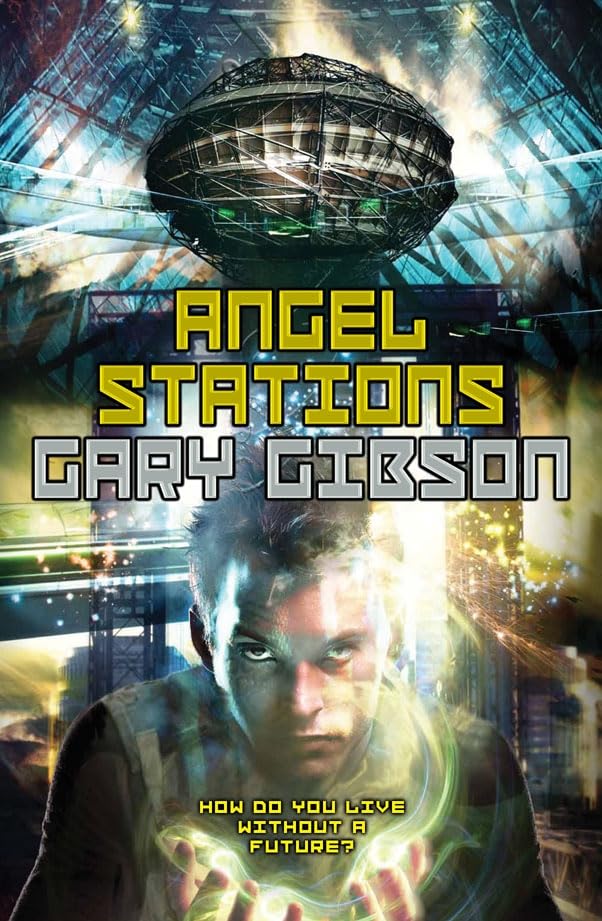
                • Cover of Angel Stations
                  Angel Stations

                  series · 2 books · 1994

                  similar byscience fictionadventurous+1 more

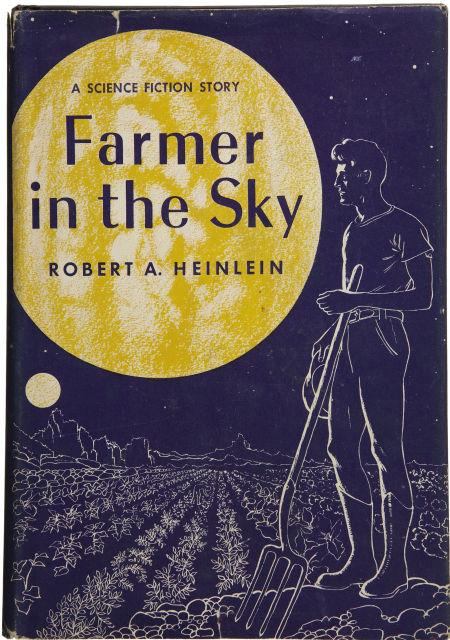
                • Cover of Farmer in the Sky
                  Farmer in the Sky

                  Robert A. Heinlein · standalone novel · 1950

                  similar byscience fictionadventurous

                  A family emigrates to the new colony on Ganymede, but the existing colonists do not have the resources to support a flood of immigrants. The teenage son, a boy scout, works to invigorate their barren holding without any technological support. Things come to a head when disaster strikes.

                • Cover of A Fall of Moondust
                  A Fall of Moondust

                  Arthur C. Clarke · standalone novel · 1961

                  similar byscience fictionadventurous

                  From the back cover of the Harbrace paperback: "The action of A Fall of Moondust takes place almost a century from now when tours on the moon are a common occurrence. One of the high points of each tour is a cruise around the Sea of Thirst, a body of volcanic dust, in a specially designed vessel called the Selene On a perfectly routine voyage one day the Selene suddenly disappears. How do you locate a small tourist "cruiser" buried beneath fifty feet of dust? If you find it, how do you rescue the passengers and crew? If you are on board, how do you feel and what do you do while brave men and expert technicians join forces in a race against time? Sustained excitement, lively humor, and an engaging cast of characters make this one of Arthur C. Clarke's most intriguing novels."

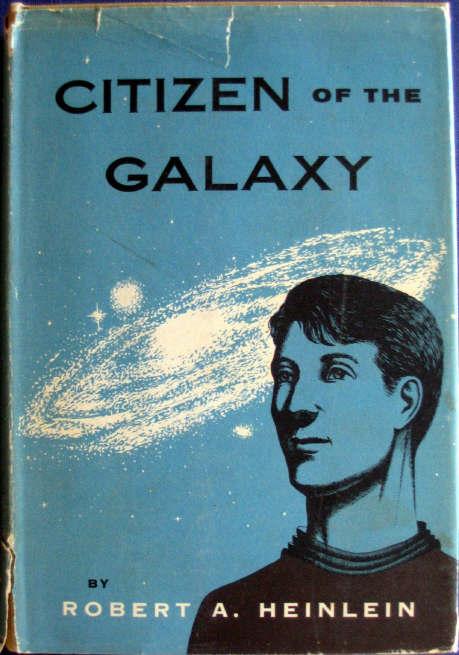
                • Cover of Citizen of the Galaxy
                  Citizen of the Galaxy

                  Robert A. Heinlein · standalone novel · 1957

                  similar byscience fictionadventurous

                  On a planet far distant from Earth, a lame beggar buys a young boy slave who has forgotten his origins. The beggar is more than he seems, and gives the boy an extensive education while employing him as an observer of activity in their city. Years later, the beggar is captured by the government, and the youth must escape the planet.

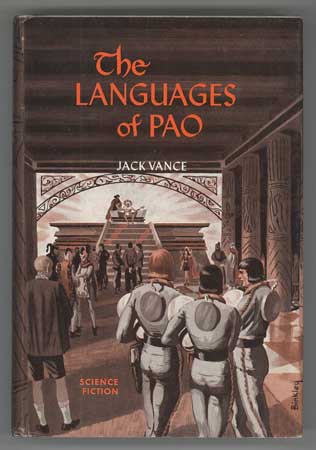
                • Cover of The Languages of Pao
                  The Languages of Pao

                  Jack Vance · standalone novel · 1958

                  similar bycolonialismscience fiction

                  The Languages of Pao is a science fiction novel by American writer Jack Vance, first published in 1958, based on the Sapir–Whorf hypothesis, which asserts that a language's structure and grammar construct the perception and consciousness of its speakers. In the novel, the placid people from the planet Pao rely on other planets for technological innovations and manufactured goods and they do not resist when an invading force occupies the land and levies heavy taxes. To expel the aggressors and make the planet more independent, three new languages are introduced. A scientific language induces its speakers to innovate more; a well-ordered language encourages its speakers to be industrious; and a warlike language induces competitiveness and aggression. The new languages change the culture and Pao ousts their overlords and develops a sophisticated modern economy.

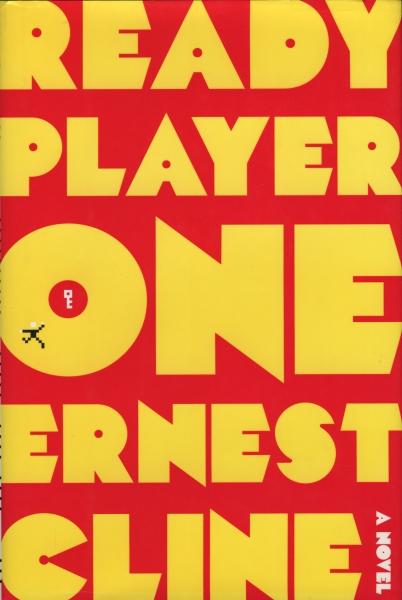
                • Cover of Ready Player One
                  Ready Player One

                  series · 3 books · 2011

                  similar byscience fictionadventurous

                  Ernest Cline's Ready Player One (2011) is set in a near-future dystopia where much of humanity escapes into the OASIS, a vast virtual-reality universe, and follows teenager Wade Watts as he chases an Easter egg hidden by the OASIS's late creator in a puzzle-based hunt worth a fortune. The 2020 sequel, Ready Player Two, picks up after Wade has gained control of the OASIS and follows him and his friends into a new quest built around a brain-computer interface the creator left behind.