Loreful
HomeDiscover
Search series, authors…⌘K
Loreful

Reading orders for SF/F series and shared universes — with your place kept in every one.

Explore

UniversesSeriesWorksAuthorsAtlas

Help

FAQAboutSite map

Account & legal

Sign inCreate accountPrivacyTerms

Data

Built on ISFDB, Wikipedia, Wikidata and Open Library. Curated reading orders carry their reasoning on the page; the rest follow publication order. Data sources & licenses

© Loreful · data: ISFDB · CC BY

More like Forever

anchored on:historical fictionimmortalityour worldnorth americaearly 20th centuryfantasy+4 more

but

Mood

The mood the book leaves you in.

  • The reading experience is propelled by journeys, exploration, and physical risk; excitement and forward momentum dominate over dread or introspection.
  • Joy and loss are deliberately mixed; the resolution grants characters something real while taking something else away, leaving warmth and sorrow together.
  • The book demands work from the reader — dense prose, difficult structure, unfamiliar ideas, or morally uncomfortable material — as part of its intended effect.
  • Grim events, cruelty, or despair dominate the atmosphere, and the book does not soften them with comfort or comic relief.
  • The atmosphere is quietly unsettling — wrongness, unease, and the uncanny pervade the book without necessarily escalating into overt horror.
  • The book is built to move the reader; character feeling is foregrounded and major scenes aim at a strong emotional response.
  • Humor is a primary aim and the prose plays for laughs — comic situations, wit, or dialogue produce sustained comedy, not occasional levity.
  • The book insists that things can improve; effort and decency are shown to matter, and the arc bends toward better outcomes even through hardship.
  • The book teaches as it goes — real facts, history, science, or craft are conveyed in enough depth that learning is part of the reading experience.
  • The book is designed to uplift and motivate, presenting perseverance or achievement in a way that invites the reader to aspire or act.
  • The overall register is cheerful and easygoing; stakes are kept gentle and the book avoids dwelling on pain or dread.
  • Withheld information drives the experience; the book sustains enigmas and secrets the reader wants resolved, whatever its genre.
  • The book is contemplative and inward-looking, giving more weight to thought, memory, and meaning than to external events.
  • The book works as comfort reading — low tension, a soothing pace, and an atmosphere the reader can unwind in.
  • Grief, loss, or melancholy set the dominant register, and the book lets sorrow stand rather than resolving it into comfort.
  • Sustained suspense is the point; the book keeps the reader braced for what happens next through danger, pressure, or impending revelation.
  • Playful invention and charm define the register — fanciful conceits, light absurdity, and a narration that delights in its own oddity.

About

What the story runs on.

  • Stories in which extraterrestrial beings are central — as characters, cultures, or the object of the plot.
  • Stories structured as a quest — a journey undertaken to find, deliver, or destroy something of great import.
  • Stories in which staying alive against nature, catastrophe, or scarcity is the central problem.
  • Stories of lovers kept apart by law, family, faith, or station, where the obstacle to love is the plot.
  • Stories in which a friendship — its making, testing, or loss — is the emotional center.
  • Stories of growing up — a young protagonist crossing from childhood into adult knowledge and responsibility.
  • Stories about who a character truly is — self-discovery, doubled lives, and the search for a self.
  • Stories about mourning — living through the death of a loved one and what loss does to the survivors.
  • Stories in which a buried family truth — hidden parentage, crimes, or shames — surfaces and reorders the present.
  • Stories driven by maneuvering for power — factions, conspiracies, and statecraft conducted in shadow.
  • Stories in which war itself is the subject — combat, occupation, and what warfare does to soldiers and civilians.
  • Stories organized around investigating a killing — the case, the clues, and the pursuit of the killer, in any genre's clothing.

Shelf

Where it sits in the library.

    • Fiction built on magic or other supernatural elements that have no scientific explanation.
    • Secondary-world fantasy at large scale, where the fate of nations or the world turns on the protagonists' struggle.
    • Fantasy set in a recognizably modern city or contemporary world where the supernatural intrudes on everyday life.
    • Fantasy that blends in horror's atmosphere and imagery, keeping a fantastical frame around grim or frightening material.
    • Action-driven fantasy following warriors or rogues with personal stakes against sorcerous threats, rather than world-spanning conflicts.
    • Fantasy set in a real historical period or a close analogue of one, with magic woven into the era.
    • Fantasy in which protagonists cross from the ordinary world into another world through a portal or similar passage.
    • Fiction that retells or reworks a traditional fairy tale in a new form or setting.
    • Fantasy drawing directly on myths, legends, and folklore, retelling them or building on their figures and logic.
    • Fantasy of ghosts, vampires, shapeshifters, psychics, and similar phenomena, usually set in an otherwise ordinary world.
    • Fiction mixing science-fictional trappings with overtly magical or impossible elements in one setting.
    • Low-stakes fantasy emphasizing comfort, community, and everyday pleasures over conflict and peril.
    • Speculative fiction of pervasive moral ambiguity, violence, and cynicism that rejects heroic conventions — fantasy and SF alike.
      • Fiction that extrapolates from science and technology — future societies, space travel, or speculative inventions — within at least nominally natural laws.
      • Science fiction of interstellar scope — starships, galactic polities, and adventure across star systems.
      • Science fiction committed to scientific rigor, where technical plausibility constrains the story.
      • Science fiction centered on armed forces and warfare, told largely from a military point of view.
      • Science fiction of networked, corporate-dominated near futures, pairing high technology with social decay.
      • Science fiction styled on nineteenth-century steam-powered technology, often in a Victorian or pseudo-Victorian setting.
      • Fiction depicting an oppressive or catastrophic society, presented as a warning.
      • Fiction set after civilization's collapse, following survivors in the ruins of the old world.
      • Fiction in which characters move between past and future, and the mechanics or consequences of that travel drive the plot.
      • Fiction exploring a world where a historical event went differently and history diverged from ours.
      • Science fiction about humanity's first encounter and communication with an alien intelligence.
      • Science fiction in which extraterrestrial forces attack or occupy Earth and humanity resists.
      • Fiction whose primary aim is to frighten or unsettle the reader through dread, menace, or the monstrous.
      • Horror of vast, indifferent, incomprehensible entities before which humanity is insignificant, in the Lovecraft tradition.
      • Horror of decaying houses, buried family secrets, and oppressive atmosphere in the Gothic literary tradition.
      • Horror centered on hauntings and the returning dead.
      • Horror located in the mind — paranoia, obsession, and unreliable perception rather than external monsters.
      • Horror built around the reanimated dead and survival amid their outbreaks.
      • Horror defined by explicit, transgressive gore that refuses to cut away from violence.
      • Speculative fiction of the strange and uncanny that resists both natural explanation and standard genre categories.
      • Fiction organized around solving a crime or puzzle, typically following an investigator toward the identification of a culprit.
      • A puzzle-first mystery that lays out clues so the culprit's identity can be deduced before the reveal.
      • Crime fiction of moral ambiguity, fatalism, and hard-edged style, set among the corrupt and the doomed.
      • A mystery following the realistic routines of police work — forensics, interviews, and case-building.
      • A gentle mystery with an amateur sleuth, a small community, and violence kept off the page.
      • A mystery set in a past era, where the investigation works within that period's methods and society.
      • Fast-paced fiction driven by imminent danger, pursuit, or high-stakes conspiracy, built to sustain tension.
      • A thriller of espionage — agents, tradecraft, and intelligence services in conflict.
      • A thriller centered on lawyers and the courtroom, where litigation carries the suspense.
      • A thriller driven by detailed contemporary or near-future technology, often military or scientific.
      • A thriller whose tension comes from mental states and manipulation between characters rather than external action.
      • Fiction whose central plot is a romantic relationship and its development toward an emotionally satisfying resolution.
      • Romance in which one or both partners are supernatural beings, blending fantasy elements into the love story.
      • A fantasy-romance hybrid in which the romantic arc and the fantasy plot carry equal weight.
      • Romance set in a past era, with courtship shaped by the period's society and manners.
      • Romance set in the present day, without supernatural or historical elements.
      • Fiction set in a real past period, where the historical setting materially shapes characters and events.
        • General and literary fiction emphasizing prose style, character interiority, or formal ambition over genre plot conventions.
        • Fiction in a realistic world where magical events occur and are treated as ordinary, in the tradition of Latin American literature.
        • Fiction that ridicules people, institutions, or society in order to criticize them.
        • Fiction of dreamlike, irrational imagery and logic that breaks from realistic representation.
        • Fiction that plays with narrative convention through metafiction, fragmentation, and self-reference.
        • Fiction propelled by journeys, exploration, and physical peril, where action and survival carry the plot.
        • Adventure fiction of ships and seafaring — naval engagements, voyages, and life at sea.
        • Fiction of the American frontier West — gunmen, ranchers, and lawmen, typically in the late nineteenth century.
        • Fiction centered on soldiers, campaigns, and the experience of warfare, historical or imagined.
          • Fiction written primarily to amuse, using comedic situations, wit, or parody as its organizing principle.
            • Multi-generational fiction following a family or dynasty across decades, with inheritance and kinship as the through-line.
              • Fiction whose world runs on explicit game mechanics — levels, stats, and skills that characters can see and exploit.
                • Fiction about costumed or superpowered heroes and their conflicts with comparable villains.

                Practical

                How long a commitment, whether it stands alone, and whether it has finished.

                Tap a chip to ask for it · tap again to rule it out · once more to clear. Numbers show what would be left.

                • Cover of Todd Family
                  Todd Family

                  series · 2 books · 2013

                  similar byreflectiveearly 20th centuryhistorical fictionbittersweet+1 more

                  Kate Atkinson's Life After Life gives Ursula Todd, born on a snowy night in 1910, a strange gift: whenever she dies, she's born again into a slightly altered version of the same life, gradually piecing together enough intuition across her many deaths to try to change the course of the twentieth century's worst events. The companion novel A God in Ruins turns to Ursula's brother Teddy, a bomber pilot, following his one, single life forward from the war through old age. The two books share a family and a set of preoccupations -- memory, war, chance -- without forming a conventional sequential series.

                • Cover of Ragtime
                  Ragtime

                  E. L. Doctorow · standalone novel · 1975

                  similar byreflectiveearly 20th centuryhistorical fictionnorth americabig city

                  Ragtime is a 1975 historiographic metafiction novel by American author E. L. Doctorow. The novel mixes historical figures and fictional characters together in a sweeping narrative set in the New York City area from 1902 to 1915. With its layered storyline, Ragtime explores themes of racial injustice, class division, and the American Dream in American society.

                • Cover of Tuck Everlasting
                  Tuck Everlasting

                  Natalie Babbitt · standalone novel · 1975

                  similar byreflectiveimmortalityfantasybittersweetnorth america

                  Publisher's description: "The Tuck family is confronted with an agonizing situation when they discover that a ten-year-old girl and a malicious stranger now share their secret about a spring whose water prevents one from ever growing any older."

                • Cover of The Amazing Adventures of Kavalier & Clay
                  The Amazing Adventures of Kavalier & Clay

                  Michael Chabon · standalone novel · 2000

                  similar byreflectiveearly 20th centuryhistorical fictionimmigration and exilenorth america

                  The Amazing Adventures of Kavalier & Clay is a 2000 novel by American author Michael Chabon. A historical fiction novel, it follows the lives of two Jewish cousins, Josef "Joe" Kavalier, a Czech artist and magician who escapes Nazi-occupied Prague, and Sammy Clay, a Brooklyn-born writer. Together, they create The Escapist, a fictional superhero inspired by Joe’s desire to fight fascism and his struggle to rescue his family from Europe. In the story, Kavalier and Clay become major figures in the comics industry during its Golden Age.

                • Cover of Winter's Tale
                  Winter's Tale

                  Mark Helprin · standalone novel · 1983

                  similar byreflectiveearly 20th centuryimmortalitynorth americabig city+1 more

                  Winter's Tale is a 1983 magic realism novel by Mark Helprin. It takes place in a mythic New York City, markedly different from reality, and in an industrial Edwardian era near the turn of the 20th century. Akiva Goldsman wrote a screenplay based on the novel and directed a feature film from the script, which was released in 2014.

                • Cover of Black Oxen
                  Black Oxen

                  Gertrude Atherton · standalone novel · 1923

                  similar byreflectiveearly 20th centuryimmortalitynorth americaidentity

                  "... Black Oxen was written in a burst of mental energy after Gertrude Atherton herself received an experimental anti-aging treatment; the introduction and appendices to this edition explore parallels between Atherton's medical treatment and that of her rejuvenated protagonist, as well as provide selections from other contemporary writings on aging, science, and the role of women in the 1920s. ..." --description of the 2012 Broadview ed. at Amazon 2019-09-05 (read in full, {{ASIN|1554810256}}

                • Cover of Black Hills
                  Black Hills

                  Dan Simmons · standalone novel · 2010

                  similar byreflectiveearly 20th centuryhistorical fictionnorth americaidentity

                  Haunted by Custer's ghost, and also by his ability to see into the memories and futures of legendary men like Sioux war-chief Crazy Horse, Paha Sapa plans to silence his ghost forever and reclaim his people's legacy--on the very day FDR comes to Mount Rushmore to dedicate the Jefferson face.

                • Cover of The Thief of Time
                  The Thief of Time

                  John Boyne · standalone novel · 2000

                  similar byreflectiveimmortalityhistorical fictionbittersweetour worldidentity

                  Matthieu Zela's life is characterized by the fact that as he grows older through the 18th century, he discovers that his body has stopped ageing, and he is near immortal. At the end of the twentieth century, he looks back at a life lived as the thief of time..

                • Cover of How to Stop Time
                  How to Stop Time

                  Matt Haig · standalone novel · 2017

                  similar byreflectiveimmortalityfantasybittersweetour worldidentity

                  How to Stop Time is a historical fantasy novel by English writer Matt Haig, published in July 2017.

                • Cover of The Snow Child
                  The Snow Child

                  Eowyn Ivey · standalone novel · 2012

                  similar byreflectiveearly 20th centuryhistorical fictionnorth america

                  The Snow Child is the debut novel by Eowyn Ivey. It was first published on February 1, 2012, by Little, Brown and Company. The novel was a finalist for the 2013 Pulitzer Prize for Fiction and was generally well received by critics.

                • Cover of Replay
                  Replay

                  Ken Grimwood · standalone novel · 1987

                  similar byreflectivefantasybittersweetour worldidentity

                  Replay is a fantasy novel by American writer Ken Grimwood, first published by Arbor House in 1987. It won the 1988 World Fantasy Award for Best Novel.

                • Cover of Empire of the Sun
                  Empire of the Sun

                  series · 2 books · 1984

                  completed

                  similar byreflectivehistorical fiction+4 more

                  J. G. Ballard's Empire of the Sun draws on his own childhood to follow Jim, a British boy separated from his parents in Japanese-occupied Shanghai during World War II and interned in a civilian camp for the rest of the war. Ballard revisited the same period and a version of the same character years later in The Kindness of Women, a more explicitly fictionalized continuation into Jim's adult life. Empire of the Sun is the more directly autobiographical and better-known of the two.

                • Cover of The Invention of Everything Else
                  The Invention of Everything Else

                  Samantha Hunt · standalone novel · 2008

                  similar byreflectiveearly 20th centuryhistorical fictionnorth americabig city

                  The Invention of Everything Else is a 2008 novel written by American author Samantha Hunt. The novel presents a fictionalized account of the last days in the life of Nikola Tesla, the Serbian-American electrical engineer. Other fictionalized versions of historical characters include Thomas Edison, George Westinghouse, and Mark Twain. Tesla is the novel's protagonist along with a chambermaid named Louisa with whom he shares some common interests including science and pigeons. Much of the book takes place in the New Yorker Hotel. The book also includes elements of science fiction, namely time travel.

                • Cover of The Invisible Life of Addie LaRue
                  The Invisible Life of Addie LaRue

                  Victoria Schwab · standalone novel · 2020

                  similar byreflectiveimmortalityfantasybittersweetcursesour worldidentity

                  The Invisible Life of Addie LaRue is a fantasy novel by the American author V. E. Schwab. It was published by Tor Books on October 6, 2020. The story follows a young French woman who in 1714 makes a bargain with the Dark that makes her immortal, but curses her to be forgotten by everyone she meets. It was nominated for the 2021 Locus Award for Best Fantasy Novel.

                • Cover of Lost Horizon
                  Lost Horizon

                  James Hilton · standalone novel · 1933

                  similar byreflectiveearly 20th century+2 more

                  Lost Horizon is a 1933 novel by the English writer James Hilton. The book was adapted into a film, also called Lost Horizon, in 1937 by director Frank Capra; and a musical film remake in 1973 by producer Ross Hunter with music by Burt Bacharach. It is the origin of Shangri-La, a fictional utopian lamasery located high in the mountains of Tibet.

                • Cover of The Pilgrim's Regress
                  The Pilgrim's Regress

                  C. S. Lewis · standalone novel · 1933

                  similar byreflectiveearly 20th centuryfantasy+1 more

                  The Pilgrim's Regress is a book of allegorical fiction by C. S. Lewis. This 1933 novel was Lewis's first published work of prose fiction, and his third piece of work to be published and first after he converted to Christianity. It charts the progress of a fictional character named John through a philosophical landscape in search of the Island of his desire. Lewis described the novel to his publisher as "a kind of Bunyan up to date," in reference to John Bunyan's 1678 novel The Pilgrim's Progress, recast with the politics, ideologies, philosophy, and aesthetic principles of the early 20th century. As such, the character struggles with the modern phoniness, hypocrisy, and intellectual vacancy of the Christian church, Communism, Fascism, and various philosophical and artistic movements.

                • Cover of Earthsea Cycle
                  Earthsea Cycle

                  series · 18 books · 1964

                  completed

                  part of Earthsea

                  similar byreflectivefantasy+1 more

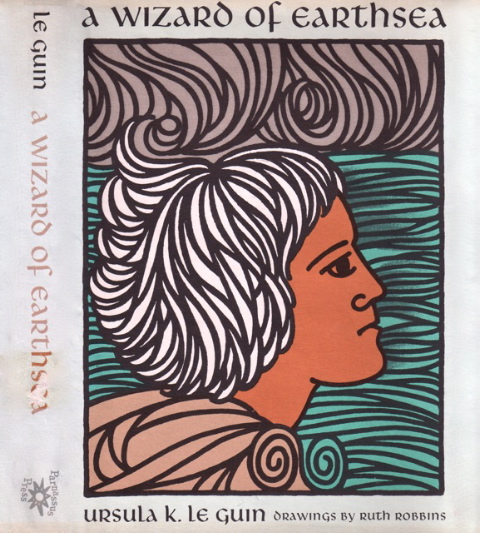
                  The Earthsea Cycle, also known as Earthsea, is a series of high fantasy books written by American author Ursula K. Le Guin. Beginning with A Wizard of Earthsea (1968), The Tombs of Atuan (1970), and The Farthest Shore (1972), the series was continued in Tehanu (1990), and Tales from Earthsea and The Other Wind. In 2018, all the novels and short stories were published in a single volume, The Books of Earthsea: The Complete Illustrated Edition, with artwork by Charles Vess.

                • Cover of Deathless
                  Deathless

                  Catherynne M. Valente · standalone novel · 2011

                  similar byreflectiveearly 20th centuryfantasyimmortality

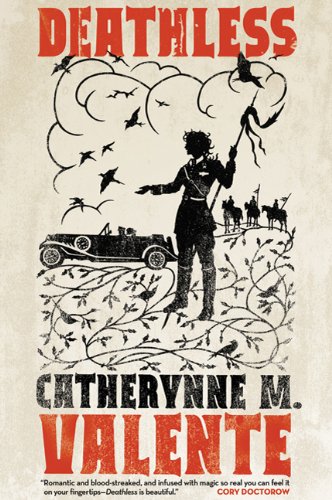
                  Deathless is an alternate history novel by American writer Catherynne M. Valente, combining the Russian fairy tale The Death of Koschei the Deathless with the events and aftermath of the Russian Revolution. The novel follows the life of Marya Morevna as she transforms from a young child witnessing the revolution to her newfound position as bride after her marriage with Koschei, Tsar of Life. The book is divided into six parts and is told primarily in the third person from the perspective of Marya Morevnan. However, it does feature other characters, such as Ivan Tsarevich.

                • Cover of Orlando: A Biography
                  Orlando: A Biography

                  Virginia Woolf · standalone novel · 1928

                  similar byreflectivehistorical fictionimmortalityidentity+1 more

                  Orlando: A Biography is a novel by Virginia Woolf, first published on 11 October 1928, inspired by the tumultuous family history of the aristocratic poet and novelist Vita Sackville-West, Woolf's lover and close friend. It is a history of English literature in satiric form. The book describes the adventures of a poet who changes from man to woman and lives for centuries, meeting the key figures of English literary history. Considered a feminist classic, the book has been written about extensively by scholars of women's writing and gender and transgender studies.

                • Cover of Lovecraft's Book
                  Lovecraft's Book

                  Richard A. Lupoff · standalone novel · 1985

                  similar byreflectiveearly 20th centuryhistorical fictionour worldnorth america

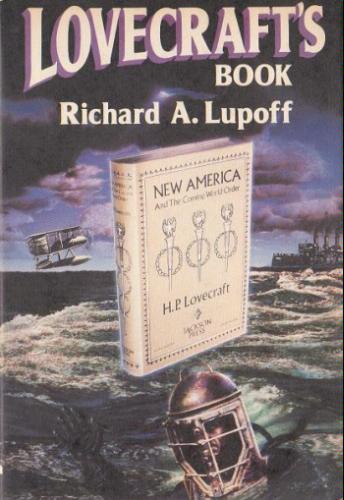
                  Lovecraft's Book is an alternate history novel by American author Richard A. Lupoff. It was released in 1985 by Arkham House in an edition of 3,544 copies. It was the author's first book published by Arkham House.

                • Cover of The Girl from Hollywood
                  The Girl from Hollywood

                  Edgar Rice Burroughs · standalone novel · 1923

                  similar byreflectiveearly 20th centuryour worldnorth america

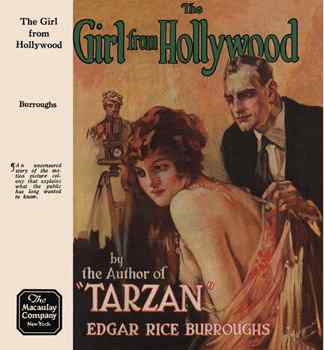
                  The Girl from Hollywood is an Edgar Rice Burroughs contemporary fiction novel. The Girl from Hollywood was published as a serial by Munsey's Magazine from June to November, 1922. The book version was first published by Macaulay Co. on 10 August 1923.

                • Cover of Between the Wars
                  Between the Wars

                  series · 4 books · 1981

                  similar byearly 20th centuryhistorical fictionidentity+1 more

                  The Pyat Quartet, also known as Between the Wars, is a tetralogy of historical fiction novels by English author Michael Moorcock comprising Byzantium Endures, The Laughter of Carthage, Jerusalem Commands and The Vengeance of Rome published from 1981 to 2006.

                • Cover of Four Freedoms
                  Four Freedoms

                  John Crowley · standalone novel · 2009

                  similar byreflectiveearly 20th centuryhistorical fictionnorth america

                  Four Freedoms is a 2009 historical novel by American writer John Crowley. It follows the adventures of several characters centering on a fictional aircraft manufacturing plant near Ponca City, Oklahoma during World War II, specifically from 1942 to 1945. The plant chiefly produces the fictional B-30 Pax bomber. It is Crowley's first novel after the completion of his Ægypt Sequence, and marks a turning in his style from the historically speculative series to historical realism.

                • Cover of Bright's Passage
                  Bright's Passage

                  Josh Ritter · standalone novel · 2011

                  similar byreflectiveearly 20th centuryhistorical fictionour worldnorth america

                  Bright's Passage is the debut novel by singer/songwriter Josh Ritter. It is published by Dial Press and was released June 28, 2011. The first chapter had been previously released for free download on Ritter's official website.