Loreful
HomeDiscover
Search series, authors…⌘K
Loreful

Reading orders for SF/F series and shared universes — with your place kept in every one.

Explore

UniversesSeriesWorksAuthorsAtlas

Help

FAQAboutSite map

Account & legal

Sign inCreate accountPrivacyTerms

Data

Built on ISFDB, Wikipedia, Wikidata and Open Library. Curated reading orders carry their reasoning on the page; the rest follow publication order. Data sources & licenses

© Loreful · data: ISFDB · CC BY

More like Found

anchored on:science fictiontime travelnorth americacontemporaryyoung adultcoming of age+4 more

but

Mood

The mood the book leaves you in.

  • The reading experience is propelled by journeys, exploration, and physical risk; excitement and forward momentum dominate over dread or introspection.
  • Joy and loss are deliberately mixed; the resolution grants characters something real while taking something else away, leaving warmth and sorrow together.
  • The book demands work from the reader — dense prose, difficult structure, unfamiliar ideas, or morally uncomfortable material — as part of its intended effect.
  • Grim events, cruelty, or despair dominate the atmosphere, and the book does not soften them with comfort or comic relief.
  • The atmosphere is quietly unsettling — wrongness, unease, and the uncanny pervade the book without necessarily escalating into overt horror.
  • The book is built to move the reader; character feeling is foregrounded and major scenes aim at a strong emotional response.
  • Humor is a primary aim and the prose plays for laughs — comic situations, wit, or dialogue produce sustained comedy, not occasional levity.
  • The book insists that things can improve; effort and decency are shown to matter, and the arc bends toward better outcomes even through hardship.
  • The book teaches as it goes — real facts, history, science, or craft are conveyed in enough depth that learning is part of the reading experience.
  • The book is designed to uplift and motivate, presenting perseverance or achievement in a way that invites the reader to aspire or act.
  • The overall register is cheerful and easygoing; stakes are kept gentle and the book avoids dwelling on pain or dread.
  • Withheld information drives the experience; the book sustains enigmas and secrets the reader wants resolved, whatever its genre.
  • The book is contemplative and inward-looking, giving more weight to thought, memory, and meaning than to external events.
  • The book works as comfort reading — low tension, a soothing pace, and an atmosphere the reader can unwind in.
  • Grief, loss, or melancholy set the dominant register, and the book lets sorrow stand rather than resolving it into comfort.
  • Sustained suspense is the point; the book keeps the reader braced for what happens next through danger, pressure, or impending revelation.
  • Playful invention and charm define the register — fanciful conceits, light absurdity, and a narration that delights in its own oddity.

About

What the story runs on.

  • Stories in which extraterrestrial beings are central — as characters, cultures, or the object of the plot.
  • Stories structured as a quest — a journey undertaken to find, deliver, or destroy something of great import.
  • Stories in which staying alive against nature, catastrophe, or scarcity is the central problem.
  • Stories of lovers kept apart by law, family, faith, or station, where the obstacle to love is the plot.
  • Stories in which a friendship — its making, testing, or loss — is the emotional center.
  • Stories of growing up — a young protagonist crossing from childhood into adult knowledge and responsibility.
  • Stories about who a character truly is — self-discovery, doubled lives, and the search for a self.
  • Stories about mourning — living through the death of a loved one and what loss does to the survivors.
  • Stories in which a buried family truth — hidden parentage, crimes, or shames — surfaces and reorders the present.
  • Stories driven by maneuvering for power — factions, conspiracies, and statecraft conducted in shadow.
  • Stories in which war itself is the subject — combat, occupation, and what warfare does to soldiers and civilians.
  • Stories organized around investigating a killing — the case, the clues, and the pursuit of the killer, in any genre's clothing.

Shelf

Where it sits in the library.

    • Fiction built on magic or other supernatural elements that have no scientific explanation.
    • Secondary-world fantasy at large scale, where the fate of nations or the world turns on the protagonists' struggle.
    • Fantasy set in a recognizably modern city or contemporary world where the supernatural intrudes on everyday life.
    • Fantasy that blends in horror's atmosphere and imagery, keeping a fantastical frame around grim or frightening material.
    • Action-driven fantasy following warriors or rogues with personal stakes against sorcerous threats, rather than world-spanning conflicts.
    • Fantasy set in a real historical period or a close analogue of one, with magic woven into the era.
    • Fantasy in which protagonists cross from the ordinary world into another world through a portal or similar passage.
    • Fiction that retells or reworks a traditional fairy tale in a new form or setting.
    • Fantasy drawing directly on myths, legends, and folklore, retelling them or building on their figures and logic.
    • Fantasy of ghosts, vampires, shapeshifters, psychics, and similar phenomena, usually set in an otherwise ordinary world.
    • Fiction mixing science-fictional trappings with overtly magical or impossible elements in one setting.
    • Low-stakes fantasy emphasizing comfort, community, and everyday pleasures over conflict and peril.
    • Speculative fiction of pervasive moral ambiguity, violence, and cynicism that rejects heroic conventions — fantasy and SF alike.
      • Fiction that extrapolates from science and technology — future societies, space travel, or speculative inventions — within at least nominally natural laws.
      • Science fiction of interstellar scope — starships, galactic polities, and adventure across star systems.
      • Science fiction committed to scientific rigor, where technical plausibility constrains the story.
      • Science fiction centered on armed forces and warfare, told largely from a military point of view.
      • Science fiction of networked, corporate-dominated near futures, pairing high technology with social decay.
      • Science fiction styled on nineteenth-century steam-powered technology, often in a Victorian or pseudo-Victorian setting.
      • Fiction depicting an oppressive or catastrophic society, presented as a warning.
      • Fiction set after civilization's collapse, following survivors in the ruins of the old world.
      • Fiction in which characters move between past and future, and the mechanics or consequences of that travel drive the plot.
      • Fiction exploring a world where a historical event went differently and history diverged from ours.
      • Science fiction about humanity's first encounter and communication with an alien intelligence.
      • Science fiction in which extraterrestrial forces attack or occupy Earth and humanity resists.
      • Fiction whose primary aim is to frighten or unsettle the reader through dread, menace, or the monstrous.
      • Horror of vast, indifferent, incomprehensible entities before which humanity is insignificant, in the Lovecraft tradition.
      • Horror of decaying houses, buried family secrets, and oppressive atmosphere in the Gothic literary tradition.
      • Horror centered on hauntings and the returning dead.
      • Horror located in the mind — paranoia, obsession, and unreliable perception rather than external monsters.
      • Horror built around the reanimated dead and survival amid their outbreaks.
      • Horror defined by explicit, transgressive gore that refuses to cut away from violence.
      • Speculative fiction of the strange and uncanny that resists both natural explanation and standard genre categories.
      • Fiction organized around solving a crime or puzzle, typically following an investigator toward the identification of a culprit.
      • A puzzle-first mystery that lays out clues so the culprit's identity can be deduced before the reveal.
      • Crime fiction of moral ambiguity, fatalism, and hard-edged style, set among the corrupt and the doomed.
      • A mystery following the realistic routines of police work — forensics, interviews, and case-building.
      • A gentle mystery with an amateur sleuth, a small community, and violence kept off the page.
      • A mystery set in a past era, where the investigation works within that period's methods and society.
      • Fast-paced fiction driven by imminent danger, pursuit, or high-stakes conspiracy, built to sustain tension.
      • A thriller of espionage — agents, tradecraft, and intelligence services in conflict.
      • A thriller centered on lawyers and the courtroom, where litigation carries the suspense.
      • A thriller driven by detailed contemporary or near-future technology, often military or scientific.
      • A thriller whose tension comes from mental states and manipulation between characters rather than external action.
      • Fiction whose central plot is a romantic relationship and its development toward an emotionally satisfying resolution.
      • Romance in which one or both partners are supernatural beings, blending fantasy elements into the love story.
      • A fantasy-romance hybrid in which the romantic arc and the fantasy plot carry equal weight.
      • Romance set in a past era, with courtship shaped by the period's society and manners.
      • Romance set in the present day, without supernatural or historical elements.
      • Fiction set in a real past period, where the historical setting materially shapes characters and events.
        • General and literary fiction emphasizing prose style, character interiority, or formal ambition over genre plot conventions.
        • Fiction in a realistic world where magical events occur and are treated as ordinary, in the tradition of Latin American literature.
        • Fiction that ridicules people, institutions, or society in order to criticize them.
        • Fiction of dreamlike, irrational imagery and logic that breaks from realistic representation.
        • Fiction that plays with narrative convention through metafiction, fragmentation, and self-reference.
        • Fiction propelled by journeys, exploration, and physical peril, where action and survival carry the plot.
        • Adventure fiction of ships and seafaring — naval engagements, voyages, and life at sea.
        • Fiction of the American frontier West — gunmen, ranchers, and lawmen, typically in the late nineteenth century.
        • Fiction centered on soldiers, campaigns, and the experience of warfare, historical or imagined.
          • Fiction written primarily to amuse, using comedic situations, wit, or parody as its organizing principle.
            • Multi-generational fiction following a family or dynasty across decades, with inheritance and kinship as the through-line.
              • Fiction whose world runs on explicit game mechanics — levels, stats, and skills that characters can see and exploit.
                • Fiction about costumed or superpowered heroes and their conflicts with comparable villains.

                Practical

                How long a commitment, whether it stands alone, and whether it has finished.

                Tap a chip to ask for it · tap again to rule it out · once more to clear. Numbers show what would be left.

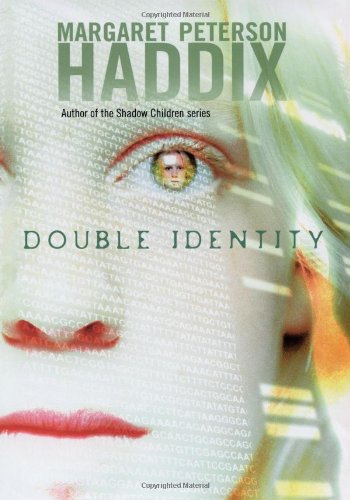
                • Cover of Double Identity
                  Double Identity

                  Margaret Peterson Haddix · standalone novel · 2005

                  similar bynorth americacontemporarymysteriouscoming of ageidentityfamily secretsscience fictionyoung adult

                  Double Identity is a 2005 young adult novel by Margaret Peterson Haddix.

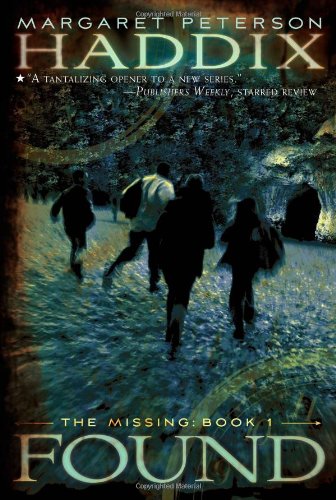
                • Cover of The Missing
                  The Missing

                  series · 10 books · 2008

                  similar byscience fictiontime travelcontemporarynorth americaidentitycoming of ageyoung adult+2 more

                  The Missing is a series of young adult novels written by Margaret Peterson Haddix. It tells the story of famous children from history stolen from their place in time by futuristic time travelers and accidentally sent to the 21st century as babies. Jonah Skidmore is one of the stolen children, and he, along with his non-adopted sister Katherine, must help return the missing kids to their rightful places in history and fix time before it is destroyed. The first book in the series, Found, was published on April 22, 2008. The series continued with book titles Sent, Sabotaged, Torn, Caught, Risked, and Revealed. The eighth and final book, Redeemed, was released on September 8, 2015. There are also two ebook short stories, Sought and Rescued . Haddix originally intended the series to consist of only seven books. However, she stated that she had trouble closing out the series in seven books; leading to her decision to write Redeemed.

                • Cover of Double Helix
                  Double Helix

                  Nancy Werlin · standalone novel · 2004

                  similar bynorth americacontemporaryscience fictionmysterioustenseidentityfamily secretsyoung adult

                  Double Helix (2004) is a novel by American writer Nancy Werlin about 18-year-old Eli Samuels, who works for a famous molecular biologist named Dr. Quincy Wyatt. There is a mysterious connection between Dr. Wyatt and Eli's parents, and all Eli knows about the connection is that it has something to do with his mother, who has Huntington's disease. Because of the connection between Dr. Wyatt and the Samuels family, Eli's father is strongly against Eli working there. The job is perfect, and the wages are great, but Eli can't help but notice that Dr. Wyatt seems to be a little too interested in him. Later on, as Eli continues to work in the lab, he discovers with the help of Kayla Matheson, Dr. Wyatt's supposed "niece," that he and Kayla are the product of a highly unethical eugenics experiment.

                • Cover of Anna to the Infinite Power
                  Anna to the Infinite Power

                  Mildred Ames · standalone novel · 1981

                  similar bynorth americacontemporaryscience fictionmysterioustensecoming of ageidentity

                  A 12-year-old math whiz accidentally learns the startling facts about her true identity and her role in an important secret experiment.

                • Cover of Flowers for Algernon
                  Flowers for Algernon

                  Daniel Keyes · standalone novel · 1966

                  similar bynorth americacontemporaryscience fictioncoming of ageidentity

                  A man with a low IQ becomes the subject of an experimental medical procedure which raises his IQ well over genius level.

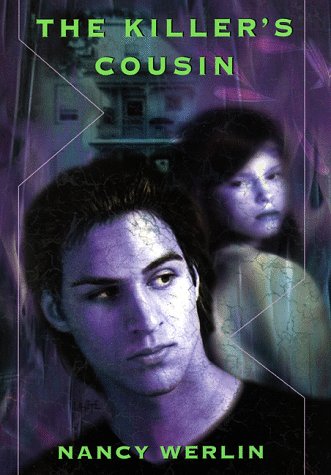
                • Cover of Killer's Cousin
                  Killer's Cousin

                  Nancy Werlin · standalone novel · 1998

                  similar bynorth americacontemporarymysterioustensecoming of agefamily secretsyoung adult+1 more

                  After being acquitted of murder, seventeen-year-old David goes to stay with relatives in Cambridge, Massachusetts, where he finds himself forced to face his past as he learns more about his strange young cousin Lily.

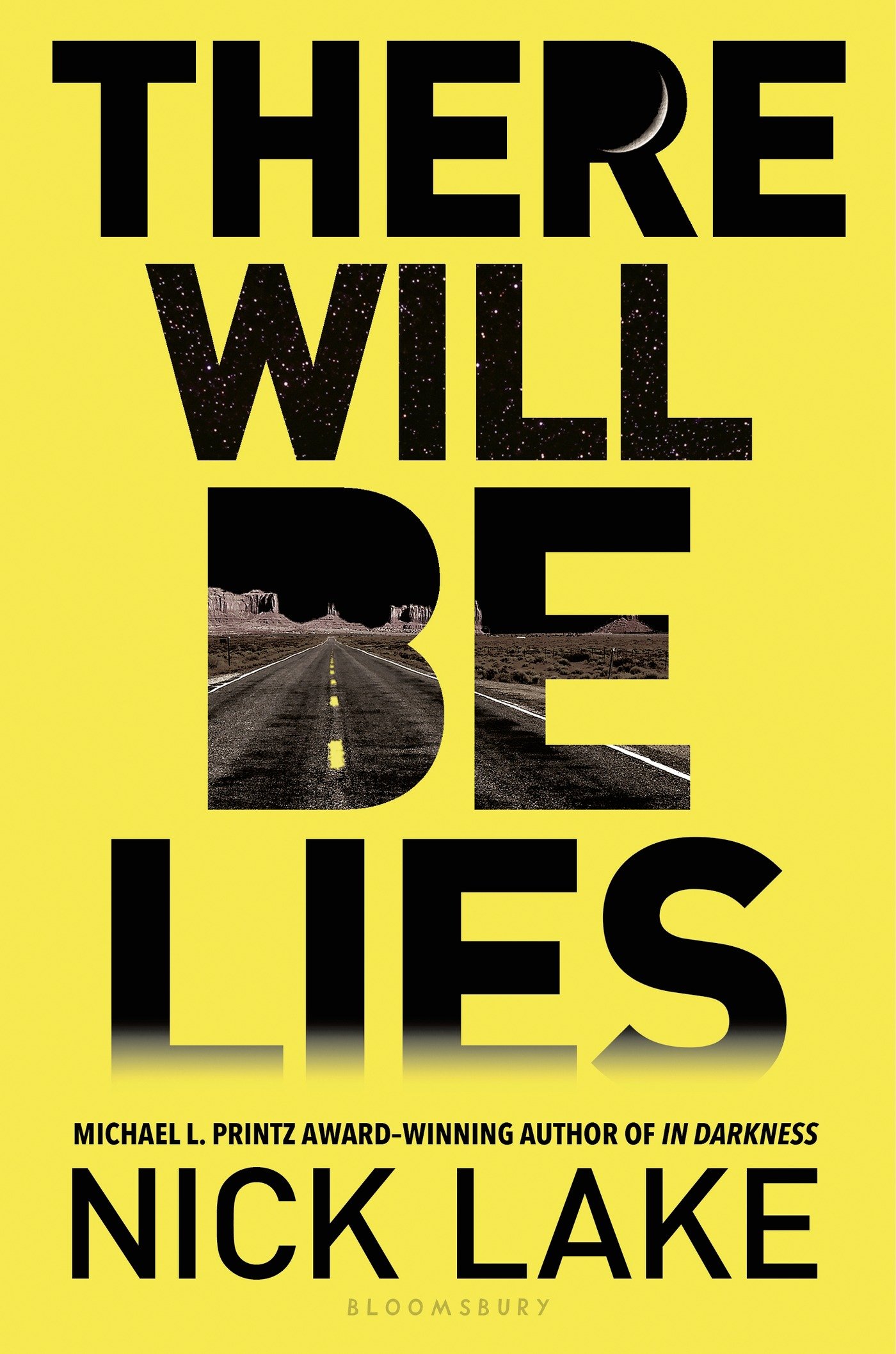
                • Cover of There Will Be Lies
                  There Will Be Lies

                  Nick Lake · standalone novel · 2015

                  similar bycontemporarymysterioustensenorth americaidentityfamily secretsyoung adult+1 more

                  "Shelby Jane Cooper is seventeen, pretty and quiet. It's just Shelby and her mom, Shaylene, a court stenographer who wears pyjama jeans, stitches tapestry, eats ice-cream for dinner and likes to keep Shelby safe. So safe she barely goes out. So safe she doesn't go to school. Because anything could happen, to a girl like Shelby. Anything. When Shelby gets knocked down by a car, it's not just her leg that's broken: Shelby's world is shattered. Her mom turns up to collect her and drives off into the night, like it's the beginning of a road trip, like two criminals on the run, like Thelma and Louise or Bonnie and Clyde. And somehow, everywhere she looks, there's a coyote watching her, talking to her, telling her not to believe. Who is Shelby Jane Cooper? If the person who keeps you safe also tells you lies, who can you trust?" (toppsta.com)

                • Cover of The Lying Game
                  The Lying Game

                  series · 6 books · 2010

                  similar bycontemporarynorth americamysterioustenseidentityfamily secretsyoung adult

                  The Lying Game is a series of young adult novels by Sara Shepard published by HarperTeen. The first novel in the series, The Lying Game, was released in hardcover on December 7, 2010. The series follows a teenager, Emma Paxton, who assumes the identity of her long-lost twin, Sutton Mercer, to uncover her sister’s killer.

                • Cover of The Man from Primrose Lane
                  The Man from Primrose Lane

                  James Renner · standalone novel · 2012

                  similar bynorth americacontemporaryscience fictionmysterioustensetime travel+1 more

                  The Man From Primrose Lane is an adult science-fiction thriller novel by American author and investigative journalist James Renner. It was published by Sarah Crichton Books in 2012. A television adaptation of the novel was picked up by 20th Television and Working Title Films in 2017.

                • Cover of The Curse Workers
                  The Curse Workers

                  series · 3 books · 2010

                  similar bycontemporarynorth americatensefamily secretsyoung adult+2 more

                  Holly Black's Curse Workers trilogy is set in an alternate America where 'curse work' — magic that harms or transforms through touch — is illegal, enforced through gloves and Prohibition-era-style crime families. It follows Cassel Sharpe, the only non-worker in a family of con artists and workers, as he tries to stay out of his family's schemes despite his own hidden connection to their world. The series runs from White Cat through two further novels.

                • Cover of Kindred
                  Kindred

                  Octavia E. Butler · standalone novel · 1979

                  similar bynorth americascience fictiontime traveltense+2 more

                  Kindred (1979) is a novel by American writer Octavia E. Butler that incorporates time travel and is modeled on slave narratives. Widely popular, it has frequently been chosen as a text by community-wide reading programs and book organizations, and for high school and college courses.

                • Cover of The Santaroga Barrier
                  The Santaroga Barrier

                  Frank Herbert · standalone novel · 1968

                  similar bynorth americacontemporaryscience fictionmysterious+1 more

                  Santaroga seemed to be nothing more than a prosperous farm community. But there was something . .. different . .. about Santaroga. Santaroga had no juvenile delinquency, or any crime at all. Outsiders found no house for sale or rent in this valley, and no one ever moved out. No one bought cigarettes in Santaroga. No cheese, wine, beer or produce from outside the valley could be sold there. The list went on and on and grew stranger and stranger.Maybe Santaroga was the last outpost of American individualism. Maybe they were just a bunch of religious kooks... Or maybe there was something extraordinary at work in Santaroga. Something far more disturbing than anyone could imagine. (Publisher's blurb)

                • Cover of Remember
                  Remember

                  Eileen Cook · standalone novel · 2015

                  similar bycontemporaryscience fictionmysterioustensenorth americaidentityyoung adult+1 more

                  Harper, whose father's company trademarked the "Memtex" procedure for wiping out bad memories, is surprised when her father objects to her having a treatment but afterwards, she begins having strange flashes about her own life and she joins forces with Neil, one of the company's protesters, to find the truth.

                • Cover of Blue Light
                  Blue Light

                  Walter Mosley · standalone novel · 1998

                  similar bynorth americacontemporaryscience fictionmysterioustense+1 more

                  Blue Light is a science fiction novel by American writer Walter Mosley, published in 1998 by Little Brown & Co.

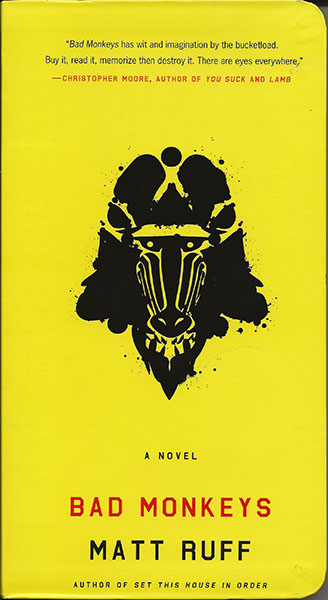
                • Cover of Bad Monkeys
                  Bad Monkeys

                  Matt Ruff · standalone novel · 2007

                  similar bynorth americacontemporarymysterioustenseidentity+1 more

                  Bad Monkeys is a 2007 psychological thriller novel by American author Matt Ruff. It received mixed reviews in national media, but was subsequently optioned for film.

                • Cover of Sang Spell
                  Sang Spell

                  Phyllis Reynolds Naylor · standalone novel · 1998

                  similar bynorth americacontemporarymysteriousidentityfamily secretsyoung adult+1 more

                  When his mother is killed in an automobile accident, high-schooler Josh decides to hitchhike across country, and finds himself trapped in a mysterious village somewhere in the Appalachian Mountains, among a group of people who call themselves Melungeons.

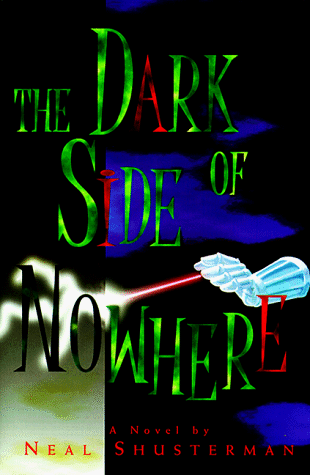
                • Cover of The Dark Side of Nowhere
                  The Dark Side of Nowhere

                  Neal Shusterman · standalone novel · 1997

                  similar bynorth americacontemporaryscience fictioncoming of ageidentity+2 more

                  The Dark Side of Nowhere is a children's book written by Neal Shusterman and published by Little Brown and Company in 1997. It was released in paperback and on audio cassettes.

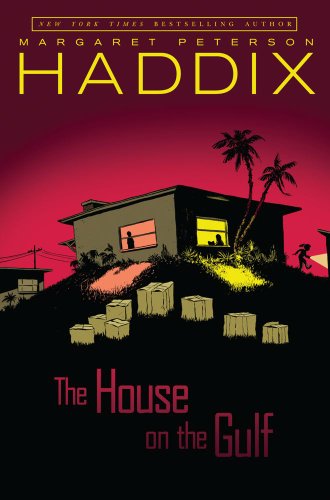
                • Cover of The House on the Gulf
                  The House on the Gulf

                  Margaret Peterson Haddix · standalone novel · 2004

                  similar bycontemporarymysterioustensenorth americacoming of agefamily secretsyoung adult

                  A sixteen-year-old boy arranges a housesitting job for the summer, but he starts acting strangely after his family moves in, and his sister begins to suspect they are not supposed to be there.

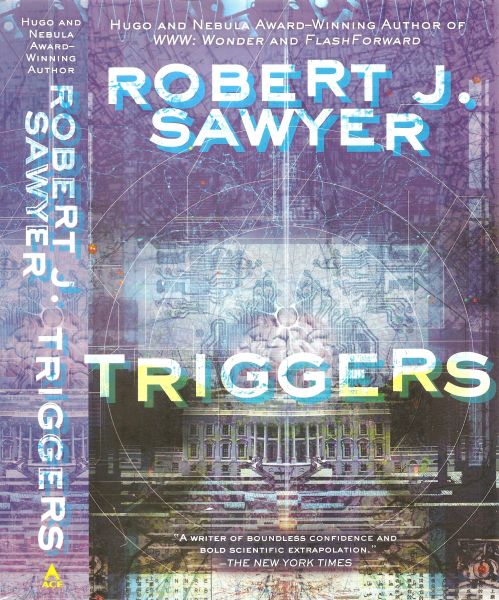
                • Cover of Triggers
                  Triggers

                  Robert J. Sawyer · standalone novel · 2012

                  similar bynorth americacontemporaryscience fictionmysterioustense

                  Triggers is a science fiction novel by Canadian writer Robert J. Sawyer. It was originally serialized in Analog.

                • Cover of Locked in Time
                  Locked in Time

                  Lois Duncan · standalone novel · 1985

                  similar bynorth americacontemporarytenseidentityfamily secretsyoung adult

                  Locked in Time is a 1985 suspense novel by Lois Duncan. The story centers around Nore, a seventeen-year-old girl who moves into a new home with her father and her new stepfamily. Soon after she meets her stepmother, stepbrother, and stepsister for the first time, Nore begins to suspect something is not quite right about her stepfamily. The author states that the novel explores some of the issues surrounding having eternal life. Duncan says she developed the idea for the novel when one of her daughters was thirteen years old and was having issues with her body image. Duncan mentions that her daughter was "taking everything out" on her, and she began to wonder what it would be like if her daughter never outgrew her adolescence.

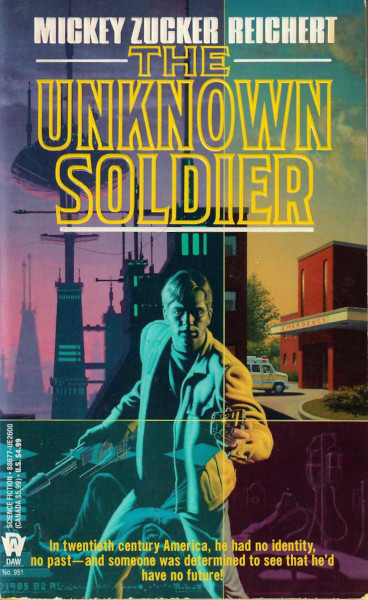
                • Cover of The Unknown Soldier
                  The Unknown Soldier

                  Mickey Zucker Reichert · standalone novel · 1994

                  similar bynorth americacontemporaryscience fictiontime travelmysterioustenseidentity

                  From the back cover of the DAW first edition: "Back to the present - They found him lying in a field near the local high school and brought him to the emergency ward at Liberty Hospital in Iowa. Suffering from multiple wounds and near death, he was a man with no discernible past, no traceable identity, and no knowledge of who he was or how he had gotten there. It was during his recovery that the nightmares began. First there were the odd flashes of memory, the vivid images of violence, of killing, of warfare, and finally a name - Carrigan. And then there was the world in which he now found himself, twentieth century America - a time and a place with which he was completely unfamiliar. Chief Resident Shawna Nicholson was the only one who managed to piece together the shocking truth about Liberty Hospital's mysterious patient. Incredible as it seemed, he could only be a man out of time, sent back to her present from a future neither he nor she wanted to contemplate. But they soon discovered that Carrigan's own time had not forgotten about him when deadly pursuers suddenly turned up, determined to destroy Carrigan - and ready to take out anyone who got in the way."

                • Cover of Elatsoe
                  Elatsoe

                  series · 2 books · 2020

                  similar bynorth americacontemporarycoming of agefamily secretsyoung adult+3 more

                • Cover of The Visitors
                  The Visitors

                  Clifford D. Simak · standalone novel · 1980

                  similar bycontemporaryscience fictionmysterioustensenorth america

                  WorldCat: Intelligent, alien creatures arrive on Earth from outer space, threatening world stability and presaging the destruction of civilization.

                • Cover of Three Days to Never
                  Three Days to Never

                  Tim Powers · standalone novel · 2006

                  similar bynorth americacontemporarymysteriousfamily secretstime travel+1 more

                  Three Days to Never is a 2006 fantasy novel by Tim Powers. As with most of Powers' novels, it proposes a secret history in which real events have supernatural causes and prominent historical figures have been involved in supernatural or occult activities. The novel was shortlisted for the Locus Fantasy Award in 2007 as well as the Mythopoeic Fantasy Award for Adult Literature in the same year.