More like Foundation's Edge
anchored on:science fictionspace operagalactic scalefar futurepolitical intriguemysterious+1 more
but
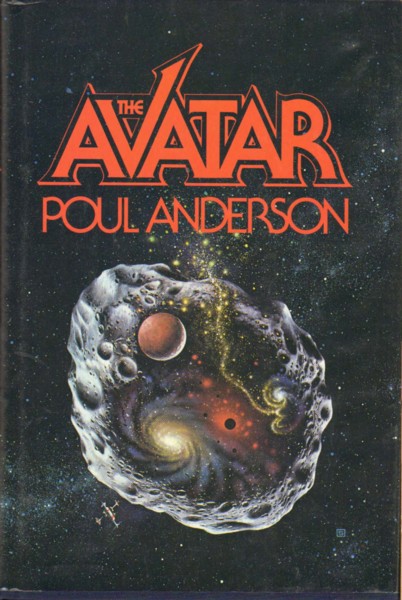
- The Avatar
Poul Andersonstandalone novel1978
similar bymysteriousfar futurepolitical intriguescience fictionspace operaspace exploration+1 more
After humanity discovers portals that transport a space vessel through time and space, a crew which has visited the planet of another species returns to Earth, only to find a political faction in power which seeks to conceal this knowledge in the name of social stability. With the aid of the political opposition, they escape and journey through the portal in search of knowledge, and perhaps even to meet those who created the portal system.
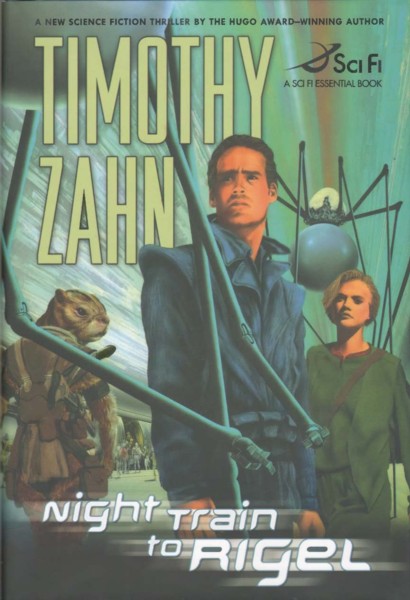
- Quadrail
series5 books2005
similar bymysteriousfar futurescience fictionpolitical intriguespace opera+1 more
Timothy Zahn's Quadrail series follows ex-intelligence operative Frank Compton, recruited by the enigmatic Spider caretakers of the Quadrail, an interstellar train network that lets a dozen alien empires travel between worlds at a light-year a minute. Paired with the telepathically gifted Bayta, Compton investigates and fights the Modhri, a parasitic group-mind quietly seizing control of galactic leaders from within. The five novels, published 2005-2012, follow one continuous investigation from first contact with the threat to its final confrontation.
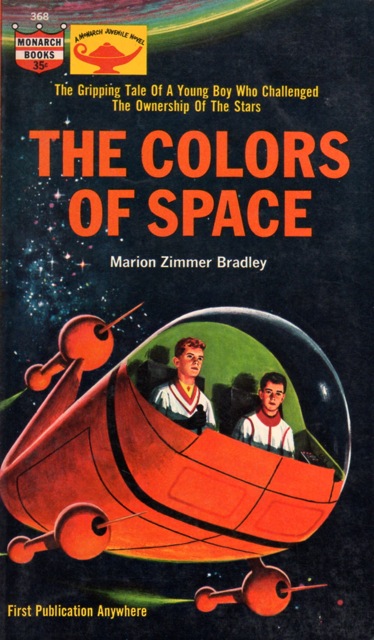
- The Colors of Space
Marion Zimmer Bradleystandalone novel1963
similar bymysteriousfar futurescience fictionspace operaspace exploration
The Lhari seem peaceful and friendly, but they go to some lengths to protect their monopoly on faster-than-light travel. One young man is sent to discover their secrets.
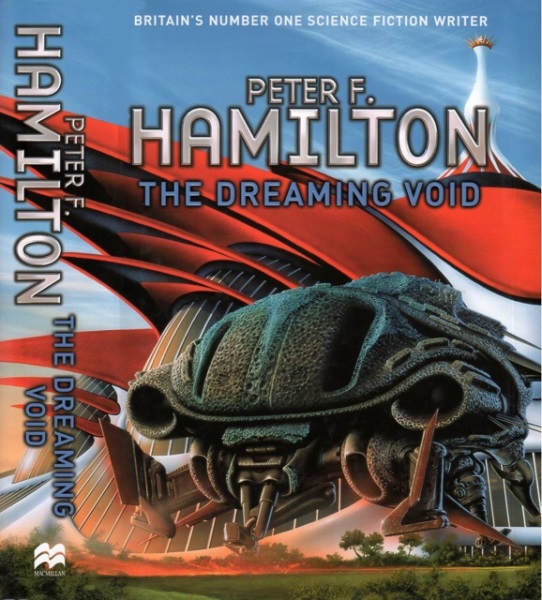
- Void Trilogy
series4 books2007
part of Commonwealth Universe
similar byfar futurescience fictionspace operagalactic scale+3 more
The Void Trilogy is a space opera series by British author Peter F. Hamilton. The series is set in the same universe as The Commonwealth Saga, 1,200 years after the end of Judas Unchained.
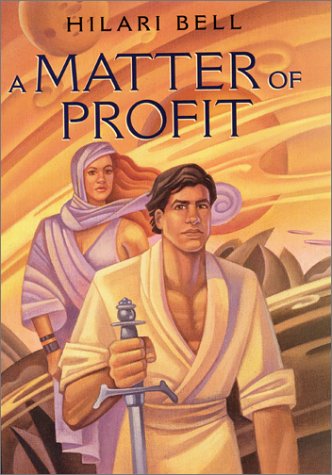
- A Matter of Profit
Hilari Bellstandalone novel2001
similar bymysteriousfar futurepolitical intriguescience fictionspace operagalactic scale
Publisher's description: "Sick of the horrors of conquering beings on other planets, Ahvrem will end his service as a soldier and save his sister from an unhappy marriage if he can discover who is behind a rumored plot to assassinate the Emperor."
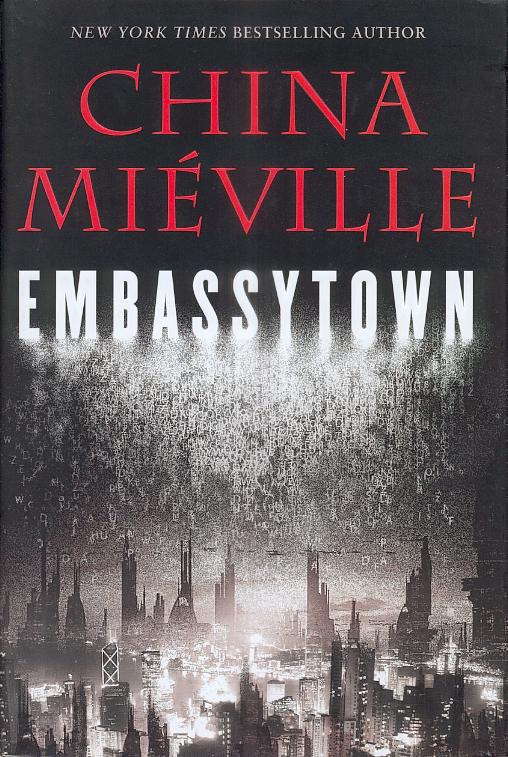
- Embassytown
China Miévillestandalone novel2011
similar bymysteriousfar futurepolitical intriguescience fiction+1 more
In the far future, humans have colonized a distant planet, home to the enigmatic Ariekei, sentient beings famed for a language unique in the universe, one that only a few altered human ambassadors can speak. Avice Benner Cho, a human colonist, has returned to Embassytown after years of deep-space adventure. She cannot speak the Ariekei tongue, but she is an indelible part of it, having long ago been made a figure of speech, a living simile in their language. When distant political machinations deliver a new ambassador to Arieka, the fragile equilibrium between humans and aliens is violently upset. Catastrophe looms, and Avice is torn between competing loyalties—to a husband she no longer loves, to a system she no longer trusts, and to her place in a language she cannot speak yet speaks through her.
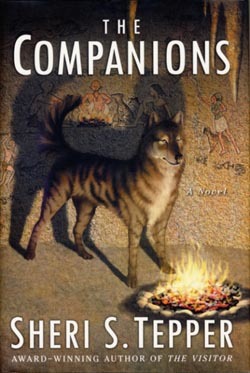
- The Companions
Sheri S. Tepperstandalone novel2003
similar bymysteriousfar futurescience fictionspace operaspace exploration+1 more
Three planets in deep space were named by their human discoverers to reflect their environments: lush and foreboding Jungle, which swallowed up an exploratory team; Stone, phenomenally rich in rare ore; and Moss, the most enigmatic -- and dangerous -- of the trio.Joining her half-brother Paul, the famed linguist, on a two-person scientific expedition, Jewel Delis has come to Moss to observe the phenomenon of dancing light and to help decipher the strange musical "language" that accompanies it. But there are other mysteries alive on this exotic world covered in ever-shifting vegetation -- and something more than illuminations has enticed her away from a disastrously overpopulated homeworld to seek answers at the universe's unexplored edge. For Jewel herself is a question mark with a radical agenda that will put her at perilous odds with her planet's ruling powers -- and with the inscrutable alien races she encounters -- as she risks all for justice for the endangered beasts of the Earth.
- Ascendance (Jay Posey)
series2 books2020
similar bymysteriousfar futurescience fictionspace opera+2 more
- Heechee
series19 books1972
completed
similar byfar futurescience fictionspace operaspace exploration+1 more
The Heechee Saga, also known as the Gateway series, is a series of science fiction novels and short stories by Frederik Pohl. The Heechee are an advanced alien race that visited the Solar System hundreds of millennia ago and then mysteriously disappeared. They left behind bases containing artifacts, including working starships, which are discovered and exploited by humanity.
- Dune
series20 books1963
part of Dune Universe
similar byfar futurepolitical intriguescience fictionspace opera+1 more
Frank Herbert's Dune Chronicles opens with 1965's Dune, set on the desert planet Arrakis where House Atreides takes control of the only source of the vital spice melange and young Paul Atreides is pulled into a struggle over its politics and religion. Herbert carried the story forward across five further novels — Dune Messiah, Children of Dune, God Emperor of Dune, Heretics of Dune, and Chapterhouse: Dune — following Paul's line over the following millennia, before Brian Herbert and Kevin J. Anderson later extended the saga. Many other editions of these six novels are omnibus and box-set repackagings rather than separate stories.
- Whipping Star
Frank Herbertstandalone novel1970
similar byfar futurepolitical intriguescience fictiongalactic scalespace opera+1 more
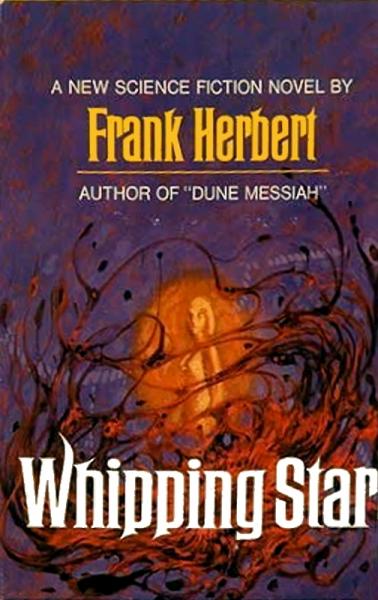
From Amazon: In the far future, humankind has made contact with numerous other species: Gowachin, Laclac, Wreaves, Pan Spechi, Taprisiots, and Caleban, and has helped to form the ConSentiency to govern among the species. After suffering under a tyrannous pure democracy, the sentients of the galaxy find the need for a Bureau of Sabotage (BuSab) to slow the wheels of government, thereby preventing it from legislating recklessly. BuSab is allowed to sabotage and harass the governmental, administrative, and economic powers in the ConSentiency. Private citizens must not be harassed, and vital functions of society are also exempt. Jorj X. McKie is a born troublemaker who has become one of BuSab's best agents. Drafted for the impossible task of establishing meaningful communication with an utterly alien entity who defies understanding, McKie finds himself racing against time to prevent a mad billionairess from wiping out all life in the ConSentiency.
- Alex Benedict
series13 books1987
similar bymysteriousfar futurescience fiction+2 more
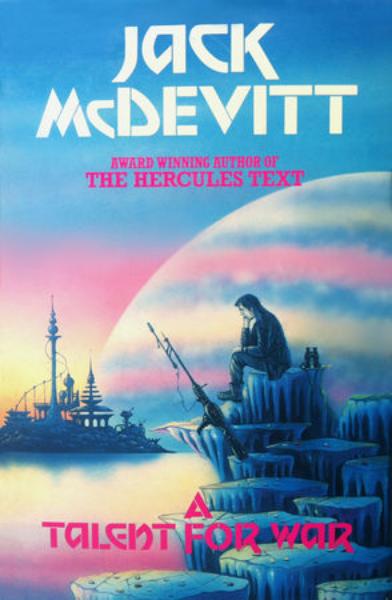
Alex Benedict is an antiques dealer and part-time interstellar investigator, generations removed from Earth's first starfaring age, who keeps stumbling into forgotten history through the objects and ruins he trades in. A Talent for War opens the series with his search for what his vanished uncle was really investigating before a doomed voyage, uncovering a buried chapter of an old human-alien war. Jack McDevitt built a long-running series, narrated by Benedict's pilot and partner Chase Kolpath, around this mix of archaeology, mystery, and deep time.
- Culture
series15 books1987
completed
part of The Culture
similar byfar futurescience fictionspace operagalactic scale+1 more
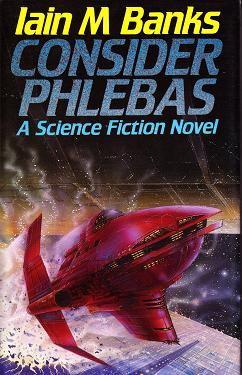
The Culture series is a science fiction series written by Scottish author Iain M. Banks and released from 1987 until 2012. The stories centre on The Culture, a utopian, post-scarcity space society of humanoid aliens and advanced superintelligent artificial intelligences living in artificial habitats spread across the Milky Way galaxy. The main themes of the series are the dilemmas that an idealistic, more-advanced civilization faces in dealing with smaller, less-advanced civilizations that do not share its ideals, and whose behaviour it sometimes finds barbaric. In some of the stories, action takes place mainly in non-Culture environments, and the leading characters are often on the fringes of the Culture, sometimes acting as agents of the Culture in its plans to civilize the galaxy. Each novel is a self-contained story with new characters, although reference is occasionally made to the events of previous novels.
- The Eternity Artifact
L. E. Modesitt & Jr.standalone novel2005
similar bymysteriousfar futurepolitical intriguescience fictionspace exploration+1 more
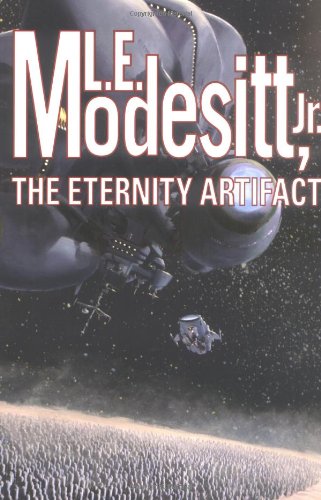
The Eternity Artifact is a science fiction novel by American writer L. E. Modesitt, Jr., published in 2005. It is set in a future approximately 3,000 years hence, in a galaxy largely colonized by humans but divided into disparate polities who strive against each other in a manner similar to that of modern-day nations. Once such group, the Comity, discovers a planet that may be the first evidence of nonhuman intelligent life. The Comity mounts an expedition to investigate this world, and certain of the other groups attempt to interfere in various ways and for various reasons. The story discusses the expedition from the perspective of four viewpoint characters. It details the progress of the explorers and touches on the differences between the various human groups and how those inform their response to this discovery, and their goals regarding it.
- Dune Universe
universe78 books1963
Start hereDune · Start here
similar byfar futurepolitical intriguescience fictionspace opera
Arrakis. Dune. The desert planet, where empire runs on a single substance: the spice melange, which folds space, prolongs life, and unlocks prescience, and which exists nowhere else in the known universe. Frank Herbert's saga is a meditation dressed as an adventure — feudal houses and a secret sisterhood, engineered messiahs and the patient ecology of a world without water, all turning on the terrible gravity of who commands the spice. It reads like scripture and schemes like a war room, ten thousand years hence, among people who have outlawed the thinking machine and made instruments of themselves instead. At its heart stand Herbert's original six — Dune, Dune Messiah, Children of Dune, God Emperor of Dune, Heretics of Dune, Chapterhouse: Dune — a single deepening arc across millennia, arguing the whole way between prophecy and free will. Around that spine his son Brian Herbert and Kevin J. Anderson have raised a vast prequel architecture: Prelude to Dune, tracing the great houses a generation before Paul; Legends of Dune, reaching back to the crusade that broke the machines; the Schools of Dune cycle on the founding of Bene Gesserit, Mentat, and Navigator; the Caladan Trilogy and Heroes of Dune filling years the originals left in shadow. Many hands, dozens of volumes, one desert. What sets Dune apart is its refusal of the simple: religion is manufactured, heroes are hazards, and the sand itself — worm, water, ecology — acts as a political power. Begin where the universe did, with Frank Herbert's Dune (1965), and read the original six in order; you need nothing else to feel the full weight. The prequels are a country to explore afterward, taken by era. Beginnings are delicate times.
- Icehenge
Kim Stanley Robinsonstandalone novel1984
similar bymysteriousfar futurescience fictionspace explorationhard science fiction
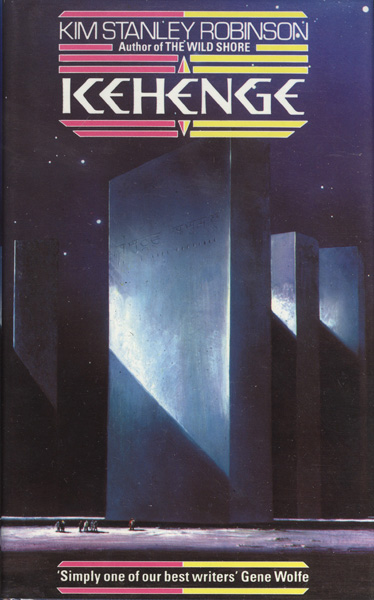
Icehenge unfolds in three parts, narrated years or centuries apart by different investigators piecing together the same facts. The first is the diary of Emma Weil, an engineer swept into a Martian revolution in 2248, conscripted onto a rebel starship fitted for a voyage beyond the solar system, and forced to decide how far her sympathy for the uprising extends. Generations later, other narrators pick up the thread of what became of her and the ship, drawn toward a stone monument on a moon of Pluto that should not exist. An early standalone novel by Kim Stanley Robinson, revisiting the Martian-revolution material he later expanded into the Mars trilogy.
- Ringworld
series5 books1970
part of Known Space
similar byfar futurescience fictionspace operaspace exploration+1 more
The Ringworld series is a series of science fiction novels written by American author Larry Niven. It is part of his Known Space series of stories. Its backdrop is the Ringworld, a giant artifact 3 million times the surface area of Earth circling a star. The series is composed of four standalone science fiction novels, the original award-winning book and its three sequels:1970: Ringworld 1979: The Ringworld Engineers 1996: The Ringworld Throne 2004: Ringworld's Children
- As on a Darkling Plain
Ben Bovastandalone novel1972
similar bymysteriousfar futurescience fictionspace operaspace exploration
Humanity has explored the solar system and is in the beginnings of interstellar exploration. However, as the explorations proceed it becomes more and more apparent that people from Earth have already been there before. Was the Earth a spacefaring planet in prehistory and had that civilization been wiped out by aliens from elsewhere so that the people of Earth had to start all over again. The discovery of the remnants of an Earth colony in orbit around Sirius seems to confirm that supposition. There is alsoa large machine that is still functioning in the solar system.
- Shakespeare's Planet
Clifford D. Simakstandalone novel1976
similar bymysteriousfar futurescience fictionrobots+1 more
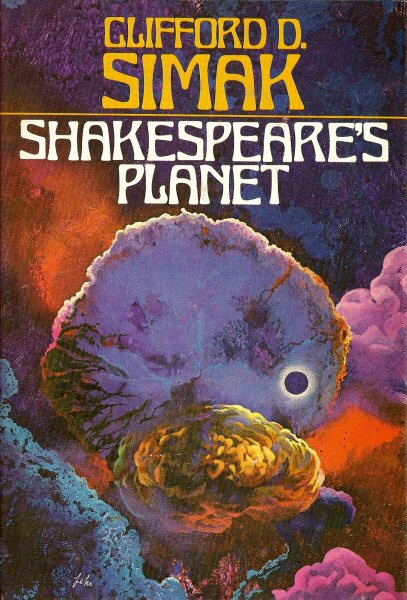
Woken after a thousand-year voyage meant to find humanity a new home, Carter Horton finds his ship stranded for good, tended by the disembodied minds of three volunteers who gave up their bodies to fly it. Outside waits a world already crowded with strangers: a robot named Nicodemus, and an alien called the Carnivore who claims to have known a human, once, called Shakespeare, and to have arrived here through a tunnel across time. As more travelers arrive through that same tunnel, Horton has to work out what kind of planet he has actually landed on. A standalone novel from Clifford D. Simak.
- Hair Carpet Makers Universe
series2 books1985
similar bymysteriousfar futurepolitical intriguescience fiction
- The Werewolf Principle
Clifford D. Simakstandalone novel1967
similar bymysteriousfar futurescience fictionour world
From the back cover of the first DAW printing: "Andrew Blake, found in a space capsule on a distant planet, was brought back to an unfamiliar Earth, where antigravity devices had replaced the wheel and houses talk and even fly! Yet nothing was as strange as Blake's own feelings. Tormented by eerie sensations and a loss of memory, he didn't know who he really was nor exactly where he came from. His destiny only began to grow frighteningly clear when he met a weird, tassel-eared creature who darkly hinted at the truth about Blake's origins. Slowly Blake became aware of the long hushed-up "Werewolf Principle," a scientific theory buried in the past, which held the key to Blake's own fate - and the future of the human race..."
- Hull Zero Three
Greg Bearstandalone novel2010
similar bymysteriousfar futurescience fictionhard science fiction+1 more
Hull Zero Three is a science fiction novel by American author Greg Bear. It was published on November 22, 2010. It is set on a generation ship that has lost its way under mysterious circumstances.
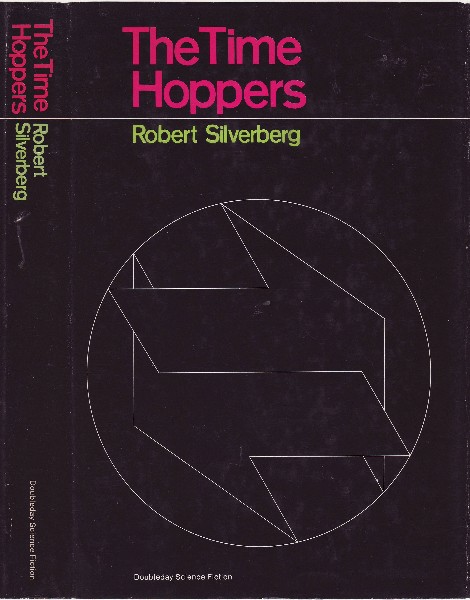
- The Time Hoppers
Robert Silverbergstandalone novel1967
similar bymysteriousfar futurescience fictionour worldtime travel
The Time Hoppers is a science fiction novel by American writer Robert Silverberg, first published by Doubleday in 1967. The plot concerns Joe Quellen, a 25th-century bureaucrat charged with investigating "hoppers", travelers from the future whose presence in the past has been documented for hundreds of years, and his brother-in-law, Norman Pomrath, an unemployed blue collar worker who ends up being presented with an opportunity to travel back in time.
- Artemis (Jane Lindskold)
series2 books2014
similar bymysteriousfar futurescience fictionspace operaspace exploration+1 more