More like Freeway Fighter
anchored on:science fictionpost-apocalypticsurvivalour worldnear futureadventurous+3 more
but
- Z for Zachariah
Robert C. O'Brienstandalone novel1975
similar bysurvivalnear futuretenseour worldscience fictionpost-apocalypticnorth america
Sixteen-year-old Ann Burden, on an Amish family farm in an isolated valley, believes she is the only survivor of nuclear war and nerve gas. One day a man arrives in a "safe-suit" that he and others have recently developed.
- The Fireman
Joe Hillstandalone novel2016
similar bysurvivalnear futuretenseour worldscience fictionpost-apocalypticnorth america
The Fireman is a novel set in a post-apocalyptic time by American author Joe Hill. The novel, Hill's fourth, tells the tale of a deadly spore that has infected most of the world's population. Hill first spoke of the novel in 2013 in promotional interviews for his then-new novel NOS4A2. The novel was released on May 17, 2016.
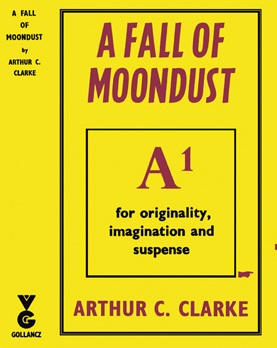
- A Fall of Moondust
Arthur C. Clarkestandalone novel1961
similar bysurvivalnear futureadventuroustensescience fiction
From the back cover of the Harbrace paperback: "The action of A Fall of Moondust takes place almost a century from now when tours on the moon are a common occurrence. One of the high points of each tour is a cruise around the Sea of Thirst, a body of volcanic dust, in a specially designed vessel called the Selene On a perfectly routine voyage one day the Selene suddenly disappears. How do you locate a small tourist "cruiser" buried beneath fifty feet of dust? If you find it, how do you rescue the passengers and crew? If you are on board, how do you feel and what do you do while brave men and expert technicians join forces in a race against time? Sustained excitement, lively humor, and an engaging cast of characters make this one of Arthur C. Clarke's most intriguing novels."
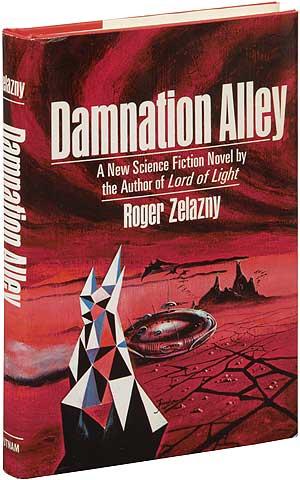
- Damnation Alley
Roger Zelaznystandalone novel1969
similar bysurvivalnear futureadventurousscience fictionpost-apocalypticnorth america
Damnation Alley is a 1969 science fiction novel by American writer Roger Zelazny, based on a novella of the same name published in 1967. A film adaptation of the novel was released in 1977.
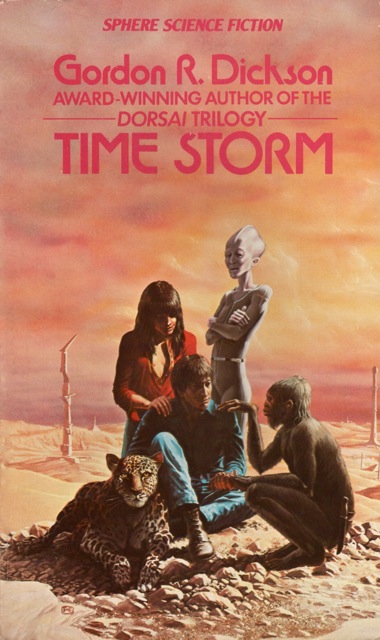
- Time Storm
Gordon R. Dicksonstandalone novel1977
similar bysurvivalnear futureadventuroustenseour worldscience fictionpost-apocalyptic
A time storm has devastated the Earth, and only a small fraction of humankind remains. From the rubble, three survivors form an unlikely alliance: a young man, a young woman, and a leopard. "A masterful science fiction story told by a masterful science fiction writer". -- Milwaukee Journal. A time storm strikes the Earth. The Earth remains, but different parts of the Earth are in different eras. Travel between the different zones is thought to be impossible. The main character, Marc Despard, resolves to fight the time storm. After some struggles, he assembles a small band of people, including one alien, to help him try to understand what has happened and to stop the time storm. He has 2 extraordinary relationships with a older teenaged girl who is speechless for the first part of the book (she was "struck dumb" by the time storm) and with, believe it or not, a leopard. Dickson's writing makes the extraordinary seem quite normal. Ultimately, after being harried by a Mad Max-like group of survivors, he uses a machine found in a different era of time to bring his small band of followers into the future so that he can find those who are trying to fight the time storm. He convinces those future beings that he is capable of fighting the time storm, and ultimately stops it, and gets the girl in the end.
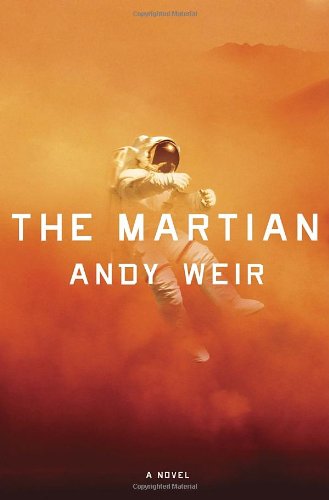
- The Martian
series2 books2012
similar bysurvivalnear futuretensescience fictionour world
Andy Weir's novel The Martian, first self-published in 2011 before a commercial re-release, follows astronaut Mark Watney after he is stranded alone on Mars when his crew presumes him dead and departs. Using scientific improvisation and dark humor, Watney works to keep himself alive long enough for a rescue to reach him. It is a single, self-contained survival story.
- Have Space Suit - Will Travel
Robert A. Heinleinstandalone novel1958
similar bysurvivalnear futureadventuroustensescience fictionnorth america
From the back cover of the Del Rey 9th printing: "Skyjacked - Everything happened at once. One minute Kip Russell was walking about in his own backyard, testing out an old space suit and dreaming about going to the moon - and the next he was out cold and the captive of an insidious space pirate. The whole thing seemed like a very bad dream until he discovered he wasn't the only prisoner on board. Then the reality of the situation became inescapable. He - along with the daughter of a world-renowned scientist and a beautiful creature from an alien planet - had been skyjacked by a monstrous extraterrestrial and they were on their way to the Moon... a journey toward a fate worse than death!"
- Down to a Sunless Sea
David Grahamstandalone novel1979
similar bysurvivalnear futuretenseour worldscience fictionpost-apocalypticnorth america
David Graham's Down to a Sunless Sea (1979) is a post-apocalyptic novel about a planeload of people during and after a short nuclear war, set in a near-future world where the USA is critically short of oil. The title of the book is taken from a line of the poem Kubla Khan by Samuel Taylor Coleridge.
- I Am Legend
Richard Mathesonstandalone novel1954
similar bysurvivaltenseour worldpost-apocalypticnorth americascience fiction
The last human survivor of the vampire epidemic has to maintain his defences against their onslaught, while attempting to research the cause and possibly solution to the plague. Robert Neville is the last living man on Earth... but he is not alone. Every other man, woman and child on the planet has become a vampire, and they are hungry for Neville's blood. By day he is the hunter, stalking the undead through the ruins of civilization. By night, he barricades himself in his home and prays for the dawn. How long can a man survive like this?
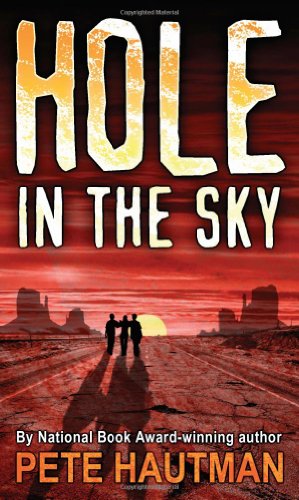
- Hole in the Sky
Pete Hautmanstandalone novel2001
similar bysurvivalnear futureadventuroustensescience fictionpost-apocalypticnorth americaadventure
"In 2028, a deadly Flu virus ravages the earth. Only one in two thousand survive the virus, and these "Survivors" are rarely left unaffected. By 2038, only 38 million people remain on Earth. Most of them live in small communities, ever fearful of outsiders who might bring the deadly Flu."Ceej Kane lives with his uncle and his Survivor sister Harryette in an abandoned hotel on the rim of the Grand Canyon. His quiet, boring life suddenly becomes a desperate adventure when Uncle and Harryette disappear. Searching for them, Ceej and his only friend, Tim, are attacked by the Kinka, a renegade band of half-mad Survivors who spread the Flu to make more of their own. Worse yet, it appears that Harryette has joined them. Fleeing deep into the Canyon, a narrow land of ghosts and ancient secrets, Ceej and Tim meet Bella, a mysterious Hopi girl. She has been searching the canyon for the Sipapuni, a mystical portal that the Hopi believe leads to another world. Tim thinks Bella is crazy, but Ceej is not so sure. Maybe there is a way out of this Flu-ravaged world. But first they must find out what happened to Uncle, and they must save Harryette from the Kinka -- if she wants to be saved.
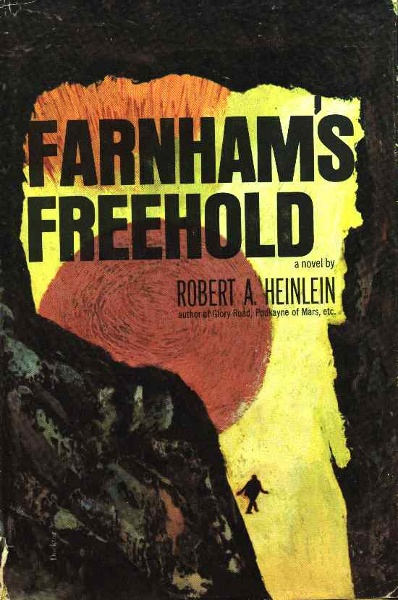
- Farnham's Freehold
Robert A. Heinleinstandalone novel1964
similar bysurvivalnear futuretensescience fictionnorth americapost-apocalyptic
Farnham's Freehold is a science fiction novel by American writer Robert A. Heinlein. A serialized version, edited by Frederik Pohl, appeared in Worlds of If magazine. The complete version was published in novel form by G. P. Putnam later in 1964.
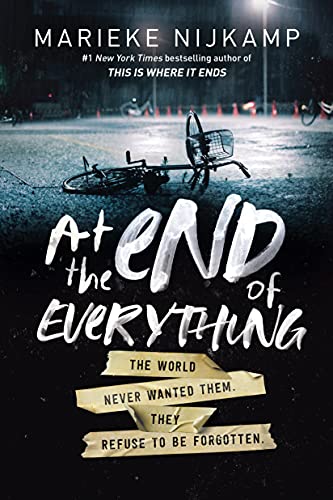
- At the End of Everything
Marieke Nijkampstandalone novel2022
similar bysurvivalnear futuretenseour worldscience fictionpost-apocalypticnorth america
The Hope Juvenile Treatment Center is ironically named. No one has hope for the delinquent teenagers who have been exiled there; the world barely acknowledges that they exist. Then the guards at Hope start acting strange. And one day…they don't show up. But when the teens band together to make a break from the facility, they encounter soldiers outside the gates. There's a rapidly spreading infectious disease outside, and no one can leave their houses or travel without a permit. Which means that they're stuck at Hope. And this time, no one is watching out for them at all. As supplies quickly dwindle and a deadly plague tears through their ranks, the group has to decide whom among them they can trust and figure out how they can survive in a world that has never wanted them in the first place.
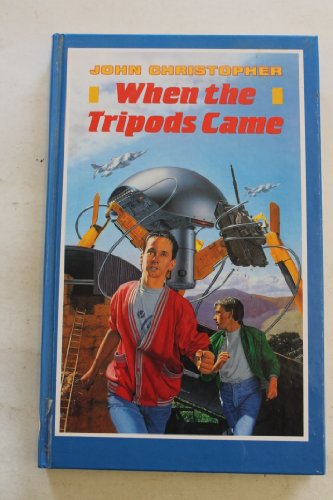
- Tripods
series4 books1967
completed
similar bynear futuretensescience fictionpost-apocalypticour world+2 more
The Tripods is a series of young adult science fiction novels by John Christopher. The series takes place in a post-apocalyptic world where humanity is enslaved by "Tripods"—gigantic three-legged walking machines piloted by an alien race later identified as the "Masters". The first two books were the basis of a science fiction TV series, produced in the United Kingdom in the 1980s.
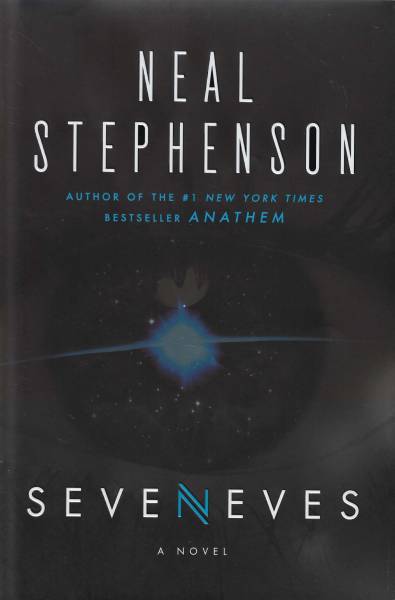
- Seveneves
Neal Stephensonstandalone novel2015
similar bysurvivalnear futuretensescience fictionour worldpost-apocalyptic
Seveneves is a science fiction novel by Neal Stephenson published in 2015. The story tells of the desperate efforts to preserve Homo sapiens in the wake of apocalyptic events on Earth after the unexplained disintegration of the Moon and the remaking of human society as a space-based civilization after a severe genetic bottleneck.
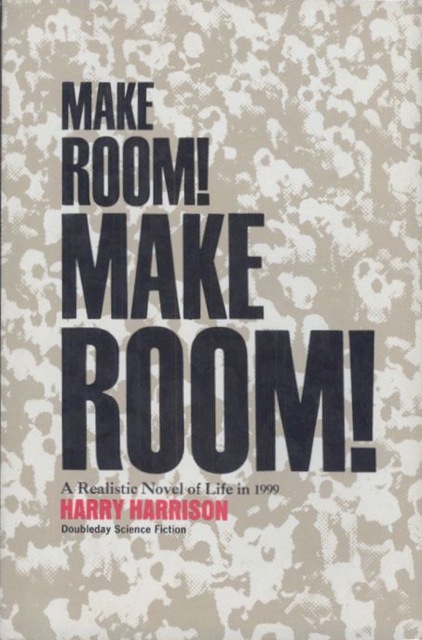
- Make Room! Make Room!
Harry Harrisonstandalone novel1966
similar bysurvivalnear futuretenseour worldscience fictionnorth america
Make Room! Make Room! is a 1966 science fiction novel written by Harry Harrison exploring the consequences of both unchecked population growth on society and the hoarding of resources by a wealthy minority. It was originally serialized in Impulse magazine.
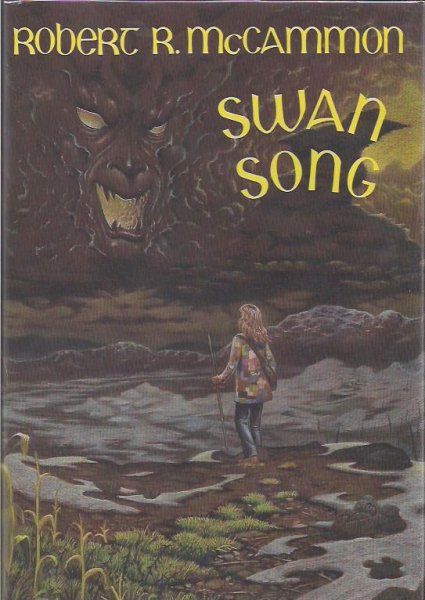
- Swan Song
Robert R. McCammonstandalone novel1987
similar bysurvivalnear futuretensepost-apocalypticnorth americascience fiction+1 more
Swan Song is a 1987 post-apocalyptic horror novel by American novelist Robert R. McCammon. Published June 1, 1987, the novel describes the aftermath of a nuclear war that provokes an evolution in humankind. Swan Song won the 1987 Bram Stoker award, tying with Stephen King's Misery.
- Survivalist
series41 books1981
similar bysurvivalnear futuretensescience fictionpost-apocalypticnorth america
The Survivalist is the generic title of Jerry Ahern's long-lived series of 29 pulp novels centering around John Rourke, an ex-CIA officer turned weapons and survival expert, in the aftermath of a nuclear war.
- City at World's End
Edmond Hamiltonstandalone novel1951
similar bysurvivaltenseour worldscience fictionpost-apocalypticnorth america
An experimental atomic weapons test in small-town America goes catastrophically wrong, hurling the entire town of Middletown, buildings, streets and all, untold ages into Earth's future, to a time when the sun is dying and humanity's last city struggles on beneath a darkening sky. Cut off from everything and everyone they knew, the townspeople have to find a way to survive in a world that has nothing left to spare for latecomers. Edmond Hamilton's novel strands a slice of mid-century America at the literal end of the world.
- The Passage
series3 books2010
similar bysurvivalnear futuretensepost-apocalypticnorth americascience fiction
The Passage is a novel series by Justin Cronin. There are three published books in the series. The film rights were acquired by Fox Entertainment Group in 2007 for adaptation into a film trilogy, but after 12 years of development and planning, it was changed to a television series, which premiered in January 2019 and was canceled after the first season.
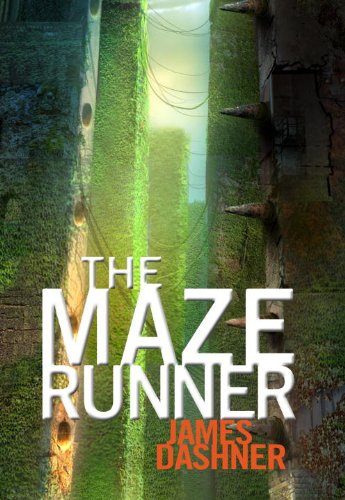
- Maze Runner
series11 books2009
similar bysurvivalnear futuretensescience fictionpost-apocalyptic+2 more
The Maze Runner is a series of young adult dystopian science fiction novels written by American author James Dashner. The series consists of the trilogy The Maze Runner (2009), The Scorch Trials (2010) and The Death Cure (2011), as well as two prequel novels, The Kill Order (2012) and The Fever Code (2016). A novella titled Crank Palace (2020) and a companion book titled The Maze Runner Files (2013) have also been released. A sequel trilogy in the series titled The Maze Cutter takes place 73 years following the events of The Death Cure and consists of the novels The Maze Cutter (2022), The Godhead Complex (2023), and The Infinite Glade (2025).
- Directive 51 / Daybreak
series3 books2010
similar bysurvivalnear futuretensescience fictionpost-apocalypticnorth america
Directive 51 opens John Barnes's near-future thriller trilogy with government analyst Heather O'Grainn as anti-technology extremists unleash a nanotech plague called Daybreak that destroys petroleum-based materials, rubber, and electrical systems worldwide. The resulting collapse triggers mass death, a crisis over presidential succession, and mysterious Moon-launched fusion strikes on Washington and Chicago, while a shadowy neofeudalist movement moves into the vacuum. Daybreak Zero and The Last President carry the same unraveling-civilization story through the rest of the trilogy.
- Cell
Stephen Kingstandalone novel2006
similar bysurvivaltenseour worldpost-apocalypticnorth americascience fiction
In Cell, King taps into readers fears of technological warfare and terrorism. Mobile phones deliver the apocalypse to millions of unsuspecting humans by wiping their brains of any humanity, leaving only aggressive and destructive impulses behind. Those without cell phones, like illustrator Clayton Riddell and his small band of "normies," must fight for survival, and their journey to find Clayton's estranged wife and young son rockets the book toward resolution.
- Alas, Babylon
Pat Frankstandalone novel1959
similar bysurvivaltensescience fictionpost-apocalypticnorth america
Classic novel of nuclear war and aftermath in rural Florida. From the back cover of a Bantam Pathfinder edition: "The day that the bomb dropped the thousands of years of "progress" that had covered the treacheries and weaknesses of ordinary man with a thin veneer of civilization were dissolved and melted like snow on the desert's dusty face. Then - the law of the jungle reigned but in the wreckage a few courageous survivors, men and women with the guts to have hope, were determined to build a new and better world on the ruins of the old. This is their story."
- The Hopkins Manuscript
R. C. Sherriffstandalone novel1939
similar bysurvivalnear futuretensescience fictionour worldpost-apocalyptic
The Hopkins Manuscript is a dystopian science fiction novel by R. C. Sherriff, first published in 1939 by Victor Gollancz. In 1958 it was reissued in a revised edition as a Pan paperback under the title The Cataclysm. The novel was later republished under its original title by The Macmillan Company in 1963 and by Persephone Books in 2002.