More like Friday
anchored on:science fictiongenetic engineeringnorth americanear futurefirst personidentity+3 more
but
- The Door Into Summer
Robert A. Heinleinstandalone novel1957
similar byscience fictionnorth americanear futureadventurousfirst personhard science fiction
From the first page of the Signet 6th printing: "An electronics engineer invents a wizard robot... only to find himself shanghaied by his ruthless partner and his gold-digging fiancee. The crafty pair forces him to submit to the "long sleep" - suspended animation for thirty years. But when he wakes up in the year 2000 A.D. the inventor makes a startling discovery. He learns that it is possible now to twist time forwards or backwards. And so he returns to the past bent on a mission... of revenge."
- Darwin
series2 books1999
completed
similar byscience fictionnear futurenorth americatensegenetic engineeringhard science fiction
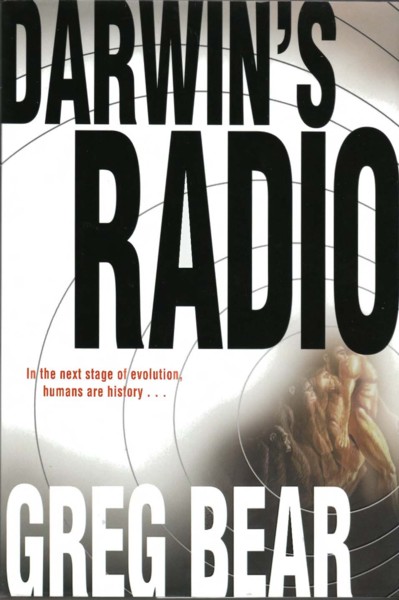
Greg Bear's Darwin's Radio imagines a dormant retrovirus in human DNA activating worldwide, triggering an accelerated leap in human evolution that governments respond to as a plague. The 1999 novel won the Nebula Award; its sequel Darwin's Children follows the first generation of changed children as society decides what to do with them. Together they're speculative near-future science fiction grounded in genetics rather than space opera.
- Have Space Suit - Will Travel
Robert A. Heinleinstandalone novel1958
similar byscience fictionnear futureadventuroustensenorth americafirst person
From the back cover of the Del Rey 9th printing: "Skyjacked - Everything happened at once. One minute Kip Russell was walking about in his own backyard, testing out an old space suit and dreaming about going to the moon - and the next he was out cold and the captive of an insidious space pirate. The whole thing seemed like a very bad dream until he discovered he wasn't the only prisoner on board. Then the reality of the situation became inescapable. He - along with the daughter of a world-renowned scientist and a beautiful creature from an alien planet - had been skyjacked by a monstrous extraterrestrial and they were on their way to the Moon... a journey toward a fate worse than death!"
- The Handmaid's Tale
series3 books1985
similar byscience fictionnorth americanear futuretense+2 more
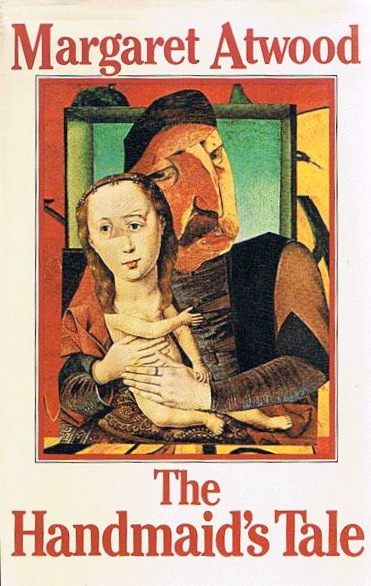
The Handmaid's Tale is Margaret Atwood's 1985 novel set in Gilead, a totalitarian theocracy that has overthrown the United States and forces fertile women into reproductive servitude as Handmaids; it is narrated by one such woman, Offred. Atwood returned to the world in her 2019 sequel The Testaments, set fifteen years later and narrated by three women, including the regime's Aunt Lydia. Together the two novels move from Gilead's grip on power toward the first cracks in it.
- Snow Crash
Neal Stephensonstandalone novel1992
similar byscience fictionnear futureadventuroustensepolitical intrigue+1 more
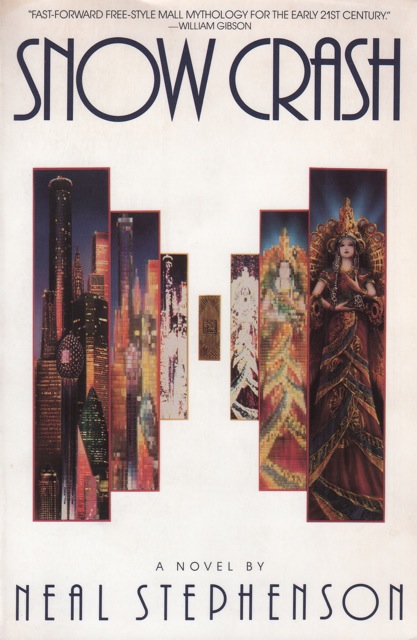
Snow Crash is a 1992 science fiction novel by Neal Stephenson. Like many of Stephenson's novels, its themes include history, linguistics, anthropology, archaeology, religion, computer science, politics, cryptography, memetics, and philosophy.
- Farnham's Freehold
Robert A. Heinleinstandalone novel1964
similar byscience fictionnear futuretensenorth americarace and racism
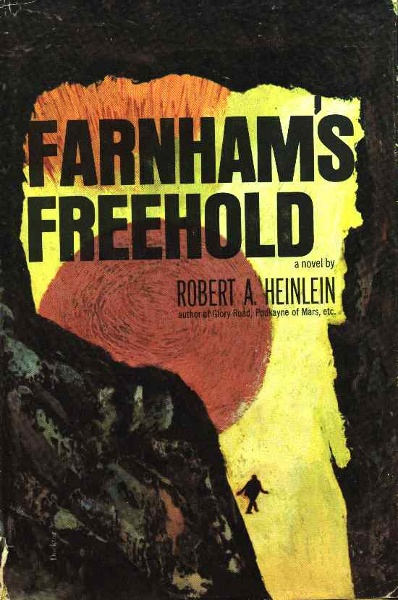
Farnham's Freehold is a science fiction novel by American writer Robert A. Heinlein. A serialized version, edited by Frederik Pohl, appeared in Worlds of If magazine. The complete version was published in novel form by G. P. Putnam later in 1964.
- A Fall of Moondust
Arthur C. Clarkestandalone novel1961
similar byscience fictionnear futureadventuroustensehard science fiction
From the back cover of the Harbrace paperback: "The action of A Fall of Moondust takes place almost a century from now when tours on the moon are a common occurrence. One of the high points of each tour is a cruise around the Sea of Thirst, a body of volcanic dust, in a specially designed vessel called the Selene On a perfectly routine voyage one day the Selene suddenly disappears. How do you locate a small tourist "cruiser" buried beneath fifty feet of dust? If you find it, how do you rescue the passengers and crew? If you are on board, how do you feel and what do you do while brave men and expert technicians join forces in a race against time? Sustained excitement, lively humor, and an engaging cast of characters make this one of Arthur C. Clarke's most intriguing novels."
- Artemis
Andy Weirstandalone novel2017
similar byscience fictionnear futureadventuroustensefirst personhard science fiction
Artemis is a 2017 science fiction novel by American writer Andy Weir. It takes place in the late 2080s in Artemis, the first and only city on the Moon. It follows the life of porter and smuggler Jasmine "Jazz" Bashara as she gets caught up in a conspiracy for control of the city. The book received mixed reviews from critics.
- Heavy Weather
Bruce Sterlingstandalone novel1994
similar byscience fictionnorth americanear futureadventuroustense
Set in 2031 when global climatology has significantly changed the world's weather patterns, Jane Unger "rescues" her brother Alex from a Mexican clinic and takes him to the Storm Troupe. The troupe, under the leadership of Dr. Jerry Mulcahey, chases tornadoes primarily across northern Texas, gathering data in preparation for tracking the mythical F-6 tornado.
- The Shockwave Rider
John Brunnerstandalone novel1975
similar byscience fictionnorth americanear futuretense+1 more
The Shockwave Rider is a science fiction novel by John Brunner, originally published in 1975. It is notable for its hero's use of computer hacking skills to escape pursuit in a dystopian future, and for the coining of the word "worm" to describe a program that propagates itself through a computer network. It also introduces the concept of a Delphi pool, perhaps derived from the RAND Corporation's Delphi method – a prediction market on world events which bears close resemblance to DARPA's controversial and cancelled Policy Analysis Market.
- The Speed of Dark
Elizabeth Moonstandalone novel2002
similar byscience fictionnear futurenorth americagenetic engineeringidentityfirst person
From the Penguin Random House website In the near future, disease will be a condition of the past. Most genetic defects will be removed at birth; the remaining during infancy. Lou Arrendale, a high-functioning autistic adult, is a member of the lost generation, born at the wrong time to reap the rewards of medical science. He lives a low-key, independent life. But then he is offered a chance to try a brand-new experimental "cure" for his condition. With this treatment Lou would think and act and be just like everyone else. But if he was suddenly free of autism, would he still be himself? Would he still love the same classical music — with its complications and resolutions? Would he still see the same colors and patterns in the world—shades and hues that others cannot see? Most important, would he still love Marjory, a woman who may never be able to reciprocate his feelings? Now Lou must decide if he should submit to a surgery that might completely change the way he views the world ... and the very essence of who he is.
- Upgrade
Blake Crouchstandalone novel2022
similar byscience fictionnear futuretensenorth americagenetic engineeringidentity
Upgrade is a 2022 novel by Blake Crouch. It is his tenth stand-alone novel, published three years after Summer Frost (2019). The novel explores the ethical and existential ramifications of genetic engineering, set in a near-future world where humanity grapples with the consequences of advanced human genetic enhancement.
- Ready Player One
series3 books2011
similar byscience fictionnear futureadventurous+3 more
Ernest Cline's Ready Player One (2011) is set in a near-future dystopia where much of humanity escapes into the OASIS, a vast virtual-reality universe, and follows teenager Wade Watts as he chases an Easter egg hidden by the OASIS's late creator in a puzzle-based hunt worth a fortune. The 2020 sequel, Ready Player Two, picks up after Wade has gained control of the OASIS and follows him and his friends into a new quest built around a brain-computer interface the creator left behind.
- The Martian
series2 books2012
similar byscience fictionnear futuretensefirst personhard science fiction
Andy Weir's novel The Martian, first self-published in 2011 before a commercial re-release, follows astronaut Mark Watney after he is stranded alone on Mars when his crew presumes him dead and departs. Using scientific improvisation and dark humor, Watney works to keep himself alive long enough for a rescue to reach him. It is a single, self-contained survival story.
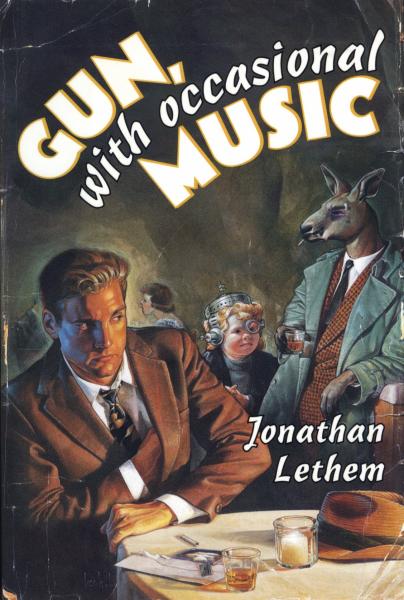
- Gun, with Occasional Music
Jonathan Lethemstandalone novel1994
similar byscience fictionnorth americanear futuretensegenetic engineeringfirst person
Conrad Metcalf has problems. He has a monkey on his back, a rabbit in his waiting room and a trigger-happy kangaroo on his tail. (Maybe evolution therapy is not such a good idea.) He's been shadowing Celeste, the wife of an affluent Oakland urologist. Maybe falling in love a little with her at the same time. When the doctor turns up dead, Metcalf finds himself caught in a crossfire between the boys from the Inquisitor's Office and gangsters who operate out of the back room of the Fickle Muse. (adapted from the blurb accompanying the first edition)
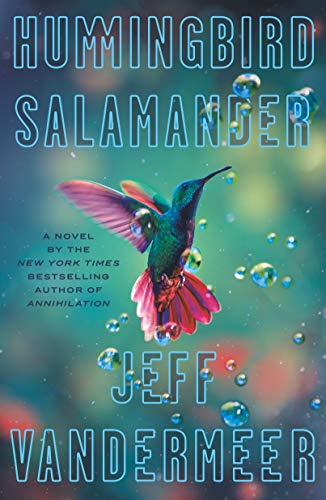
- Hummingbird Salamander
Jeff VanderMeerstandalone novel2021
similar byscience fictionnorth americanear futuretensefirst person+1 more
Hummingbird Salamander is a 2021 novel by American author Jeff VanderMeer. It is set in a near-future dystopia affected by climate change, and narrated by a corporate security consultant, "Jane Smith," who is drawn into a mystery incited by her receipt of a taxidermied hummingbird from an extinct species.
- When She Woke
Hillary Jordanstandalone novel2011
similar byscience fictionnorth americanear futuretensegenetic engineering+1 more
When She Woke is a science fiction novel by American author Hillary Jordan, published in October 2011. It has been translated into French, Spanish, Turkish, German, Portuguese and Chinese. The novel is a dystopian reimagining of Nathaniel Hawthorne's The Scarlet Letter, set in a future theocratic America where rather than being imprisoned and rehabilitated, criminals are punished by being "chromed" – having their skin color genetically altered to fit their crime – and released into the general population to survive as best they can.
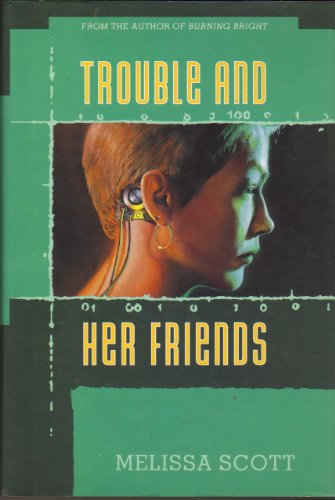
- Trouble and Her Friends
Melissa Scottstandalone novel1994
similar byscience fictionnorth americanear futuretenseidentity+1 more
Trouble and Her Friends is a science fiction novel by American writer Melissa Scott, first published in 1994. Set in the near future in the United States, the story follows India Carless, known as "Trouble" in her life as a criminal hacker, and her ex-lover Cerise. After leaving the underground scene three years earlier, they discover someone impersonating Trouble online, and decide to reunite to confront this impersonator, embarking on a cross-country journey. The novel features extensive use of virtual reality and neural implants, making it a solid example of cyberpunk; however, it is notable within the genre for its distinct feminist perspective and its focus on main characters who are gay or lesbian, reflecting themes common in much of Scott's work.
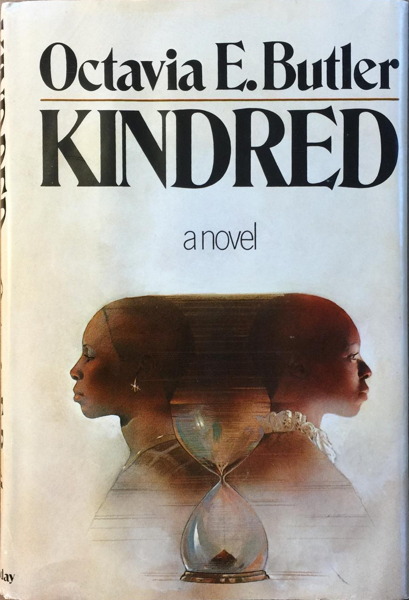
- Kindred
Octavia E. Butlerstandalone novel1979
similar byscience fictionnorth americatenserace and racismfirst person+1 more
Kindred (1979) is a novel by American writer Octavia E. Butler that incorporates time travel and is modeled on slave narratives. Widely popular, it has frequently been chosen as a text by community-wide reading programs and book organizations, and for high school and college courses.
- Rainbows End
Vernor Vingestandalone novel2006
similar byscience fictionnorth americanear futuretensehard science fiction+1 more
A science-fiction thriller set in a place and time as exciting and strange as any far-future world: San Diego, California, 2025. Robert Gu is a recovering Alzheimer’s patient. The world that he remembers was much as we know it today. Now, as he regains his faculties through a cure developed during the years of his near-fatal decline, he discovers that the world has changed and so has his place in it. He was a world-renowned poet. Now he is seventy-five years old, though by a medical miracle he looks much younger, and he’s starting over, for the first time unsure of his poetic gifts. Living with his son’s family, he has no choice but to learn how to cope with a new information age in which the virtual and the real are a seamless continuum, layers of reality built on digital views seen by a single person or millions, depending on your choice. But the consensus reality of the digital world is available only if, like his thirteen-year-old granddaughter Miri, you know how to wear your wireless access—through nodes designed into smart clothes—and to see the digital context—through smart contact lenses. With knowledge comes risk. When Robert begins to re-train at Fairmont High, learning with other older people what is second nature to Miri and other teens at school, he unwittingly becomes part of a wide-ranging conspiracy to use technology as a tool for world domination. In a world where every computer chip has Homeland Security built-in, this conspiracy is something that baffles even the most sophisticated security analysts, including Robert’s son and daughter-in law, two top people in the U.S. military. And even Miri, in her attempts to protect her grandfather, may be entangled in the plot. As Robert becomes more deeply involved in conspiracy, he is shocked to learn of a radical change planned for the UCSD Geisel Library; all the books there, and worldwide, would cease to physically exist. He and his fellow re-trainees feel compelled to join protests against the change. With forces around the world converging on San Diego, both the conspiracy and the protest climax in a spectacular moment as unique and satisfying as it is unexpected.
- Divergent
series10 books2011
similar byscience fictionnear futuretensenorth americaidentity+1 more
Divergent, also known as The Divergent Series, is a series of young adult dystopian novels by American novelist Veronica Roth set in a post-apocalyptic dystopian Chicago. The trilogy consists of Divergent (2011), Insurgent (2012), and Allegiant (2013). A related book, Four (2014), presents a series of short stories told from the perspective of one of the trilogy's characters, the male love interest Tobias. A later short story, We Can Be Mended (2018), serves as an epilogue five years after the events of the trilogy, again from Tobias/Four's perspective.
- Bug Jack Barron
Norman Spinradstandalone novel1969
similar byscience fictionnorth americanear futuretensepolitical intrigue
Bug Jack Barron is a 1969 science fiction novel by American writer Norman Spinrad, first serialized in the New Worlds magazine under the editorship of Michael Moorcock. It was nominated for the 1970 Hugo Award. The novel is notable for its lyrical style and unique use of cut-up phrases. In this regard, Spinrad has cited the influence of Beat writers William S. Burroughs, Allen Ginsberg, and Jack Kerouac.
- Unwind Dystology
series5 books2007
similar byscience fictionnear futurenorth americatensegenetic engineering+1 more
Neal Shusterman's Unwind Dystology opens in a United States reshaped by the resolution to a war over reproductive rights: parents can retroactively have a teenager "unwound," their body disassembled for transplant on the premise that nothing technically dies since every part lives on in someone else. The first novel follows three teens fleeing that fate, and the sequels widen the same dystopia's cast and consequences across a four-book arc plus companion material. It is grim speculative fiction built to ask hard bioethical questions rather than offer comfort.
- Blade Runner Universe
series6 books1968
similar byscience fictionnear futureidentity+2 more
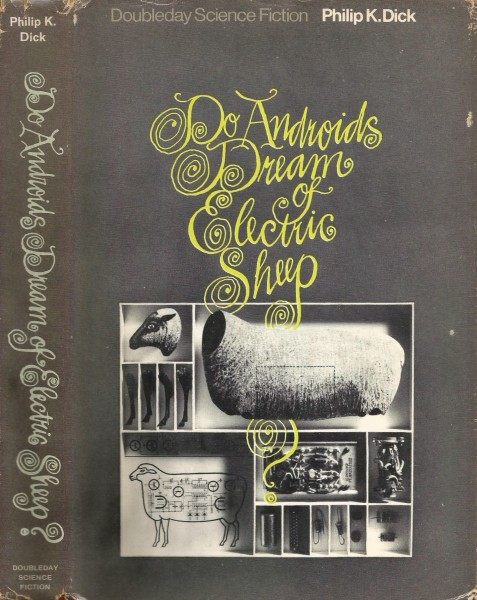
Philip K. Dick's 1968 novel Do Androids Dream of Electric Sheep? follows bounty hunter Rick Deckard as he tracks escaped androids through an irradiated, near-abandoned San Francisco, using the hunt to probe questions of empathy and what separates human from machine. The novel became the basis for Ridley Scott's 1982 film Blade Runner, and Marvel Comics later published an illustrated adaptation of that film. Together the two trace the story's path from prose original to screen and comic-page adaptation.