More like Future Flash
anchored on:science fictionnear futureshort story cycleartificial intelligencenanotechnologyspace
but
- Islands in the Sky
Arthur C. Clarkestandalone novel1952
similar byscience fictionspacenear futurespace exploration+1 more
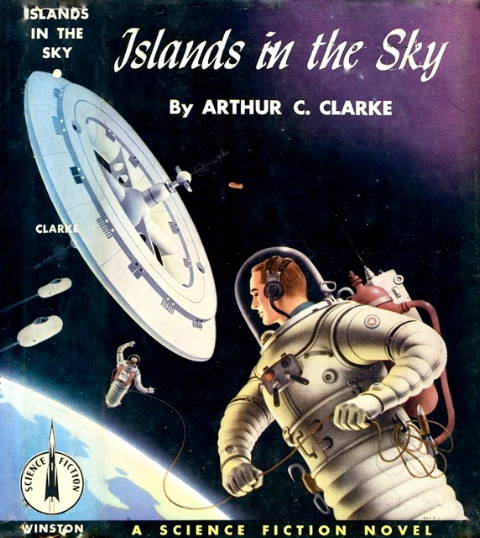
Islands in the Sky is a 1952 science fiction novel by British writer Arthur C. Clarke. It is one of his earliest works. Clarke wrote the story as a travelogue of human settlement of cislunar space in the last half of the twenty-first century.
- Podkayne of Mars
Robert A. Heinleinstandalone novel1963
similar byscience fictionspacenear future+1 more
From the back cover of the Baen 1995 edition: "Meet Podkayne Fries, a thoroughly modern Martian Ms. who thinks that Earth is not really fit for habitation and that humanity evolved in the now-exploded Fifth Planet. Poddy has one goal in life, to be the first female starship captain. She has her strategy all scoped out, and with her determination, looks and I.Q. she'll get there, never you doubt! But all work and no play would make Poddy a Dull Girl, so when a chance comes her way to travel to distant Earth via Venus with her elderly uncle, Poddy jumps at it, even if it does mean having her loathsome little brother along for the trip: Travel, Adventure, the chance to cuddle up (in a nice way) with real spaceship officers and ruthlessly pump their brains - she'll have it all. What Poddy doesn't know is that "Unca Tom" is more than her warmly supportive relative: he is also the Ambassador Plenipotentiary from Mars to the Three Planets Conference (travelling not quite incognito enough) and that certain people will stop at nothing to gain control of his vote - including kidnapping and doing terrible things to sweetly innocent Poddy Fries..."
- Have Space Suit - Will Travel
Robert A. Heinleinstandalone novel1958
similar byscience fictionspacenear futurespace exploration
From the back cover of the Del Rey 9th printing: "Skyjacked - Everything happened at once. One minute Kip Russell was walking about in his own backyard, testing out an old space suit and dreaming about going to the moon - and the next he was out cold and the captive of an insidious space pirate. The whole thing seemed like a very bad dream until he discovered he wasn't the only prisoner on board. Then the reality of the situation became inescapable. He - along with the daughter of a world-renowned scientist and a beautiful creature from an alien planet - had been skyjacked by a monstrous extraterrestrial and they were on their way to the Moon... a journey toward a fate worse than death!"
- The Diamond Age
Neal Stephensonstandalone novel1995
similar byscience fictionnear futureartificial intelligencenanotechnology
The Diamond Age: Or, A Young Lady's Illustrated Primer is a science fiction novel by Neal Stephenson. It is to some extent a Bildungsroman or coming-of-age story, focused on a young girl named Nell, set in a future world in which nanotechnology affects all aspects of life. The novel deals with themes of education, social class, ethnicity, and the nature of artificial intelligence. The Diamond Age was first published in 1995 by Bantam Books, as a Bantam Spectra hardcover edition. In 1996, it won both the Hugo and Locus Awards, and was shortlisted for the Nebula and other awards.
- The Android's Dream
series2 books2006
similar byscience fictionspacenear futureartificial intelligence
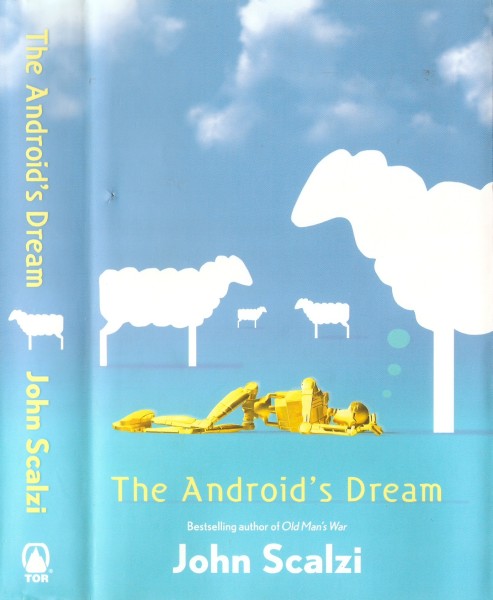
A minor diplomatic insult with a genetically engineered sheep breed spirals into a full interstellar crisis when the last surviving specimen of the 'Android's Dream' breed, needed for a critical ceremony with the alien Nidu, turns out to have been hunted to extinction by a Nidu faction bent on provoking war. John Scalzi's The Android's Dream follows ex-soldier Harry Creek as the hunt for a replacement leads him to Robin Baker, an ordinary woman carrying hidden sheep DNA that makes her the key to avoiding a war. It's a standalone comic space opera rather than an ongoing series.
- The Hammer of God
Arthur C. Clarkestandalone novel1993
similar byscience fictionspacenear futurespace exploration+1 more
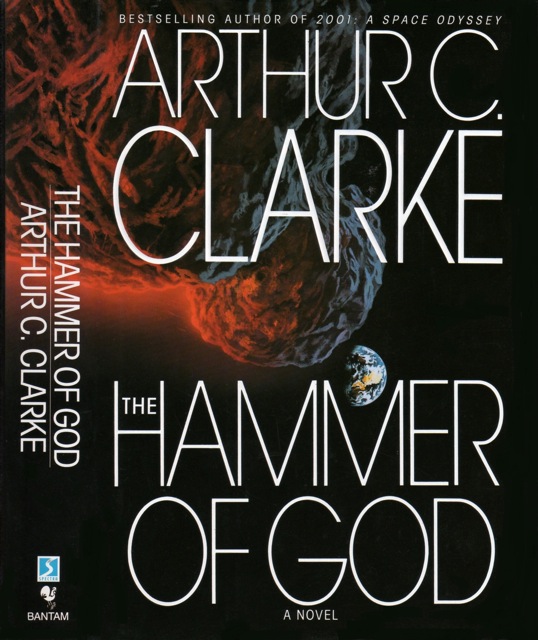
The Hammer of God is a science fiction novel by Arthur C. Clarke originally published in 1993. Set in the year 2109, it deals with the discovery of an asteroid to be on course to collide with Earth and depicts the mission for deflecting the asteroid by using fusion thermal rockets.
- The Rolling Stones
Robert A. Heinleinstandalone novel1952
similar byscience fictionspacenear futurespace exploration
The Stone family, lunar-born, technically minded, and perpetually restless, buy a secondhand spaceship and set off from the Moon on a family tour of the solar system. Teenage twins Castor and Pollux have their own side hustle in mind, planning to buy up used bicycles on Mars and resell them at a markup, but a small furry souvenir picked up along the way, a Martian 'flat cat' bought for their little brother, turns out to have habits that could sink the whole trip's finances. Robert A. Heinlein's family adventure blends hard-edged space travel with comic domestic chaos.
- Heart of the Comet
David Brin & Gregory Benfordstandalone novel1986
similar byscience fictionspacenear futurespace exploration
Heart of the Comet is a novel by David Brin and Gregory Benford about human space travel to Halley's Comet published in 1986. Its publication coincided with the comet's 1986 approach to the Earth.
- Blindsight / Firefall
series3 books2006
similar byscience fictionspaceartificial intelligence+2 more
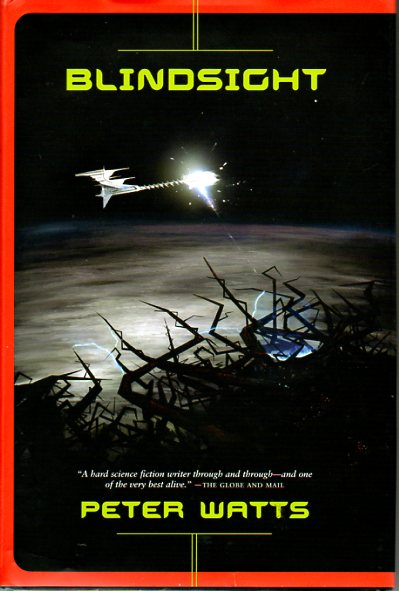
Blindsight sends a crew of radically modified posthumans (including a resurrected, genetically restored vampire) out to the Oort cloud after humanity detects an alien signal, only to make contact with something intelligent, wildly capable, and possibly not conscious at all — a first-contact story built around the question of whether self-awareness is actually useful. Peter Watts's Echopraxia is a same-timeframe "sidequel" rather than a direct sequel, following different characters through the fallout of the same first-contact event.
- Sprawl Trilogy
series10 books1981
similar byscience fictionnear futureartificial intelligence
The Sprawl Trilogy is William Gibson's foundational cyberpunk sequence: Neuromancer (1984), in which hacker Case is drawn into a high-stakes heist alongside an artificial intelligence and a damaged ex-soldier, followed by Count Zero (1986) and Mona Lisa Overdrive (1988), which widen the same near-future world of corporate power and networked cyberspace to new characters. Johnny Mnemonic, an early short story set in the same fictional milieu, predates the novels and introduces the courier Molly Millions before her role in the trilogy. Together these works established much of cyberpunk's visual and thematic vocabulary.
- Stories of Other Worlds
series8 books1900
completed
similar byscience fictionspacenear futurespace exploration
- The Road to Mars
Eric Idlestandalone novel1999
similar byscience fictionspacenear futurespace exploration+1 more
The Road to Mars is a 1999 science fiction comedic novel by Eric Idle.
- Creation Node
Stephen Baxterstandalone novel2023
similar byscience fictionspacenear futureartificial intelligencespace exploration
Creation Node is a 2023 science fiction novel by British writer Stephen Baxter, first published in September 2023 in the United Kingdom by Victor Gollancz Ltd. The book is about the discovery of the hypothesised Planet Nine in the Oort cloud at the outer edge of the Solar System. Initially it is thought to be a black hole, but it is later revealed to be an artificial planet.
- Blood Music
Greg Bearstandalone novel1985
similar byscience fictionnear futurenanotechnology+1 more
Blood Music is a 1985 science fiction novel by American writer Greg Bear. It is an expanded version of a short story of the same title, originally published in the June 1983 issue of Analog and the winner of both the 1983 Nebula and 1984 Hugo awards for Best Novelette. The novel won the 1986 Prix Apollo Award, given to the best science fiction novel published in France during the preceding year, under the title La Musique du sang.
- Gravity
Tess Gerritsenstandalone novel1999
similar byscience fictionspacenear futurespace exploration
Medical thriller set aboard the International Space Station where astronauts are dying one by one from a mysterious disease. Dr Emma Watson is a research physician on a mission to study living organisms in space. But the mission aboard the space station turns into a nightmare.
- Forge of God
series2 books1987
completed
similar byscience fiction+4 more
The Forge of God (1987) is Greg Bear's science fiction novel about Earth's discovery that it is the target of an incomprehensible, overwhelming alien attack, following scientists and ordinary people as they try to understand what is destroying the planet. Its 1992 sequel, Anvil of Stars, follows a group of young survivors sent on a mission of interstellar retaliation, continuing directly from the first book's ending.
- Assemblers of Infinity
Kevin J. Anderson & Doug Beasonstandalone novel1993
similar byscience fictionspacenear futurenanotechnology
Assemblers of Infinity is a science-fiction novel by American writers Kevin J. Anderson and Doug Beason. It first appeared in print in serialized form in the American magazine Analog Science Fiction and Fact from September to December 1992 and was published in 1993 by Bantam Spectra. In 1994 it was nominated for the Nebula Award for best science fiction novel: this was the only Nebula nomination that both Anderson and Beason ever had. It was also placed 25th SF Novel in the 1994 Locus Award. The book is currently out of print, but is still available as e-book.
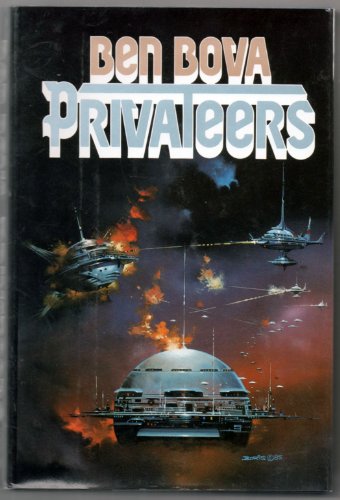
- Privateers
Ben Bovastandalone novel1985
similar byscience fictionspacenear futurespace exploration
This latest of Grand Tour chronicles tells a brilliant tale of revenge, love, and freedom while also laying out a vision for the human future in Space. Setting itself up for a final confrontation between Soviet official Vasily Malik and American/Venezuelan industrialist Dan Randolph, this book reasonably describes how Third World Nations might take the lead in both liberty and space exploration as America withdraws from a world teeming with dictatorships.
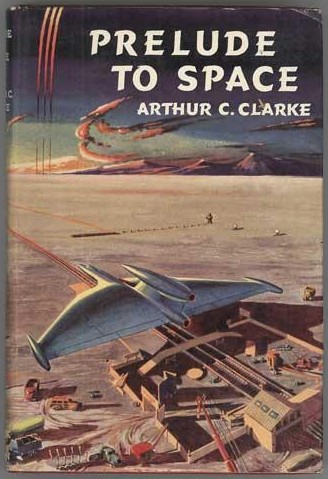
- Prelude to Space
Arthur C. Clarkestandalone novel1951
similar byscience fictionnear futurespace exploration+1 more
Prelude to Space is a science fiction novel written by British author Arthur C. Clarke in 1947. It appeared for the first time in 1951 as a paperback from World Editions Inc, as number three in its series of Galaxy novels. Sidgwick & Jackson published it in the UK in 1953, followed the next year by a United States hardcover edition from Gnome Press and a paperback from Ballantine Books.
- Diaspora
Greg Eganstandalone novel1997
similar byscience fictionspaceartificial intelligencespace exploration+1 more
Diaspora is a hard science fiction novel by the Australian writer Greg Egan which first appeared in print in 1997. It originated as the short story "Wang's Carpets" which originally appeared in the Greg Bear-edited anthology New Legends. The story appears as a chapter of the novel.
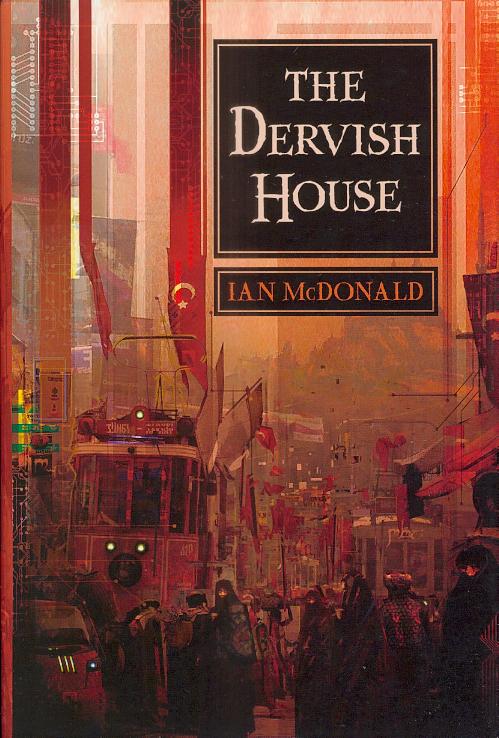
- The Dervish House
Ian McDonaldstandalone novel2010
similar byscience fictionnear futureartificial intelligencenanotechnology
The Dervish House is a 2010 science fiction novel by British author Ian McDonald. The novel was shortlisted for the Arthur C. Clarke Award in 2011, and won the BSFA Award and the John W. Campbell Memorial Award in the same year. It was a nominee for the 2011 Hugo Award for Best Novel. The French translation La maison des derviches won the Planete-SF Blogger's Award in 2012.
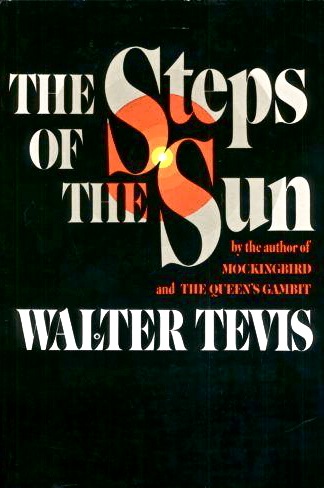
- The Steps of the Sun
Walter Tevisstandalone novel1983
similar byscience fictionspacenear futurespace exploration
The Steps of the Sun is a 1983 science fiction novel by the American author Walter Tevis. It is about a future energy crisis, and a world in which China has become the leading superpower.