More like G-2
anchored on:science fiction
but
- H. G. Wells' War of the Worlds
universe65 books1898
Start hereThe War of the Worlds · Start here
similar byscience fiction+2 more
No one would have believed, in the closing years of the nineteenth century, that human affairs were being watched keenly and closely from the timeless worlds of space. And then the cylinders fell. H. G. Wells' War of the Worlds opens in the quiet of the Surrey commons, where a falling star proves to be the first Martian craft — and from the pit rise the towering tripods, the Heat-Ray, the choking Black Smoke and the creeping red weed, wielded by minds that regard mankind much as we regard the creatures we boil for supper. This is invasion rendered as natural disaster: cold, methodical, and vast beyond argument. Wells' 1898 novel is the seed; everything else grows from that Martian soil. The catalogue gathers direct sequels and continuations alongside a wide field of other hands. In War of the Worlds: Global Dispatches the invasion is retold across the whole planet through the eyes of Twain, Verne, Tolstoy, Lowell and Kipling; in the Manly Wade and Wade Wellman crossover, Sherlock Holmes, Watson and Professor Challenger take the field against the machines; and Scott Washburn's Great Martian War stretches the fighting into a decades-long alternate history of steam, artillery and grinding attrition. It is a loose shared world — no single decreed sequence, many voices answering one calamity. What sets this world apart is its refusal of heroics: the invaders fall not to generals but to the smallest things of Earth, humbling and indifferent. Begin, always, with Wells' original novel — it is short, and it is the ground every later book stands upon. From there follow your appetite: Global Dispatches for the panorama, the Holmes campaign for adventure, Washburn for the long war.
- Tripods
series4 books1967
completed
similar byaliensscience fictionnear futureour world+1 more
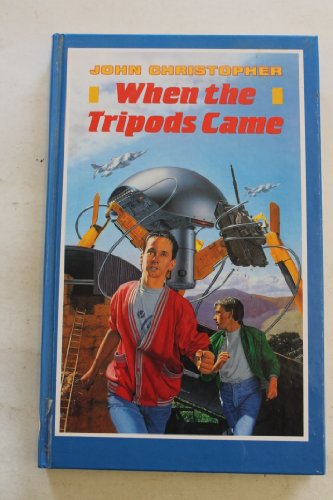
The Tripods is a series of young adult science fiction novels by John Christopher. The series takes place in a post-apocalyptic world where humanity is enslaved by "Tripods"—gigantic three-legged walking machines piloted by an alien race later identified as the "Masters". The first two books were the basis of a science fiction TV series, produced in the United Kingdom in the 1980s.
- Cavor
series2 books1901
similar byaliensscience fictionadventurous
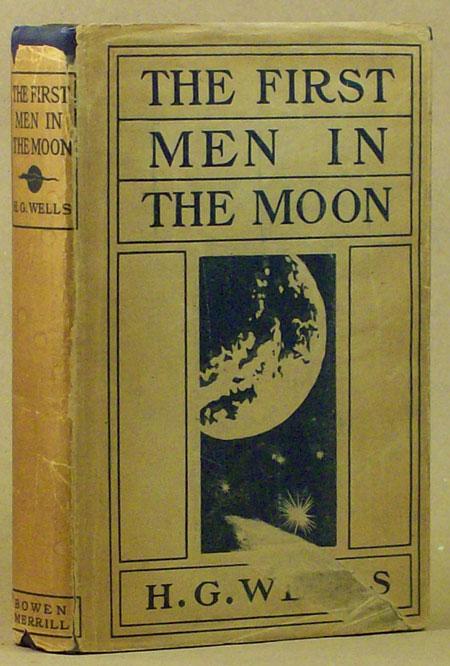
H. G. Wells's 1901 novel The First Men in the Moon is narrated by the businessman Bedford, who joins the reclusive scientist Cavor after Cavor invents cavorite, a gravity-blocking substance that carries the two men to the Moon. There they discover a vast underground civilization of insect-like Selenites, and the expedition that began as a hunt for lunar minerals turns into an encounter with an alien society. It is a standalone novel; later editions crediting Stephen Baxter add an introduction or afterword rather than a continuing story.
- Project Hail Mary
Andy Weirstandalone novel2021
similar byaliensscience fictionadventurousnear futureour world
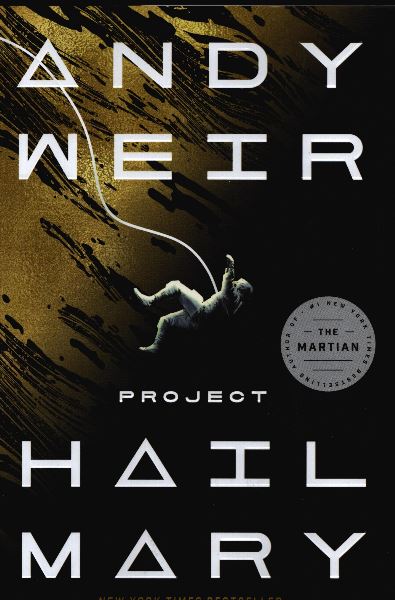
Project Hail Mary is a 2021 hard science fiction novel by American writer Andy Weir. It centers on science teacher and former biologist Ryland Grace, who wakes up aboard a spacecraft, afflicted with amnesia.
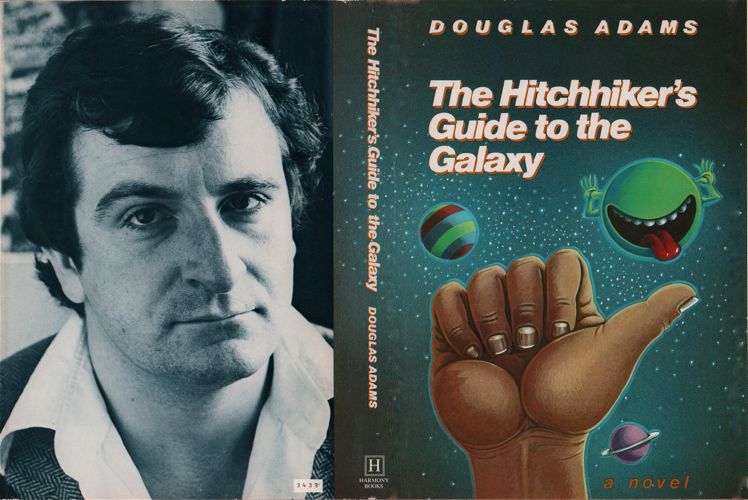
- Hitchhiker's Guide to the Galaxy
series16 books1979
part of The Hitchhiker's Guide to the Galaxy Universe
similar byscience fiction+2 more
The Hitchhiker's Guide to the Galaxy is a comedy science fiction franchise created by Douglas Adams. Originally a radio sitcom broadcast over two series on BBC Radio 4 between 1978 and 1980, it was soon adapted to other formats, including both novels and comic books, a 1981 BBC television series, a 1984 text adventure game, stage shows and a 2005 feature film.
- The Star Beast
Robert A. Heinleinstandalone novel1954
similar byaliensscience fictionadventurousnear futureour world
A talking alien pet has grown to the size of a small dinosaur. She repeatedly gets her teenage owner in trouble whenever she leaves the backyard, but he continues to care for her, as did his father and grandfather before him. When an alien delegation lands on Earth and demands custody, he fights to protect her.
- Galactic Milieu
series10 books1981
completed
similar byaliensscience fiction+2 more
Galactic Milieu is a series of science fiction novels by Julian May. It is linked to her previously published series, the Saga of Pliocene Exile; and through the fantastical device of time-travel, acts as both a prequel and a sequel to this earlier series. The "Galactic Milieu" of the title is an interplanetary federation, and Earth's membership of it is a central plot concern.
- Stranger in a Strange Land
Robert A. Heinleinstandalone novel1961
similar byaliensscience fictionnear futureour world
Stranger in a Strange Land is a 1961 science fiction novel by the American author Robert A. Heinlein. It tells the story of Valentine Michael Smith, a human who comes to Earth in early adulthood after being born on the planet Mars and raised by Martians, and explores his interaction with and eventual transformation of Terran culture.
- Armada
Ernest Clinestandalone novel2015
similar byaliensscience fictionadventurousnear futureour world
Armada is a science fiction novel by Ernest Cline, published on July 14, 2015 by Crown Publishing Group. The story follows a teenager who plays an online video game about defending against an alien invasion, only to find out that the game is a simulator to prepare him and people around the world for defending against an actual alien invasion.
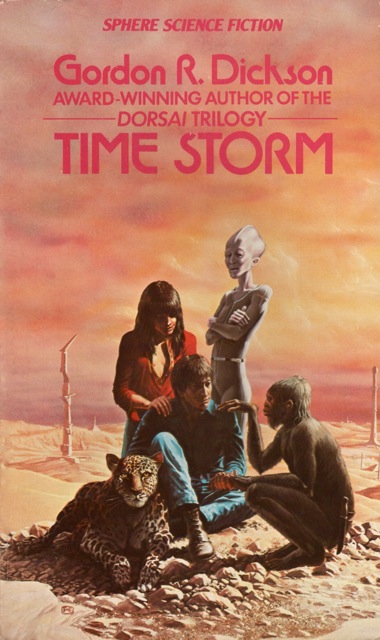
- Time Storm
Gordon R. Dicksonstandalone novel1977
similar byscience fictionadventurousnear futureour world+1 more
A time storm has devastated the Earth, and only a small fraction of humankind remains. From the rubble, three survivors form an unlikely alliance: a young man, a young woman, and a leopard. "A masterful science fiction story told by a masterful science fiction writer". -- Milwaukee Journal. A time storm strikes the Earth. The Earth remains, but different parts of the Earth are in different eras. Travel between the different zones is thought to be impossible. The main character, Marc Despard, resolves to fight the time storm. After some struggles, he assembles a small band of people, including one alien, to help him try to understand what has happened and to stop the time storm. He has 2 extraordinary relationships with a older teenaged girl who is speechless for the first part of the book (she was "struck dumb" by the time storm) and with, believe it or not, a leopard. Dickson's writing makes the extraordinary seem quite normal. Ultimately, after being harried by a Mad Max-like group of survivors, he uses a machine found in a different era of time to bring his small band of followers into the future so that he can find those who are trying to fight the time storm. He convinces those future beings that he is capable of fighting the time storm, and ultimately stops it, and gets the girl in the end.
- Childhood's End
Arthur C. Clarkestandalone novel1953
similar byaliensscience fictionnear futureour world
Childhood's End is a 1953 science fiction novel by the British author Arthur C. Clarke. The story follows a peaceful alien invasion of Earth by mysterious Overlords, whose arrival begins decades of apparent utopia under indirect alien rule, at the cost of human identity and culture.
- Time for the Stars
Robert A. Heinleinstandalone novel1956
similar byscience fictionadventurous+2 more
Explorer spaceships need a way to communicate back to earth in a timely manner when they are light years away. When telepathy is found to have no delay, pairs of twins are hired. One twin stays on Earth to receive reports, and the other twin goes into space.
- The Themis Files
series3 books2015
similar byaliensscience fictionour world+2 more
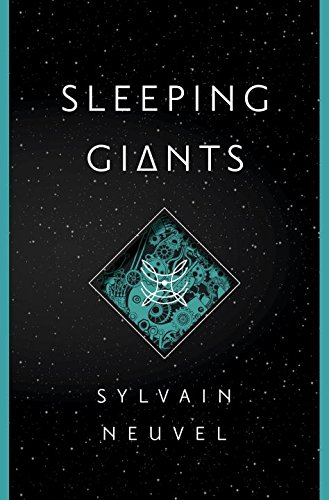
Sylvain Neuvel's Themis Files opens when a girl falls into a hole in South Dakota and lands on the palm of a giant metal hand buried underground; the trilogy picks up years later as she leads the team trying to determine what the hand is part of and why it's there. Sleeping Giants and its sequels are told almost entirely through interview transcripts conducted by an unnamed, evasive interrogator, giving the series a documentary, oral-history feel unusual for first-contact SF. The mystery escalates from an archaeological puzzle into a question of who else is looking for the same answer.
- This Immortal
series2 books1966
similar byaliensscience fictionadventurousour world
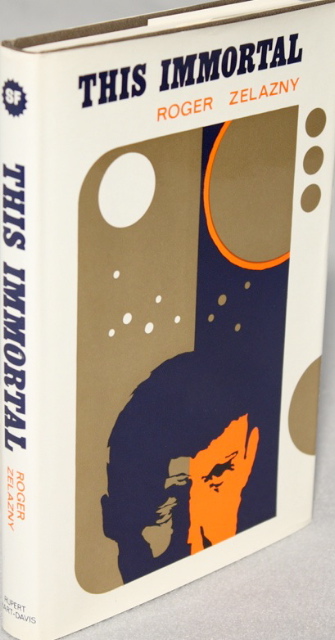
This Immortal is a single science fiction novel by Roger Zelazny, expanded from his 1965 serial ...And Call Me Conrad. In a depopulated future Earth largely toured by an alien race, its long-lived, secretive protagonist Conrad Nomikos is assigned to guide and protect a visiting alien across the ruins of Greece and Egypt, uncovering old grudges and assassination plots along the way. The novel shared the 1966 Hugo Award for Best Novel with Frank Herbert's Dune.
- Time Traders
series7 books1958
similar byscience fictionadventurous+1 more
The Time Traders opens Andre Norton's Cold War-flavored science fiction series, following an American agent recruited to travel into the past and counter a Soviet operation built around ancient technology unearthed from a vanished civilization. Norton, later joined by collaborators Sherwood Smith and P. M. Griffin, expanded the sequence to seven novels published between 1958 and 2002, and revised the opening book herself in 2000. Like several of Norton's other series, it treats leftover technology from a long-gone ancient culture as its central plot engine.
- Out of the Dark (David Weber)
series3 books2010
similar byaliensscience fictionour world+1 more
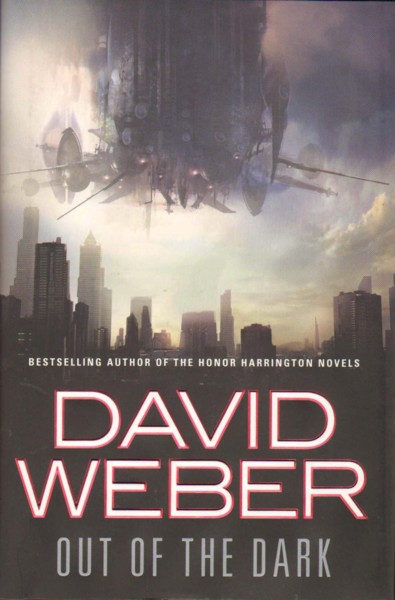
Out of the Dark begins when an overwhelming alien armada arrives to subjugate Earth, only for the invasion to run into unexpected resistance from an unlikely source within humanity itself. David Weber's trilogy, joined for its later volumes by Chris Kennedy, follows the human resistance and its strange allies as the war against the invaders escalates.
- Ler
series3 books1975
completed
similar byscience fiction+4 more
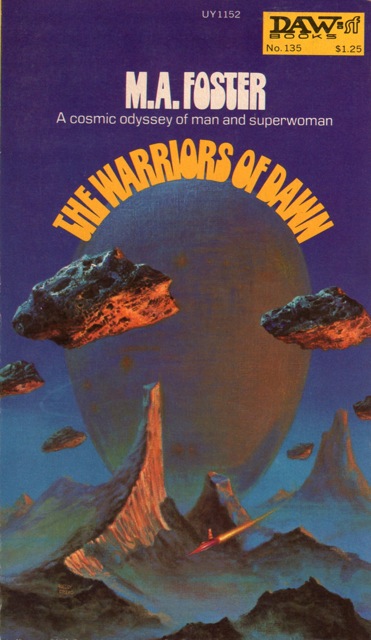
The Ler novels are M. A. Foster's 1970s science fiction trilogy, The Warriors of Dawn (1975), The Gameplayers of Zan and The Day of the Klesh, later collected as The Book of the Ler. They follow the Ler, a genetically engineered offshoot of humanity living an uneasy, segregated existence alongside ordinary humans on a future Earth, as tensions between the two peoples come to a head. It is a complete trilogy rather than an open series.
- Have Space Suit - Will Travel
Robert A. Heinleinstandalone novel1958
similar byaliensscience fictionadventurousnear future
From the back cover of the Del Rey 9th printing: "Skyjacked - Everything happened at once. One minute Kip Russell was walking about in his own backyard, testing out an old space suit and dreaming about going to the moon - and the next he was out cold and the captive of an insidious space pirate. The whole thing seemed like a very bad dream until he discovered he wasn't the only prisoner on board. Then the reality of the situation became inescapable. He - along with the daughter of a world-renowned scientist and a beautiful creature from an alien planet - had been skyjacked by a monstrous extraterrestrial and they were on their way to the Moon... a journey toward a fate worse than death!"
- Pax / Astra
series2 books1954
completed
similar byscience fictionadventurous+2 more
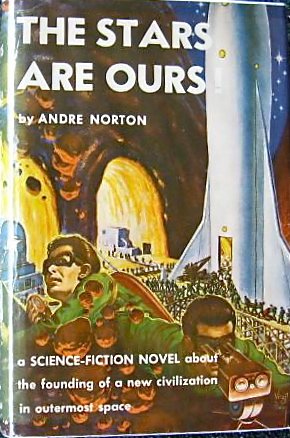
Andre Norton's The Stars Are Ours! (1954) and its sequel Star Born (1957) follow a group of scientists and their families who flee a repressive future Earth to colonize a distant world they name Astra, and then the next generation, who must contend with that world's original inhabitants. Star Flight appears to be a later omnibus or reissue rather than a third original novel.
- Jenny Casey
series4 books2004
similar byscience fictionnear future+3 more
Elizabeth Bear's Jenny Casey trilogy opens with Hammered (2004), her debut novel, which won the Locus Award for Best First Novel. It continues across Scardown and Worldwired, completing the story of its title character across three volumes published through 2006.
- The Best of All Possible Worlds Universe
series3 books2013
similar byaliensscience fiction+3 more
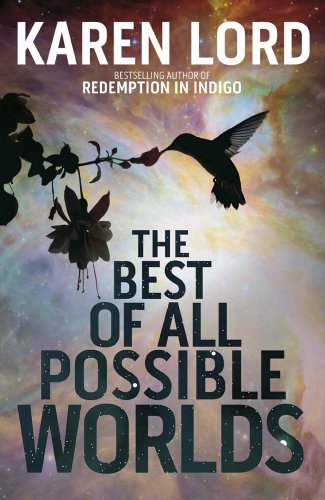
The Best of All Possible Worlds, the opener of this loose sequence by Karen Lord, follows survivors of a destroyed alien civilization as they search other worlds for compatible communities to join, told with more interest in culture and relationships than action. The Galaxy Game and The Blue, Beautiful World continue Lord's character-driven exploration of the same universe's societies, power politics, and cross-cultural understanding, without following a single continuous plot.
- Hainish
series33 books1964
completed
similar byscience fiction+1 more
The Hainish Cycle consists of a number of science fiction novels and stories by Ursula K. Le Guin. The cycle is set in a future history that features civilizations of human beings on planets orbiting a number of nearby stars, including Terra ("Earth"); these humans are contacting each other for the first time and establishing diplomatic relations, as well as setting up a confederacy under the guidance of the oldest of the human worlds, the peaceful planet Hain. In this history, human beings did not evolve on Earth, but they were instead the result of interstellar colonies planted by Hain in the distant past, after which interstellar travel ceased for an extended period. Some of the human races have new genetic traits, a result of ancient Hainish experiments in genetic engineering; this includes people who can dream while awake, and a world of hermaphroditic people who only enter active sexuality once per month, not knowing which sex will manifest in them. In keeping with Le Guin's narrative approach, she uses varied social and environmental settings to explore the anthropological and sociological outcomes of human evolution in those environments. The author often discounted the characterization of a so-called "Hainish Cycle".