More like Gargantis
anchored on:fantasymiddle grade
but
- Five Children Universe
series27 books1902
completed
similar byfantasy+5 more
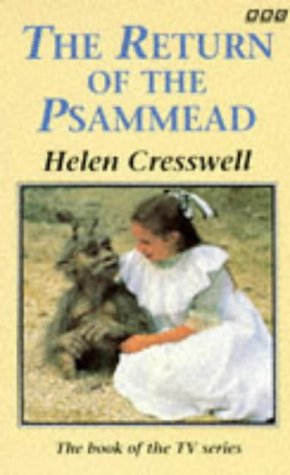
Two separate modern continuations of E. Nesbit's Psammead stories were written decades apart by different authors: Helen Cresswell's The Return of the Psammead (1992) brings the wish-granting sand fairy back for a new set of children, while Kate Saunders's Five Children on the Western Front (2014) follows the now-grown Lamb and his siblings as the First World War arrives, in a more somber sequel to Nesbit's original trilogy. Neither book is by Nesbit herself, and the two have no direct connection to each other beyond both drawing on her creation. Later writers have kept returning to Nesbit's premise long after her own trilogy ended.
- The Indian in the Cupboard
series5 books1980
completed
similar byfantasycoming of agecontemporaryour worldmiddle grade+1 more
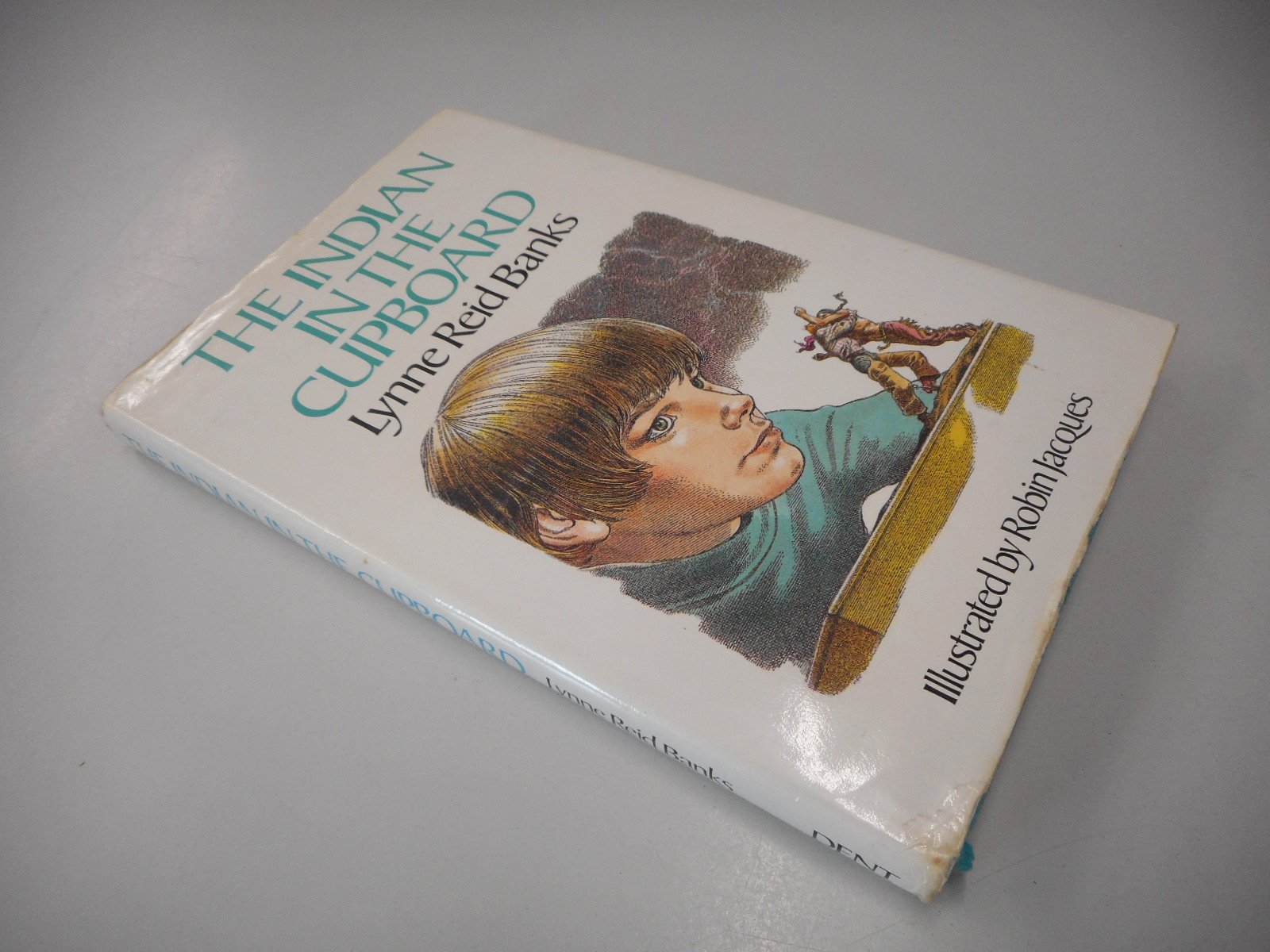
Lynne Reid Banks' Indian in the Cupboard series begins with the 1980 children's novel in which a boy discovers that an old cupboard can bring his plastic toy figures to life. The low-fantasy series, which inspired a 1995 film adaptation, continues across Return of the Indian, The Secret of the Indian, The Mystery of the Cupboard, and The Key to the Indian.
- The Halloween Tree
Ray Bradburystandalone novel1972
similar byfantasyfriendshipcoming of agecontemporarywhimsicalour worldmiddle grade
Eight boys gather on Halloween night to trick-or-treat with their ninth friend, Pipkin, only Pipkin never shows, having vanished on some errand that may cost him his life. A strange, black-robed guide named Moundshroud appears to lead the boys after him, and the chase turns into a journey through the history of the holiday itself: ancient Egypt, druidic Britain, Rome, medieval Paris, and the Mexican Day of the Dead, each stop peeling back another layer of how humanity has faced death and the dark. Ray Bradbury's Halloween novel doubles as a compressed history of the holiday's origins.
- Bod Owens
series3 books2007
similar byfantasycoming of agecontemporaryour worldmiddle grade
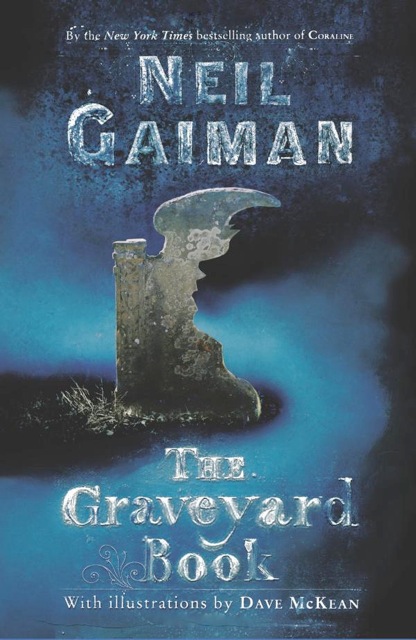
The Graveyard Book follows Nobody "Bod" Owens, a toddler who escapes the murder of his family and is raised among the ghosts of an old English graveyard, absorbing their otherworldly customs while a threat from his past waits beyond the gates. Neil Gaiman's 2008 novel won both the Newbery and Carnegie Medals, and illustrator P. Craig Russell later adapted it into a two-volume graphic novel. Bod's story spans the original novel and that graphic-novel retelling rather than continuing in a prose sequel.
- Lewis Barnavelt
series12 books1973
similar byfantasycontemporarymiddle grade+4 more
Lewis Barnavelt is a lonely orphan who moves in with his uncle Jonathan, an amateur wizard, in a rambling old house that turns out to hide a doomsday clock built into its walls by a previous, malevolent owner. John Bellairs introduced the character in The House with a Clock in Its Walls (1973), illustrated by Edward Gorey, and after Bellairs's death Brad Strickland continued the series from his notes and outlines for most of its later volumes. It blends gothic horror atmosphere with a gentler, more whimsical strain of children's fantasy.
- Magic Shop
series7 books1982
similar byfantasycoming of agecontemporaryour worldmiddle grade+1 more
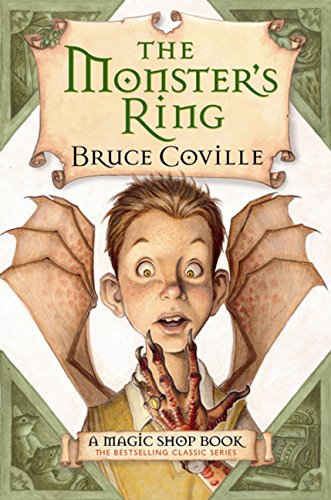
Bruce Coville's Magic Shop books each send a different kid into Mr. Elives's strange antique shop, where an ordinary-looking item turns out to carry real magic and consequences. The Monster's Ring opens the series with a boy who buys a ring to scare a bully on Halloween, only to find he can genuinely transform into a monster. Later entries repeat the pattern with new objects and new children, tied together by the shop and its owner rather than a continuing plot.
- Willow Falls (Wendy Mass)
series5 books2009
similar byfantasycontemporaryour worldsmall townmiddle grade+3 more
- Spiderwick
universe17 books2003
Start hereSpiderwick Chronicles · Start here
similar byfantasycontemporarymiddle grade+1 more
Do not read this book. So warns the note bound into Arthur Spiderwick's Field Guide to the Fantastical World Around You — which is exactly why Jared Grace opens it, and why the hidden world opens onto him. Move into a crumbling family estate with your mother, your twin brother, and your fencing-champion sister, and you may find the walls already occupied: a testy house brownie, goblins with a taste for cats, and an ogre named Mulgarath who wants the Guide for himself. Holly Black writes and Tony DiTerlizzi draws this small, densely illustrated world across two linked cycles. The Spiderwick Chronicles runs five slim volumes — The Field Guide, The Seeing Stone, Lucinda's Secret, The Ironwood Tree, and The Wrath of Mulgarath — a single mounting emergency told at a breathless clip. Beyond the Spiderwick Chronicles carries the danger south to swampy Florida across three more books, where new children meet giants, nixies, and a wyrm stirring underground. The companion Field Guide itself catalogues every sprite and troll in loving naturalist detail. The pleasure here is the specimen-collector's: faerie treated as a taxonomy to be sketched, labelled, and survived, cozy domestic scale shot through with real teeth. Begin with The Field Guide and read straight through in publication order — the five originals first, then the Beyond trilogy. Slender enough to finish in an afternoon, sharp enough to send you checking the cupboard afterward.
- American Gods
series10 books1999
similar byfantasycontemporaryour world+2 more
Neil Gaiman's American Gods (2001) follows Shadow Moon, an ex-convict who takes a job as bodyguard to a mysterious drifter who is secretly the Norse god Odin, and is drawn into a brewing conflict between the old immigrant gods of myth and the new gods of media, technology, and modern American life. Gaiman's 2005 novel Anansi Boys is set in the same mythological world and shares the trickster god Mr. Nancy, but follows a different protagonist and story, making it a loose companion rather than a direct sequel.
- Peter Pan Universe
universe112 books1902
Start herePeter Pan · Start here
similar byfantasy+2 more
Second star to the right, and straight on till morning — and there it is, the island that every child dreams once and then, growing up, contrives to forget. Neverland: mermaids in the lagoon, a ticking crocodile with a clock in its belly, a pirate nursing his severed hand, and above it all the boy who will not grow up, forever flying, forever heartless in the lovely careless way that only children are. It begins with J. M. Barrie — the 1904 stage play, the chapters of Kensington Gardens, and the novel Peter and Wendy that fixed Peter, Wendy, Tinker Bell, Hook and the Lost Boys in place. From that small window a wide world has flown. Dave Barry and Ridley Pearson supply the how-it-all-began in their Starcatchers books, chasing falling starstuff aboard a doomed ship to explain why one orphan came to fly and never age. A whole bright shelf tends Tinker Bell's Pixie Hollow — the Disney Fairies and Fairy Haven tales, Kiki Thorpe's Never Girls — while Heidi Schulz hands the wheel to Hook's own daughter, and stranger, dimmer corners carry the island into far darker weather. Many hands, one archipelago; no single map governs them all. What sets it apart is the sweetness with a blade in it — wonder shadowed always by the ache of leaving, of mothers who keep the window open and children who fly home too late. Newcomers should begin where it began, with Barrie's Peter and Wendy, then, for the origin, take the Starcatchers books in their own order. The rest of Neverland waits, as it always does, for whoever still remembers how to reach it.
- Tales of Magic
series7 books1954
completed
similar byfantasyfriendshipcontemporarywhimsicalour world+2 more
Tales of Magic collects Edward Eager's seven loosely connected children's novels about ordinary kids who stumble into magic in everyday American settings, starting with Half Magic, in which four siblings find a coin that grants exactly half of any wish. Each book follows a different, sometimes overlapping set of children and a different magical object or rule, from Knight's Castle to the deliberately ambiguous Magic or Not? and its sequel The Well-Wishers. Eager wrote them as a direct homage to E. Nesbit, sometimes having his own child characters read her books.
- His Dark Materials Universe
universe13 books1995
Start hereHis Dark Materials · Start here
similar byfantasycoming of age+1 more
In a world like ours and unlike it, every human soul walks outside the body in the shape of an animal — a daemon, who speaks, who cannot be lied to, and who settles into one fixed form only when childhood ends. This is the country of His Dark Materials: a company of parallel worlds across which an invisible dust of consciousness drifts down upon the waking mind; where a Church that calls itself the Magisterium would sooner sever a child's soul than let that Dust be understood; and where a golden instrument, the alethiometer, answers true questions for anyone with the patience to read it. Philip Pullman's design stands in two trilogies and a scatter of shorter tales. His Dark Materials — Northern Lights (published in America as The Golden Compass), The Subtle Knife, and The Amber Spyglass — carries Lyra Belacqua from the rooftops of a shadow Oxford across the borders between worlds. The Book of Dust returns to that same territory: La Belle Sauvage looks back to Lyra as an infant carried through a great flood, while The Secret Commonwealth follows her grown and less certain into adulthood, with a concluding volume closing the arc. Around them sit slim companion books — Lyra's Oxford, Once Upon a Time in the North, Serpentine — and Nicholas Wright's stage adaptation, made with Pullman's blessing. The register is grave and luminous at once, its title lifted from Milton and its quarrel drawn from Blake: a story that takes the side of curiosity, love, and the physical world against any authority that would forbid them. It reads as adventure — armoured bears, aeronauts, knife-cut windows between skies — yet reasons like philosophy. Begin with Northern Lights / The Golden Compass and read the first trilogy through before turning to The Book of Dust, which deepens everything the first has already made you feel.
- Kairos
series11 books1962
completed
similar by+4 more
The Time Quintet is a science fantasy series of five young adult novels written by American author Madeleine L'Engle and made up of A Wrinkle in Time (1962), A Wind in the Door (1973), A Swiftly Tilting Planet (1978), Many Waters (1986), and An Acceptable Time (1989).
- Spiderwick Chronicles
series14 books2003
part of Spiderwick
similar byfantasycontemporarymiddle grade+2 more
Holly Black and Tony DiTerlizzi's Spiderwick Chronicles follow the three Grace children after they move into the run-down Spiderwick Estate and discover a hidden field guide to the fantastical creatures living around them. Their new knowledge draws them into escalating conflicts with dangerous faeries, building to a confrontation with the shapeshifting ogre Mulgarath, who wants the guide's secrets to conquer both the human and faerie worlds.