More like Generation
anchored on:science fictionour worldnear future
but
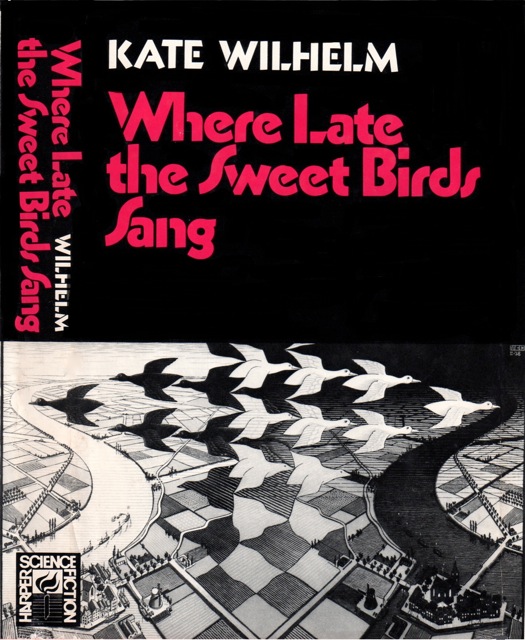
- Where Late the Sweet Birds Sang
Kate Wilhelmstandalone novel1976
similar byscience fictiondarkcloningour worldnear future+1 more
Where Late the Sweet Birds Sang is a science fiction novel by American writer Kate Wilhelm, published in 1976. The novel is composed of three parts, "Where Late the Sweet Birds Sang," "Shenandoah," and "At the Still Point," and is set in a post-apocalyptic era, a concept popular among authors who took part in the New Wave Science Fiction movement in the 1960s.
- Clone
Richard Cowperstandalone novel1972
similar byscience fictioncloningidentityour worldnear futuretensedystopia+1 more
History's first clones: Alvin, Bruce, Colin, and Desmond - Spawned in a dangerous 21st century experiment, there were brought into a world where educated apes did manual labor and the government encouraged suicide as a method of population control. Their existence as clones was unknown to anyone - even to each other - known only to their creator. But then came the strange, haunting visions, the peculiar psychic sensations that drew them closer and closer together - revealing one and for all the mysterious secret they shared that would change the world! (from the back cover of the Pocket Books edition)
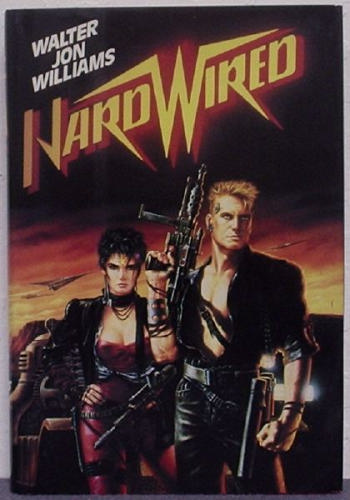
- Hardwired
series3 books1986
similar byscience fictionnear futureour worldtense+3 more
Walter Jon Williams' Hardwired (1986) is an early and influential cyberpunk novel. Voice of the Whirlwind, published three years later, is a loosely connected follow-up set in the same future, sharing its technological and political backdrop with a different cast of characters.
- A Clockwork Orange
series4 books1962
completed
similar byscience fictiondarknear futureour worlddystopia+1 more
Anthony Burgess's 1962 novel is narrated by Alex, a teenage gang leader in a near-future Britain gripped by a youth subculture of extreme violence, recounting his crimes in Nadsat, an invented slang blending English with Russian-derived words. After his crimes catch up with him, Alex is made the subject of a controversial state program meant to forcibly reform his behavior, and the novel uses his ordeal to question whether imposed goodness is worth the loss of free will. It is a standalone novel.
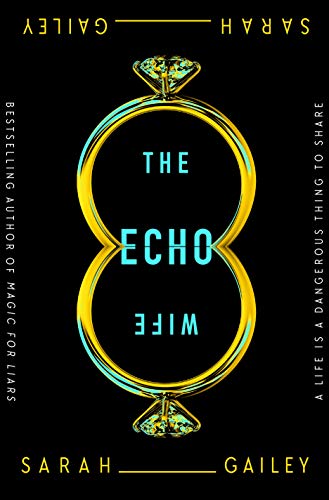
- The Echo Wife
Sarah Gaileystandalone novel2021
similar byscience fictiondarkcloningidentityour worldnear futuretense
The Echo Wife is a 2021 science fiction thriller novel by Sarah Gailey, published by Tor Books. It follows Doctor Evelyn Caldwell, an accomplished scientist researching cloning, who has discovered that her husband, Nathan, has used her research to create Martine, a clone of Evelyn who is his ideal wife. When Martine kills Nathan in self-defense, Evelyn must assist in covering up the murder.
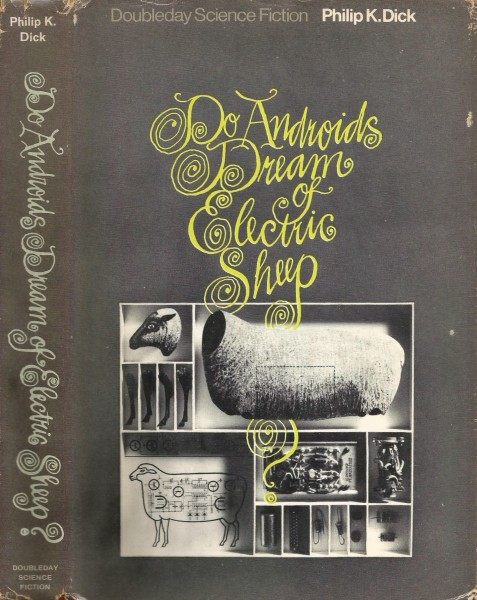
- Blade Runner Universe
series6 books1968
similar byscience fictiondarkidentitynear future+2 more
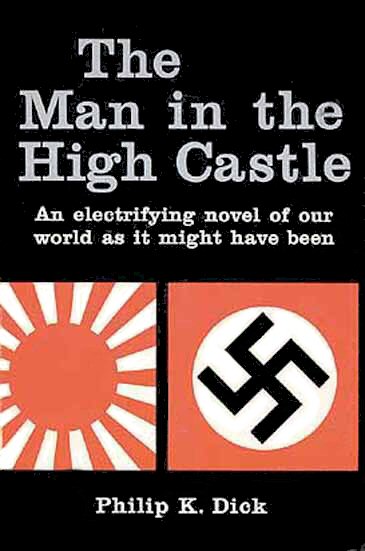
Philip K. Dick's 1968 novel Do Androids Dream of Electric Sheep? follows bounty hunter Rick Deckard as he tracks escaped androids through an irradiated, near-abandoned San Francisco, using the hunt to probe questions of empathy and what separates human from machine. The novel became the basis for Ridley Scott's 1982 film Blade Runner, and Marvel Comics later published an illustrated adaptation of that film. Together the two trace the story's path from prose original to screen and comic-page adaptation.
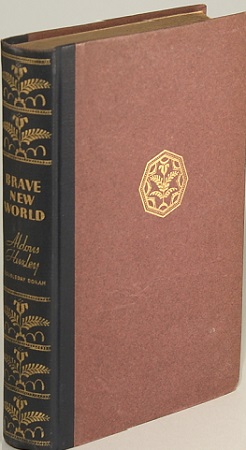
- Brave New World
series8 books1932
similar byscience fictiondystopia+3 more
Aldous Huxley's 1932 novel imagines a future World State where reproduction, social caste, and desire are all engineered before birth, and the population is kept content through conditioning, sleep-hypnosis, and a mood-altering drug called soma. The story follows the disruption this seemingly stable order suffers when an outsider raised beyond its reach is brought into it, exposing what the society traded away for comfort and order. Some editions pair the novel with Huxley's own 1958 nonfiction essay collection, Brave New World Revisited, which reassesses the book's ideas rather than continuing its story.
- Library of America P. K. Dick Collection
series9 books1962
completed
similar byscience fictionnear future+4 more
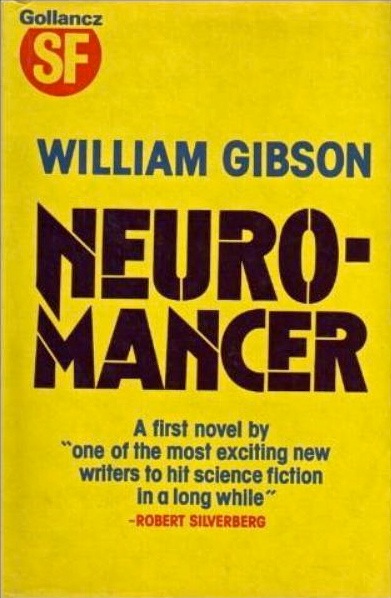
- Sprawl Trilogy
series10 books1981
similar byscience fictiondarknear futuretense
The Sprawl Trilogy is William Gibson's foundational cyberpunk sequence: Neuromancer (1984), in which hacker Case is drawn into a high-stakes heist alongside an artificial intelligence and a damaged ex-soldier, followed by Count Zero (1986) and Mona Lisa Overdrive (1988), which widen the same near-future world of corporate power and networked cyberspace to new characters. Johnny Mnemonic, an early short story set in the same fictional milieu, predates the novels and introduces the courier Molly Millions before her role in the trilogy. Together these works established much of cyberpunk's visual and thematic vocabulary.
- The Zap Gun
Philip K. Dickstandalone novel1967
similar byscience fictiondarkour worldnear future+2 more
The Zap Gun is a 1967 science fiction novel by American writer Philip K. Dick. It was first published as the two-part serial Project Plowshare in Worlds of Tomorrow in 1965 and 1966, before Pyramid Books issued it in paperback under its present title. The novel originated in a title-first commission devised by Pyramid editor Don Bensen and was written in 1964 during a period of rapid production in Dick's career.
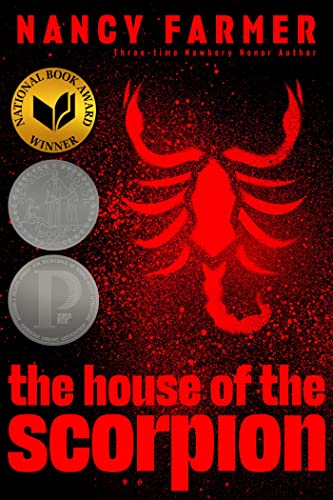
- The House of the Scorpion
series2 books2002
similar byscience fictiondarkcloningyoung adulttensedystopia+2 more
Matt is a clone of El Patron, the ancient drug lord who rules Opium, a narco-state carved out of the border between the U.S. and a future Mexico, created and raised solely to supply spare organs for the man he was copied from. Nancy Farmer's The House of the Scorpion follows Matt's growing awareness of what he is and what's expected of him, and his fight to be treated as human once El Patron dies. The sequel, The Lord of Opium, picks up with Matt unexpectedly left in charge of the whole corrupt nation.
- Shadrach in the Furnace
Robert Silverbergstandalone novel1976
similar byscience fictiondarkidentitynear futureour worlddystopia+1 more
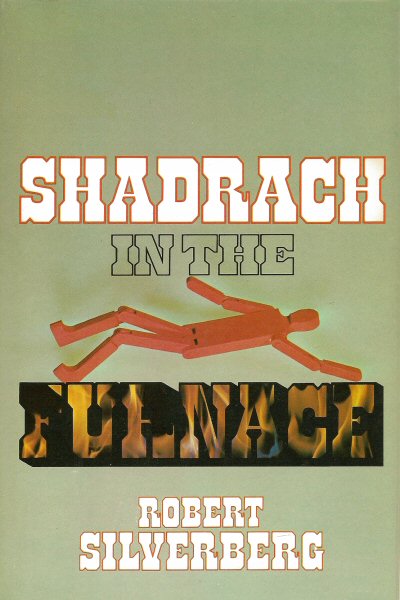
Shadrach in the Furnace is a science fiction novel by American writer Robert Silverberg, first published as a serial in Analog Science Fiction and Fact magazine in the August, September, and October 1976 issues. It was subsequently published by Bobbs Merrill in 1976. The novel was nominated in 1976 for the Nebula Award, and in 1977 for the Hugo Award.
- The Light of Other Days
Arthur C. Clarke & Stephen Baxterstandalone novel2000
similar byscience fictionour worldnear futuretense+2 more
An industrialist devises a technique to use tiny wormholes as light pipes to enable viewing of any event anywhere; and subsequently it becomes possible to use them to view any event in the past as well. The effects on society are enormous.
- The Duplicate
William Sleatorstandalone novel1988
similar byscience fictiondarkcloningidentityour worldyoung adulttense
"Sixteen-year-old David, finding a strange machine that creates replicas of living organisms, duplicates himself and suffers the horrible consequences when the duplicate turns against him." --summary, WorldCat library record {{OCLC|855408448}}
- Poster Girl
Veronica Rothstandalone novel2022
similar byscience fictionour worldnear futuredystopia+1 more
- Unwind Dystology
series5 books2007
similar byscience fictiondarknear futureyoung adulttensedystopia+2 more
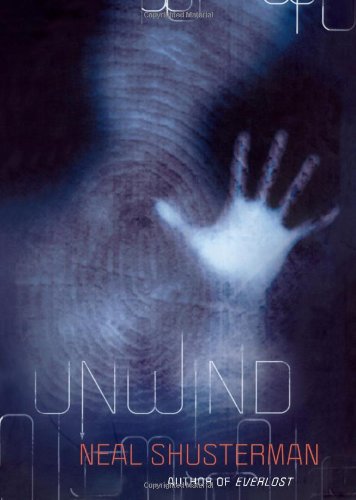
Neal Shusterman's Unwind Dystology opens in a United States reshaped by the resolution to a war over reproductive rights: parents can retroactively have a teenager "unwound," their body disassembled for transplant on the premise that nothing technically dies since every part lives on in someone else. The first novel follows three teens fleeing that fate, and the sequels widen the same dystopia's cast and consequences across a four-book arc plus companion material. It is grim speculative fiction built to ask hard bioethical questions rather than offer comfort.
- Fahrenheit 451
series2 books1951
completed
similar byscience fictionnear futuredystopia+2 more
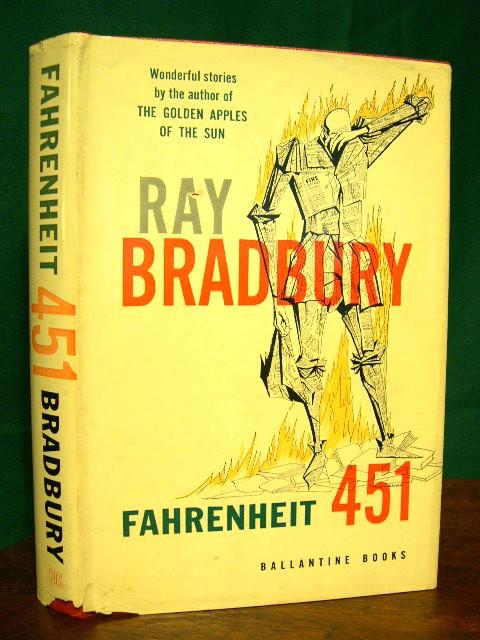
Fahrenheit 451 began life as "The Fireman," a novella Ray Bradbury published in 1951, which he then expanded into the full novel released in 1953 under its now-famous title. Set in a future where books are outlawed and firemen exist to burn them, it follows fireman Guy Montag as doubts about his job push him toward the very literature he's supposed to destroy. The novella and novel are one story's evolution rather than two separate books.
- Never Let Me Go
Kazuo Ishigurostandalone novel2005
similar byscience fictioncloningidentityour worldnear futuredystopia
Never Let Me Go is a 2005 science fiction novel by the British author Kazuo Ishiguro. It was shortlisted for the 2005 Man Booker Prize, for the 2006 Arthur C. Clarke Award and the 2005 National Book Critics Circle Award. Time magazine named it the best novel of 2005. It included the novel in its '100 Best English-language novels published since 1923—the beginning of TIME'. It also received an ALA Alex Award in 2006. A film adaptation directed by Mark Romanek was released in 2010.
- The Declaration
series4 books2007
similar byscience fictiondarkour worldnear futureyoung adulttensedystopia
- Ship Breaker
series3 books2010
similar byscience fictiondarknear futureyoung adulttense+3 more
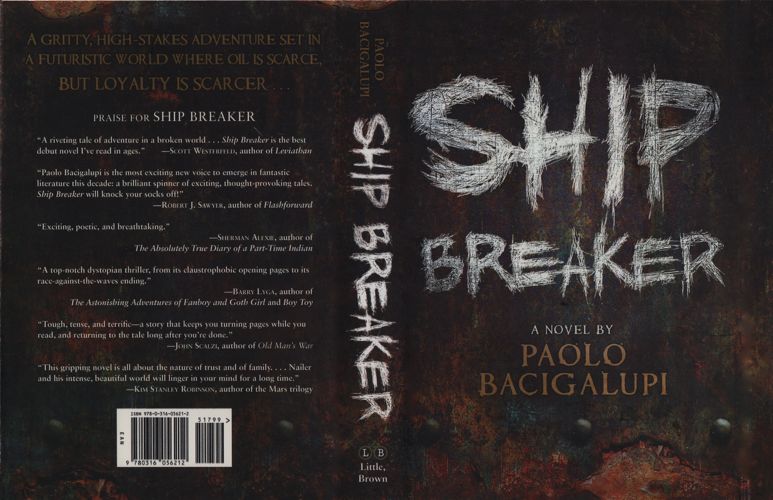
Nailer works a light-crew scavenging copper wire and scrap from beached oil tankers on a Gulf Coast reshaped by rising seas and vanished order, until a wrecked clipper ship washes ashore carrying a half-drowned girl from the wealthy world he'll never belong to. Paolo Bacigalupi's Ship Breaker follows Nailer as helping her pulls him out of his abusive father's orbit and into a much larger, more dangerous game involving her family's fortune. The sequels The Drowned Cities and Tool of War widen the same flooded, resource-scavenging future to new characters and coastlines.
- Shadow Children
series7 books1998
similar byscience fictiondarknear futureyoung adulttensedystopia+1 more
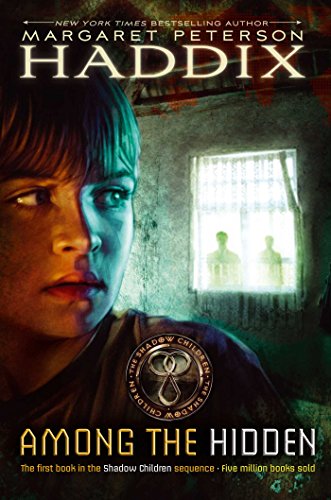
Shadow Children is a series of seven books by Margaret Peterson Haddix about a dystopian country which suffers food shortages due to a drought and the effects of the government's totalitarian attempts to control resources as a way to solidify its power. The Population Police enforce the government's Population Law, killing or imprisoning "shadow children," any child born after their first two siblings. In some cases, a parent may choose to forge a child's identification card so a shadow child can live a normal life.
- Arc of a Scythe
series17 books2016
similar byscience fictionour worldyoung adultdystopia+3 more
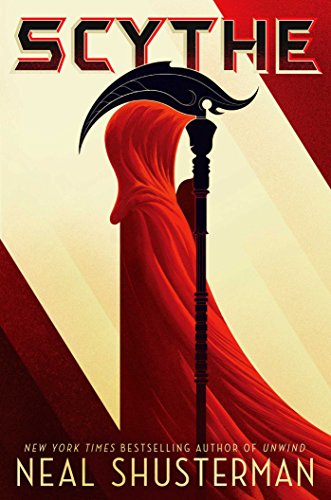
Neal Shusterman's Arc of a Scythe opens with Scythe (2016), set in a future where the AI Thunderhead has ended death and disease — except for a designated order of Scythes tasked with killing to control population. Thunderhead and The Toll continue the trilogy, joined by companion material collected as Gleanings.
- The Twilight of Briareus
Richard Cowperstandalone novel1974
similar byscience fictiondarkidentityour worldnear futuretense
It took the light of the supernova Briareus Delta one hundred and thirty-two years to cross space to the Solar System. But the night it exploded in our sky was a night that would never be forgotten in the history of the world. For in that bath of cosmic particles, all things changed. Not only the weather and the flora and fauna, but humanity itself received what seemed to be its death sentence. Sterility signalled the end of man, until the strange children known as the Zeta-mutants began to appear. Richard Cowper, author of Clone and other sf novels, has produced in this new novel a gripping story of how one man coped with the terrible dilemma of his world - how he attempted to solve the problem of the girls with the amber eyes and what he did when he found out what he himself had become during The Twilight of Briarseus. (from the back cover of the DAW Books first printing)