Loreful
HomeDiscover
Search series, authors…⌘K
Loreful

Reading orders for SF/F series and shared universes — with your place kept in every one.

Explore

UniversesSeriesWorksAuthorsAtlas

Help

FAQAboutSite map

Account & legal

Sign inCreate accountPrivacyTerms

Data

Built on ISFDB, Wikipedia, Wikidata and Open Library. Curated reading orders carry their reasoning on the page; the rest follow publication order. Data sources & licenses

© Loreful · data: ISFDB · CC BY

More like Generation X

anchored on:literary & generalnorth americalate 20th centuryreflectiveframe storyidentity+1 more

but

Mood

The mood the book leaves you in.

  • The reading experience is propelled by journeys, exploration, and physical risk; excitement and forward momentum dominate over dread or introspection.
  • Joy and loss are deliberately mixed; the resolution grants characters something real while taking something else away, leaving warmth and sorrow together.
  • The book demands work from the reader — dense prose, difficult structure, unfamiliar ideas, or morally uncomfortable material — as part of its intended effect.
  • Grim events, cruelty, or despair dominate the atmosphere, and the book does not soften them with comfort or comic relief.
  • The atmosphere is quietly unsettling — wrongness, unease, and the uncanny pervade the book without necessarily escalating into overt horror.
  • The book is built to move the reader; character feeling is foregrounded and major scenes aim at a strong emotional response.
  • Humor is a primary aim and the prose plays for laughs — comic situations, wit, or dialogue produce sustained comedy, not occasional levity.
  • The book insists that things can improve; effort and decency are shown to matter, and the arc bends toward better outcomes even through hardship.
  • The book teaches as it goes — real facts, history, science, or craft are conveyed in enough depth that learning is part of the reading experience.
  • The book is designed to uplift and motivate, presenting perseverance or achievement in a way that invites the reader to aspire or act.
  • The overall register is cheerful and easygoing; stakes are kept gentle and the book avoids dwelling on pain or dread.
  • Withheld information drives the experience; the book sustains enigmas and secrets the reader wants resolved, whatever its genre.
  • The book is contemplative and inward-looking, giving more weight to thought, memory, and meaning than to external events.
  • The book works as comfort reading — low tension, a soothing pace, and an atmosphere the reader can unwind in.
  • Grief, loss, or melancholy set the dominant register, and the book lets sorrow stand rather than resolving it into comfort.
  • Sustained suspense is the point; the book keeps the reader braced for what happens next through danger, pressure, or impending revelation.
  • Playful invention and charm define the register — fanciful conceits, light absurdity, and a narration that delights in its own oddity.

About

What the story runs on.

  • Stories in which extraterrestrial beings are central — as characters, cultures, or the object of the plot.
  • Stories structured as a quest — a journey undertaken to find, deliver, or destroy something of great import.
  • Stories in which staying alive against nature, catastrophe, or scarcity is the central problem.
  • Stories of lovers kept apart by law, family, faith, or station, where the obstacle to love is the plot.
  • Stories in which a friendship — its making, testing, or loss — is the emotional center.
  • Stories of growing up — a young protagonist crossing from childhood into adult knowledge and responsibility.
  • Stories about who a character truly is — self-discovery, doubled lives, and the search for a self.
  • Stories about mourning — living through the death of a loved one and what loss does to the survivors.
  • Stories in which a buried family truth — hidden parentage, crimes, or shames — surfaces and reorders the present.
  • Stories driven by maneuvering for power — factions, conspiracies, and statecraft conducted in shadow.
  • Stories in which war itself is the subject — combat, occupation, and what warfare does to soldiers and civilians.
  • Stories organized around investigating a killing — the case, the clues, and the pursuit of the killer, in any genre's clothing.

Shelf

Where it sits in the library.

    • Fiction built on magic or other supernatural elements that have no scientific explanation.
    • Secondary-world fantasy at large scale, where the fate of nations or the world turns on the protagonists' struggle.
    • Fantasy set in a recognizably modern city or contemporary world where the supernatural intrudes on everyday life.
    • Fantasy that blends in horror's atmosphere and imagery, keeping a fantastical frame around grim or frightening material.
    • Action-driven fantasy following warriors or rogues with personal stakes against sorcerous threats, rather than world-spanning conflicts.
    • Fantasy set in a real historical period or a close analogue of one, with magic woven into the era.
    • Fantasy in which protagonists cross from the ordinary world into another world through a portal or similar passage.
    • Fiction that retells or reworks a traditional fairy tale in a new form or setting.
    • Fantasy drawing directly on myths, legends, and folklore, retelling them or building on their figures and logic.
    • Fantasy of ghosts, vampires, shapeshifters, psychics, and similar phenomena, usually set in an otherwise ordinary world.
    • Fiction mixing science-fictional trappings with overtly magical or impossible elements in one setting.
    • Low-stakes fantasy emphasizing comfort, community, and everyday pleasures over conflict and peril.
    • Speculative fiction of pervasive moral ambiguity, violence, and cynicism that rejects heroic conventions — fantasy and SF alike.
      • Fiction that extrapolates from science and technology — future societies, space travel, or speculative inventions — within at least nominally natural laws.
      • Science fiction of interstellar scope — starships, galactic polities, and adventure across star systems.
      • Science fiction committed to scientific rigor, where technical plausibility constrains the story.
      • Science fiction centered on armed forces and warfare, told largely from a military point of view.
      • Science fiction of networked, corporate-dominated near futures, pairing high technology with social decay.
      • Science fiction styled on nineteenth-century steam-powered technology, often in a Victorian or pseudo-Victorian setting.
      • Fiction depicting an oppressive or catastrophic society, presented as a warning.
      • Fiction set after civilization's collapse, following survivors in the ruins of the old world.
      • Fiction in which characters move between past and future, and the mechanics or consequences of that travel drive the plot.
      • Fiction exploring a world where a historical event went differently and history diverged from ours.
      • Science fiction about humanity's first encounter and communication with an alien intelligence.
      • Science fiction in which extraterrestrial forces attack or occupy Earth and humanity resists.
      • Fiction whose primary aim is to frighten or unsettle the reader through dread, menace, or the monstrous.
      • Horror of vast, indifferent, incomprehensible entities before which humanity is insignificant, in the Lovecraft tradition.
      • Horror of decaying houses, buried family secrets, and oppressive atmosphere in the Gothic literary tradition.
      • Horror centered on hauntings and the returning dead.
      • Horror located in the mind — paranoia, obsession, and unreliable perception rather than external monsters.
      • Horror built around the reanimated dead and survival amid their outbreaks.
      • Horror defined by explicit, transgressive gore that refuses to cut away from violence.
      • Speculative fiction of the strange and uncanny that resists both natural explanation and standard genre categories.
      • Fiction organized around solving a crime or puzzle, typically following an investigator toward the identification of a culprit.
      • A puzzle-first mystery that lays out clues so the culprit's identity can be deduced before the reveal.
      • Crime fiction of moral ambiguity, fatalism, and hard-edged style, set among the corrupt and the doomed.
      • A mystery following the realistic routines of police work — forensics, interviews, and case-building.
      • A gentle mystery with an amateur sleuth, a small community, and violence kept off the page.
      • A mystery set in a past era, where the investigation works within that period's methods and society.
      • Fast-paced fiction driven by imminent danger, pursuit, or high-stakes conspiracy, built to sustain tension.
      • A thriller of espionage — agents, tradecraft, and intelligence services in conflict.
      • A thriller centered on lawyers and the courtroom, where litigation carries the suspense.
      • A thriller driven by detailed contemporary or near-future technology, often military or scientific.
      • A thriller whose tension comes from mental states and manipulation between characters rather than external action.
      • Fiction whose central plot is a romantic relationship and its development toward an emotionally satisfying resolution.
      • Romance in which one or both partners are supernatural beings, blending fantasy elements into the love story.
      • A fantasy-romance hybrid in which the romantic arc and the fantasy plot carry equal weight.
      • Romance set in a past era, with courtship shaped by the period's society and manners.
      • Romance set in the present day, without supernatural or historical elements.
      • Fiction set in a real past period, where the historical setting materially shapes characters and events.
        • General and literary fiction emphasizing prose style, character interiority, or formal ambition over genre plot conventions.
        • Fiction in a realistic world where magical events occur and are treated as ordinary, in the tradition of Latin American literature.
        • Fiction that ridicules people, institutions, or society in order to criticize them.
        • Fiction of dreamlike, irrational imagery and logic that breaks from realistic representation.
        • Fiction that plays with narrative convention through metafiction, fragmentation, and self-reference.
        • Fiction propelled by journeys, exploration, and physical peril, where action and survival carry the plot.
        • Adventure fiction of ships and seafaring — naval engagements, voyages, and life at sea.
        • Fiction of the American frontier West — gunmen, ranchers, and lawmen, typically in the late nineteenth century.
        • Fiction centered on soldiers, campaigns, and the experience of warfare, historical or imagined.
          • Fiction written primarily to amuse, using comedic situations, wit, or parody as its organizing principle.
            • Multi-generational fiction following a family or dynasty across decades, with inheritance and kinship as the through-line.
              • Fiction whose world runs on explicit game mechanics — levels, stats, and skills that characters can see and exploit.
                • Fiction about costumed or superpowered heroes and their conflicts with comparable villains.

                Practical

                How long a commitment, whether it stands alone, and whether it has finished.

                Tap a chip to ask for it · tap again to rule it out · once more to clear. Numbers show what would be left.

                • Cover of Phases of Gravity
                  Phases of Gravity

                  Dan Simmons · standalone novel · 1989

                  similar byliterary & generalreflectivelate 20th centuryidentitynorth america

                  Follows Richard Baedecker, an Apollo astronaut who walked on the moon, through his midlife crisis. He meanders through India, Glen Oak Illinois, the mountains of Colorado, and the coastline of Oregon, checking up on his son and his former Apollo crewmates.

                • Cover of Moon Palace
                  Moon Palace

                  Paul Auster · standalone novel · 1989

                  similar byliterary & generalreflectivenorth americalate 20th centuryidentityloneliness

                  Moon Palace is a novel written by Paul Auster that was first published in 1989.

                • Cover of Beautyland
                  Beautyland

                  Marie-Helene Bertino · standalone novel · 2024

                  similar byliterary & generalreflectivenorth americalate 20th centuryloneliness+1 more

                  Beautyland is a novel by Marie-Helene Bertino. It was published on January 16, 2024, by Farrar, Straus and Giroux. The book follows Adina, who is sent by aliens before birth to find out if they could live on earth and reports to them via a fax machine. The book starts with Adina's birth, which takes place in 1977 when Voyager 1 was launched.

                • Cover of The Edible Woman
                  The Edible Woman

                  Margaret Atwood · standalone novel · 1969

                  similar byliterary & generalreflectivelate 20th centuryidentitynorth america

                  The Edible Woman is the first published novel by Canadian writer Margaret Atwood, published in 1969. It is the story of a young woman, Marian, whose sane, structured, consumer-oriented world starts to slip out of focus. Following her engagement, Marian feels her body and her self are becoming separated. Marian begins endowing food with human qualities that cause her to identify with it, and finds herself unable to eat, repelled by metaphorical cannibalism. In a foreword written in 1979 for the Virago edition of the novel, Atwood described it as a protofeminist rather than feminist work.

                • Cover of The Gum Thief
                  The Gum Thief

                  Douglas Coupland · standalone novel · 2007

                  similar byliterary & generalreflectivenorth americaidentityloneliness

                  The Gum Thief is Canadian author Douglas Coupland's twelfth novel. It was published on September 25, 2007 , by Random House Canada in Canada and Bloomsbury Publishing in the United States.

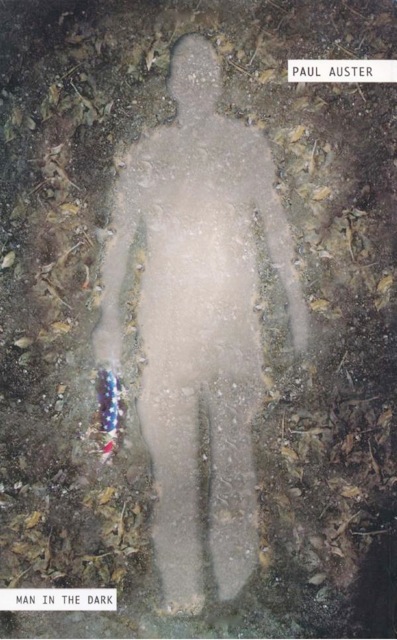
                • Cover of Man in the Dark
                  Man in the Dark

                  Paul Auster · standalone novel · 2008

                  similar byliterary & generalreflectivenorth americaidentityframe story

                  An insomniac makes up a story about a man transported to an alternate reality in which a US civil war erupted after the 2000 election.

                • Cover of Warp
                  Warp

                  Lev Grossman · standalone novel · 1997

                  similar byliterary & generalreflectivenorth americalate 20th centuryidentityloneliness

                  A novel on a young man pursuing leisure. He is Hollis of Boston who graduated from Harvard, but doesn't feel like working. He lives in a world of imagination, sometimes a knight errant, sometimes a space warrior. A debut in fiction.

                • Cover of In Milton Lumky Territory
                  In Milton Lumky Territory

                  Philip K. Dick · standalone novel · 1985

                  similar byliterary & generalreflectivenorth americaidentityloneliness

                  In Milton Lumky Territory is a realist, non-science fiction novel authored by Philip K. Dick. Originally written in 1958, but rejected by prospective publishers, this book was eventually published posthumously in 1985 by Dragon Press. It was published in two editions. Fifty copies were bound in quarter leather and included a signature from one of the author's canceled checks but were not jacketed. Nine hundred fifty copies were published with a cloth binding and included a dust jacket. It was reprinted in paperback in 2006.

                • Cover of Surfacing
                  Surfacing

                  Margaret Atwood · standalone novel · 1972

                  similar byliterary & generalreflectivenorth americaidentity+1 more

                  Surfacing is a novel by Canadian author Margaret Atwood. Published by McClelland and Stewart in 1972, it was her second novel. Surfacing has been described by commentators as a companion novel to Atwood's collection of poems, Power Politics, which was written the previous year and deals with complementary issues.

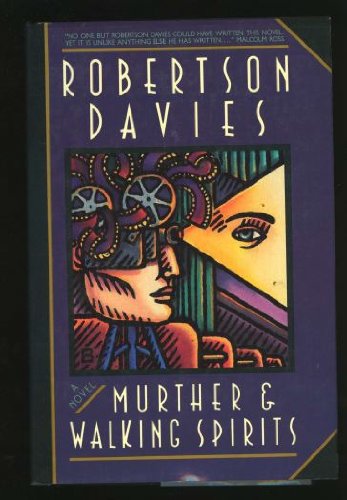
                • Cover of Murther & Walking Spirits
                  Murther & Walking Spirits

                  Robertson Davies · standalone novel · 1991

                  similar byliterary & generalreflectivenorth americaidentityframe story

                  The editor of a Toronto newspaper finds out about his ancestors in an unusual private Film Festival.

                • Cover of My Life As an Ice Cream Sandwich
                  My Life As an Ice Cream Sandwich

                  Ibi Zoboi · standalone novel · 2019

                  similar byliterary & generalreflectivenorth americalate 20th centuryidentityfriendship

                  Twelve-year-old Ebony-Grace Norfleet has lived with her beloved grandfather Jeremiah in Huntsville, Alabama ever since she was little. As one of the first black engineers to integrate NASA, Jeremiah has nurtured Ebony-Grace’s love for all things outer space and science fiction—especially Star Wars and Star Trek. But in the summer of 1984, when trouble arises with Jeremiah, it’s decided she’ll spend a few weeks with her father in Harlem. Harlem is an exciting and terrifying place for a sheltered girl from Hunstville, and Ebony-Grace’s first instinct is to retreat into her imagination. But soon 126th Street begins to reveal that it has more in common with her beloved sci-fi adventures than she ever thought possible, and by summer's end, Ebony-Grace discovers that Harlem has a place for a girl whose eyes are always on the stars.

                • Cover of Life Before Man
                  Life Before Man

                  Margaret Atwood · standalone novel · 1979

                  similar byliterary & generalreflectivenorth americalate 20th century+2 more

                  Life Before Man is a novel by Canadian writer Margaret Atwood. It was first published by McClelland and Stewart in 1979 and was a finalist for the Governor General's Award.

                • Cover of Even Cowgirls Get the Blues
                  Even Cowgirls Get the Blues

                  Tom Robbins · standalone novel · 1976

                  similar byliterary & generalnorth americalate 20th centuryidentity+1 more

                  Sissy Hankshaw was born with unusually oversized thumbs, and instead of seeing them as a flaw turns them into a gift: the greatest hitchhiking thumbs in America, carrying her across the country on a restless road life. Her travels take her to New York, where she becomes star model for the Countess, a feminine-hygiene tycoon, before a stint at a Dakota ranch called the Rubber Rose brings her into the orbit of Bonanza Jellybean's cowgirls and a mountain mystic known only as the Chink. Around Sissy's wandering, Robbins builds a philosophical comedy about freedom and gender, with a flock of endangered whooping cranes crossing her path. Tom Robbins's best-known novel.

                • Cover of The Robber Bride
                  The Robber Bride

                  Margaret Atwood · standalone novel · 1993

                  similar byliterary & generalreflectivenorth americaidentityfriendship

                  The Robber Bride is a novel by Canadian writer Margaret Atwood, first published by McClelland and Stewart in 1993.

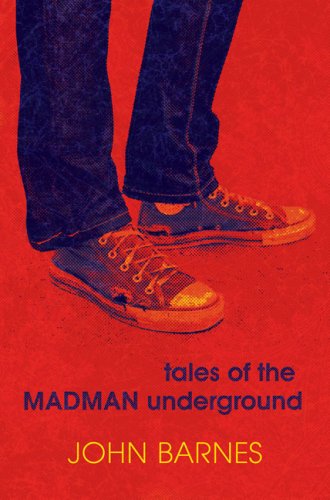
                • Cover of Tales of the Madman Underground
                  Tales of the Madman Underground

                  John Barnes · standalone novel · 2009

                  similar byliterary & generalreflectivenorth americalate 20th centuryfriendship+1 more

                  In September 1973, as the school year begins in his depressed Ohio town, high-school senior Kurt Shoemaker determines to be "normal," despite his chaotic home life with his volatile, alcoholic mother and the deep loyalty and affection he has for his friends in the therapy group dubbed the Madman Underground.

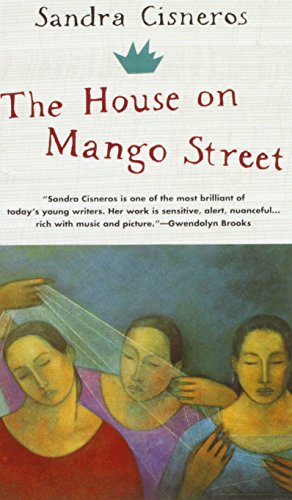
                • Cover of The House on Mango Street
                  The House on Mango Street

                  Sandra Cisneros · standalone novel · 1984

                  similar byliterary & generalreflectivenorth americalate 20th centuryidentity

                  In a series of inter-connected vignettes, this is the story of a young girl growing up in the Hispanic quarter of Chicago. Contains magical realism.

                • Cover of Girlfriend in a Coma
                  Girlfriend in a Coma

                  Douglas Coupland · standalone novel · 1998

                  similar byliterary & generalreflectivenorth americalate 20th centuryfriendship

                  Girlfriend in a Coma is a novel by Canadian writer and artist Douglas Coupland. It was first published by HarperCollins Canada in 1998. The novel tells the story of a group of friends growing up in Vancouver, British Columbia, Canada in the late 1970s. On the night of a teenage house-wrecking party, one of the protagonists, Karen, falls into a coma. Peculiarly, she seemed to expect it, having given her boyfriend, Richard, a letter detailing the vivid dreams of the future she had experienced and how she wanted to sleep for a thousand years to avoid that dystopia.

                • Cover of Black Swan Green
                  Black Swan Green

                  David Mitchell · standalone novel · 2006

                  similar byliterary & generalreflectivelate 20th centuryidentityfriendship+1 more

                  Black Swan Green is a semi-autobiographical novel written by David Mitchell, published in April 2006 in the U.S. and May 2006 in the UK. The bildungsroman's thirteen chapters each represent one month—from January 1982 through January 1983—in the life of 13-year-old Worcestershire boy Jason Taylor. The novel is written from the perspective of Taylor and employs many teen colloquialisms and popular-culture references from early-1980s England.

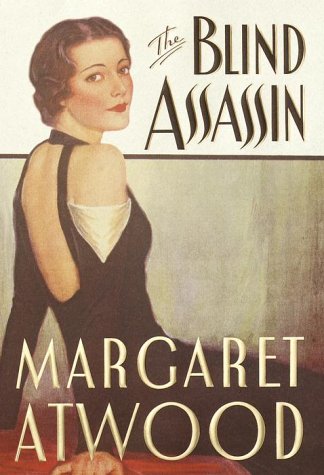
                • Cover of The Blind Assassin
                  The Blind Assassin

                  Margaret Atwood · standalone novel · 2000

                  similar byliterary & generalreflectivenorth americaidentityframe story

                  "Considerable sf content is also concealed in her Booker Prize-winning The Blind Assassin (2000), a novel whose conventional twentieth-century Canadian frame story of thwarted and secret-ridden family life is folded around a very extensive, and in many ways much more interesting science-fictional Pulp magazine adventure (after which the novel is named)." - {{SFE}}'s author page (2021-10-30)

                • Cover of Wolf in White Van
                  Wolf in White Van

                  John Darnielle · standalone novel · 2014

                  similar byliterary & generalreflectivenorth americaidentityloneliness

                  Wolf in White Van is the first novel by the American author and singer-songwriter John Darnielle. Wolf in White Van tells the story of Sean Phillips, a reclusive game designer whose face has been severely disfigured. One reviewer characterizes Sean as someone "steeped in video games, bad sci-fi movies, and Conan the Barbarian comic books". The plot, which is told non-chronologically, alternates among Sean's childhood, adolescence, and adulthood to describe the circumstances surrounding the incident that disfigured him. A fictional play-by-mail role-playing game called Trace Italian figures prominently in the novel.

                • Cover of Black Oxen
                  Black Oxen

                  Gertrude Atherton · standalone novel · 1923

                  similar byliterary & generalreflectivenorth americaidentity

                  "... Black Oxen was written in a burst of mental energy after Gertrude Atherton herself received an experimental anti-aging treatment; the introduction and appendices to this edition explore parallels between Atherton's medical treatment and that of her rejuvenated protagonist, as well as provide selections from other contemporary writings on aging, science, and the role of women in the 1920s. ..." --description of the 2012 Broadview ed. at Amazon 2019-09-05 (read in full, {{ASIN|1554810256}}

                • Cover of Climbers
                  Climbers

                  M. John Harrison · standalone novel · 1989

                  similar byliterary & generalreflectivelate 20th centuryidentityfriendship

                  Climbers is a literary novel by the British author M. John Harrison. First published in 1989 and apparently set several years earlier, the book had been out of print for several years but was reissued in paperback by Phoenix in 2004. It has attracted considerable critical acclaim and won the Boardman Tasker Prize for Mountain Literature in 1989. It was not, however, universally popular with the British climbing public, and received at least one negative review in the popular magazine Climber.

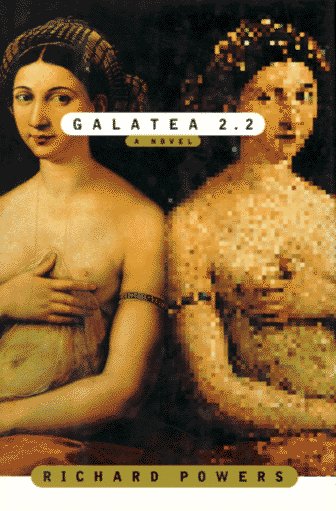
                • Cover of Galatea 2.2
                  Galatea 2.2

                  Richard Powers · standalone novel · 1995

                  similar byliterary & generalreflectivelate 20th centuryidentitynorth america

                  Galatea 2.2 is a 1995 pseudo-autobiographical novel by American writer Richard Powers and a contemporary reworking of the Pygmalion myth. The book's narrator shares the same name as Powers, with the book referencing events and books in the author's life while mentioning other events that may or may not be based upon Powers' life.

                • Cover of 253
                  253

                  Geoff Ryman · standalone novel · 1998

                  similar byliterary & generalreflectivelate 20th centuryidentityloneliness

                  253 is about the 253 people on a London Underground train travelling between Embankment station and Elephant & Castle on January 11, 1995. The basic structure of the novel is explained in the foreword: There are seven carriages on a Bakerloo Line train, each with 36 seats. A train in which every passenger has a seat will carry 252 people. With the driver, that makes 253. Each character is introduced in a separate section containing 253 words, which give general details and describe the thoughts going through the characters' heads. In the online version, hypertext links lead to other characters who are nearby or who have some connection to the current character; in the print version, the links are partly replaced by a traditional index. The reader can proceed from one character to another using these devices or can read the novel in positional order, e.g. from one seat and one train car to the next, but there is no overall chronological order except in the final section.