More like Genometry
anchored on:science fictiongenetic engineeringnear futurecloningidentityother star systems+2 more
but
- Stand on Zanzibar
John Brunnerstandalone novel1968
similar byscience fictionchallengingnear futuredarkgenetic engineeringour world
Stand on Zanzibar is a dystopian New Wave science fiction novel written by John Brunner and first in part published in New Worlds magazine in 1967 and in book form in 1968. The book won a Hugo Award for Best Novel at the 27th World Science Fiction Convention in 1969, as well as the 1969 BSFA Award and the 1973 Prix Tour-Apollo Award.
- A Clockwork Orange
series4 books1962
completed
similar byscience fictionchallengingnear futuredarkour world+1 more
Anthony Burgess's 1962 novel is narrated by Alex, a teenage gang leader in a near-future Britain gripped by a youth subculture of extreme violence, recounting his crimes in Nadsat, an invented slang blending English with Russian-derived words. After his crimes catch up with him, Alex is made the subject of a controversial state program meant to forcibly reform his behavior, and the novel uses his ordeal to question whether imposed goodness is worth the loss of free will. It is a standalone novel.
- Stranger in a Strange Land
Robert A. Heinleinstandalone novel1961
similar byscience fictionnear futurechallengingidentityour world
Stranger in a Strange Land is a 1961 science fiction novel by the American author Robert A. Heinlein. It tells the story of Valentine Michael Smith, a human who comes to Earth in early adulthood after being born on the planet Mars and raised by Martians, and explores his interaction with and eventual transformation of Terran culture.
- Blood Music
Greg Bearstandalone novel1985
similar byscience fictionnear futuregenetic engineeringdarkour world+1 more
Blood Music is a 1985 science fiction novel by American writer Greg Bear. It is an expanded version of a short story of the same title, originally published in the June 1983 issue of Analog and the winner of both the 1983 Nebula and 1984 Hugo awards for Best Novelette. The novel won the 1986 Prix Apollo Award, given to the best science fiction novel published in France during the preceding year, under the title La Musique du sang.
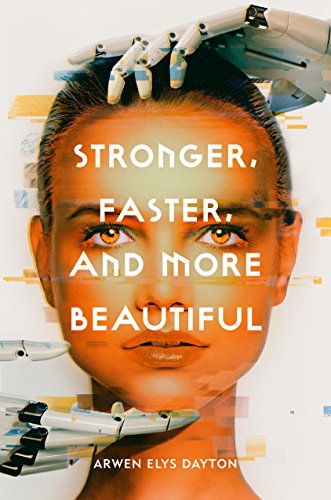
- Stronger, Faster, and More Beautiful
Arwen Elys Daytonstandalone novel2018
similar byscience fictionchallengingnear futuregenetic engineeringidentityour world+1 more
Stronger, Faster and More Beautiful is a 2018 science fiction novel by Arwen Elys Dayton. It explores the ethical question of how far humans will go in their pursuit of physical perfection. It was well received critically, with Tom Shippey of the Wall Street Journal citing it as one of the best science fiction novels of 2018, and has won a number of awards.
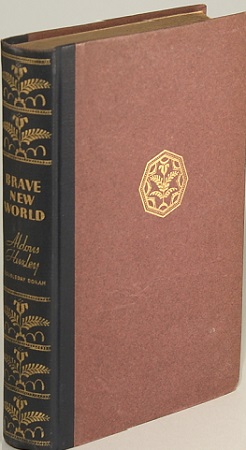
- Brave New World
series8 books1932
similar byscience fiction+5 more
Aldous Huxley's 1932 novel imagines a future World State where reproduction, social caste, and desire are all engineered before birth, and the population is kept content through conditioning, sleep-hypnosis, and a mood-altering drug called soma. The story follows the disruption this seemingly stable order suffers when an outsider raised beyond its reach is brought into it, exposing what the society traded away for comfort and order. Some editions pair the novel with Huxley's own 1958 nonfiction essay collection, Brave New World Revisited, which reassesses the book's ideas rather than continuing its story.
- The Light of Other Days
Arthur C. Clarke & Stephen Baxterstandalone novel2000
similar byscience fictionchallengingnear futureour world+2 more
An industrialist devises a technique to use tiny wormholes as light pipes to enable viewing of any event anywhere; and subsequently it becomes possible to use them to view any event in the past as well. The effects on society are enormous.
- Dune
series20 books1963
part of Dune Universe
similar byscience fictionother star systems+3 more
Frank Herbert's Dune Chronicles opens with 1965's Dune, set on the desert planet Arrakis where House Atreides takes control of the only source of the vital spice melange and young Paul Atreides is pulled into a struggle over its politics and religion. Herbert carried the story forward across five further novels — Dune Messiah, Children of Dune, God Emperor of Dune, Heretics of Dune, and Chapterhouse: Dune — following Paul's line over the following millennia, before Brian Herbert and Kevin J. Anderson later extended the saga. Many other editions of these six novels are omnibus and box-set repackagings rather than separate stories.
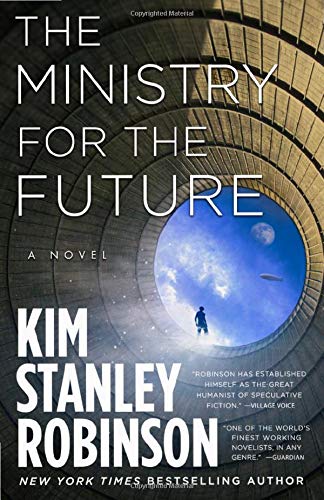
- The Ministry for the Future
Kim Stanley Robinsonstandalone novel2020
similar byscience fictionchallengingnear futureour world+1 more
The Ministry for the Future is a climate fiction novel by American science fiction writer Kim Stanley Robinson, published in 2020. Set in the near future, the novel follows a subsidiary body, established under the Paris Agreement, whose mission is to act as an advocate for the world's future generations of citizens as if their rights were as valid as the present generation's. While the ministry pursues various ambitious projects, the effects of climate change are determined to be the most consequential. The plot primarily follows Mary Murphy, the head of the titular Ministry for the Future, and Frank May, an American aid worker traumatized by experiencing a deadly heat wave in India. Many chapters are devoted to other characters' accounts of future events, as well as their ideas about ecology, economics, and other subjects.
- Blade Runner Universe
series6 books1968
similar byscience fictionnear futuredarkidentity+1 more
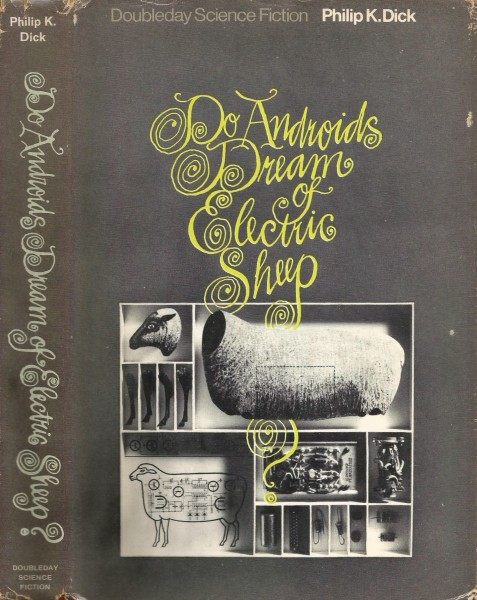
Philip K. Dick's 1968 novel Do Androids Dream of Electric Sheep? follows bounty hunter Rick Deckard as he tracks escaped androids through an irradiated, near-abandoned San Francisco, using the hunt to probe questions of empathy and what separates human from machine. The novel became the basis for Ridley Scott's 1982 film Blade Runner, and Marvel Comics later published an illustrated adaptation of that film. Together the two trace the story's path from prose original to screen and comic-page adaptation.
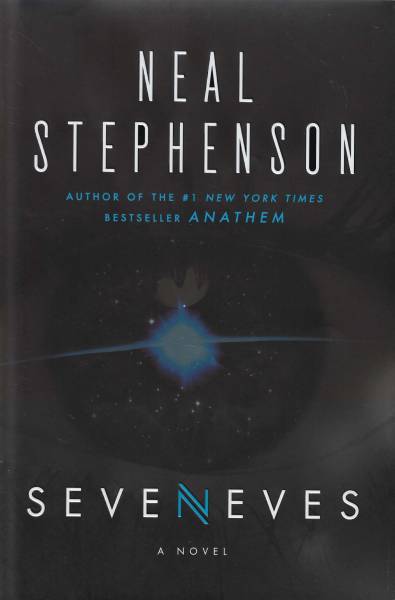
- Seveneves
Neal Stephensonstandalone novel2015
similar byscience fictionchallengingnear futuregenetic engineeringour world
Seveneves is a science fiction novel by Neal Stephenson published in 2015. The story tells of the desperate efforts to preserve Homo sapiens in the wake of apocalyptic events on Earth after the unexplained disintegration of the Moon and the remaking of human society as a space-based civilization after a severe genetic bottleneck.
- Library of America P. K. Dick Collection
series9 books1962
completed
similar byscience fictionnear future+3 more
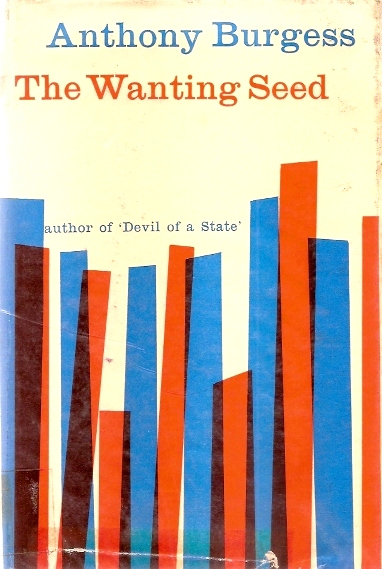
- The Wanting Seed
Anthony Burgessstandalone novel1962
similar byscience fictionchallengingnear futuredarkour world
The Wanting Seed is a dystopian novel by the English author Anthony Burgess, written in 1962.
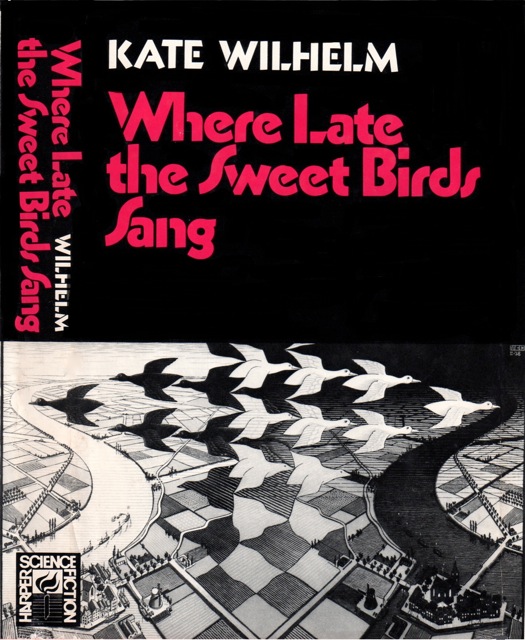
- Where Late the Sweet Birds Sang
Kate Wilhelmstandalone novel1976
similar byscience fictionnear futuredarkcloningour world+1 more
Where Late the Sweet Birds Sang is a science fiction novel by American writer Kate Wilhelm, published in 1976. The novel is composed of three parts, "Where Late the Sweet Birds Sang," "Shenandoah," and "At the Still Point," and is set in a post-apocalyptic era, a concept popular among authors who took part in the New Wave Science Fiction movement in the 1960s.
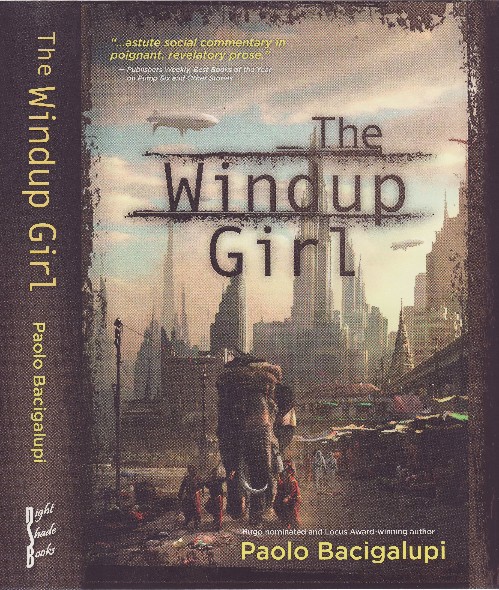
- The Windup Universe
series3 books2005
similar byscience fictionnear futuregenetic engineeringdarkour world
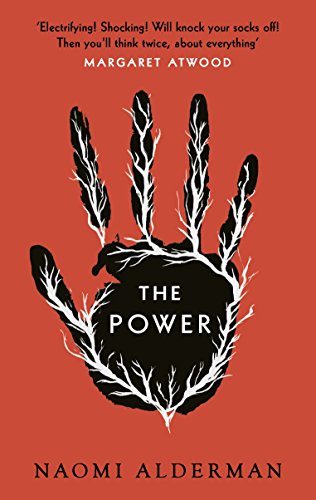
- The Power
Naomi Aldermanstandalone novel2016
similar byscience fictionchallengingnear futuredarkour world
The Power is a 2016 science fiction novel by the British writer Naomi Alderman. Its central premise is of women developing the ability to release electrical jolts from their fingers, which allows them to become the dominant sex. In 2017, it won the Baileys Women's Prize for Fiction.
- Clone
Richard Cowperstandalone novel1972
similar byscience fictionnear futurecloningidentityour world+1 more
History's first clones: Alvin, Bruce, Colin, and Desmond - Spawned in a dangerous 21st century experiment, there were brought into a world where educated apes did manual labor and the government encouraged suicide as a method of population control. Their existence as clones was unknown to anyone - even to each other - known only to their creator. But then came the strange, haunting visions, the peculiar psychic sensations that drew them closer and closer together - revealing one and for all the mysterious secret they shared that would change the world! (from the back cover of the Pocket Books edition)
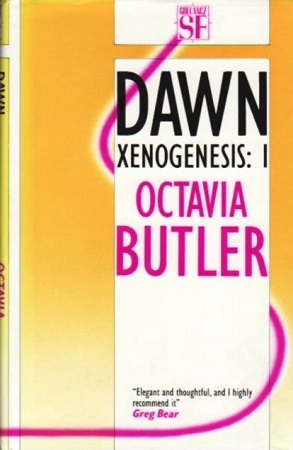
- Xenogenesis / Lilith's Brood
series4 books1987
completed
similar byscience fictiongenetic engineering+5 more
Lilith's Brood, previously known as the Xenogenesis Trilogy, is a collection of three science fiction works by Octavia E. Butler: Dawn, Adulthood Rites, and Imago.
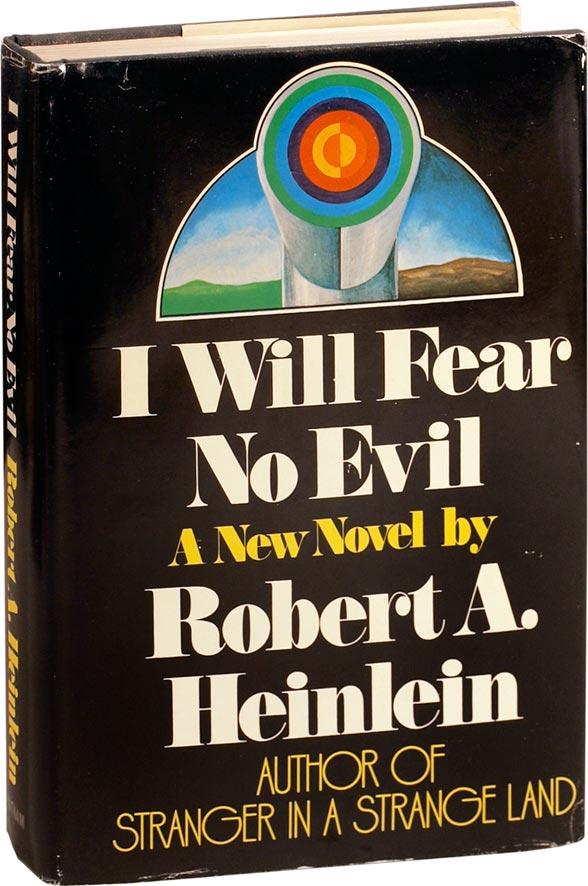
- I Will Fear No Evil
Robert A. Heinleinstandalone novel1970
similar byscience fictionnear futureidentityour worldbody swap
I Will Fear No Evil is a science fiction novel by American writer Robert A. Heinlein, originally serialised in Galaxy and published in hardcover in 1970. The title is taken from Psalm 23:4.
- MaddAddam
series3 books2003
similar byscience fictionnear futuregenetic engineeringdark+1 more
Margaret Atwood's MaddAddam trilogy (Oryx and Crake, The Year of the Flood, MaddAddam, 2003-2013) is set around a genetically engineered pandemic unleashed deliberately by the brilliant, disillusioned scientist Crake, who intends the deadly 'BlyssPluss' pill to wipe out humanity and clear the way for the gentler, engineered Crakers he has designed to replace it. Told from the perspectives of survivors including Crake's old friend Jimmy (now calling himself Snowman), the trilogy pieces together the pandemic's causes and its aftermath from multiple, overlapping vantage points.
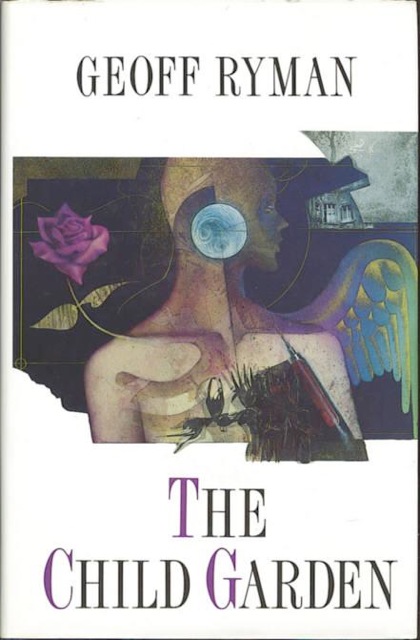
- The Child Garden
Geoff Rymanstandalone novel1989
similar byscience fictionnear futuregenetic engineeringdarkour world+1 more
The Child Garden is a 1989 science fiction novel by Canadian writer Geoff Ryman.
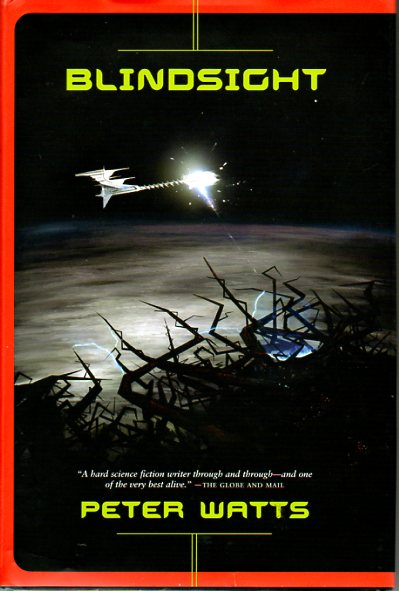
- Blindsight / Firefall
series3 books2006
similar byscience fictionchallengingdark+4 more
Blindsight sends a crew of radically modified posthumans (including a resurrected, genetically restored vampire) out to the Oort cloud after humanity detects an alien signal, only to make contact with something intelligent, wildly capable, and possibly not conscious at all — a first-contact story built around the question of whether self-awareness is actually useful. Peter Watts's Echopraxia is a same-timeframe "sidequel" rather than a direct sequel, following different characters through the fallout of the same first-contact event.
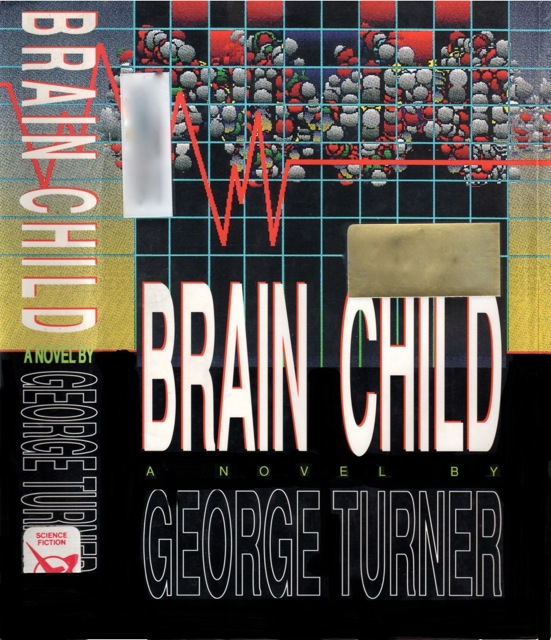
- Brain Child
George Turnerstandalone novel1991
similar byscience fictionnear futuregenetic engineeringdarkidentityour world
From the rear flap of the William Morrow first edition: Now, in Brain Child, Turner has created an intense novel of murder and science that sounds the great themes of human identity and the nature of intelligence. Set a few decades in the future, he tells the story of a man searching for his roots and, through layers of discovery, the story of a complex and astounding scientific experiment. David Chance has been raised in an orphanage and, now an adult, finds that he is the child of a man genetically altered before birth by a group of scientists experimenting in increasing human intelligence and creativity. But his father is dead. He pursues the search for the true nature of his father and, through it, the true nature of the experiments and the survivors of the final disaster that ended them. Chance exposes his roots and find them entangled in horror, deceit, vengeance, and perverse scientific illumination. Peace and self-knowledge are achieved only at great risk and terrible cost.