Loreful
HomeDiscover
Search series, authors…⌘K
Loreful

Reading orders for SF/F series and shared universes — with your place kept in every one.

Explore

UniversesSeriesWorksAuthorsAtlas

Help

FAQAboutSite map

Account & legal

Sign inCreate accountPrivacyTerms

Data

Built on ISFDB, Wikipedia, Wikidata and Open Library. Curated reading orders carry their reasoning on the page; the rest follow publication order. Data sources & licenses

© Loreful · data: ISFDB · CC BY

More like Get Smart!

anchored on:humorour worldmid 20th centuryfunnyspy thrillerlighthearted

but

Mood

The mood the book leaves you in.

  • The reading experience is propelled by journeys, exploration, and physical risk; excitement and forward momentum dominate over dread or introspection.
  • Joy and loss are deliberately mixed; the resolution grants characters something real while taking something else away, leaving warmth and sorrow together.
  • The book demands work from the reader — dense prose, difficult structure, unfamiliar ideas, or morally uncomfortable material — as part of its intended effect.
  • Grim events, cruelty, or despair dominate the atmosphere, and the book does not soften them with comfort or comic relief.
  • The atmosphere is quietly unsettling — wrongness, unease, and the uncanny pervade the book without necessarily escalating into overt horror.
  • The book is built to move the reader; character feeling is foregrounded and major scenes aim at a strong emotional response.
  • Humor is a primary aim and the prose plays for laughs — comic situations, wit, or dialogue produce sustained comedy, not occasional levity.
  • The book insists that things can improve; effort and decency are shown to matter, and the arc bends toward better outcomes even through hardship.
  • The book teaches as it goes — real facts, history, science, or craft are conveyed in enough depth that learning is part of the reading experience.
  • The book is designed to uplift and motivate, presenting perseverance or achievement in a way that invites the reader to aspire or act.
  • The overall register is cheerful and easygoing; stakes are kept gentle and the book avoids dwelling on pain or dread.
  • Withheld information drives the experience; the book sustains enigmas and secrets the reader wants resolved, whatever its genre.
  • The book is contemplative and inward-looking, giving more weight to thought, memory, and meaning than to external events.
  • The book works as comfort reading — low tension, a soothing pace, and an atmosphere the reader can unwind in.
  • Grief, loss, or melancholy set the dominant register, and the book lets sorrow stand rather than resolving it into comfort.
  • Sustained suspense is the point; the book keeps the reader braced for what happens next through danger, pressure, or impending revelation.
  • Playful invention and charm define the register — fanciful conceits, light absurdity, and a narration that delights in its own oddity.

About

What the story runs on.

  • Stories in which extraterrestrial beings are central — as characters, cultures, or the object of the plot.
  • Stories structured as a quest — a journey undertaken to find, deliver, or destroy something of great import.
  • Stories in which staying alive against nature, catastrophe, or scarcity is the central problem.
  • Stories of lovers kept apart by law, family, faith, or station, where the obstacle to love is the plot.
  • Stories in which a friendship — its making, testing, or loss — is the emotional center.
  • Stories of growing up — a young protagonist crossing from childhood into adult knowledge and responsibility.
  • Stories about who a character truly is — self-discovery, doubled lives, and the search for a self.
  • Stories about mourning — living through the death of a loved one and what loss does to the survivors.
  • Stories in which a buried family truth — hidden parentage, crimes, or shames — surfaces and reorders the present.
  • Stories driven by maneuvering for power — factions, conspiracies, and statecraft conducted in shadow.
  • Stories in which war itself is the subject — combat, occupation, and what warfare does to soldiers and civilians.
  • Stories organized around investigating a killing — the case, the clues, and the pursuit of the killer, in any genre's clothing.

Shelf

Where it sits in the library.

    • Fiction built on magic or other supernatural elements that have no scientific explanation.
    • Secondary-world fantasy at large scale, where the fate of nations or the world turns on the protagonists' struggle.
    • Fantasy set in a recognizably modern city or contemporary world where the supernatural intrudes on everyday life.
    • Fantasy that blends in horror's atmosphere and imagery, keeping a fantastical frame around grim or frightening material.
    • Action-driven fantasy following warriors or rogues with personal stakes against sorcerous threats, rather than world-spanning conflicts.
    • Fantasy set in a real historical period or a close analogue of one, with magic woven into the era.
    • Fantasy in which protagonists cross from the ordinary world into another world through a portal or similar passage.
    • Fiction that retells or reworks a traditional fairy tale in a new form or setting.
    • Fantasy drawing directly on myths, legends, and folklore, retelling them or building on their figures and logic.
    • Fantasy of ghosts, vampires, shapeshifters, psychics, and similar phenomena, usually set in an otherwise ordinary world.
    • Fiction mixing science-fictional trappings with overtly magical or impossible elements in one setting.
    • Low-stakes fantasy emphasizing comfort, community, and everyday pleasures over conflict and peril.
    • Speculative fiction of pervasive moral ambiguity, violence, and cynicism that rejects heroic conventions — fantasy and SF alike.
      • Fiction that extrapolates from science and technology — future societies, space travel, or speculative inventions — within at least nominally natural laws.
      • Science fiction of interstellar scope — starships, galactic polities, and adventure across star systems.
      • Science fiction committed to scientific rigor, where technical plausibility constrains the story.
      • Science fiction centered on armed forces and warfare, told largely from a military point of view.
      • Science fiction of networked, corporate-dominated near futures, pairing high technology with social decay.
      • Science fiction styled on nineteenth-century steam-powered technology, often in a Victorian or pseudo-Victorian setting.
      • Fiction depicting an oppressive or catastrophic society, presented as a warning.
      • Fiction set after civilization's collapse, following survivors in the ruins of the old world.
      • Fiction in which characters move between past and future, and the mechanics or consequences of that travel drive the plot.
      • Fiction exploring a world where a historical event went differently and history diverged from ours.
      • Science fiction about humanity's first encounter and communication with an alien intelligence.
      • Science fiction in which extraterrestrial forces attack or occupy Earth and humanity resists.
      • Fiction whose primary aim is to frighten or unsettle the reader through dread, menace, or the monstrous.
      • Horror of vast, indifferent, incomprehensible entities before which humanity is insignificant, in the Lovecraft tradition.
      • Horror of decaying houses, buried family secrets, and oppressive atmosphere in the Gothic literary tradition.
      • Horror centered on hauntings and the returning dead.
      • Horror located in the mind — paranoia, obsession, and unreliable perception rather than external monsters.
      • Horror built around the reanimated dead and survival amid their outbreaks.
      • Horror defined by explicit, transgressive gore that refuses to cut away from violence.
      • Speculative fiction of the strange and uncanny that resists both natural explanation and standard genre categories.
      • Fiction organized around solving a crime or puzzle, typically following an investigator toward the identification of a culprit.
      • A puzzle-first mystery that lays out clues so the culprit's identity can be deduced before the reveal.
      • Crime fiction of moral ambiguity, fatalism, and hard-edged style, set among the corrupt and the doomed.
      • A mystery following the realistic routines of police work — forensics, interviews, and case-building.
      • A gentle mystery with an amateur sleuth, a small community, and violence kept off the page.
      • A mystery set in a past era, where the investigation works within that period's methods and society.
      • Fast-paced fiction driven by imminent danger, pursuit, or high-stakes conspiracy, built to sustain tension.
      • A thriller of espionage — agents, tradecraft, and intelligence services in conflict.
      • A thriller centered on lawyers and the courtroom, where litigation carries the suspense.
      • A thriller driven by detailed contemporary or near-future technology, often military or scientific.
      • A thriller whose tension comes from mental states and manipulation between characters rather than external action.
      • Fiction whose central plot is a romantic relationship and its development toward an emotionally satisfying resolution.
      • Romance in which one or both partners are supernatural beings, blending fantasy elements into the love story.
      • A fantasy-romance hybrid in which the romantic arc and the fantasy plot carry equal weight.
      • Romance set in a past era, with courtship shaped by the period's society and manners.
      • Romance set in the present day, without supernatural or historical elements.
      • Fiction set in a real past period, where the historical setting materially shapes characters and events.
        • General and literary fiction emphasizing prose style, character interiority, or formal ambition over genre plot conventions.
        • Fiction in a realistic world where magical events occur and are treated as ordinary, in the tradition of Latin American literature.
        • Fiction that ridicules people, institutions, or society in order to criticize them.
        • Fiction of dreamlike, irrational imagery and logic that breaks from realistic representation.
        • Fiction that plays with narrative convention through metafiction, fragmentation, and self-reference.
        • Fiction propelled by journeys, exploration, and physical peril, where action and survival carry the plot.
        • Adventure fiction of ships and seafaring — naval engagements, voyages, and life at sea.
        • Fiction of the American frontier West — gunmen, ranchers, and lawmen, typically in the late nineteenth century.
        • Fiction centered on soldiers, campaigns, and the experience of warfare, historical or imagined.
          • Fiction written primarily to amuse, using comedic situations, wit, or parody as its organizing principle.
            • Multi-generational fiction following a family or dynasty across decades, with inheritance and kinship as the through-line.
              • Fiction whose world runs on explicit game mechanics — levels, stats, and skills that characters can see and exploit.
                • Fiction about costumed or superpowered heroes and their conflicts with comparable villains.

                Practical

                How long a commitment, whether it stands alone, and whether it has finished.

                Tap a chip to ask for it · tap again to rule it out · once more to clear. Numbers show what would be left.

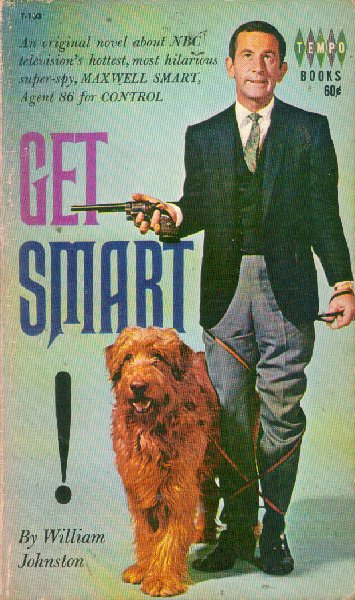
                • Cover of Get Smart
                  Get Smart

                  series · 9 books · 1965

                  completed

                  similar byour worldmid 20th centuryhumorfunnyspy thriller+2 more

                  Get Smart is an American comedy television series parodying the secret agent genre that had become widely popular in the first half of the 1960s with the release of the James Bond films. It was created by Mel Brooks and Buck Henry, and had its television premiere on NBC on September 18, 1965. It starred Don Adams, who was also a director on the series, as agent Maxwell Smart, Barbara Feldon as Agent 99, and Edward Platt as The Chief. Henry said that they created the show at the request of Daniel Melnick to capitalize on James Bond and Inspector Clouseau, "the two biggest things in the entertainment world today". Brooks described it as "an insane combination of James Bond and Mel Brooks comedy".

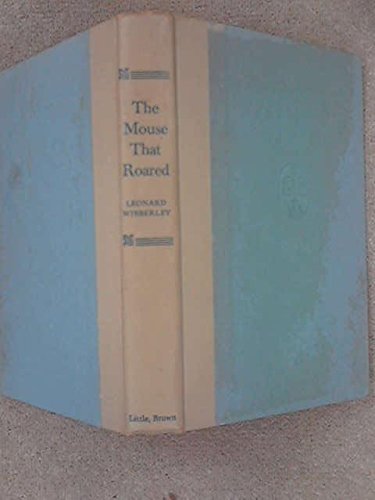
                • Cover of The Mouse That Roared
                  The Mouse That Roared

                  series · 6 books · 1955

                  completed

                  similar byfunnyhumormid 20th century+3 more

                  The Mouse That Roared launches Leonard Wibberley's satirical series about the tiny fictional Duchy of Grand Fenwick, a European microstate whose leaders declare war on the United States purely to lose quickly and collect the postwar reconstruction aid given to defeated nations. The 1955 novel uses Fenwick's mismatched ambitions to poke fun at Cold War politics and the nuclear arms race, and Wibberley kept the joke going across four more novels into the 1970s. Later entries send the duchy into further absurd confrontations with the wider world, including a race to the Moon and a scheme on Wall Street.

                • Cover of The Satanist
                  The Satanist

                  Dennis Wheatley · standalone novel · 1960

                  similar byour worldmid 20th centuryspy thriller+1 more

                  The Satanist is a black magic/horror novel by Dennis Wheatley. Published in 1960, it is characterized by an anti-communist spy theme. The novel was one of the popular novels of the 1960s, popularizing the tabloid notion of a black mass.

                • Cover of Lord of the Flies
                  Lord of the Flies

                  William Golding · standalone novel · 1954

                  similar bymid 20th centuryour world+1 more

                  Lord of the Flies is the 1954 debut novel of British author William Golding. The plot concerns a group of prepubescent British boys who are stranded on an uninhabited island and their disastrous attempts to govern themselves that lead to a descent into savagery. The novel's themes include morality, leadership, and the tension between civility and chaos.

                • Cover of John Goldfarb, Please Come Home!
                  John Goldfarb, Please Come Home!

                  William Peter Blatty · standalone novel · 1963

                  similar bypolitical intriguemid 20th centuryhumorfunnyspy thriller

                  A comic novel involving Cold War espionage and football. The only SF element is that much of the action takes place in Fawzia, a non-existent Arab country.

                • Cover of Messiah
                  Messiah

                  Gore Vidal · standalone novel · 1954

                  similar bypolitical intrigueour worldmid 20th century

                  Messiah is a satirical novel by Gore Vidal, first published in 1954 in the United States by E.P. Dutton. It is the story of the creation of a new religion, Cavism, which quickly comes to replace the established but failing Christian religion.

                • Cover of Tad Anders
                  Tad Anders

                  series · 1 book · 1975

                  similar bypolitical intrigueour worldmid 20th centuryspy thriller

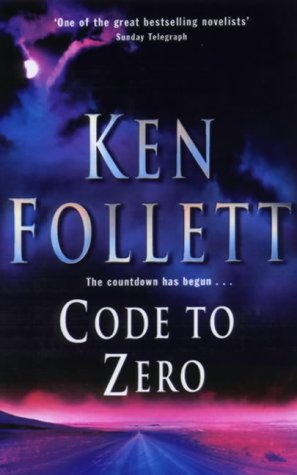
                • Cover of Code to Zero
                  Code to Zero

                  Ken Follett · standalone novel · 2000

                  similar bypolitical intrigueour worldmid 20th centuryspy thriller

                  Code to Zero is a novel by the British author Ken Follett, published by Pan Macmillan. The story follows Luke, an amnesic who spends the duration of the book learning of his life, and slowly uncovering secrets of a conspiracy to hold the United States back in the space race.

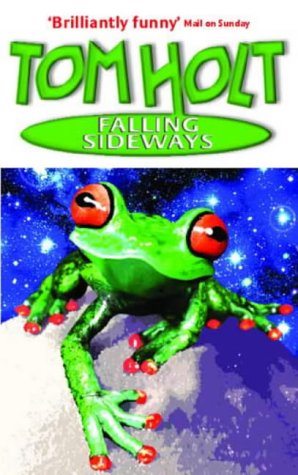
                • Cover of Falling Sideways
                  Falling Sideways

                  Tom Holt · standalone novel · 2002

                  similar byour worldfunnyhumor+1 more

                  The hilarious new comic fantasy novel from the most inventive writer in the field.From the moment the first Homo Sapiens descended from the trees, possibly onto their heads, humanity has striven towards civilisation. Fire. The Wheel. Running Away from furry things with more teeth than one might reasonably expect - all are testament to man's ultimate ascendancy.It is a noble story, a triumph of intelligence over adversity and so, of course, complete and utter fiction.For one man has discovered the hideous truth: that humanity's ascent has been ruthlessly guided by a small gang of devious frogs.

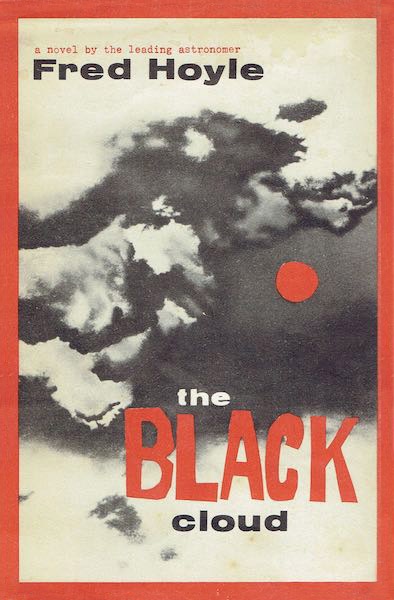
                • Cover of The Black Cloud
                  The Black Cloud

                  Fred Hoyle · standalone novel · 1957

                  similar byour worldmid 20th century+1 more

                  The Black Cloud is a 1957 science fiction novel by British astrophysicist Fred Hoyle. It details the arrival of an enormous cloud of gas that enters the Solar System and appears about to destroy most of the life on Earth by blocking the Sun's radiation.

                • Cover of The Management Style of the Supreme Beings
                  The Management Style of the Supreme Beings

                  Tom Holt · standalone novel · 2017

                  similar byour worldfunnyhumor+1 more

                  When the Supreme Being and his son decide that being supreme isn't for them any more, it's inevitable that things get a bit of a shake-up.It soon becomes apparent that our new owners, the Venturi brothers, have a very different perspective on all sorts of things. Take Good and Evil, for example. For them, it's an outdated concept that never worked particularly well in the first place. Unfortunately, the sudden disappearance of right and wrong, while welcomed by some, raises certain concerns amongst those still attached to the previous team's management style.In particular, there's one of the old gods who didn't move out with the others. A reclusive chap, he lives somewhere up north, and only a handful even believe in him.But he's watching. And he really does need to know if you've been naughty or nice.

                • Cover of The Spook Who Sat by the Door
                  The Spook Who Sat by the Door

                  Sam Greenlee · standalone novel · 1969

                  similar bypolitical intriguemid 20th centuryspy thriller

                  The Spook Who Sat by the Door (1969), by Sam Greenlee, is the fictional story of Dan Freeman, the first black CIA officer, and of the CIA's history of training persons and political groups who later used their specialised training in gathering intelligence, political subversion, and guerrilla warfare against the CIA. The novel has been characterised as "part thriller, part satire and part social commentary". As described by The New Yorker, the title "alludes to the conspicuous deployment of the agency's one black officer to display its phony integration".

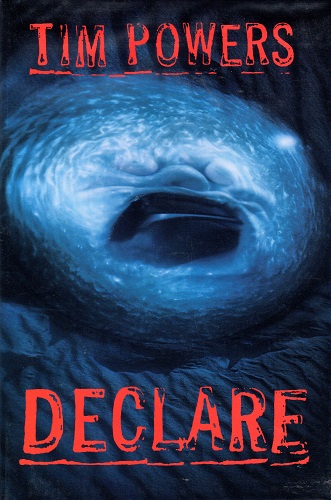
                • Cover of Declare
                  Declare

                  Tim Powers · standalone novel · 2000

                  similar bypolitical intriguemid 20th centuryspy thriller

                  Declare (2000) is a supernatural spy novel by American author Tim Powers. The novel presents a secret history of the Cold War, and earned several major fantasy fiction awards.

                • Cover of The Anti-Death League
                  The Anti-Death League

                  Kingsley Amis · standalone novel · 1966

                  similar byour worldmid 20th century+1 more

                  The Anti-Death League is a 1966 novel by English author Kingsley Amis. Set in England, it follows the lives of characters working in and around a fictional British Army camp where a secret weapon is being tested.

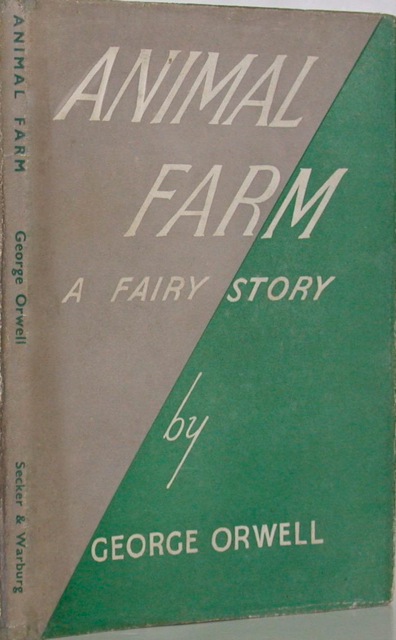
                • Cover of Animal Farm: A Fairy Story
                  Animal Farm: A Fairy Story

                  George Orwell · standalone novel · 1945

                  similar bypolitical intriguemid 20th century+1 more

                  WorldCat: "Fueled by Orwell's intense disillusionment with Soviet Communism, Animal Farm is a nearly perfect piece of writing, both an engaging story and an allegory that actually works. When the downtrodden beasts of Manor Farm oust their drunken human master and take over management of the land, all are awash in collectivist zeal."

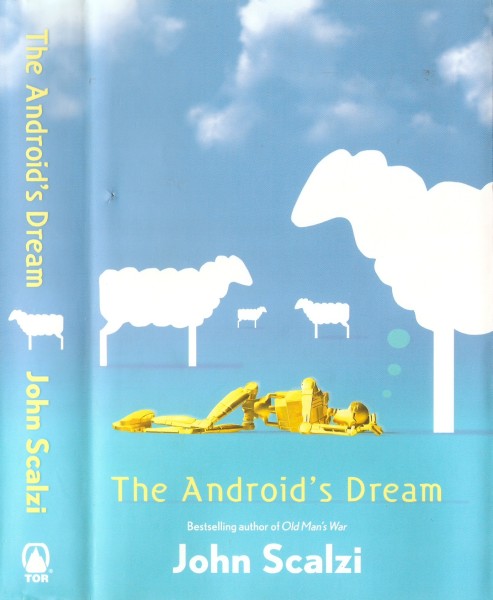
                • Cover of The Android's Dream
                  The Android's Dream

                  series · 2 books · 2006

                  similar bypolitical intriguefunnyhumor

                  A minor diplomatic insult with a genetically engineered sheep breed spirals into a full interstellar crisis when the last surviving specimen of the 'Android's Dream' breed, needed for a critical ceremony with the alien Nidu, turns out to have been hunted to extinction by a Nidu faction bent on provoking war. John Scalzi's The Android's Dream follows ex-soldier Harry Creek as the hunt for a replacement leads him to Robin Baker, an ordinary woman carrying hidden sheep DNA that makes her the key to avoiding a war. It's a standalone comic space opera rather than an ongoing series.

                • Cover of The Puppet Masters
                  The Puppet Masters

                  Robert A. Heinlein · standalone novel · 1951

                  similar bymid 20th century+1 more

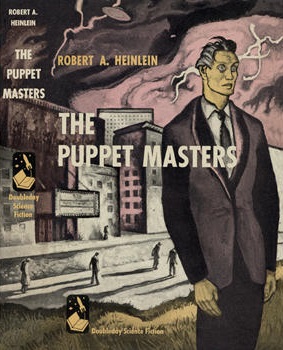
                  Parasitical aliens attach themselves to human hosts and take over their bodies. Two spies are sent to find out what's happening, but the extent is much farther than they knew. With access to the humans' memories, the aliens quietly invade the government and start taking over.

                • Cover of Crooked
                  Crooked

                  Austin Grossman · standalone novel · 2015

                  similar bypolitical intrigueour worldmid 20th century

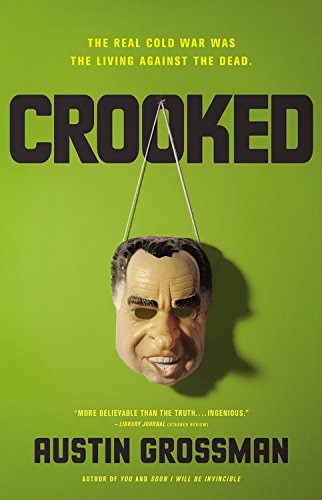
                  Crooked is a novel by author Austin Grossman, published in 2015 by Mulholland Books. It is a cosmic horror fantasy and secret history of the Cold War and the Watergate scandal, narrated by a fictional version of Richard Nixon.

                • Cover of Laundry Files
                  Laundry Files

                  series · 22 books · 2004

                  similar byspy thriller+2 more

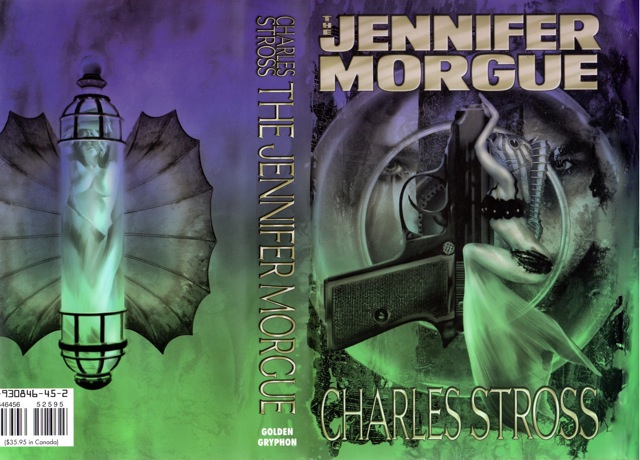
                  The Laundry Files is a series of novels by British writer Charles Stross. They mix the genres of Lovecraftian horror, spy thriller, science fiction, and workplace humour. Their main character for the first five novels is "Bob Howard", a one-time I.T. consultant turned occult field agent. Howard is recruited to work for the Q-Division of SOE, otherwise known as "the Laundry", the British government agency which deals with occult threats. "Magic" is described as being a branch of applied computation (mathematics), therefore computers and equations are just as useful as, and perhaps more potent than, classical spellbooks, pentagrams, and sigils for the purpose of influencing ancient powers and opening gates to other dimensions. These occult struggles happen largely out of view of the public, as the Laundry seeks to keep the methods for contacting such powers under wraps. There are also elements of dry humour and satirisation of bureaucracy.

                • Cover of Beyond This Horizon
                  Beyond This Horizon

                  Robert A. Heinlein · standalone novel · 1948

                  similar byour world+1 more

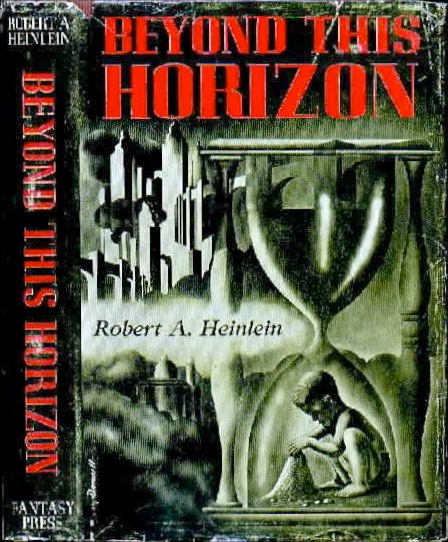
                  From the front flap of a 2001 Baen reprint: "Utopia has been achieved. For centuries, disease, hunger, poverty, and war have been things found only in the history tapes. And applied genetics has given men and women the bodies of athletes and a lifespan of over a century. They should all have been very happy... But Hamilton Felix is bored. And he is the culmination of a star line, each of his last thirty ancestors chosen for superior genes. Hamilton is, as far as genetics can produce one, the ultimate man. And this ultimate man can see no reason why the human race should survive, and has no intention of continuing the pointless comedy. However, Hamilton's life is about to become less boring. A secret cabal of revolutionaries who find utopia not just boring, but desperately in need of leaders who know just What Needs to be Done, are planning to revolt and put themselves in charge. Knowing of Hamilton's disenchantment with the modern world, they have recruited him to join their Glorious Revolution. Big mistake! The revolutionaries are about to find out that recruiting a superman was definitely not a good idea..."

                • WU
                  Worldwar Universe

                  series · 8 books · 1994

                  similar byour world+2 more

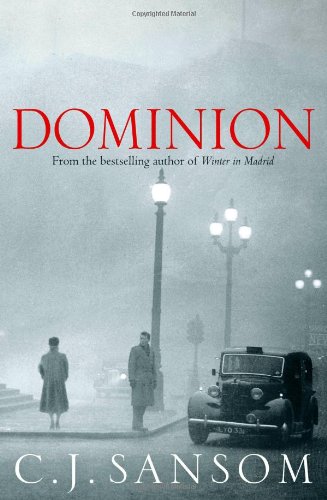
                • Cover of Dominion
                  Dominion

                  C. J. Sansom · standalone novel · 2012

                  similar bypolitical intriguemid 20th centuryspy thriller

                  Dominion is a 2012 alternative history novel by British author C. J. Sansom. It is a political thriller set in the early 1950s against the backdrop of a Britain that has become a satellite state of Nazi Germany. The point of divergence from actual history is that Lord Halifax, rather than Winston Churchill, succeeded Neville Chamberlain as Prime Minister in May 1940 leading to an armistice with Germany.

                • Cover of The Leaky Establishment
                  The Leaky Establishment

                  David Langford · standalone novel · 1984

                  similar bypolitical intrigueour worldhumorfunny

                  The Leaky Establishment is a novel by David Langford, first published in June 1984 by Frederick Muller Ltd. It was re-issued, with an introduction by Terry Pratchett, in 2001 by Big Engine, and then in July 2003 by Cosmos Books. The book draws on some of Langford's own experiences working at the United Kingdom government's Atomic Weapons Research Establishment at Aldermaston, Berkshire.

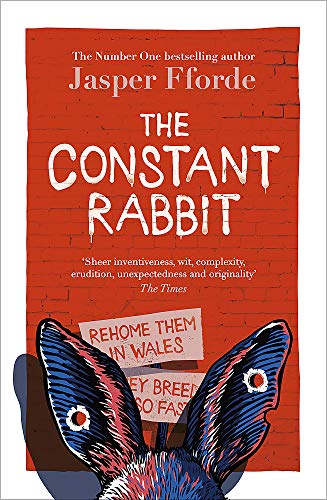
                • Cover of The Constant Rabbit
                  The Constant Rabbit

                  Jasper Fforde · standalone novel · 2020

                  similar bypolitical intrigueour worldfunny

                  The Constant Rabbit is a 2020 science fantasy allegorical novel by Jasper Fforde. It was published by Hodder & Stoughton.