More like Ghost Light
anchored on:science fictiongothic
but
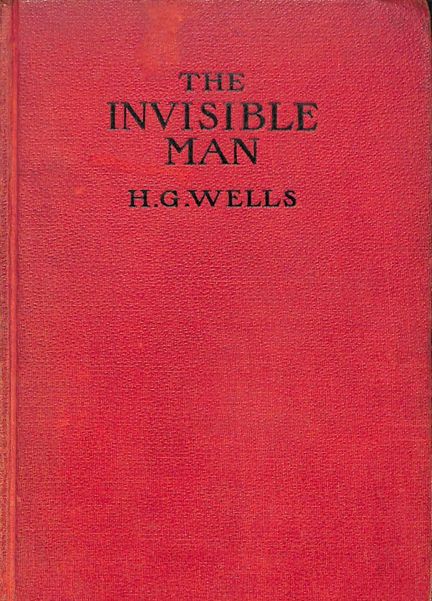
- The Invisible Man
series6 books1897
similar by19th centuryscience fictionbritish isles+1 more
The Invisible Man is H. G. Wells's 1897 science fiction novel about Griffin, a scientist who works out how to make living tissue invisible and tests the process on himself, only to discover he has no way to reverse it. Unseen and increasingly cut off from other people, he turns to theft and violence while trying to survive and find a cure, making the book as much about his moral collapse as about the invisibility premise itself. It's a single self-contained novel; the two listed titles here are duplicate editions rather than separate books.
- The Turn of the Screw
series3 books1898
similar by19th centurygothicbritish isles+3 more
Henry James's 1898 novella The Turn of the Screw follows a governess at an isolated English country house who becomes convinced that the two children in her care are being stalked by malevolent ghosts, narrated entirely through her own increasingly uncertain account. Its ambiguity over whether the haunting is real has made it one of the most discussed ghost stories in English literature and prompted later works built around it, including Michael Hastings's The Nightcomers, a 1971 prequel imagining events at the house before the governess's arrival. A stage adaptation of James's original text also exists.
- Dracula
universe144 books1897
Start hereDracula · Start here
similar by+2 more
"Come freely. Go safely. And leave something of the happiness you bring" — so the Count greets his guest at the threshold of the Carpathians, and the great door shuts behind. Bram Stoker's Dracula (1897) is the wellspring of the modern vampire: the account of a centuries-old Transylvanian nobleman who quits his crumbling castle for the crowded lodging-houses of London, and the handful of ordinary people — a young solicitor, a doctor of the mad, a professor of stranger learning — who must piece together what he is before he makes the whole city his fold. It is told wholly in fragments: journal entries, letters, telegrams, ships' logs, phonograph cylinders, each hand recording only its own sliver of the dark. Around that single novel a whole crypt of continuations has grown, raised by many writers across a century. Fred Saberhagen's Dracula Sequence hands the Count the microphone, retelling the old events from his own wry, aggrieved lips and following him into later intrigues. Robert Lory's brisk 1970s Dracula Horror Series revives him as a reluctant weapon turned against fouler things; Peter Tremayne's trilogy reaches back along his bloodline; and further sequels, a Quincey Morris spin-off, and Dracula's Children carry the shadow onward. This is a loose shared world built upon a public-domain figure, not one governed continuity — each author remakes him as villain, antihero, or sympathetic narrator. Begin, always, with Stoker's original; the letters and the mounting dread stand entirely on their own. From there follow whichever door tempts you — Saberhagen's The Dracula Tape for the monster's own confession, Lory or Tremayne for tales that never glance back at the Borgo Pass again.
- Time Out of Joint
Philip K. Dickstandalone novel1959
similar bymadnessscience fictioneeriemysteriousour world
Time Out of Joint is a science fiction novel by American writer Philip K. Dick, first published in novel form in the United States in 1959. An abridged version was also serialised in the British science fiction magazine New Worlds Science Fiction in several installments from December 1959 to February 1960.
- H. G. Wells' War of the Worlds
universe65 books1898
Start hereThe War of the Worlds · Start here
similar byscience fiction+3 more
No one would have believed, in the closing years of the nineteenth century, that human affairs were being watched keenly and closely from the timeless worlds of space. And then the cylinders fell. H. G. Wells' War of the Worlds opens in the quiet of the Surrey commons, where a falling star proves to be the first Martian craft — and from the pit rise the towering tripods, the Heat-Ray, the choking Black Smoke and the creeping red weed, wielded by minds that regard mankind much as we regard the creatures we boil for supper. This is invasion rendered as natural disaster: cold, methodical, and vast beyond argument. Wells' 1898 novel is the seed; everything else grows from that Martian soil. The catalogue gathers direct sequels and continuations alongside a wide field of other hands. In War of the Worlds: Global Dispatches the invasion is retold across the whole planet through the eyes of Twain, Verne, Tolstoy, Lowell and Kipling; in the Manly Wade and Wade Wellman crossover, Sherlock Holmes, Watson and Professor Challenger take the field against the machines; and Scott Washburn's Great Martian War stretches the fighting into a decades-long alternate history of steam, artillery and grinding attrition. It is a loose shared world — no single decreed sequence, many voices answering one calamity. What sets this world apart is its refusal of heroics: the invaders fall not to generals but to the smallest things of Earth, humbling and indifferent. Begin, always, with Wells' original novel — it is short, and it is the ground every later book stands upon. From there follow your appetite: Global Dispatches for the panorama, the Holmes campaign for adventure, Washburn for the long war.
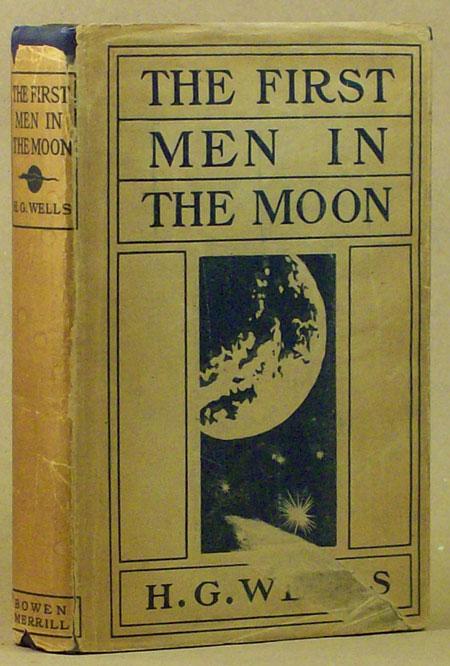
- Cavor
series2 books1901
similar byscience fictionaliens+2 more
H. G. Wells's 1901 novel The First Men in the Moon is narrated by the businessman Bedford, who joins the reclusive scientist Cavor after Cavor invents cavorite, a gravity-blocking substance that carries the two men to the Moon. There they discover a vast underground civilization of insect-like Selenites, and the expedition that began as a hunt for lunar minerals turns into an encounter with an alien society. It is a standalone novel; later editions crediting Stephen Baxter add an introduction or afterword rather than a continuing story.
- The Lathe of Heaven
Ursula K. Le Guinstandalone novel1971
similar byscience fictioneerieour world+2 more
The Lathe of Heaven is a 1971 science fiction novel by American writer Ursula K. Le Guin, first serialized in the American science fiction magazine Amazing Stories. It won the 1972 Locus Award for Best Novel and was a finalist for the 1971 Nebula Award for Best Novel and 1972 Hugo Award for Best Novel. Two television film adaptations were released: the PBS production, The Lathe of Heaven (1980), and Lathe of Heaven (2002), a remake produced by the A&E Network.
- Southern Reach Trilogy
series4 books2014
similar bymadnessscience fictioneerieour world+1 more
The Southern Reach Series is a series of novels by the American author Jeff VanderMeer first published in 2014—Annihilation, Authority, Acceptance, and Absolution. The series takes its name from the secret agency that is central to the plot. In 2013, Paramount Pictures bought the movie rights for the series, and a film adaptation of Annihilation was made with Alex Garland as writer-director. The film was released in 2018. The most recent book in the series, Absolution, was released on 22 October 2024.
- The Adventures of Dr. Caspian and Bronwen
series4 books1976
completed
similar byeeriebritish isles+5 more
- The Island of Dr. Moreau
series12 books1896
similar by19th centuryscience fiction
H. G. Wells's 1896 novel The Island of Doctor Moreau follows a shipwrecked man stranded on a remote island where a reclusive scientist creates human-animal hybrids through vivisection, using the scenario to probe questions of cruelty, control, and what separates humanity from the beasts it experiments on. The premise has drawn later reimaginings gathered alongside it here, including Brian Aldiss's Moreau's Other Island and Silvia Moreno-Garcia's The Daughter of Doctor Moreau, each transplanting Wells's central idea into a new setting and voice. Taken together, the group traces one unsettling premise across more than a century of speculative fiction rather than forming a single ongoing story.
- Twilight Zone Collections
series8 books1960
part of Twilight Zone
similar byeeriescience fictionour world+2 more
- Drood
Dan Simmonsstandalone novel2009
similar bymadness19th centurymysteriousgothicbritish isles
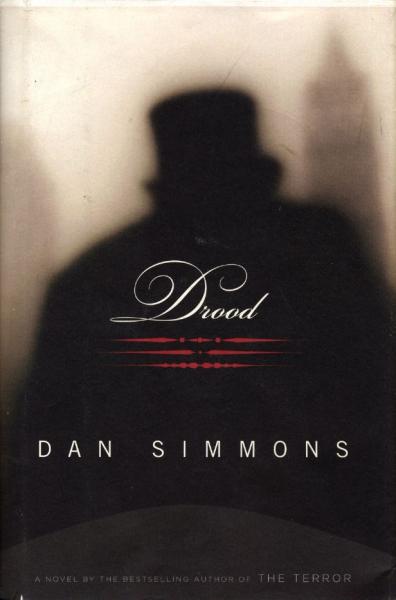
Drood is a novel written by Dan Simmons. The book was initially published on February 1, 2009 by Little, Brown and Company. It is a fictionalized account of the last five years of Charles Dickens' life.
- Quicksand
John Brunnerstandalone novel1967
similar byscience fictioneerieour worldbritish islesaliens+1 more
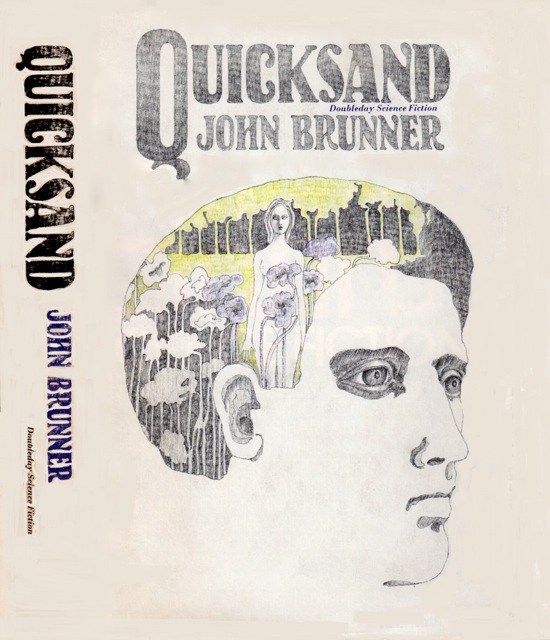
A British psychiatrist in a deadening job and a deadening marriage gets a mysterious patient; a petite young woman who speaks an unrecognizable language and is unfamiliar with the common objects, sights, and behaviors of normal life, yet who is able to quickly and easily cripple or kill a large man with her bare hands when she feels threatened. He feels more than professional concern for the woman, who he believes is not actually mentally ill but is in fact a more unusual case.
- Elephantasm
Tanith Leestandalone novel1993
similar by19th centuryeeriegothicbritish islesfamily secrets+1 more
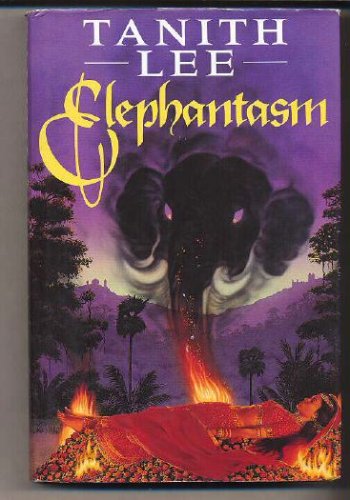
Synopsis - Annie Ember lives in hopeless poverty with her sister Rose and her wicked brother-in-law...until the day that Annie discovers the mysterious exotic shop where she buys, for one penny, a tiny and ancient ivory elephant. Soon afterwards a grisly murder leaves Annie without home or family, but employment is found for her in a country house far away. Sir Hampton Smolte made his fortune out in India, and has brought back not only his wealth but also an obsessive hatred towards that conquered land where he once commanded a mercenary army. His mansion is fanciful and extraordinary, all scarlet and gold, like a fairy tale raja’s palace set down in green English parkland. There Annie is to become a drudge – a scullery maid in this house full of stuffed animals, eccentric servants, and the even more peculiar Smolte family. But soon she catches the eye of the handsome Rupert who, like his father, retains a fascination with India. Entranced, she succumbs to his attentions – till one night she learns in disgust and terror just what his lovemaking entails... Annie’s fear and helpless fury provide the catalyst which will turn this dream house into a place of panic and the impossible – letting in all the power of the jungle, and unlocking the darkest secrets of Hampton Smolte’s beginnings.
- Frankenstein
universe128 books1818
Start hereFrankenstein, or, The Modern Prometheus · Start here
similar by+2 more
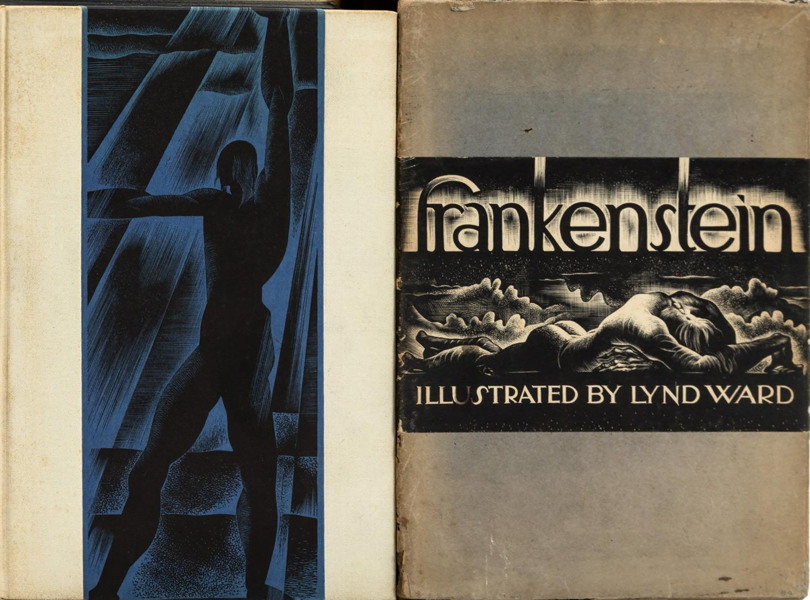
Light a candle against the November dark and consider what a single spark, rightly applied to dead matter, might wake. In a laboratory at Ingolstadt a student named Victor Frankenstein learns the secret of animating lifeless flesh, assembles a being from the harvest of charnel houses and graves, and, at the moment it draws breath, flees the thing he has made. What he abandons does not stay abandoned. This is the world Mary Shelley opened in 1818 with Frankenstein; or, The Modern Prometheus: the story of a maker and his unmothered creation, and the long ruin each works upon the other. Shelley's novel arrives as a nest of confessions, an explorer's letters from the frozen north enclosing Victor's account, which in turn encloses the Creature's own, an articulate and wounded voice that has read Milton and wants only not to be alone. From that single volume two centuries of other hands have built outward, not as one continuity but as a gathering of independent returns to the same fire. Dean Koontz transplants the myth to modern New Orleans across a five-book cycle, Prodigal Son through The Dead Town, where the original Creature, now called Deucalion, hunts a Victor who never died. Donald F. Glut's New Adventures and Frank Schildiner's Quest of Frankenstein run the monster through pulp adventure; the mid-century French novels published as Benoit Becker chase him across a ruined Europe; Scott Sonneborn's Frankenstein Journals and the comic Frankenstein's Aunt turn the legend toward younger and lighter readers. What binds them is the question the book asks and never settles: which is the monster, the forsaken creature who kills, or the man whose ambition and cowardice made and abandoned him? Expect little comfort and few clean villains; the abiding note is grief, sublime and articulate, set against Alpine ice and candlelit hubris. Begin where it began, with Shelley's own novel; the later cycles reward you only once you have heard the Creature speak for himself.
- The Drowned World
J. G. Ballardstandalone novel1962
similar bymadnessscience fictioneeriebritish isles
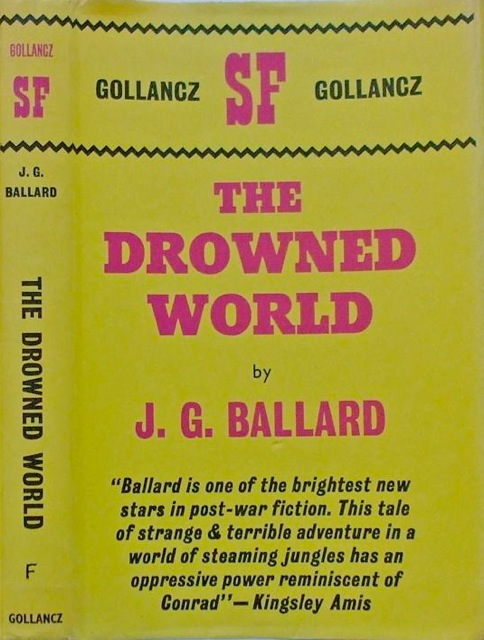
The Drowned World is a 1962 science fiction novel by J. G. Ballard. It first appeared in shortened form in the January 1962 issue of the UK edition of Science Fiction Adventures and was published in book form later that year by Victor Gollancz Ltd in London; an American edition followed from Berkley Medallion. Critics have grouped The Drowned World with Ballard's early science-fiction novels as part of an "ambiguous apocalypse" sequence that also includes The Drought and The Crystal World, from the period in which he was developing the ideas he described as "inner space". Set in a future in which solar radiation has melted the polar ice caps and transformed London into a flooded tropical lagoon, the novel follows biologist Robert Kerans as he becomes increasingly drawn toward the altered environment rather than toward restoring the old social order.
- Twilight Zone
universe40 books1960
Start hereStories from the Twilight Zone · Start here
similar byscience fictionour world+2 more
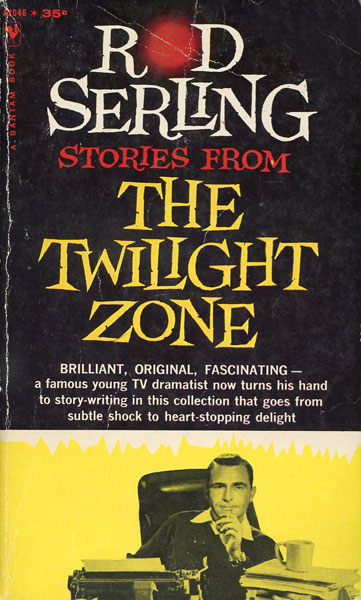
Picture, if you will, an ordinary person on an ordinary afternoon: a tired salesman, a frightened child, a man who wants only to be left alone. Somewhere between the streetlight and the front door, the rules quietly change. This is the Twilight Zone — not a place on any map but a middle ground between light and shadow, science and superstition, the pit of our fears and the summit of our knowledge. There is no continuing saga here, no cast to follow across the years. There is only the door, and the parable waiting on the far side of it. What the shelf holds is Rod Serling's anthology given the permanence of print. Serling turned his own teleplays into prose, the collections that open with Stories from the Twilight Zone, and the scripts survive alongside them — his and Richard Matheson's, the two hands that set the show's pulse. Around that core gather the story-collections of Walter B. Gibson, the volumes of new tales assembled by Carol Serling, standalone novels, and paired reissues: dozens of self-contained pieces, many writers under one banner. Read one or read forty. Each closes its own circle. The machinery is always the same and never predictable — a reasonable premise, a moral squeeze, a final turn that lands like a tap on the shoulder, sometimes cruel, sometimes merciful, always earned. Beneath the twist runs Serling's true subject: ordinary conscience under strain — prejudice, vanity, loneliness, the wish to go back. Begin where he began, with his own Stories from the Twilight Zone, then follow Matheson. There is no order to keep. You unlock this door with the key of imagination.
- This House Is Haunted
John Boynestandalone novel2013
similar by19th centuryeeriemysteriousgothicbritish islesfamily secrets
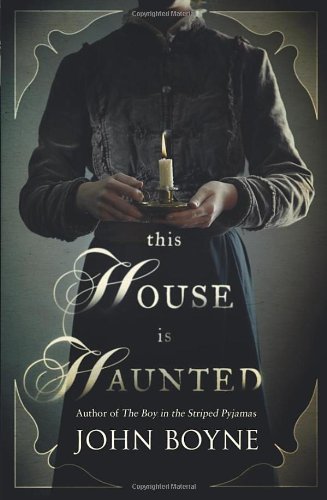
This House Is Haunted is a novel written by Irish novelist John Boyne. It was first published in 2013 by Doubleday.
- Doctor Nikola
series5 books1895
completed
similar by19th century+1 more
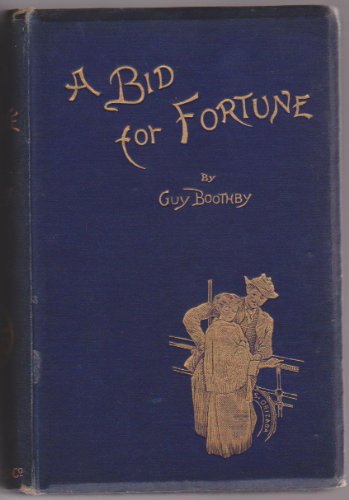
Doctor Nikola is Guy Boothby's Victorian-era series about Dr. Nikola, an occultist criminal mastermind often read as a forerunner to later master-villain characters like Fu Manchu. Beginning with A Bid for Fortune (1895) and continuing across further novels to 'Farewell, Nikola' (1901), it follows Nikola's escalating schemes and the people drawn into opposing or serving him across the British Empire and beyond. The books can be read as one loosely continuous arc following Nikola's rise.