More like Ghostly Shadows
anchored on:middle gradefantasy
but
- Narnia
series26 books1950
part of Narnia Universe
similar byfantasysecondary world+1 more
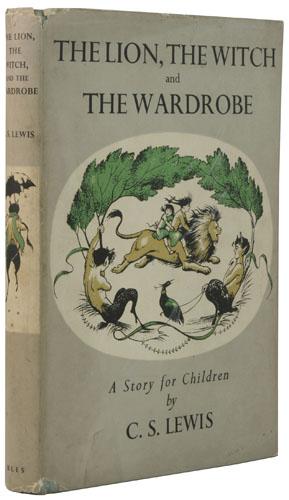
The Chronicles of Narnia is a series of seven portal fantasy novels by British author C. S. Lewis. Illustrated by Pauline Baynes and originally published between 1950 and 1956, the series is set in the fictional realm of Narnia, a fantasy world of magic, mythical beasts, and talking animals. It narrates the adventures of various children who play central roles in the unfolding history of the Narnian world. Except in The Horse and His Boy, the protagonists are all children from the real world who are magically transported to Narnia, where they are sometimes called upon by the lion Aslan to protect Narnia from evil. The books span the entire history of Narnia, from its creation in The Magician's Nephew to its eventual destruction in The Last Battle.
- Stephen King multiverse
universe46 books1967
Start hereThe Gunslinger · Start here
similar by+3 more
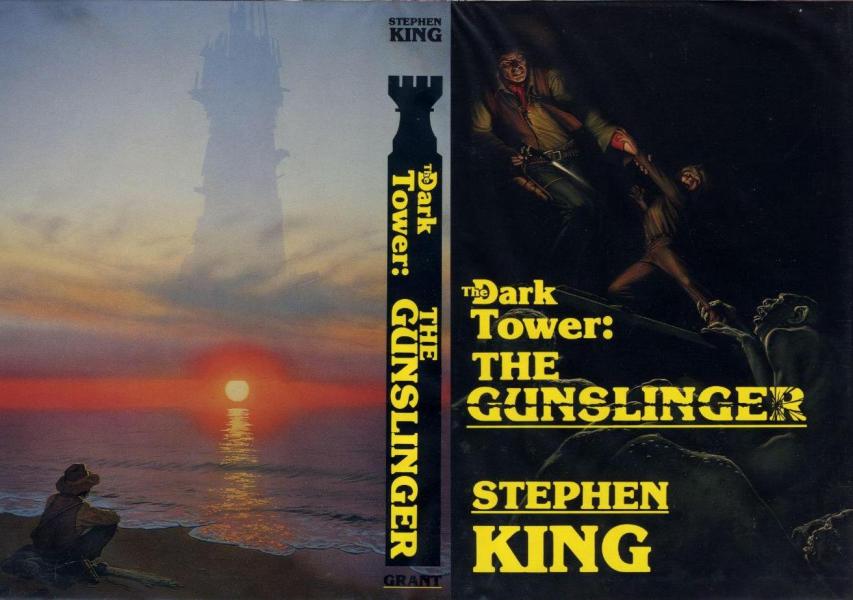
The man in black fled across the desert, and the gunslinger followed. So begins the long walk of Roland Deschain, last of an order of knight-errant pistoleers, across a land that has "moved on" — where the compass points drift, dead machines rot toward sentience, and the weave of what's real wears thin. His quest is the Dark Tower itself: a spire standing at the hub of every world that exists, the linchpin that holds all of them back from ruin. Roland's road runs eight volumes, from The Gunslinger through the closing Dark Tower, with the later, interleaved tale The Wind Through the Keyhole folding a story-within-a-story back into his youth. Along the way he draws a ka-tet — a fellowship bound by fate, not choosing — through doorways between worlds: a heroin-shackled New Yorker, a woman of two minds, a boy who dies twice. The Tower is also the secret axle around which the wider shelf of King's work turns; threads from The Stand, 'Salem's Lot and beyond wind quietly toward it. Expect a mongrel of Western, high fantasy, horror and decayed science fiction, told in a dusty, incantatory dialect all its own — ka, thankee-sai, the world that has moved on. This is King at his most mythic and most personal, a decades-spanning circle that rewards a patient reader. Begin at the beginning: The Gunslinger, then walk forward in publication order. There are other worlds than these — but this door opens first.
- Earthsea Cycle
series18 books1964
completed
part of Earthsea
similar byfantasysecondary world+1 more
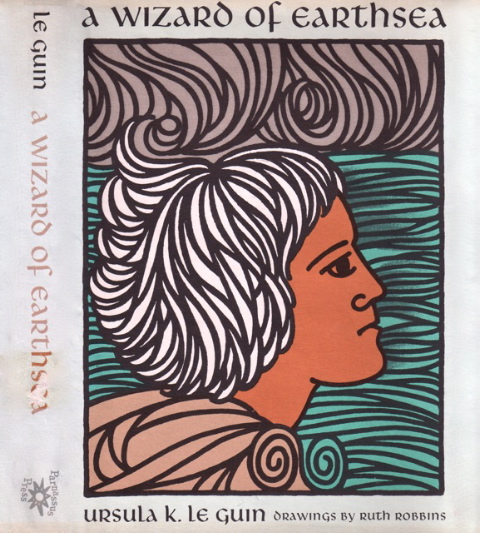
The Earthsea Cycle, also known as Earthsea, is a series of high fantasy books written by American author Ursula K. Le Guin. Beginning with A Wizard of Earthsea (1968), The Tombs of Atuan (1970), and The Farthest Shore (1972), the series was continued in Tehanu (1990), and Tales from Earthsea and The Other Wind. In 2018, all the novels and short stories were published in a single volume, The Books of Earthsea: The Complete Illustrated Edition, with artwork by Charles Vess.
- New Crobuzon
series4 books2000
similar byfantasysecondary world+2 more
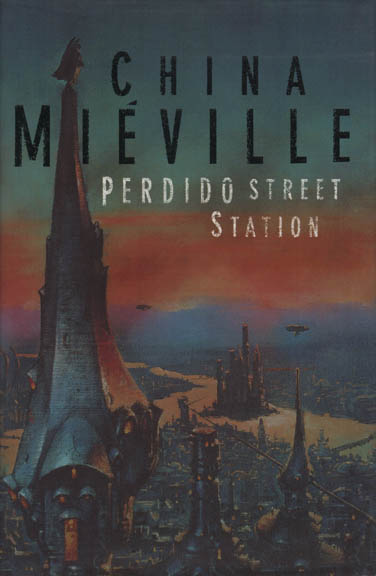
The New Crobuzon books are three standalone novels by China Miéville set in and around New Crobuzon, a vast, corrupt industrial city in his invented world of Bas-Lag where magic, biopunk technology, and several sentient species coexist. Perdido Street Station follows a renegade scientist and his lover after an experiment unleashes something monstrous on the city, while The Scar and Iron Council return to the same setting with different casts and only loose continuity between books.
- His Dark Materials
series8 books1995
part of His Dark Materials Universe
similar byfantasyparallel universeyoung adult+2 more
His Dark Materials is a trilogy of fantasy novels by Philip Pullman consisting of Northern Lights, The Subtle Knife (1997), and The Amber Spyglass (2000). It follows the coming of age of two children, Lyra Belacqua and Will Parry, as they wander through a series of parallel universes. The novels have won a number of awards, including the Carnegie Medal in 1995 for Northern Lights and the 2001 Whitbread Book of the Year for The Amber Spyglass. In 2003, the trilogy was ranked third on the BBC's The Big Read poll.
- His Dark Materials Universe
universe13 books1995
Start hereHis Dark Materials · Start here
similar byfantasyparallel universeyoung adult+1 more
In a world like ours and unlike it, every human soul walks outside the body in the shape of an animal — a daemon, who speaks, who cannot be lied to, and who settles into one fixed form only when childhood ends. This is the country of His Dark Materials: a company of parallel worlds across which an invisible dust of consciousness drifts down upon the waking mind; where a Church that calls itself the Magisterium would sooner sever a child's soul than let that Dust be understood; and where a golden instrument, the alethiometer, answers true questions for anyone with the patience to read it. Philip Pullman's design stands in two trilogies and a scatter of shorter tales. His Dark Materials — Northern Lights (published in America as The Golden Compass), The Subtle Knife, and The Amber Spyglass — carries Lyra Belacqua from the rooftops of a shadow Oxford across the borders between worlds. The Book of Dust returns to that same territory: La Belle Sauvage looks back to Lyra as an infant carried through a great flood, while The Secret Commonwealth follows her grown and less certain into adulthood, with a concluding volume closing the arc. Around them sit slim companion books — Lyra's Oxford, Once Upon a Time in the North, Serpentine — and Nicholas Wright's stage adaptation, made with Pullman's blessing. The register is grave and luminous at once, its title lifted from Milton and its quarrel drawn from Blake: a story that takes the side of curiosity, love, and the physical world against any authority that would forbid them. It reads as adventure — armoured bears, aeronauts, knife-cut windows between skies — yet reasons like philosophy. Begin with Northern Lights / The Golden Compass and read the first trilogy through before turning to The Book of Dust, which deepens everything the first has already made you feel.
- Piranesi
Susanna Clarkestandalone novel2020
similar byeeriefantasy+1 more
A man lives in a huge isolated labyrinthine building partially submerged in an ocean, together with another man and 13 skeletons, which is the only world he recalls.
- Gormenghast
series6 books1946
completed
similar byfantasysecondary world+1 more
Gormenghast is a fantasy series by British author Mervyn Peake, about the inhabitants of Castle Gormenghast, a sprawling, decaying, Gothic structure. Originally conceived as a single on-going novel, the series was ended by Peake's death and comprises three novels: Titus Groan (1946), Gormenghast (1950) and Titus Alone (1959); and a novella, Boy in Darkness (1956). Peake was writing a fourth novel, Titus Awakes, at the time of his death in 1968. The book was completed by Peake's widow Maeve Gilmore in the 1970s, but was not published until 2011 after it was discovered by their family.
- Grimus
Salman Rushdiestandalone novel1975
similar byfantasy+2 more
After drinking a mysterious fluid that grants him immortality, the young Axona man Flapping Eagle sets out on a centuries-long search for his vanished sister, drifting through identities and eras as the decades pass without aging him. The trail eventually leads him to a hidden dimension reachable through the Mediterranean, and to Calf Island, a refuge for immortals who have grown weary of endless life but cannot bring themselves to give it up, ruled by a strange and rigid order all its own. Salman Rushdie's first novel, an early, genre-inflected departure from the realism of his later, more famous work.
- The Thief of Always
Clive Barkerstandalone novel1992
similar byeeriefantasymiddle grade+1 more
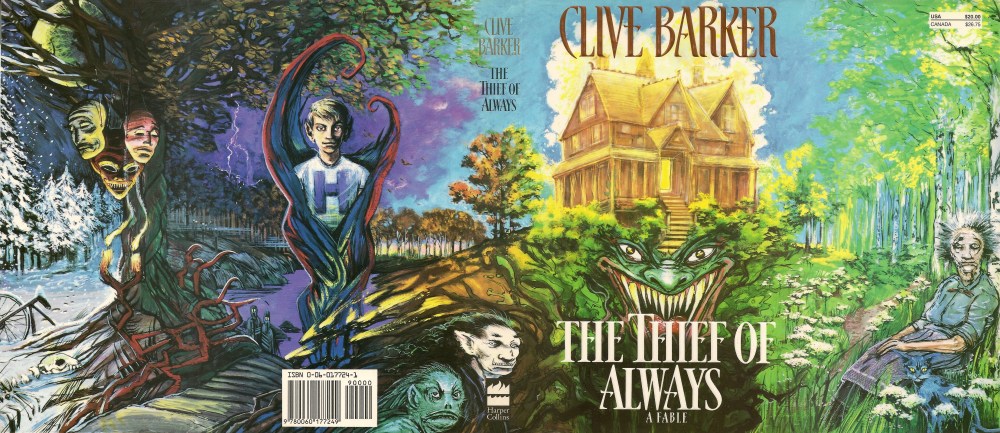
Ten-year-old Harvey Swick is bored out of his mind when a stranger named Rictus offers him a way out: Holiday House, a place where every season of the year -- Christmas, Halloween, summer -- arrives in a single glorious day, one after another. Once inside, Harvey meets fellow children Wendell and Lulu, the elderly caretaker Mrs. Griffin and her cats, and settles into a routine of enchantment that starts to feel too perfect. Their host, the mysterious Mr. Hood, never appears, rumors about a figure called Carna keep surfacing, and something in the nearby lake is very wrong. One of Clive Barker's best-known standalone books, written for younger readers.
- Eternal Champion
series6 books1962
part of Moorcock's Multiverse
similar byfantasysecondary world+1 more
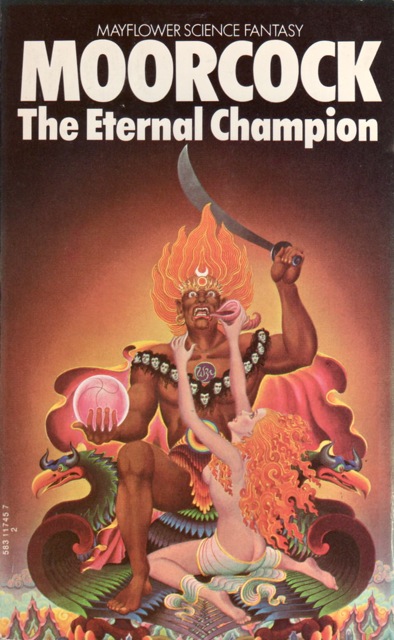
The Eternal Champion introduces Erekosë, a modern man drawn out of his own life to become a warrior fated to fight across many worlds and identities — the seed of Michael Moorcock's whole multiverse concept, in which the same doomed hero recurs under different names. First published as a 1962 novella and expanded to a novel in 1970, it heads a trilogy completed by Phoenix in Obsidian and The Dragon in the Sword; within the wider moorcocks-multiverse this is the sequence that names and anchors the Eternal Champion idea itself.
- Ambergris
series20 books1996
similar byfantasysecondary world+1 more
Ambergris is the fictional, fungus-ridden city Jeff VanderMeer uses as the throughline for a loosely connected cycle of increasingly strange fiction, beginning with the linked stories of City of Saints and Madmen. Shriek: An Afterword recasts the city's history through a historian's biography of her artist brother's disappearance into its underground; Finch turns to a hardboiled detective investigating a murder after the city's balance of power has shifted. Each book changes form and narrator, using the setting itself as the connective tissue rather than a continuing plot.
- Lud-in-the-Mist
Hope Mirrleesstandalone novel1926
similar byeeriefantasysecondary world
Lud-in-the-Mist (1926) is the third and final novel by the British writer Hope Mirrlees. It continues the author's exploration of the themes of Life and Art, by a method already described in the preface of her first novel, Madeleine: One of Love's Jansenists (1919): "to turn from time to time upon the action the fantastic limelight of eternity, with a sudden effect of unreality and the hint of a world within a world".
- Lilith
George MacDonaldstandalone novel1895
similar byeeriefantasy
Lilith: A Romance is a fantasy novel by Scottish writer George MacDonald, first published in 1895. It was reprinted in paperback by Ballantine Books as the fifth volume of the Ballantine Adult Fantasy series in September 1969.
- Tales of the Flat Earth
series14 books1978
completed
similar byfantasysecondary world+1 more
Tales from the Flat Earth is a fantasy series by British writer Tanith Lee. The novels take inspiration from One Thousand and One Nights and are similarly structured as interconnected stories. The series has been well received, and Death's Master, the second book in the series, won the British Fantasy Award for Best Novel in 1980.
- The Iron Dragon's Daughter
series3 books1993
similar by+3 more
The Iron Dragon's Daughter follows Jane, a human changeling enslaved in a factory that builds part-mechanical, part-magical dragons used as war machines, in a Faerie that runs on industrial-age technology as much as spellcraft. Michael Swanwick wrote it as a deliberately recursive, spiral narrative rather than a straight line, and returned to the same colliding fantasy-industrial world, though not the same plot, in The Dragons of Babel and The Iron Dragon's Mother. The three books share a setting and sensibility more than a continuing story.
- Viriconium
series14 books1971
similar byeeriefantasysecondary world+1 more
Viriconium is a series of novels and stories written by English author M. John Harrison between 1971 and 1984, set in and around the fictional city of the same name.
- Mythago Wood
series7 books1984
completed
similar byeeriefantasy
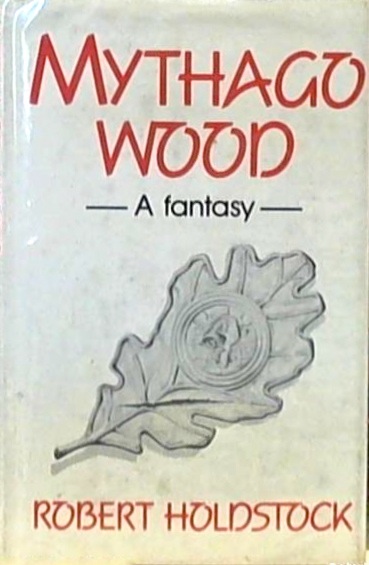
Robert Holdstock's Mythago Wood is set around Ryhope Wood, a small patch of ancient British woodland that is somehow far larger on the inside, generating 'mythagos' -- physical embodiments of myth and legend drawn from visitors' own collective unconscious. The first novel follows Stephen Huxley investigating his family's obsession with the wood after his father's death; Holdstock continued the cycle across further novels and stories exploring different characters and eras. It blends fantasy with psychology and British folklore rather than a conventional quest structure.
- Dream Cycle
series26 books1919
similar byeerie+1 more
The Dream Cycle is a series of short stories and novellas by author H. P. Lovecraft (1890–1937). Written between 1918 and 1932, they are about the "Dreamlands", a vast alternate dimension that can only be entered via dreams. The Dreamlands are described as lying deeper than space, matter and time, and are a "limitless vacua beyond all thought and entity".
- Tales from the Sinister City
series4 books2007
similar byfantasysecondary worldmiddle grade+1 more
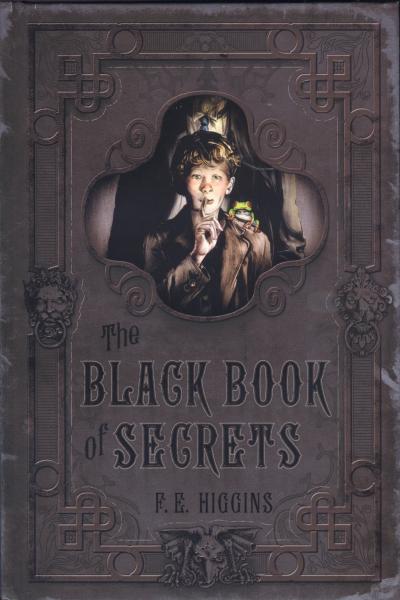
F. E. Higgins's four Sinister City novels, opening with the Bisto Honour-winning The Black Book of Secrets, follow a rotating cast of apprentices, runaways, and pawnbrokers through a fog-bound, Victorian-flavored world built on secrecy and betrayal. Each book stands as its own dark, fairy-tale-style mystery rather than continuing a single plot, unified by setting and tone more than by recurring characters. Higgins, an Irish children's author, writes in a tradition closer to gothic fable than epic fantasy.
- The Wild Magic
series3 books2018
similar byfantasysecondary worldmiddle grade
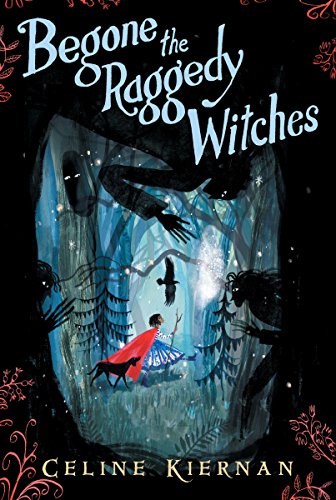
Celine Kiernan's The Wild Magic trilogy opens with Begone the Raggedy Witches, a children's fantasy novel about witches, and continues across The Little Grey Girl and The Promise Witch.
- Kane
series25 books1970
completed
similar byfantasysecondary world+1 more
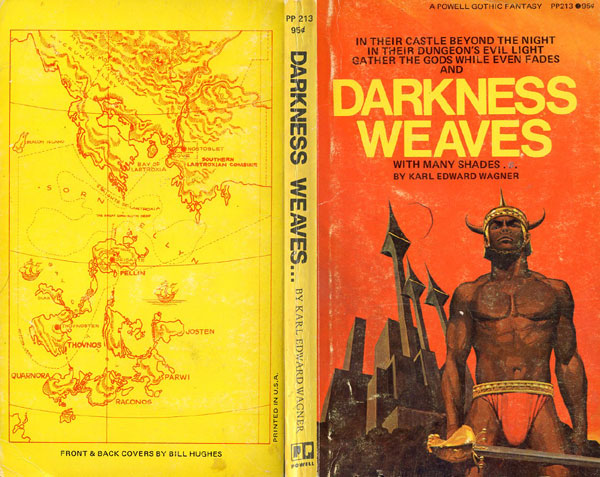
Kane is a fictional character created by American author Karl Edward Wagner, who is the protagonist of three novels and about 20 short stories published between 1970 and 1985. Most Kane tales are sword and sorcery with strong elements of gothic horror and set in a grim, pre-medieval world which is nonetheless ancient and rich in history. In some of Wagner's later stories, Kane appears in the present day—for example, as a drug dealer in "Lacunae" and as a somewhat suspect publishing magnate in "At First Just Ghostly".
- Dilvish
series13 books1965
completed
similar byfantasysecondary world
Centuries ago, the half-elf warrior Dilvish tried to stop a dark sorcerer named Jelerak from completing a terrible ritual, and paid for it by being turned to stone and having his soul cast into Hell. Roger Zelazny's Dilvish the Damned stories bring him back when the people he once protected need him again, reuniting him with his strange metal steed Black for a string of sword-and-sorcery adventures built around his long-delayed vengeance against Jelerak. The tales run as short, episodic quests rather than one continuous plot.