Loreful
HomeDiscover
Search series, authors…⌘K
Loreful

Reading orders for SF/F series and shared universes — with your place kept in every one.

Explore

UniversesSeriesWorksAuthorsAtlas

Help

FAQAboutSite map

Account & legal

Sign inCreate accountPrivacyTerms

Data

Built on ISFDB, Wikipedia, Wikidata and Open Library. Curated reading orders carry their reasoning on the page; the rest follow publication order. Data sources & licenses

© Loreful · data: ISFDB · CC BY

More like Ghostspeaker

anchored on:mystery & detective

but

Mood

The mood the book leaves you in.

  • The reading experience is propelled by journeys, exploration, and physical risk; excitement and forward momentum dominate over dread or introspection.
  • Joy and loss are deliberately mixed; the resolution grants characters something real while taking something else away, leaving warmth and sorrow together.
  • The book demands work from the reader — dense prose, difficult structure, unfamiliar ideas, or morally uncomfortable material — as part of its intended effect.
  • Grim events, cruelty, or despair dominate the atmosphere, and the book does not soften them with comfort or comic relief.
  • The atmosphere is quietly unsettling — wrongness, unease, and the uncanny pervade the book without necessarily escalating into overt horror.
  • The book is built to move the reader; character feeling is foregrounded and major scenes aim at a strong emotional response.
  • Humor is a primary aim and the prose plays for laughs — comic situations, wit, or dialogue produce sustained comedy, not occasional levity.
  • The book insists that things can improve; effort and decency are shown to matter, and the arc bends toward better outcomes even through hardship.
  • The book teaches as it goes — real facts, history, science, or craft are conveyed in enough depth that learning is part of the reading experience.
  • The book is designed to uplift and motivate, presenting perseverance or achievement in a way that invites the reader to aspire or act.
  • The overall register is cheerful and easygoing; stakes are kept gentle and the book avoids dwelling on pain or dread.
  • Withheld information drives the experience; the book sustains enigmas and secrets the reader wants resolved, whatever its genre.
  • The book is contemplative and inward-looking, giving more weight to thought, memory, and meaning than to external events.
  • The book works as comfort reading — low tension, a soothing pace, and an atmosphere the reader can unwind in.
  • Grief, loss, or melancholy set the dominant register, and the book lets sorrow stand rather than resolving it into comfort.
  • Sustained suspense is the point; the book keeps the reader braced for what happens next through danger, pressure, or impending revelation.
  • Playful invention and charm define the register — fanciful conceits, light absurdity, and a narration that delights in its own oddity.

About

What the story runs on.

  • Stories centered on witches and the practice of witchcraft — covens, hedge magic, familiars, and the witch's place in her community.
  • Stories structured as a quest — a journey undertaken to find, deliver, or destroy something of great import.
  • Stories in which staying alive against nature, catastrophe, or scarcity is the central problem.
  • Stories of lovers kept apart by law, family, faith, or station, where the obstacle to love is the plot.
  • Stories in which a friendship — its making, testing, or loss — is the emotional center.
  • Stories of growing up — a young protagonist crossing from childhood into adult knowledge and responsibility.
  • Stories about who a character truly is — self-discovery, doubled lives, and the search for a self.
  • Stories about mourning — living through the death of a loved one and what loss does to the survivors.
  • Stories in which a buried family truth — hidden parentage, crimes, or shames — surfaces and reorders the present.
  • Stories driven by maneuvering for power — factions, conspiracies, and statecraft conducted in shadow.
  • Stories in which war itself is the subject — combat, occupation, and what warfare does to soldiers and civilians.
  • Stories organized around investigating a killing — the case, the clues, and the pursuit of the killer, in any genre's clothing.

Shelf

Where it sits in the library.

    • Fiction built on magic or other supernatural elements that have no scientific explanation.
    • Secondary-world fantasy at large scale, where the fate of nations or the world turns on the protagonists' struggle.
    • Fantasy set in a recognizably modern city or contemporary world where the supernatural intrudes on everyday life.
    • Fantasy that blends in horror's atmosphere and imagery, keeping a fantastical frame around grim or frightening material.
    • Action-driven fantasy following warriors or rogues with personal stakes against sorcerous threats, rather than world-spanning conflicts.
    • Fantasy set in a real historical period or a close analogue of one, with magic woven into the era.
    • Fantasy in which protagonists cross from the ordinary world into another world through a portal or similar passage.
    • Fiction that retells or reworks a traditional fairy tale in a new form or setting.
    • Fantasy drawing directly on myths, legends, and folklore, retelling them or building on their figures and logic.
    • Fantasy of ghosts, vampires, shapeshifters, psychics, and similar phenomena, usually set in an otherwise ordinary world.
    • Fiction mixing science-fictional trappings with overtly magical or impossible elements in one setting.
    • Low-stakes fantasy emphasizing comfort, community, and everyday pleasures over conflict and peril.
    • Speculative fiction of pervasive moral ambiguity, violence, and cynicism that rejects heroic conventions — fantasy and SF alike.
      • Fiction that extrapolates from science and technology — future societies, space travel, or speculative inventions — within at least nominally natural laws.
      • Science fiction of interstellar scope — starships, galactic polities, and adventure across star systems.
      • Science fiction committed to scientific rigor, where technical plausibility constrains the story.
      • Science fiction centered on armed forces and warfare, told largely from a military point of view.
      • Science fiction of networked, corporate-dominated near futures, pairing high technology with social decay.
      • Science fiction styled on nineteenth-century steam-powered technology, often in a Victorian or pseudo-Victorian setting.
      • Fiction depicting an oppressive or catastrophic society, presented as a warning.
      • Fiction set after civilization's collapse, following survivors in the ruins of the old world.
      • Fiction in which characters move between past and future, and the mechanics or consequences of that travel drive the plot.
      • Fiction exploring a world where a historical event went differently and history diverged from ours.
      • Science fiction about humanity's first encounter and communication with an alien intelligence.
      • Science fiction in which extraterrestrial forces attack or occupy Earth and humanity resists.
      • Fiction whose primary aim is to frighten or unsettle the reader through dread, menace, or the monstrous.
      • Horror of vast, indifferent, incomprehensible entities before which humanity is insignificant, in the Lovecraft tradition.
      • Horror of decaying houses, buried family secrets, and oppressive atmosphere in the Gothic literary tradition.
      • Horror centered on hauntings and the returning dead.
      • Horror located in the mind — paranoia, obsession, and unreliable perception rather than external monsters.
      • Horror built around the reanimated dead and survival amid their outbreaks.
      • Horror defined by explicit, transgressive gore that refuses to cut away from violence.
      • Speculative fiction of the strange and uncanny that resists both natural explanation and standard genre categories.
      • Fiction organized around solving a crime or puzzle, typically following an investigator toward the identification of a culprit.
      • A puzzle-first mystery that lays out clues so the culprit's identity can be deduced before the reveal.
      • Crime fiction of moral ambiguity, fatalism, and hard-edged style, set among the corrupt and the doomed.
      • A mystery following the realistic routines of police work — forensics, interviews, and case-building.
      • A gentle mystery with an amateur sleuth, a small community, and violence kept off the page.
      • A mystery set in a past era, where the investigation works within that period's methods and society.
      • Fast-paced fiction driven by imminent danger, pursuit, or high-stakes conspiracy, built to sustain tension.
      • A thriller of espionage — agents, tradecraft, and intelligence services in conflict.
      • A thriller centered on lawyers and the courtroom, where litigation carries the suspense.
      • A thriller driven by detailed contemporary or near-future technology, often military or scientific.
      • A thriller whose tension comes from mental states and manipulation between characters rather than external action.
      • Fiction whose central plot is a romantic relationship and its development toward an emotionally satisfying resolution.
      • Romance in which one or both partners are supernatural beings, blending fantasy elements into the love story.
      • A fantasy-romance hybrid in which the romantic arc and the fantasy plot carry equal weight.
      • Romance set in a past era, with courtship shaped by the period's society and manners.
      • Romance set in the present day, without supernatural or historical elements.
      • Fiction set in a real past period, where the historical setting materially shapes characters and events.
        • General and literary fiction emphasizing prose style, character interiority, or formal ambition over genre plot conventions.
        • Fiction in a realistic world where magical events occur and are treated as ordinary, in the tradition of Latin American literature.
        • Fiction that ridicules people, institutions, or society in order to criticize them.
        • Fiction of dreamlike, irrational imagery and logic that breaks from realistic representation.
        • Fiction that plays with narrative convention through metafiction, fragmentation, and self-reference.
        • Fiction propelled by journeys, exploration, and physical peril, where action and survival carry the plot.
        • Adventure fiction of ships and seafaring — naval engagements, voyages, and life at sea.
        • Fiction of the American frontier West — gunmen, ranchers, and lawmen, typically in the late nineteenth century.
        • Fiction centered on soldiers, campaigns, and the experience of warfare, historical or imagined.
          • Fiction written primarily to amuse, using comedic situations, wit, or parody as its organizing principle.
            • Multi-generational fiction following a family or dynasty across decades, with inheritance and kinship as the through-line.
              • Fiction whose world runs on explicit game mechanics — levels, stats, and skills that characters can see and exploit.
                • Fiction about costumed or superpowered heroes and their conflicts with comparable villains.

                Practical

                How long a commitment, whether it stands alone, and whether it has finished.

                Tap a chip to ask for it · tap again to rule it out · once more to clear. Numbers show what would be left.

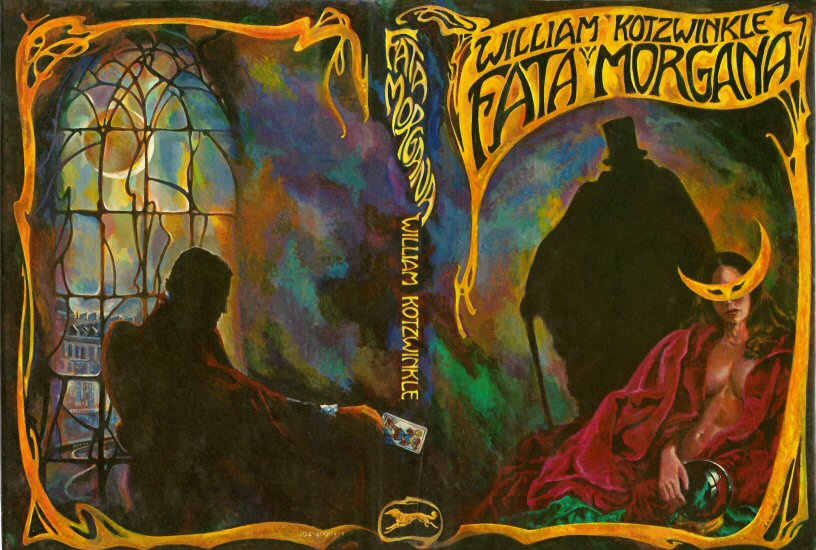
                • Cover of Fata Morgana
                  Fata Morgana

                  William Kotzwinkle · standalone novel · 1977

                  similar bymurder investigationeurope19th centurymystery & detectiveeeriemysterious+1 more

                  From the flaps of the Knopf first edition: "In Fata Morgana a celebrated novelist turns conjurer to bring us a supremely theatrical magic show - a rich exotic entertainment of crime, treble-trickery, and legerdermain, with Europe as its stage and the golden leaders of the Uppercrust and the Underworld as its players. The time and place are Paris, 1861 - the extravagant capital of Louis Napoleon and his Empress Eugenie, the gaudy, blatant public arena of Great Whores and fabulous charlatans; the treacherous private labyrinth of Police Inspector Paul Picard and the human prey he stalks. Picard is a hunter of the purest instincts, with an appetite for the ladies, a taste for lemon tarts, and a policeman's nose for hard realities. As the book opens he is on his way to the Opera, for music and murder: among the guests is as elegant a killer as ever sliced his way through Parisian high society, and on his arm is the young woman he means to decapitate tonight. A strange encounter with them precipitates Picard into a new and (apparently) trivial assignment - a case that is fated to disrupt and then transform, irrevocably, his life. At first it seems routine: a man - Ric Lazare - has recently arrived in Paris and in a short time has captured the jaded attention and the favors of the entire city. His aura of opulence, his bewitching wife, Rene, and, above all, his unearthly fortune-telling machine have won him entree to the salons (and the bank vaults) of the most dazzling leaders of society, including, it is whispered, the Emperor himself. But, who - and what - is Lazare? Is he a crook? A master of illusions? A real magician? Or - more terrible - a reincarnation from an Older World? To find the answer, Picard must follow the thread of the man's past. His quest takes him from Paris to Vienna, Nuremberg, Budapest, and on to the dark, menacing valleys and steppes of eastern Hungary, uncovering a trail of deceit and violent death: a fabled toy maker driven to destroy himself and a lifetime's priceless creations... a man ruthlessly killed over a dice game... a beautiful woman purchased at auction, then stolen away... the sudden death of a priest. Beset by intimations of his own mortality, by a sense of inexplicable entrapment in a malign world of mechanical and deadly playthings, by a slowly suffocating conviction that he is undertaking a journey he has made before, Picard, caught up in the quickening pace, returns to Paris - and to a terrifying confrontation with his quarry and his own destiny."

                • Cover of Sally Lockhart
                  Sally Lockhart

                  series · 4 books · 1985

                  similar bymurder investigation19th centurymystery & detective+2 more

                  Philip Pullman's Sally Lockhart quartet follows a resourceful, unconventional heroine navigating Victorian London - a sharpshooting, mathematically gifted young orphan who builds an improbable career as a financial consultant against the era's expectations for women. The Ruby in the Smoke opens with Sally investigating her father's death and a mysterious jewel; the following novels widen out into fraud, opium-trade crime, and international intrigue, tracking Sally's evolving relationships, including with the journalist Daniel Goldberg, across four Victorian-set mysteries.

                • Cover of The Haunted Hotel
                  The Haunted Hotel

                  Wilkie Collins · standalone novel · 1878

                  similar bymurder investigationeurope19th centuryeerieghost stories

                  Lord Montbarry breaks off his engagement to Agnes Lockwood and marries the Countess Narona, with whom he lives in a Venetian palace. When he dies, Agnes Lockwood becomes suspicious of the circumstances, and goes to Venice with other family members to investigate. Staying in Montbarry's former residence, they experience a haunting.

                • Cover of Lord Darcy
                  Lord Darcy

                  series · 15 books · 1964

                  similar bymurder investigationmystery & detective+3 more

                  Lord Darcy centers on Randall Garrett's investigator of the same name, a detective working an alternate history where functional magic stands in for our world's technology. Working alongside his forensic-sorcerer partner, Darcy solves closed-room mysteries and political crimes across a run of short stories and novels. After Garrett's death, Michael Kurland continued the character with further Lord Darcy novels.

                • Cover of Carnacki
                  Carnacki

                  universe · 102 books · 1909

                  Start hereCarnacki, the Ghost-Finder · Start here

                  similar byeerieghost stories+3 more

                  The card arrives without preamble: dinner at 472 Cheyne Walk, and afterward the tale. Thomas Carnacki explains nothing until his four friends are fed and settled by the fire — then, pipe lit, he recounts the thing he has just come back from, and at the last word turns them out into the Embankment dark with a curt "Out you go!" This is the world of the Ghost-Finder: an Edwardian London where a haunting is a case to be worked, and the man who works it trusts neither the credulous nor the smug. William Hope Hodgson raised Carnacki in a slim sheaf of stories — "The Gateway of the Monster," "The Whistling Room," "The Horse of the Invisible" and their fellows, gathered in 1913 and rounded out to nine. Each is a siege: Carnacki barricades himself inside a defended circle, half medieval and half modern — chalk, garlic, water-drawn pentacles and the glass tubes of his own Electric Pentacle humming against the dark — and consults the crumbling Sigsand Manuscript for a rite that may or may not hold. A century on, other hands keep the Chelsea rooms lit: William Meikle, the team of Chico Kidd and Rick Kennett, and editors such as John Linwood Grant, Robert M. Price and Sam Gafford send him after horrors Hodgson never named. What sets the cases apart is Carnacki's refusal to decide in advance. A whistling room may prove a swindle with a trick of plumbing behind it, or a genuine intrusion of the "ab-natural" pressing at the pentacle till the light fails — and until the last page neither he nor you can say which. Begin at the source: read Hodgson's 1913 collection in its own order, "The Gateway of the Monster" first. The later homages are a loose fraternity with no fixed sequence; take them up afterward, as the dark permits.

                • Cover of Newbury & Hobbes Investigations
                  Newbury & Hobbes Investigations

                  series · 23 books · 2008

                  similar by19th centurymystery & detective+1 more

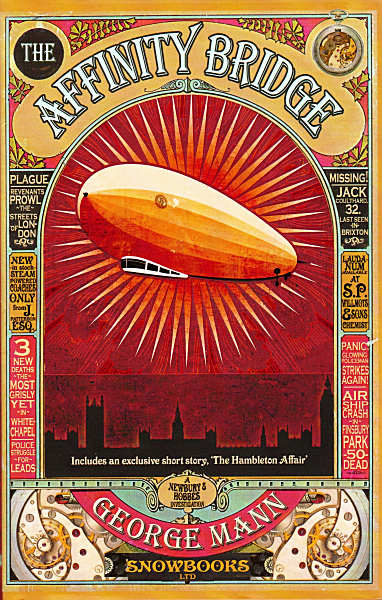
                  George Mann's steampunk series follows Sir Maurice Newbury, an occult investigator working for the crown in an alternate, more mechanized Victorian Britain, and his assistant Veronica Hobbes, as they take on cases blending supernatural threats with the era's mechanical marvels. The Affinity Bridge, the opening novel, entangles them with a crashed automaton airship and a spreading plague of the reanimated; later books deepen Newbury's struggle with addiction and Veronica's search for her institutionalized sister. It combines detective procedural with alternate-history steampunk London.

                • Cover of Dracula
                  Dracula

                  universe · 144 books · 1897

                  Start hereDracula · Start here

                  similar by+2 more

                  "Come freely. Go safely. And leave something of the happiness you bring" — so the Count greets his guest at the threshold of the Carpathians, and the great door shuts behind. Bram Stoker's Dracula (1897) is the wellspring of the modern vampire: the account of a centuries-old Transylvanian nobleman who quits his crumbling castle for the crowded lodging-houses of London, and the handful of ordinary people — a young solicitor, a doctor of the mad, a professor of stranger learning — who must piece together what he is before he makes the whole city his fold. It is told wholly in fragments: journal entries, letters, telegrams, ships' logs, phonograph cylinders, each hand recording only its own sliver of the dark. Around that single novel a whole crypt of continuations has grown, raised by many writers across a century. Fred Saberhagen's Dracula Sequence hands the Count the microphone, retelling the old events from his own wry, aggrieved lips and following him into later intrigues. Robert Lory's brisk 1970s Dracula Horror Series revives him as a reluctant weapon turned against fouler things; Peter Tremayne's trilogy reaches back along his bloodline; and further sequels, a Quincey Morris spin-off, and Dracula's Children carry the shadow onward. This is a loose shared world built upon a public-domain figure, not one governed continuity — each author remakes him as villain, antihero, or sympathetic narrator. Begin, always, with Stoker's original; the letters and the mounting dread stand entirely on their own. From there follow whichever door tempts you — Saberhagen's The Dracula Tape for the monster's own confession, Lory or Tremayne for tales that never glance back at the Borgo Pass again.

                • Cover of The Dispossessed
                  The Dispossessed

                  series · 3 books · 2013

                  similar byeurope19th century+3 more

                • Cover of The Golden
                  The Golden

                  Lucius Shepard · standalone novel · 1993

                  similar bymurder investigationeurope19th centurymystery & detectivemysterious

                  Deviating from traditional tales that feature lonely vampires who prowl through human society in search of victims or solace, this account of vampires flourishing in their own "inhuman society" takes place in the year 1860, when their centuries-long breeding experiments have finally produced "The Golden," a mortal whose blood is perfect and powerful. Mobilized by the news of this discovery, aristocratic vampire clans arrive at the looming Castle Banat, where they plan to partake of the sublime blood. To their shock, the guests find that The Golden, a young girl, has been brutally murdered and her blood already drained. The story also follows the Inspector Michael Beheim—a recent vampire—assigned to track down the killer. Recounted in full 19th-century literary style with gothic elements and foreshadowing, the inspector navigates his way through the vampire world and the crime therein.

                • Cover of Jackaby
                  Jackaby

                  series · 5 books · 2014

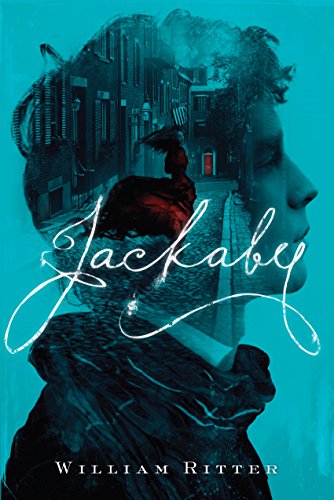
                  similar bymurder investigation19th centurymystery & detectivemysteriousfantasy+2 more

                • Cover of Rivers of London
                  Rivers of London

                  series · 32 books · 2011

                  similar bymurder investigationmystery & detectivemysterious+1 more

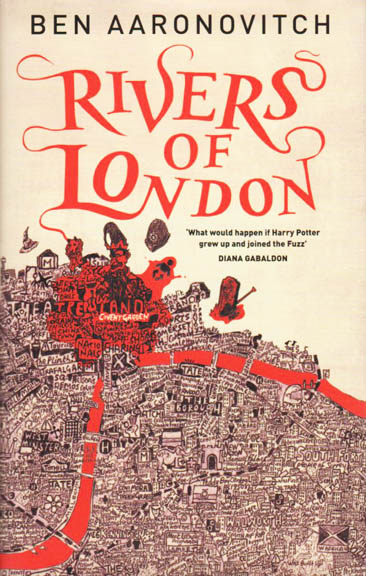
                  The Rivers of London series is a series of urban fantasy novels by English author Ben Aaronovitch, and comics/graphic novels by Aaronovitch and Andrew Cartmel, illustrated by Lee Sullivan.

                • Cover of Irene Adler
                  Irene Adler

                  series · 10 books · 1990

                  completed

                  similar bymurder investigationeurope19th centurymystery & detective+1 more

                • Cover of Chevalier Dupin
                  Chevalier Dupin

                  series · 17 books · 1841

                  similar bymurder investigationeurope19th centurymystery & detectivemysterious

                • Cover of Vurt
                  Vurt

                  series · 4 books · 1993

                  similar by+2 more

                  In Jeff Noon's alternate Manchester, an entire subculture has formed around Vurt: a hallucinogenic, colour-coded feather that plunges users into a shared alternate reality as vivid and dangerous as real life. Vurt follows Scribble and his gang, the Stash Riders, on a search for his sister, lost somewhere inside a Vurt trip gone catastrophically wrong. The sequel Pollen continues directly from its fallout, while Noon's other novels of the period, including Automated Alice and Nymphomation, circle the same fevered, drug-soaked version of the city.

                • Cover of Robert Langdon
                  Robert Langdon

                  series · 6 books · 2000

                  similar byeuropemystery & detectivemysterious+1 more

                  The Robert Langdon novel series is named after Robert Langdon, the protagonist of the novels by American author Dan Brown. Langdon is portrayed as a Harvard University professor of religious iconology and symbology, a fictional field related to the study of historic symbols, which is not methodologically connected to the actual discipline of semiotics. Brown's novels that feature the lead character also include historical themes and Christianity as motifs, and as a result have generated controversy. Brown states on his website that his novels are not anti-Christian, and that he is on a "constant spiritual journey" himself.

                • Cover of The Extraordinary Adventures of the Athena Club
                  The Extraordinary Adventures of the Athena Club

                  series · 3 books · 2017

                  similar byeurope19th century+4 more

                • Cover of Belladonna
                  Belladonna

                  series · 4 books · 2022

                  similar byfantasy+4 more

                  Belladonna is Adalyn Grace's gothic YA fantasy series opening with Belladonna (2022), followed by Foxglove and Wisteria, plus the companion novella Holly. Set in a haunted, death-adjacent version of the era, it follows an orphaned heiress entangled with Death itself as she investigates the murders and mysteries surrounding her inherited estate. It blends romance, ghost story and whodunit within one continuing story.

                • Cover of The Last Binding
                  The Last Binding

                  series · 3 books · 2021

                  similar by19th centuryfantasy+4 more

                • Cover of The City & the City
                  The City & the City

                  China Miéville · standalone novel · 2009

                  similar bymurder investigationmystery & detectiveeeriemysterious+1 more

                  Inspector Tyador Borlú must travel to Ul Qoma to search for answers in the murder of a woman found in the city of Besźel. (Source: OCLC record)

                • Cover of Emily Chambers Spirit Medium Trilogy
                  Emily Chambers Spirit Medium Trilogy

                  series · 3 books · 2012

                  similar by+3 more

                • Cover of New Amsterdam
                  New Amsterdam

                  series · 13 books · 2005

                  similar by+5 more

                • Cover of The Portrait of Mrs. Charbuque
                  The Portrait of Mrs. Charbuque

                  Jeffrey Ford · standalone novel · 2002

                  similar bymurder investigation19th centurymystery & detectiveeeriemysterious+1 more

                  "The toast of 1893 New York society, the portraitist Piero Piambo has his pick of choice assignments. Acclaimed by his peers and his "betters," he is a fixture in the city's most opulent salons, yet he fears he has sold his soul to arrive there. But then comes a commission unlike any other - one that will test Piambo's talents, his will .. and his sanity.". "The client is a Mrs. Charbuque, and the offer she makes to the artist is as bizarre and intriguing as it is financially rewarding. Piambo must paint the lady's portrait, and for the service he may name any price. However, though he may question her at length on any topic, he must never look upon his subject. And if the painting ends up a true likeness, his payment will be doubled.". "With sketchbook in hand and his "model" hidden behind an elegant screen, the artist begins his haunting descent into her life and mind. Carried by her words through a strange childhood in a world of ice - where she aided an obsessed, perhaps murderous, father in his study of the divine language of snowflakes - and across a history marked by fame and despair, desire and rage, phantasm and myth, Piambo is alternately seduced and repulsed by the story she has to tell. Yet each session leaves him more determined than ever to unwrap the enigma that is Mrs. Charbuque.". "But while he struggles to capture in oils the face of a woman he has never seen, a series of horrific and inexplicable deaths rocks the outside city. On street corners, in the alleys off the bustling shopping areas, and between the crumbling tenements, anonymous women are dying, their lifeblood flowing freely like tears from their eyes. And the deeper Piambo is drawn into Mrs. Charbuque's world, the more he begins to suspect that these terrible events, his impossible task, and his odd "benefactress" are somehow intimately connected."--BOOK JACKET.

                • Cover of Johannes Cabal
                  Johannes Cabal

                  series · 9 books · 2004

                  similar byfantasy+2 more

                  Johannes Cabal the Necromancer follows an amoral necromancer who sold his soul years earlier and must now win it back from Satan through a wager, journeying through a demonic travelling carnival to collect the hundred souls required. Jonathan L. Howard's series follows Cabal's increasingly strange and darkly comic misadventures across further novels, including Johannes Cabal the Detective and The Fear Institute.
                • Cover of Gilda Carr Tiny Mysteries
                  Gilda Carr Tiny Mysteries

                  series · 3 books · 2019

                  similar bymystery & detective+3 more