Loreful
HomeDiscover
Search series, authors…⌘K
Loreful

Reading orders for SF/F series and shared universes — with your place kept in every one.

Explore

UniversesSeriesWorksAuthorsAtlas

Help

FAQAboutSite map

Account & legal

Sign inCreate accountPrivacyTerms

Data

Built on ISFDB, Wikipedia, Wikidata and Open Library. Curated reading orders carry their reasoning on the page; the rest follow publication order. Data sources & licenses

© Loreful · data: ISFDB · CC BY

More like Glide Path

anchored on:historical fictionearly 20th centurywarbritish islesinformative

but

Mood

The mood the book leaves you in.

  • The reading experience is propelled by journeys, exploration, and physical risk; excitement and forward momentum dominate over dread or introspection.
  • Joy and loss are deliberately mixed; the resolution grants characters something real while taking something else away, leaving warmth and sorrow together.
  • The book demands work from the reader — dense prose, difficult structure, unfamiliar ideas, or morally uncomfortable material — as part of its intended effect.
  • Grim events, cruelty, or despair dominate the atmosphere, and the book does not soften them with comfort or comic relief.
  • The atmosphere is quietly unsettling — wrongness, unease, and the uncanny pervade the book without necessarily escalating into overt horror.
  • The book is built to move the reader; character feeling is foregrounded and major scenes aim at a strong emotional response.
  • Humor is a primary aim and the prose plays for laughs — comic situations, wit, or dialogue produce sustained comedy, not occasional levity.
  • The book insists that things can improve; effort and decency are shown to matter, and the arc bends toward better outcomes even through hardship.
  • The book teaches as it goes — real facts, history, science, or craft are conveyed in enough depth that learning is part of the reading experience.
  • The book is designed to uplift and motivate, presenting perseverance or achievement in a way that invites the reader to aspire or act.
  • The overall register is cheerful and easygoing; stakes are kept gentle and the book avoids dwelling on pain or dread.
  • Withheld information drives the experience; the book sustains enigmas and secrets the reader wants resolved, whatever its genre.
  • The book is contemplative and inward-looking, giving more weight to thought, memory, and meaning than to external events.
  • The book works as comfort reading — low tension, a soothing pace, and an atmosphere the reader can unwind in.
  • Grief, loss, or melancholy set the dominant register, and the book lets sorrow stand rather than resolving it into comfort.
  • Sustained suspense is the point; the book keeps the reader braced for what happens next through danger, pressure, or impending revelation.
  • Playful invention and charm define the register — fanciful conceits, light absurdity, and a narration that delights in its own oddity.

About

What the story runs on.

  • Stories in which extraterrestrial beings are central — as characters, cultures, or the object of the plot.
  • Stories about minds with paranormal abilities — telepathy, telekinesis, precognition, empathy — and how societies handle those who have them.
  • Stories structured as a quest — a journey undertaken to find, deliver, or destroy something of great import.
  • Stories in which staying alive against nature, catastrophe, or scarcity is the central problem.
  • Stories of lovers kept apart by law, family, faith, or station, where the obstacle to love is the plot.
  • Stories of growing up — a young protagonist crossing from childhood into adult knowledge and responsibility.
  • Stories about who a character truly is — self-discovery, doubled lives, and the search for a self.
  • Stories in which a buried family truth — hidden parentage, crimes, or shames — surfaces and reorders the present.
  • Stories driven by maneuvering for power — factions, conspiracies, and statecraft conducted in shadow.
  • Stories about rising against rulers — uprisings, resistance movements, and revolutions and their aftermaths.
  • Stories in which war itself is the subject — combat, occupation, and what warfare does to soldiers and civilians.
  • Stories organized around investigating a killing — the case, the clues, and the pursuit of the killer, in any genre's clothing.

Shelf

Where it sits in the library.

    • Fiction built on magic or other supernatural elements that have no scientific explanation.
    • Secondary-world fantasy at large scale, where the fate of nations or the world turns on the protagonists' struggle.
    • Fantasy set in a recognizably modern city or contemporary world where the supernatural intrudes on everyday life.
    • Fantasy that blends in horror's atmosphere and imagery, keeping a fantastical frame around grim or frightening material.
    • Action-driven fantasy following warriors or rogues with personal stakes against sorcerous threats, rather than world-spanning conflicts.
    • Fantasy set in a real historical period or a close analogue of one, with magic woven into the era.
    • Fantasy in which protagonists cross from the ordinary world into another world through a portal or similar passage.
    • Fiction that retells or reworks a traditional fairy tale in a new form or setting.
    • Fantasy drawing directly on myths, legends, and folklore, retelling them or building on their figures and logic.
    • Fantasy of ghosts, vampires, shapeshifters, psychics, and similar phenomena, usually set in an otherwise ordinary world.
    • Fiction mixing science-fictional trappings with overtly magical or impossible elements in one setting.
    • Low-stakes fantasy emphasizing comfort, community, and everyday pleasures over conflict and peril.
    • Speculative fiction of pervasive moral ambiguity, violence, and cynicism that rejects heroic conventions — fantasy and SF alike.
      • Fiction that extrapolates from science and technology — future societies, space travel, or speculative inventions — within at least nominally natural laws.
      • Science fiction of interstellar scope — starships, galactic polities, and adventure across star systems.
      • Science fiction committed to scientific rigor, where technical plausibility constrains the story.
      • Science fiction centered on armed forces and warfare, told largely from a military point of view.
      • Science fiction of networked, corporate-dominated near futures, pairing high technology with social decay.
      • Science fiction styled on nineteenth-century steam-powered technology, often in a Victorian or pseudo-Victorian setting.
      • Fiction depicting an oppressive or catastrophic society, presented as a warning.
      • Fiction set after civilization's collapse, following survivors in the ruins of the old world.
      • Fiction in which characters move between past and future, and the mechanics or consequences of that travel drive the plot.
      • Fiction exploring a world where a historical event went differently and history diverged from ours.
      • Science fiction about humanity's first encounter and communication with an alien intelligence.
      • Science fiction in which extraterrestrial forces attack or occupy Earth and humanity resists.
      • Fiction whose primary aim is to frighten or unsettle the reader through dread, menace, or the monstrous.
      • Horror of vast, indifferent, incomprehensible entities before which humanity is insignificant, in the Lovecraft tradition.
      • Horror of decaying houses, buried family secrets, and oppressive atmosphere in the Gothic literary tradition.
      • Horror centered on hauntings and the returning dead.
      • Horror located in the mind — paranoia, obsession, and unreliable perception rather than external monsters.
      • Horror built around the reanimated dead and survival amid their outbreaks.
      • Horror defined by explicit, transgressive gore that refuses to cut away from violence.
      • Speculative fiction of the strange and uncanny that resists both natural explanation and standard genre categories.
      • Fiction organized around solving a crime or puzzle, typically following an investigator toward the identification of a culprit.
      • A puzzle-first mystery that lays out clues so the culprit's identity can be deduced before the reveal.
      • Crime fiction of moral ambiguity, fatalism, and hard-edged style, set among the corrupt and the doomed.
      • A mystery following the realistic routines of police work — forensics, interviews, and case-building.
      • A gentle mystery with an amateur sleuth, a small community, and violence kept off the page.
      • A mystery set in a past era, where the investigation works within that period's methods and society.
      • Fast-paced fiction driven by imminent danger, pursuit, or high-stakes conspiracy, built to sustain tension.
      • A thriller of espionage — agents, tradecraft, and intelligence services in conflict.
      • A thriller centered on lawyers and the courtroom, where litigation carries the suspense.
      • A thriller driven by detailed contemporary or near-future technology, often military or scientific.
      • A thriller whose tension comes from mental states and manipulation between characters rather than external action.
      • Fiction whose central plot is a romantic relationship and its development toward an emotionally satisfying resolution.
      • Romance in which one or both partners are supernatural beings, blending fantasy elements into the love story.
      • A fantasy-romance hybrid in which the romantic arc and the fantasy plot carry equal weight.
      • Romance set in a past era, with courtship shaped by the period's society and manners.
      • Romance set in the present day, without supernatural or historical elements.
      • Fiction set in a real past period, where the historical setting materially shapes characters and events.
        • General and literary fiction emphasizing prose style, character interiority, or formal ambition over genre plot conventions.
        • Fiction in a realistic world where magical events occur and are treated as ordinary, in the tradition of Latin American literature.
        • Fiction that ridicules people, institutions, or society in order to criticize them.
        • Fiction of dreamlike, irrational imagery and logic that breaks from realistic representation.
        • Fiction that plays with narrative convention through metafiction, fragmentation, and self-reference.
        • Fiction propelled by journeys, exploration, and physical peril, where action and survival carry the plot.
        • Adventure fiction of ships and seafaring — naval engagements, voyages, and life at sea.
        • Fiction of the American frontier West — gunmen, ranchers, and lawmen, typically in the late nineteenth century.
        • Fiction centered on soldiers, campaigns, and the experience of warfare, historical or imagined.
          • Fiction written primarily to amuse, using comedic situations, wit, or parody as its organizing principle.
            • Multi-generational fiction following a family or dynasty across decades, with inheritance and kinship as the through-line.
              • Fiction whose world runs on explicit game mechanics — levels, stats, and skills that characters can see and exploit.
                • Fiction about costumed or superpowered heroes and their conflicts with comparable villains.

                Practical

                How long a commitment, whether it stands alone, and whether it has finished.

                Tap a chip to ask for it · tap again to rule it out · once more to clear. Numbers show what would be left.

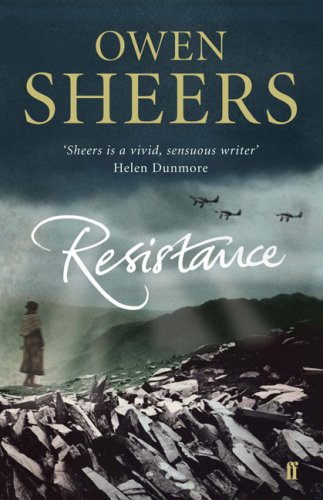
                • Cover of Resistance
                  Resistance

                  Owen Sheers · standalone novel · 2007

                  similar bywarhistorical fictionearly 20th centurybritish islestense

                  Resistance is a 2007 alternative history novel by Welsh poet and author Owen Sheers. The plot centers on the inhabitants of a valley near Abergavenny in Wales in 1944–45, shortly after the failure of Operation Overlord and a successful German counterinvasion of Great Britain. A group of German Wehrmacht soldiers stay there after men leave to serve in the covert British Resistance. The novel follows abandoned farmer's wife Sarah Lewis and German commanding officer Albrecht Wolfram, as they form an unlikely relationship in spite of their backgrounds and political standings.

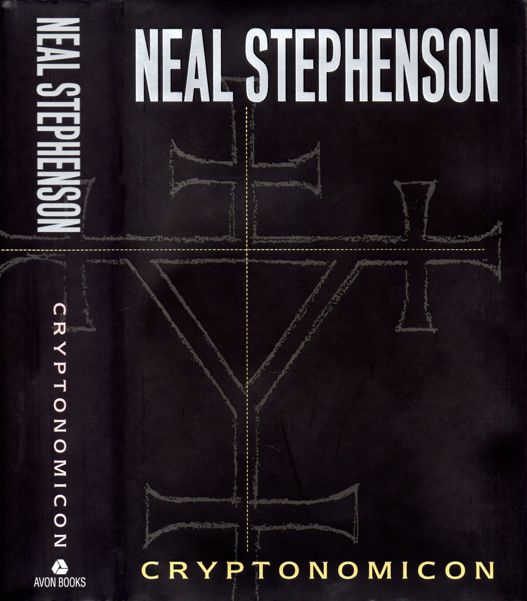
                • Cover of Cryptonomicon
                  Cryptonomicon

                  Neal Stephenson · standalone novel · 1999

                  similar bywarhistorical fictioninformativeearly 20th century

                  There are two main timelines in this novel. This first is during World War II, and follows the lives of three cryptologists: Lawrence Pritchard Waterhouse (American), Alan Turing (British), and Rudolf von Hacklheber (German), as well as the strange exploits of Detachment 2702. The second timeline takes place during the present, filled with the offspring of the main characters in the first timeline. They are preoccupied with the construction of a data haven.

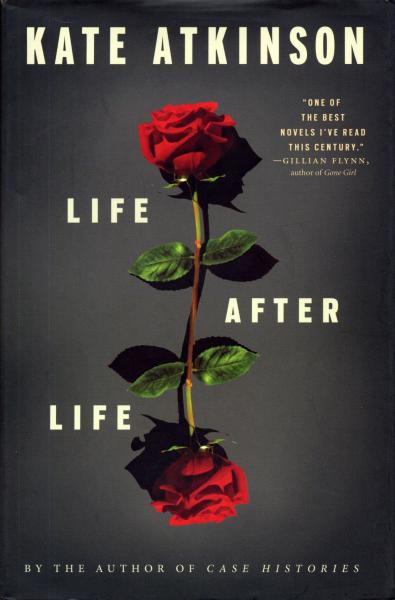
                • Cover of Todd Family
                  Todd Family

                  series · 2 books · 2013

                  similar bywarhistorical fictionearly 20th centurybritish isles

                  Kate Atkinson's Life After Life gives Ursula Todd, born on a snowy night in 1910, a strange gift: whenever she dies, she's born again into a slightly altered version of the same life, gradually piecing together enough intuition across her many deaths to try to change the course of the twentieth century's worst events. The companion novel A God in Ruins turns to Ursula's brother Teddy, a bomber pilot, following his one, single life forward from the war through old age. The two books share a family and a set of preoccupations -- memory, war, chance -- without forming a conventional sequential series.

                • Cover of Dawn of Fear
                  Dawn of Fear

                  Susan Cooper · standalone novel · 1970

                  similar bywarhistorical fictionearly 20th centurybritish isles

                  "A study not a story, really, demonstrating--decisively--just what the title says." --Kirkus Reviews 1970-09-01 "Dawn of Fear (1970) is a[n] effective though nonfantastic Young Adult novel set during World War Two." --SFE3

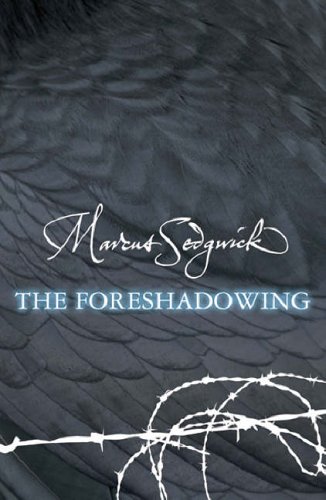
                • Cover of The Foreshadowing
                  The Foreshadowing

                  Marcus Sedgwick · standalone novel · 2005

                  similar bywarhistorical fictionearly 20th centurybritish isles

                  The Foreshadowing is a historical fiction novel by Marcus Sedgwick published in 2005. It takes place during the beginning of World War I, following a 17-year-old British girl named Sasha who has premonitions of death.

                • Cover of Gravity's Rainbow
                  Gravity's Rainbow

                  Thomas Pynchon · standalone novel · 1973

                  similar bywarearly 20th centurybritish isles+1 more

                  Gravity's Rainbow is a 1973 postmodern novel by Thomas Pynchon. The narrative is set primarily in Europe at the end of World War II and centers on the design, production and dispatch of V-2 rockets by the German military. In particular, it features the quest undertaken by several characters to uncover the secret of a mysterious device, the Schwarzgerät, which is slated to be installed in a rocket with the serial number "00000".

                • Cover of The Beardless Warriors
                  The Beardless Warriors

                  Richard Matheson · standalone novel · 1960

                  similar bywarhistorical fictionearly 20th century+1 more

                  The Beardless Warriors is a 1960 World War II novel by American writer Richard Matheson. It was based on his experiences as a young infantryman in the 87th Division in France and Germany.

                • Cover of The Warlord Chronicles
                  The Warlord Chronicles

                  series · 3 books · 1995

                  similar bywarhistorical fictionbritish isles+1 more

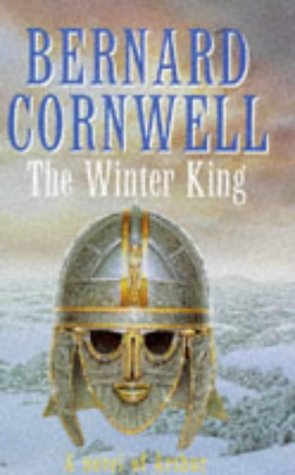
                  The Warlord Chronicles or The Warlord Trilogy is a series of three novels about Arthurian Britain written by Bernard Cornwell. The story is written as a mixture of historical fiction and Arthurian legend. The books were originally published between 1995 and 1997 by Penguin and Michael Joseph in the United Kingdom and by St. Martin's Press in the United States. It has been adapted for television as The Winter King.

                • Cover of The Book Thief
                  The Book Thief

                  Markus Zusak · standalone novel · 2005

                  similar bywarhistorical fictionearly 20th century

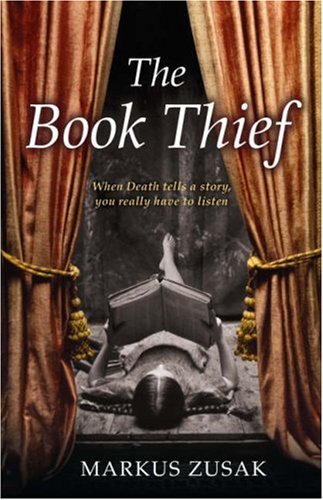
                  The Book Thief is a historical fiction novel by the Australian author Markus Zusak, set in Nazi Germany during World War II. Published in 2005, The Book Thief became an international bestseller and was translated into 63 languages and sold 17 million copies. It was adapted into the 2013 feature film, The Book Thief.

                • Cover of Black Horses for the King
                  Black Horses for the King

                  Anne McCaffrey · standalone novel · 1996

                  similar bywarhistorical fictionbritish isles

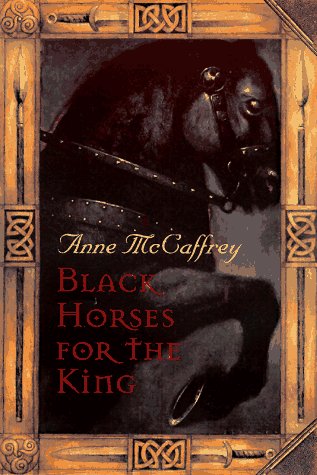
                  Galwyn, son of a Roman Celt, escapes from his tyrannical uncle and joins Lord Artos, later know as King Arthur, using his talent with languages and way with horses to help secure and care for the Libyan horses that Artos hopes to use in battle against the Saxons.

                • Cover of Lion of Ireland
                  Lion of Ireland

                  series · 2 books · 1980

                  similar bywarhistorical fictionbritish isles

                  Morgan Llywelyn's Lion of Ireland is a historical novel dramatizing the life of Brian Boru, the Irish hero and High King who unified much of medieval Ireland against Viking incursion. Pride of Lions continues into the generation after Brian's death, following the fractured politics and succession struggles his heirs faced. The pair reads as historical fiction grounded in early medieval Irish history rather than fantasy.

                • Cover of Guardians Trilogy (Jack Whyte)
                  Guardians Trilogy (Jack Whyte)

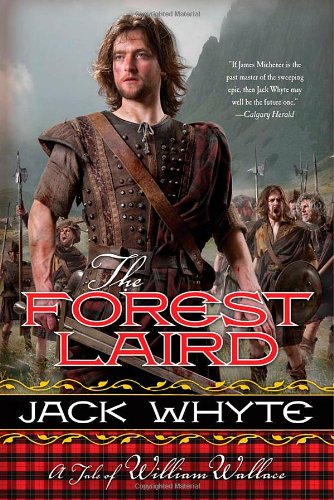
                  series · 3 books · 2010

                  completed

                  similar bywarhistorical fictionbritish isles+1 more

                • Cover of The Dalriada Trilogy
                  The Dalriada Trilogy

                  series · 3 books · 2004

                  similar bywarhistorical fictionbritish isles+1 more

                • Cover of Oxford Time Travel
                  Oxford Time Travel

                  series · 6 books · 1982

                  similar bybritish islestense+3 more

                  Connie Willis's Oxford Time Travel novels are set at a near-future Oxford University where historians travel into the past as observers, constrained by a version of history that resists any change large enough to alter real events. Doomsday Book sends a medieval historian to what should be 1320 but turns out to be the Black Death year of 1348, intercut with a present-day epidemic at Oxford; To Say Nothing of the Dog returns to the same time-travel program for a lighter, Victorian-set story with different characters. The two novels share their setting and rules rather than a directly continuing plot.

                • Cover of The Devil's Voyage
                  The Devil's Voyage

                  Jack L. Chalker · standalone novel · 1981

                  similar bywarhistorical fictionearly 20th centurytense

                  The Devil's Voyage is a historical novel by science fiction writer Jack Chalker. It describes the final voyage of the heavy cruiser USS Indianapolis, which was sunk during World War II in the Pacific by Japanese submarine action, with the loss of many of the initial survivors to sharks.

                • Cover of Boudica
                  Boudica

                  series · 4 books · 2003

                  similar bywarhistorical fictionbritish isles

                  Manda Scott's Boudica novels reimagine the Iceni queen's life and rebellion against Roman occupation, opening with Dreaming the Eagle's account of her childhood and rise among rival British tribes before following her through the war that made her legend across three further novels.

                • Cover of Collaborator
                  Collaborator

                  Murray Davies · standalone novel · 2003

                  similar bywarhistorical fictionearly 20th centurybritish isles+1 more

                  Collaborator is an alternate history novel by Murray Davies, published as a hardcover on 19 September 2003 and released in paperback in the United Kingdom and the United States in September 2004. The novel is set in a Nazi-occupied Great Britain in 1940 and 1941. It chronicles life during this period primarily through the experiences of Nick Penny, the collaborator of the novel's title.

                • Cover of Between the Wars
                  Between the Wars

                  series · 4 books · 1981

                  similar bywarhistorical fictionearly 20th century

                  The Pyat Quartet, also known as Between the Wars, is a tetralogy of historical fiction novels by English author Michael Moorcock comprising Byzantium Endures, The Laughter of Carthage, Jerusalem Commands and The Vengeance of Rome published from 1981 to 2006.

                • Cover of The Jesus Factor
                  The Jesus Factor

                  Edwin Corley · standalone novel · 1970

                  similar bywarhistorical fictionearly 20th centurytense

                  The Jesus Factor is a 1970 conspiracy theory thriller novel by Edwin Corley based on the Manhattan Project of World War II and the bombing of Hiroshima and Nagasaki. It concerns issues relating to the "arms race" and the collective guilt of those involved with the bombings.

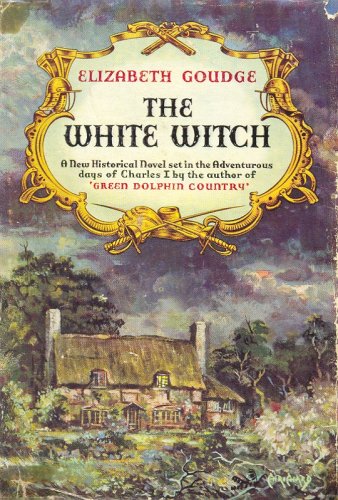
                • Cover of The White Witch
                  The White Witch

                  Elizabeth Goudge · standalone novel · 1958

                  similar bywarhistorical fictionbritish isles+1 more

                  From goodreasd.com: "Set in 17th-century England, when Cavaliers struggle with Puritans to keep the throne safe for King Charles 1st. The wise and gentle Froniga Haslewood, is caught between two worlds. Divided between her Puritan family at the Oxfordshire village's manor house and her relatives in the Gypsy community, she works using her skill in healing to help those in need. Her cousin Robert , a local squire, is gripped by the prospect of war. Following his boyhood hero, he leaves his family and travels away to fight for the Parliamentarian cause. While his wife Margaret and their twin children wait in the manor house for news about him. Left behind with her brother, Robert's daughter Jenny grows up under the shadow of conflict, until she encounters mysterious royalist Francis Leyland. While Froniga's gypsy cousins sometimes camp near her, and have befriended Yomen, who conceals a grand past, but is now a tinker and royalist spy. The women must choose between family loyalty and their own heart. As their lives entwine, the villagers struggle to stay true to their beliefs as war threatens to tear their community apart."

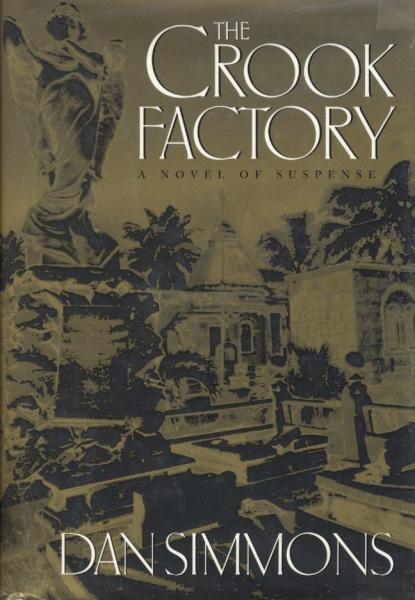
                • Cover of The Crook Factory
                  The Crook Factory

                  Dan Simmons · standalone novel · 1999

                  similar bywarhistorical fictionearly 20th centurytense

                  The Crook Factory is a thriller novel by American author Dan Simmons. The book was initially published by William Morrow on March 1, 1999. The novel tells a fictionalized version of the real life counter-espionage and spy ring, known as the Crook Factory, that was set up by Ernest Hemingway in Cuba during World War II.

                • Cover of Red Shift
                  Red Shift

                  Alan Garner · standalone novel · 1973

                  similar bywarhistorical fictionbritish isles

                  Quoting that 1978 review article by Brian Lee: Red Shift [after The Owl Service] was again about the relationship between two adolescents, but interwoven in their love story were two other strands: one about a group of Roman legionaires 'going tribal' among warring factions of the British (the parallel and the brutal language are obviously those of the Americans among the Viet Cong and the Viet Minh); the other strand is about the massacre of a village on the Welsh border during the Civil War.{{BREAK}} Undoubtedly, Red Shift is a brilliantly written and gripping book. The difficulty about it is that Garner makes no concessions to his readers (and on the book jacket he makes it clear that it is for children). It is told almost entirely in cryptic conversation with minimal clues to the identity of the speakers. He switches from strand to strand of the story without warning. The book cannot be understood and appreciated at one hasty reading. It is worth serious study, but will children persevere? In her introduction to the 1973 edition of Children's Books of the Year, critic and reviewer Elaine Moss says: Spurred on by the publication of Alan Garner's literary crossword puzzle Red Shift ... many of us asked ourselves where children's publishing should end and adult begin? For Children's Books of the Year I have drawn the line below Red Shift and excluded it ... Alan Garner, in deliberately choosing an avant-garde form, is also choosing an advanced, sophisticated audience for his book. Alan Garner himself seems to have come around to this view. This year a television adaptation of Red Shift was screened at peak viewing time with no mention of the fact that it was originally published as a children's novel. [end quotation from the review article; ellipses by Lee]

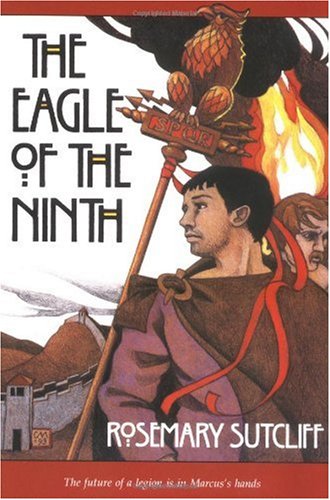
                • Cover of Marcus
                  Marcus

                  series · 4 books · 1954

                  completed

                  similar byhistorical fictionbritish isles+1 more

                  Rosemary Sutcliff's linked Roman Britain novels follow several generations of one family across centuries of the Roman occupation and its aftermath, opening with The Eagle of the Ninth, in which the young centurion Marcus Aquila sets out to recover his lost father's legion standard. Later books, including The Silver Branch and The Lantern Bearers, follow his descendants through Britain's slow slide out of the Empire.

                • Cover of Volk
                  Volk

                  Piers Anthony · standalone novel · 1996

                  similar bywarhistorical fictionearly 20th century

                  Set During World War II, Volk is the story of friendship that transcends politics and war. Lane is an American fighter pilot; Quality, an American pacifist Quaker; and Ernst, a Nazi.