Loreful
HomeDiscover
Search series, authors…⌘K
Loreful

Reading orders for SF/F series and shared universes — with your place kept in every one.

Explore

UniversesSeriesWorksAuthorsAtlas

Help

FAQAboutSite map

Account & legal

Sign inCreate accountPrivacyTerms

Data

Built on ISFDB, Wikipedia, Wikidata and Open Library. Curated reading orders carry their reasoning on the page; the rest follow publication order. Data sources & licenses

© Loreful · data: ISFDB · CC BY

More like Goa

anchored on:south asia

but

Mood

The mood the book leaves you in.

  • The reading experience is propelled by journeys, exploration, and physical risk; excitement and forward momentum dominate over dread or introspection.
  • Joy and loss are deliberately mixed; the resolution grants characters something real while taking something else away, leaving warmth and sorrow together.
  • The book demands work from the reader — dense prose, difficult structure, unfamiliar ideas, or morally uncomfortable material — as part of its intended effect.
  • Grim events, cruelty, or despair dominate the atmosphere, and the book does not soften them with comfort or comic relief.
  • The atmosphere is quietly unsettling — wrongness, unease, and the uncanny pervade the book without necessarily escalating into overt horror.
  • The book is built to move the reader; character feeling is foregrounded and major scenes aim at a strong emotional response.
  • Humor is a primary aim and the prose plays for laughs — comic situations, wit, or dialogue produce sustained comedy, not occasional levity.
  • The book insists that things can improve; effort and decency are shown to matter, and the arc bends toward better outcomes even through hardship.
  • The book teaches as it goes — real facts, history, science, or craft are conveyed in enough depth that learning is part of the reading experience.
  • The book is designed to uplift and motivate, presenting perseverance or achievement in a way that invites the reader to aspire or act.
  • The overall register is cheerful and easygoing; stakes are kept gentle and the book avoids dwelling on pain or dread.
  • Withheld information drives the experience; the book sustains enigmas and secrets the reader wants resolved, whatever its genre.
  • The book is contemplative and inward-looking, giving more weight to thought, memory, and meaning than to external events.
  • The book works as comfort reading — low tension, a soothing pace, and an atmosphere the reader can unwind in.
  • Grief, loss, or melancholy set the dominant register, and the book lets sorrow stand rather than resolving it into comfort.
  • Sustained suspense is the point; the book keeps the reader braced for what happens next through danger, pressure, or impending revelation.
  • Playful invention and charm define the register — fanciful conceits, light absurdity, and a narration that delights in its own oddity.

About

What the story runs on.

  • Stories in which extraterrestrial beings are central — as characters, cultures, or the object of the plot.
  • Stories in which gods and deities act as characters — walking the world, meddling in mortal lives, or dying.
  • Stories structured as a quest — a journey undertaken to find, deliver, or destroy something of great import.
  • Stories in which staying alive against nature, catastrophe, or scarcity is the central problem.
  • Stories of lovers kept apart by law, family, faith, or station, where the obstacle to love is the plot.
  • Stories of growing up — a young protagonist crossing from childhood into adult knowledge and responsibility.
  • Stories about who a character truly is — self-discovery, doubled lives, and the search for a self.
  • Stories about mourning — living through the death of a loved one and what loss does to the survivors.
  • Stories in which belief, doubt, and religious life are the central subject, from crises of faith to life inside a religious community.
  • Stories in which a buried family truth — hidden parentage, crimes, or shames — surfaces and reorders the present.
  • Stories driven by maneuvering for power — factions, conspiracies, and statecraft conducted in shadow.
  • Stories in which war itself is the subject — combat, occupation, and what warfare does to soldiers and civilians.

Shelf

Where it sits in the library.

    • Fiction built on magic or other supernatural elements that have no scientific explanation.
    • Secondary-world fantasy at large scale, where the fate of nations or the world turns on the protagonists' struggle.
    • Fantasy set in a recognizably modern city or contemporary world where the supernatural intrudes on everyday life.
    • Fantasy that blends in horror's atmosphere and imagery, keeping a fantastical frame around grim or frightening material.
    • Action-driven fantasy following warriors or rogues with personal stakes against sorcerous threats, rather than world-spanning conflicts.
    • Fantasy set in a real historical period or a close analogue of one, with magic woven into the era.
    • Fantasy in which protagonists cross from the ordinary world into another world through a portal or similar passage.
    • Fiction that retells or reworks a traditional fairy tale in a new form or setting.
    • Fantasy drawing directly on myths, legends, and folklore, retelling them or building on their figures and logic.
    • Fantasy of ghosts, vampires, shapeshifters, psychics, and similar phenomena, usually set in an otherwise ordinary world.
    • Fiction mixing science-fictional trappings with overtly magical or impossible elements in one setting.
    • Low-stakes fantasy emphasizing comfort, community, and everyday pleasures over conflict and peril.
    • Speculative fiction of pervasive moral ambiguity, violence, and cynicism that rejects heroic conventions — fantasy and SF alike.
      • Fiction that extrapolates from science and technology — future societies, space travel, or speculative inventions — within at least nominally natural laws.
      • Science fiction of interstellar scope — starships, galactic polities, and adventure across star systems.
      • Science fiction committed to scientific rigor, where technical plausibility constrains the story.
      • Science fiction centered on armed forces and warfare, told largely from a military point of view.
      • Science fiction of networked, corporate-dominated near futures, pairing high technology with social decay.
      • Science fiction styled on nineteenth-century steam-powered technology, often in a Victorian or pseudo-Victorian setting.
      • Fiction depicting an oppressive or catastrophic society, presented as a warning.
      • Fiction set after civilization's collapse, following survivors in the ruins of the old world.
      • Fiction in which characters move between past and future, and the mechanics or consequences of that travel drive the plot.
      • Fiction exploring a world where a historical event went differently and history diverged from ours.
      • Science fiction about humanity's first encounter and communication with an alien intelligence.
      • Science fiction in which extraterrestrial forces attack or occupy Earth and humanity resists.
      • Fiction whose primary aim is to frighten or unsettle the reader through dread, menace, or the monstrous.
      • Horror of vast, indifferent, incomprehensible entities before which humanity is insignificant, in the Lovecraft tradition.
      • Horror of decaying houses, buried family secrets, and oppressive atmosphere in the Gothic literary tradition.
      • Horror centered on hauntings and the returning dead.
      • Horror located in the mind — paranoia, obsession, and unreliable perception rather than external monsters.
      • Horror built around the reanimated dead and survival amid their outbreaks.
      • Horror defined by explicit, transgressive gore that refuses to cut away from violence.
      • Speculative fiction of the strange and uncanny that resists both natural explanation and standard genre categories.
      • Fiction organized around solving a crime or puzzle, typically following an investigator toward the identification of a culprit.
      • A puzzle-first mystery that lays out clues so the culprit's identity can be deduced before the reveal.
      • Crime fiction of moral ambiguity, fatalism, and hard-edged style, set among the corrupt and the doomed.
      • A mystery following the realistic routines of police work — forensics, interviews, and case-building.
      • A gentle mystery with an amateur sleuth, a small community, and violence kept off the page.
      • A mystery set in a past era, where the investigation works within that period's methods and society.
      • Fast-paced fiction driven by imminent danger, pursuit, or high-stakes conspiracy, built to sustain tension.
      • A thriller of espionage — agents, tradecraft, and intelligence services in conflict.
      • A thriller centered on lawyers and the courtroom, where litigation carries the suspense.
      • A thriller driven by detailed contemporary or near-future technology, often military or scientific.
      • A thriller whose tension comes from mental states and manipulation between characters rather than external action.
      • Fiction whose central plot is a romantic relationship and its development toward an emotionally satisfying resolution.
      • Romance in which one or both partners are supernatural beings, blending fantasy elements into the love story.
      • A fantasy-romance hybrid in which the romantic arc and the fantasy plot carry equal weight.
      • Romance set in a past era, with courtship shaped by the period's society and manners.
      • Romance set in the present day, without supernatural or historical elements.
      • Fiction set in a real past period, where the historical setting materially shapes characters and events.
        • General and literary fiction emphasizing prose style, character interiority, or formal ambition over genre plot conventions.
        • Fiction in a realistic world where magical events occur and are treated as ordinary, in the tradition of Latin American literature.
        • Fiction that ridicules people, institutions, or society in order to criticize them.
        • Fiction of dreamlike, irrational imagery and logic that breaks from realistic representation.
        • Fiction that plays with narrative convention through metafiction, fragmentation, and self-reference.
        • Fiction propelled by journeys, exploration, and physical peril, where action and survival carry the plot.
        • Adventure fiction of ships and seafaring — naval engagements, voyages, and life at sea.
        • Fiction of the American frontier West — gunmen, ranchers, and lawmen, typically in the late nineteenth century.
        • Fiction centered on soldiers, campaigns, and the experience of warfare, historical or imagined.
          • Fiction written primarily to amuse, using comedic situations, wit, or parody as its organizing principle.
            • Multi-generational fiction following a family or dynasty across decades, with inheritance and kinship as the through-line.
              • Fiction whose world runs on explicit game mechanics — levels, stats, and skills that characters can see and exploit.
                • Fiction about costumed or superpowered heroes and their conflicts with comparable villains.

                Practical

                How long a commitment, whether it stands alone, and whether it has finished.

                Tap a chip to ask for it · tap again to rule it out · once more to clear. Numbers show what would be left.

                • Cover of Sarantine Universe
                  Sarantine Universe

                  series · 8 books · 1995

                  similar byreflectivehistorical fantasy+2 more

                  Guy Gavriel Kay's Sarantine-world novels are loosely connected historical fantasies sharing one invented history rather than a fixed cast: The Lions of Al-Rassan (1995, an analogue of medieval Spain), The Last Light of the Sun (2004, drawing on the Viking-age raids of Alfred the Great's Britain), Children of Earth and Sky (2016, a world modeled on Venice, Istanbul, and the Balkans in the 15th century), its prequel A Brightness Long Ago (2019), and its sequel All the Seas of the World (2022, set amid wars between Christendom and the Ottoman Empire). Each novel stands alone, but together they trace centuries of the same fictional world, distinct from Kay's separate Sarantine Mosaic duology.

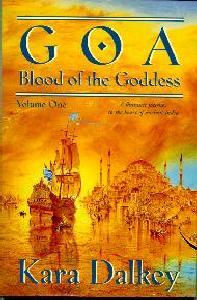
                • Cover of Blood of the Goddess
                  Blood of the Goddess

                  series · 3 books · 1996

                  similar bysouth asia+2 more

                • Cover of Lent
                  Lent

                  Jo Walton · standalone novel · 2019

                  similar byreflectivehistorical fantasyfaith and religionrenaissance and early modern

                  "Young Girolamo's life is a series of miracles. It's a miracle that he can see demons, plain as day, and that he can cast them out with the force of his will. It's a miracle that he's friends with Pico della Mirandola, the Count of Concordia. It's a miracle that when Girolamo visits the deathbed of Lorenzo "the Magnificent," the dying Medici is wreathed in celestial light, a surprise to everyone, Lorenzo included. It's a miracle that when Charles VIII of France invades northern Italy, Girolamo meets him in the field, and convinces him to not only spare Florence but also protect it. It's a miracle than whenever Girolamo preaches, crowds swoon. It's a miracle that, despite the Pope's determination to bring young Girolamo to heel, he's still on the loose...and, now, running Florence in all but name. That's only the beginning. Because Girolamo Savanarola is not who--or what--he thinks he is. He will discover the truth about himself at the most startling possible time. And this will be only the beginning of his many lives." - publisher

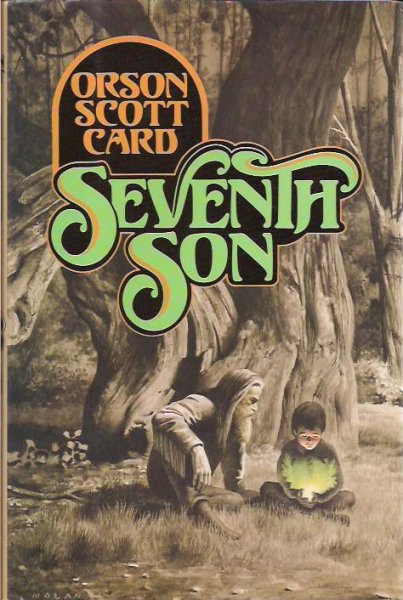
                • Cover of The Alvin Maker Saga
                  The Alvin Maker Saga

                  series · 15 books · 1986

                  similar byhistorical fantasy+2 more

                  The Tales of Alvin Maker is a series of seven alternate history fantasy novels written by American novelist Orson Scott Card, published from 1987 to 2026. They explore the experiences of a young man, Alvin Miller, who realizes he has incredible powers for creating and shaping things around him.

                • Cover of Pavane
                  Pavane

                  series · 9 books · 1966

                  completed

                  similar byreflectivefaith and religion

                  Keith Roberts' Pavane (1968) is a single fix-up novel built from linked stories rather than a multi-book series: in an alternate 20th century where Elizabeth I was assassinated and Spain conquered England, the Catholic Church suppresses Protestantism and keeps technology frozen at a steam-powered, feudal level. The interconnected stories follow different Dorset families across generations as long-suppressed dissent against Church rule begins to stir.

                • Cover of Puck
                  Puck

                  series · 14 books · 1906

                  completed

                  similar byhistorical fantasy+1 more

                • Cover of The Malacia Tapestry
                  The Malacia Tapestry

                  Brian W. Aldiss · standalone novel · 1976

                  similar byreflectivehistorical fantasyrenaissance and early modern

                  The Malacia Tapestry is a fantasy-historical novel by British writer Brian Aldiss, published in 1976. The story takes place in a fictional port city called Malacia, which is an alternate history version of a Renaissance city-state. It tells the story of a poor young actor named Perian de Chirolo who hopes to change his station in life so he can marry a wealthy merchant's daughter. While Malacia is considered a near-utopia, the happiness in the city belies the authoritarian rule of the powerful Supreme Council, which uses fear to prevent progress.

                • Cover of Goddess of the River
                  Goddess of the River

                  Vaishnavi Patel · standalone novel · 2024

                  similar byreflectivegodssouth asia+1 more

                  Goddess of the River is a 2024 novel by Vaishnavi Patel. It retells some of the events of the Mahabarata from the perspective of the goddess Ganga.

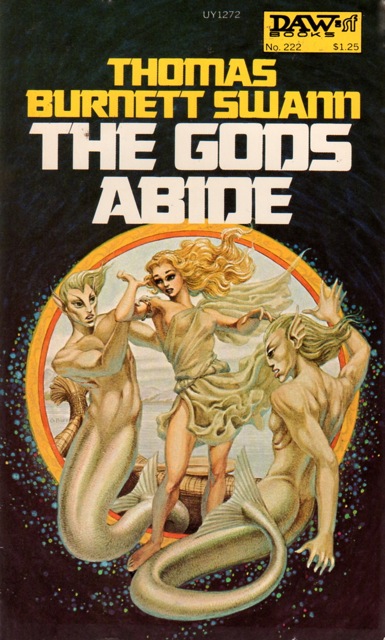
                • Cover of The Gods Abide
                  The Gods Abide

                  Thomas Burnett Swann · standalone novel · 1976

                  similar byreflectivehistorical fantasygodsfaith and religion

                  From the back cover of the DAW first edition: "... in this tale of the time of Rome and the fallen Celtic kingdoms there is embodied the story of the retreat of the pagan gods and all their array of sprites and nymphs and little folk. Facing the ruthless practicality of the new religion which denied their very right to exist, the varied pre-humans faced utter destruction unless they could find a sanctuary beyond detection. THE GODS ABIDE tells their tale and that of two of their defenders who followed the trail of the legendary immortals to the very waters of the Styx."

                • Cover of The Salt Roads
                  The Salt Roads

                  Nalo Hopkinson · standalone novel · 2003

                  similar byreflectivehistorical fantasygodsfaith and religion

                  Jeanne Duval, the ginger-haired entertainer, is descended from African slaves and white sailors. It is twilight, and she argues with her lover Charles Baudelaire in his Paris apartment. Mer, plantation slave and doctor, has healing hands though her spirit is sickened. She both hungers for and dreads liberation, and longs for the gods to take her home. Thais, a beauty from Alexandria, was sold into slavery and prostitution as a girl. Impelled to seek a glorious revelation, she will travel the long hot roads to Jerusalem. (adapted from information stated with the first edition)

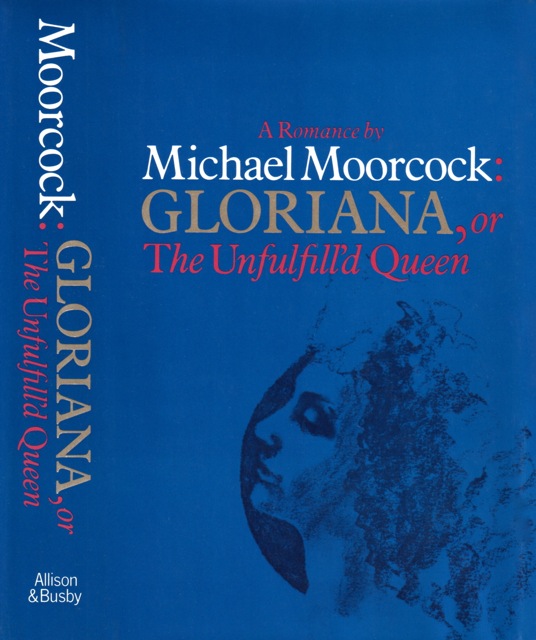
                • Cover of Gloriana, or, the Unfulfill'd Queen
                  Gloriana, or, the Unfulfill'd Queen

                  Michael Moorcock · standalone novel · 1978

                  similar byreflectivehistorical fantasyrenaissance and early modern

                  Gloriana, or The Unfulfill'd Queen is a work of literary fantasy by British novelist Michael Moorcock. It was first published in 1978 and has remained in print ever since.

                • Cover of Circe
                  Circe

                  Madeline Miller · standalone novel · 2018

                  similar byreflectivegods+1 more

                  Circe is a 2018 mythic fantasy novel by American writer Madeline Miller. Set during the Greek Heroic Age, it is an original reimagining of various Greek myths, most notably the Odyssey, as told from the perspective of the witch Circe. While drawing on characters and episodes from ancient myths, the novel invents or substantially reinterprets many aspects of Circe's biography, including Circe's encounters with mythological figures such as Hermes, the Minotaur, Jason, and Medea and ultimately, her romance with Odysseus and his son Telemachus.

                • Cover of A Traveller in Time
                  A Traveller in Time

                  Alison Uttley · standalone novel · 1939

                  similar byhistorical fantasyrenaissance and early modern+1 more

                  Timeslip story featuring the historical plot to free Mary Queen of Scots, or to murder, or both? Among more than 100 novels and collections, "Her most famous and successful novel for older children, A Traveller in Time (1939), is a fantasy based again on her rural childhood, concerning a local plot to murder Mary Queen of Scots in 1569 and a girl from the 20th century who uncontrollably Timeslips back 400 years to witness the tragedy." (underscore represents linked cross-reference) --SFE: Encyclopedia of Fantasy, biographical entry by Jo Fletcher "Based on the Babington Plot of Anthony Babington at Dethick, near her family home, this romance mixes dream and historical fact in a story about a 20th-century girl who is transported to the 16th century, becoming involved in a plot to free Mary, Queen of Scots from nearby Wingfield Manor." --Wikipedia, "Alison Uttley"

                • Cover of Bard: The Odyssey of the Irish
                  Bard: The Odyssey of the Irish

                  Morgan Llywelyn · standalone novel · 1984

                  similar byhistorical fantasy+2 more

                  Bard: The Odyssey of the Irish is a 1984 historical fantasy novel by Morgan Llywelyn. It depicts the migration of Galicians to Ireland, led by Amergin the bard and the Sons of the Mil. It is loosely based on the Early Irish Lebor Gabála Érenn or The Book of Invasions found in several medieval manuscripts.

                • Cover of Miranda and Caliban
                  Miranda and Caliban

                  Jacqueline Carey · standalone novel · 2017

                  similar byreflectivehistorical fantasyrenaissance and early modern

                  "A lovely girl grows up in isolation where her father, a powerful magus, has spirited them to in order to keep them safe. We all know the tale of Prospero's quest for revenge, but what of Miranda? Or Caliban, the so--called savage Prospero chained to his will? In this incredible retelling of the fantastical tale, Jacqueline Carey shows readers the other side of the coin--the dutiful and tenderhearted Miranda, who loves her father but is terribly lonely. And Caliban, the strange and feral boy Prospero has bewitched to serve him. The two find solace and companionship in each other as Prospero weaves his magic and dreams of revenge. Always under Prospero-s jealous eye, Miranda and Caliban battle the dark, unknowable forces that bind them to the island even as the pangs of adolescence create a new awareness of each other and their doomed relationship. Miranda and Caliban is bestselling fantasy author Jacqueline Carey's gorgeous retelling of The Tempest. With hypnotic prose and a wild imagination, Carey explores the themes of twisted love and unchecked power that lie at the heart of Shakespeare's masterpiece, while serving up a fresh take on the play's iconic characters."--

                • Cover of Seedbearers
                  Seedbearers

                  series · 3 books · 1974

                  completed

                  similar by+4 more

                • KL
                  Kushiel's Legacy Universe

                  series · 13 books · 2001

                  similar by+1 more

                • Cover of VALIS
                  VALIS

                  series · 4 books · 1981

                  completed

                  similar byreflectivefaith and religion

                  The VALIS trilogy is a set of science fiction/philosophical novels by author Philip K. Dick which include VALIS (1981), The Divine Invasion (1981), and The Transmigration of Timothy Archer (1982). Dick's first novel about the VALIS concept originally titled "VALISystem A", was published as Radio Free Albemuth after Dick's death in 1985.

                • Cover of Children of the Light Isles
                  Children of the Light Isles

                  series · 2 books · 2002

                  similar byhistorical fantasy+1 more

                  The Saga of the Light Isles is a historical fantasy duology by New Zealand writer Juliet Marillier, consisting of Wolfskin (2002) and Foxmask (2004).

                • Cover of The Vampire Chronicles
                  The Vampire Chronicles

                  series · 15 books · 1976

                  completed

                  similar by+1 more

                  The Vampire Chronicles is a series of Gothic vampire novels and a media franchise, created by American author Anne Rice, that revolves around the fictional character Lestat de Lioncourt, a French nobleman turned into a vampire in the 18th century.

                • Cover of I Dwelt in High Places
                  I Dwelt in High Places

                  Marjorie Bowen · standalone novel · 1933

                  similar byreflectivehistorical fantasyrenaissance and early modern+1 more

                  "A fictional account of John Dee, an English Elizabethan alchemist, and Edward Kelley, an occultist." (Toronto Public Library)

                • Cover of The Maeve Chronicles
                  The Maeve Chronicles

                  series · 5 books · 2000

                  similar by+3 more

                • Cover of Deathless
                  Deathless

                  Catherynne M. Valente · standalone novel · 2011

                  similar byreflectivehistorical fantasygods

                  Deathless is an alternate history novel by American writer Catherynne M. Valente, combining the Russian fairy tale The Death of Koschei the Deathless with the events and aftermath of the Russian Revolution. The novel follows the life of Marya Morevna as she transforms from a young child witnessing the revolution to her newfound position as bride after her marriage with Koschei, Tsar of Life. The book is divided into six parts and is told primarily in the third person from the perspective of Marya Morevnan. However, it does feature other characters, such as Ivan Tsarevich.

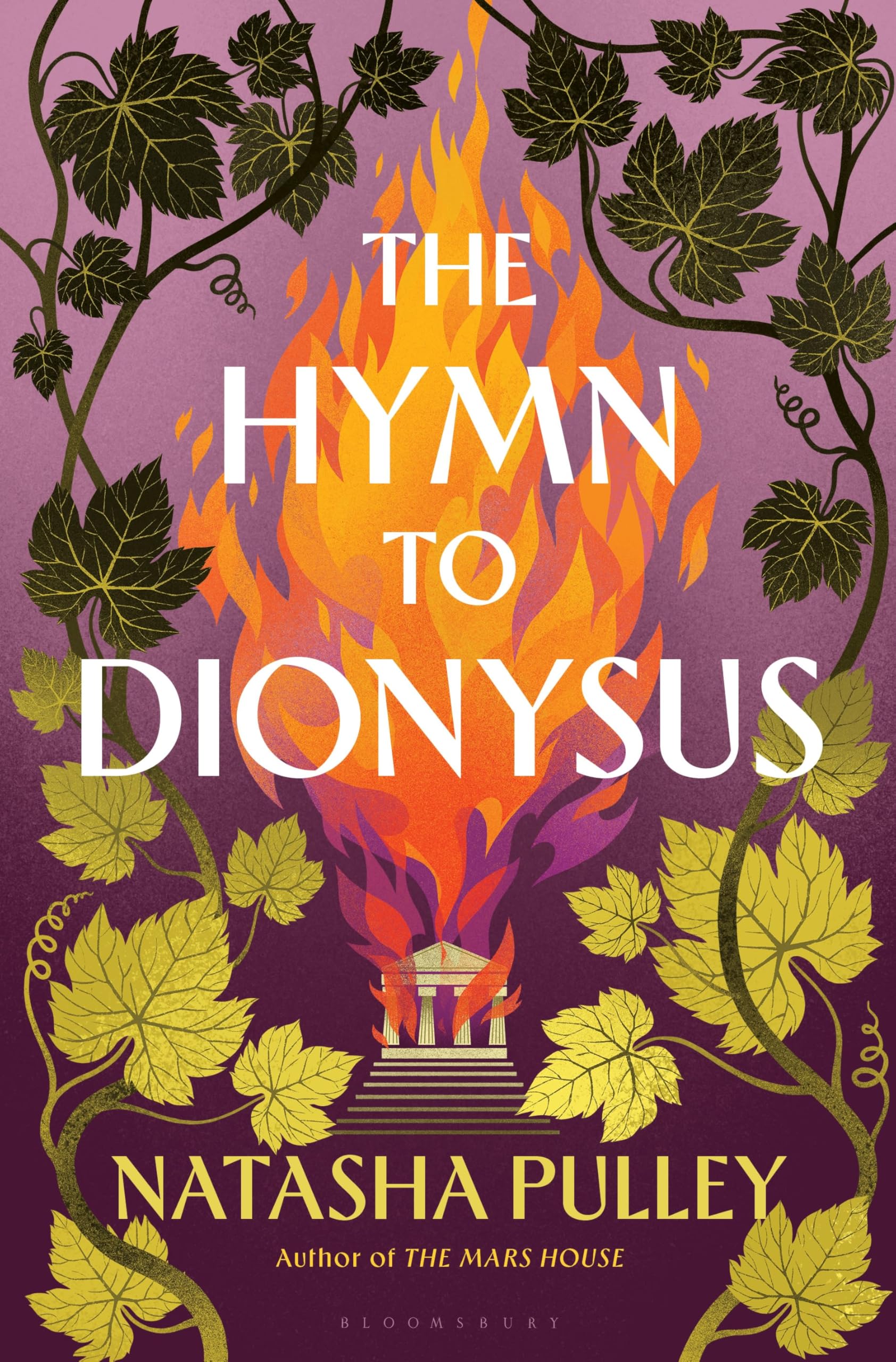
                • Cover of The Hymn to Dionysus
                  The Hymn to Dionysus

                  Natasha Pulley · standalone novel · 2025

                  similar byreflectivehistorical fantasygods

                  Raised in a Greek legion, Phaidros has been taught to fight for the homeland he’s never seen and to follow his commander’s orders at all costs. But when he rescues a baby from a fire at Thebes’s palace, his commander’s orders cease to make sense: Phaidros is forced to abandon the blue-eyed boy at a temple, and to keep the baby’s existence a secret. Years later, after a strange encounter that led to the death of his battalion, Phaidros has become a training master for young soldiers. He struggles with panic attacks and flashbacks, and he is not the only one: all around him, his fellow veterans are losing their minds. Phaidros’s risk of madness is not his only problem: his life has become entangled with Thebes’s young crown prince, who wishes to escape the marriage his mother, the Queen, has chosen for him. When the prince vanishes, Phaidros is drawn into the search for him—a search that leads him to a blue-eyed witch named Dionysus, whose guidance is as wise as the events that surround him are strange. In Dionysus’s company, Phaidros witnesses sudden outbursts of riots and unrest, and everywhere Dionysus goes, rumors follow about a new god, one sired by Zeus but lost in a fire.